Jordan Historical Sites: 14 Essential Stops and the Best Route
Jordan is not a Petra trip with a few ruins around the edges. Nabataean engineering, Roman cities, Byzantine mosaics, early Islamic art, Crusader castles, pilgrimage places, and living historic towns stack along a route short enough to understand as one journey.
The hard part is choosing what deserves time, especially when heat, stairs, opening hours, regional security, and long transfers can quietly shrink a day.
First, Check Whether This Is the Right Time to Go
The U.S. State Department currently rates Jordan Level 3, Reconsider Travel, because of terrorism and armed conflict, with several named Level 4 areas. The advisory was updated August 29, 2026 without changing the overall Level 3 rating, so read the live notice immediately before booking or departure.
That is not a decorative disclaimer beneath an itinerary. Read the full current advisory, avoid every specifically restricted area, check airline operations and insurance exclusions, enroll in STEP if eligible, and keep a departure plan that does not depend on government assistance.
If the current risk does not fit your comfort, postpone. Historical sites endure, and no prepaid tour deserves priority over an official warning or your own sound judgment.
How to Plan Jordan’s Historical Sites
Jordan’s main visitor route runs north to south: Umm Qais and Jerash, Amman, the eastern desert castles, Madaba and the Dead Sea area, Karak and Shobak, Petra, Wadi Rum, then Aqaba. You can reverse it, but trying to zigzag from one Amman hotel wastes daylight.
A rental car gives flexibility, while a licensed driver removes parking, navigation, and fatigue from long touring days. Public transport can connect major cities, but it is less efficient for linking scattered archaeological sites on a tight schedule.
Should you buy the Jordan Pass?
The official Jordan Pass includes entry to more than 40 attractions, including Petra, Jerash, and Wadi Rum, and can include the tourist entry visa cost when its conditions are met. Buy only through the official site and check nationality, arrival crossing, minimum-stay, visa, and validity rules before purchase.
The pass is not a universal skip-the-line ticket, transport card, guide, or promise that every place will be open. Compare the current pass price with the sites you will actually visit, and keep the digital document available offline.
1. Amman Citadel
Best for: A first overview of Jordan’s layered history.
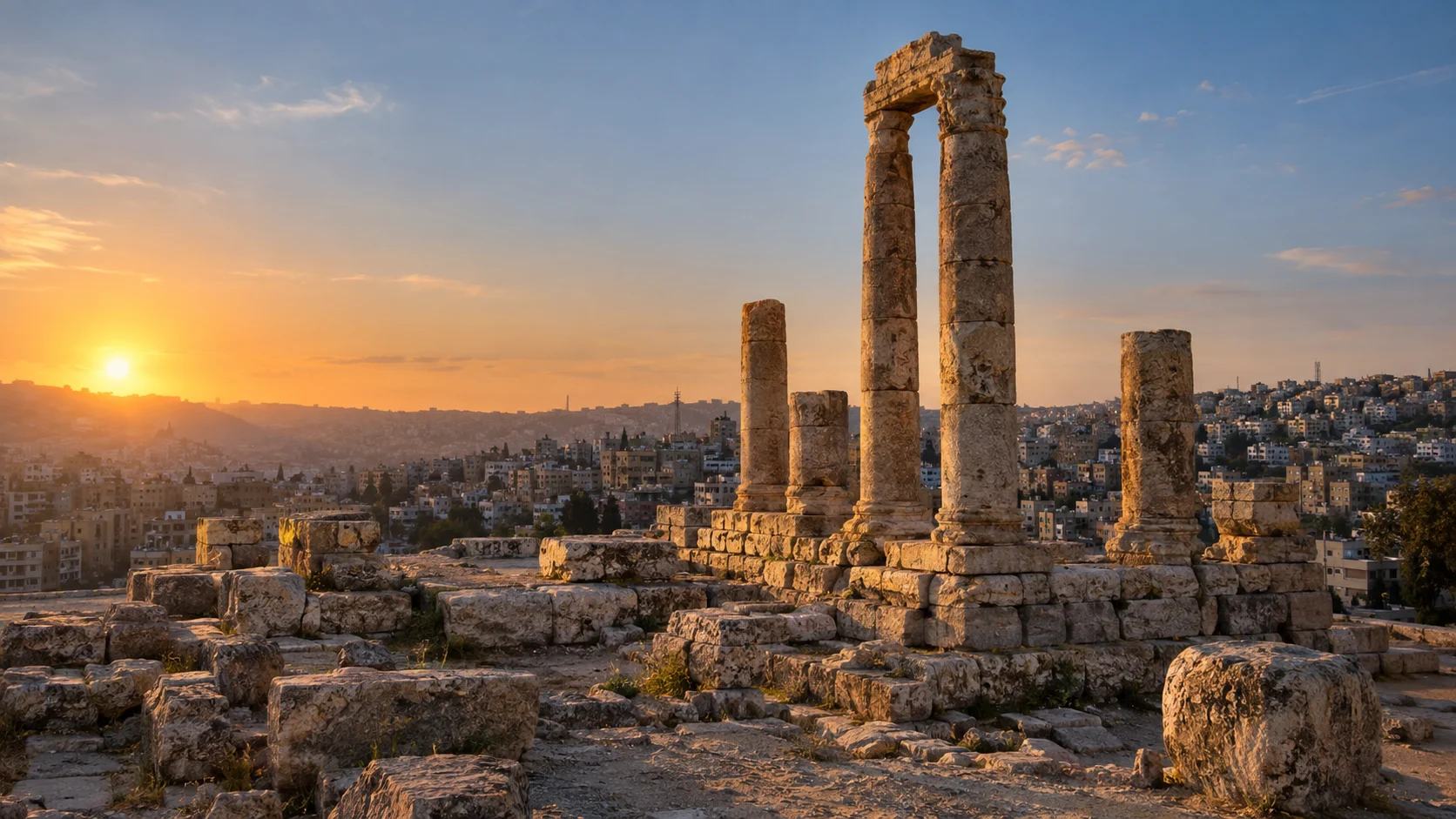
Jabal al-Qal’a, the Citadel hill, contains traces of multiple periods rather than one intact monument. The Temple of Hercules, Umayyad Palace complex, Byzantine church remains, archaeology museum, and broad city view help place everything that follows.
Allow at least 90 minutes and go early or late because shade is limited. Uneven ground and climbs make sturdy shoes more useful than dressy city footwear.
Pair it with the Roman Theater
The Roman Theater sits below in downtown Amman, but the road and stair network make the two feel farther apart than a map suggests. A taxi between levels can preserve energy, then downtown food and markets turn the ruins into a full city day rather than a checklist.
2. Jerash
Best for: The strongest first-time Roman-era site after Petra.
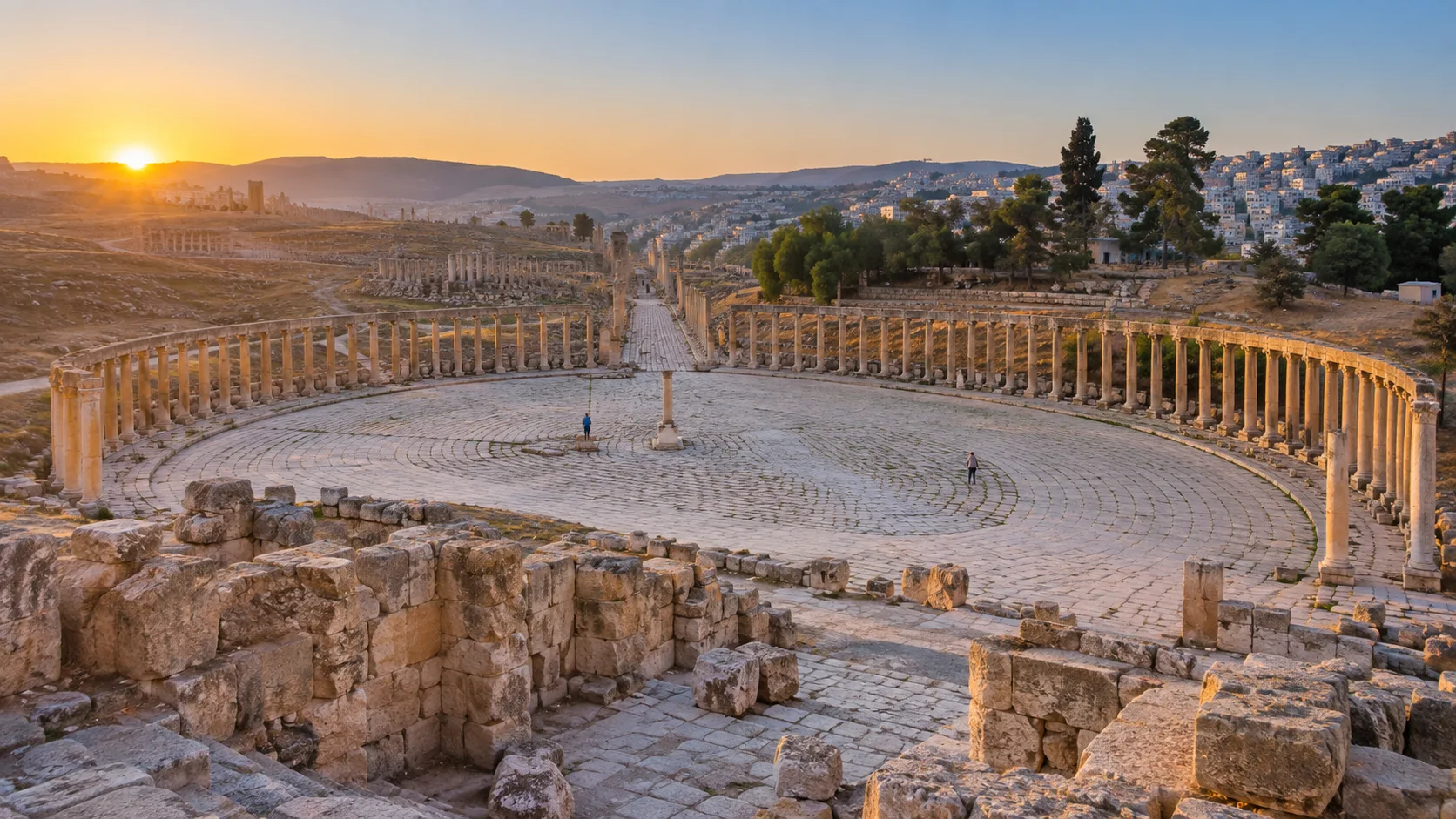
Jerash rewards a half day with Hadrian’s Arch, the hippodrome, Oval Plaza, colonnaded Cardo, temples, theaters, gates, baths, and churches. The site reveals a city plan at walking scale, which is why it lands above most single-monument stops.
The official tourism board identifies Hadrian’s Arch as commemorating Emperor Hadrian’s visit in 129 CE, while the broader Jordan history and culture overview places Jerash among the country’s central heritage destinations. Bring sun protection and enough water because the route is exposed and larger than the entrance view implies.
3. Umm Qais
Best for: Travelers who want ruins, landscape, and fewer tour groups in one stop.
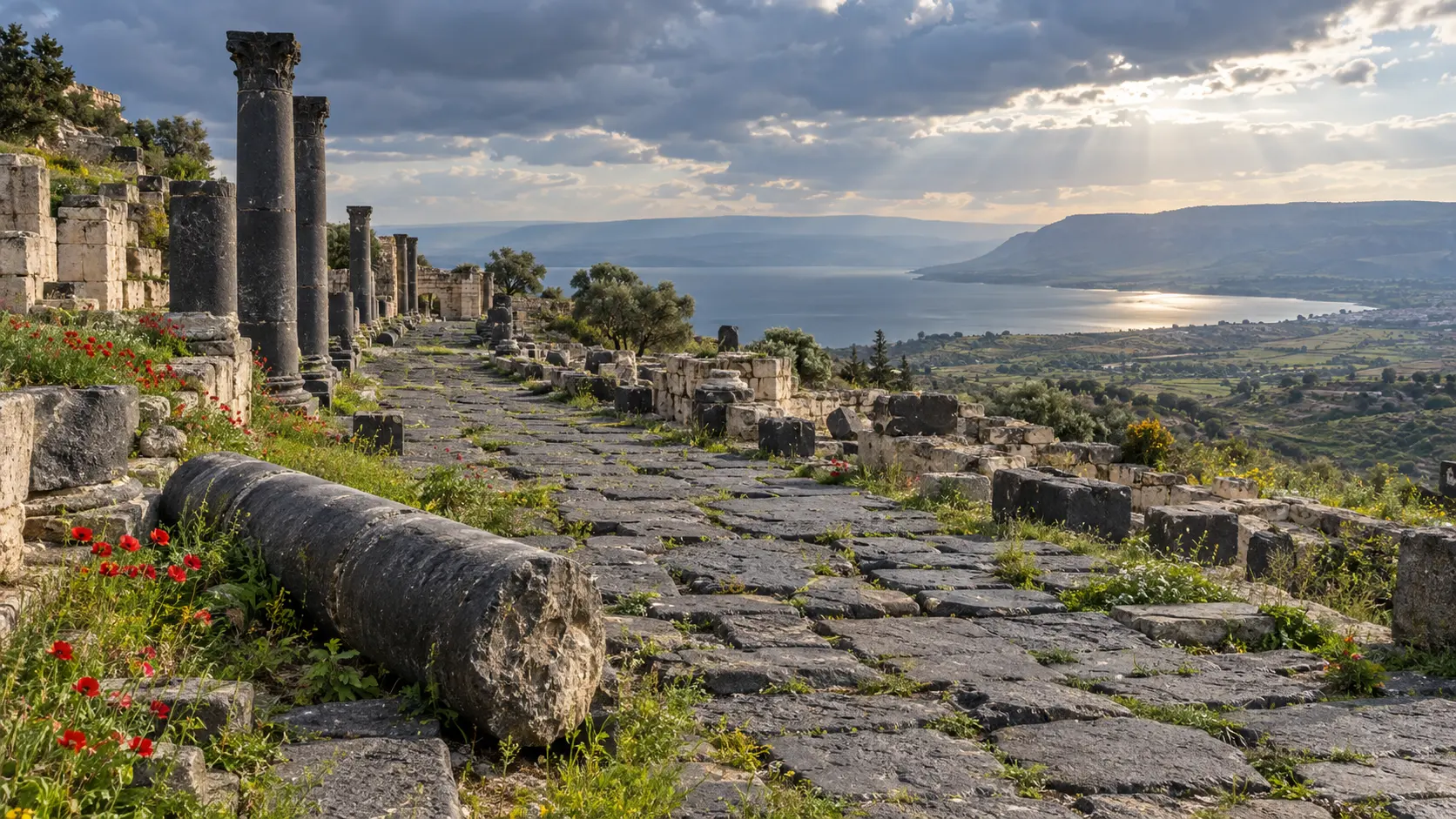
Ancient Gadara combines dark basalt masonry, a theater, colonnaded street, Ottoman-era village buildings, and expansive northern views. It lacks Jerash’s concentrated grandeur but feels more contemplative and geographically revealing.
Umm Qais works best on a dedicated northern day, sometimes paired with Ajloun rather than squeezed after Jerash. Check the current advisory carefully because northern routing and border proximity deserve more scrutiny than a standard city excursion.
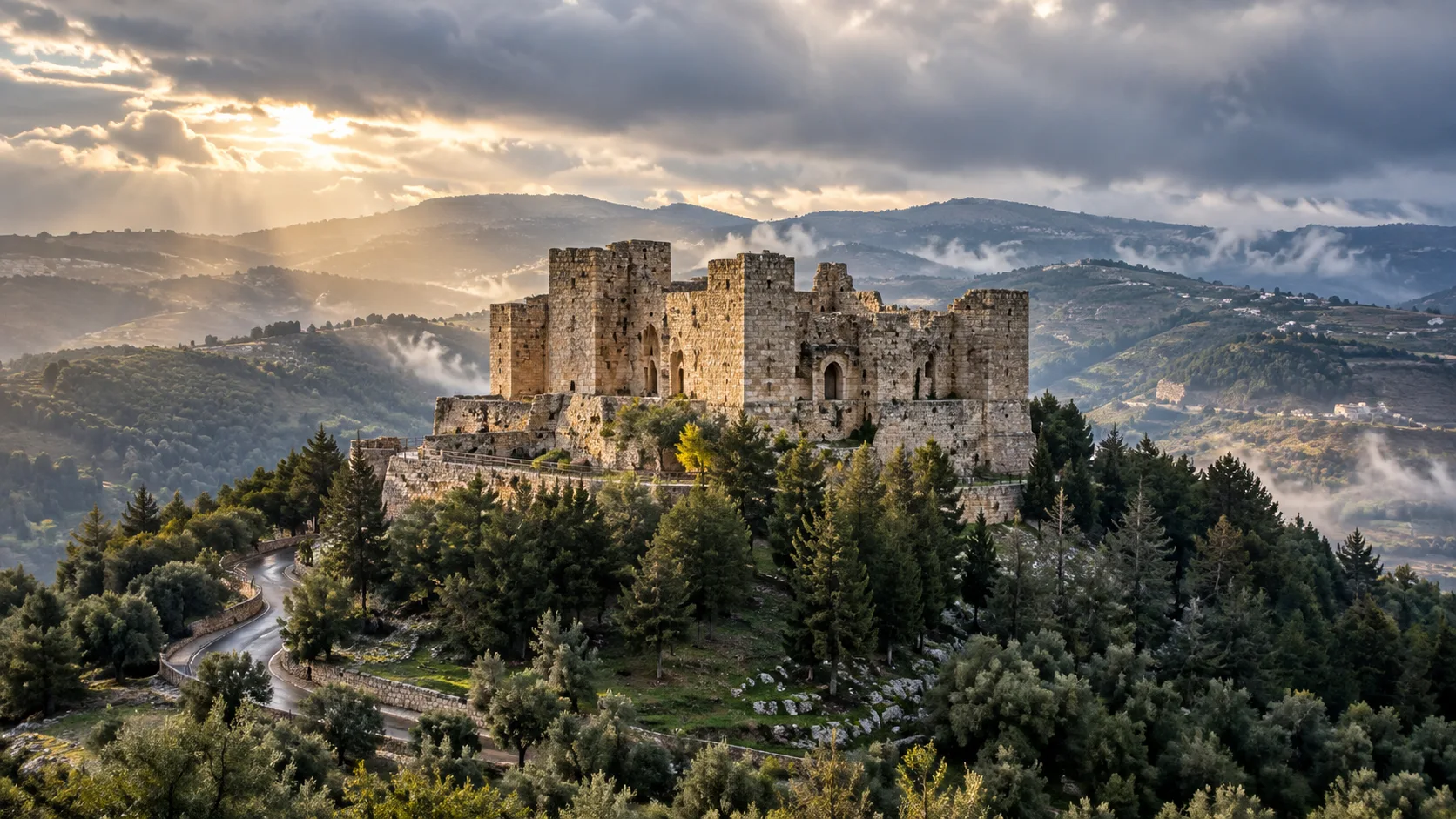
4. Ajloun Castle
Best for: Medieval military history and a greener Jordan landscape.
Ajloun Castle brings the story forward from Roman cities to Islamic fortification and the strategic control of routes. Its chambers, stairs, stone passages, and hilltop setting provide a satisfying contrast after Jerash.
Choose Ajloun if castles are a real interest, not because every northern tour includes it. Visitors with limited mobility should confirm the accessible extent because historic staircases and uneven surfaces shape the experience.
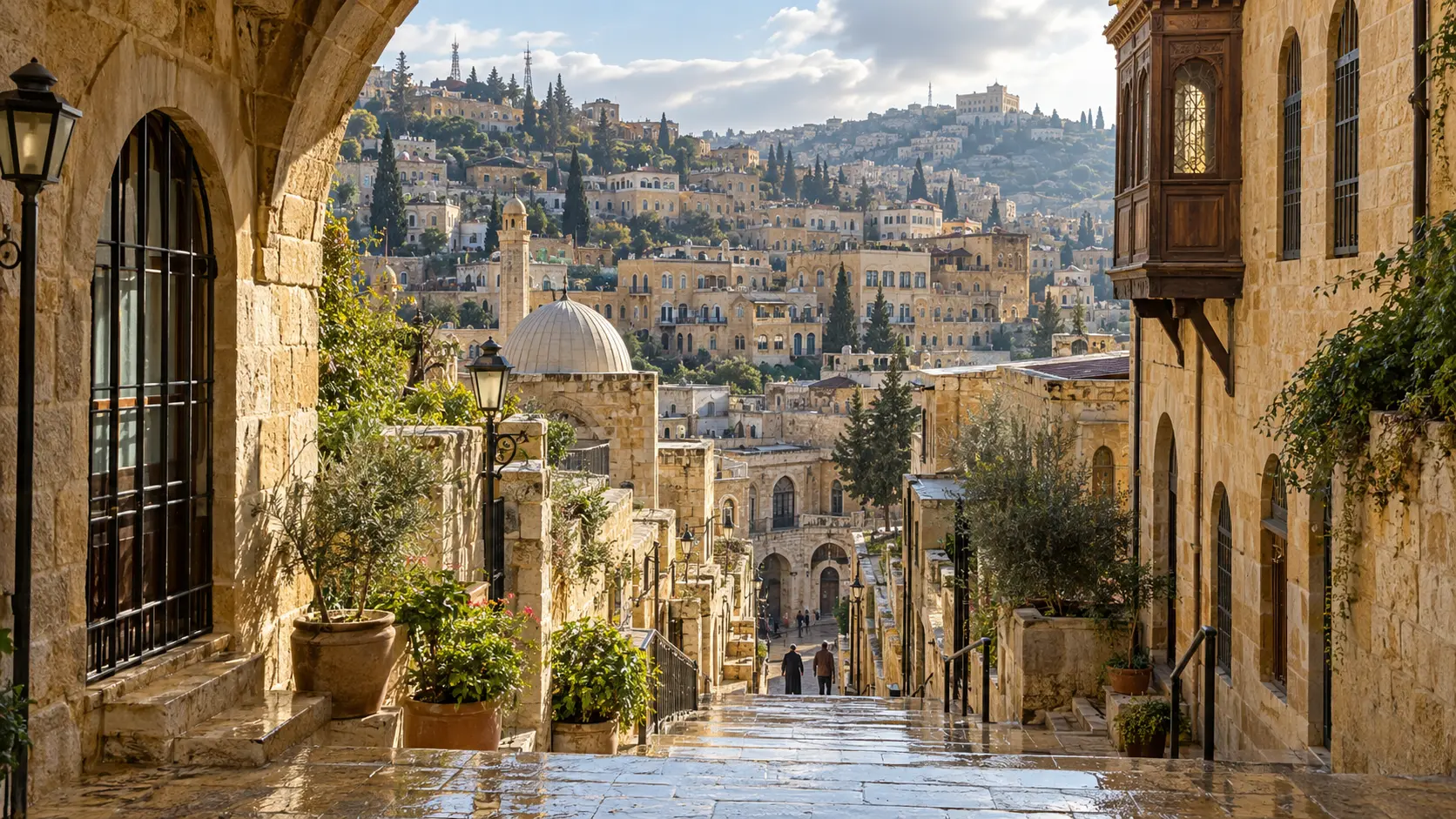
5. As-Salt
Best for: Living urban heritage rather than fenced archaeology.
As-Salt’s value lies in its Ottoman-era architecture, hillside streets, markets, hospitality traditions, and continued community life. It asks visitors to notice how a historic city functions, not simply photograph an isolated facade.
This is a strong half-day from Amman for travelers who enjoy food, social history, and walking. Wear modest clothing, ask before photographing people, and remember that homes, shops, and places of worship are active spaces.
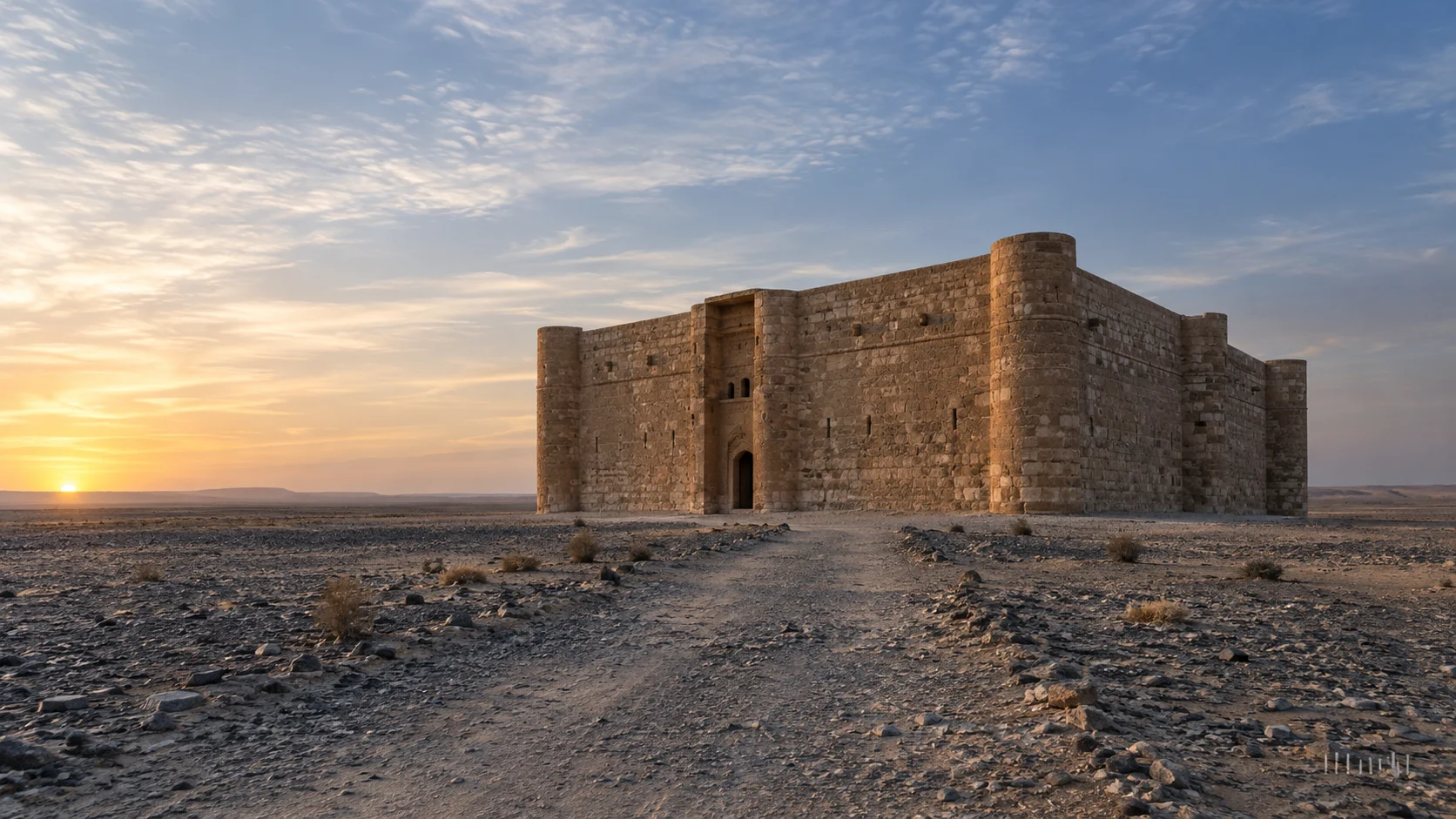
6. The Eastern Desert Castles
Best for: Early Islamic history, art, and architecture on a compact driving circuit.
“Desert castles” is a convenient label for sites with different functions and stories. Qasr Kharana has a striking fortified form, Qasr Amra preserves important Umayyad wall paintings, and Azraq Castle has a much longer history of strategic occupation.
Choose a driver or self-drive loop only after checking current security guidance and road conditions east of Amman. Qasr Amra’s interiors are the intellectual prize, so go with enough context to understand the imagery rather than treating the circuit as three quick building photos.
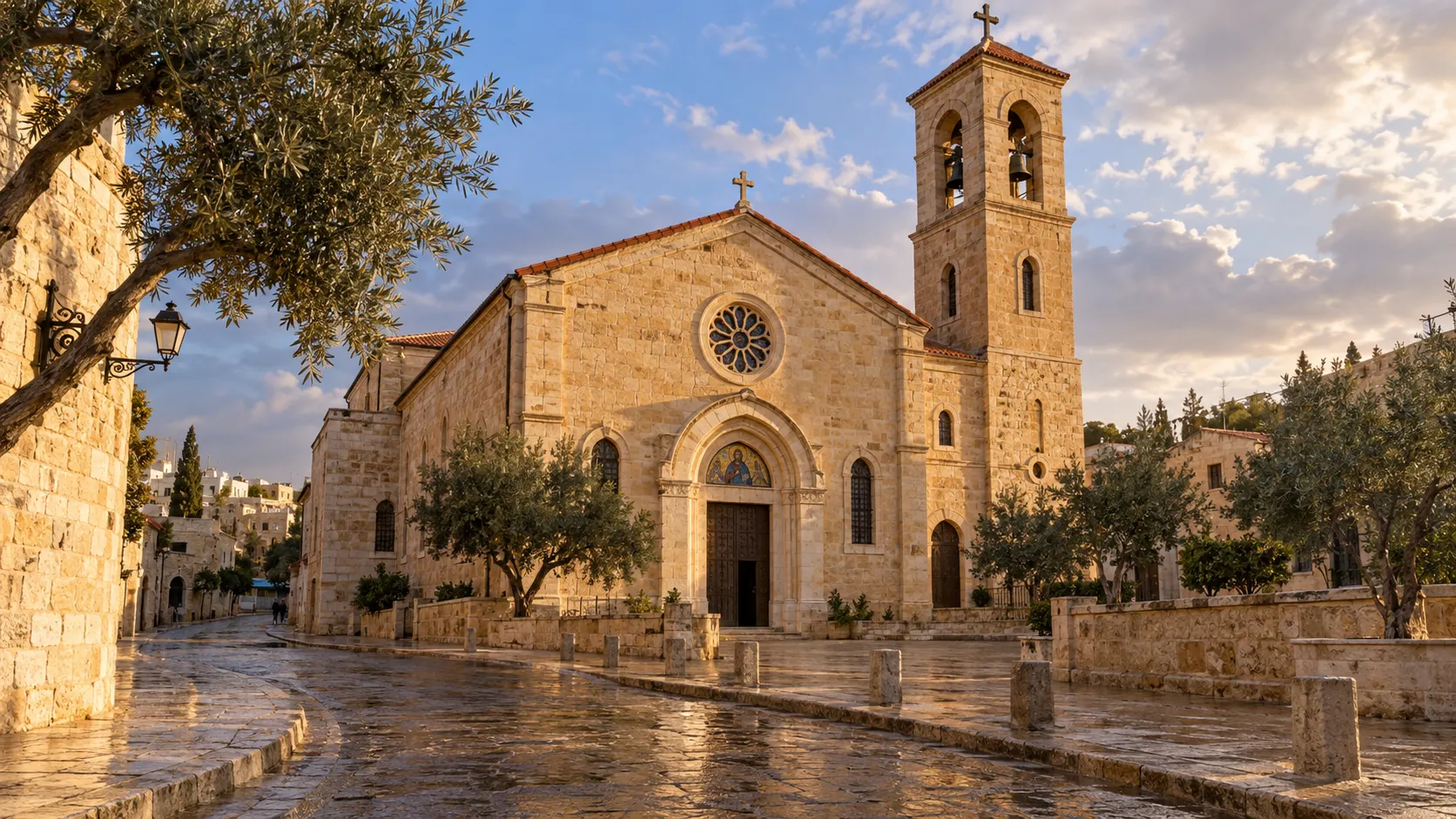
7. Madaba
Best for: Byzantine mosaics and an easy historical base near the airport.
Madaba is famous for the mosaic map in St. George’s Church, but the Archaeological Park, Church of the Apostles, and town center justify more than a bus stop. The attraction is the concentration of mosaic work and the relationship between archaeology and a living Christian community.
Check church access around services and dress respectfully. Madaba can work as a first or final overnight, especially when a central Amman stay would add unnecessary urban driving.
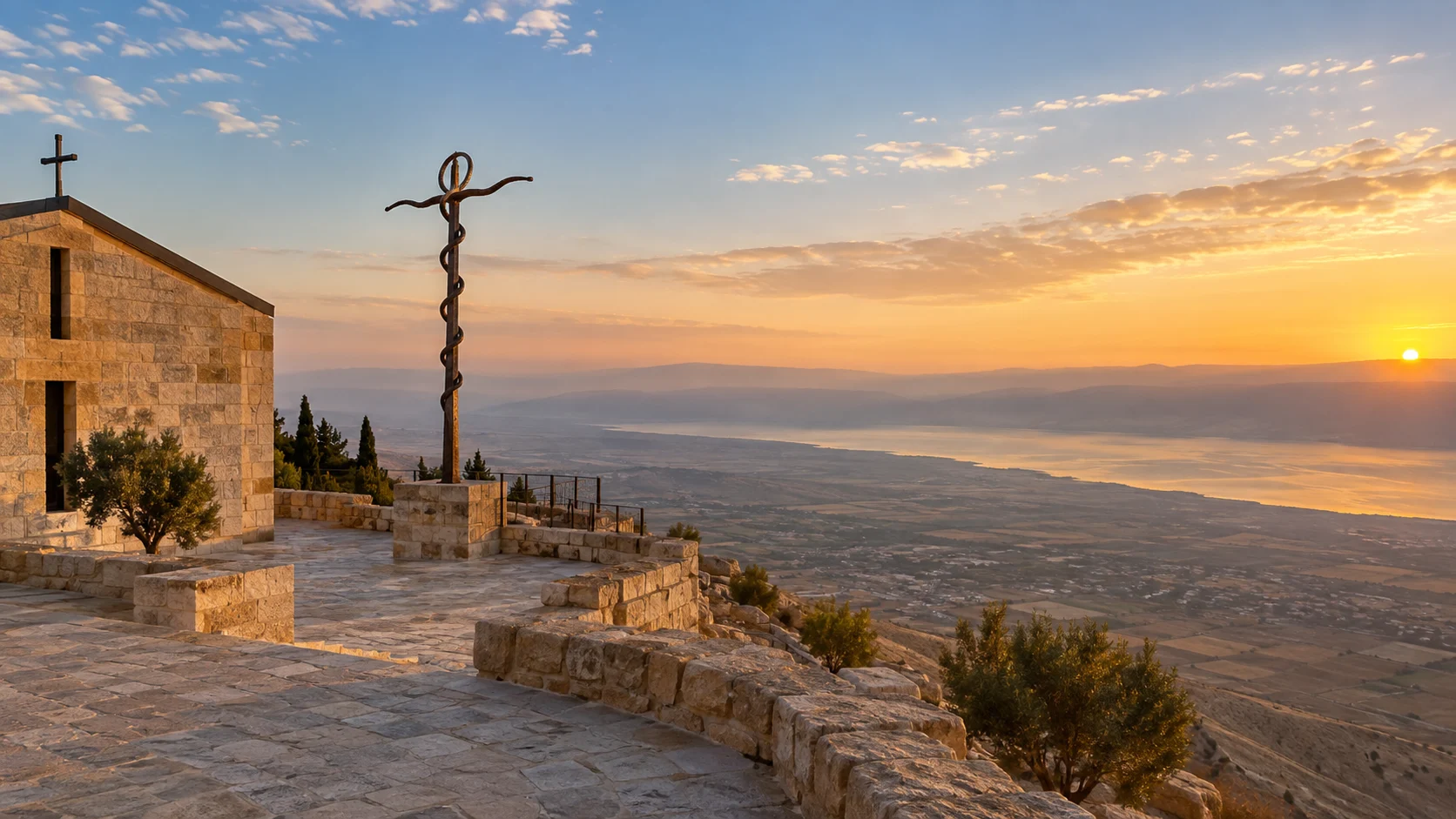
8. Mount Nebo
Best for: Biblical history, mosaics, and a landscape view with religious meaning.
Mount Nebo is traditionally associated with Moses viewing the Promised Land. The memorial church and mosaics matter as much as the panorama, which can be hazy and should never be guaranteed.
Pair Nebo with Madaba rather than making it a separate long excursion. Faith-based travelers may want quiet time, while secular visitors benefit from reading the site’s interpretation instead of rushing through for the viewpoint.
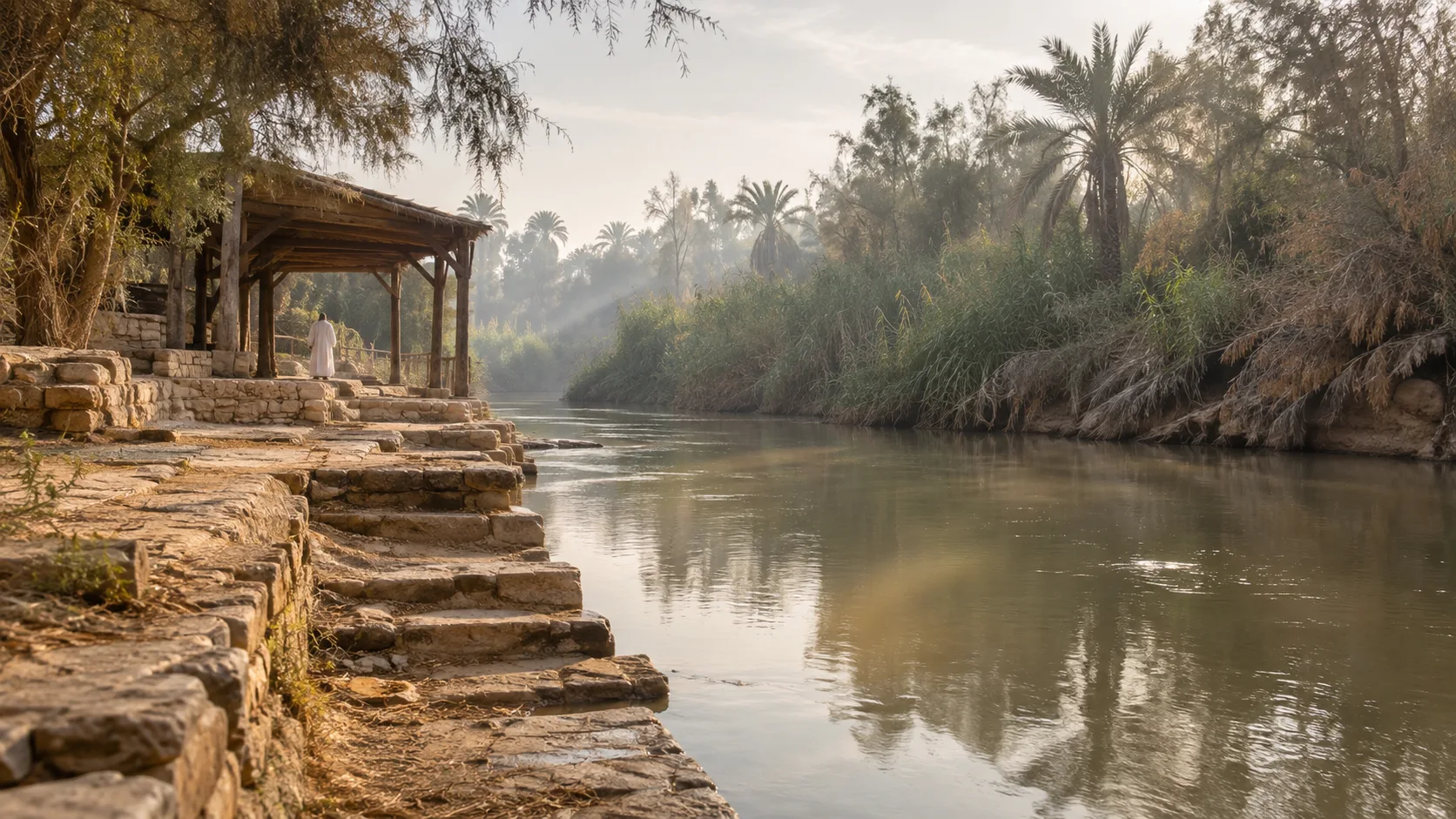
9. Bethany Beyond the Jordan
Best for: Christian pilgrimage and travelers interested in sacred landscape.
Al-Maghtas, the Baptism Site on the Jordan River, is associated with the baptism of Jesus and includes archaeological and pilgrimage elements. It is a guided, controlled visit rather than a place to wander independently, so current schedules and security procedures shape the day.
Combine it with the Dead Sea area only if the timetable allows unhurried participation. Treat worshippers, clergy, the river, and the international border setting with particular care.
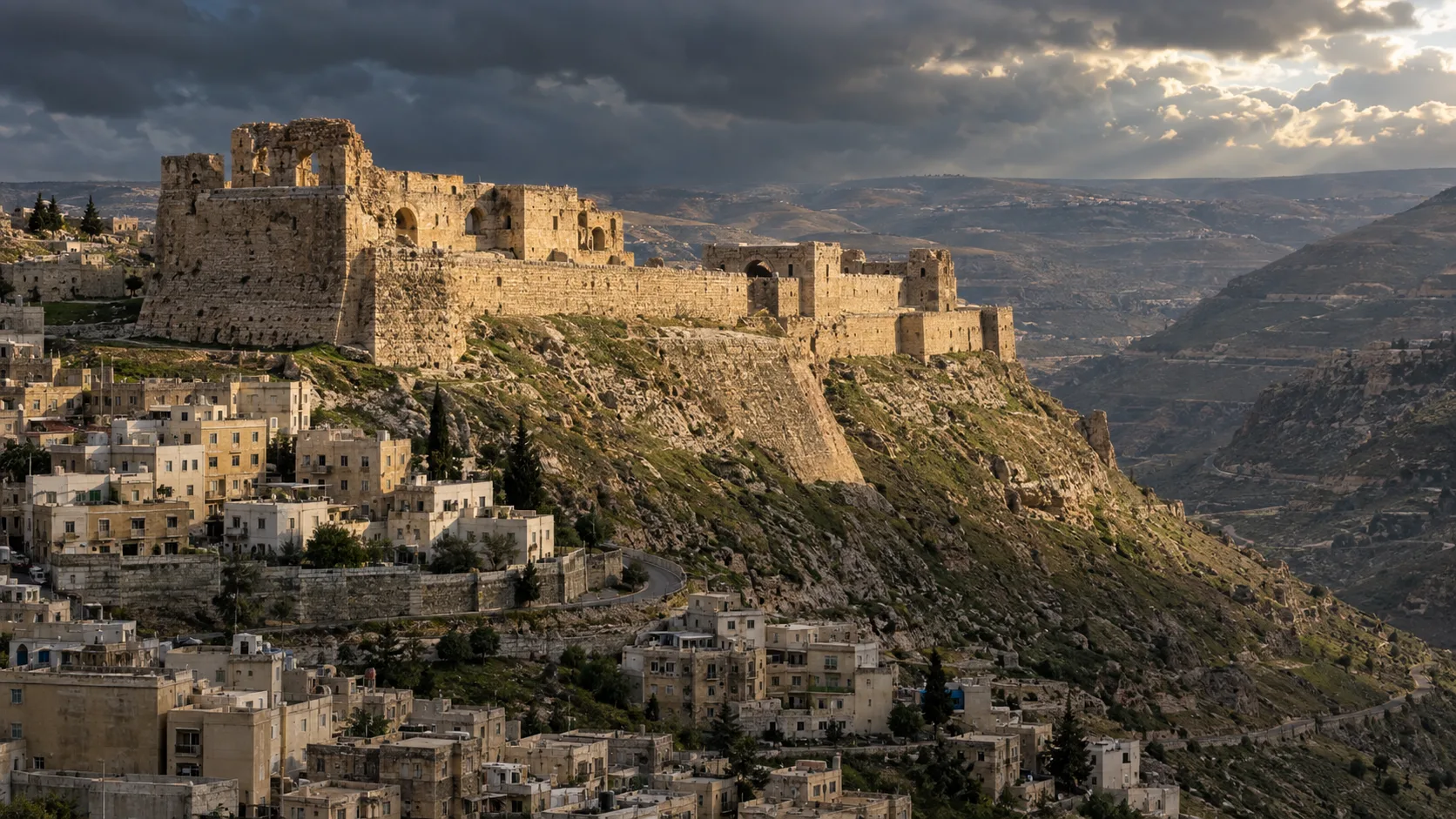
10. Karak Castle
Best for: Crusader history on the southbound King’s Highway.
Karak’s huge stone mass dominates a living hill city and carries layers beyond the Crusader period alone. Interior passages can be dark, rough, and disorienting, so a flashlight and careful footing improve the visit.
The castle fits naturally between Madaba or the Dead Sea and Petra when taking the scenic King’s Highway. That road is slower than the Desert Highway, and adding Dana viewpoints, lunch, and Shobak can stretch the day beyond comfort.
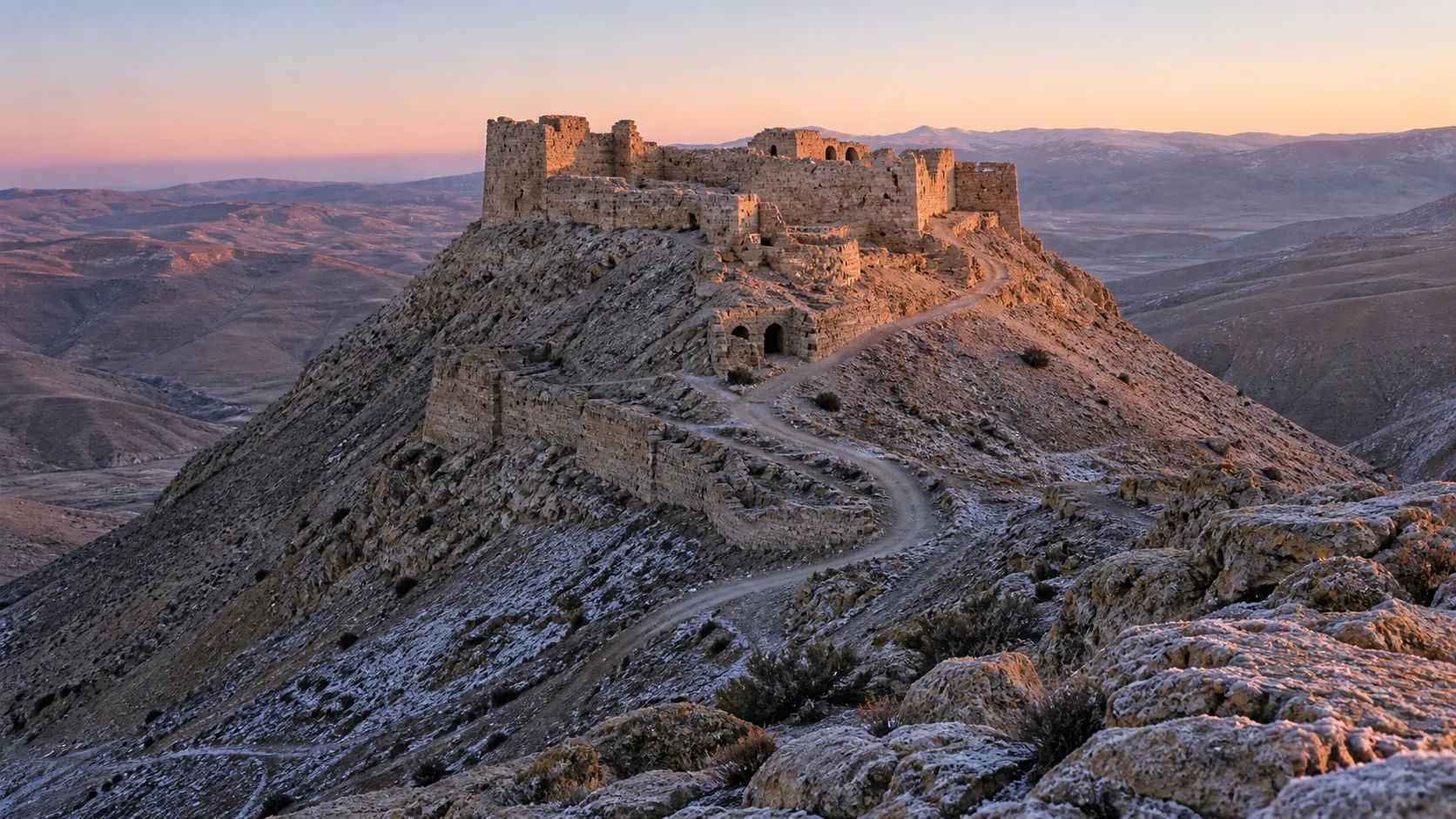
11. Shobak Castle
Best for: Castle enthusiasts willing to trade polish for atmosphere.
Shobak stands more remotely than Karak and usually receives less time from group itineraries. Its ruins reward travelers who enjoy defensive landscapes, but it is the easier castle to cut when daylight, heat, or walking capacity is limited.
Do not force both castles into a rushed transfer simply because they appear on the map. Karak is the broader first-time choice, while Shobak is the quieter specialist addition.
12. Petra
Best for: The essential two-day archaeological experience.
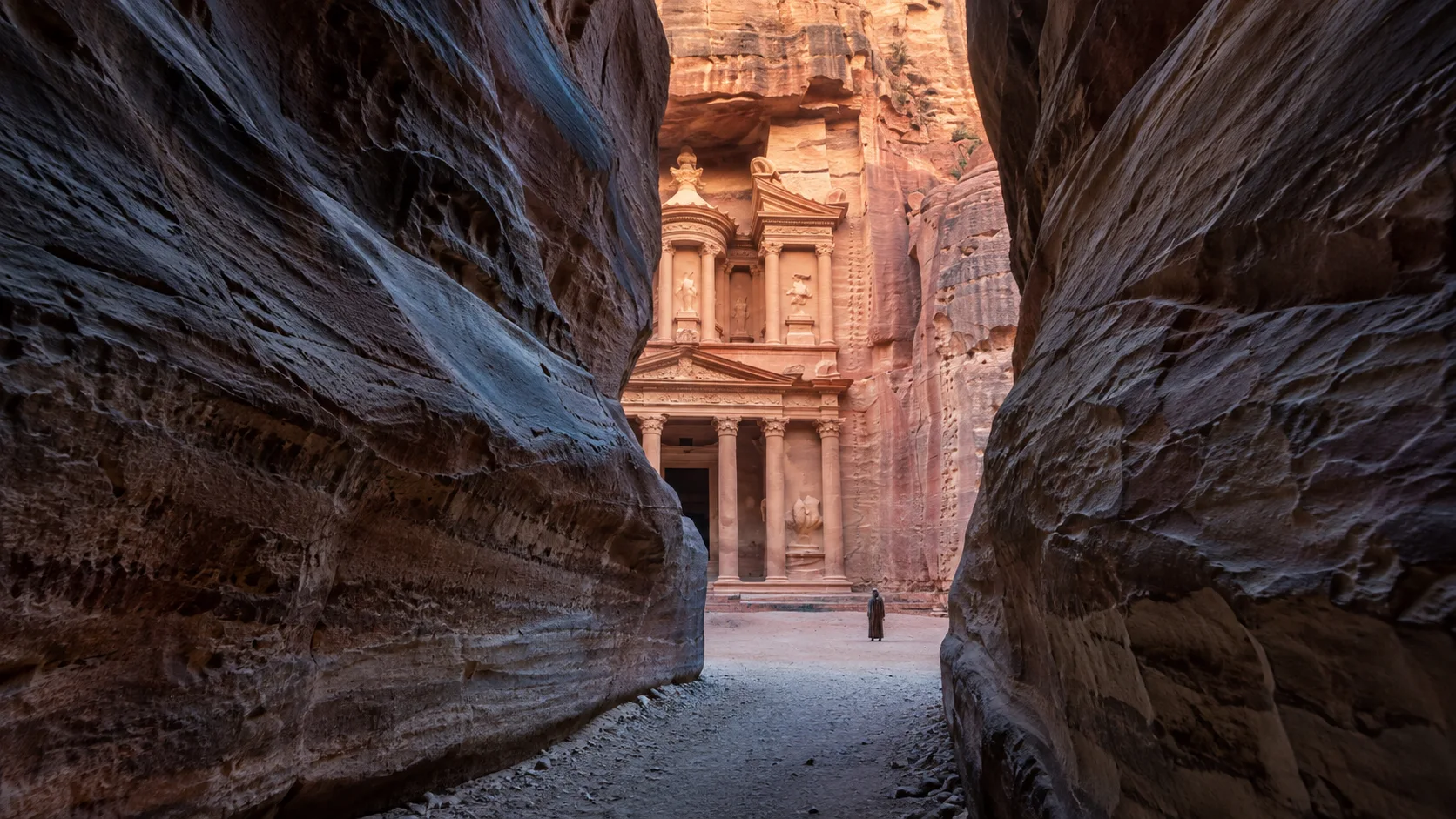
Petra was a Nabataean capital and caravan center, half-built and half-carved into a landscape of sandstone passages and mountains. Jordan’s official UNESCO heritage overview emphasizes its role connecting Arabia, Egypt, Syria-Phoenicia, and trade in incense, silk, and spices.
The Treasury is the famous reveal after the Siq, but it is the start, not the whole city. The Street of Facades, theater, Royal Tombs, colonnaded street, Great Temple area, Byzantine church, museum, and Monastery can fill two substantial days.
Why one day is a compromise
A one-day visit can cover the Siq, Treasury, and selected central monuments, but the distance accumulates quickly and the return remains on foot. The Monastery adds hundreds of steps, while high viewpoints can involve exposed, uneven routes.
Start near opening, carry water, use sun protection, and decline animal transport if welfare, route, price, or handling concerns are not clear. Never follow an unofficial “shortcut” toward an exposed viewpoint simply because someone promises the best photo.
Current official admission lists one-, two-, and three-day options, while the higher same-day visitor rate can apply to someone who does not stay overnight in Jordan. Check the current Jordan entrance-fee page because eligibility and pricing can change.
13. Little Petra
Best for: Nabataean context with a smaller physical commitment.
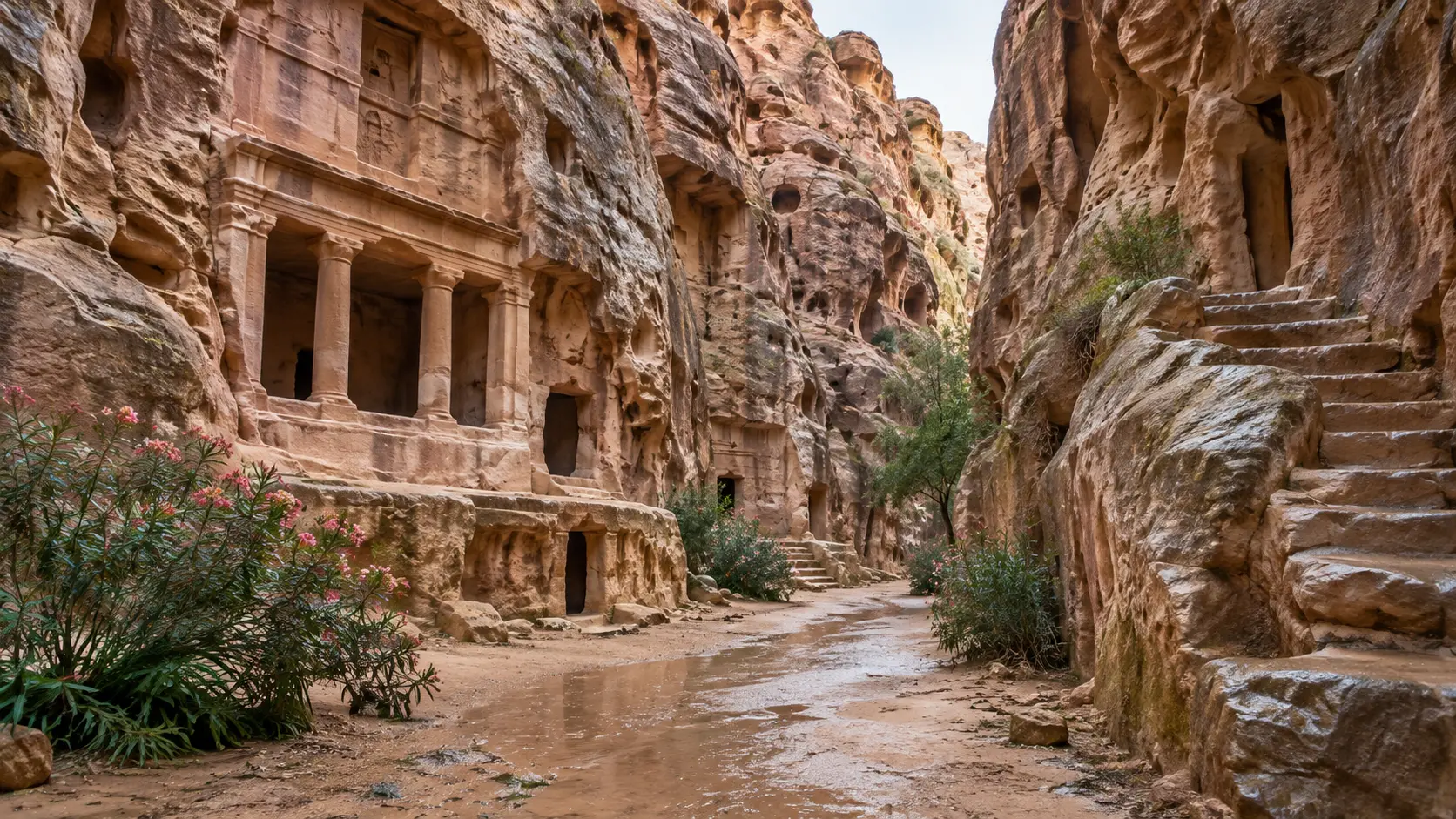
Siq al-Barid, commonly called Little Petra, includes carved spaces, a narrow approach, and evidence of the wider landscape around the main city. It complements Petra but does not replace the Siq, Treasury, Royal Tombs, and central archaeological zone.
Visit before the main site if you want historical orientation, or afterward when another full Petra hike would be too much. Confirm transport rather than assuming it is a walkable extension of Wadi Musa.
14. Wadi Rum
Best for: Cultural landscape, rock inscriptions, desert history, and an overnight.
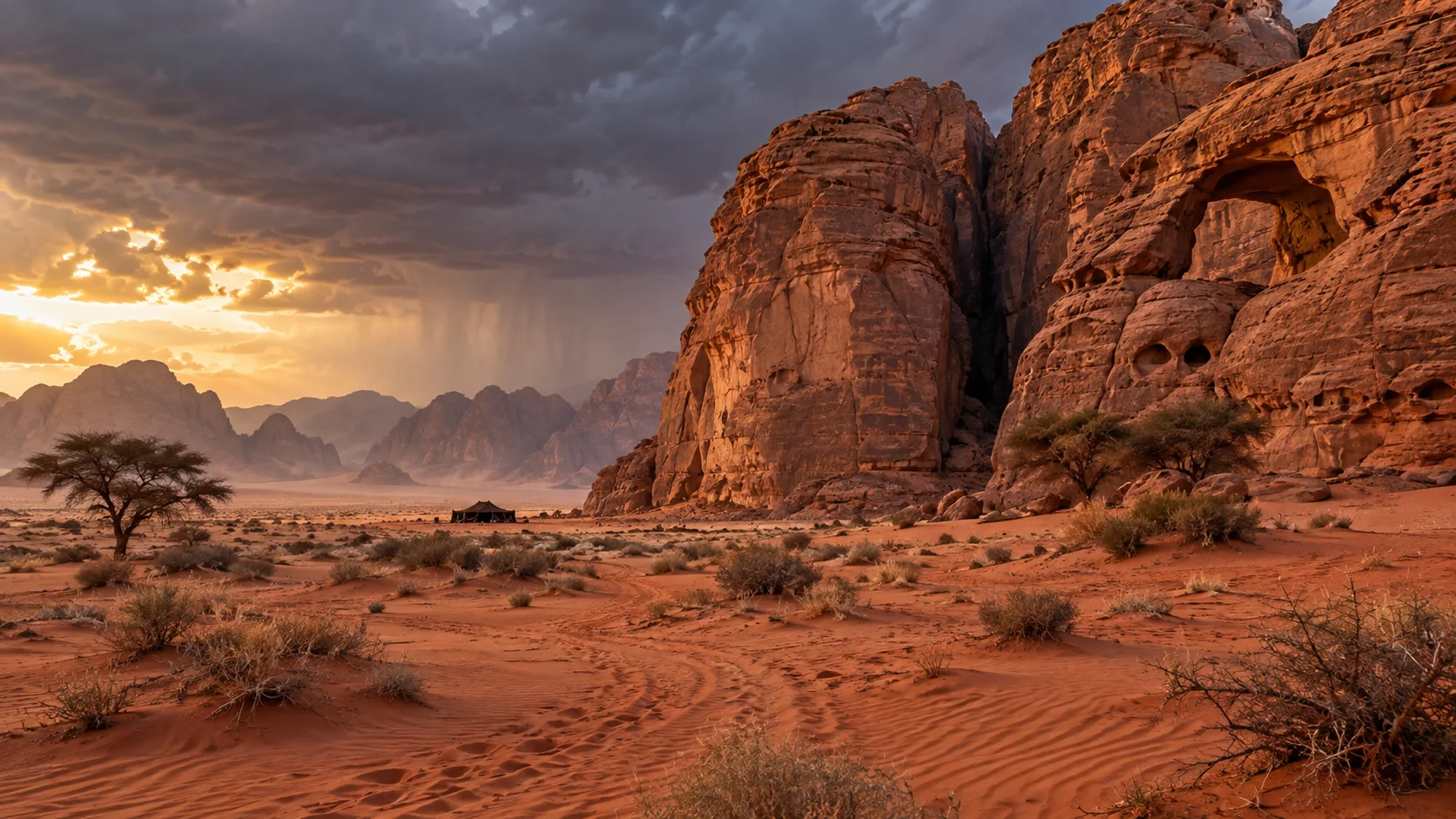
Wadi Rum is not empty scenery added after the ruins. Its rock art, inscriptions, archaeological traces, routes, and continuing Bedouin cultural connections make the protected landscape part of Jordan’s historical story.
Use an authorized local operator, agree on the route and inclusions, and choose the camp for location and operating standards rather than dome photos alone. An overnight adds sunset, dark skies, and slower interpretation, but extreme heat, cold nights, dust, and rough vehicle travel are real tradeoffs.
Hikers can connect the historical route to broader landscape planning through these world hiking ideas, which include Jordan’s Wadi Dana. Desert hiking needs local conditions, sufficient water, and a route appropriate to heat and navigation.
What About Aqaba’s Historical Sites?
Aqaba Castle, the early Islamic site of Ayla, and local museums can add a final layer, but Aqaba’s stronger role for most visitors is a Red Sea rest after Wadi Rum and Petra. Give its heritage a half day if you have genuine interest, not as an obligation before the beach.
Aqaba is also Jordan’s cruise gateway, yet Petra is not a casual walk from the pier. Anyone arriving by ship should use the ship’s all-aboard time, verified transport, and substantial road transfer as the framework, as explained in this practical cruise-port directory.
A Realistic Seven-Day Historical Route
Day 1: Arrive and sleep in Amman or Madaba, depending on flight time. Do not schedule a major site after a long overnight journey.
Day 2: Tour Amman Citadel, Roman Theater, and downtown. Add a museum only if opening hours and energy cooperate.
Day 3: Make Jerash the centerpiece, then choose either Ajloun or a relaxed return to Amman. Umm Qais deserves a longer northern day on an expanded itinerary.
Day 4: Visit Madaba and Mount Nebo, then drive the King’s Highway with Karak if daylight permits. Sleep near Petra rather than arriving after an exhausting late drive.
Days 5 and 6: Give Petra two entries, dividing the central city, Royal Tombs, and Monastery according to walking ability. Two measured days beat one punishing photo sprint.
Day 7: Continue to Wadi Rum for a guided visit and overnight, or transfer to Aqaba if a beach finish matters more. An international flight from Amman usually requires another transfer day.
Ten Days Is the Better First Trip
Add Umm Qais or the desert castles, Bethany Beyond the Jordan, a Dead Sea night, and a full Wadi Rum overnight. Ten days also creates breathing room when a site closes early, heat slows the walk, or current security advice changes the route.
Practical Rules That Protect the Trip
Keep the broader preparation simple with these travel-planning fundamentals, then add Jordan-specific security, cultural, heat, and site-access checks.
- Recheck the State Department advisory, local news, flight status, and road restrictions before departure and during the trip.
- Carry water, sun protection, sturdy shoes, and modest layers that work at archaeological and religious sites.
- Use posted paths, never climb monuments, and do not remove pottery, stone, sand, or any artifact.
- Ask before photographing people and respect active worship, services, and private homes.
- Carry some Jordanian dinars for rural purchases, small admissions, and situations where cards fail.
- Check same-day opening hours because seasons, Ramadan, restoration, weather, and security can change access.
The best Jordan itinerary does not collect the most ruins. It connects periods and landscapes at a pace that leaves enough attention for the people, faith, engineering, art, and living communities that make those stones mean something.