Things to Do in Rockford, Illinois: Gardens, Museums and More
Rockford can be meditative, prehistoric, or outdoorsy within the same afternoon, which is a much stranger and better mix than its old industrial reputation suggests.
This guide helps you choose the attractions that fit your group, with practical advice for combining them into a day trip or a slower visit.
Why Rockford is worth visiting
Rockford sits in northern Illinois, about 90 miles northwest of Chicago and 75 miles south of Madison. Its attractions are spread across the city, but most are close enough to combine into a full day, a weekend, or a slower visit from a nearby hotel.
The city’s advantage is variety. You can move from a carefully designed Japanese garden to dinosaur fossils, tropical plants, public art, or a 3,000-acre state park without spending the day crossing a huge metro area.
I recommend Rockford most strongly for couples, friends, garden lovers, multigenerational families, and parents with children who need more than pretty storefronts. It is also a useful bad-weather option because Burpee Museum and other cultural attractions can replace outdoor time.
If you are building a larger regional trip, my Wisconsin day-trip guide covers more nearby choices. Rockford deserves its own stop when the garden, museums, or state park match the way you like to travel.
Best things to do in Rockford, Illinois
Slow down at Anderson Japanese Gardens
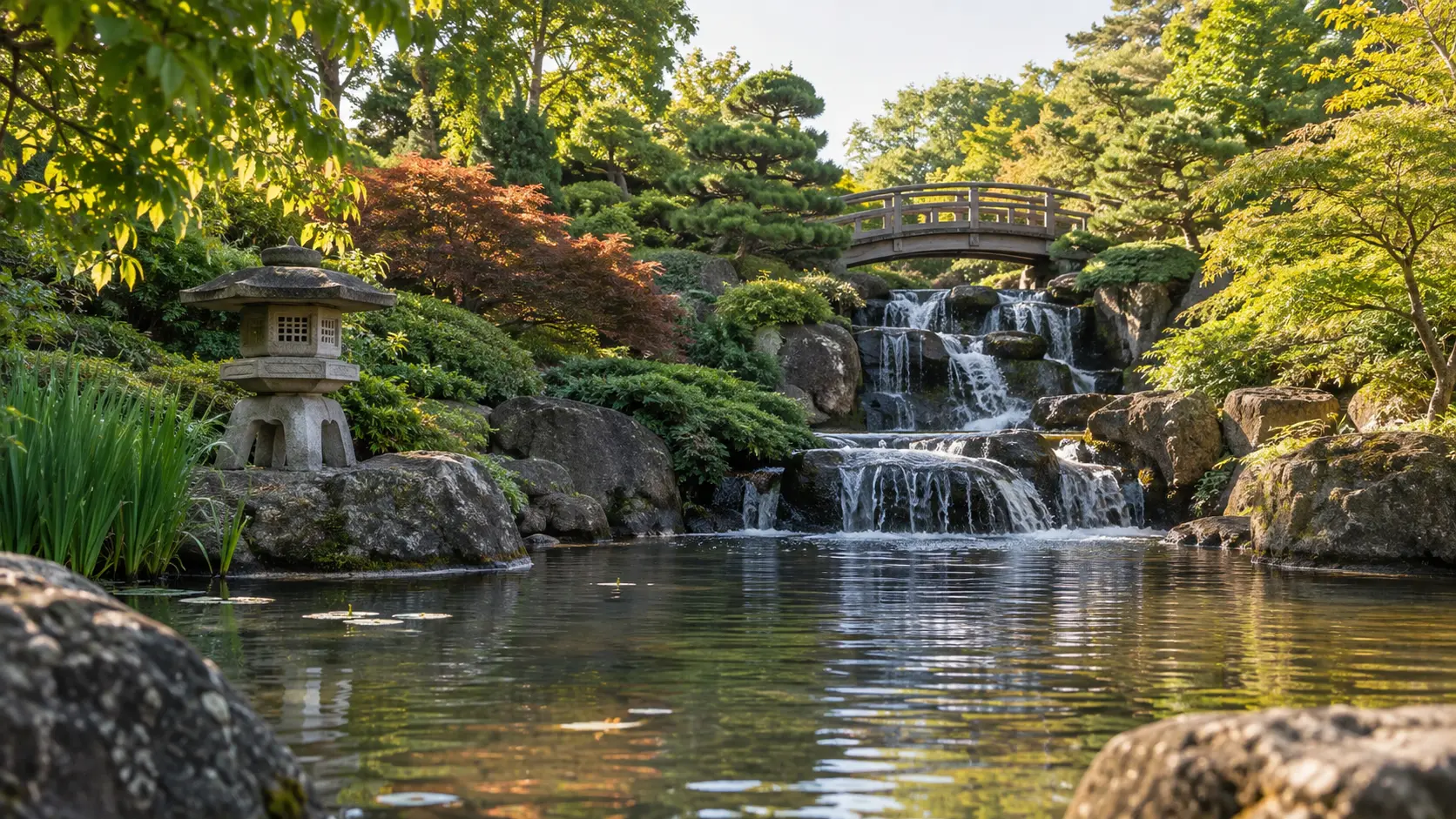
Start at Anderson Japanese Gardens when it is open for general admission. The 12-acre garden uses ponds, streams, waterfalls, stone, bridges, plants, and built structures to create a slow walking experience that rewards attention.
This should be the anchor, not a quick lap before the “real” sightseeing. Allow about 90 minutes to two hours, and give yourself permission to sit instead of treating every path like a race.
Check the garden’s official visitor information before arriving because general hours, admission, special events, and seasonal access can change. Tickets are typically sold at the admissions counter, but current instructions should control your plan.
The garden asks visitors to stay on paths, keep voices low, and bring only bottled water into the grounds. Pets are not allowed except qualifying service animals, and posed photography has different rules from casual snapshots.
Those policies tell you what kind of visit this is. Anderson is peaceful because visitors are expected to protect the atmosphere, so it is not the right stop for a group that wants to run, climb, picnic beside a waterfall, or stage an elaborate photo session.
During one visit with a friend, we rounded a bend to the sound of water and both stopped talking without planning to. A few minutes later, she whispered that even unfolding the paper map suddenly felt loud, which still captures the garden’s effect better than any grand description I could write.
Eat beside the garden
Fresco at the Gardens serves breakfast and lunch beside the property, which can make the morning wonderfully simple. Restaurant hours and reservations are separate from garden admission, so check both rather than assuming one booking covers everything.
If you want a quiet adult day, a meal here before or after the garden is appealing. Families eager for dinosaurs may prefer to keep breakfast quick and save lunch for the museum district.
Do not force the restaurant into the itinerary just because it is convenient. Rockford has enough independent food options that the better choice is the one matching your budget, dietary needs, and timing.
Choose Burpee Museum or Discovery Center
After the garden, choose one substantial indoor attraction rather than collecting admissions. Burpee Museum of Natural History is my first pick for dinosaur fans, science-minded adults, and families with children who can spend time looking closely at exhibits.
Burpee’s best-known resident is Jane, a remarkably complete young tyrannosaur discovered by a museum field crew in Montana. The science around Jane’s classification has evolved, which makes the exhibit a useful example of how evidence can change paleontologists’ conclusions rather than a frozen story with no debate.
Use the museum’s Jane exhibit page for the latest interpretation, then check current admission and hours before visiting. Give Burpee roughly two hours if the fossil galleries are your main reason for coming.
Discovery Center Museum, next door, is the better choice for children who learn through hands-on play and experiments. Trying to do both museums thoroughly after the garden can exhaust younger visitors, so pick according to the group rather than buying a larger itinerary than you can enjoy.
Choose Midway Village for Rockford’s local story
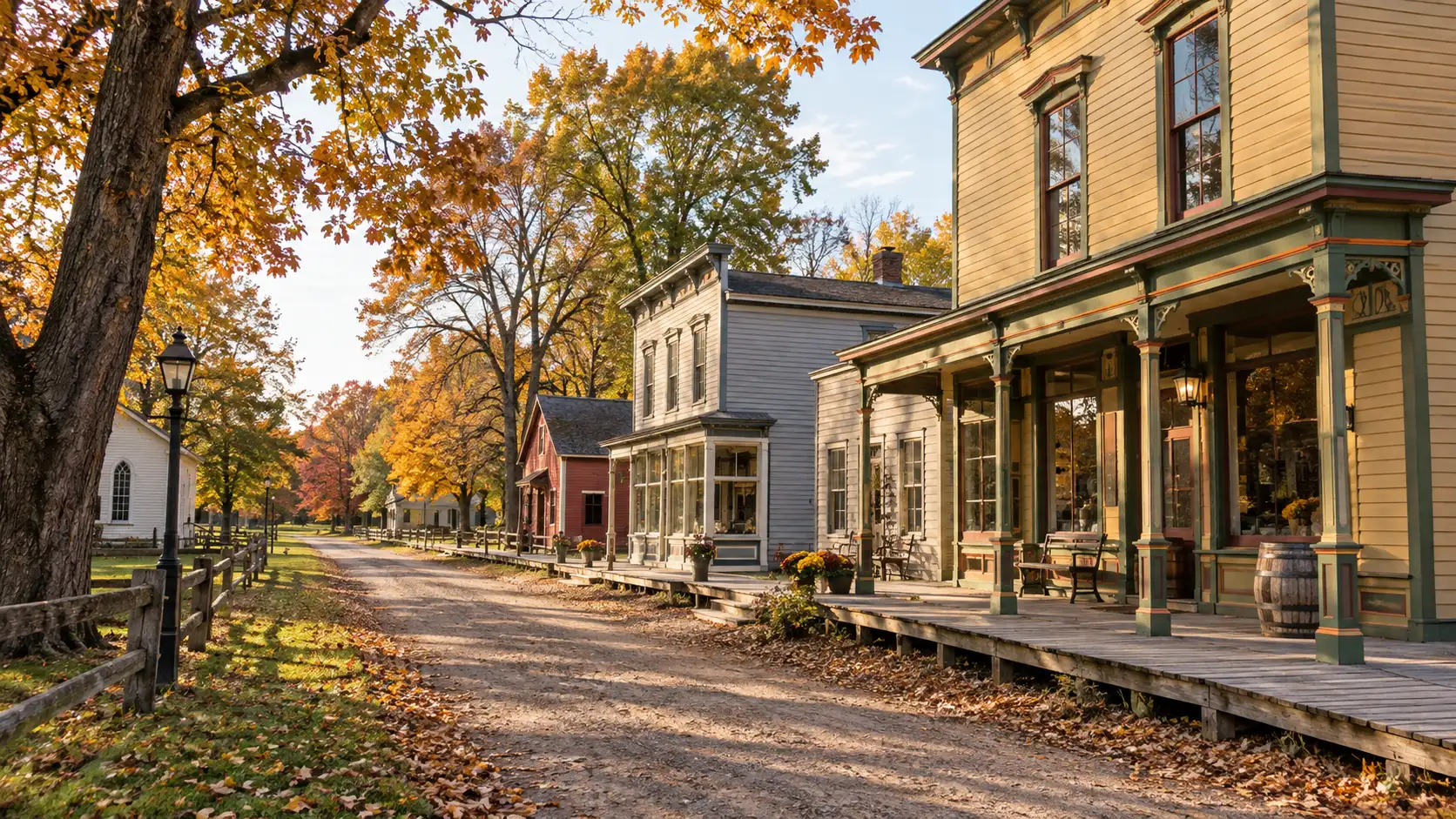
Midway Village Museum is the better history choice when immigration, industry, and daily life interest you more than fossils. Its main museum is open year-round, while access to the 13-acre Victorian Village and guided experiences follows the museum’s current schedule.
Give it its own two-hour block instead of squeezing it in after both riverfront museums. The preserved village streets pictured later in this guide make the most sense once you know this is a living-history campus, not an old neighborhood you can casually drive through.
Walk the Rock River and see Nicholas Conservatory
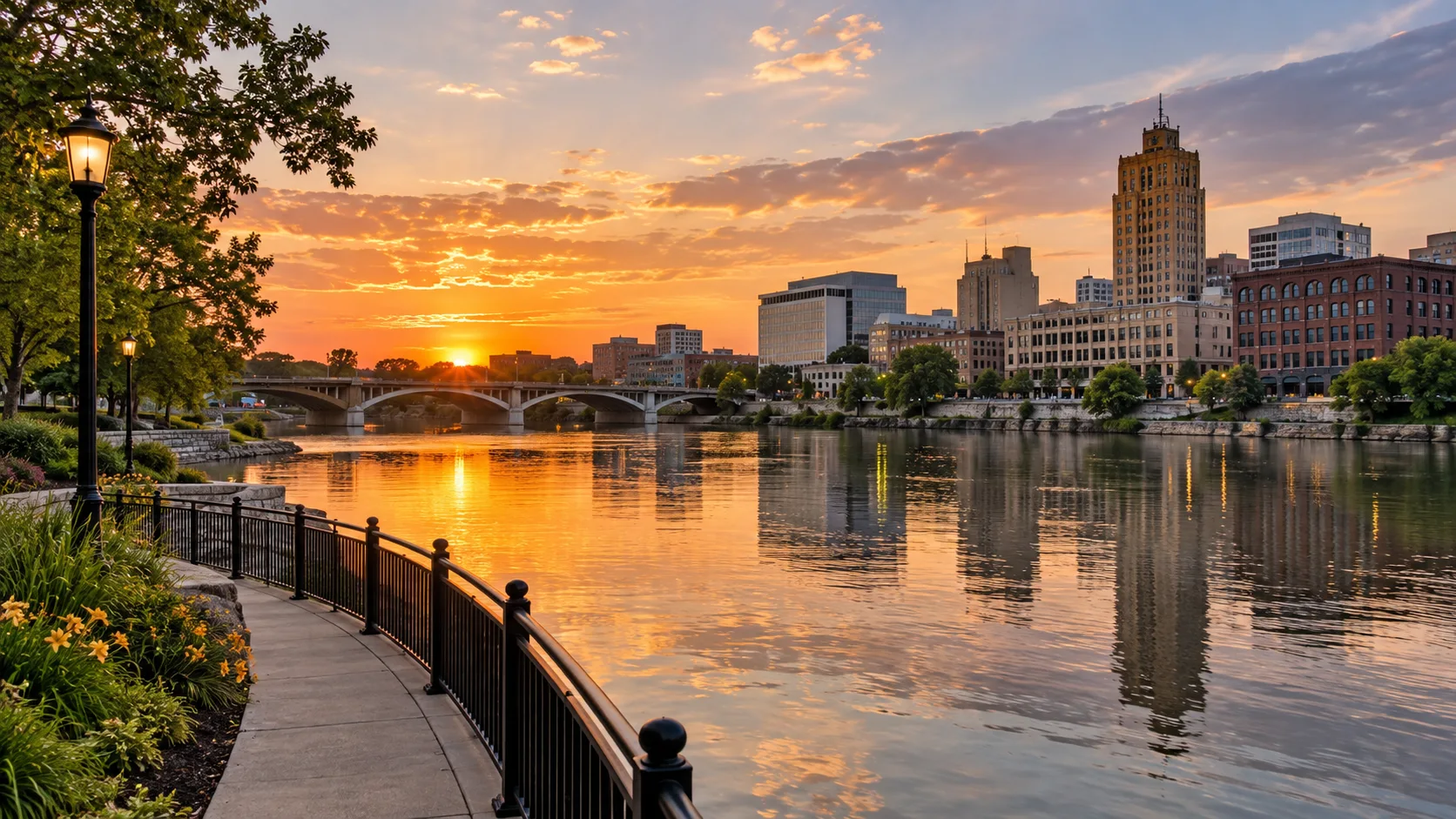
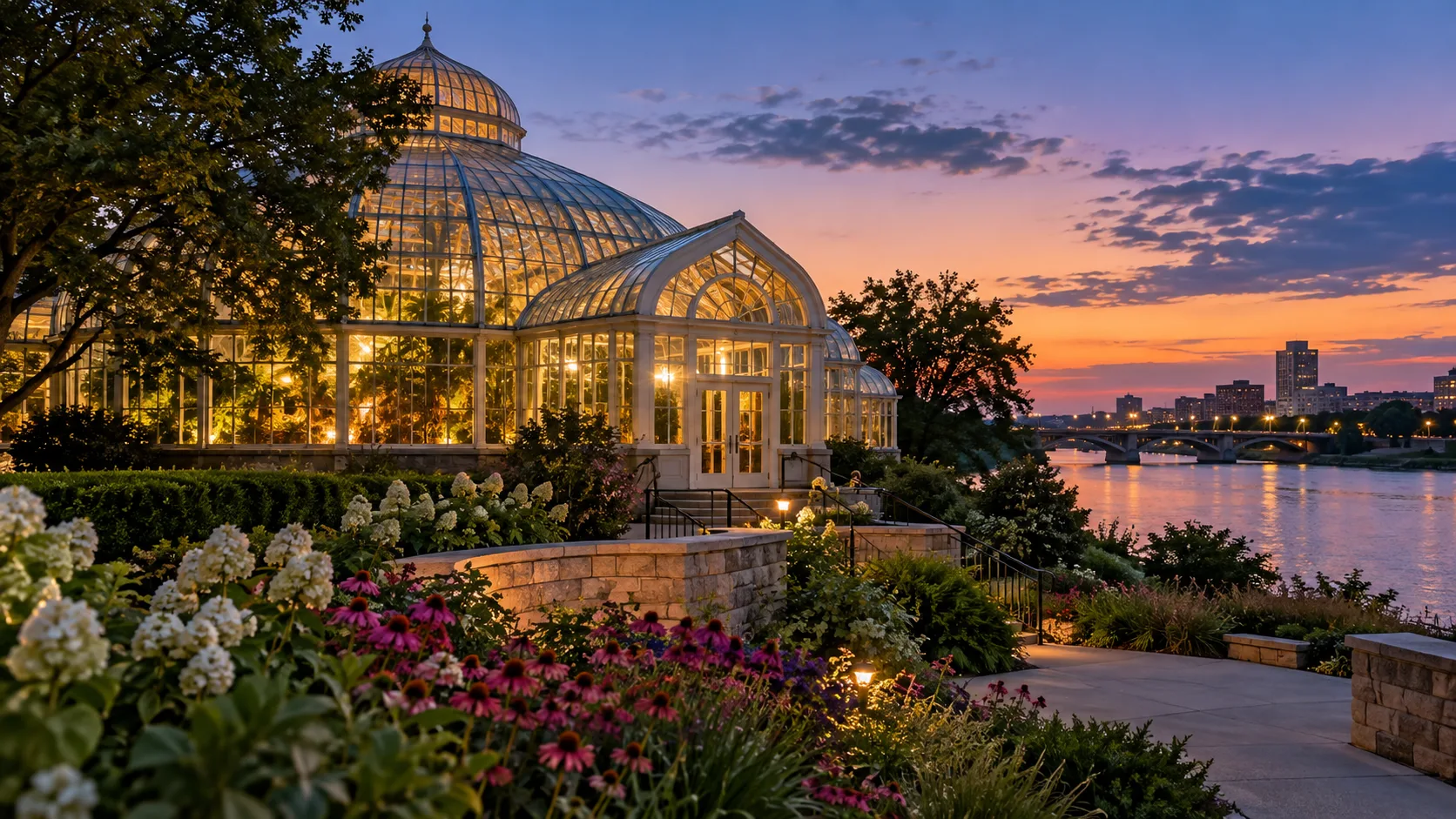
Finish around the Rock River and Sinnissippi area if the weather is pleasant. Nicholas Conservatory and Gardens provides a tropical indoor environment, while the surrounding riverfront gives you space to walk without another long drive.
Check the official Rockford gardens overview for current visitor details, then confirm hours and admission directly with the conservatory. Seasonal displays can affect both crowds and the amount of time you will want inside.
If you already spent two slow hours at Anderson, the conservatory may feel like too much plant-focused sightseeing. In that case, choose a riverfront stroll, downtown coffee, or an early dinner instead.
I have made the mistake of stacking the conservatory immediately after a long garden visit because both looked conveniently close on the map. By the second collection of beautiful plants, my attention was gone, so I now put a museum, meal, or river walk between Rockford’s garden-focused stops.
Explore Rockford’s local food and downtown
Rockford has enough dining around downtown and established neighborhoods to justify staying through an early dinner. Choose somewhere near your final activity so the day does not end with unnecessary backtracking.
I would look for a locally owned restaurant with straightforward parking and a menu everyone will actually enjoy. This is not the moment to cross town for a viral dish after your group has spent six hours walking.
For current neighborhoods, restaurants, and event listings, use the official GoRockford visitor site. Treat business hours as date-specific, especially on Sundays, Mondays, holidays, and event nights.
The outdoor alternative: Rock Cut State Park
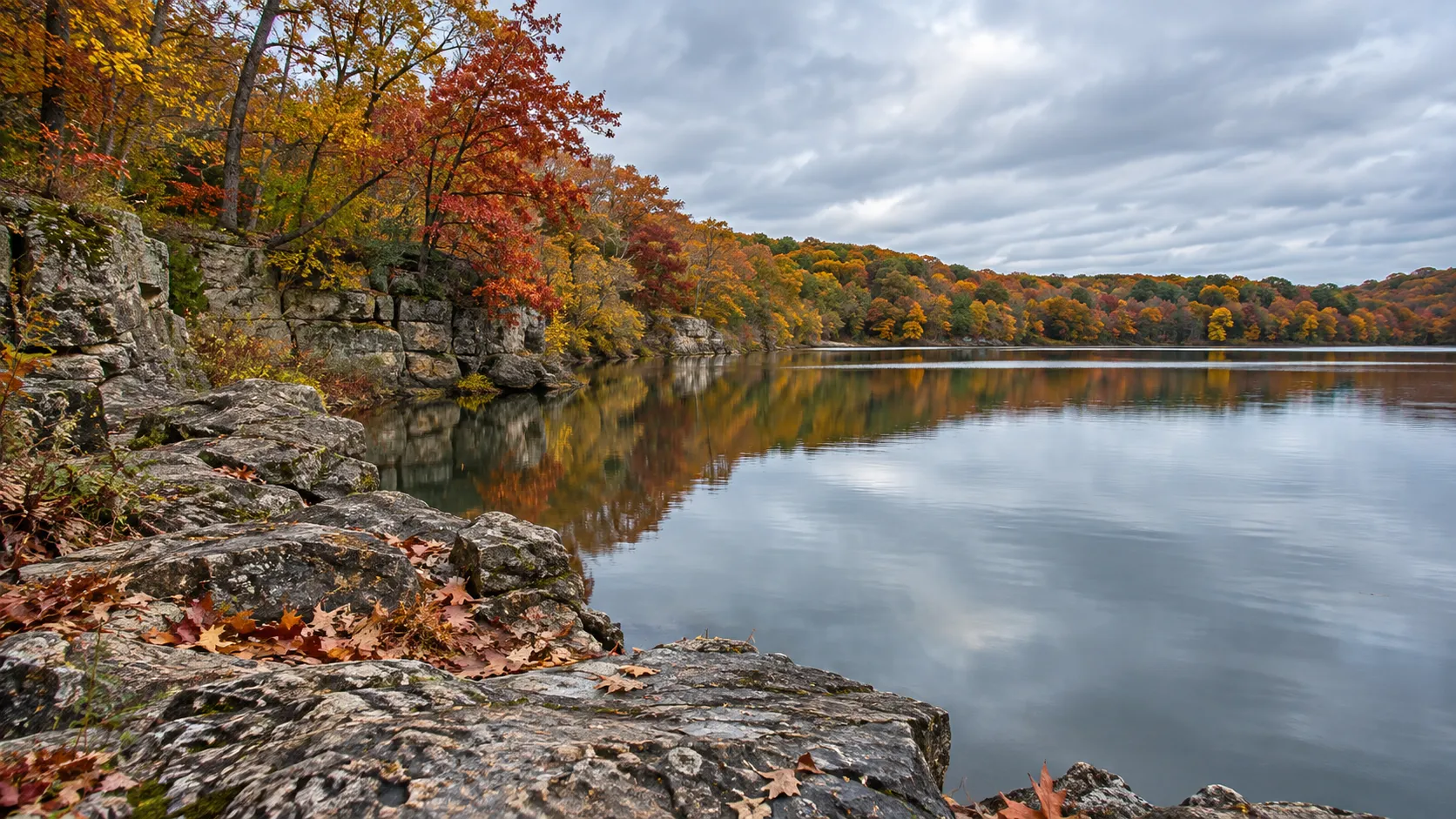
If your group would rather hike than visit museums, build the afternoon around Rock Cut State Park north of the city. The park covers 3,254 acres and contains Pierce Lake and Olson Lake, plus trails for hiking and other designated uses.
The Illinois DNR’s Rock Cut page lists current closures, activities, and park information. Trail uses vary by color and season, so download the map and follow signs rather than assuming every path welcomes every activity.
Rock Cut is an alcohol-free park, including the campground, and that rule is enforced. Seasonal concessions, rentals, beach access, and winter services should be verified before you make them essential to the day.
The park also has several paved routes and accessible facilities, including designated parking, restrooms, and fishing access in specific areas. Visitors who need a fully accessible outing should use the Illinois DNR’s detailed accessibility information to select the right lot and route.
I would not combine a long Rock Cut hike, Anderson Japanese Gardens, Burpee Museum, and downtown into one day. Choose Anderson plus a city attraction, or choose Anderson plus a moderate park outing if outdoor time matters most.
How to shape your Rockford visit
For couples: Start with breakfast and Anderson Japanese Gardens, add an easy riverfront walk, then finish with dinner. This version favors conversation and atmosphere over museum quantity.
For families with young children: Choose Discovery Center as the main indoor stop and use a park or riverfront area for movement afterward. Anderson works only if the children can respect its quiet pace and garden rules.
For dinosaur fans: Pair Anderson with Burpee and allow the museum enough time to be more than a gift-shop dash. Skip a second museum unless the entire group is still engaged.
For outdoor travelers: Use Rock Cut as the anchor and add one shorter city stop. My Southern Wisconsin hiking guide offers more nature-focused ideas if you are continuing north through the region.
For a rainy day: Choose Burpee or Discovery Center, then add Nicholas Conservatory and an unhurried meal. Confirm that any special exhibit or timed event you want is actually operating.
Parking, tolls, and budget
Driving is the most practical way to move among Rockford’s gardens, museums, downtown, and Rock Cut State Park. Save the addresses for each chosen stop before setting out because the city covers a larger area than the compact attraction list makes it seem.
Depending on your route, you may encounter Illinois toll roads or toll-related navigation choices. Check the route before departure, make sure your plate or transponder arrangement is understood, and do not wait for a surprise notice to learn how payment works.
Parking differs by attraction. Major sites generally provide visitor information for their own lots, while downtown parking requires attention to posted time limits, event restrictions, and payment instructions.
Your main costs will be admission to Anderson and one museum or conservatory, plus meals and transportation. Check exact prices directly because family packages, special events, donation days, and admission policies can change.
A cheaper Rockford day is easy to build around a riverfront walk, public art, and Rock Cut State Park, with one paid anchor. A more expensive version adds multiple admissions and a sit-down meal, but more tickets do not automatically create a better day.
Accessibility and sensory considerations
Anderson Japanese Gardens is an outdoor landscape with paths, bridges, grades, and weather exposure. Contact the garden before visiting if someone needs a specific step-free route, mobility assistance, or certainty about current path conditions.
Burpee and the conservatory are better choices when you need climate control and a more predictable indoor surface. Special events can still add noise and crowds, so quieter visitors should avoid peak programming when possible.
Rock Cut offers accessible features, but not every trail or shelter has the same surface. Pick the exact facility from the official accessibility description instead of relying on a general claim that the park is accessible.
What I would skip in Rockford
I would skip trying to visit Anderson, Burpee, Discovery Center, Nicholas Conservatory, Rock Cut, and downtown in one sweep. That plan looks impressive on a list and feels like a series of parking lots in real life.
I would also skip Anderson if the garden is closed or your group cannot enjoy a quiet walking experience. Substituting a strong museum or longer park visit is better than forcing a rushed trip around one unavailable attraction.
Finally, do not treat Rockford as a lesser version of Chicago. Its appeal is that the best attractions are manageable, distinctive, and easier to combine in one day.
Best time to visit Rockford
Late spring through fall is best for a garden-centered trip because outdoor landscapes and riverfront time are at their strongest. Anderson’s operating season and special events should guide the exact date.
Summer brings long daylight and full outdoor options, along with heat and busier family attractions. Fall adds color at the garden and Rock Cut, but popular weekends can increase traffic.
Winter still works as a museum and conservatory day, with outdoor plans treated as optional. If road weather is poor, remember that Rockford will still be available on a safer weekend.
For a larger regional route, Rockford can fit into some of the planning ideas in my Upper Midwest road trip. For this outing, keeping it to one city is exactly what makes the day comfortable.
Off the Beaten Path: Local Finds Most Visitors Miss
Rockford’s biggest attractions deserve their reputation, but several smaller places reveal stories the standard garden-and-museum loop misses. Pick one based on your strongest interest and confirm its schedule before crossing town.
Laurent House for human-centered Frank Lloyd Wright design
Laurent House is a rare Wright home designed around the needs of a wheelchair user, with wider passages, low sightlines, and a flowing single-level plan. It is an unusually specific architecture stop because accessibility is part of the original design story rather than a later adaptation.
Public tours generally require advance reservations and begin at a separate visitor center with parking, so this is not a spontaneous exterior-photo detour. My sister and I kept noticing how the windows framed the landscape from a seated height, and that one detail made the house feel far more personal than a list of design terms.
Tinker Swiss Cottage for a guided local-history hour
Tinker Swiss Cottage is a distinctive 19th-century house filled with original family objects, unusual rooms, and Rockford history. Admission to the house is normally through a guided tour at set times, which makes it a focused alternative to a large museum.
Check the day’s tour schedule and special events before arriving because the grounds and interior do not operate like an always-open public park. The historic interior includes stairs and tight architectural features, so ask about the current accessible tour experience if anyone in your group needs it.
The Rockford Peaches Fan Trail
The Peaches Fan Trail connects Beyer Stadium, murals, and other locations tied to Rockford’s All-American Girls Professional Baseball League team. You do not need to complete every stop to appreciate the history, and Beyer Stadium plus one downtown mural makes a satisfying short version.
Map the exact stops before driving because the trail is spread across the city and some locations are active businesses or event spaces. My brother initially agreed to “one baseball stop,” then became the person navigating us toward the next mural, so I now leave room for a second stop without promising the entire trail.
Klehm Arboretum when you want trees instead of formality
Klehm Arboretum and Botanic Garden covers 155 acres and feels looser and more expansive than Anderson Japanese Gardens. A paved loop improves access to part of the property, while secondary paths and children’s areas make it a good choice for walkers or families who want more freedom.
Check admission, hours, trail conditions, and children’s water-feature operation before visiting because seasons change the experience. The site has its own parking, but allow more time than a quick garden stop if you plan to explore beyond the main paved route.
Frequently asked questions
Is Rockford worth visiting?
Yes, especially if one of its distinctive attractions genuinely interests you. Anderson Japanese Gardens and Burpee Museum can anchor a first visit, while Rock Cut State Park and the smaller local finds make it easy to shape a second day.
Can you visit Anderson Japanese Gardens and Burpee Museum in one day?
Yes. Allow roughly two hours for each, add a meal between them, and keep the evening flexible rather than booking a third major attraction.
Is Rockford good with kids?
Very much so, especially when Burpee or Discovery Center is the anchor. Match Anderson to the child’s ability to handle a quiet garden with stay-on-path rules.
Can I bring my dog?
Do not build the standard itinerary around a pet because Anderson does not allow pets other than qualifying service animals, and museums have their own restrictions. A dog-focused day is better centered on an approved outdoor area after verifying its current leash and access rules.
How many attractions should I choose?
Choose two anchors, then add a meal and one flexible walk or treat. That is enough to make Rockford feel substantial without turning the trip into an endurance contest.
Are Rockford’s attractions worth the trip?
Rockford succeeds because it offers attractions with real identities rather than a random collection of things to do. Start with Anderson, choose the museum or outdoor setting that fits your group, and let the Rock River or dinner provide a calm finish.
If a shorter Wisconsin town sounds better, browse my guide to the best Wisconsin cities for different trips. Choose Rockford when gardens, dinosaurs, and a manageable city day sound like the right combination.