Horicon Marsh from Madison: Trails, Wildlife and Visitor Guide
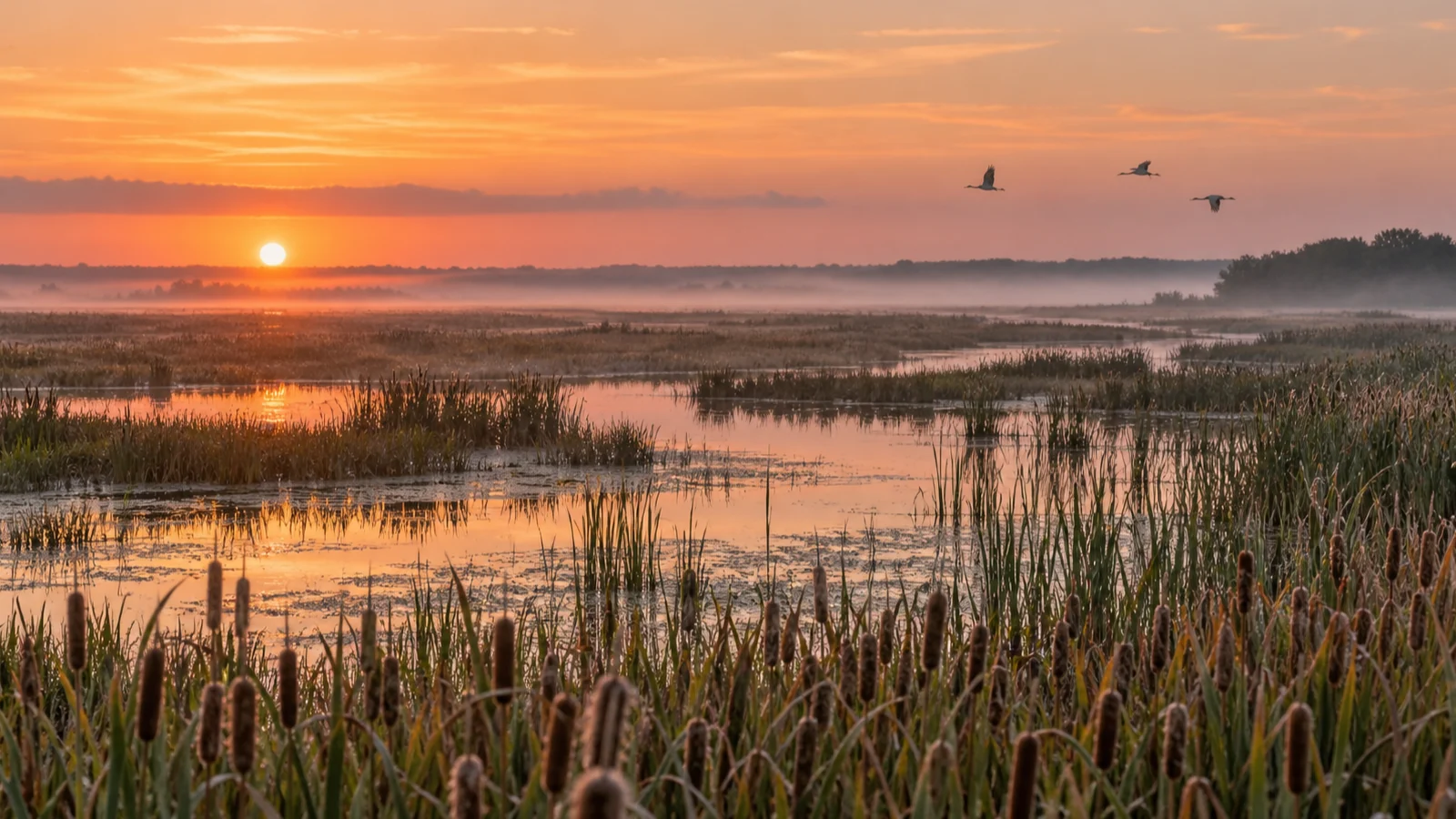
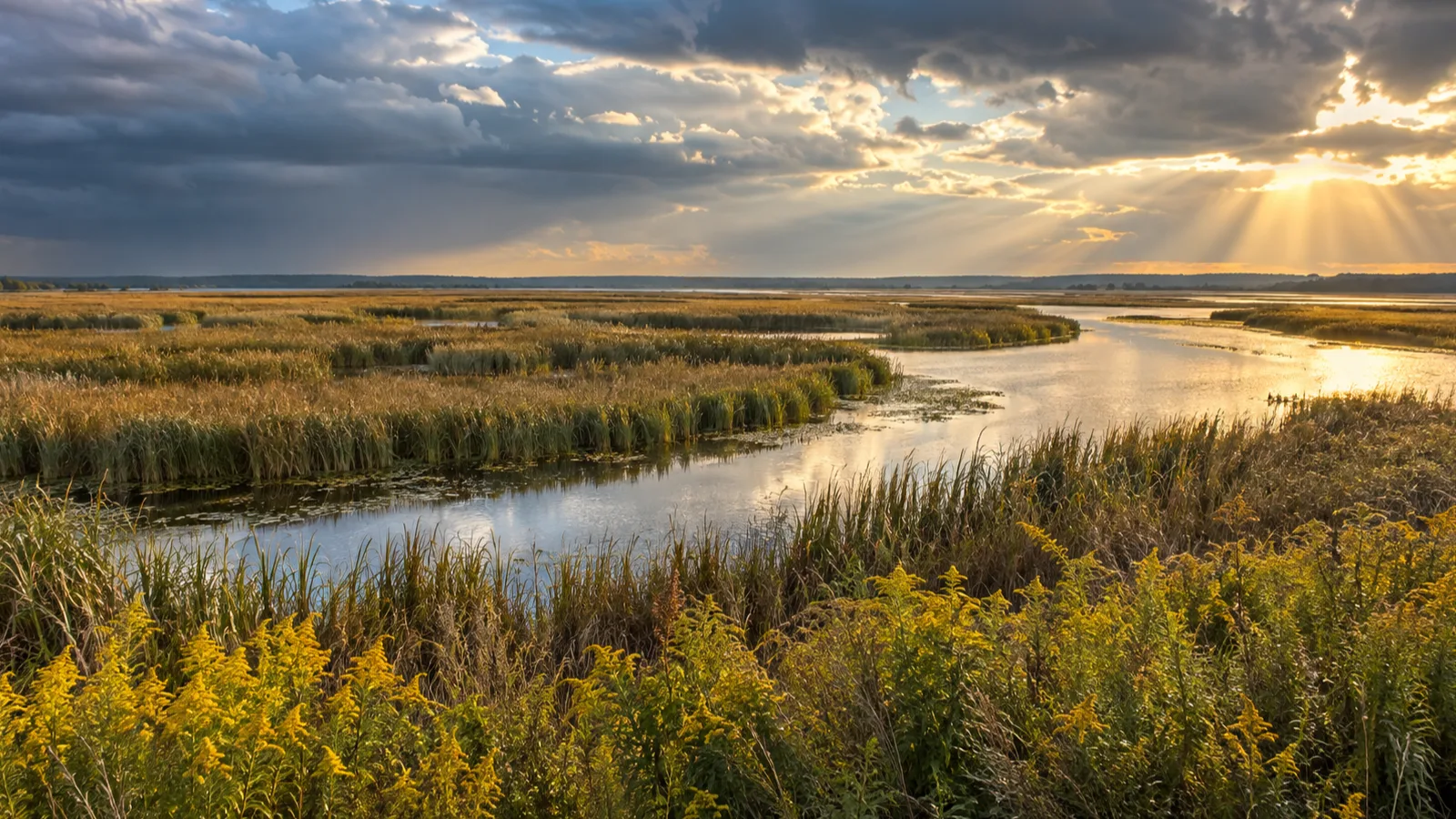
Horicon Marsh becomes most interesting when you stop moving: cattails rustle, a dark shape separates into a heron, and the enormous sky starts to feel like part of the habitat.
This guide explains how the state and federal sides differ, which trails and overlooks deserve your time, and how to build a visit around the season.
Why Horicon Marsh is worth visiting
Horicon Marsh is especially rewarding if you enjoy birding, easy walks, nature photography, or a quiet escape into a vast wetland landscape. Cattails, shallow water, prairie, and an enormous sky make the marsh feel wonderfully removed from the towns and highways around it.
The marsh covers about 33,000 acres and is divided between the state-managed Horicon Marsh State Wildlife Area in the south and the federally managed Horicon National Wildlife Refuge in the north. That division matters because each side has different visitor centers, trails, road access, and rules.
I recommend using the southern Education and Visitor Center as the base for exhibits, southern trails, and Palmatory Street Overlook. Add the federal refuge’s auto tour and Egret Trail when you have at least half a day and want the most varied visit.
Horicon also fits neatly into a larger Wisconsin trip, but it deserves more than a quick roadside glance. If you are comparing other outings, my guide to Wisconsin day trips by starting region helps match the destination to your available time.
How long to spend at Horicon Marsh
Two hours works as a focused sampler of one side: pair the southern visitor center with a nearby trail, or choose the northern TernPike auto tour and Egret Trail. It is not enough for a relaxed visit to both management areas.
Plan about four hours to combine one southern stop with the auto tour and floating boardwalk. Six to seven hours works best for two walks, slow wildlife viewing, a picnic, and both sides of the marsh.
Birders and photographers may want longer because sightings decide the pace. Families and casual visitors usually enjoy fewer stops with more time at each one.
Getting to Horicon Marsh and choosing the right entrance
Horicon Marsh spreads between Horicon, Mayville, and Waupun, and most visitors need a car to move between its state and federal sections. The southern Education and Visitor Center is on Highway 28, while the northern refuge sites cluster around Headquarters Road and Highway 49.
From central Madison, the drive to the southern center usually takes about 1 hour 10 minutes. The two main visitor centers are roughly 20 minutes apart, a transfer worth including when you plan both sides.
Set your first destination by name rather than navigating to the marsh in general. Start south for exhibits and nearby trails, or start north when the auto tour and Egret Trail are your priorities.
Best places to visit at Horicon Marsh
Horicon Marsh Education and Visitor Center
Begin on the southern side at the Horicon Marsh Education and Visitor Center, the large stone-and-timber building above the marsh on Highway 28. Parking and entry to the building are free, while the indoor Explorium has a separate admission charge.
Spend 20 to 30 minutes getting oriented, looking through the marsh-viewing windows, and checking which trails or roads have seasonal restrictions. The lobby, wildlife displays, gift shop, restrooms, and outdoor overlook make this a useful first stop even if you skip the paid exhibit.
Families and anyone visiting in poor weather may want another 30 to 40 minutes for the Horicon Marsh Explorium. Its interactive exhibits explain how glaciers, people, water management, and wildlife shaped the marsh, but I would not let it replace outdoor time on a clear day.
Look up the visitor center’s seasonal schedule before departure. If the building is closed, use the outdoor trails and viewing areas that remain open.
Indermuehle Island and Bachhuber Flowage trails
The trails descending from the Education and Visitor Center provide your first close look at the southern marsh. Choose a short loop that matches conditions rather than trying to collect every trail name on one visit.
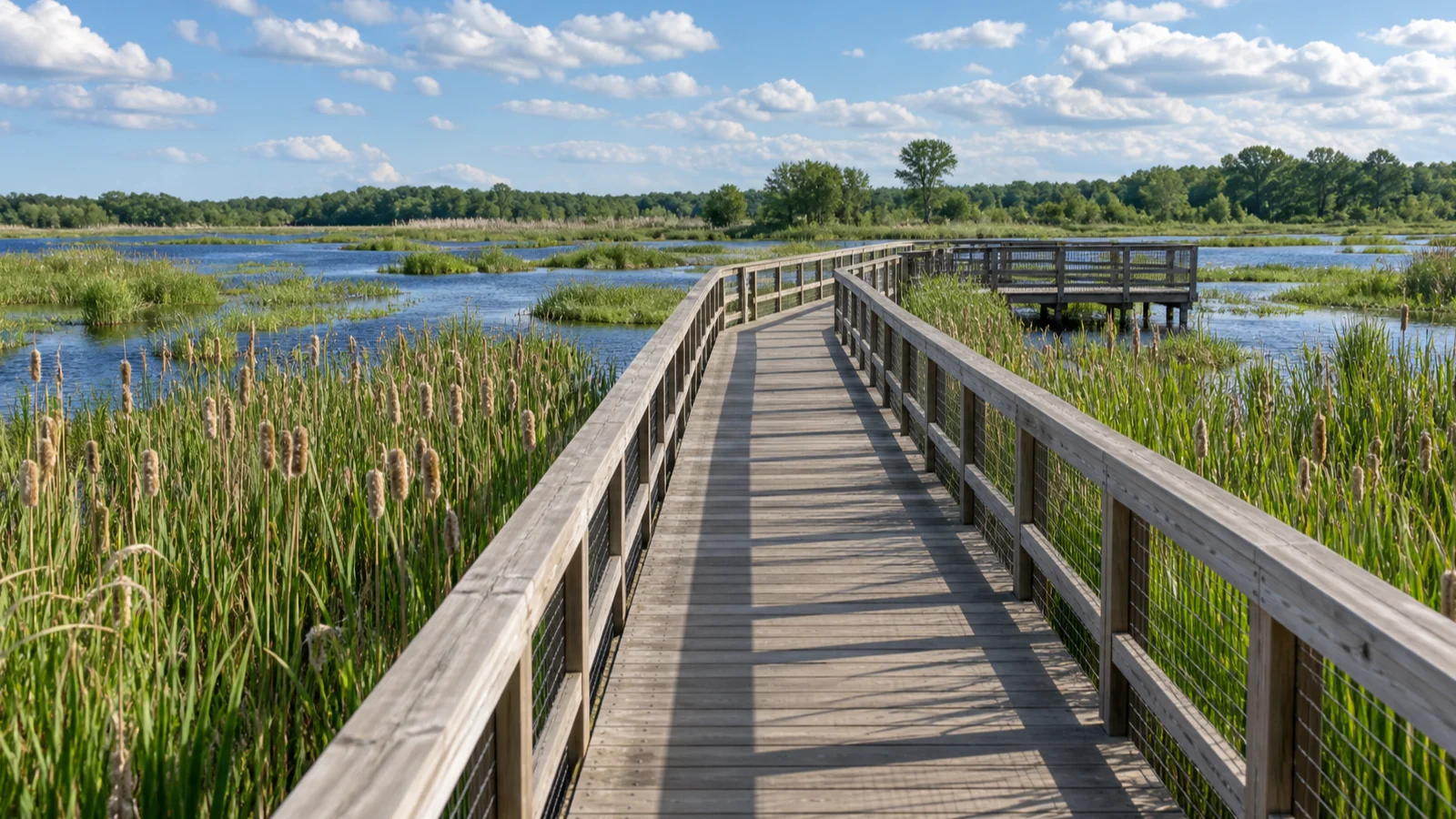
Indermuehle Island is the more satisfying choice for most first-time visitors because its boardwalk and wooded island provide variety within a manageable walk. The grade down from the visitor center means the return is uphill, so save some energy and carry water.
Bachhuber Flowage is useful if you want more open wetland views and birding time. Trail surfaces can be wet, muddy, snowy, or buggy depending on the season, and a pair of dry shoes in the car is a wonderfully unglamorous form of trip planning.
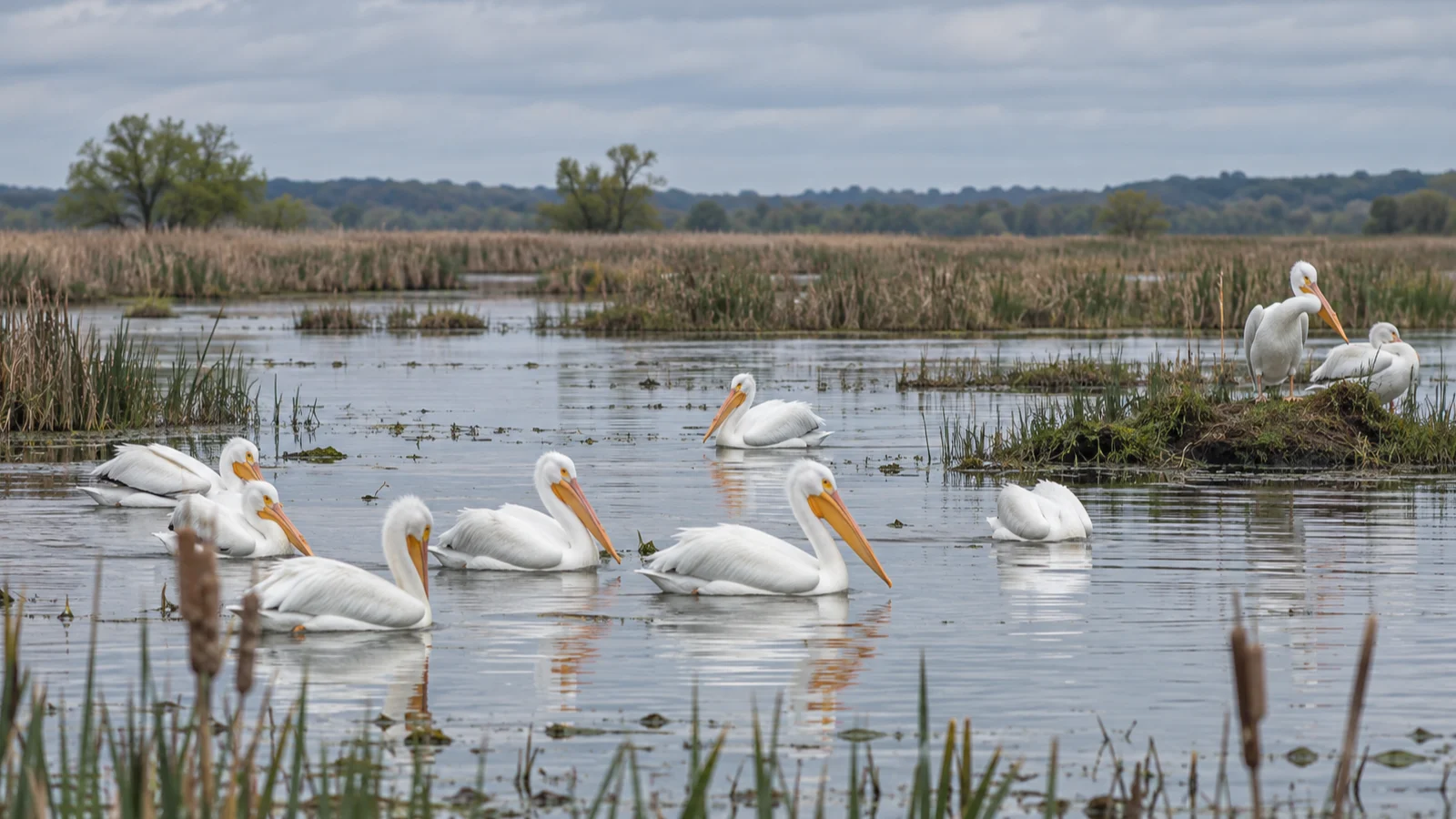
Walk quietly and pause at openings rather than pushing for mileage. Horicon rewards slow scanning because muskrats, turtles, herons, egrets, ducks, pelicans, and raptors often appear after you have stopped moving.
If hiking is the main reason for your trip, compare this walk with the routes in my guide to the best hikes in southern Wisconsin. Horicon is strongest for wildlife and wetland scenery, not steep climbs or dramatic rock formations.
Palmatory Street Overlook
Drive into Horicon and follow signs toward the Palmatory Street Overlook on the marsh’s southeastern edge. The elevated viewpoint gives you a wider sense of scale than the lower trails and is a good place to use binoculars.
Allow 20 to 30 minutes unless birds are especially active. The overlook is most rewarding in soft morning light or later afternoon, while the exposed view can feel hot and bright around midday.
My brother and I once watched a dark shape across the marsh for several minutes before binoculars revealed our “eagle” was a very committed dead branch. I have carried binoculars here ever since, partly for the birds and partly to protect our dignity.
This is also a smart stop for travelers who cannot manage a long trail. The overlook generally asks much less of your knees than the hill below the Education Center.
Picnic areas and nearby food
A picnic is the most efficient lunch because it keeps you near the marsh and makes the day’s timing flexible. Pack sandwiches, fruit, water, and something salty, then use a designated picnic area and carry out everything you brought in.
If you want a restaurant meal, Horicon has casual options in town, while Waupun offers more choices near the northern side of the marsh. Check opening days before building your route around one independent restaurant, since small-town lunch hours can be limited.
Keep lunch efficient when you are visiting both sides of the marsh. The federal refuge, auto tour, and best easy boardwalk sit north of the state visitor center and require additional driving.
Horicon National Wildlife Refuge
The northern half of Horicon is managed by the U.S. Fish and Wildlife Service. Use the official refuge visit page to choose between the federal visitor center on Headquarters Road and the TernPike auto tour off Highway 49.
If the visitor center is open and you want maps, exhibits, or the short orientation film, stop there first. If you already feel oriented, go directly to the auto tour so you have more time outside.
Do not assume that “Horicon Marsh Visitor Center” always means the same building. There are three separate visitor centers around the marsh, and this naming tangle is the easiest way to lose time.
TernPike auto tour
The paved three-mile auto tour is not about covering distance quickly. Pull into designated stops, turn off the engine, and scan the water edges, dead trees, and open sky before moving on.
The free route normally opens to vehicles from mid-March into late fall, although weather or hunting closures can interrupt that season. Use the refuge notice linked above when the driving loop is central to your plan.
Bring binoculars even if you do not consider yourself a birder. A great blue heron across a pool can look like a gray stick to the naked eye and become the best moment of the day once you can actually see it.
Stay inside your car where signs require it, park only in designated spaces, and never stop in the travel lane for a photograph. The refuge protects feeding and nesting habitat, so an exciting sighting is not permission to leave a public road.
Egret Trail floating boardwalk
The one-mile Egret Trail is my top short walk for a first Horicon Marsh visit. It combines smooth surfaces, a floating boardwalk through marsh habitat, and a return through oak woods without demanding a long hike.
The official Horicon refuge trail guide describes the route as asphalt, boardwalk, and crushed gravel with gentle grades. Winter visitors should use the refuge’s season-specific parking directions.
Dogs are not allowed on the Egret Trail floating boardwalk, even though leashed dogs are welcome in many other refuge public-use areas. If you brought a dog, have one adult stay with the pet or choose a different trail instead of leaving an animal in the car.
For a longer walk, add all or part of the Red Fox Trail or Redhead Trail. Red Fox adds prairie and forest on a mowed, non-accessible path, while the two-mile Redhead loop includes uneven ground, slopes, prairie, forest, and Rock River views.
Discovery Trail and secondary viewing points
If you still have energy, finish at the federal visitor center’s Discovery Trail or a signed viewing point such as Rockvale Road. Discovery Trail begins at the visitor center and includes a crushed-gravel route, boardwalk, nature-play features, and accessible portions.
Skip the extra stop if your group is tired or wildlife has gone quiet in the heat. A relaxed departure is better than adding another path just because it appears on a map.
Horicon, Waupun, and Beaver Dam provide useful meal stops depending on your route and departure time. If you enjoy building several nature stops into a longer vacation, these Wisconsin road-trip routes offer more realistic combinations than attaching Horicon to a distant attraction.
Best time to visit Horicon Marsh
Spring and fall are the headline seasons because migration brings large numbers and varieties of birds. Those periods also bring changing trail access, hunters in designated areas, cool wind, mud, and busy festival or event weekends.
Late spring is excellent for green landscapes, wildflowers, active nesting areas viewed from permitted routes, and comfortable walks before summer heat peaks. Mosquitoes and ticks can already be active, so repellent and a post-walk tick check belong in the plan.
Summer offers the broadest mix of hiking, paddling on the state side, and road access, but midday can be hot and buggy. Start early, prioritize shaded or exposed walks according to the forecast, and use the visitor centers during the warmest part of the day.
Fall can be spectacular for migration and golden marsh color. It is also when public access may change around hunting seasons, so read posted signs and check the refuge rules and closures before choosing a trail.
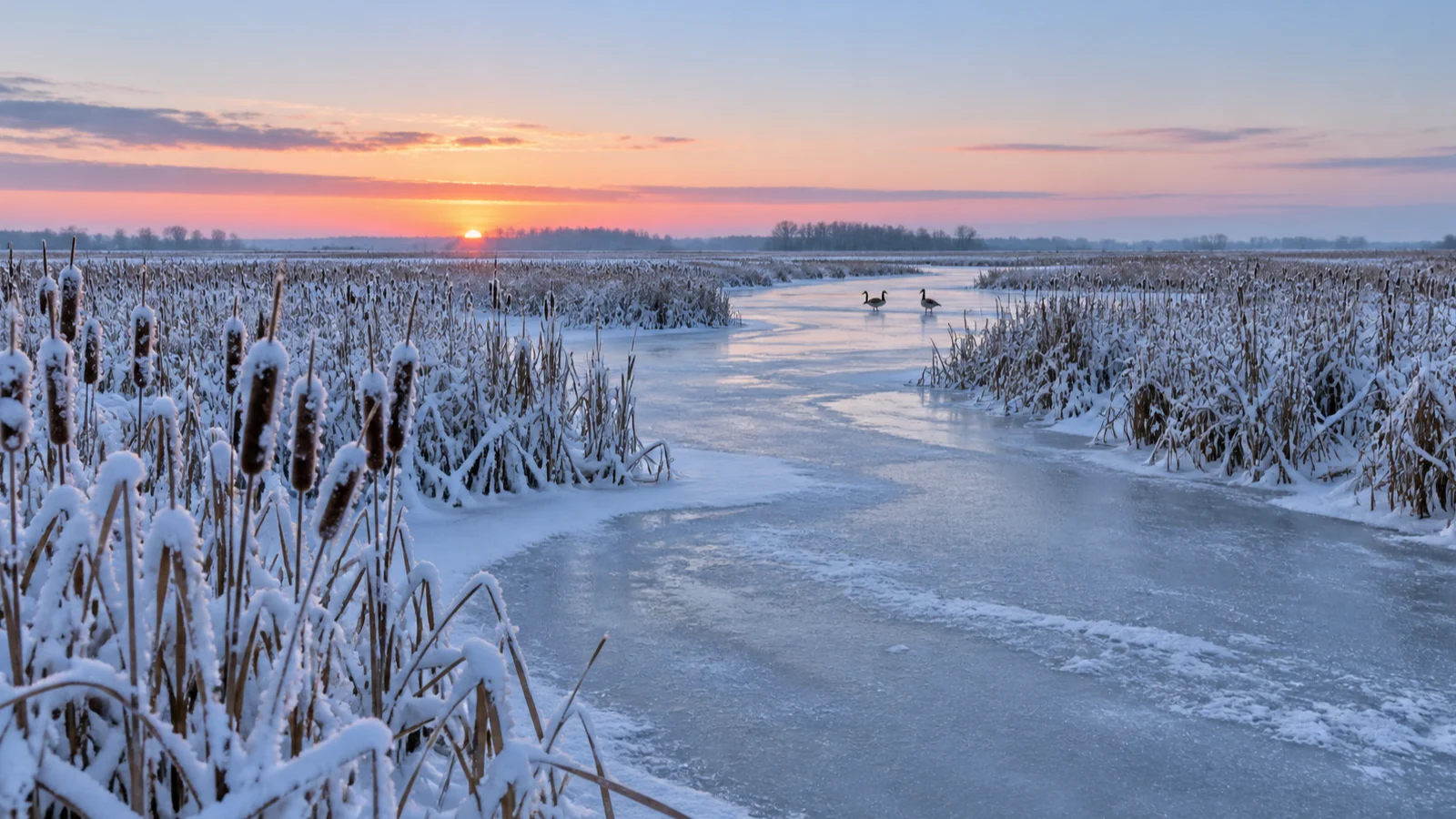
Winter is quiet and beautiful, with opportunities for hiking, snowshoeing, and cross-country skiing when conditions cooperate. Visitor center schedules and parking access become more limited, and the auto tour closes to vehicles, so a winter visit needs a different plan.
Parking, admission, and practical costs
General admission to the federal refuge, the state visitor center lobby, outdoor overlooks, and most public trails is free. The Explorium charges admission, and special programs, rentals, or guided experiences may have their own fees.
Designated parking is available at the Education and Visitor Center, the federal visitor center, the auto tour, and major trailheads. Do not park along narrow refuge roads or block gates, even if another vehicle has already made that mistake look official.
Your main costs are gas, food, and optional exhibit or program admission. Horicon can be an excellent-value outing if you pack lunch and spend most of your time on free public routes.
What to bring for the day
- Binoculars, ideally one pair per adult who is genuinely interested in wildlife
- Refillable water bottles and a picnic or trail snacks
- Walking shoes that can handle gravel, damp grass, and mud
- Insect repellent, sunscreen, and a hat
- A light rain jacket or wind layer
- A phone charger or power bank for navigation between sites
- A printed or downloaded map in case cellular service is inconsistent
- A small trash bag so packing out lunch is easy
A long camera lens is fun but not required. Binoculars usually improve the experience more than trying to turn every distant bird into a phone photograph.
Accessibility and low-mobility planning
The Education and Visitor Center and the federal refuge visitor center provide the easiest indoor orientation and marsh views. The TernPike auto tour also lets travelers experience several habitats with limited walking when the route is open to vehicles.
Egret Trail has smooth, generally level asphalt, boardwalk, and crushed-gravel surfaces, while Discovery Trail includes an accessible crushed-gravel and boardwalk route. Ask the appropriate visitor center about any feature that is essential to your visit.
Indermuehle Island and longer mowed trails may involve slopes, uneven ground, or muddy sections. I would build an accessible day around the state visitor center, Palmatory Street Overlook, auto tour, Egret Trail, and federal visitor center rather than forcing a difficult loop.
Bringing dogs to Horicon Marsh
Leashed dogs are welcome in many public-use areas, but rules differ between the state and federal sides. On the federal refuge, dogs are specifically prohibited from the Egret Trail floating boardwalk and must remain leashed elsewhere.
Bring water, waste bags, tick protection, and a backup plan for any dog-restricted stop. My broader pet-friendly trip planning guide explains why shade, surface temperature, and rest breaks matter more than squeezing every attraction into the day.
On a later visit with my Aussiedoodles, I used a dog-friendly refuge route and saved Egret Trail for another trip. That simple switch was much easier than asking two fluffy dogs to understand why the most interesting-looking boardwalk was off limits.
Never leave a dog in the car while you walk the boardwalk or tour an exhibit. If Egret Trail is a priority, visit without a pet or travel with another adult who is happy to trade turns.
Off the Beaten Path: Local Finds Most Visitors Miss
Bud Cook Hiking Area
Bud Cook Hiking Area is a quiet federal-refuge alternative off Point Road, with two mowed trails and an observation area. It suits repeat visitors, walkers who want fewer people around them, and anyone more interested in prairie edges and patient wildlife watching than a polished boardwalk.
The year-round mowed paths can be wet, uneven, or steep enough to challenge wheels and unsteady walkers. Bring insect protection, and choose Rockvale instead after heavy rain.
Rockvale Road Viewing Point
This small viewing stop is one of the marsh’s best low-effort surprises. An observation platform and spotting scope let you scan open water and wetland without committing to a hike, making it especially useful for older travelers, young children, photographers carrying heavy gear, or a breezy shoulder-season visit.
Treat it as a focused 15- to 30-minute pause rather than a major attraction. Park only in the designated area, keep clear of the road, and remember that vegetation and water levels can change what is visible.
Main Dike Road beyond the usual auto-tour stops
Main Dike Road rewards travelers who enjoy a slower, quieter look at the federal refuge. The full road is available to hikers and bicyclists year-round, while the eastern gravel portion generally opens to vehicles only during a seasonal window when weather and road conditions allow.
I prefer this route when the visitor center feels lively because even a short walk from a designated pull-off creates the spacious, wind-in-the-reeds feeling I come to Horicon for. Leave the western section for a dry day.
Marsh Haven Nature Center
Across Highway 49 from the northern refuge, nonprofit Marsh Haven Nature Center offers a smaller-scale introduction through nature displays, trails, and an observation tower. It is a smart fit for families who like hands-on interpretation, returning visitors who have already seen the main federal center, or anyone who wants a locally rooted stop.
Operations are seasonal and programs vary, so check its current calendar before building a drive around it. Use its own parking and allow about an hour for the exhibits and grounds, more if a scheduled program matches your interests.
What to skip on a first visit
Skip Old Marsh Road unless its limited seasonal opening matches your visit and you specifically want a longer bike or hike. The gravel road is generally open for hiking and bicycling in summer and a winter period, but it closes during critical migration and nesting periods.
Do not attempt every visitor center. The state Education and Visitor Center plus the federal refuge’s auto tour and Egret Trail create a complete first visit, while Marsh Haven Nature Center works better as an alternative or return-trip stop.
Skip paddling unless you have checked the launch, route, water, wind, safety requirements, and state-side regulations in advance. Boats are not permitted on the federal refuge, even though paddling is available in parts of the state wildlife area.
Finally, skip any plan that promises a specific species. Horicon offers excellent wildlife habitat, not scheduled performances, and a quiet morning with common ducks can still be more enjoyable than a frantic chase for one rare bird.
Who will enjoy this trip most?
Horicon is best for birders, photographers, families with nature-curious children, couples wanting an inexpensive outdoor day, and travelers who prefer easy walks to strenuous hikes. It also works well for mixed-mobility groups because the visitor centers, overlooks, and auto tour provide meaningful options beyond trails.
It is less suitable for anyone who needs constant entertainment, shopping, or a tightly scheduled list of attractions. The marsh becomes rewarding when you can spend ten quiet minutes watching one pool instead of asking what comes next.
Horicon Marsh visitor FAQ
How much time do you need at Horicon Marsh?
Two hours works for a focused sampler of one side, while about four hours gives most first-time visitors a relaxed look at both sides. Set aside six to seven hours for two walks, the auto tour, overlooks, slow wildlife watching, and lunch.
Is Horicon Marsh free?
General access to the refuge, visitor center lobbies, public overlooks, auto tour, and most trails is free. The Explorium and some programs or special activities charge separately.
Can you drive through Horicon Marsh?
Yes, the federal refuge operates a three-mile paved auto tour that is normally open to vehicles from mid-March into late fall, subject to weather and closures. Other refuge roads have their own schedules and rules.
Can you kayak at Horicon Marsh?
Paddling is available on designated waters in the state-managed southern portion, with routes and conditions that require advance planning. Boats, including kayaks and canoes, are not allowed on the federal refuge.
Are dogs allowed at Horicon Marsh?
Leashed dogs are allowed in many public-use areas, but not everywhere. The Egret Trail floating boardwalk prohibits dogs, and owners must follow the posted rules for the specific state or federal site they are using.
What birds can you see at Horicon Marsh?
More than 300 bird species have been recorded across the marsh, including waterfowl, herons, egrets, pelicans, cranes, songbirds, and raptors. The mix changes with migration, habitat, water levels, weather, and time of day.
Is Horicon Marsh good for children?
Yes, especially if you keep walks short and give children binoculars or a simple wildlife checklist. The Explorium, Discovery Trail nature-play features, auto tour, and floating boardwalk add variety without requiring an all-day hike.
How I would combine the highlights
For a first full visit, start at the Education and Visitor Center, take one southern trail, stop at Palmatory Street Overlook, then drive north for the TernPike auto tour and Egret Trail. For a shorter visit, choose either the southern visitor-center cluster or the northern auto-tour cluster instead of rushing between them.
Keep the plan flexible, because wildlife, weather, and seasonal access should decide where you linger. Horicon is at its best when you have enough structure to reach the right places and enough breathing room to stand still once you arrive.