What Time Should You Arrive at the Cruise Port?
Arrive at the cruise terminal during the arrival window assigned or selected for your sailing. I would plan the drive, parking, and baggage handoff around that appointment, with enough buffer that a normal traffic delay does not turn into a rush.
Getting there hours early does not guarantee early boarding, and the ship’s departure time is too late to use as your arrival target.

Find these three times before booking transportation
- Your terminal arrival appointment: when the cruise line wants you to enter the embarkation process.
- The final check-in or boarding cutoff: the last permissible deadline stated for your sailing.
- Scheduled departure: when the ship is expected to leave, which comes after the boarding deadline.
A boarding group can be a fourth piece of information. It controls when a group proceeds onto the ship, and it may not be the same thing as the appointment for reaching the terminal.
I would write those times in one note with the ship name and terminal. Keep the time zone clear if you are flying from somewhere else or checking the reservation while still at home.
Why the arrival window is the best starting point
Terminals need to handle departing passengers, arriving guests, luggage, security, and traffic within limited space. An arrival appointment spreads the workload across the day.
For a guest, its main value is giving the morning a clear target. It does not promise a particular wait, immediate access to the gangway, or that your cabin will be ready.
Royal Caribbean’s check-in instructions distinguish the selected terminal arrival time from the required final check-in deadline. I would follow the time in the reservation rather than a general claim that everyone should arrive at 10:30.
On Norwegian, the official cruise-preparation guidance explains when guests can reserve their pier arrival time. Different lines open that selection at different points before departure, so look it up while planning the trip.
If the system offers several appointments, choose one your transportation can reliably meet. I would take a slightly later window over an early one that depends on a flight landing perfectly.
Work backward from the terminal doors
Start with your selected arrival window and subtract the parts of the trip that happen before you reach the terminal entrance. Include the drive, the port gate, parking or drop-off, baggage handoff, and any shuttle connection.
Use the actual route at a comparable time of day when checking travel estimates. A Sunday morning sailing can have different traffic from a weekday afternoon, but special events and multiple ship departures can still change the drive.
I would include a separate allowance for uncertainty rather than pretending every step takes its best-case time. The right amount depends on the route, weather, and how easily you can change plans.
A direct taxi from a nearby hotel may need a modest cushion. A rental-car return followed by a shared shuttle needs enough time for a missed departure, loading bags, and the shuttle’s other stops.
My Florida cruise-port guide is useful when choosing an airport or hotel location. A hotel advertised for a departure city may still leave you with a substantial drive to the cruise terminal.

A sample arrival calculation
Imagine a noon-to-12:30 appointment, a hotel that is normally 25 minutes from the port, and a car that you will park in the terminal garage. Your plan needs to cover more than the 25-minute drive.
You might allow time for garage entry, unloading, finding a space, getting back to your bags, and walking to the terminal. Add a traffic buffer that suits the route, then choose the hotel departure time.
I would write the plan as a range rather than a minute-by-minute promise. If the route is running smoothly, you can pause in an appropriate place before entering the terminal process.
Do not wait in a vehicle lane, stop on a shoulder, or circle a secure port area just to hit the exact minute. Use a legal waiting area, your hotel, or a nearby business where you are permitted to stop.
This example is a planning method, not a recommendation that every passenger needs the same extra 30 or 60 minutes. A port with a remote lot and transfer bus can need much more time than a curbside drop-off.
If you are using a hotel shuttle
Ask when the vehicle actually departs, which ships it serves, and whether your booking guarantees a seat. “Shuttle available” can mean a scheduled service with limited capacity rather than a vehicle ready whenever you want it.
Confirm whether the price is per person, per room, or per trip. For a larger family, a direct vehicle may be worth comparing with several individual shuttle fares.
I would also ask how mobility equipment, a stroller, or oversized luggage is handled. A vehicle that cannot carry your equipment is not a workable transfer, even if its scheduled time looks ideal.
If the only shuttle reaches the terminal much earlier than your appointment, ask the cruise line or hotel about alternatives. Do not assume a hotel transfer automatically grants an exception to the line’s arrival policy.

If you are driving and parking
Choose the lot before sailing day and read its entry instructions. The port’s official garage, a nearby private lot, and a hotel parking package can have very different transfer arrangements.
For an off-site lot, check shuttle hours and the recommended check-in time at the lot itself. The start of the drive to the parking facility is not the same as the start of the final ride to the ship.
Decide whether your party should unload at the terminal first or stay together through parking. I would favor the simplest safe option for your group, especially if one adult would otherwise be left managing children and several bags.
Keep the parking confirmation and return instructions offline. It is easier to understand the pickup point before the cruise than while standing outside with luggage after disembarkation.
If you reach the port early
Look for staff directing early arrivals and ask where you should wait. Some terminals separate guests by appointment, and others may hold early guests outside or ask them to return.
Bring patience rather than treating another passenger’s exception as a rule. Conditions change from one sailing to the next, even at the same terminal.
I would avoid arriving hours early with a heavy carry-on and no food plan. A comfortable hotel lobby or nearby breakfast is a better place to wait if you still have that choice.
Early access benefits also need checking in the reservation. A suite, loyalty tier, or purchased boarding product may change the procedure, but the exact entitlement matters more than the label.
If you are running late
Contact the cruise line using the travel-day number in your documents as soon as the delay threatens your appointment or boarding deadline. Explain your location and realistic estimated arrival time.
Keep moving toward the correct terminal while following any updated instructions. Calling ahead does not guarantee that boarding will remain open or that the ship will wait.
If your appointment has passed but the final cutoff has not, ask where late arrivals should enter the process. Do not spend additional time hunting for an earlier queue that no longer applies.
I would not decide the situation is safe merely because a map shows the ship at the pier. Passenger manifests, security clearance, and gangway operations can close before departure.

Same-day flights need more than a short buffer
A flight arrival time is the time the aircraft is scheduled to reach the airport, not the time you will be in a vehicle heading for the ship. Add deplaning, baggage delivery, and the ground transfer.
A cancellation or missed connection can overwhelm any reasonable same-day cushion. If I am flying to a cruise, I would usually reach the departure area at least the day before, with extra time for a complicated route.
The State Department’s cruise guidance is also worth checking for the documents needed if your plans change abroad. A disrupted cruise itinerary can become an air-travel problem as well as a timing problem.
Read the specific terms if you bought flights or transfers through the cruise line. I would not describe every cruise-booked flight as an unconditional promise that the ship will wait.
Families and travelers who need assistance
Choose a window that works with medication, meals, and the group’s ability to wait. Being first onboard is a poor trade if it creates a difficult morning for a child or someone with limited stamina.
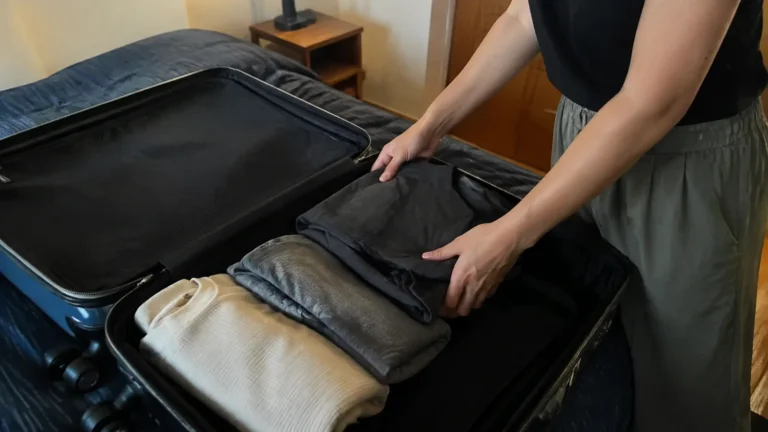
Pack the first afternoon separately from checked luggage. My cruise packing advice covers the essentials that should stay with you through the terminal.
Request needed assistance ahead of time and confirm where to meet staff. Do not deliberately arrive very late to avoid standing if that leaves little time to arrange the help.
For families planning their first sailing, my guide to cruises for kids can help with the wider ship choice. On arrival day, a familiar snack and a manageable bag often matter more than squeezing in one extra activity.
My final timing check
- Confirm the appointment and final boarding instructions in the current reservation.
- Verify today’s ship terminal instead of using a saved address from an older cruise.
- Include every transfer step between hotel checkout and the terminal doors.
- Check traffic and operational messages before leaving.
- Keep documents accessible so the buffer is not wasted reorganizing bags.
- Use the updated sailing notice if the line changes the arrival plan.
Should I choose the earliest available appointment?
I would choose it if I am already nearby and can arrive comfortably. It is less useful when the transportation is uncertain or the group would have to rush breakfast and checkout.
Can I arrive later to avoid all lines?
A later appointment may suit your plans, but it does not guarantee an empty terminal. Choose a permitted window with enough margin before the final cutoff, not an unofficial last-minute strategy.
What if different cabins have different arrival times?
Ask whether the group can enter together or adjust the appointments in advance. I would not separate a child from the responsible adult simply to follow two different reservation times.

The arrival time I would choose
I would select a window I can reach comfortably, then build enough margin into transportation to absorb an ordinary delay. Following that appointment is a better plan than racing for the first boarding group or aiming at the final cutoff.