Alicante Beaches: 9 Best City and Costa Blanca Picks
Alicante makes beach planning look delightfully easy, right until you discover that “Alicante beach” can mean the city, the province, or a cove more than an hour away. This comparison keeps the geography honest and helps you choose by sand, access, swimming, atmosphere, and actual travel time.
Which Alicante beach is best for you?
- Best all-around beach: Playa de San Juan
- Best without leaving downtown: Postiguet Beach
- Best smaller sandy beach: Albufereta Beach
- Best for sunset: Almadraba Beach
- Best for rocky coves and snorkeling: Cabo de la Huerta
- Best quieter long beach: Saladares-Urbanova
- Best with a dog: Agua Amarga
- Best full-day outing: Tabarca Island
- Best easy Costa Blanca extension: Muchavista Beach
Before ranking the beaches, check today’s water
A lovely photograph cannot tell you whether swimming is allowed this afternoon. Spain’s Ministry of Health publishes monitored bathing zones and current classifications through the official Náyade bathing-water system, while beach flags and lifeguard directions cover immediate sea conditions.
Treat those as two separate checks: water testing addresses sanitary quality, while the flag responds to waves, wind, currents, jellyfish, storms, and other same-day hazards. A Blue Flag is useful context, but it never overrides a red flag or a temporary closure.
The official Alicante beaches page links live sea status and seasonal lifeguard schedules. An empty tower does not prove the water is safe.
1. Playa de San Juan: best all-around Alicante beach
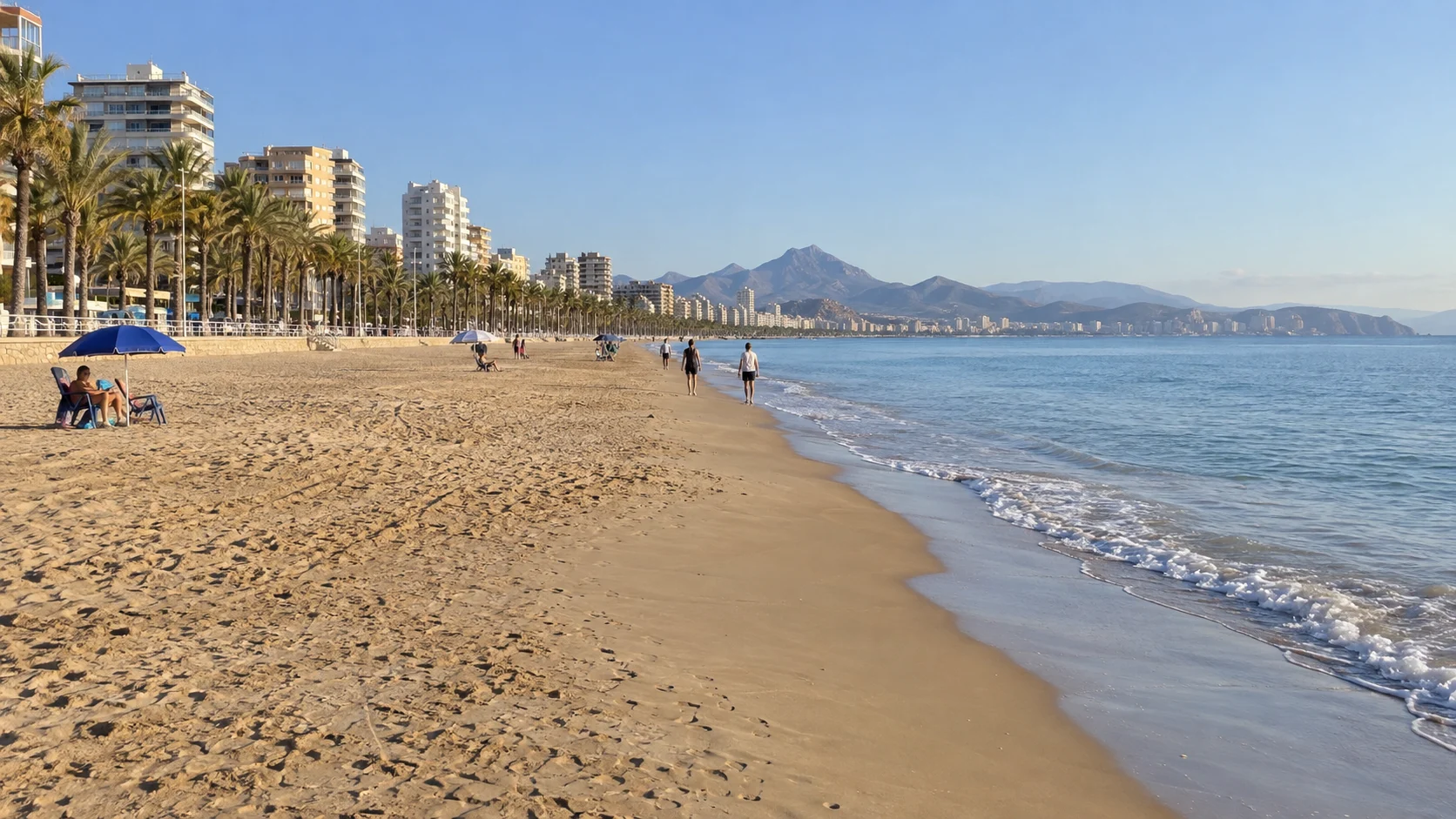
San Juan is the easy recommendation when you want a proper beach day: about 1.8 miles of fine golden sand, a broad shoreline, sports areas, playgrounds, and a restaurant-lined promenade. Its size gives groups room to spread out, although July and August still bring crowds.
TRAM lines 3, 4, and 5 serve different parts of the beach area. Check the official TRAM maps, because the right stop depends on your access point.
Summer services have included lifeguards, restrooms, nonmotorized rentals, and bathing assistance at a designated accessible access. Confirm the operating dates before relying on any staffed service, especially in late September or the shoulder season.
Best for: Families, active travelers, long walks, and anyone who wants sand plus lunch options. Tradeoff: It feels like an urban resort beach, not a secret Mediterranean hideaway.
2. Postiguet Beach: best for a city-and-sea day
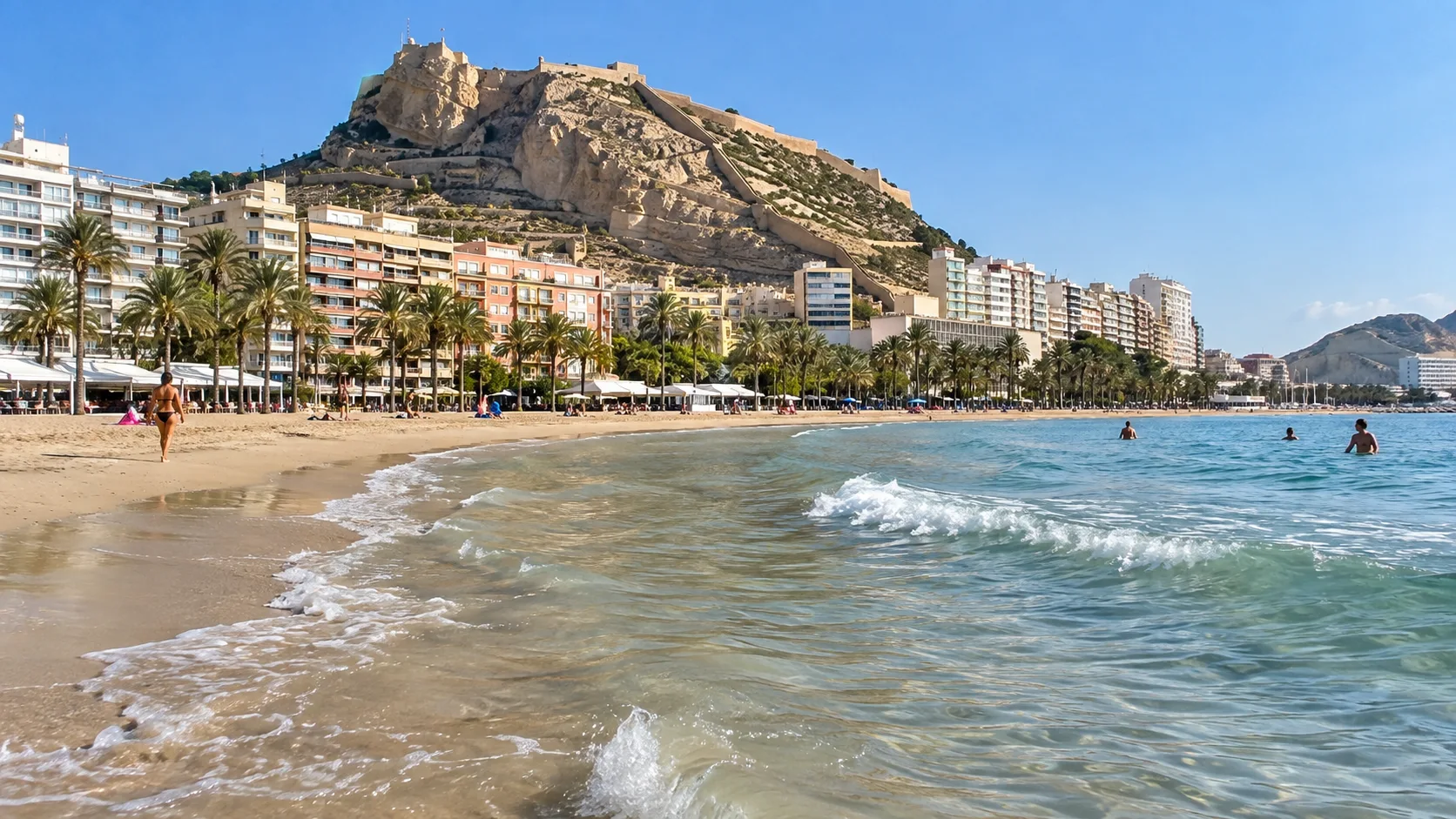
Postiguet sits below Santa Bárbara Castle beside central Alicante, so you can pair sand with the Explanada, old-town lanes, and a castle visit. The roughly 0.6-mile beach has fine golden sand, public restrooms, play and sports areas, and seasonal chair and umbrella rentals.
This is the sensible choice for a short visit, including many cruise or rail days, because you are not spending the morning commuting to your towel. The compromise is popularity, plus a more unmistakably urban backdrop than San Juan or Urbanova.
Best for: First-time visitors, short stays, and travelers combining the beach with attractions. Tradeoff: Convenience attracts company, especially around midday.
3. Albufereta Beach: best compact sandy option
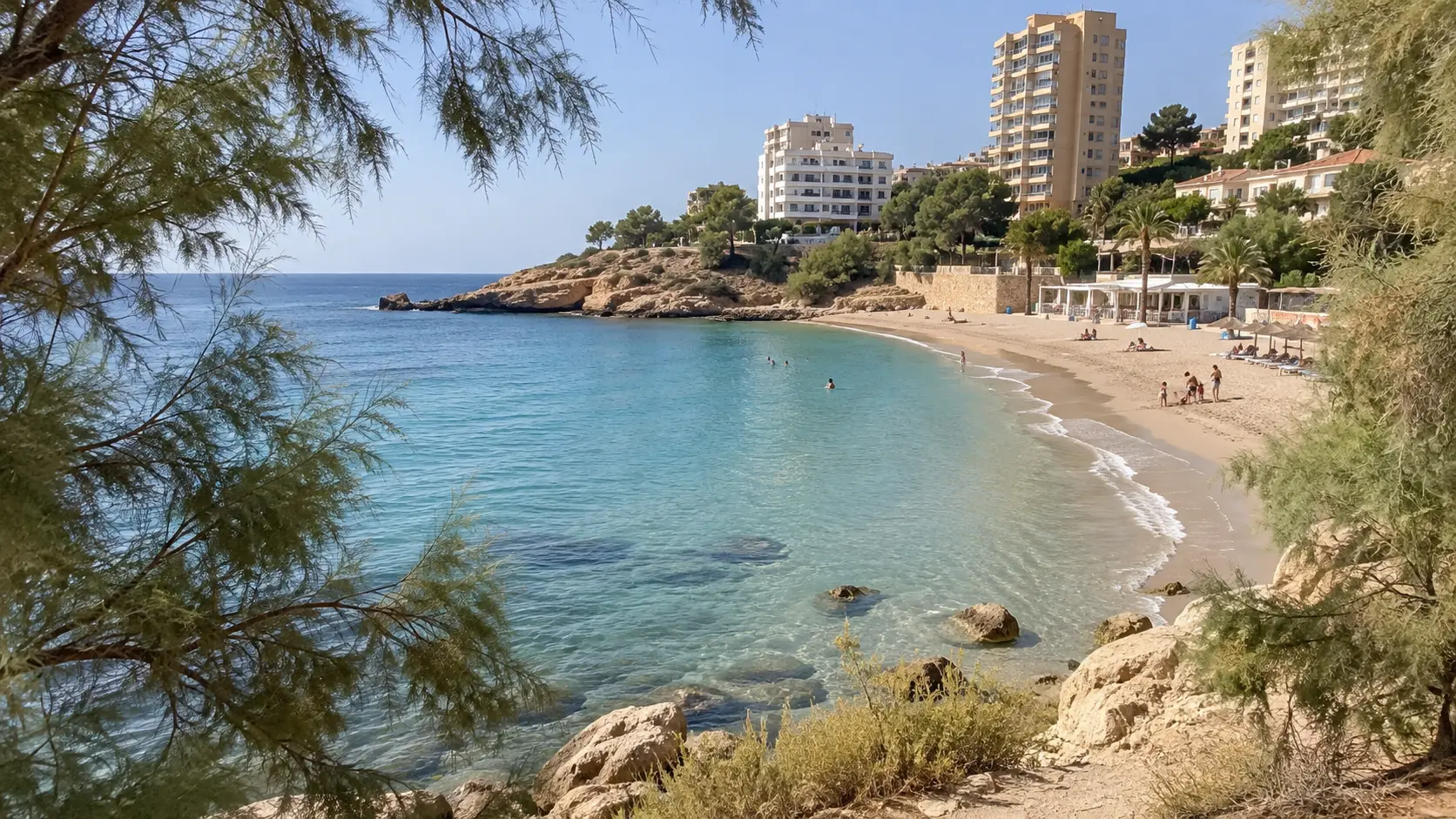
Albufereta is a smaller residential beach northwest of downtown, between Serra Grossa and the Tossal de Manises archaeological area. Its approximately quarter-mile arc of fine golden sand is easier to scan than San Juan, which parents may appreciate even though close supervision remains nonnegotiable.
Official descriptions call the water calm, but conditions can change quickly and sheltered does not mean hazard-free. The beach has TRAM and bus access, first aid and a summer beach bar, with seasonal adapted facilities listed for visitors with reduced mobility.
Best for: A lower-key half day, families wanting a smaller footprint, and travelers staying nearby. Tradeoff: There is less sand and fewer dining choices than at San Juan.
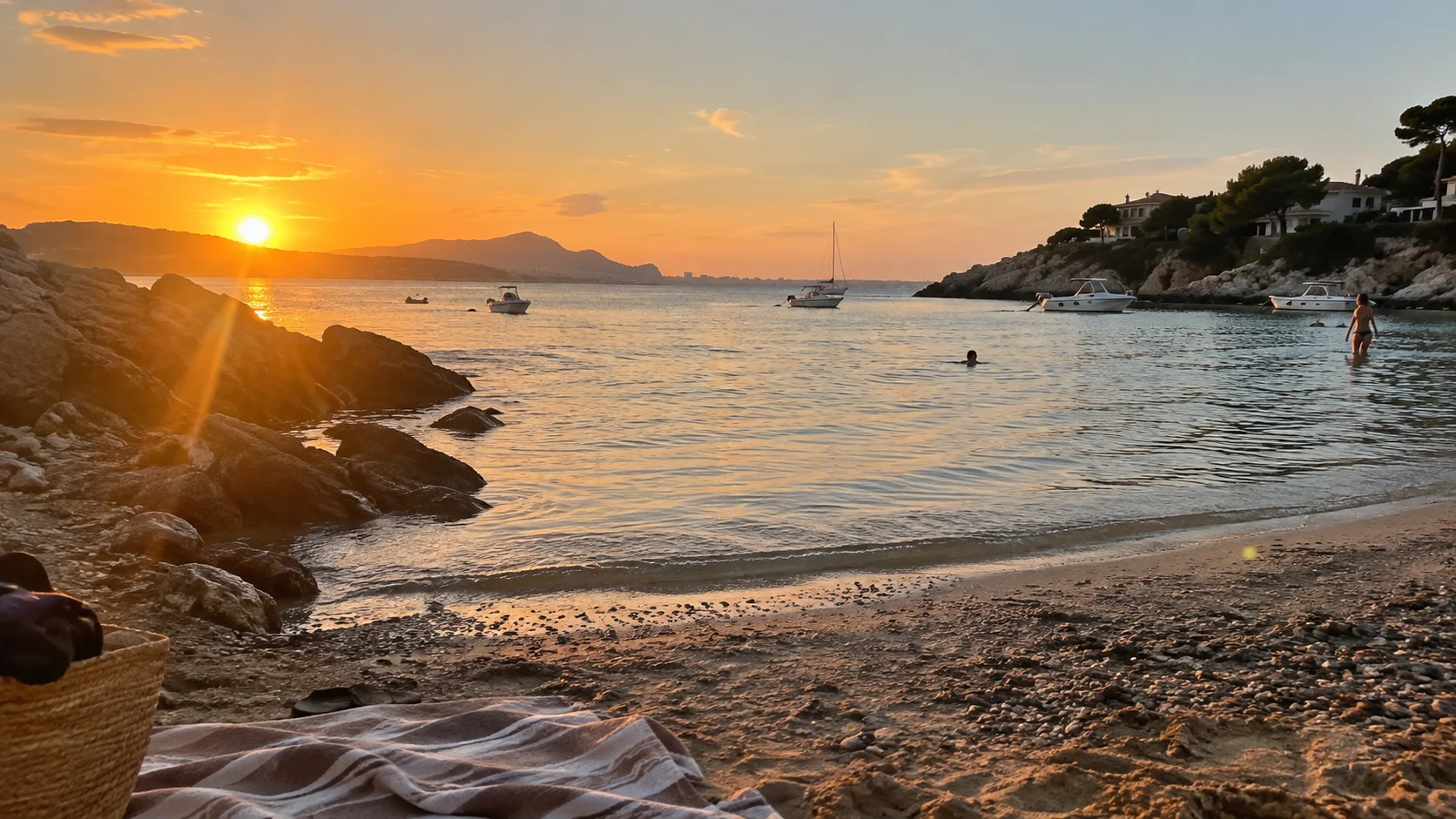
4. Almadraba Beach: best for sunset
Almadraba lies between Albufereta and Cabo de la Huerta, with a narrow strand and western-facing sunset views. It works better for a gentle evening, picnic, or paddle than for travelers dreaming of an enormous sandy playground.
A waterfront park opened in 2026 with paths, green space, play areas, and interpretation of Roman remains. Check the flag before entering the water.
Best for: Sunset, couples, small children who mainly want to potter at the edge, and an easy coastal pause. Tradeoff: The beach is long but narrow, and peak-season space can disappear faster than expected.
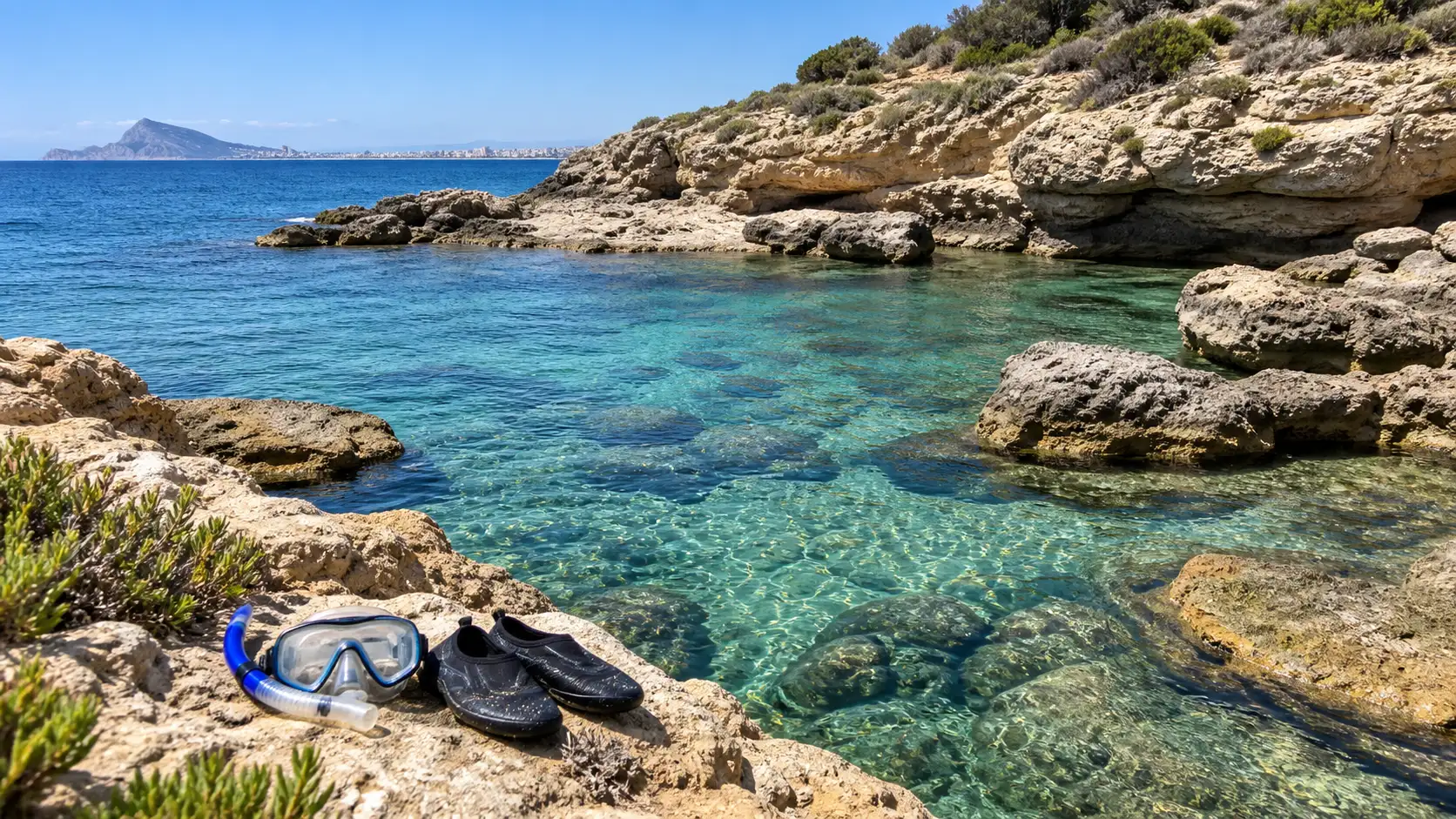
5. Cabo de la Huerta coves: best for rocks and snorkeling
Cabo de la Huerta breaks the sandy-beach pattern with Cala de la Palmera, Cala Cantalares, and Cala de los Judíos. Rocky seabeds can support interesting marine life and clearer viewing, but they also demand water shoes, careful entry, and honest confidence about your balance.
The official page lists a diving area, coastal trail, naturist area, parking, TRAM line 4, and bus 22. These are semi-urban coves with fewer comfort services than the main beaches, so bring water, shade, and a small first-aid kit rather than packing as if a beach club will solve everything.
Do not stand on seagrass or chase wildlife. Our Tenerife black-sand beaches comparison reinforces the same lesson: footwear and conditions matter more than Instagram confidence.
Best for: Snorkeling, coastal walking, naturist-friendly space, and travelers who prefer coves to concessions. Tradeoff: Entry is less forgiving, shade is limited, and not every access suits reduced mobility.
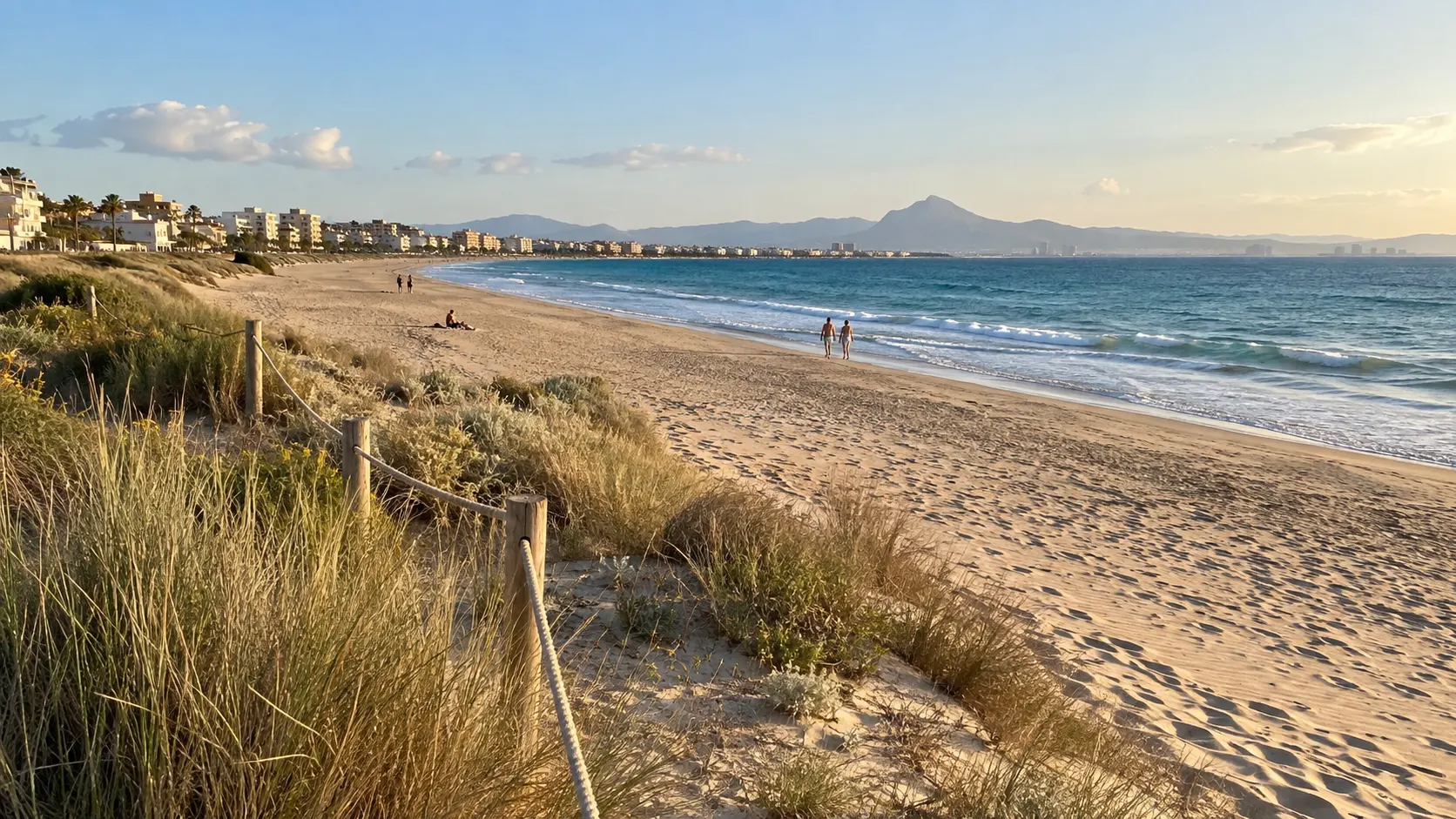
6. Saladares-Urbanova: best long beach away from the center
About 3 miles south of central Alicante, Saladares-Urbanova offers roughly 1 mile of fine sand, a promenade, restaurants, play areas, and surviving dunes at its southern end. It often feels less compressed than Postiguet because it is removed from the central sightseeing circuit.
Bus 27 is the public-transport option listed by Alicante tourism, and drivers approach on the N-332. Summer facilities have included lifeguards, medical service, adapted restrooms, and bathing assistance at access 6, but operating days should be verified.
Best for: A spacious beach day, families with a car, and travelers staying south of downtown. Tradeoff: It is less convenient for pairing with central attractions, and the bus requires more schedule awareness than the TRAM.
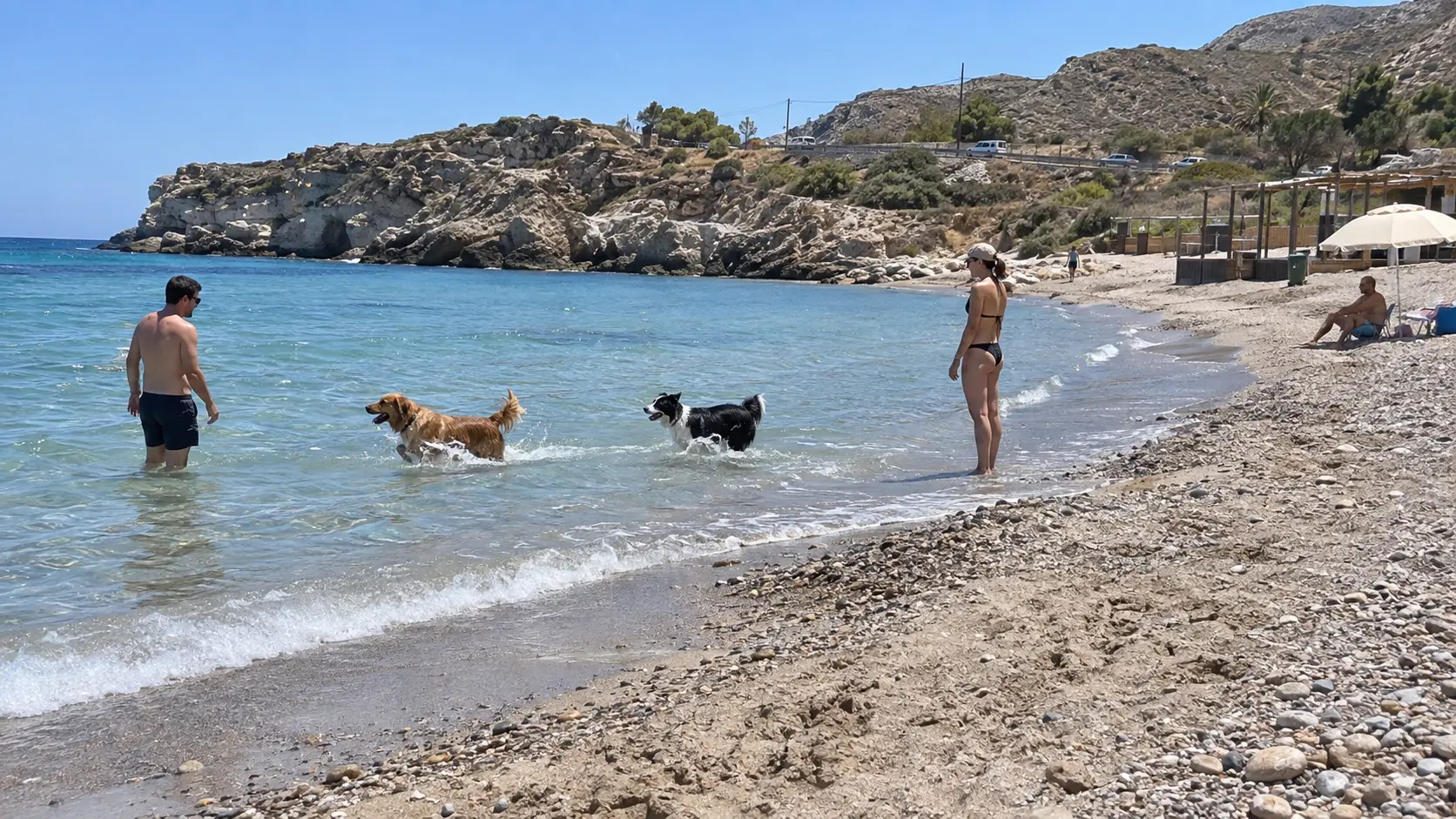
7. Agua Amarga: best official dog beach
Agua Amarga, immediately north of Urbanova, is Alicante’s designated dog-friendly beach. The city lists special cleaning, a fenced dog-relief area, first aid, and dog-oriented summer services, which is much clearer than hoping nobody notices a Labrador on a no-dog beach.
Rules include active control, immediate waste pickup, valid microchip and health documentation, and limits on the number of dogs per adult. Potentially dangerous dogs face additional leash and muzzle requirements, while aggressive, ill, in-heat, or very young dogs are excluded.
Bring fresh water and shade, avoid the hottest part of the day, and rinse salt from your dog afterward. Most other Alicante beaches allow dogs on the sand only during the municipality’s stated winter window, so check the current ordinance before assuming “off-season” is close enough.
Best for: Travelers whose dog is genuinely beach-ready and well socialized. Tradeoff: This is a specialist beach, not the city’s prettiest swimming choice for people without pets.
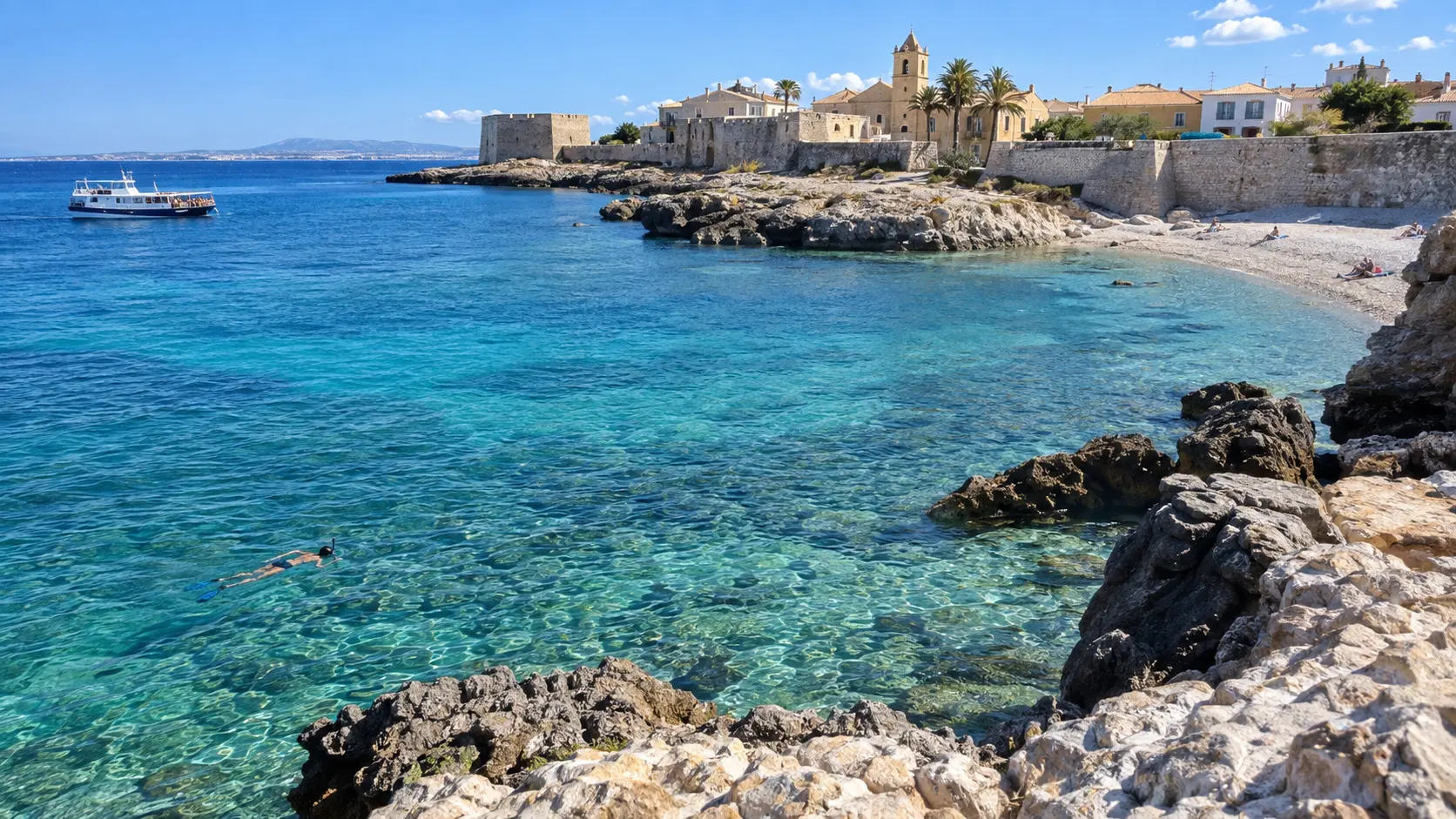
8. Tabarca Island: best full-day beach outing
Tabarca sits about 11 nautical miles from Alicante and combines a compact beach, rocky coves, a fortified village, seafood restaurants, and protected water. Boats from Alicante usually take about an hour, while departures from Santa Pola are shorter, but schedules and sailings depend on season and weather.
The surrounding marine reserve protects Posidonia seagrass meadows and rocky habitat, as Spain’s environment ministry explains in its Tabarca reserve overview. Snorkel without feeding fish, handling octopuses, lifting starfish, or taking anything living from the seabed.
Tabarca is not a clever add-on to a packed sightseeing afternoon. Allow buffer time before your return boat, carry sun protection and water, and expect prices and crowds to rise on beautiful summer weekends.
Travelers drawn to the island’s fortifications and beacon can keep the coastal theme going with our Spain lighthouse route planner. Just remember that an island boat ticket and a lighthouse road trip require very different logistics.
Best for: Snorkeling, history, and a day that feels separate from the city. Tradeoff: Boat cost, weather dependence, and limited shade make it the highest-effort pick here.
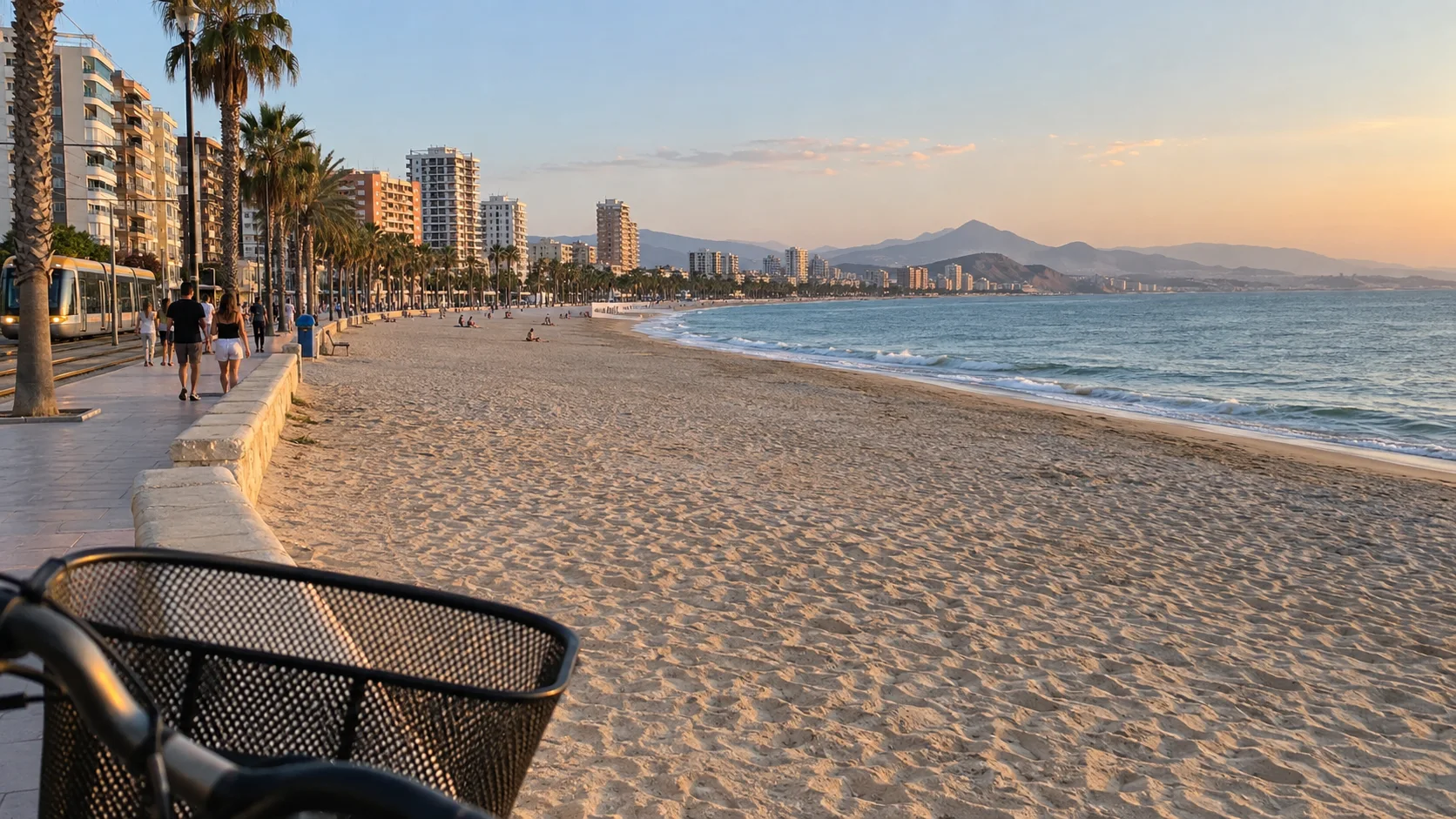
9. Muchavista Beach: best easy Costa Blanca extension
Muchavista is the northward continuation of San Juan, but it belongs to El Campello rather than Alicante city. The official El Campello tourism office describes more than 2 miles of fine sand, a long promenade, TRAM stops, restaurants, sports areas, and an accessible section.
Choose it if your accommodation is near the northern TRAM corridor or you want to combine the beach with El Campello. If you are based downtown for one or two nights, San Juan offers a similar sandy experience with less reason to chase a municipal boundary.
For a bigger city-and-coast pairing, Valencia is roughly 100 miles north and merits more than a casual beach hop. Our Valencia trip planner shows why its historic center, Turia Gardens, and coast work best as a separate stop.
Best for: El Campello stays, long promenade walks, and repeat visitors. Tradeoff: It does not add much variety if San Juan is already in your plan.
How accessibility and lifeguards work
Alicante’s 2026 accessible-beach program provided assisted bathing at Postiguet, San Juan, Urbanova, Albufereta, and Tabarca from July 1 through September 15. Annual dates, hours, equipment, and access points can change.
An accessible walkway does not always include assisted sea entry, and lifeguard coverage is also seasonal. Confirm any essential chair, restroom, parking, companion service, or supervised swim zone before travel.
A realistic two-day Alicante beach plan
Day one: city sights plus Postiguet
Start with Santa Bárbara Castle or the old town before the heat builds, then move to Postiguet for lunch and a swim if the flag permits. Finish along the Explanada, keeping valuables minimal and secured whenever everyone enters the water.
Day two: choose one main beach
Take the TRAM to San Juan for sand and amenities, or choose Cabo de la Huerta for snorkeling and a coastal walk. Do not combine them just to collect beach names unless your group enjoys changing clothes beside transit stops.
What to pack for Alicante beaches
- Broad-spectrum sunscreen, a hat, sunglasses, and more shade than optimism suggests.
- Water shoes for Cabo de la Huerta, Tabarca coves, and any rocky entry.
- A dry pouch or locking beach bag for a phone, card, and room key.
- Drinking water and a light snack, especially outside the main summer season.
- A small towel or cover-up for the TRAM and restaurants.
- A rash guard for children or long snorkeling sessions.
- Downloaded transit details and boat tickets that remain available offline.
Leave large valuables at your accommodation and avoid having the whole group swim while bags sit unattended. Beach sand is talented, but it has not yet learned asset protection.
Frequently asked questions
What is the nicest beach in Alicante city?
San Juan is the strongest all-around choice for sand, space, transit, activities, and dining. Postiguet wins when central location matters more than a resort-style beach day.
Can you reach Alicante beaches without a car?
Yes, Postiguet is walkable from central areas, while TRAM and buses reach San Juan, Albufereta, Almadraba, Cabo de la Huerta, and Muchavista. Urbanova and Agua Amarga rely more heavily on bus 27, and Tabarca requires a boat.
When is the best time for an Alicante beach trip?
Late spring and early fall often balance warm weather with lighter crowds, but sea temperature, rain, wind, and service schedules vary. Summer offers the broadest lifeguard and rental coverage along with the most heat and competition for sand.
Are Alicante beaches free?
Public beach access is generally free, while parking, chairs, umbrellas, food, rentals, and Tabarca boats cost extra. Confirm any mobility-assistance reservation process separately even when the municipal service itself is free.
Final choice
Pick San Juan for a classic sandy day, Postiguet for maximum convenience, Cabo de la Huerta for rocky snorkeling, and Tabarca when you can give the coast a full day. Whichever wins, check Náyade, the live beach flag, transport updates, and staffed-service hours before you leave.