Lisbon Cruise Port Guide: Terminals, Transport, and One Day
Lisbon can be one of Europe’s easiest cruise calls, but only after you identify your terminal. Ships near Alfama put you about a 10-minute walk from the old center, while an Alcântara-area berth changes the transport plan, luggage strategy, and time available for Belém or Sintra.
Where cruise ships dock in Lisbon
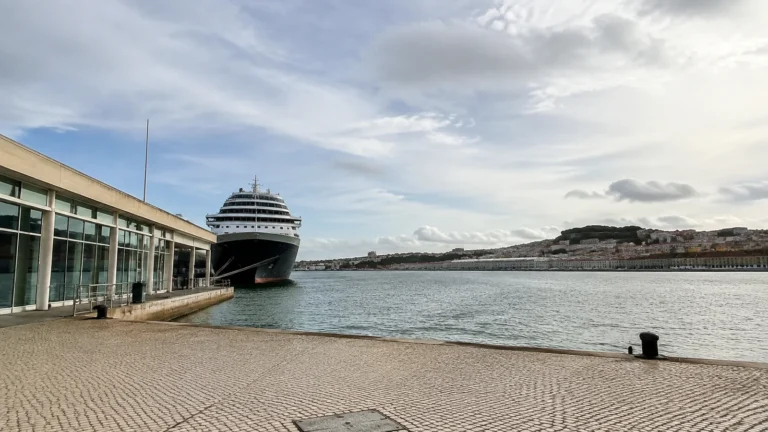
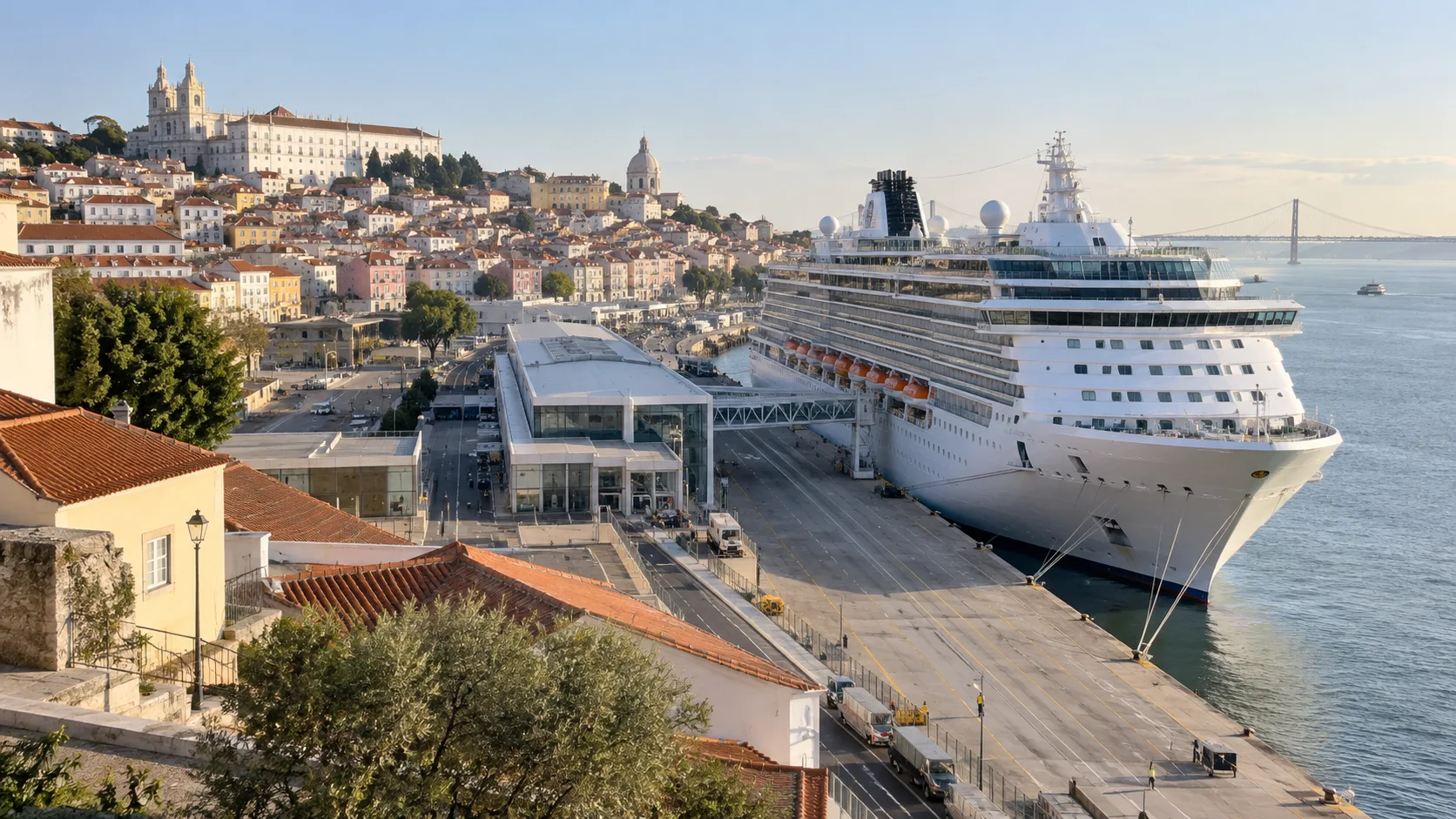
The Port of Lisbon lists the modern Lisbon Cruise Terminal, Santa Apolónia Cruise Terminal, Rocha Conde de Óbidos, and Alcântara among its official cruise facilities. Your cruise documents may also name Jardim do Tabaco, which is part of the central waterfront cruise area.
Do not enter “Lisbon port” into a taxi app and hope. Confirm the terminal, ship name, berth, boarding time, and terminal entrance on the day because assignments can change.
Lisbon Cruise Terminal and Jardim do Tabaco
The modern terminal at Doca Jardim do Tabaco sits below Alfama, east of Praça do Comércio. Lisbon Cruise Port describes the historic center as about a 10-minute walk away, although your pace, gangway position, and security line add time.
This is the most convenient location for a walking day in Alfama, Baixa, and Chiado. The old neighborhood rises steeply behind the waterfront, so “close” does not mean flat.
Santa Apolónia
Santa Apolónia is also east of the central sights and beside a railway and metro station. It remains practical for walking into Alfama, with the useful option of a short taxi or metro ride when hills or heat are a concern.
Confirm which Santa Apolónia facility or berth the ship is using. A terminal label is more reliable than a pin saved from another traveler’s sailing.
Rocha Conde de Óbidos and Alcântara
These western waterfront facilities sit closer to the Alcântara district and the April 25 Bridge than to Alfama. Treat transportation as part of the day instead of beginning with a long roadside walk.
A taxi or rideshare is simplest for the historic center, while local rail and buses can work for Belém. Ask whether the cruise line provides a shuttle, then verify its drop-off point and last return.
Can you walk from Lisbon cruise port?
From Jardim do Tabaco or the central Lisbon Cruise Terminal, yes. The port’s official transportation page states that the center is about a 10-minute walk and lists metro, train, bus, and taxi options.
From Santa Apolónia, many active travelers can walk to Alfama or Praça do Comércio. From Alcântara or Rocha Conde de Óbidos, use transportation unless the waterfront walk itself is your priority.
Lisbon’s polished limestone paving can become slippery in rain, and tiled sidewalks are often uneven. Wear shoes with traction and expect steps, slopes, narrow sidewalks, and curb cuts that may not align cleanly.
The best Lisbon cruise day for a first visit
For a normal eight-to-ten-hour call at a central terminal, keep the day in Alfama, Baixa, and Chiado. This delivers views, historic streets, food, and major squares without making the ship depend on a regional train.
Morning in Alfama
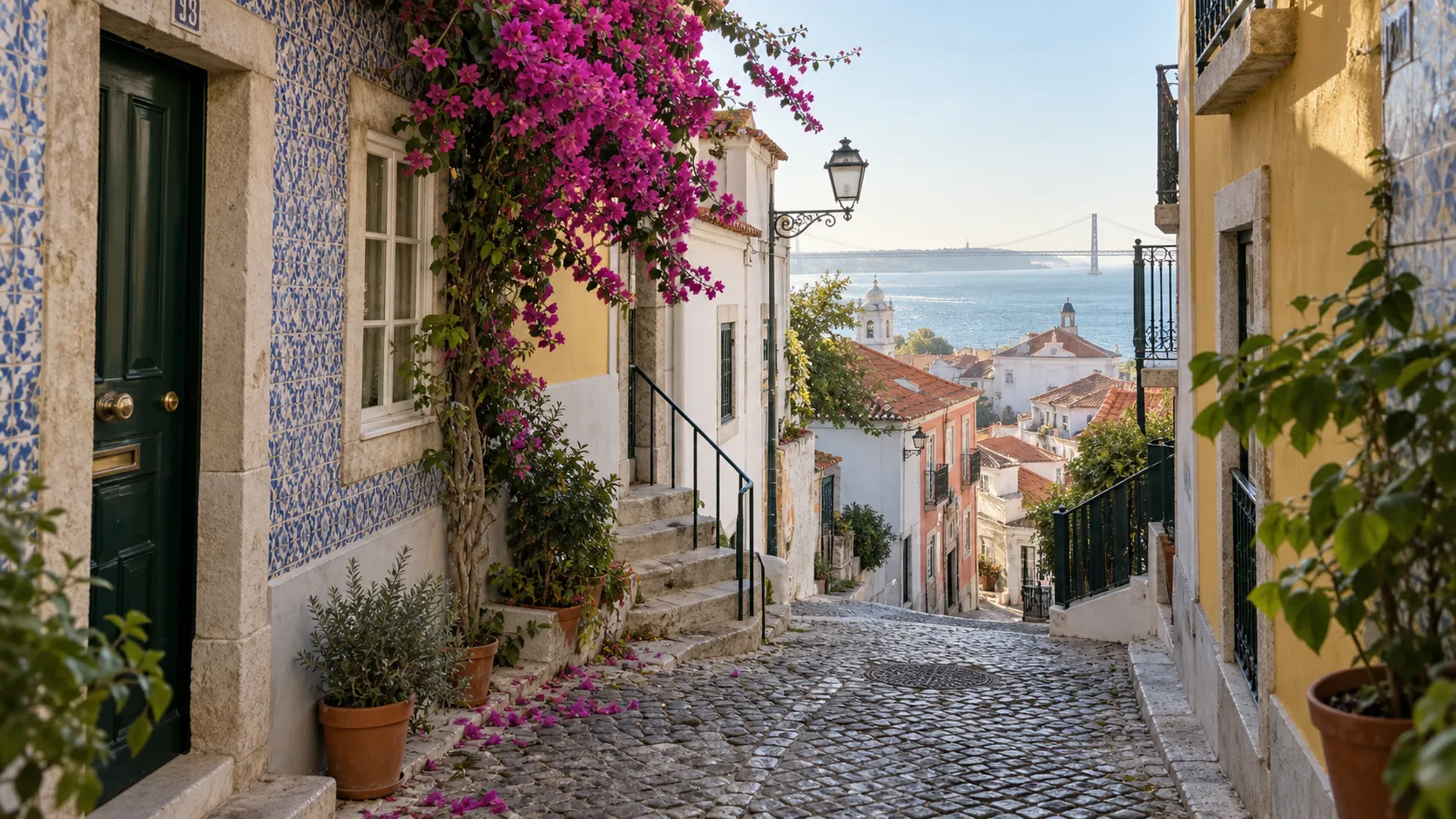
Walk uphill early, when lanes and viewpoints are calmer, then work downward toward the river. São Jorge Castle needs a ticket and adds steep access, so reserve it only if the castle is more important than covering several neighborhoods.
Miradouro de Santa Luzia and nearby streets offer a shorter scenic option. Keep phones and wallets secure when a viewpoint or tram stop becomes crowded.
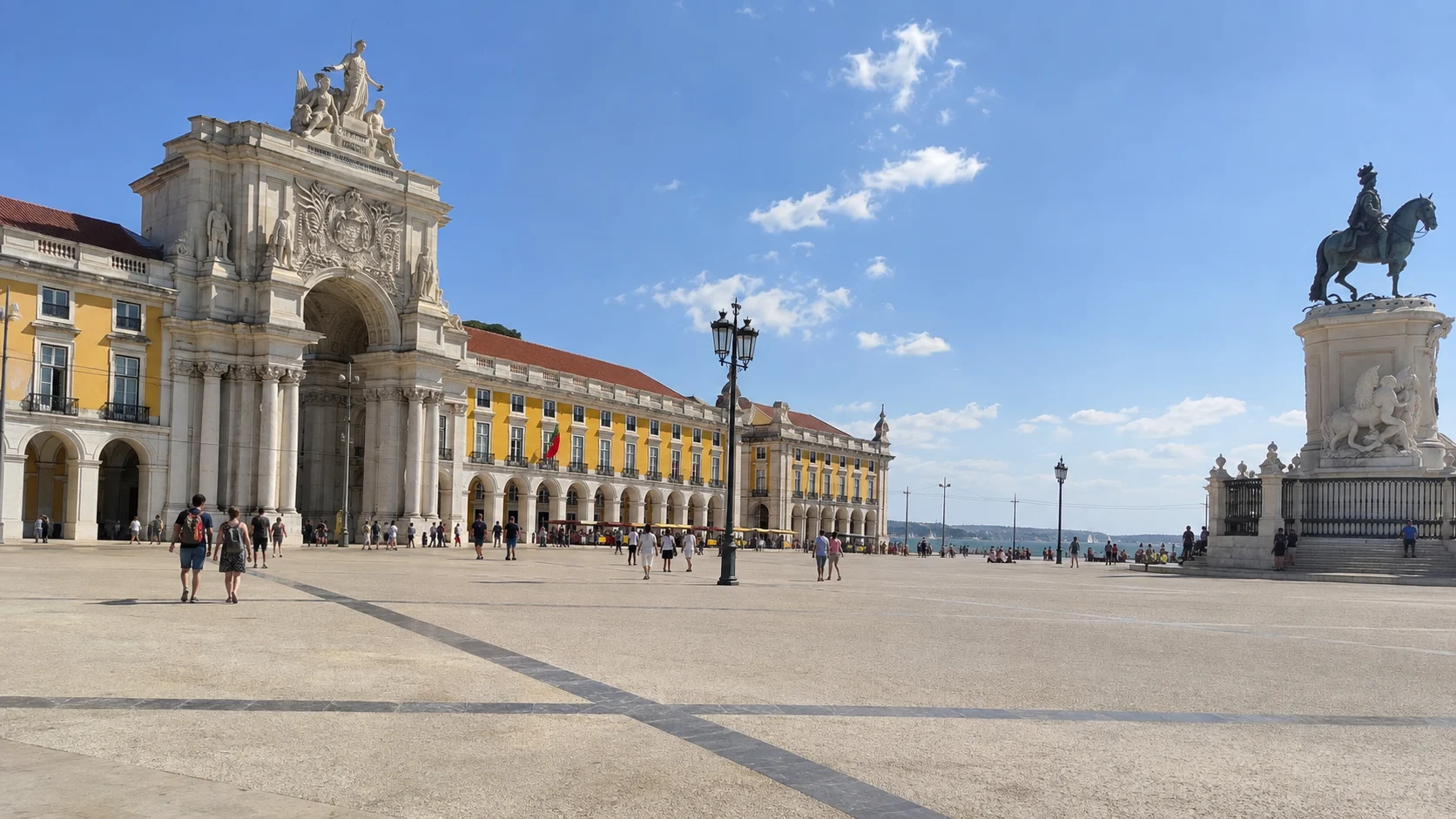
Lunch and Baixa
Continue toward Lisbon Cathedral, Praça do Comércio, and the grid of Baixa. Choose one relaxed lunch rather than spending the middle of the call chasing a restaurant seen in a viral video.
From Baixa, walk or take transit toward Chiado if energy allows. Return along the river with at least 45 minutes beyond the expected walking time.
The central Lisbon walk I would choose
With an 8:30 a.m. exit from Jardim do Tabaco and a 4:30 p.m. all-aboard, I would walk toward the cathedral first, continue uphill to Miradouro de Santa Luzia, then come down toward Baixa. Allow about two hours for that opening walk and photo stops; this is my suggested schedule, not a promised walking time for every visitor.
From Baixa, follow Rua Augusta to Praça do Comércio, then choose lunch nearby and keep the afternoon close to the waterfront. I would aim to be back at the terminal around 3:00 p.m., leaving room for a slow meal or a wrong turn without squeezing the return.
Skip the Santa Luzia climb if the pavement is slippery, the heat is tiring, or someone in your group needs a flatter outing. Baixa and the riverfront still make a lovely day, and nobody needs to earn lunch by climbing every hill in Lisbon.
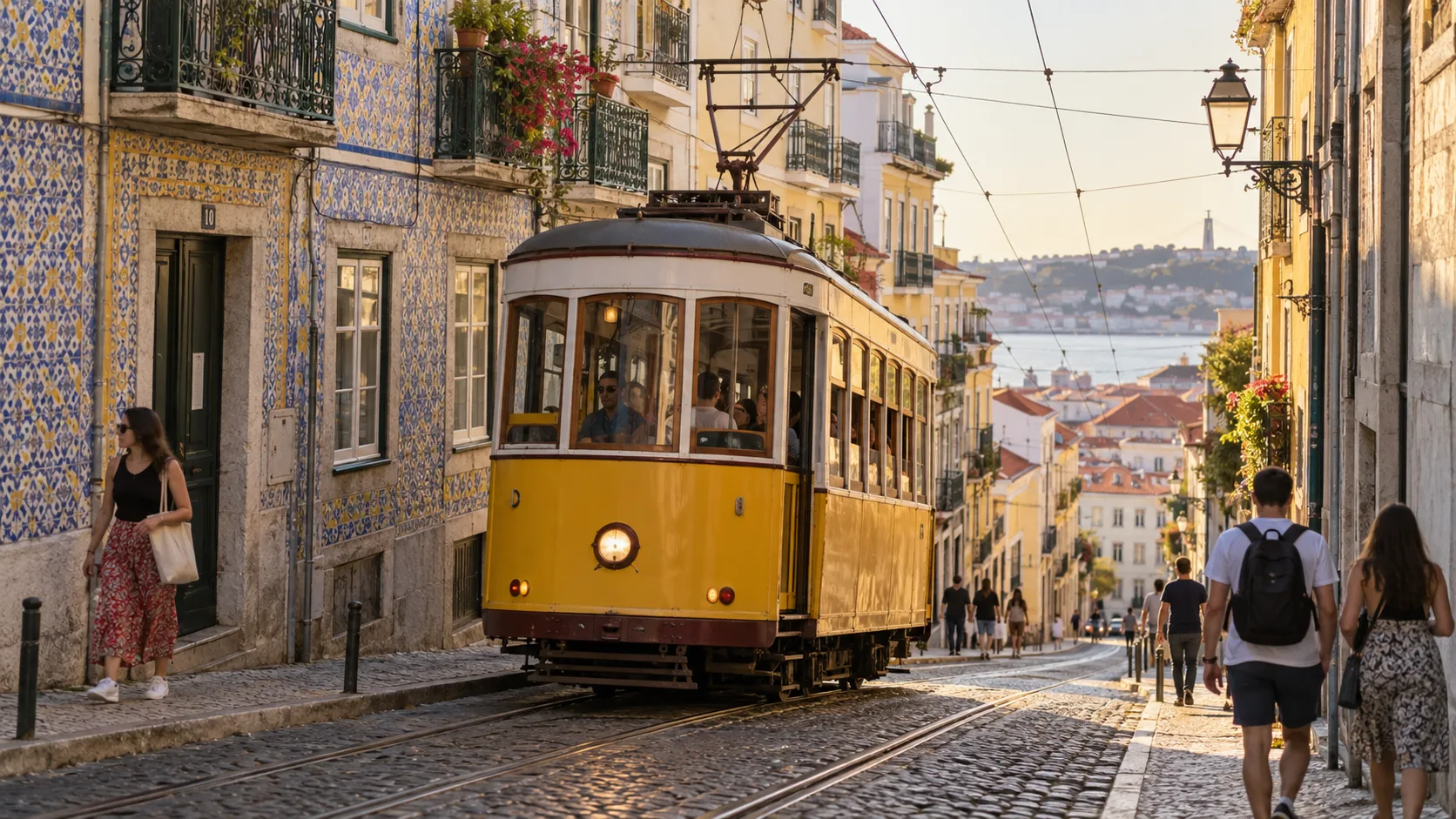
Should you ride Tram 28?
Tram 28 is a working transit route, not a reserved sightseeing attraction. Lines can be long, cars can be packed, and pickpockets favor crowded tourist services.
Ride early from a less congested stop if the tram itself matters, or photograph it and use another route. Walking part of Alfama often produces a better port day than waiting an hour to stand inside a full car.
Buy and validate the correct fare before or upon boarding as required. Lisbon Metro’s current ticket page explains single journeys, 24-hour products, and the rechargeable Navegante card, with prices subject to change.
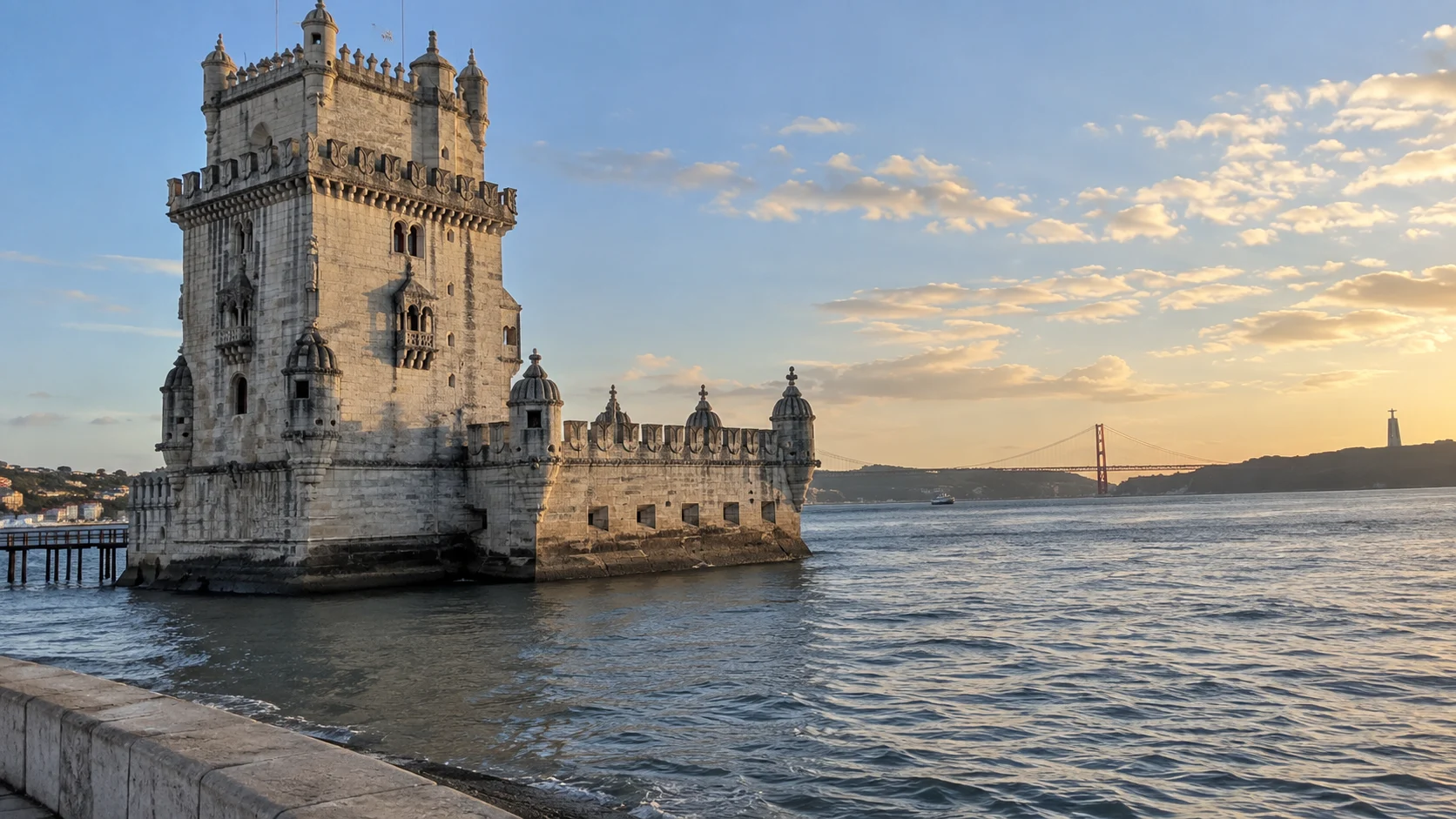
Belém from Lisbon cruise port
Choose Belém for riverside monuments, the Jerónimos area, and custard tarts, especially if the ship docks at Alcântara. From a central terminal, allow roughly 30 to 45 minutes each way after walking, waiting, and traffic.
Belém Tower, Jerónimos Monastery, and other attractions keep separate hours and ticket systems. Pick one interior plus the waterfront rather than spending the entire call in security and admission lines.
Transit disruptions, demonstrations, and special events can change service around the riverfront. Aim to leave Belém at least two hours before all-aboard if returning independently by public transit.
A specific Belém plan
From the central waterfront, check the current 15E route, board toward Algés at Praça do Comércio, and get off at Mosteiro Jerónimos. I would make the monastery area the first stop, leave an hour for lunch and a pastry, then walk the riverfront only as far as the return schedule comfortably allows.
For a practical half-day, reserve 45 to 60 minutes for each transit leg including waits, about 90 minutes for your chosen interior, and an hour for food. These are planning allowances; a long admission line means shortening the waterfront walk, not spending the ship-return cushion.
Belém Tower reopened in May 2026 after restoration, so older closure notices need checking against the official monument page. Its listed regular admission is €15 and it closes on Mondays; I would choose it instead of a monastery interior if the tower is your priority.

Can you visit Sintra on a cruise day?
Sintra is possible on a long call, but it consumes most of the day and requires disciplined reservations. You must reach Rossio or another departure station and ride the train, with an additional uphill transfer if you choose Pena Palace.
Timed palace tickets do not eliminate road congestion, bus queues, fog, or the downhill return. Choose one palace, enter early, and plan to be back in central Lisbon at least two hours before all-aboard.
A ship excursion reduces missed-ship risk, while an independent trip gives more control and demands more margin. Skip Sintra on a short call, a strike day, or when a mobility need makes repeated transfers difficult.
My easier independent Sintra choice
For a long cruise call, I would choose the National Palace of Sintra in the historic center, take the train from Rossio, and follow the town route from Sintra station. Parques de Sintra lists that walk at 10 to 15 minutes, which avoids adding Pena’s hill transfer to an already busy day.
I would allow 90 minutes in the palace and an hour for lunch and the center, then return to the station without adding a second paid attraction. Work backward from being in central Lisbon two hours before all-aboard, including your terminal transfer and a missed-train allowance; if that leaves too little time for Sintra, stay in Lisbon.
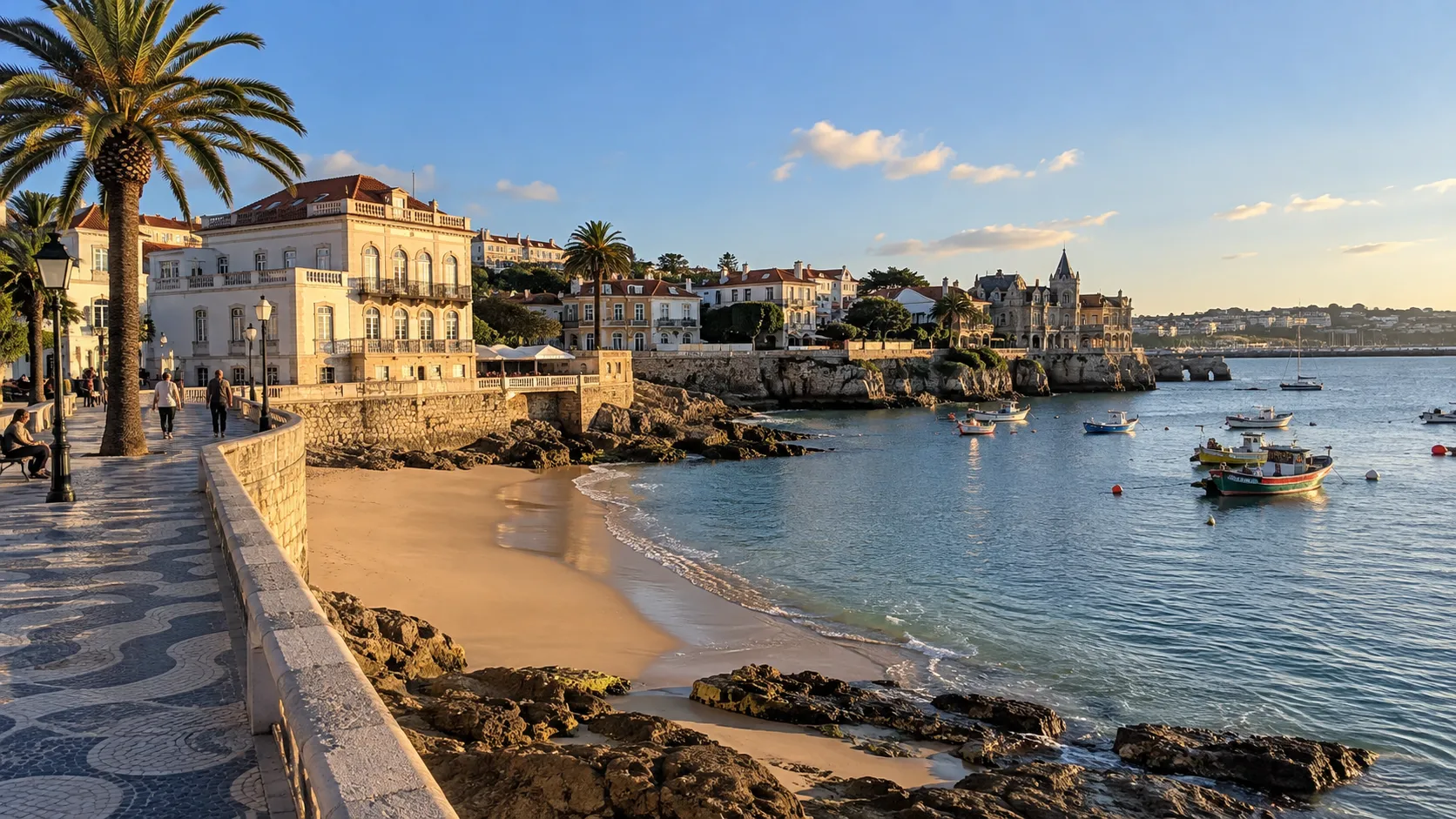
Cascais, Fátima, and other day trips
Cascais can work from Alcântara or central Lisbon using the coastal rail line, but it still trades away Lisbon itself. Fátima, Évora, and distant coast stops are better suited to organized tours or a land stay.
Do not combine Sintra, Cascais, Belém, and Alfama in one port call. The map hides queues, hills, station transfers, and the simple pleasure of actually stopping.
Lisbon public transportation
Metro
Santa Apolónia has a metro station, while the central cruise terminal is reached by walking from nearby connections rather than stepping directly into a subway entrance at the gangway. Metro is useful for longer hops, but it does not erase Alfama’s hills.
Each traveler needs the appropriate ticket or contactless arrangement accepted at that time. Keep a card until the trip ends because exits and inspections may require it.
Bus and tram
Carris operates city buses, trams, funiculars, and elevators. Route diversions are common enough that the current app or stop display should outrank a printed route from home.
Board with bags closed and carried in front. A crowded tram is the wrong place for a phone in a back pocket or a wallet in an open tote.
Taxi and rideshare
Taxis and app-based rides are useful for Alcântara, luggage, heat, and small groups. Meet only at an authorized pickup point and match the license plate before entering.
Traffic can slow around the waterfront, bridge approaches, and events. A car is convenient, not a guarantee of a fixed travel time.
Lisbon airport to the cruise port
Lisbon Airport is within the city, but cruise-day traffic and luggage change the transfer. The airport’s official transport page says the metro reaches Saldanha in about 20 minutes and notes a 50-by-40-by-20-centimeter luggage limit on city buses.
Metro is inexpensive for light packers, while a taxi or arranged transfer is easier with large bags and a distant terminal. Tell the driver the terminal name and ship, not just “cruise port.”
Arrive at least one day before embarkation, especially after an international flight. Border processing, baggage delay, and missed connections can consume the entire check-in window.
Embarking in Lisbon
Follow the cruise line’s arrival appointment and keep passports, medication, valuables, and one change of clothes in hand luggage. Bag drop, security, and check-in arrangements can differ between the modern terminal and another assigned facility.
A city-center hotel does not guarantee a comfortable luggage walk because hills and paving matter. Ask the hotel about the terminal-specific route and book a taxi when rolling bags would start the vacation badly.
Accessibility
Request embarkation and gangway assistance through the cruise line before sailing. The modern terminal is designed for passengers, but a low tide, steep gangway, or changed berth can alter the practical route.
Historic Lisbon is the bigger challenge, with slopes, steps, narrow sidewalks, and slick paving. A panoramic accessible vehicle tour can be far more satisfying than forcing a standard walking itinerary.
Confirm step-free stations, vehicle capacity, and monument access directly for your date. An elevator outage can transform a technically accessible connection.
Safety and entry requirements
Portugal is generally safe for travelers, but petty theft occurs in tourist areas and on public transportation. The current United States State Department guidance specifically advises vigilance in crowded places.
Carry a zipped bag in front, separate one backup card, and avoid displaying cash at ticket machines. Call 112 for police, fire, or medical emergencies in Portugal.
Passport, Schengen, and digital border requirements depend on citizenship and itinerary. Verify official rules close to travel and ignore unofficial sites selling a future authorization that is not yet required.
Return buffers that make sense
- Central walking day: start back 45 to 60 minutes beyond the expected walk.
- Belém: leave about two hours before all-aboard when using public transit.
- Sintra or Cascais: target central Lisbon at least two hours before all-aboard.
- Independent road tour: agree on a conservative turnaround time before departure.
All-aboard is earlier than sail-away, and the ship normally does not wait for independent travelers. Save the port-agent number, ship name, terminal, and all-aboard time offline.
What to pack for a Lisbon port day
- Walking shoes with traction for polished stone and hills
- Sun protection, water, and a light rain layer
- Secure zippered bag and a separate backup payment card
- Downloaded tickets, offline map, and portable battery
- Government ID and cruise card required for port reentry
Use the cruise packing checklist to keep the day bag useful rather than heavy. Lisbon’s hills make every unnecessary pound noticeable.
The best plan by terminal
From Jardim do Tabaco or Santa Apolónia, choose Alfama and Baixa for the easiest first visit. From Alcântara, Belém becomes more logical, while central Lisbon needs a taxi, train, bus, or shuttle first.
If Lisbon is embarkation rather than a call, copy the terminal workflow from the Barcelona cruise port guide: arrive early, confirm the exact berth, and keep luggage out of the sightseeing plan. Mediterranean ports punish vague addresses.
Your Lisbon cruise-port decision
Choose one geographic zone, reserve only the attraction that matters most, and set the return time before leaving the ship. Lisbon rewards wandering, but a cruise call rewards wandering with boundaries.
Put terminal, tickets, transport backups, and port contacts in your cruise planning system. With that small discipline, Lisbon feels less like a transfer problem and more like the generous city it is.