12 Lake Michigan Lighthouses Worth Planning a Route Around
Lake Michigan lighthouses range from easy city viewpoints to seasonal tower climbs and offshore landmarks you cannot legally walk to. The best trip is not the one with the longest list, but the one that matches your time, mobility, appetite for stairs, and tolerance for weather-dependent plans.
“Open lighthouse” can mean open grounds, an accessible keeper’s house, a museum, or a tower climb. Confirm the exact experience with the site operator a day or two before driving, especially in May, September, and October.
Most climbing towers use narrow spiral stairs and may end with a ladder-like section or small gallery. A traveler who skips the climb can still get the strongest architecture, shoreline, and history at several stops on this list.
Illinois and Wisconsin lighthouse stops
1. Chicago Harbor Lighthouse, Illinois
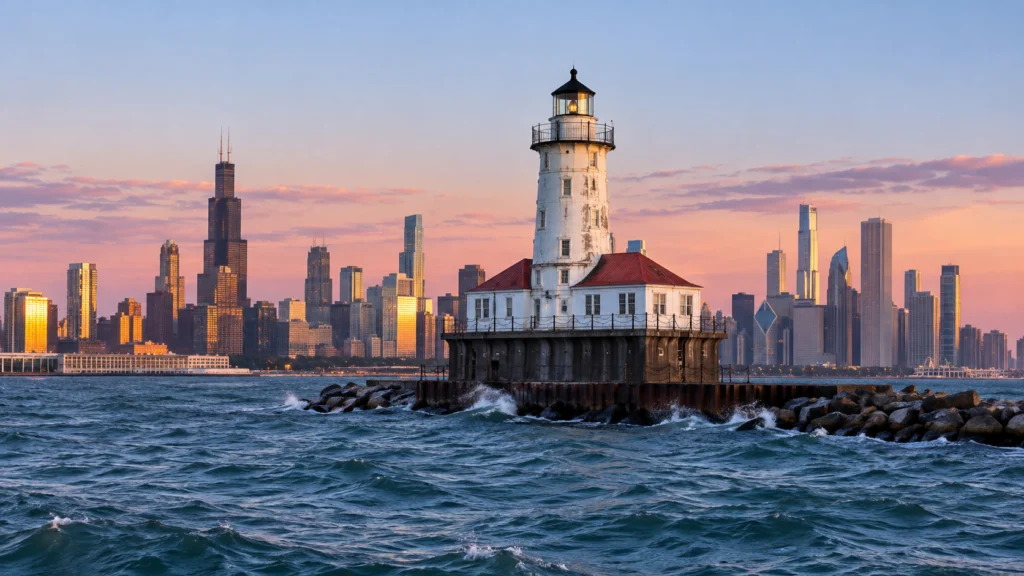
Chicago Harbor Light is the right opening stop if you want skyline scale rather than a keeper-led tower visit. The City of Chicago says the structure was built for the 1893 World’s Columbian Exposition, moved to its breakwater location in 1917, and remains the city’s only surviving lighthouse.
View it from Navy Pier, the lakefront, or an authorized boat, but do not plan to enter it. The city’s landmark record for Chicago Harbor Light helps explain why its architecture looks more elaborate than a plain pier beacon.
Morning light can be easier for detail, while an evening cruise adds the skyline behind the tower. Wind and haze matter more than the clock, so do not buy a boat ticket solely for one photograph.
2. Wind Point Lighthouse, Wisconsin
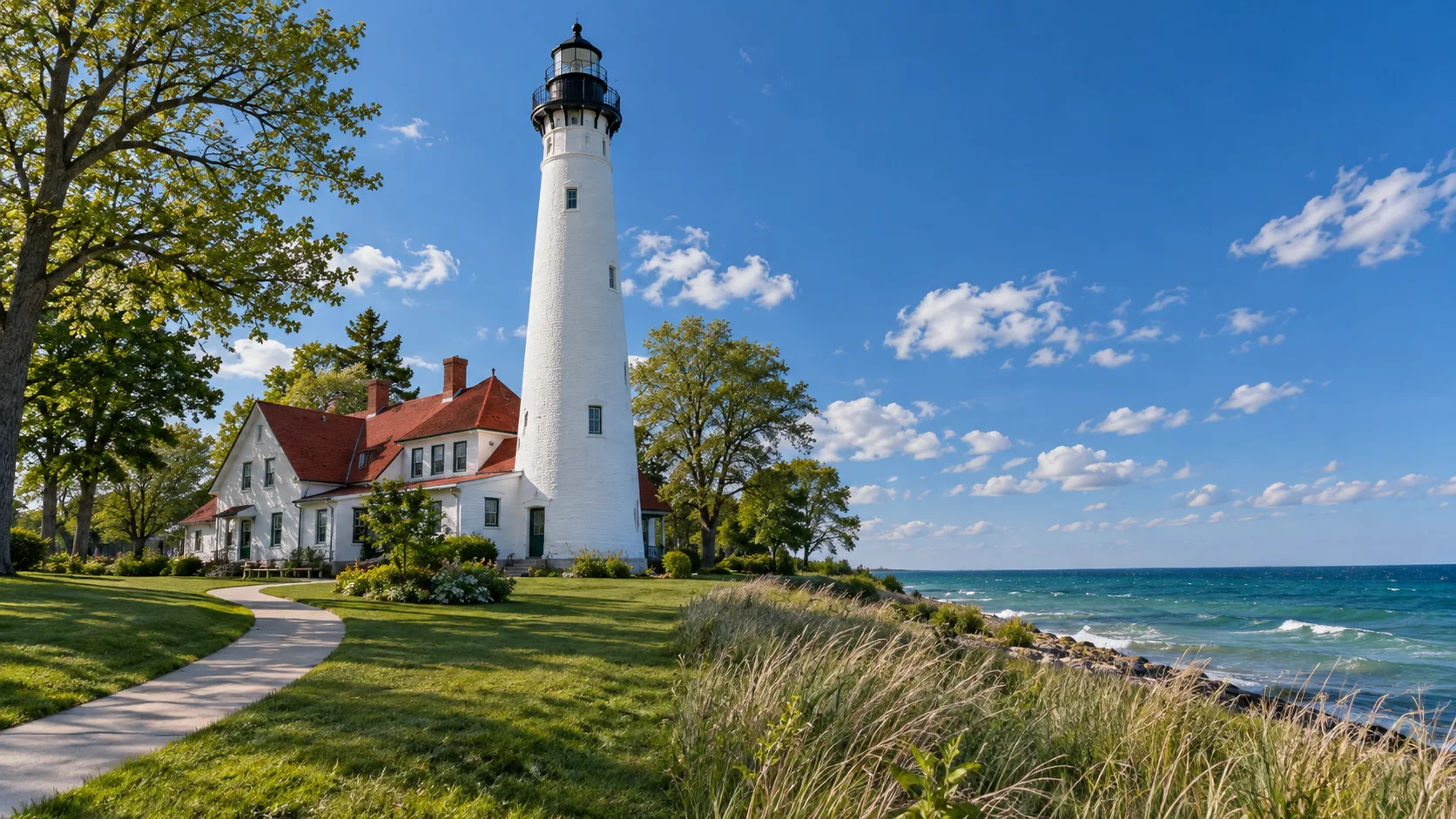
Wind Point, north of Racine, works well for a relaxed grounds visit with a classic white tower, lawns, and an open-lake setting. Tower tours run on selected dates rather than continuously, so treat a climb as a scheduled event.
This is a sensible stop for a mixed-mobility group because one person can enjoy the exterior while another climbs when tours are offered. Check the Village of Wind Point calendar and any private-event restrictions before detouring from Interstate 94.
3. North Point Lighthouse, Milwaukee
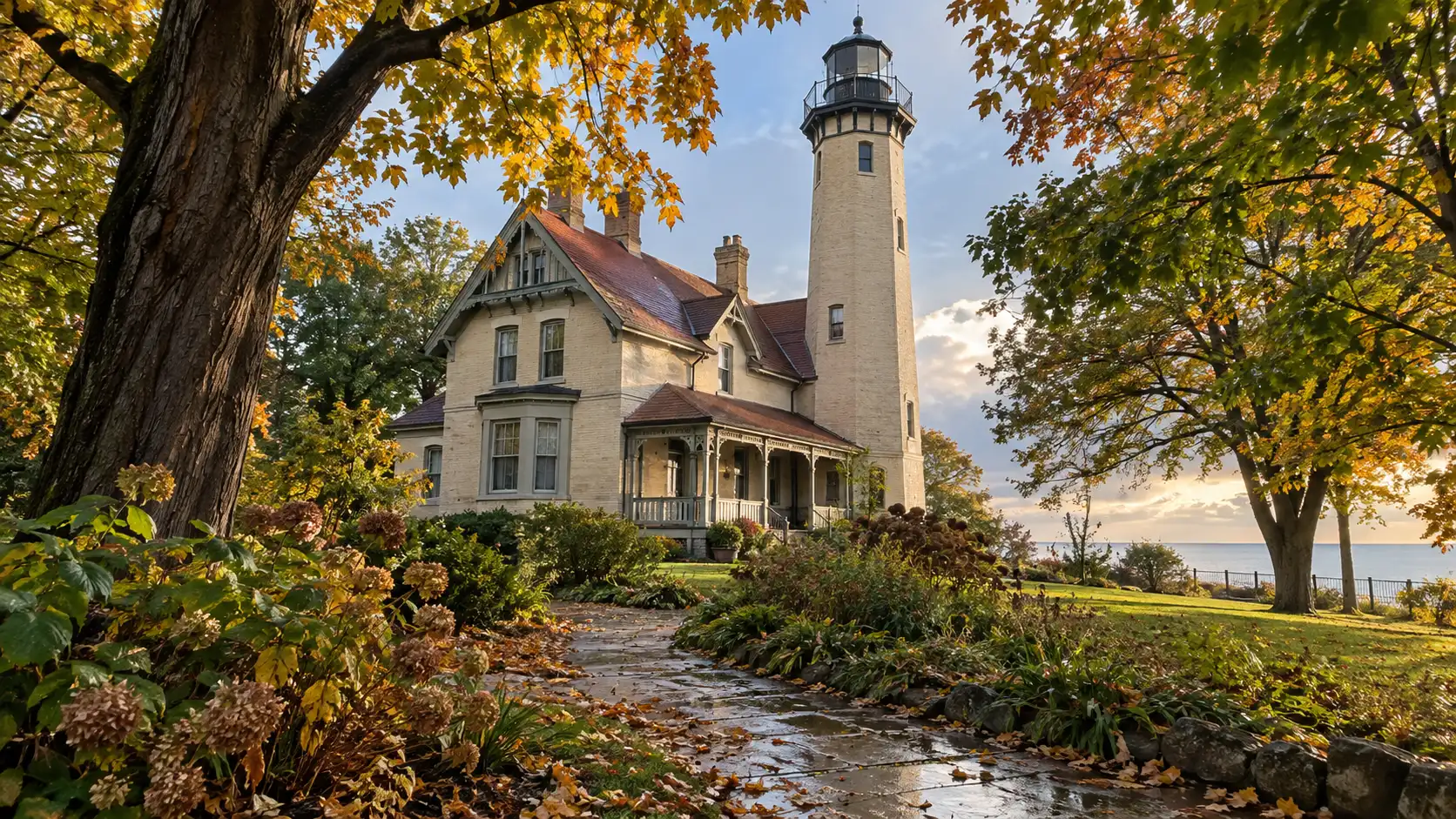
North Point sits in Lake Park above Milwaukee’s shoreline, which makes it a convenient museum stop on an urban weekend. The museum and tower keep limited seasonal hours, but the surrounding park gives the stop value even if the building is closed.
Pair it with the Milwaukee lakefront rather than trying to collect every harbor light in one afternoon. Ellie’s Wisconsin city comparison can help decide whether Milwaukee deserves a full overnight instead of a quick drive-through.
4. Cana Island Lighthouse, Door County
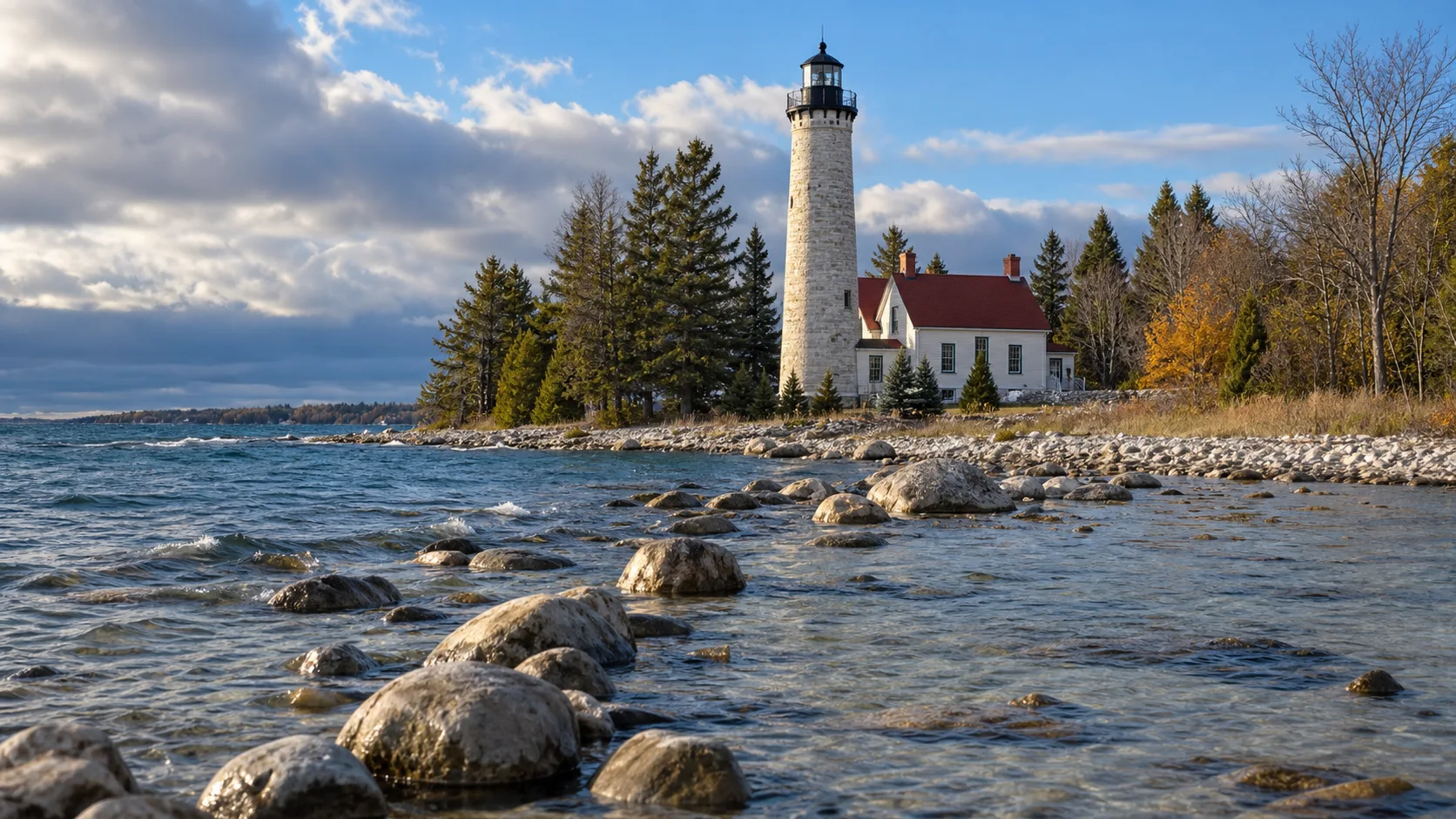
Cana Island is the Wisconsin choice for travelers who want the approach to feel like part of the experience. The causeway can hold water, and the maritime museum may use a wagon to move visitors, so footwear and access can change with conditions.
The 89-foot tower has 97 steps, and climbing is subject to operating and weather decisions. Check the Door County Maritime Museum’s Cana Island information for current admission, hours, height requirements, and causeway procedures before setting out.
Allow at least 90 minutes if the tower, keeper’s quarters, and shoreline all matter to you. For more lights on the peninsula, the Door County lighthouse route separates drive-up sites from boat-view landmarks.
Northern Michigan lighthouse stops
5. Old Mackinac Point Lighthouse
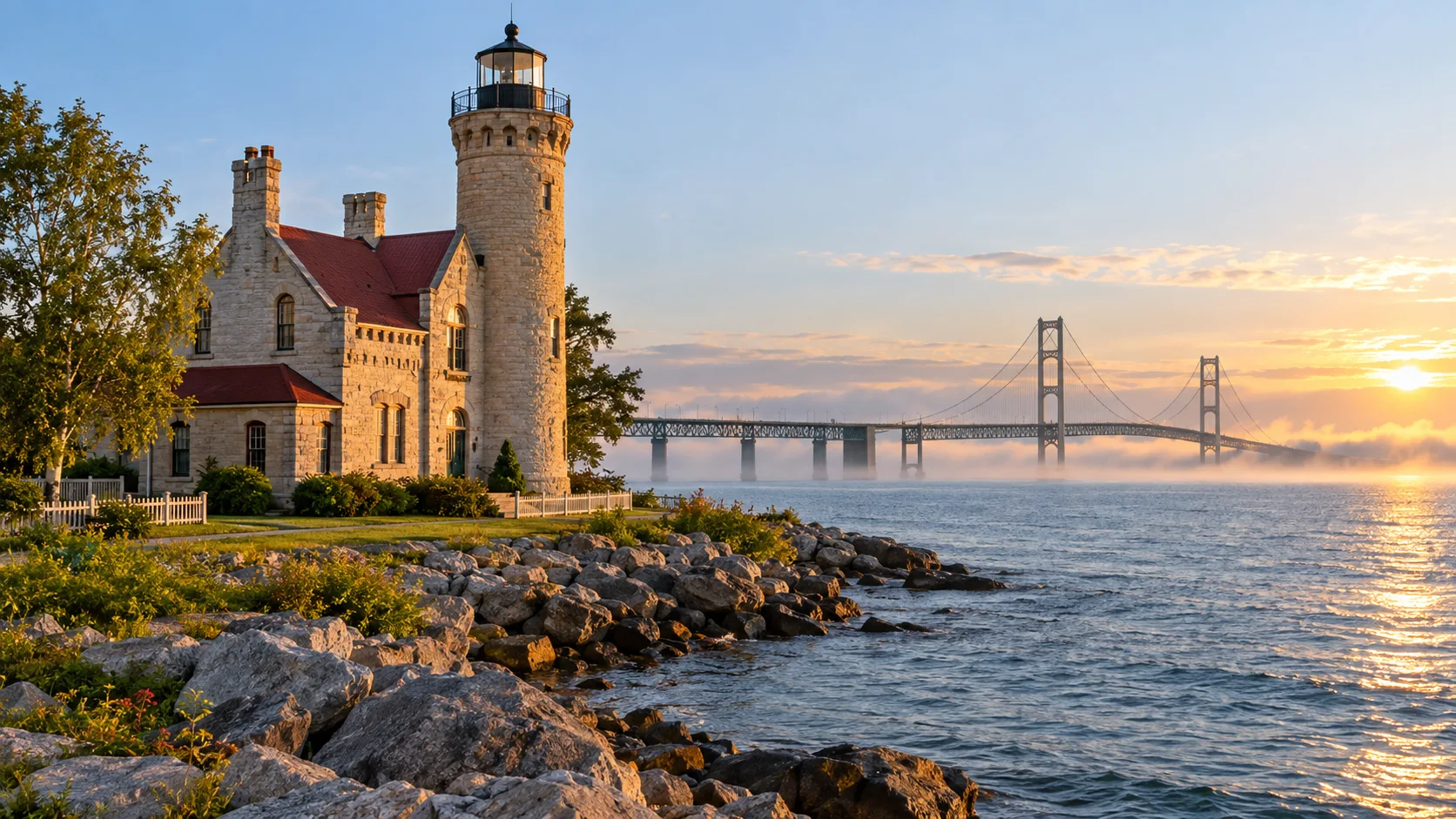
Old Mackinac Point stands at the Straits of Mackinac, where Lake Michigan meets Lake Huron, so it is best understood as the northern gateway to a Lake Michigan circuit. Its castle-like 1892 building and views toward Mackinac Bridge make the boundary location worthwhile.
Seasonal museum admission and tower programs are separate questions, and some experiences have age, footwear, or physical restrictions. Give the site two hours if you also want the reconstructed Straits of Mackinac shipwreck exhibit and park grounds.
6. Grand Traverse Lighthouse
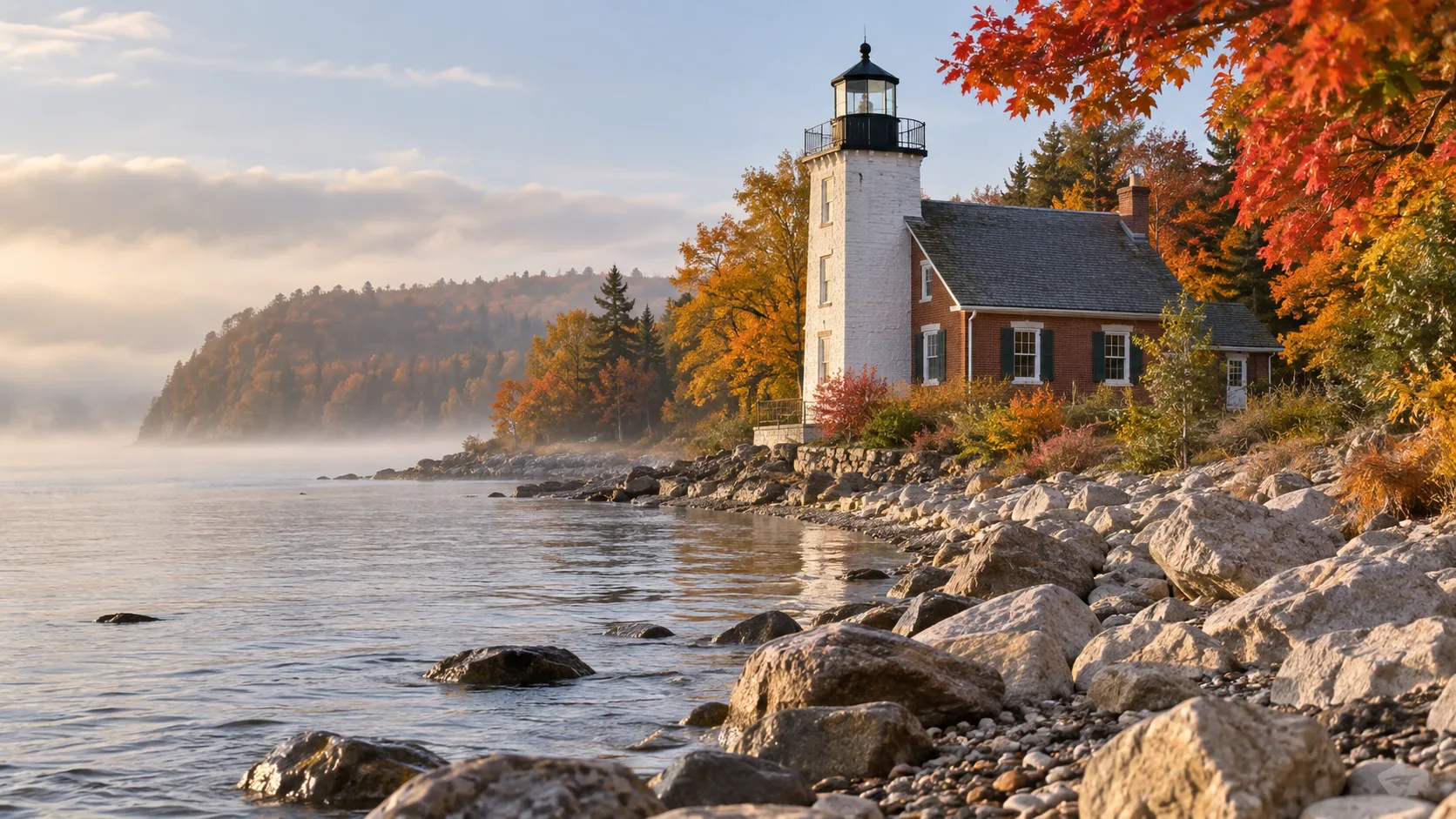
At the tip of the Leelanau Peninsula, Grand Traverse Lighthouse is the most complete conventional museum stop on this route. The keeper’s dwelling, tower, fog-signal building, and state-park shoreline make it much more than a roadside photo.
The museum’s posted 2026 schedule runs daily from April through October with shorter shoulder-season hours, plus limited November weekends. Because the lighthouse is inside Leelanau State Park, account for both museum admission and Michigan’s Recreation Passport requirements.
Do not confuse Grand Traverse Lighthouse with the lights around Traverse City. It is near Northport at the peninsula’s far end, and the drive deserves its own half day rather than a rushed add-on after wineries.
7. Point Betsie Lighthouse
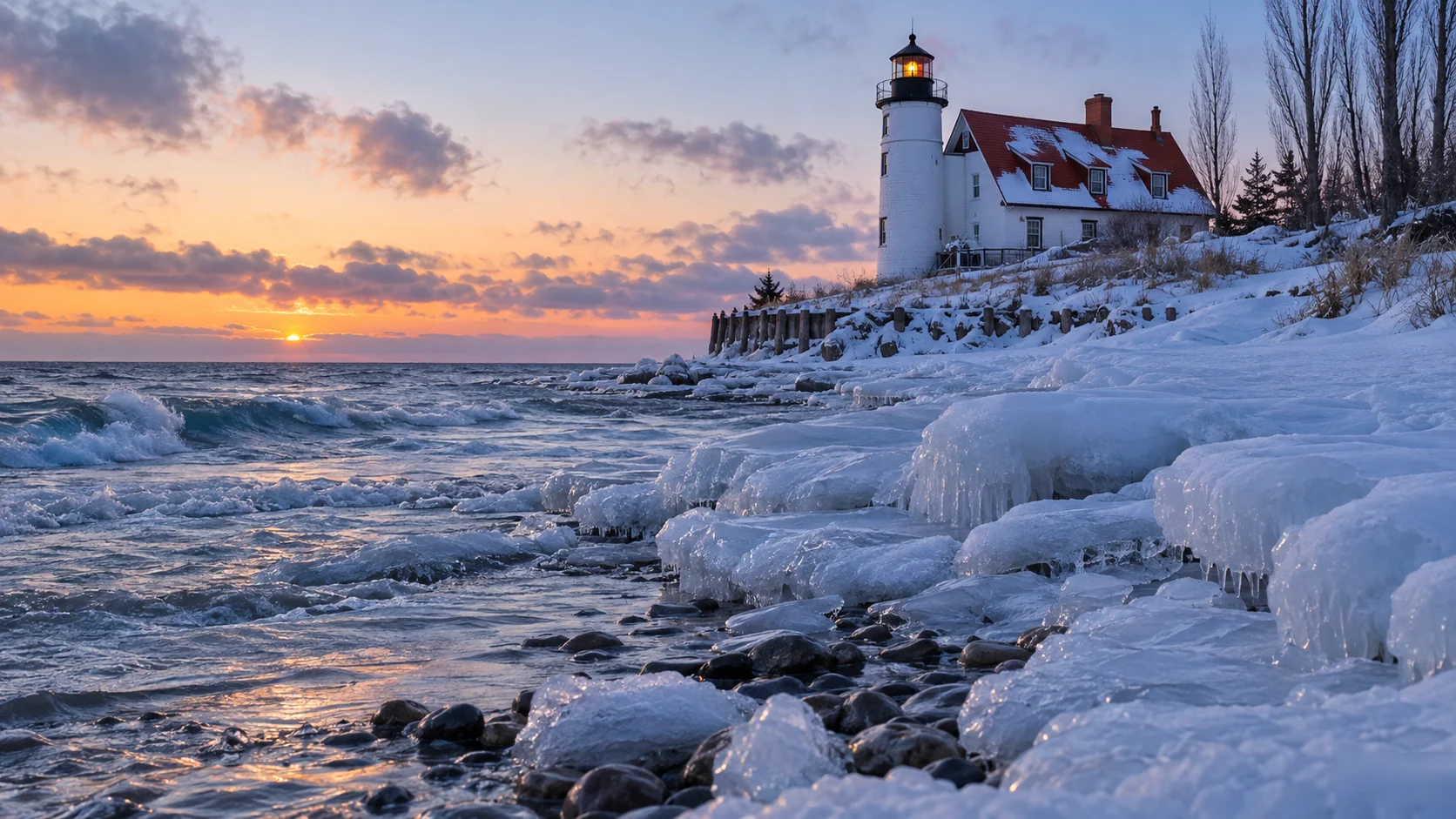
Point Betsie, north of Frankfort, is ideal when architecture and beach photography matter more than a strenuous climb. The white cylindrical tower, red roof, and low keeper’s complex sit close to the water, with Lake Michigan immediately behind them.
The grounds have broader availability than the seasonal museum and tower, and erosion or restoration work can redirect visitors. Check the nonprofit operator’s current calendar, parking notes, and event schedule before arriving.
8. South Manitou Island Lighthouse, with an access warning
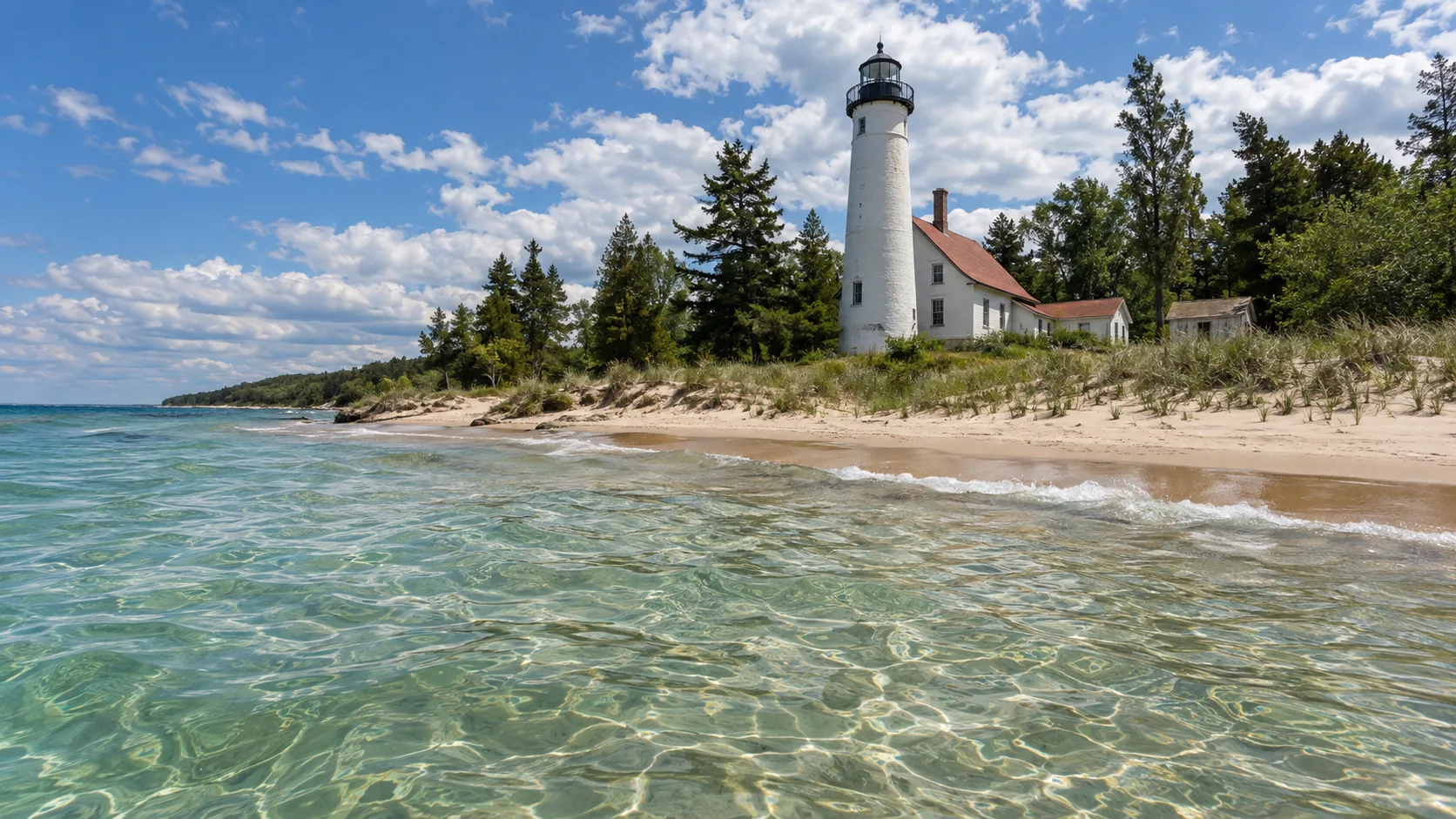
South Manitou’s 1871 lighthouse would normally be the route’s big island commitment, but it is not a normal visitor stop in 2026. Dock relocation and infrastructure work have closed the dock, village, lighthouse, Bay Campground, group sites, and potable-water access until further notice.
The National Park Service’s 2026 South Manitou notice says the regular ferry is not operating and personal boats cannot dock. Do not improvise a landing or rely on an old blog itinerary, and save the lighthouse for a later season after NPS announces safe access.
West Michigan lighthouse stops
9. Big Sable Point Lighthouse
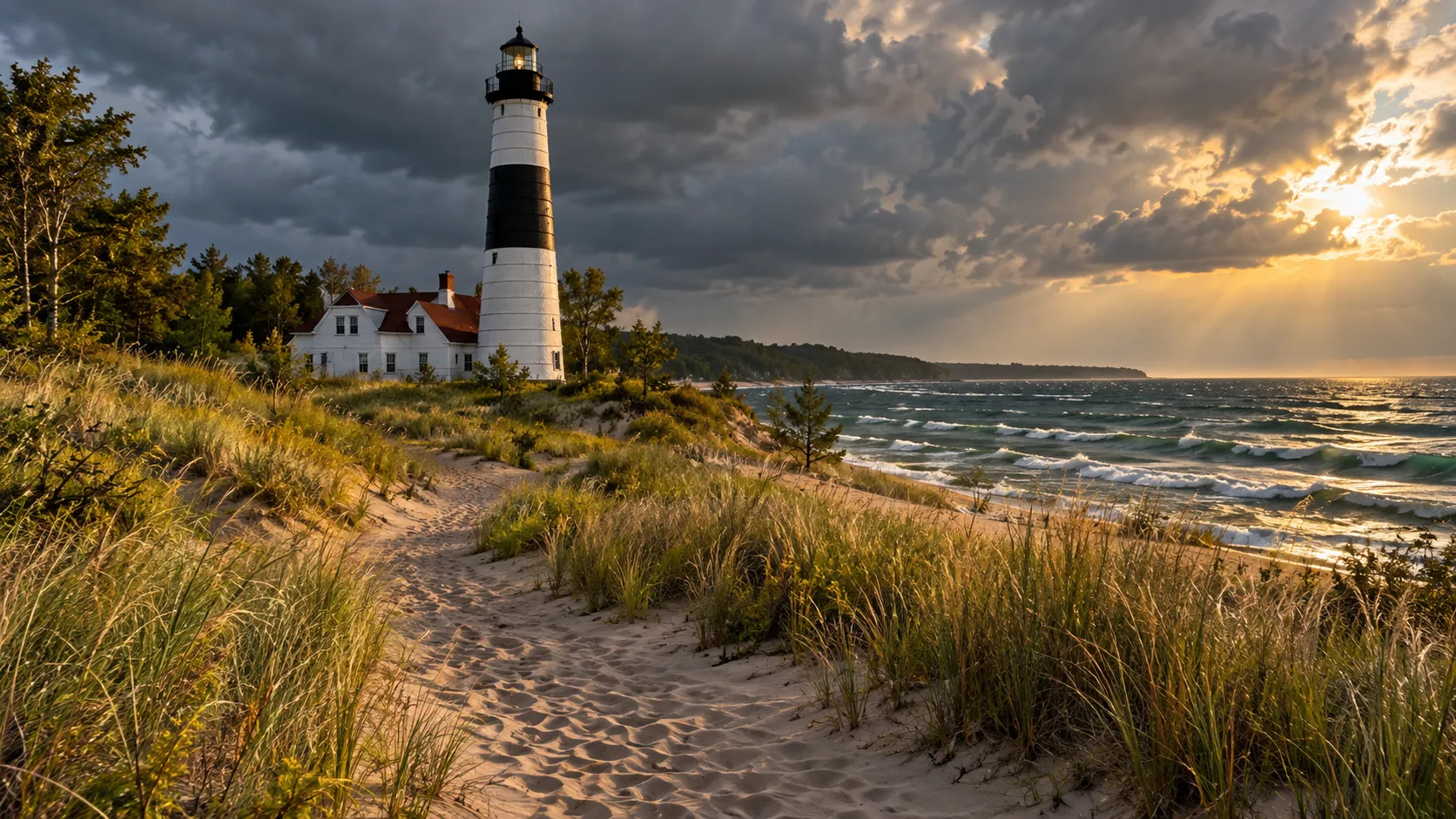
Big Sable is the best choice when you want the lighthouse to feel earned. From the main Ludington State Park area, the usual approach follows a mostly level service road for about 1.8 miles each way through dunes and woods.
Bring water, sun protection, and walking shoes even if the beach looks cool and breezy. Limited bus days may be offered, but ordinary visitors should plan on the walk and never assume a same-day ride.
Lakeshore Keepers posts site-specific opening dates, and its 2026 lighthouse calendar and operating guidance shows why late-season visits need extra care. Grounds access and a staffed tower are not the same thing, and a park entrance requirement may apply even when the lighthouse is closed.
10. Little Sable Point Lighthouse
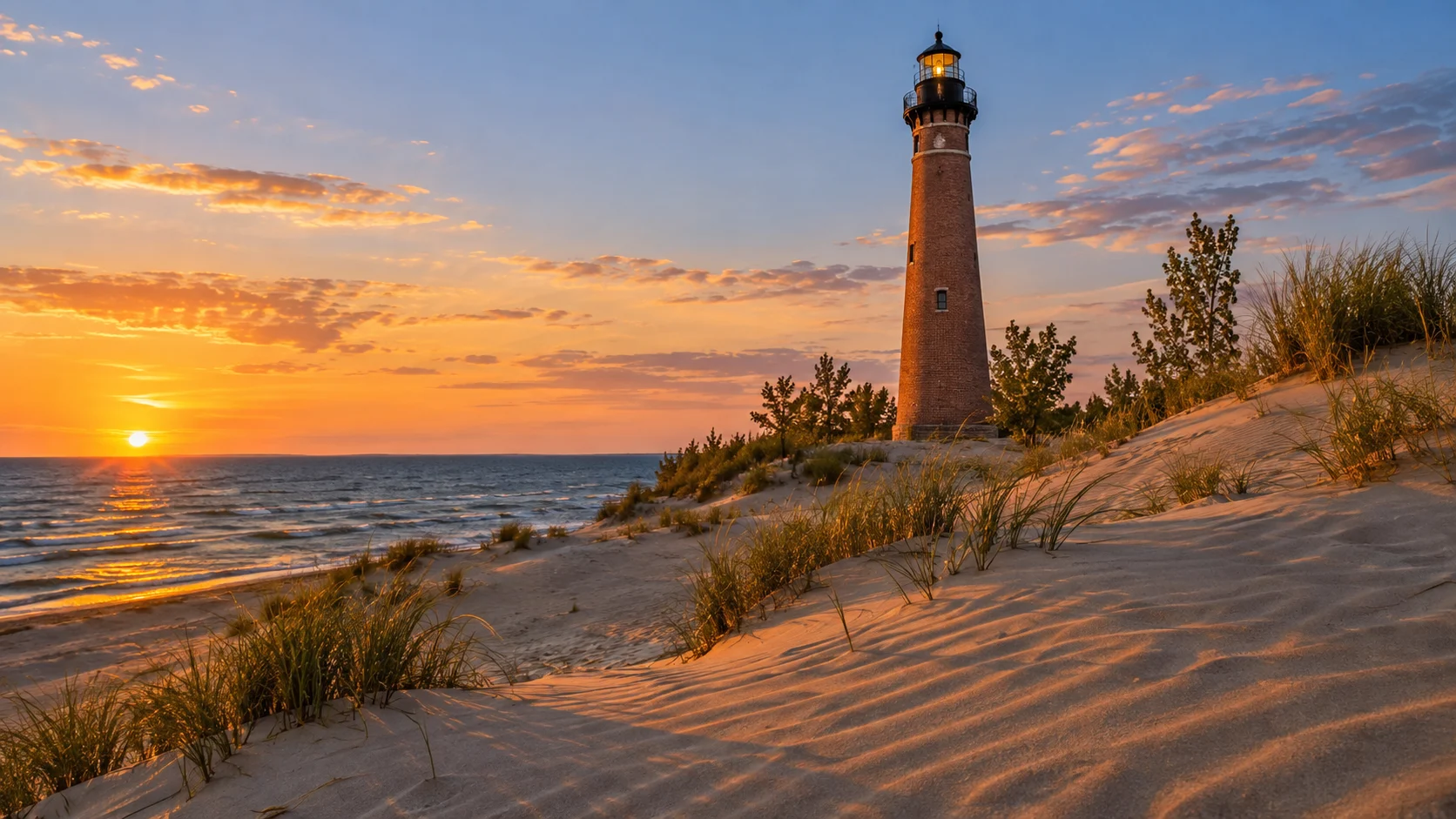
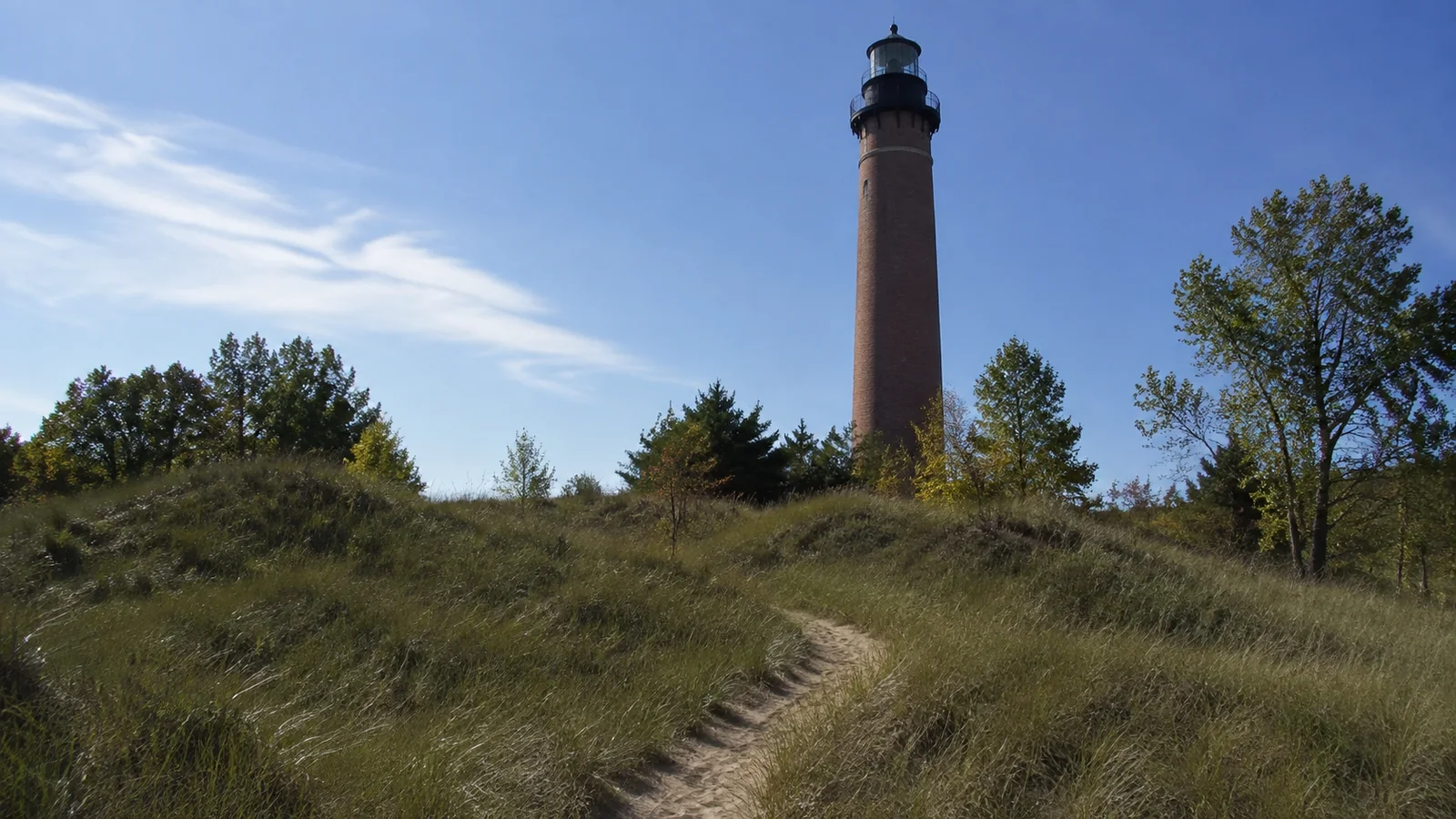
Little Sable gives you a 107-foot brick tower, broad sand, and a much shorter approach than Big Sable. Choose it for a family beach day or when someone wants a tower climb without adding a 3.6-mile round-trip walk.
The sand approach can still be tiring for wheels, balance limitations, or small children. Silver Lake State Park offers an adaptive track chair by reservation during its stated season, but availability and terrain restrictions mean you should arrange it in advance rather than count on a walk-up loan.
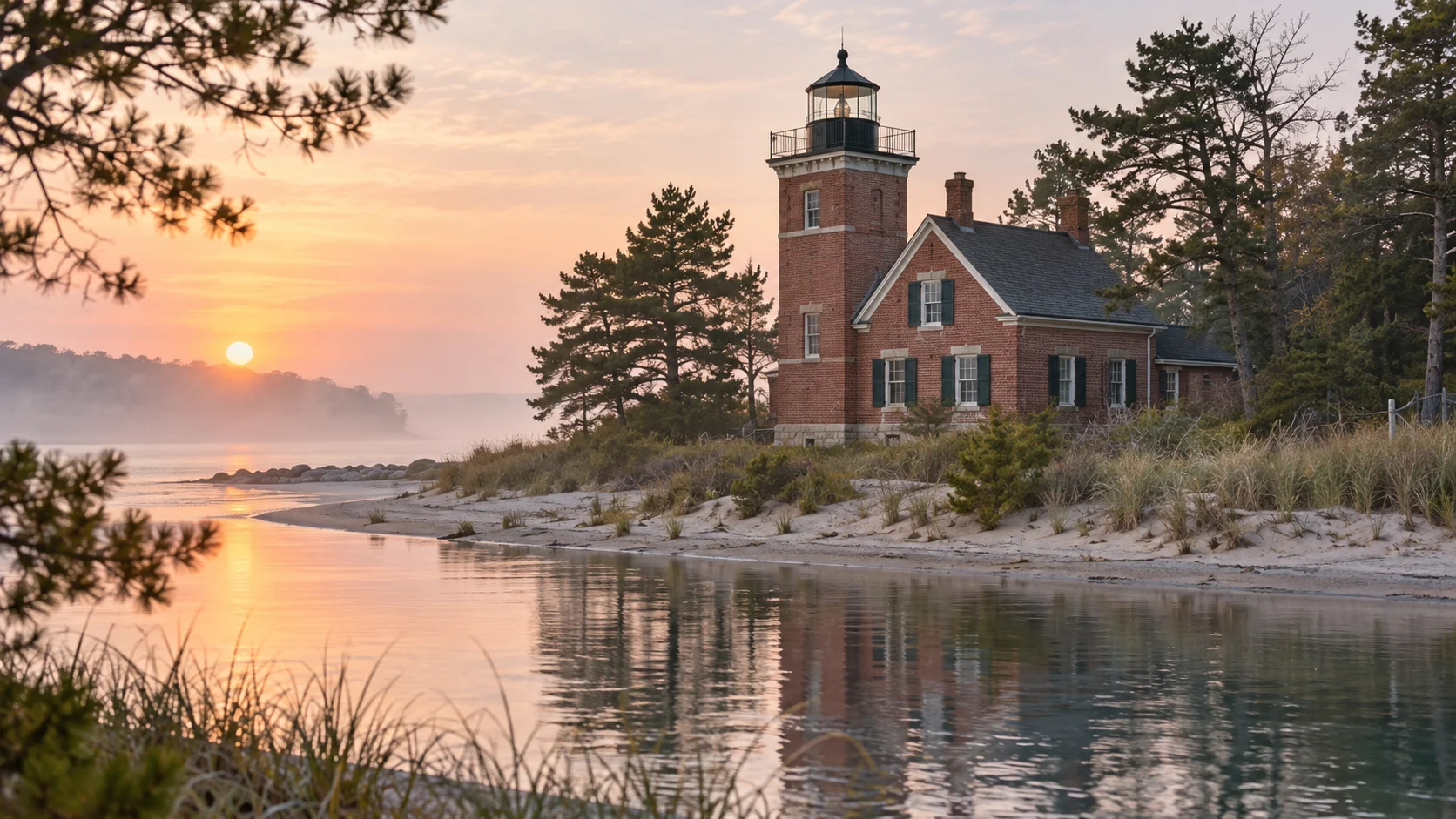
11. White River Light Station
White River is the quieter counterpoint to the tall climbing towers. The 1875 keeper’s dwelling holds a small museum near the channel between White Lake and Lake Michigan, making this a history-first visit.
Choose it when steep stairs are not your group’s priority, but still verify building accessibility and seasonal hours. The grounds, channel, beach, and nearby small towns can fill a gentle half day without forcing another tower climb.
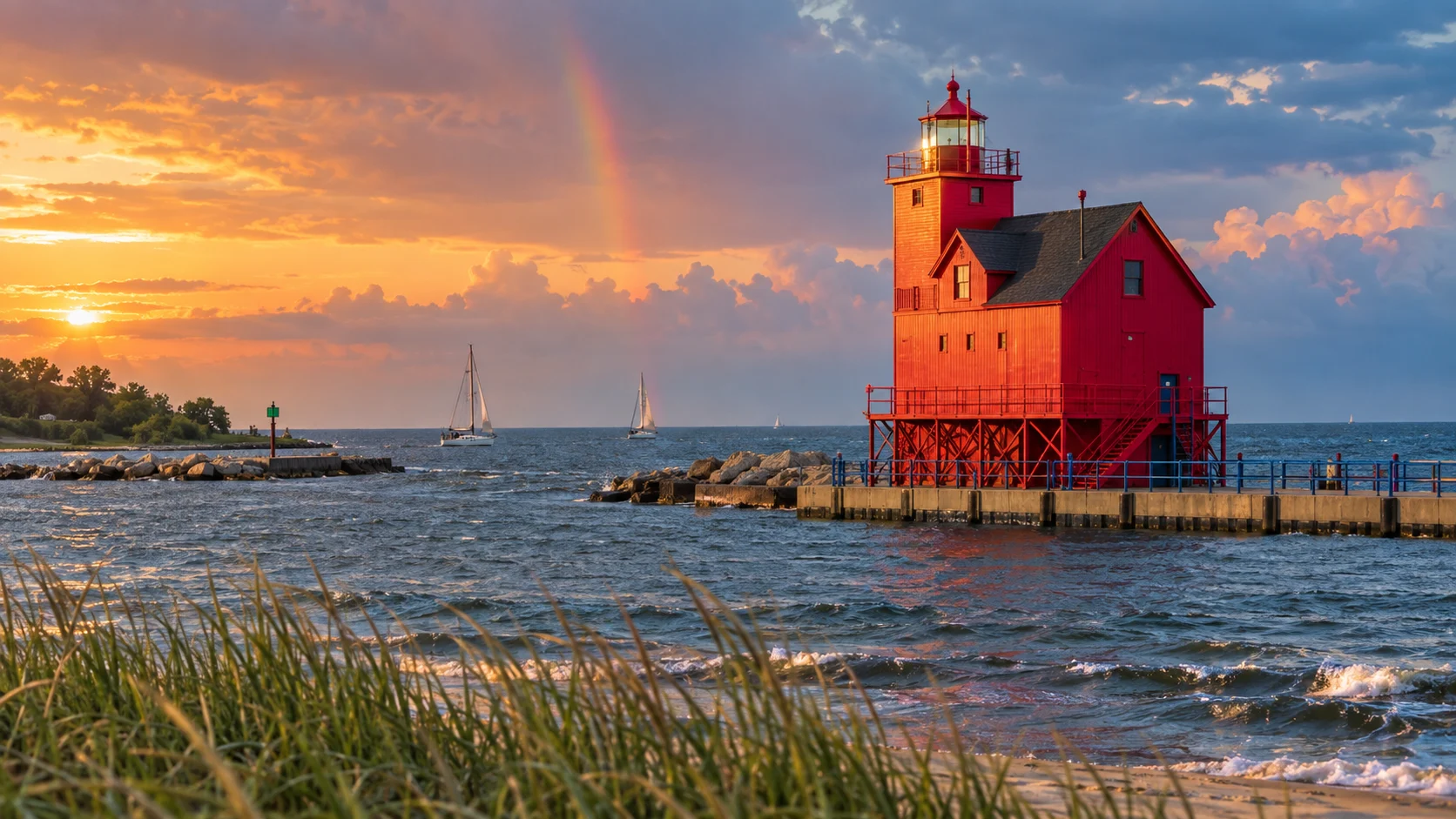
12. Holland Harbor Lighthouse, or Big Red
Big Red is one of the lake’s most recognizable lights, yet the tower and access road are associated with a private residential area. The reliable public plan is to view it across the channel from Holland State Park rather than follow a map pin toward the building.
A longer lens helps, but the full scene with dunes, channel, and lake often makes the better photograph. Check state-park parking and beach conditions, then leave private roads and signs alone.
Where Grand Haven and pier lights fit
Grand Haven’s red range lights and elevated catwalk are worth adding between Holland and Ludington, especially near sunset. They are exterior harbor structures, not a substitute for a museum tour, and the pier becomes a poor idea when waves are breaking across it.
Manistee and Ludington also have pier and breakwater lights with seasonal climb programs on selected dates. Treat every staffed visit as weather-dependent and every unstaffed pier as a marine environment, even on a sunny afternoon.
How to build a realistic lighthouse route
Lake Michigan’s full shoreline is too large for a satisfying long weekend. Use the Great Lakes road-trip framework for regional logic, then choose one of these smaller lighthouse clusters.
- Chicago and southeast Wisconsin, 2 to 3 days: Chicago Harbor, Wind Point, and North Point, with city time between stops.
- Door County, 2 to 4 days: Cana Island plus selected bay-side lights, using a boat tour only if weather and schedule cooperate.
- Northern Lower Peninsula, 3 to 5 days: Old Mackinac Point, Grand Traverse, and Point Betsie, with South Manitou deferred during the 2026 closure.
- West Michigan, 4 to 6 days: Big Sable, Little Sable, White River, Grand Haven, and Big Red.
If you try to combine Wisconsin and Michigan without circling Chicago, a vehicle ferry can reduce driving but adds a fixed reservation and weather dependency. Compare the full cost and schedule with the drive, and never book a tower tour too close to the ferry’s arrival.
Best month for Lake Michigan lighthouses
June through August gives the broadest chance of staffed museums and tower climbs, but also the busiest beaches and hottest sand. September is my favorite planning compromise for lighter crowds and softer light, provided you verify reduced weekday hours.
May can be beautiful and cold, while October brings color and shortened schedules. Winter is for shore photography from safe public ground, not icy pier walking or assuming an unstaffed property is open.
Pier, weather, and accessibility rules
Never walk onto a pier when water is washing over it, ice is present, warning signs are posted, or local authorities have closed access. A lake forecast can look acceptable while a harbor entrance concentrates waves against concrete.
For mobility planning, ask separately about parking surface, distance to the building, threshold steps, restroom access, museum floors, tower stairs, and exterior viewing. “Accessible grounds” does not guarantee an accessible historic tower.
Bring a backup for every tower day, such as a keeper’s-house museum, shoreline trail, or town stop. Wind, staffing, maintenance, lightning, and capacity can close a climb even when the grounds stay open.
My final recommendation
For a first Lake Michigan lighthouse weekend, base in Ludington and pair Big Sable’s walk with Little Sable’s easier approach, then add White River if you want more history. That trio shows how different these sites can be without turning the trip into a windshield marathon.
If stairs are not appealing, choose Chicago Harbor, Big Red, Point Betsie grounds, and a safe Grand Haven viewpoint. The memorable part is the meeting of architecture and water, not a checklist of towers climbed.