Alaska Weather in August: A Cruiser’s Planning Guide
August is one of Alaska’s easiest cruise months for mild temperatures and long days, but it is not reliably dry. Expect many port afternoons in the low to mid-60s, cool nights around 50°F, sharp regional rain differences, and peak-season demand, with later August feeling wetter and darker than the month’s bright beginning.
Is August a good time for an Alaska cruise?
Yes, especially for a first trip, a family tied to summer break, or anyone who wants a broad choice of ships and excursions. August combines relatively mild coastal weather with enough daylight for ambitious port days.
The tradeoffs are real: popular departures can cost more, tours can sell out, and ports may feel busy when several large ships overlap. Rain remains part of the plan, especially in Southeast Alaska.
Early August leans closer to midsummer, while late August begins the transition toward a cooler and wetter fall. Choose your week based on your priorities rather than treating all 31 days as one weather block.
August Alaska temperatures and rainfall by port
The figures below come from NOAA’s official 1991–2020 climate normals. A normal is a 30-year planning baseline, not a forecast and not a guarantee that your week will stay near the average.
- Juneau: normal August high 62.9°F, low 49.1°F, and 6.41 inches of precipitation.
- Ketchikan: normal high 64.7°F, low 53.3°F, and 11.30 inches of precipitation.
- Sitka: normal high 61.8°F, low 52.9°F, and 7.25 inches of precipitation.
- Skagway: normal high 63.4°F, low 51.0°F, and 2.35 inches of precipitation.
- Anchorage: normal high 64.0°F, low 50.9°F, and 2.93 inches of precipitation.
Precipitation is the normal total for the whole month, not the number of rainy days or the duration of each shower. Airport observations also cannot describe the exact conditions beside a glacier, on a mountain pass, or in the next fjord.
What those numbers mean on a cruise
Juneau
A 62.9°F normal high supports comfortable walking when the wind is light, but a wet boat ride can feel much colder. Pack for the exposed whale-watching deck or glacier overlook, not only the sheltered shops near the dock.
Low cloud and rain may affect helicopter or floatplane operations even if ground tours continue. If flightseeing is your must-do, book it early in the port call so a same-day rebooking remains possible, without counting on that space.
Ketchikan
Ketchikan is slightly warmer at night than the other listed ports and dramatically wetter than Skagway. Its 11.30-inch August normal is your cue to pack a genuine waterproof shell rather than a thin fashion jacket.
A wet forecast does not make the port a loss. Creek Street, museums, cultural stops, and a guided outing can still work, but a hood and dry socks protect the mood.
Sitka
Sitka faces the outer coast and combines mild temperatures with frequent moisture. The 7.25-inch August normal sits between Juneau and Ketchikan, but an individual storm can ignore neat rankings.
Allow time for the shuttle or transportation arrangement connected to your berth. Rain and a full ship day can add boarding lines that are easy to underestimate.
Skagway
Skagway’s 2.35-inch normal reflects a rain shadow, making it much drier on average than the southern Southeast ports. The upper Lynn Canal can still funnel wind, and a trip up the White Pass climbs into colder conditions.
Do not leave the rain layer aboard just because the dock looks bright at breakfast. Mountain weather and return conditions can change during a long rail or road excursion.
Anchorage and Southcentral Alaska
Anchorage matters for travelers adding a land stay to a one-way cruise, but ships do not use downtown Anchorage as the normal ocean-cruise turnaround. Seward and Whittier have their own coastal conditions, followed by a long transfer through mountains.
Southcentral’s lower precipitation normal does not cancel rain, smoke, or transportation disruption. Arrive before embarkation day so a delayed flight or road issue does not become a missed ship.
How much daylight is there in August?
Juneau has roughly 16 hours and 20 minutes of daylight near August 1 and about 14 hours by August 31. You can check an exact date and location with NOAA’s sunrise and sunset calculator, remembering that mountains can hide the sun before the calculated horizon time.
That decline is noticeable across one month. Early August gives generous evening light, while late August makes a 7 p.m. sail-away or independent walk feel more time-sensitive.
A sleep mask is still useful in a bright cabin, particularly at the beginning of the month. Blackout curtains help, but light can slip around the edges when the ship turns.
Rain in August: plan for it, do not surrender to it
A waterproof day is not the same thing as a canceled day. Many excursions run in showers, while aviation, small-boat, and exposed-water activities depend on visibility, wind, and sea state as well as rain.
Choose one weather-sensitive priority and one sturdy backup in each important port. If flightseeing is canceled, a food tour, museum, rainforest walk, or scenic drive can keep the day satisfying.
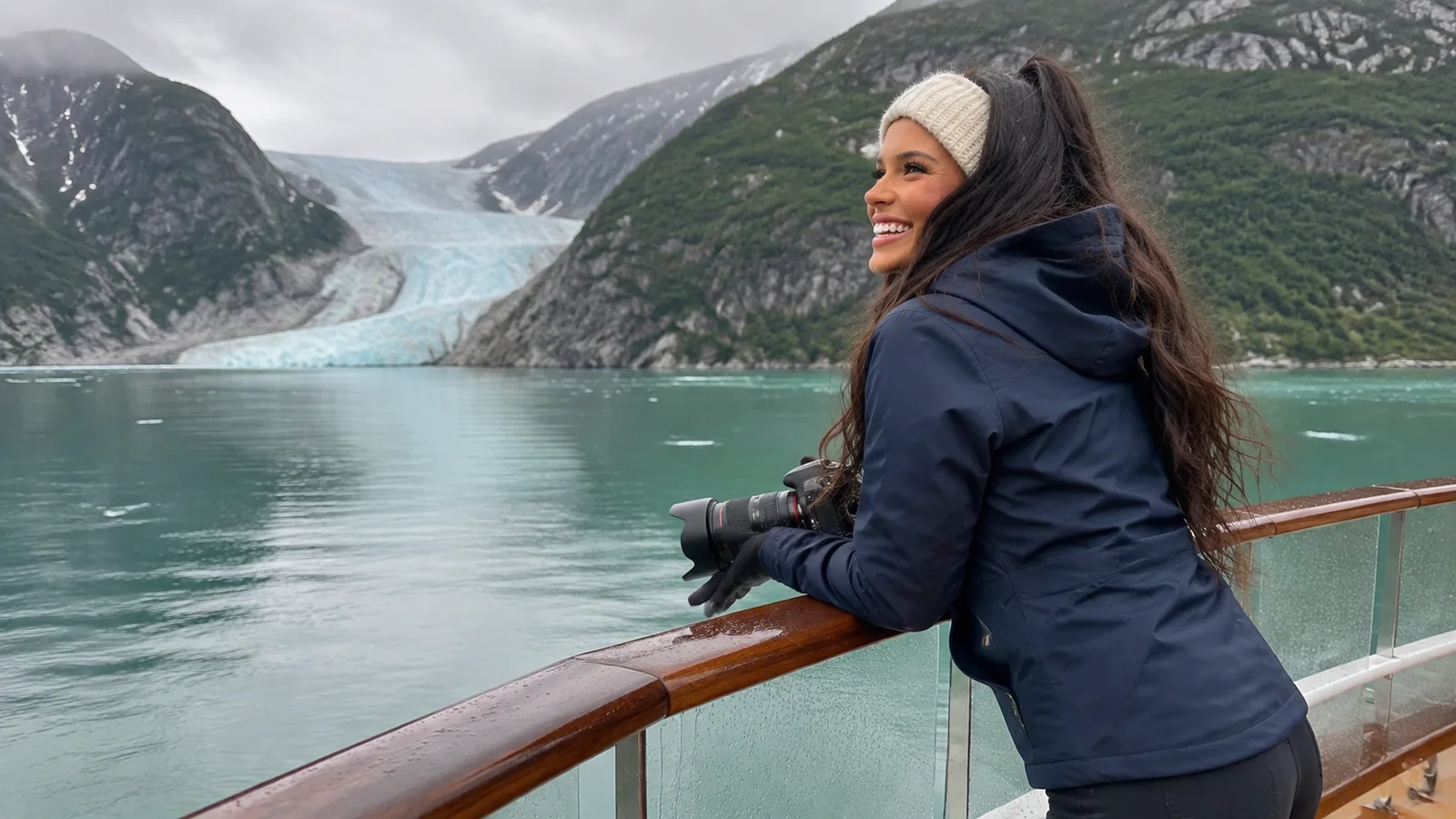
A small umbrella is awkward in port wind and nearly useless on an open deck. A jacket with a secure hood keeps both hands free for railings, binoculars, and photos.
Wind and sea conditions in August
Inside channels can be smooth while the outer coast or Gulf of Alaska has noticeable swell. August does not promise calm water, and even a large ship can move when wind and waves line up poorly.
The National Weather Service posts current conditions and forecasts on its Southeast Alaska marine page. Check close to sailing instead of relying on a seasonal claim made months earlier.
Motion-sensitive travelers should favor a lower, midship cabin and ask a clinician about appropriate prevention before the trip. A southbound or northbound Gulf crossing can feel different from a protected scenic day, but no direction guarantees smoother water.
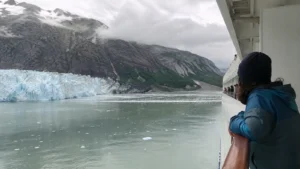
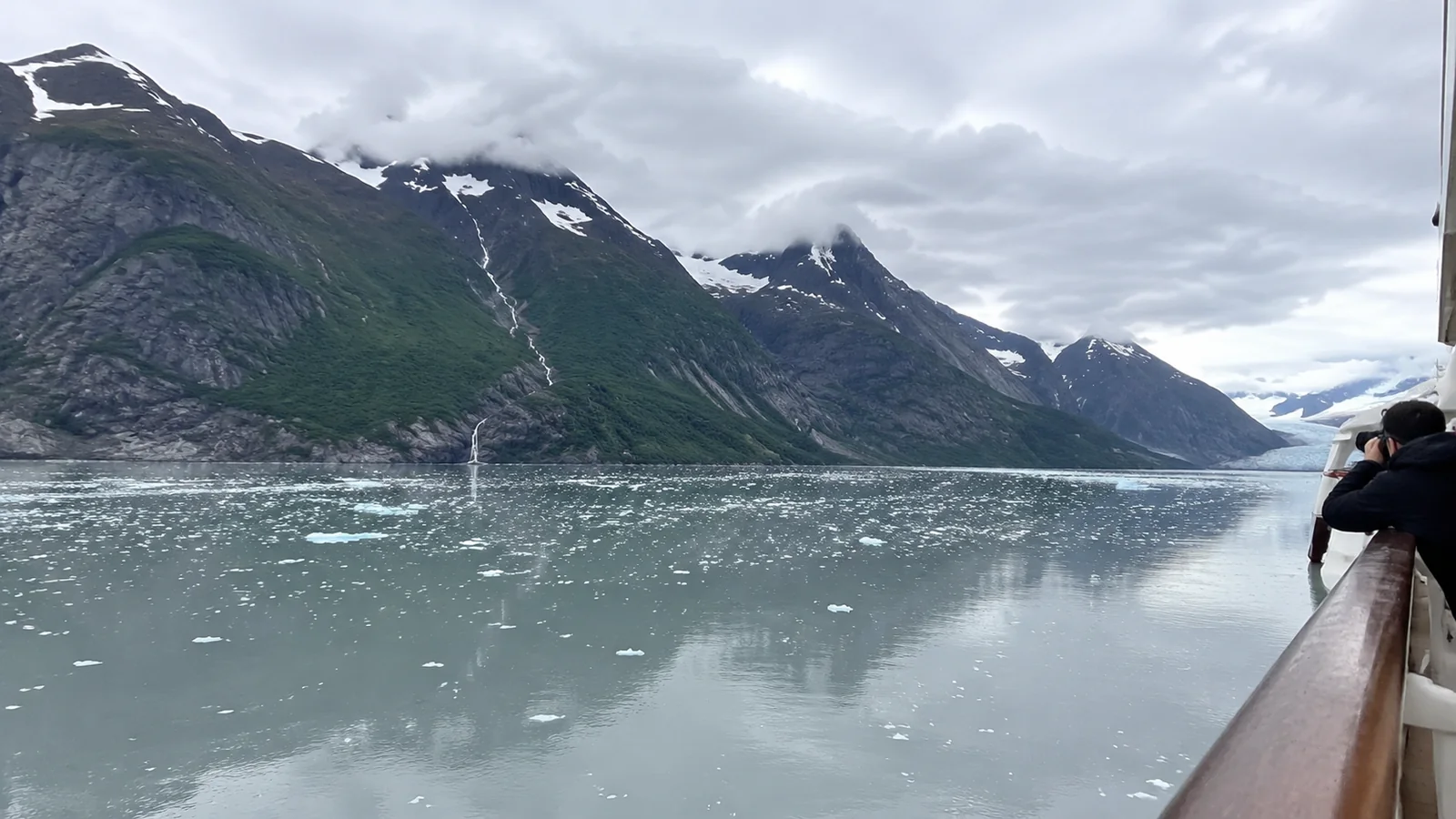
Glacier-viewing decks add wind chill even when the ship is barely moving. Keep gloves, a beanie, and your midlayer in the cabin rather than packing them in checked luggage.
Can wildfire smoke affect an August cruise?
Yes, although smoke is not equally likely on every itinerary or every day. It is a greater planning concern for Interior and Southcentral land extensions, yet transported smoke can reach coastal communities too.
The Alaska Department of Environmental Conservation maintains wildfire smoke information and advisory links. Check current air quality before strenuous outdoor plans and follow medical advice if you have asthma, heart disease, or another condition affected by fine particles.
A well-fitting respirator takes little space and may be useful for a sensitive traveler. Ordinary cloth face coverings are not equivalent protection from fine smoke particles.
Wildlife in August
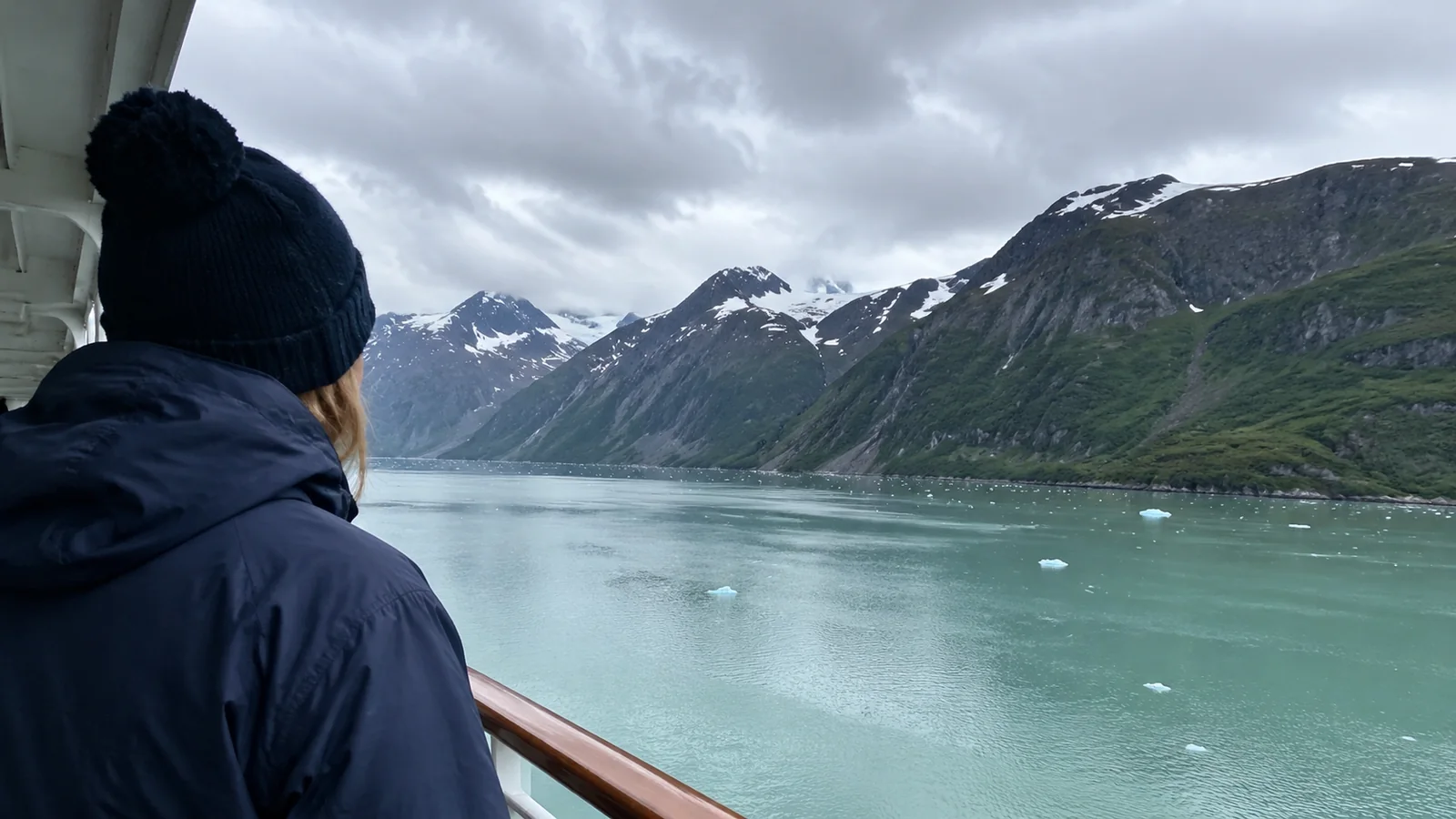
August can offer strong wildlife opportunities because food is abundant in many coastal areas, but sightings remain wild and uneven. Humpback whales, orcas, sea lions, seals, otters, eagles, bears, and salmon all require the right location and timing.
The Alaska Department of Fish and Game says bears and other wildlife can concentrate along streams where salmon spawn during summer, with salmon spawning occurring mostly from July into November. Its wildlife-viewing season overview helps set expectations without guaranteeing a bear or whale on one excursion.
A whale-watching operator may know where animals fed yesterday, but it cannot schedule them for tomorrow. Choose a tour for its time on the water, responsible viewing practices, guide quality, vessel, and refund or sighting policy.
For bears, never approach a stream bank casually because someone else posted a photo there. Use an authorized guide where appropriate, carry required safety equipment on independent hikes, and follow closures and local instructions.
What to pack for Alaska in August
Pack for a working range from the 40s to the 60s, plus warmer or colder exceptions. The ship’s heated interior, a damp forest, and an exposed glacier deck can require three outfits in one afternoon.
- Waterproof shell: hooded, wind-resistant, and large enough to cover a midlayer.
- Warm midlayer: fleece, wool, or a light synthetic puffer.
- Quick-drying base tops: short and long sleeves for changing conditions.
- Comfortable pants: with optional rain pants for kayaking, hiking, or small boats.
- Water-resistant walking shoes: broken in before the trip, with useful traction.
- Warm extras: thin gloves, beanie, brimmed cap, and several pairs of socks.
- Day gear: binoculars, sunglasses, sunscreen, reusable water bottle, and dry bags.
Bring a second pair of walking shoes if wet feet ruin your day. A ship cabin may lack a safe, fast way to dry soaked footwear overnight.
Skip an entire suitcase of bulky sweaters by building repeatable layers. The cruise clothes packing method makes room for excursion gear without expecting every dinner outfit to be unique.
August crowds, prices, and reservations
August sits in Alaska’s main cruise season, so assume strong competition for balcony cabins, rail add-ons, popular wildlife boats, and limited-capacity flightseeing. Booking late can still work, but it may leave times that conflict with port hours.
Price the whole trip before deciding a sailing is expensive or cheap. Airfare, hotels, transfers, excursions, gratuities, drinks, specialty meals, and insurance can outweigh a modest cruise-fare difference.
Family demand may ease as some schools reopen later in August, but that pattern varies by region and year. A port can still be crowded if several ships share the day.
Reserve the one experience you would be genuinely sad to miss, then leave breathing room. Packing every port with nonrefundable independent tours turns a weather delay into a financial argument.
Early August versus late August
Choose early August for maximum summer feel
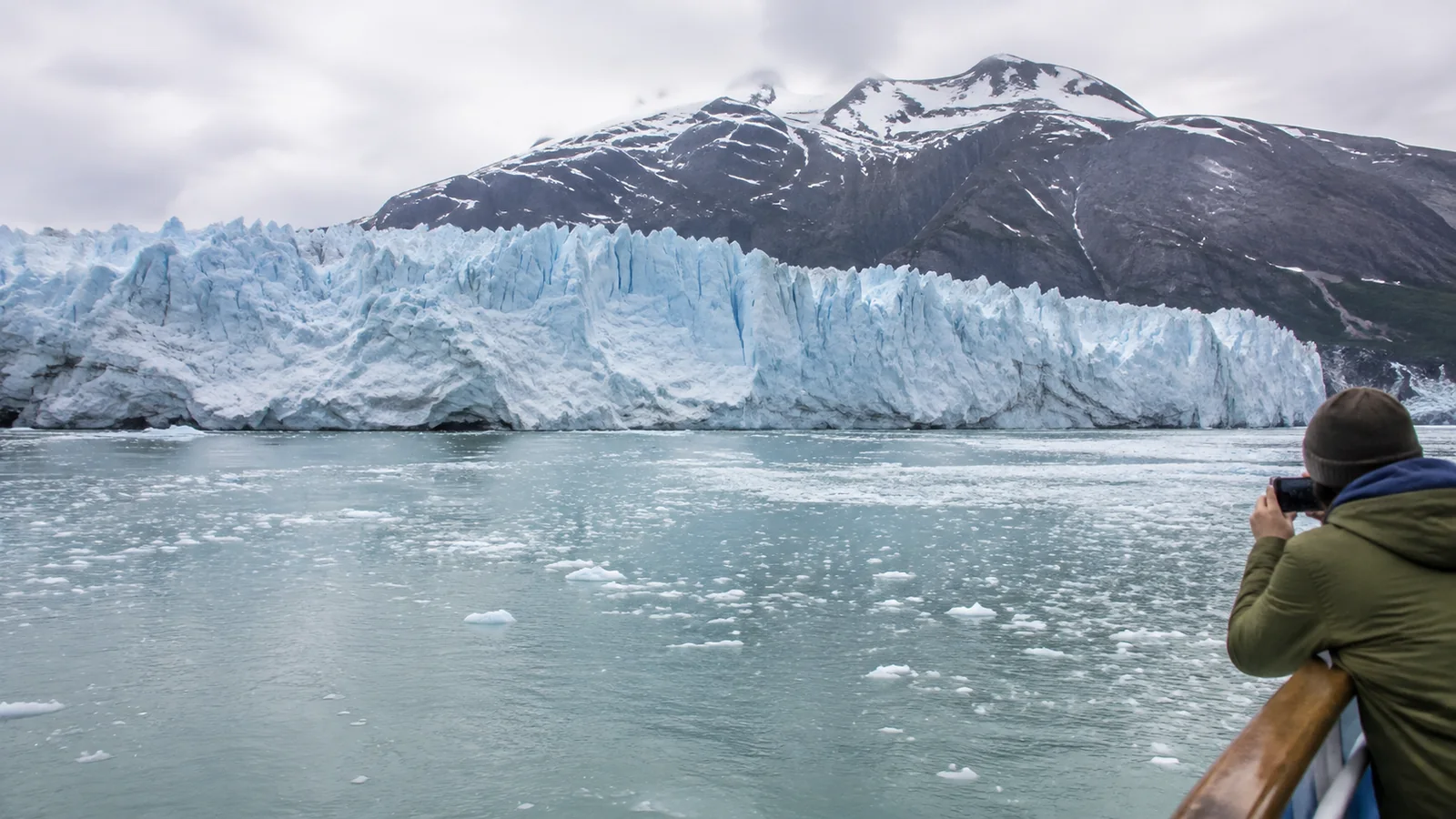
Early August offers longer daylight and slightly better odds of warmer conditions than the month’s end. It suits families, active travelers, and photographers who want extra evening light.
It can also carry peak pricing and full tours. Book flights and key excursions early, especially when the sailing connects to a fixed land itinerary.
Choose late August for a transition-season compromise
Late August can bring softer demand on some dates while keeping more seasonal operations than a late-September cruise. Cooler evenings, increasing rain risk, and earlier darkness are part of that bargain.
Do not assume every late-August sailing is discounted. Compare cabin category, onboard credits, airfare, and cancellation terms on the exact date.
Round-trip and one-way weather tradeoffs
A round-trip from Seattle or Vancouver concentrates on Southeast ports and simplifies flights. Depending on the route, it may spend time in more exposed water west of Vancouver Island, so “Inside Passage” in the title does not prove every hour is sheltered.
A one-way sailing reaches Southcentral Alaska and works naturally with Denali or another land extension. It also introduces an open Gulf segment and more transportation pieces, making a pre-cruise buffer especially valuable.
Compare the actual glacier destination, port hours, and scenic cruising before comparing water slides. The guide to choosing an Alaska cruise line sorts the options by itinerary and traveler type.
Should you choose a small ship in August?
A small ship may enter quieter coves, use flexible wildlife-focused itineraries, and carry fewer guests. It can also cost more, offer fewer indoor distractions, require more mobility, and transmit motion differently in open water.
August demand applies to expedition products too, so limited inventory can disappear early. Compare activity level, landing method, medical support, cabin comfort, and included gear among small-ship Alaska cruises.
August versus September
August has warmer port normals, longer days, and generally lower Southeast precipitation totals than September. It also tends to bring more families, higher demand, and busier excursions.
September can be cheaper and quieter, but Southeast normals turn cooler and much wetter while daylight falls rapidly. Travelers who dislike rain or depend on one seasonal tour will usually find August the safer fit.
The best August plan
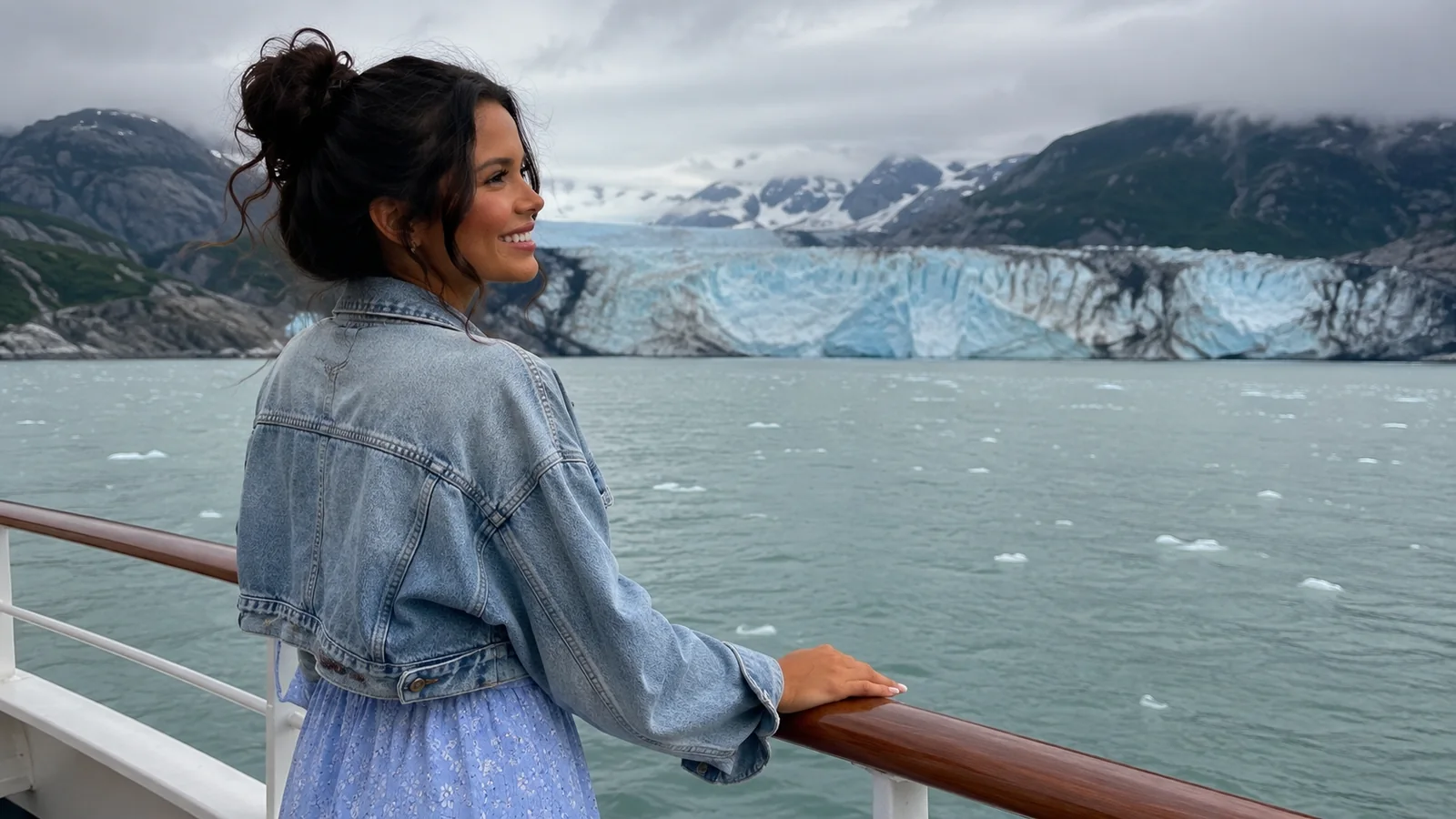
Choose August if you want mild odds, long sightseeing days, and the broadest mainstream cruise schedule, then budget for peak demand. Pick an itinerary for glacier access and port time before choosing a ship for restaurants or entertainment.
Pack waterproof layers, reserve one essential excursion, and keep a weather-proof backup for every port. August is a strong Alaska month precisely because you can plan around its rain instead of pretending the rain will stay away.