Icon of the Seas Cabins to Avoid: Exact Areas and Better Picks
The Icon of the Seas cabins to avoid are really the rooms that do not fit your priorities. A cabin below a pool deck, overlooking a busy family neighborhood, or far from your favorite venues can be terrific for one traveler and a weeklong annoyance for another, so let’s sort the facts from the guesswork.
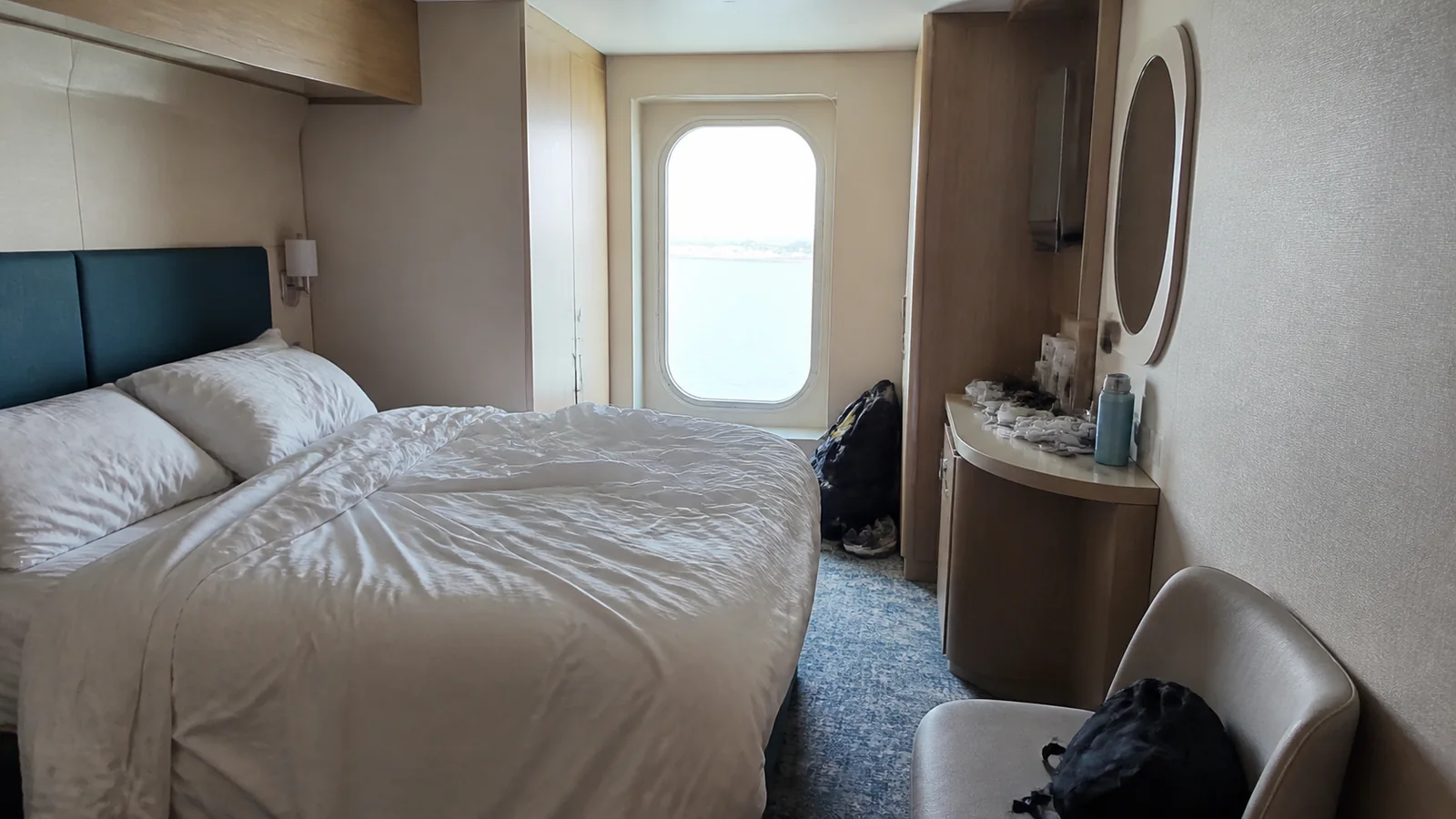
Check the Icon of the Seas deck plan for your dates
This guide was checked against Royal Caribbean’s official Icon of the Seas deck plan profile for sailings from May 2, 2026, through April 24, 2027. Deck-plan versions can change, so select the date range covering your cruise before relying on any cabin number.
The plan proves where a room sits, what category it belongs to, and which public spaces are above or below it. It cannot prove that you will hear chairs, feel motion, smell food, or encounter noisy neighbors.
That difference is important on a ship with several open neighborhoods. “This balcony faces Surfside” is a fact, while “this room will be loud” is only a possible outcome.
Quick list of Icon of the Seas cabin cautions
These are the room groups I would inspect most carefully before paying:
- Deck 14 cabins beneath AquaDome, Chill Island, the main pool area, Windjammer, and The Hideaway on Deck 15
- Surfside Family View Balconies if you want an ocean horizon, a conventional balcony outlook, or maximum visual privacy
- Spacious Infinite Central Park View Balconies if you expect a traditional outdoor platform or ocean view
- Spacious Infinite Ocean View Balconies if a physically separate outdoor balcony is essential
- Deck 7 cabins directly over public venues on Deck 6, especially for early sleepers and afternoon nappers
- Very forward or very aft rooms if you are sensitive to motion or long walks
- Connecting rooms when you do not need the door and are especially sensitive to neighboring sound
- Any room carrying the official obstructed-view symbol if an open sightline is the reason you are upgrading
None of these areas is defective. The goal is to avoid paying for a feature you imagined but the room does not actually have.
Deck 14 cabins below the busiest outdoor and dining deck
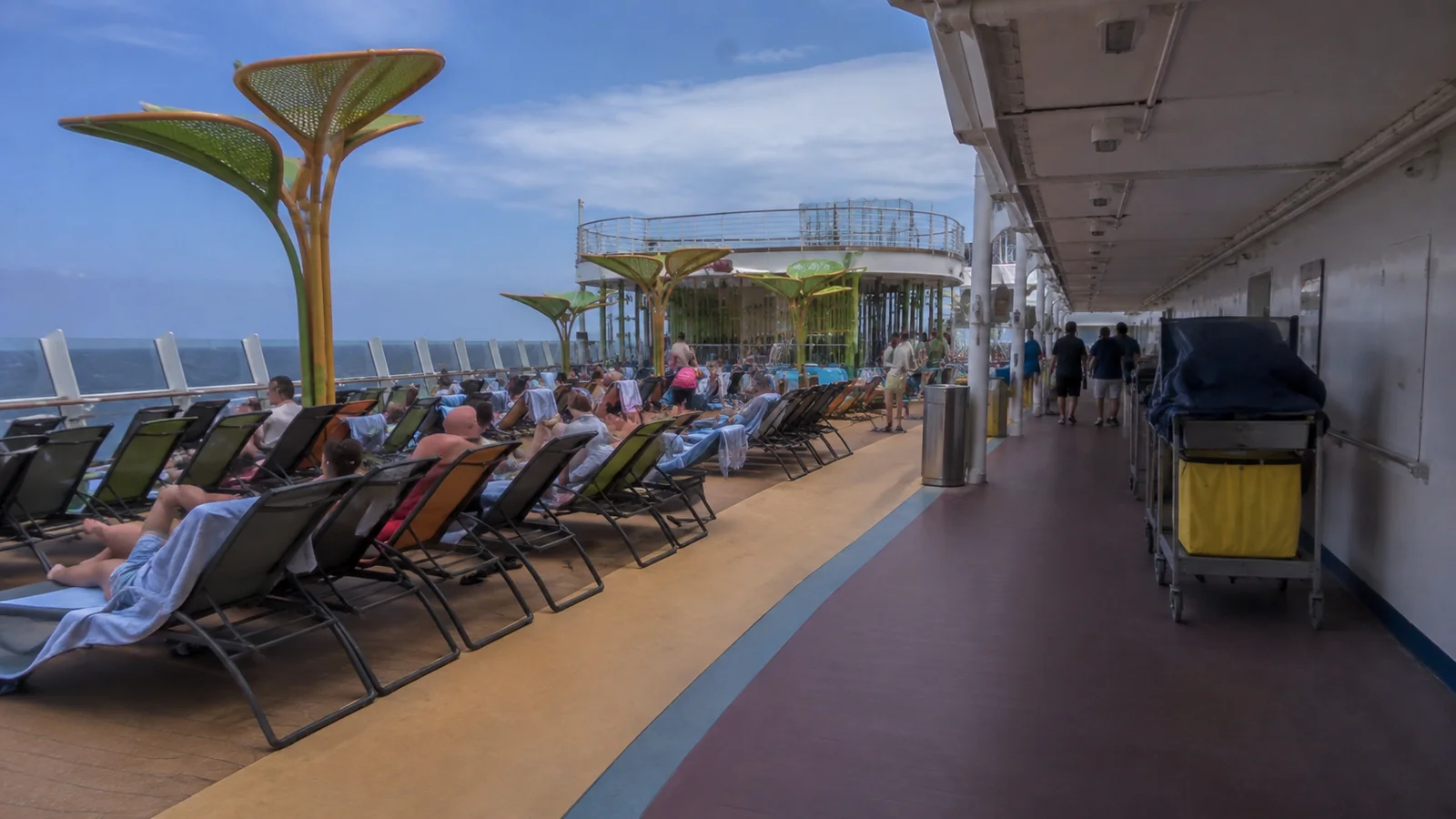
Deck 15 is almost entirely public space, with AquaDome and its theater forward, Chill Island and the pool area midship, Windjammer aft, and The Hideaway at the stern. Deck 14 has long cabin fields directly beneath that changing footprint.
On the profile checked, the broad Deck 14 fields run from the 14138 area aft to 14362 on the port side and from 14538 aft to 14762 on the starboard side. Those are zone endpoints, not a claim that every integer between them is a cabin or that every room has the same venue overhead.
The forward part sits below the AquaDome complex and nearby dining areas. Farther back, the overhead use changes through pool seating and service areas, Windjammer, then The Hideaway.
Possible concerns include footsteps, rolling carts, furniture movement, music, cleaning, and early food-service preparation. The precise risk depends on the room’s position, operating schedule, insulation, and your sensitivity, so a deck plan cannot promise a noisy night.
Better alternative: Look first at an exterior room on Deck 10, 11, or 12 with staterooms above and below. Deck 12 can be especially appealing to travelers who want a residential buffer without being as far from the upper-deck action as a much lower room.
Do not simply move one cabin number forward or aft. Place the selected Deck 14 room over Deck 15 and identify whether its direct neighbor is a theater footprint, pool seating, dining space, service area, or open deck.
Surfside Family View Balconies: fun view, specific tradeoffs
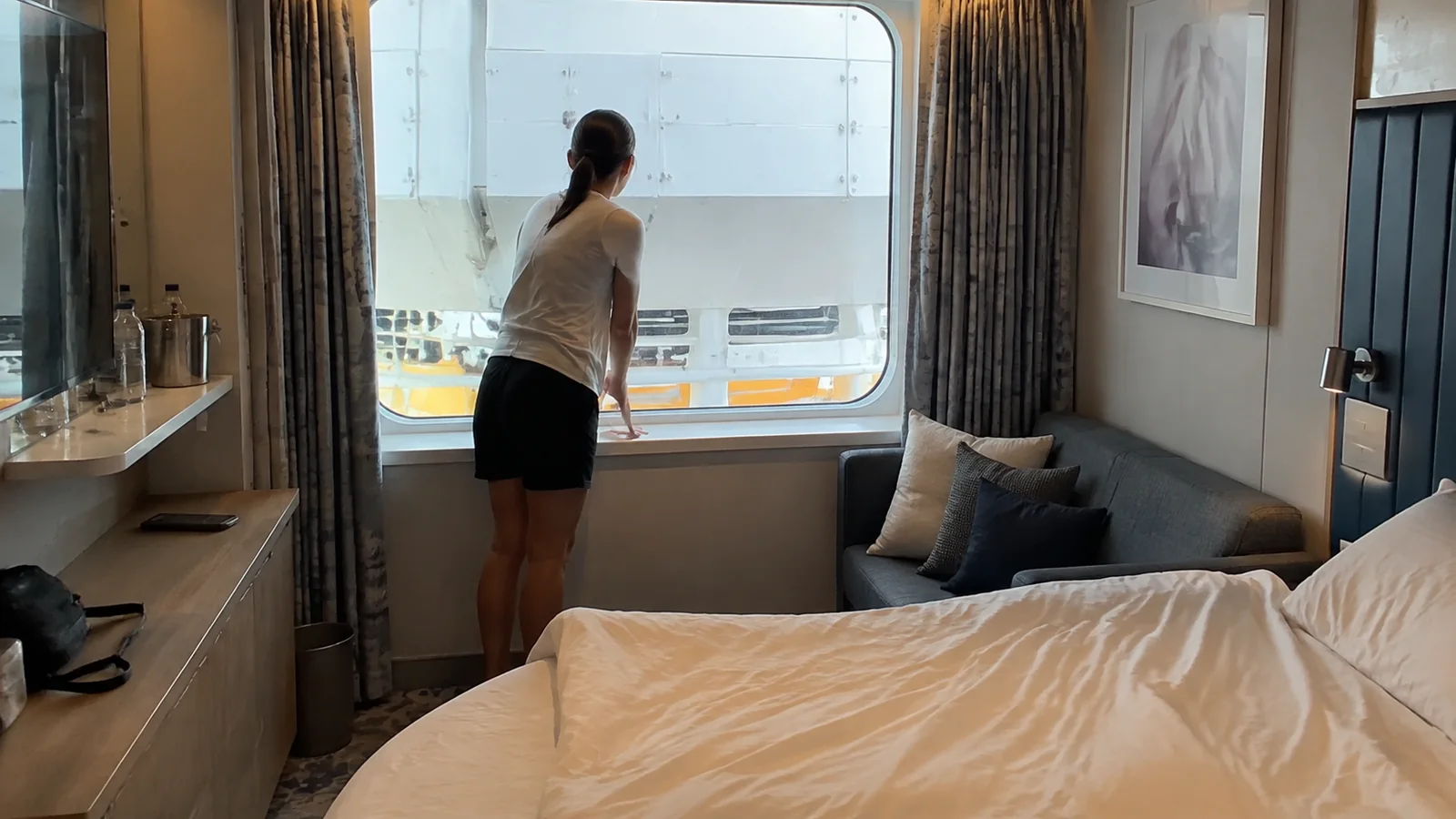
Royal Caribbean describes the Surfside Family View Balcony as a private balcony overlooking Surfside and specifically highlights people-watching. That description is wonderfully clear about what you are buying, and it is equally clear about what you are not buying.
The view is into a lively family neighborhood rather than straight over the side to an uninterrupted ocean horizon. Balconies across the neighborhood can also create opposing sightlines, so curtains and thoughtful clothing choices may matter more than they do in an ocean-facing room.
On Deck 10, exact examples from the current plan include 10289 and 10321 through 10347 on the port side, plus 10689 and 10721 through 10747 on the starboard side. The ranges refer to the valid odd-numbered rooms shown within those stretches, not every number.
Similar Surfside-facing groups appear on Decks 9, 11, and 12, but their numbers and positions differ. Search your exact room on the official plan rather than adding or subtracting 1000 and assuming the layout repeats perfectly.
Families may adore watching the neighborhood wake up and being close to its activities. Couples seeking a quiet retreat, an ocean panorama, or a balcony that feels visually tucked away may prefer something else.
Activity can mean voices, music, children playing, and event energy during operating hours, but it does not justify a blanket noise guarantee. Closing times and programming can change, and cabin insulation is not visible on a diagram.
Better alternative: Pick an ocean-facing balcony on a residential deck if the sea is the main event. If Surfside convenience is the priority, select the neighborhood room gladly and pack with its inward-facing sightlines in mind.
Families comparing layouts can also browse our cruises for kids guide before paying extra for a cabin whose biggest advantage is neighborhood access.
Infinite Central Park balconies are not ocean balconies
The current room inventory calls these Spacious Infinite Central Park View Balconies. Royal Caribbean says the expanded living area becomes a balcony overlooking Central Park at the push of a button.
The important words are “Central Park” and “expanded living area.” This is an inward view and an integrated window area, not a conventional platform projecting over the ocean.
On Deck 10, the current plan shows this category in the interior-facing fields from 10181 through 10257 portside and 10583 through 10657 starboard. Related fields appear on Decks 11 and 12, with interruptions and category details that should be checked room by room.
Central Park can be a beautiful outlook for travelers who like greenery and neighborhood atmosphere. The tradeoffs are opposing-window sightlines, activity below, and no direct sea view from that opening.
Music, conversation, and restaurant activity are possible, but nobody can predict what reaches a specific cabin on your sailing. Higher and lower positions can feel different, and sensitivity varies enormously.
Better alternative: Choose an ocean-facing Infinite Ocean View Balcony if the horizon matters, or a standard Ocean View Balcony if you specifically want a separate outdoor platform. If you love the park, keep the category and choose privacy habits rather than expecting it to behave like an exterior balcony.
Infinite Ocean View Balconies: understand the window first
Icon’s Spacious Infinite Ocean View Balcony uses an expanded living area that becomes an oceanfront balcony at the push of a button, according to Royal Caribbean’s official Icon stateroom guide. It offers ocean views and flexible interior space, but its architecture is different from a standard balcony with a separate exterior floor.
This category is not one I would avoid automatically. I would skip it only when the physical separation of a conventional balcony is central to how you plan to use the room.
Think about whether one person wants outdoor air while another naps in a dark, climate-controlled cabin. An integrated window area can produce a different compromise from opening a door to a separate balcony.
Better alternative: Compare the category name on your booking with Royal Caribbean’s Ocean View Balcony description, which specifically refers to a private balcony with chairs. Never assume the word “balcony” means the same structure across Icon’s neighborhood, infinite, family, and standard categories.
Deck 7 cabins above Deck 6 public venues
Deck 6 contains The Attic, Dueling Pianos, Royal Promenade, Pearl Café, Giovanni’s Italian Kitchen and Wine Bar, Boleros, Schooner Bar, Playmakers, Adventure Ocean, and entrances serving Absolute Zero and Surfside. Deck 7 places cabins above different parts of that public footprint.
Forward Deck 7 room fields begin around 7112 portside and 7512 starboard, while aft fields extend through the 7300 and 7700 areas. The direct venue below changes substantially along the deck, so the whole level should never receive one simplistic label.
A cabin above a lounge may present a possible music or event concern for an early sleeper. A room above a corridor, retail edge, or low-activity support area may have a very different experience even when its number looks close.
Aft Deck 7 also borders Surfside, which is a convenience win for families. The same position may feel busy to a traveler seeking a sleepy, adults-focused corridor.
Better alternative: For the strongest residential sandwich, look at an exterior cabin on Deck 10 or 11 with rooms on both adjacent decks. If Deck 7’s access is the reason you chose it, keep the location but overlay your exact cabin against Deck 6 before final payment.
Our general cruise cabin red-flag checklist explains the two-deck check that catches more problems than browsing cabin reviews alone.
Rooms marked with an obstructed-view symbol
The current Royal Caribbean legend includes a black-square symbol for a stateroom with an obstructed view. Treat that notation as a material booking fact, but do not guess the amount or shape of the obstruction from the symbol alone.
An obstruction can still leave light, sky, and usable outdoor space. It simply means you should not buy the room assuming a completely clean panorama.
Search the exact cabin in the date-specific planner, review its category description, and ask Royal Caribbean or your advisor to document what blocks the view. Photos should match the exact room or a truly identical structural position, not merely the same category somewhere else.
Better alternative: Choose a room without the obstruction mark when the view is worth most of the upgrade. If price and daylight matter more than a perfect horizon, an honestly described obstruction can still be sensible value.
Very forward cabins and motion sensitivity
Icon has striking forward rooms near the AquaDome end of the ship, including cabins with expansive window arrangements. Their location can involve more perceived pitching than a lower, central cabin when the sea has a noticeable swell.
No cabin is motion-proof, and no route guarantees rough water. Weather, speed, heading, sea state, deck height, and your own body all affect the experience.
Forward corridors can also mean a longer walk to aft venues such as Surfside and The Hideaway. For some travelers, that distance is welcome exercise; for others, it is a daily nuisance.
Better alternative: Choose a lower, more central room near an elevator bank when motion and walking are major concerns. Check what is on both adjacent decks, because a central location loses its appeal if it places a light sleeper beside the wrong public space.
Very aft rooms: views, walks, and possible vibration
Aft rooms can offer appealing wake views and quick access to Surfside or upper-deck stern venues, depending on the deck. They also sit far from the AquaDome end and may involve a different motion or vibration sensation than a central room.
Vibration is a possibility, not a permanent condition. Maneuvering, speed, sea state, machinery, and the precise cabin position all change what a guest might notice.
Better alternative: Pick a cabin near the aft elevator bank without going to the final few rooms at the stern. You keep much of the neighborhood convenience while shortening neither end of the ship quite so dramatically.
Connecting cabins and private-foyer pairs
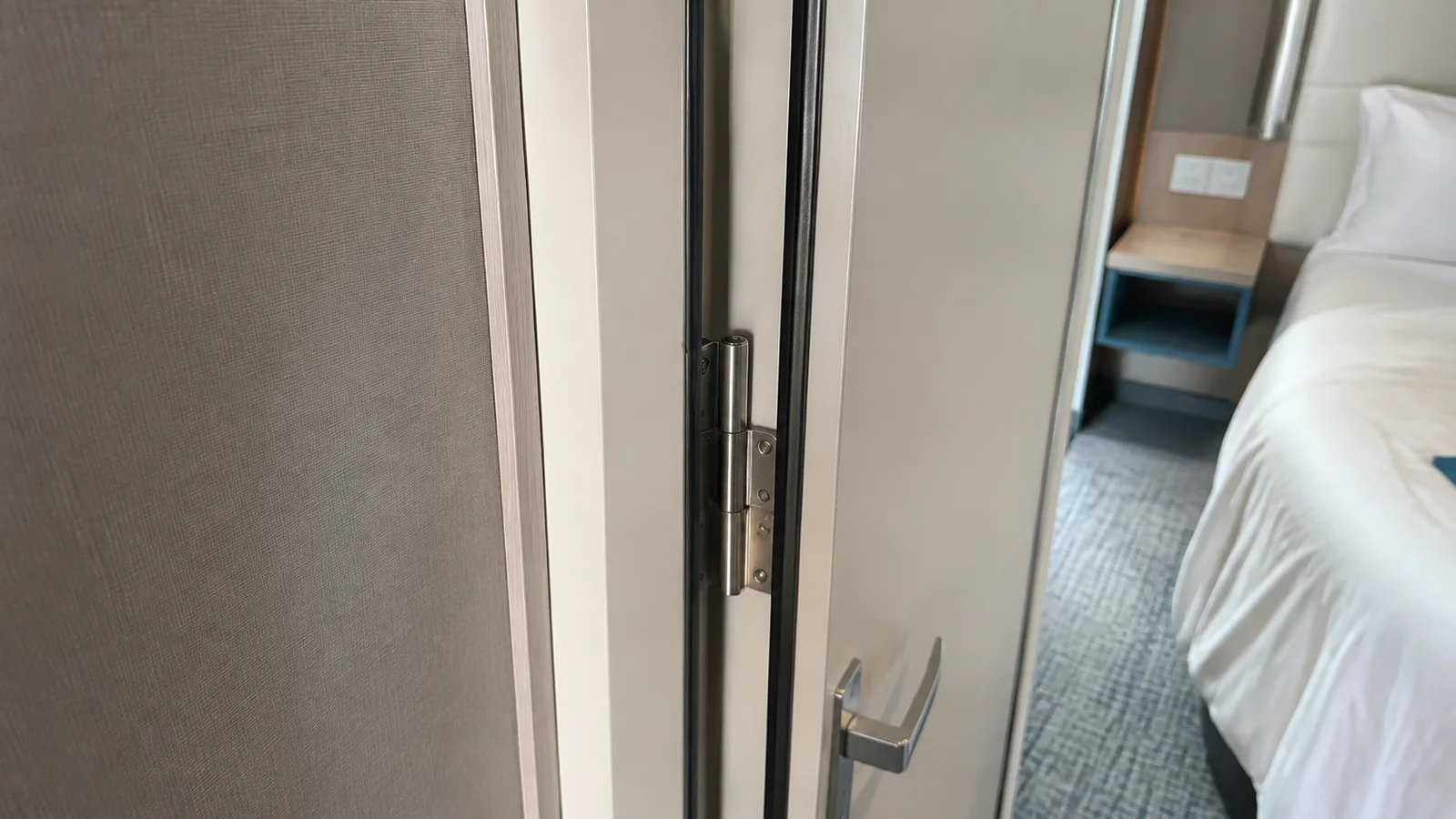
The official legend distinguishes standard connecting rooms from staterooms connected through a private foyer, a feature used on Icon class. Both can be excellent when your group occupies the linked spaces.
A conventional connecting door may allow more neighbor sound than an uninterrupted wall, although seals, voices, television volume, and room layout determine what you actually hear. A private foyer can add group convenience but may also bring door activity close to the entry.
Better alternative: If you do not need a connection, choose a room without either symbol. If you are traveling together, the ability to move between rooms safely may be far more valuable than a theoretical sound concern.
Our practical cruise cabin tips include low-fuss ways to share a small space without packing half your house.
Cabins near elevators are not automatically noisy
Elevator proximity is one of the most repeated cabin warnings, but the plan alone does not show a sound problem. Most cabin doors sit along corridors rather than opening directly into an elevator car, and the actual concern is often passenger conversation in the lobby.
A nearby elevator can be a major benefit on a ship this large, especially for a traveler with limited stamina. Do not trade a manageable lobby location for a punishing corridor walk because a generic list said all elevators are bad.
Better alternative: Choose a cabin several doors down from the lobby rather than at the farthest possible end. This compromise reduces passing clusters without giving up convenient vertical access.
Accessible cabins deserve an exact needs match
Accessible staterooms should never appear on a casual “avoid” list simply because their layout is different. Royal Caribbean says these rooms are intended for guests with mobility disabilities or other disabilities requiring their features.
The line’s accessibility guidance says guests do not need to provide medical proof, but they must acknowledge their need through the Guest Special Needs Form. Book an accessible room when someone in your party needs its features, not as a strategy for extra floor space.
Travelers who need roll-in access, turning space, bathroom supports, or other adaptations should confirm the exact room’s configuration directly with the Accessibility Department. “Accessible rooms available” at the category level does not mean every room in that category has the same adaptations.
Better alternative: If accessible features are not required, select a standard cabin in the same general zone. If they are required, prioritize the exact functional layout above internet opinions about decor, location, or furniture placement.
How to choose a better Icon of the Seas cabin
Start with your top two priorities, not a universal best-deck claim. Quiet, pool access, kid convenience, ocean view, short walks, price, and balcony style cannot all occupy first place.
- Confirm the plan version. Use the date selector and make sure your sailing falls inside the displayed range.
- Read the full category name. Surfside, Central Park, Infinite, Family, Ocean View, and standard Balcony describe meaningfully different products.
- Inspect the decks above and below. Look for pools, theaters, restaurants, service space, clubs, and open neighborhoods.
- Decode every symbol. Note connections, private foyers, occupancy, accessibility, and any obstructed-view mark.
- Measure the route you will repeat. Trace the walk to elevators, dining, kids’ spaces, pools, and your likely evening venue.
- Get unusual details in writing. Confirm view limitations, bed arrangements, occupancy, and accessible features before final payment.
When comparing another big Royal Caribbean ship, our Wonder of the Seas cabin guide is useful for the method, but never transfer its room numbers or venue map to Icon. Sister brands and even ships with similar neighborhood ideas are not interchangeable.

My simplest recommendation
For a quiet-first booking, begin with an exterior cabin on Deck 10, 11, or 12, positioned near but not directly at an elevator lobby, with staterooms immediately above and below. Then check the connection, obstruction, occupancy, and accessibility symbols for the exact number.
For a family-first booking, a Surfside-facing room may be a feature rather than a warning. For a view-first booking, verify that the category faces the ocean and decide whether you want an Infinite opening or a conventional separate balcony.
The smartest Icon of the Seas cabin is not the one with the fewest online complaints. It is the one whose documented layout and location match how your group actually sleeps, walks, relaxes, and uses this very big ship.