Carnival Legend Cabins to Avoid, Plus Quieter Choices
The Carnival Legend cabins most worth a second look are below busy public rooms, above late venues, behind lifeboats, or at the ship’s far ends. None is universally bad, but matching those structural facts to your sleep, view, mobility, and motion priorities can prevent an expensive game of cabin roulette.
Start with the current Carnival Legend deck plan
This guide was checked against Carnival’s standard and accessible deck plans. Recheck the version linked from the official Carnival Legend page before final payment because venues, categories, and accessibility markings can change.
Legend is a Spirit-class ship with guest cabins on Decks 1 and 4 through 8. Decks 2 and 3 are mostly public, while Deck 9 contains the main pools, buffet, fitness center, spa areas, and Serenity.
That arrangement creates three easy planning questions: what is above, what is below, and how far is the room from the ship’s center? A deck number by itself is not a quality score.
The short list of Carnival Legend cabins to check twice
- Deck 8 rooms directly below the fitness center, pools, buffet, or open decks.
- Forward Deck 1 rooms below the theater and nearby backstage footprint.
- Deck 4 rooms above public spaces on Deck 3, especially if you sleep early.
- Category 4K, 7A, and 9A rooms when an unobstructed view matters.
- Far-forward or far-aft cabins if you are sensitive to motion or operational sounds.
- Connecting cabins when you do not need the connecting door.
These are screening flags, not predictions. A deck plan proves adjacency or an obstruction category, but it cannot prove that a particular guest will hear noise or dislike a view.
Deck 8 cabins below Lido Deck venues
Deck 8 is the clearest place to study overhead activity because Deck 9 is almost entirely public. The official plan places cabins 8101 through 8267 beneath different parts of the fitness, pool, café, buffet, bar, and open-deck footprint.
Forward Deck 8
Rooms in the forward 8101 area sit under or close to the fitness center and spa-side spaces. Early exercise activity, equipment movement, or daytime foot traffic is possible, although insulation and exact positioning make the result cabin-specific.
If you like the forward location but want more separation, compare a similar cabin on Deck 7. Deck 7 has passenger rooms above and below across most of its length.
Midship Deck 8
Cabins around the middle of Deck 8 align below the Camelot Forward Pool, Avalon Main Pool, bars, and surrounding open deck. Chair movement, music, pool programming, and cleanup are possible sources of sound at different times.
The exact boundary between “under a pool” and “under a walkway” is not obvious from a sales label. Match the cabin outline vertically to Deck 9 rather than assuming every room in a broad range has the same exposure.
Aft Deck 8
The aft portion sits beneath Lido dining, bars, the Serenity area, and an aft pool. These rooms trade quick buffet and outdoor access for the possibility of overhead setup, chairs, carts, or guest traffic.
A quieter alternative is usually a central cabin on Deck 6 or 7. Those decks are more consistently surrounded by staterooms, which removes many obvious public-venue adjacencies.
Deck 1 cabins below Promenade Deck
Riviera Deck 1 contains cabins 1101 through 1265, with public venues directly above on Deck 2. The forward block aligns below the Folies Main Lounge, while the middle and rear cabin areas sit below public rooms and circulation space; the large galley is farther aft on Deck 1 itself.
Forward rooms below the theater
The official drawing places the theater and backstage area above the forward portion of Deck 1. Shows, rehearsals, bass, and crew movement can create a risk for an early sleeper, but a plan cannot establish how audible any event will be inside a particular room.
These low forward cabins may also feel more pitching in rough water than low midship cabins. The lower deck can help with some ship movement, but being at the bow still matters.
Aft Deck 1 rooms near the galley
The official plan places the galley on Deck 1, beyond the aft end of the guest cabin corridors and aft stair/elevator area. I would examine the rearmost rooms for nearby service routes, since this is a same-deck adjacency question rather than a kitchen directly overhead.
If sleep is the priority, a low midship cabin away from the forward theater footprint and aft galley approach offers a better structural starting point. It is still wise to check elevators, stairs, blank service areas, and connecting doors.
Deck 4 rooms above public areas
Main Deck 4 is the lowest long balcony deck, but much of it sits immediately above Atlantic Deck 3. That deck includes the theater, shops, photo area, atrium, circulation space, and the upper level of Truffles Restaurant; the lower dining level is on Deck 2.
Forward Deck 4 rooms align above the theater footprint, while far-aft rooms align above dining space. Possible sound depends on event hours, speaker placement, operations, and the room’s exact position.
Deck 5 is a simpler choice for light sleepers who want a similar general elevation. Most Deck 5 rooms have cabins immediately above on Deck 6 and cabins below on Deck 4.
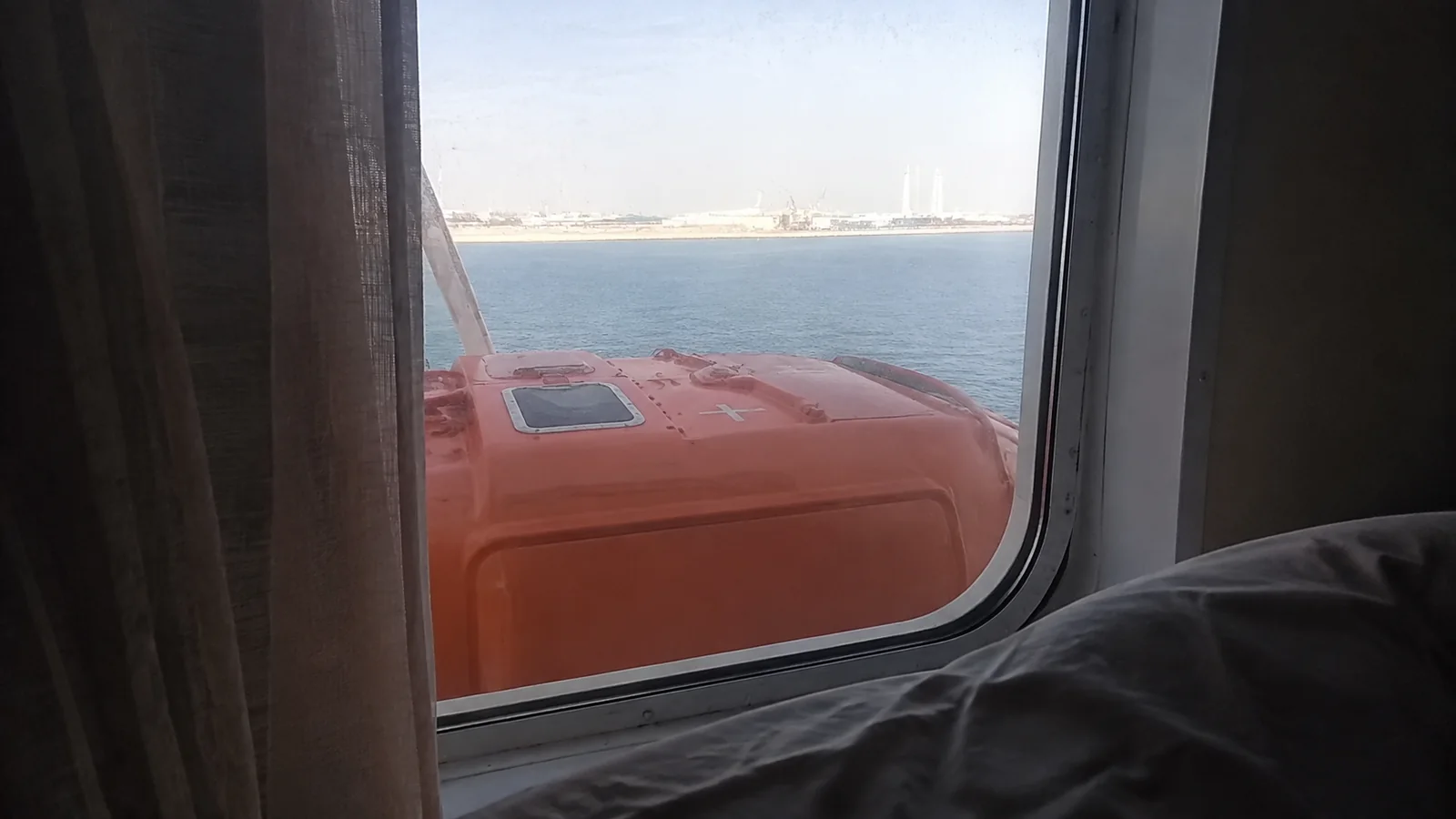
Category 4K obstructed-view rooms
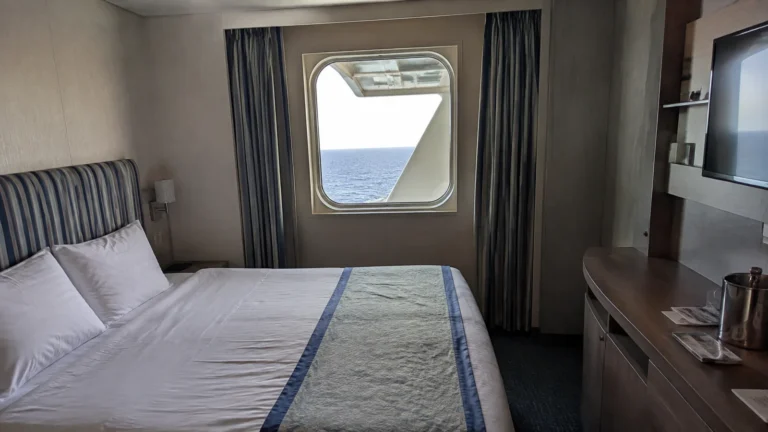
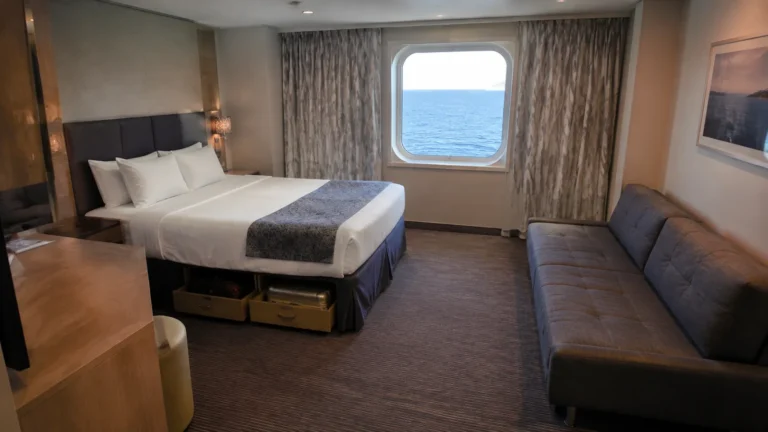
Category 4K is officially an Interior with Window and an obstructed view. Many of these rooms face lifeboats or ship structure, so they can provide daylight without promising an open ocean panorama.
The current Carnival Legend deck-plan PDF specifically says cabins 4202, 4203, 4205, and 4207 have picture windows instead of French doors. That note describes hardware, not an unobstructed view.
Some travelers see 4K as a clever daylight upgrade from a fully interior room. Others find a lifeboat-dominated sightline disappointing, so compare the actual price with a true ocean-view or balcony cabin.
Category 7A and 9A balcony obstructions
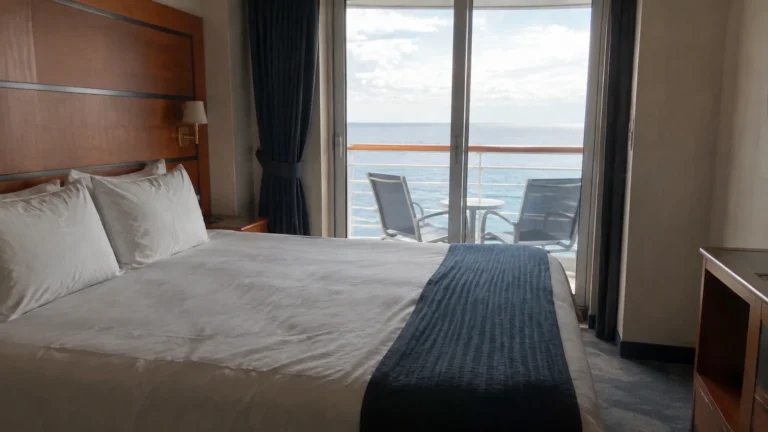
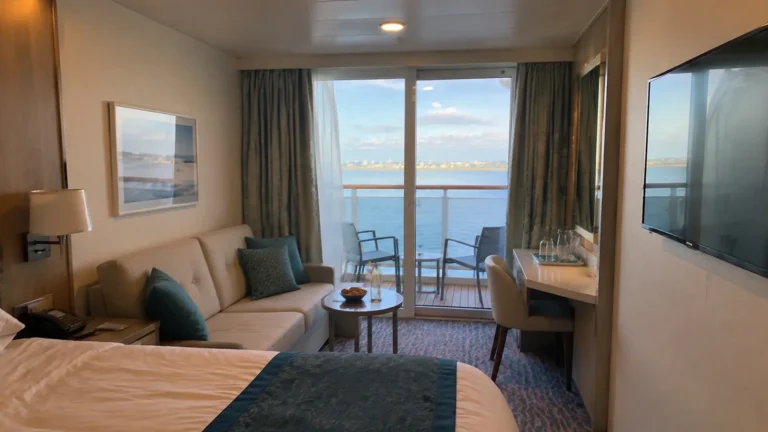
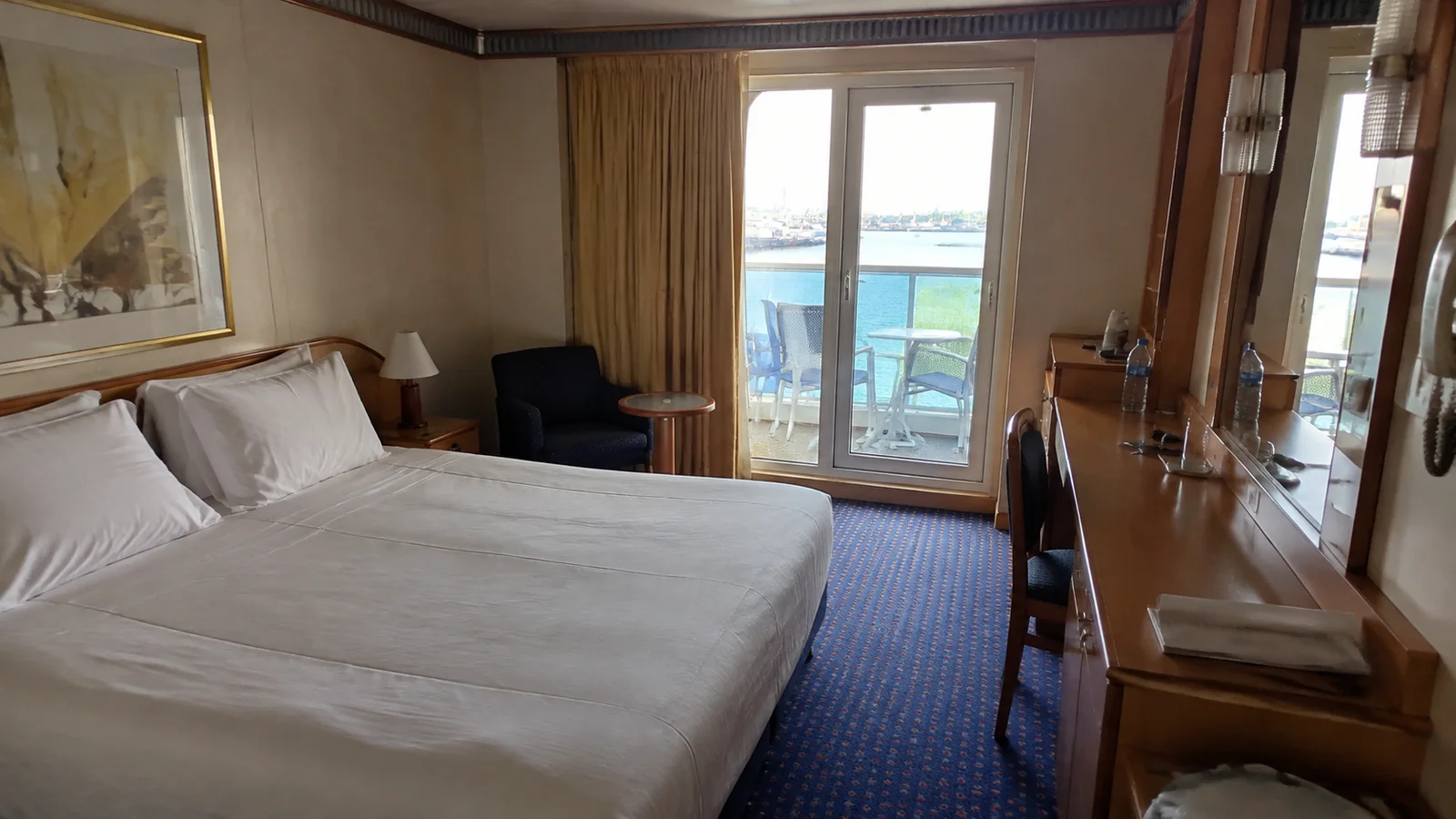
Carnival labels category 7A as Balcony with obstructed views and category 9A as Premium Balcony with obstructed views on the current plan. The obstruction is a booking fact, while its emotional importance is entirely personal.
Do not assume “balcony” means a clean horizon from a seated position. Ask what blocks the view, where it sits relative to the railing, and whether the category description changed after any future recategorization.
A standard category 8 balcony on a cabin-only deck is the safer fit when view and quiet both rank high. Compare final fare, not just the promotional “upgrade” language.
Forward cabins and possible motion
Far-forward cabins can feel more vertical movement when the bow meets swells. Wind, itinerary, speed, and sea state determine the actual ride, so no cabin guide can promise smooth or rough conditions.
The bow area can also be near mooring and anchor operations on lower decks. Those activities tend to matter around arrivals and departures rather than continuing all day.
For a motion-sensitive traveler, a lower cabin near midship is the conventional safer bet. Book your preferred location instead of relying on a guarantee category, which leaves assignment to Carnival.
Aft cabins and extended balconies
Legend’s aft-view extended balconies and corner Vista Suites appeal to travelers who value wake views and outdoor space. Their stern position can bring more vibration, turning sensation, or mechanical hum for some sailings and some guests.
Soot, sun, wind, and privacy can also vary with deck and conditions. None of those outcomes is certain, and an aft lover may consider the same location the best room on the ship.
If the wake view is not a priority, choose a side-facing balcony closer to midship. You will give up the stern panorama but reduce one obvious motion variable.
Connecting cabins
The official plan marks connecting pairs throughout several decks. They are useful for families and friends, but the extra door can provide less acoustic separation than a solid shared wall.
That does not mean every conversation travels through it. If you do not need the connection and are highly sound-sensitive, a non-connecting room simply removes a preventable uncertainty.
Elevators, stairs, and service spaces
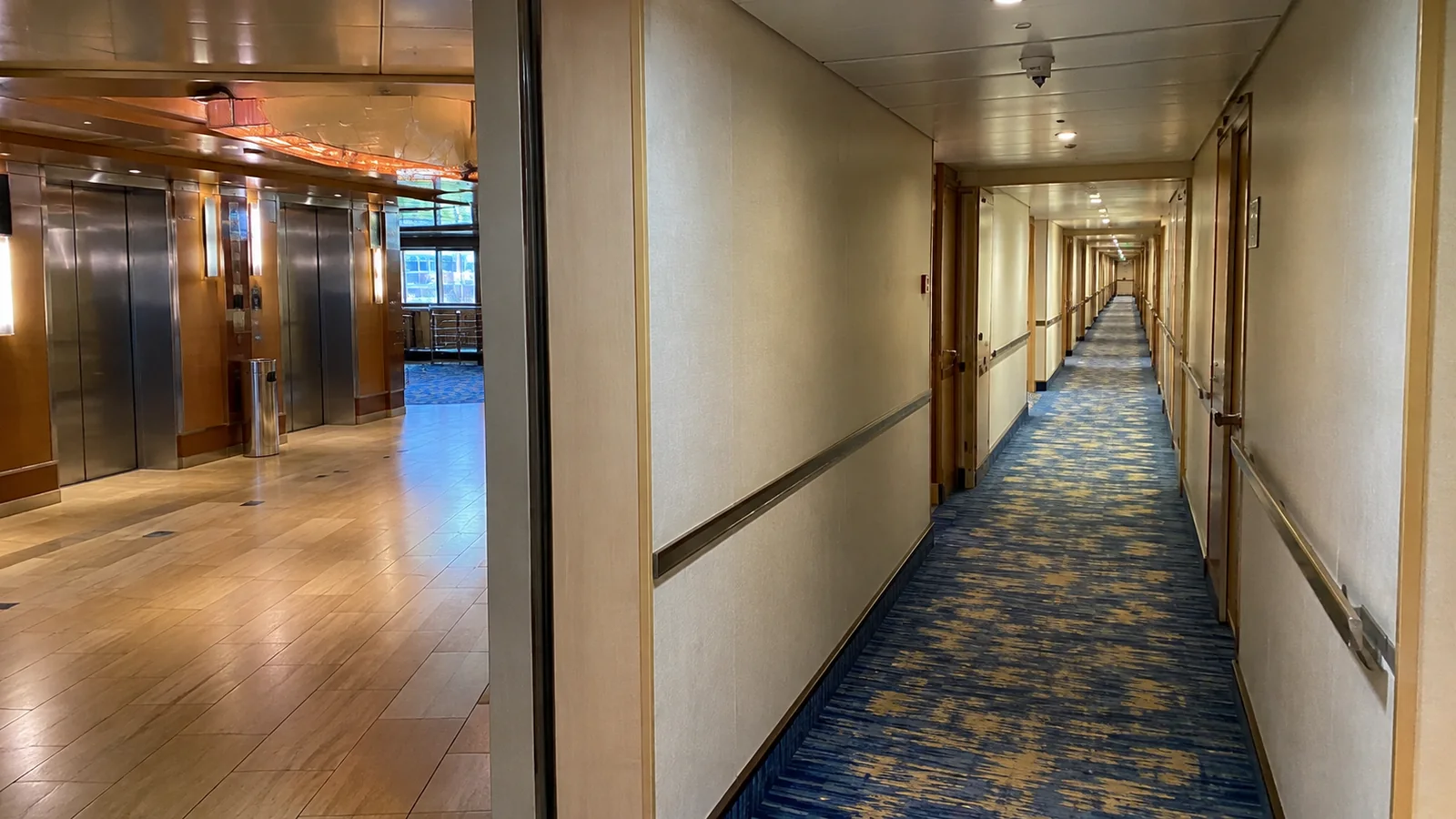
Being near an elevator is often convenient and is not proof of noise inside the cabin. The greater concern may be conversations in the lobby, a high-traffic turn in the corridor, or an unmarked service door.
Blank spaces on a plan may hold machinery, crew access, storage, or structural voids. Ask Carnival what a large blank area represents rather than letting an internet rumor decorate it with an imaginary nightclub.
Travelers with limited stamina may sensibly prioritize shorter routes to elevators and dining over theoretical quiet. Our first-time cruise planning tips can help balance cabin location with the rest of embarkation and ship life.
Accessible cabins deserve exact matching
Carnival distinguishes Fully Accessible Cabins, Fully Accessible Cabins with Single Side Approach, and Ambulatory Accessible Cabins. Those are not interchangeable labels, and a standard cabin does not gain accessible clearance just because it looks roomy online.
The line’s current accessibility page says FAC rooms include turning space, accessible routes, a wider doorway, and an accessible bathroom, while FAC-SSA provides clear space on only one side of the bed in the applicable configuration. AAC rooms are intended for guests with mobility limitations who do not regularly require a wheelchair or scooter.
Carnival also says guests who book an accessible cabin without needing its features may be moved to accommodate a guest with a disability. Reserve through Guest Access Services, confirm the exact bed arrangement and measurements, and leave this scarce inventory for people who need it.
Quieter Carnival Legend locations to consider
- Central Deck 6: cabins above and below provide a strong buffer from major public rooms.
- Central Deck 7: another mostly cabin-sandwiched choice, one deck below the top cabin deck.
- Midship rather than extreme bow or stern: helpful when motion matters more than the special view.
- Non-connecting room: removes one potential pathway for neighboring voices.
- Standard unobstructed balcony: simpler when sightline matters more than bargain pricing.
“Quiet” always remains comparative. Hallway behavior, neighboring families, maintenance, weather, and an unusually enthusiastic door-slammer can visit almost any deck.
How to check your exact cabin before paying
- Open the current standard plan and the accessible version if relevant.
- Find the cabin number, category color, and bed symbols.
- Trace the same position one deck up and one deck down.
- Note public rooms, open deck, lifeboats, stairs, elevators, and blank service areas.
- Confirm whether the room connects and whether its view is officially obstructed.
- Ask Carnival to explain any unclear symbol or changed category in writing.
- Recheck the plan before final payment if the ship is scheduled for work.
Keep a copy of the cabin description with your booking confirmation. Our practical cruise booking comparison explains when direct booking or an advisor may make that follow-up easier.
Once the room is settled, use a modular cruise packing list instead of trying to solve a location concern with bulky cabin gadgets. A sensible cabin and a smaller suitcase are a pleasantly civilized pairing.
Frequently asked questions
What are the quietest decks on Carnival Legend?
Central areas of Decks 6 and 7 have the cleanest cabin-above, cabin-below pattern. Exact neighbors, connecting doors, and corridor position still matter.
Should I avoid all Deck 8 cabins?
No. Deck 8 is convenient for Lido facilities, but light sleepers should identify the exact venue overhead and decide whether that convenience is worth the conditional sound risk.
Are Legend’s obstructed-view cabins bad?
No, particularly when they cost little more than an interior and daylight is the goal. They are a poor fit only when a clear sea view is important.
Can Carnival change my cabin?
Assignment terms depend on the fare and reservation, while an accessible cabin may be reassigned if it was booked by someone who does not need the features. Read the current booking terms and verify your selection.
The bottom line
The Carnival Legend cabins to examine most carefully are on Deck 8 below Lido activity, on Decks 1 and 4 beside public-room footprints, in officially obstructed categories, or at motion-prone extremes. These are conditional tradeoffs, not a blacklist.
For the simplest quiet-first choice, start midship on Deck 6 or 7 with cabins above and below, then check connections and the exact layout. That small bit of deck-plan detective work is much more useful than declaring hundreds of perfectly serviceable rooms “bad.”