Wonder of the Seas Cabins to Avoid: Exact Rooms & Better Picks
I want all the fun Wonder of the Seas can fit into a vacation, with the option to leave some of it behind when I close my cabin door.
These are the room numbers and balcony directions I’d compare before a family-friendly location turns into the wrong setting for my own bedtime or quiet morning coffee.
Wonder of the Seas cabins to compare first
- 8293, 8295, 8695 and 8697: Boardwalk balcony examples beside the aft boundary of Music Hall, not my first choice for turning in while live entertainment continues.
- 9327, 9329, 9727 and 9729: inward-facing Boardwalk balconies near the AquaTheater end, worth choosing for their lively setting rather than private ocean-watching.
- 9179, 9181, 9579 and 9581: Central Park balconies facing the neighborhood and other cabins, not the ocean.
- 14142, 14144, 14542 and 14544: forward Deck 14 examples alongside Adventure Ocean, a useful family route but a different corridor setting from an accommodation-only deck.
- Deck 14 beneath the pools and Windjammer: compare a lower room with cabins overhead when naps or late mornings matter more than the shortest breakfast trip.
My straightforward starting point is an outward-facing balcony on Deck 9, 10 or 11 with cabins above and below. The inward view is a fixed feature; proximity to entertainment identifies possible disturbance rather than a guarantee of noise.
Keep the official Wonder plans beside the actual room offer. On this ship, the direction of the balcony can matter more than how many decks above the water it sits.
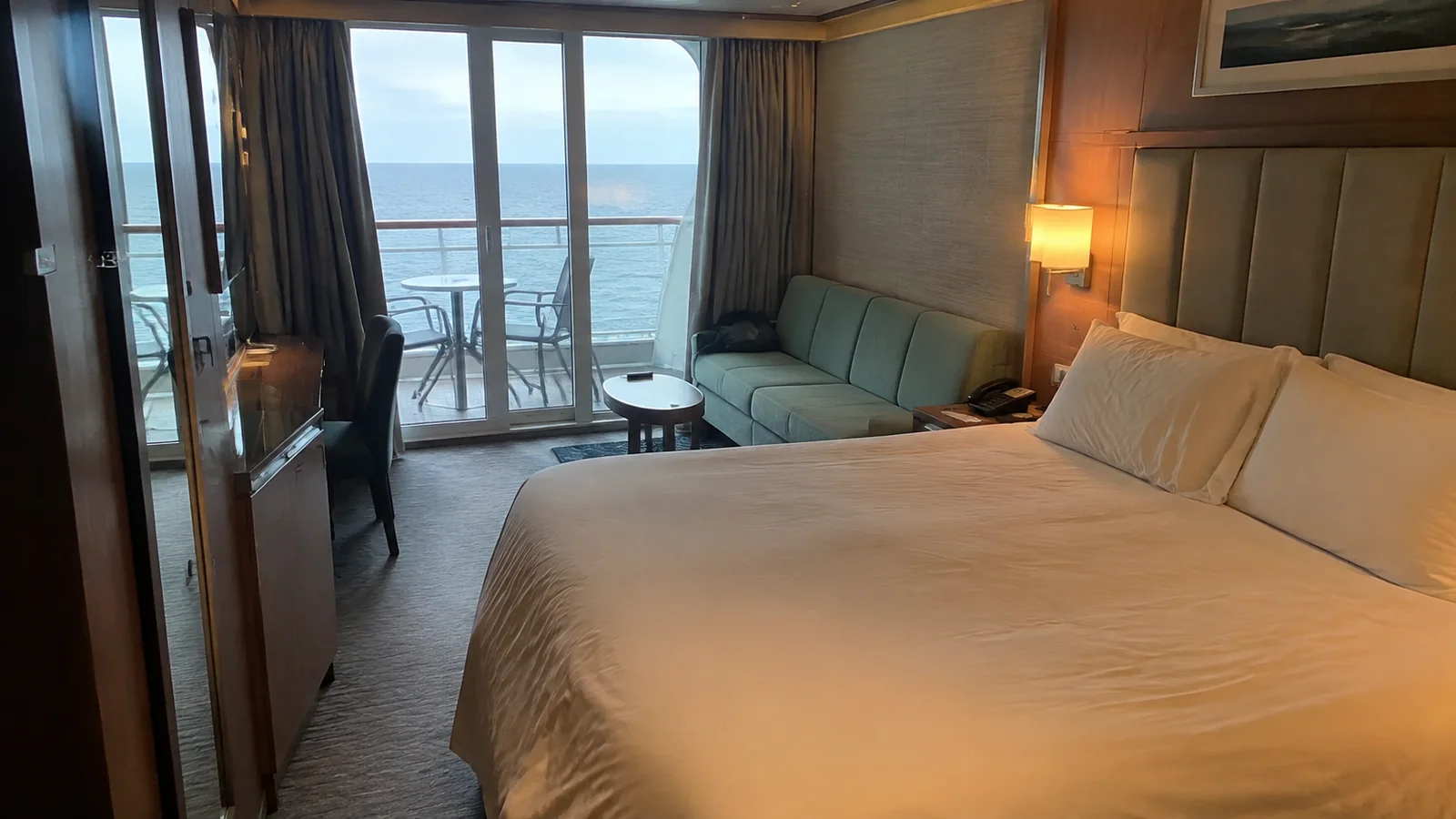
8293, 8295, 8695 and 8697: Boardwalk rooms near Music Hall
These rooms begin the inward-facing Boardwalk balcony section just aft of Music Hall on Deck 8. Compare a different location before choosing one for a child who sleeps early or an adult especially sensitive to music.
The relevant relationship is the nearby entertainment space, not the assumption that every Boardwalk room hears the same sound. Music Hall also occupies space on Deck 9, so moving one floor up without checking the venue boundary may retain a similar problem.
My alternative: an outward-facing room in a residential stretch, with its own immediate neighbors checked. When the Boardwalk view is the attraction, compare an individual room farther from Music Hall rather than just changing the deck number.
Moving aft brings you closer to the other end of the neighborhood and its outdoor entertainment. That may suit you better, but it is a different tradeoff rather than a universal quiet-room solution.
The numbered deck diagrams show the two-level Music Hall footprint. They do not establish the location of every speaker or how much sound reaches a particular bed.
9327, 9329, 9727 and 9729: choose the Boardwalk atmosphere deliberately
These Deck 9 Boardwalk balconies sit near the aft end of the inward-facing rows. Their appeal is the neighborhood setting and the direction toward the AquaTheater, not the same outlook as a conventional ocean-facing balcony.
Choose differently when I want to read outside without looking across at other guests’ balconies. Opposite rooms, activity below and the theater-end structures are part of the setting you are paying to overlook.
Do not assume an aft Boardwalk position guarantees a perfect private seat for every performance. The particular angle and structures matter, and a photograph aimed toward open water may leave most of the neighborhood outside the frame.
My alternative: an Ocean View Balcony when the sea itself is the main reason to spend extra. Keep the Boardwalk room when people-watching and feeling close to the action are benefits you genuinely want.
For a family that spends evenings out and enjoys the neighborhood, the inward balcony may be an excellent match. Simply avoid buying it as an inexpensive substitute for a more secluded ocean-facing room.
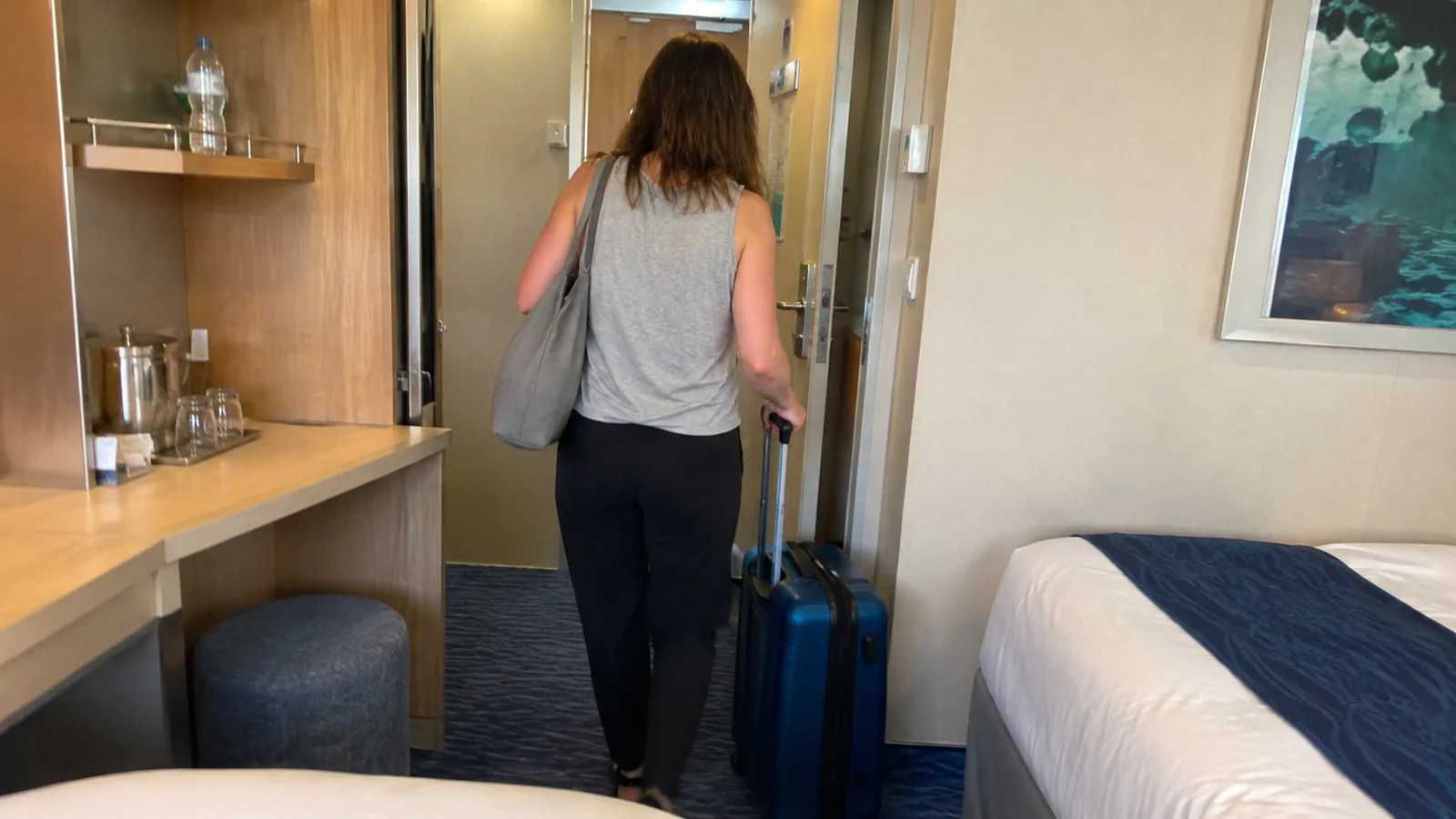
9179, 9181, 9579 and 9581: greenery instead of a sea view
These Deck 9 rooms face Central Park. They have an open-air neighborhood outlook, but the balcony does not become ocean-facing because you have moved away from the Boardwalk.
I can see the appeal of looking out toward greenery and the restaurants below. Be less enthusiastic when my main goal is leaving the curtains open without facing another row of staterooms.
Central Park and Boardwalk have different atmospheres, so they should not receive identical entertainment warnings. They share the more important booking distinction that the view points into the ship rather than out toward the horizon.
My alternative: compare a conventional ocean-facing balcony on the same residential deck. Moving higher within the Central Park category changes the height above the neighborhood, not the direction of the view.
The Wonder room options distinguish neighborhood views from ocean-facing accommodation. Keep that full description beside the fare instead of comparing every room labeled balcony as the same product.
14142, 14144, 14542 and 14544: convenient for Adventure Ocean
These forward Deck 14 examples sit alongside the Adventure Ocean area. Choose them for a family’s actual pickup and drop-off routine, not because a high cabin automatically offers the most private corridor.
The possible concern is activity associated with the youth space and its approaches. That does not establish that children can be heard through every wall or that every nearby room is unsuitable for couples.
For parents making several visits a day, the short route could be a genuine advantage. For adults who will not use Adventure Ocean, there may be little reason to accept this particular public-space neighbor at the same fare as a more residential location.
My alternative: a room on Deck 12 or another lower accommodation deck near a useful elevator bank. Check the actual vertical neighbors too, because simply moving down may leave the youth area overhead.
The best family choice is not necessarily the closest door to an activity. My family cruise guide helps compare convenient routes with the beds, bathrooms and nap schedule your own children need.
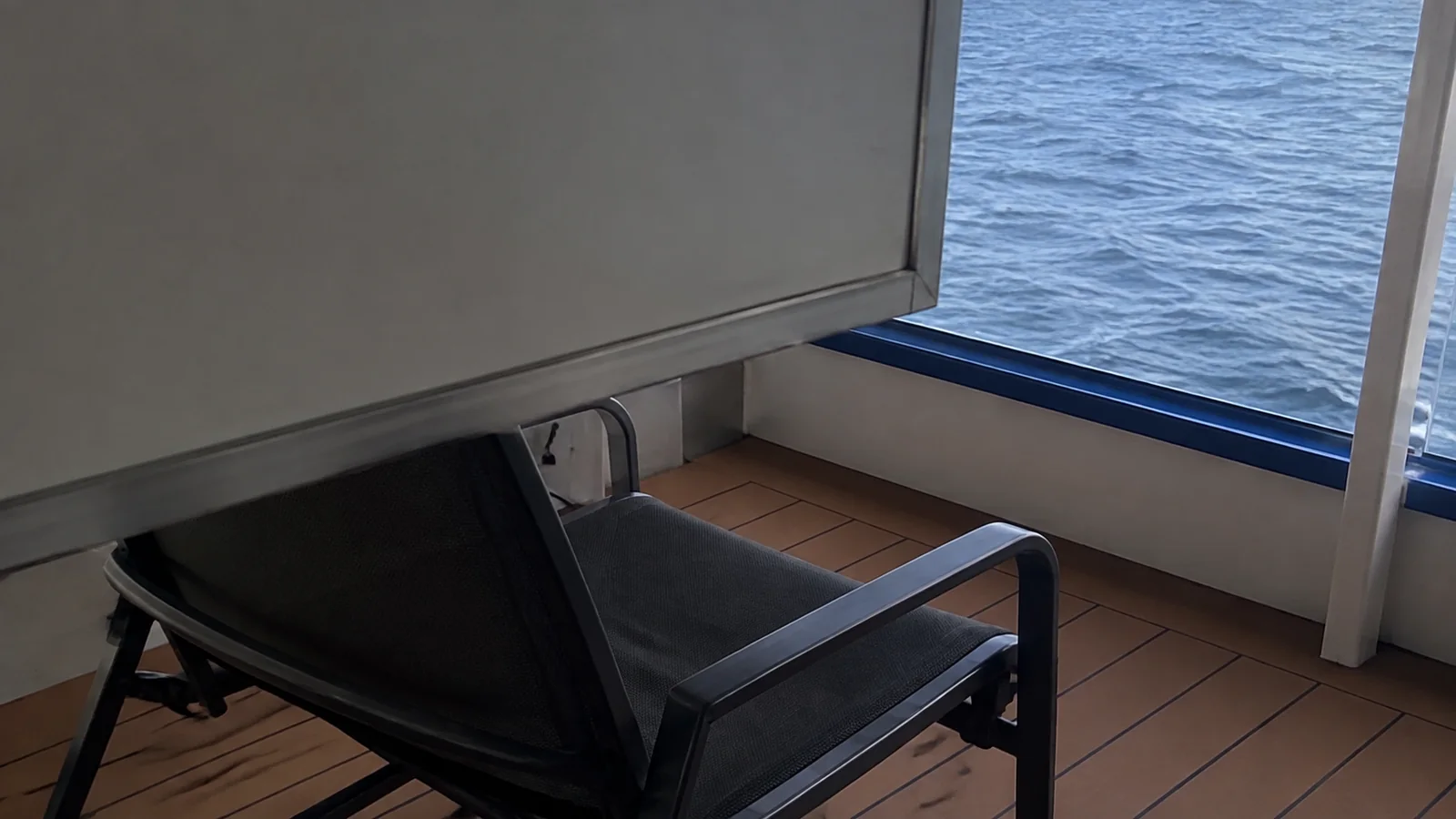
Deck 14 below the pools: protect the ceiling before the shortcut
Deck 15 places pool surroundings and outdoor circulation above much of the central Deck 14 accommodation. Consider furniture handling, footsteps and preparation when selecting a room for late mornings.
The seating and walkways matter as much as the pools themselves. A room does not need to sit directly beneath a pool basin to have a public-deck ceiling.
My alternative: a checked Deck 12 room with Deck 14 accommodation above it, since Wonder omits Deck 13. An outward-facing Deck 10 or 11 balcony gives another straightforward comparison when you do not need constant pool access.
A family returning frequently for goggles or dry clothes may value the higher room more. Choose that convenience deliberately, not treat it as a universal benefit for every traveler researching a restful cabin.
Windjammer and the aft activity decks are a different overhead setting
Farther aft on Deck 15, Windjammer brings dining preparation and furniture rather than the same poolside routine. The aft activity areas on Decks 15 and 16 add another reason to check the full vertical stack instead of rejecting the whole stern.
For a late sleeper, I’d start with bedrooms above rather than a buffet floor. A short breakfast trip is less appealing when breakfast is the activity you were hoping to sleep through.
Do not describe every attraction on Deck 16 as being immediately above a Deck 14 cabin. The intervening deck and the actual overlap both matter when deciding which activity could reasonably affect the room.
My floor-plan guide explains how to compare these levels with their elevator banks aligned. Matching the bottom edges of drawings with different scales can put a cabin under the wrong venue.
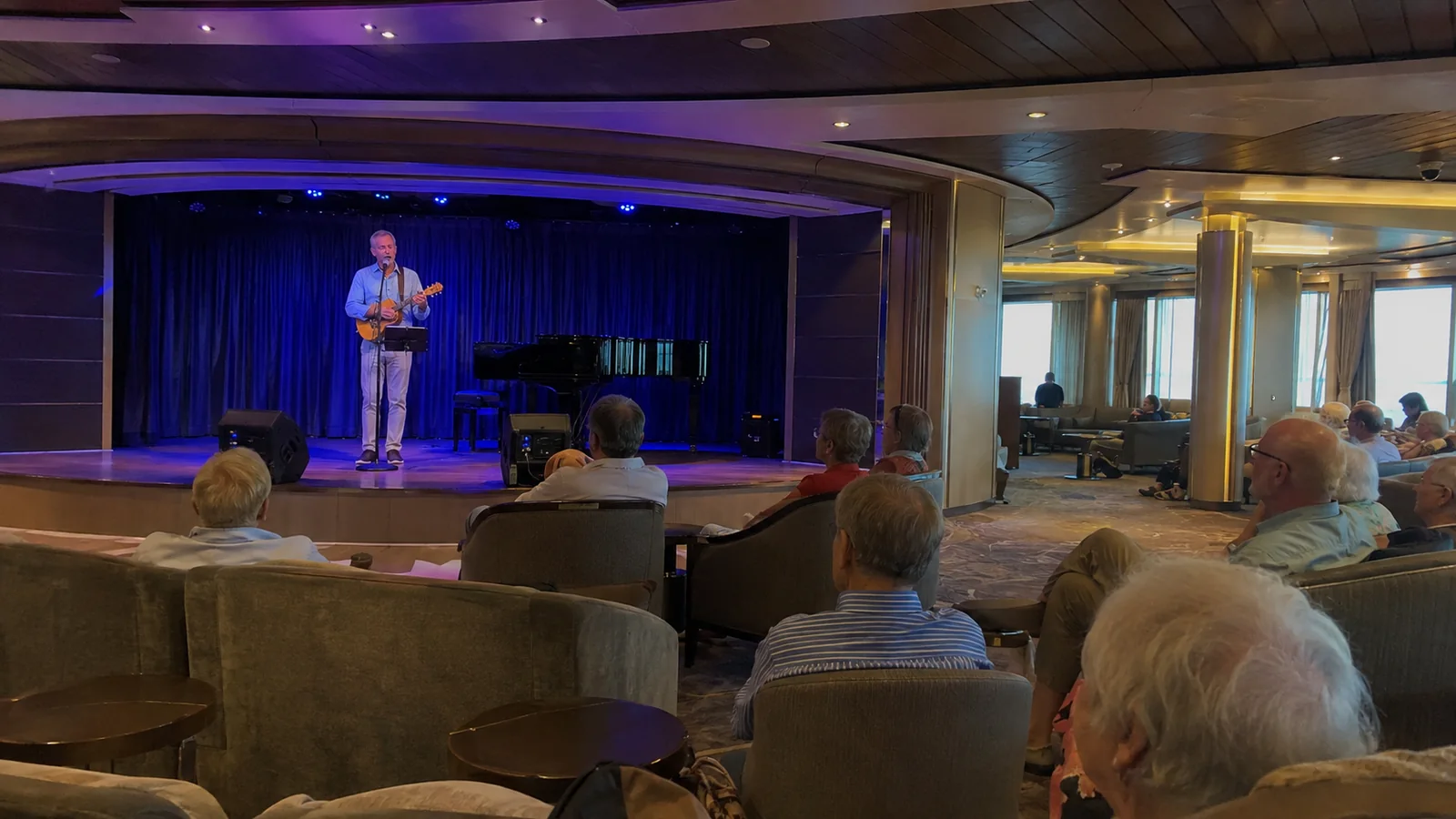
A suite should improve the room features you actually use
An AquaTheater suite is an appealing choice for someone who wants that distinctive setting and outdoor space. Not choose it merely because suite accommodation sounds automatically quieter or more central than an ordinary balcony.
Likewise, a loft layout deserves a stairs-and-bedroom decision before the price comparison. A large room spread across levels may be less convenient than a single-level room for the people sharing it.
My suite value guide helps separate useful benefits from space you may barely use. Pay for the bathroom, bed separation or outdoor setup that improves our routine rather than the grandest category name.
Beds and accessible routes come before theoretical quiet
Confirm the exact extra beds and connecting arrangement when reserving for a family. Two nearby numbers do not necessarily provide an internal doorway, and a sofa photographed by day may occupy the bathroom route once it becomes a bed.
A room a short turn from an elevator can make this large ship much easier to use. Not move someone with limited walking tolerance into a remote corridor simply to avoid a lift symbol.
Use Royal Caribbean’s access guidance to confirm essential bathroom and equipment arrangements. Those needs take priority over a speculative quieter location in a room that is not suitable.
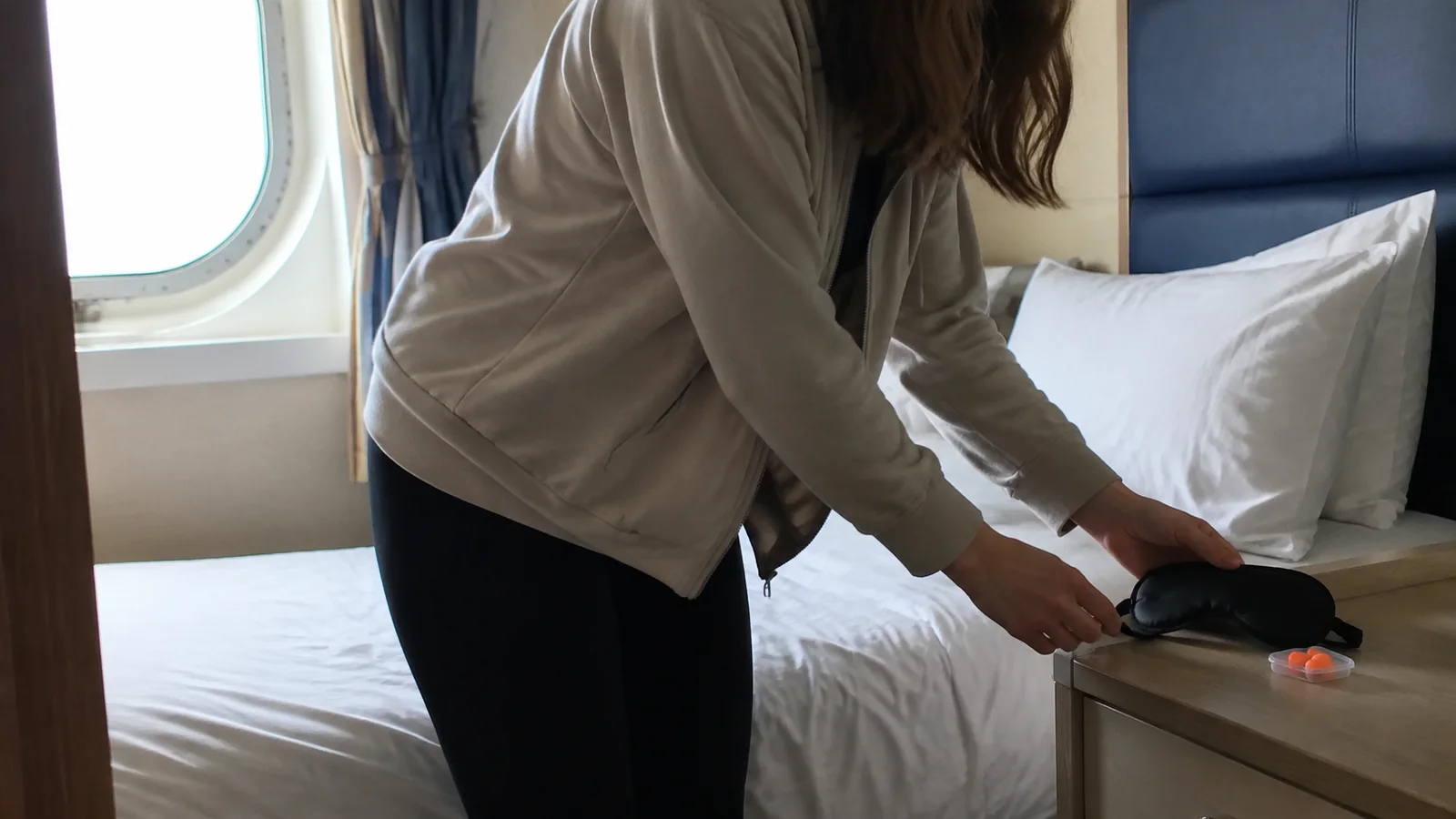
The Wonder of the Seas room that makes the most sense
Start with a non-connecting outward-facing balcony on Deck 9, 10 or 11, with cabins above and below and a manageable elevator route. A neighborhood balcony would need to win because I actively wanted its setting, not simply because it was the cheapest room with an outdoor door.
Choose a guarantee only when every permitted view, bed arrangement and location works for your needs. My cabin-selection checklist keeps the actual room ahead of the excitement of a possible upgrade.