Iceland Hot Springs: Choose the Right Geothermal Soak
Iceland can make a warm bath feel like expedition planning. Some famous “hot springs” are polished lagoons with timed tickets, others are neighborhood pools, and a few involve muddy trails, no changing room, and water that did not receive the memo about your preferred temperature.
First, choose the kind of soak you actually want
- Luxury lagoon: Designed setting, lockers, showers, reservations, and premium pricing
- Local swimming pool: Lap pool, hot pots, family facilities, and lower admission
- Rustic paid pool: Simpler facilities and a more natural setting, with managed access
- Wild bathing place: Little infrastructure, variable temperature, and more environmental responsibility
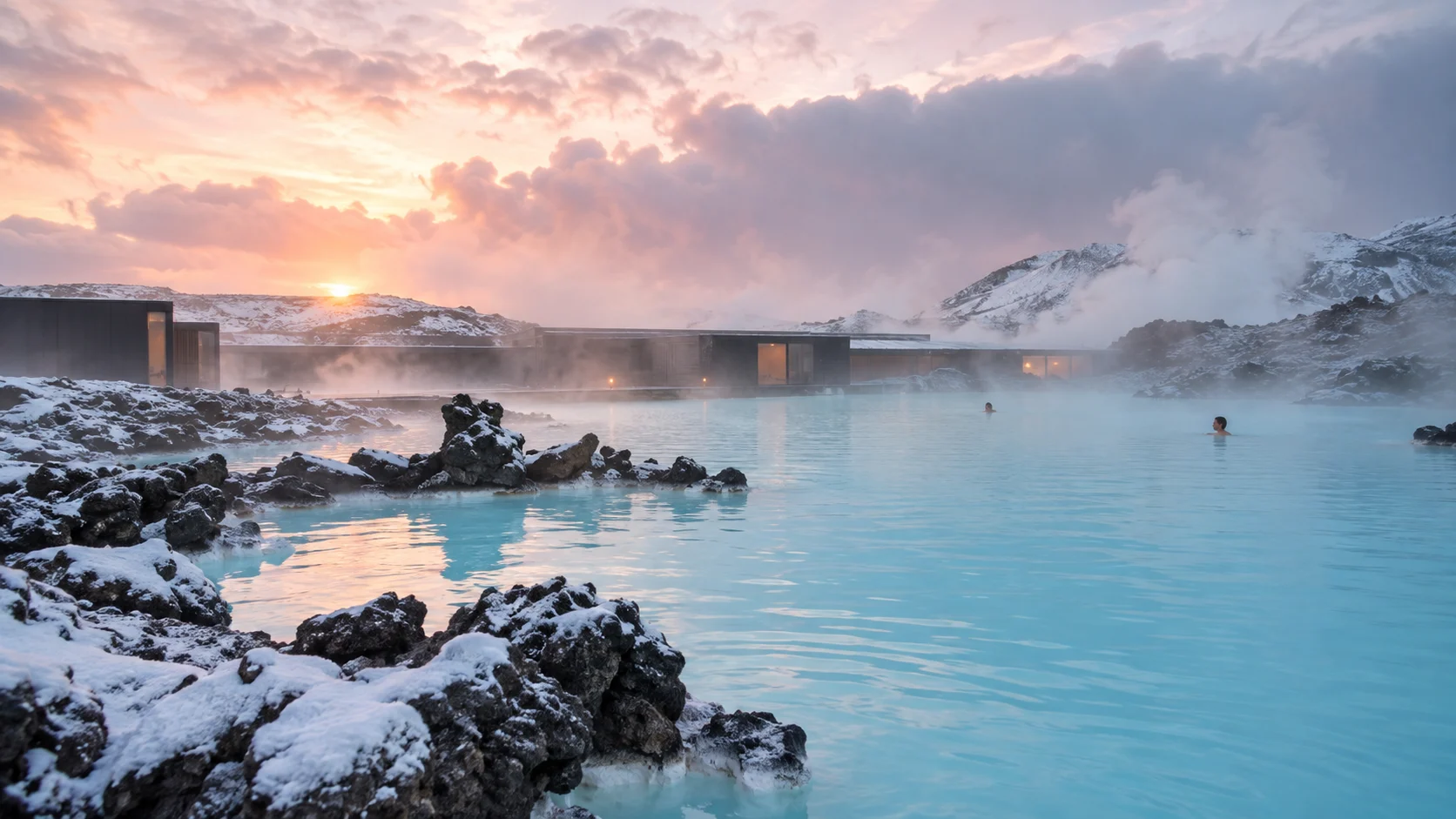
Iceland’s geothermal bathing culture is broader than a single blue photograph. The official Visit Iceland pool overview explains why community pools and hot pots are everyday social spaces, not consolation prizes for travelers who skipped a spa.
Quick picks for different Iceland trips
- Short stop near Keflavík Airport: Blue Lagoon, only with a confirmed opening and generous flight buffer
- Reykjavík city break: Sky Lagoon for theater, or a municipal pool for value and local rhythm
- Golden Circle: Secret Lagoon or Laugarvatn Fontana
- West Iceland drive: Hvammsvík or Krauma
- North Iceland: Forest Lagoon, GeoSea, or Mývatn Nature Baths
- East Iceland: Vök Baths
- Hike plus soak: Reykjadalur, only in suitable trail and weather conditions
Best Iceland hot springs and geothermal pools
1. Blue Lagoon, Reykjanes Peninsula
Blue Lagoon is a managed geothermal seawater lagoon in a lava field, not an untouched spring discovered behind the airport. Its changing facilities, in-water mask, food, transport options, and polished operations suit first-time visitors who value ease and an iconic setting.
It lies about 13 miles from Keflavík International Airport and 30 miles from central Reykjavík. Prebooking is essential through the official Blue Lagoon ticket page, and ticket tiers should be compared by inclusions rather than their pleasantly vague names.
The Reykjanes Peninsula remains volcanically active, so opening status, road access, air quality, and evacuation guidance can change. Check the lagoon’s same-day notice and Icelandic authorities even when a months-old travel article says everything is normal.
Best for: A special first or last soak with full facilities. Tradeoff: High demand, dynamic prices, and greater disruption risk than a Reykjavík pool.
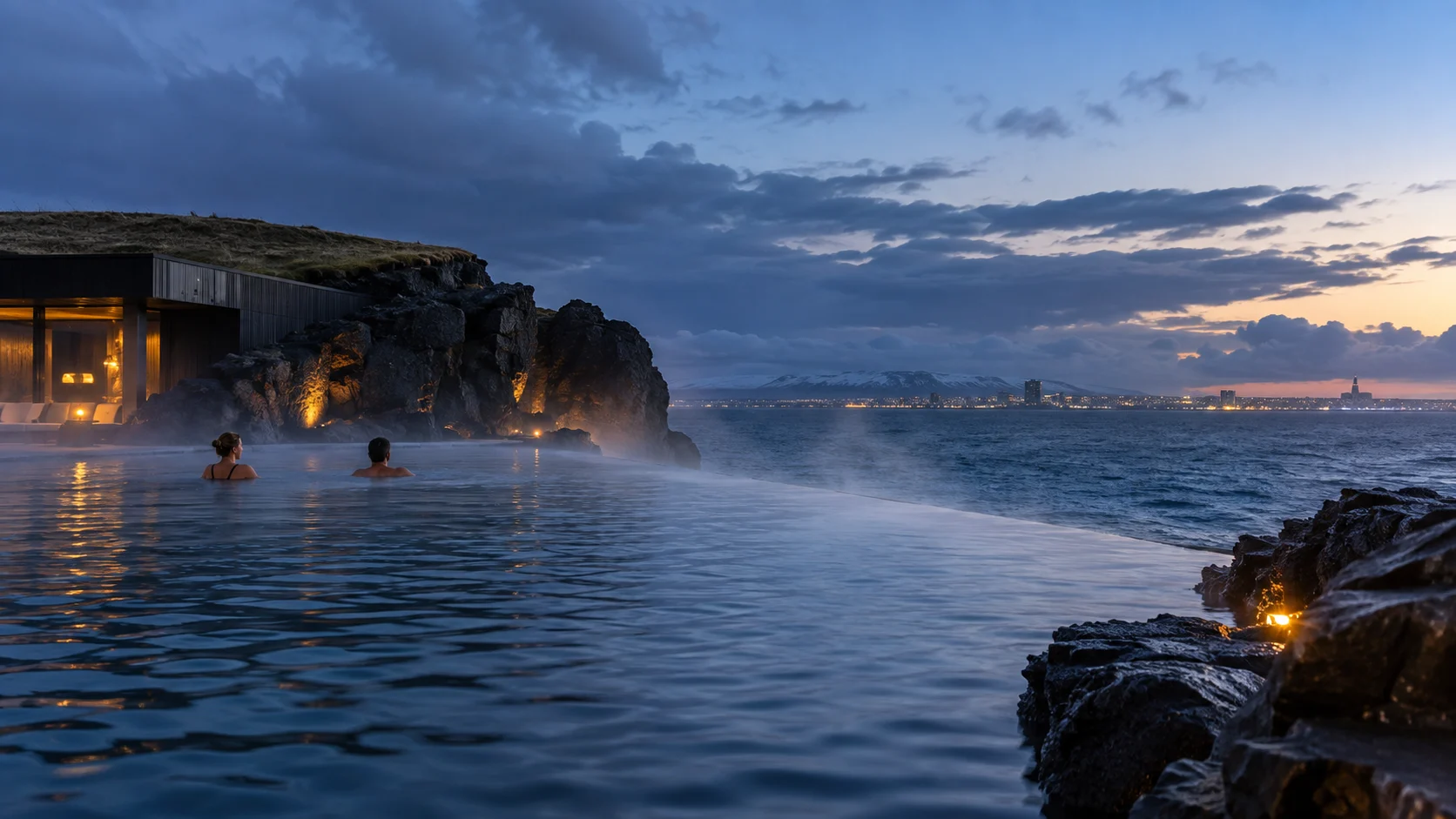
2. Sky Lagoon, near Reykjavík
Sky Lagoon is a designed oceanside spa in Kópavogur, close to Reykjavík, with an infinity-edge view and an optional multi-step ritual. It works beautifully on a city itinerary because it does not require committing a day to the countryside.
Children under 12 are not admitted, and guests ages 12 through 14 require an adult guardian under current policy. Confirm the latest packages and age rules in the Sky Lagoon visitor FAQ before promising a family outing.
Best for: Couples, friends, and design-minded city stays. Tradeoff: This is an upscale spa experience, not a cheap local swim or wild spring.
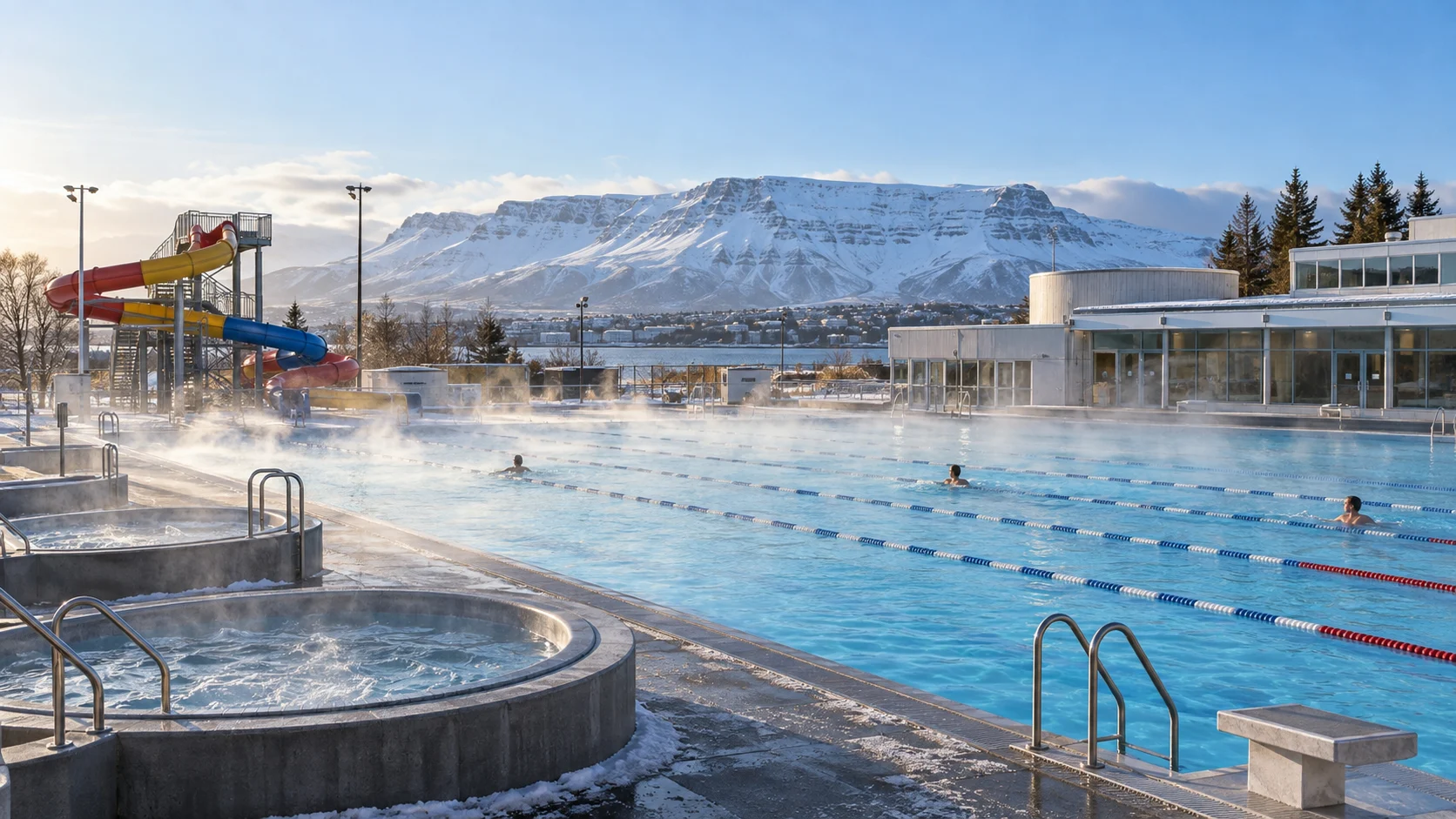
3. Reykjavík municipal pools
Laugardalslaug, Sundhöllin, Vesturbæjarlaug, and other city pools pair swimming areas with hot pots at different temperatures. They usually cost far less than destination lagoons and reveal the practical bathing culture that Icelanders actually use year-round.
Facilities vary, so compare slides, indoor areas, accessibility, opening hours, and renovation notices on the city pool pages. Families should check each child’s swimming ability and the facility’s supervision rules rather than choosing solely by the number of slides.
Best for: Budgets, families, repeat soaks, and travelers without a car. Tradeoff: Expect a community recreation facility, not cinematic seclusion.
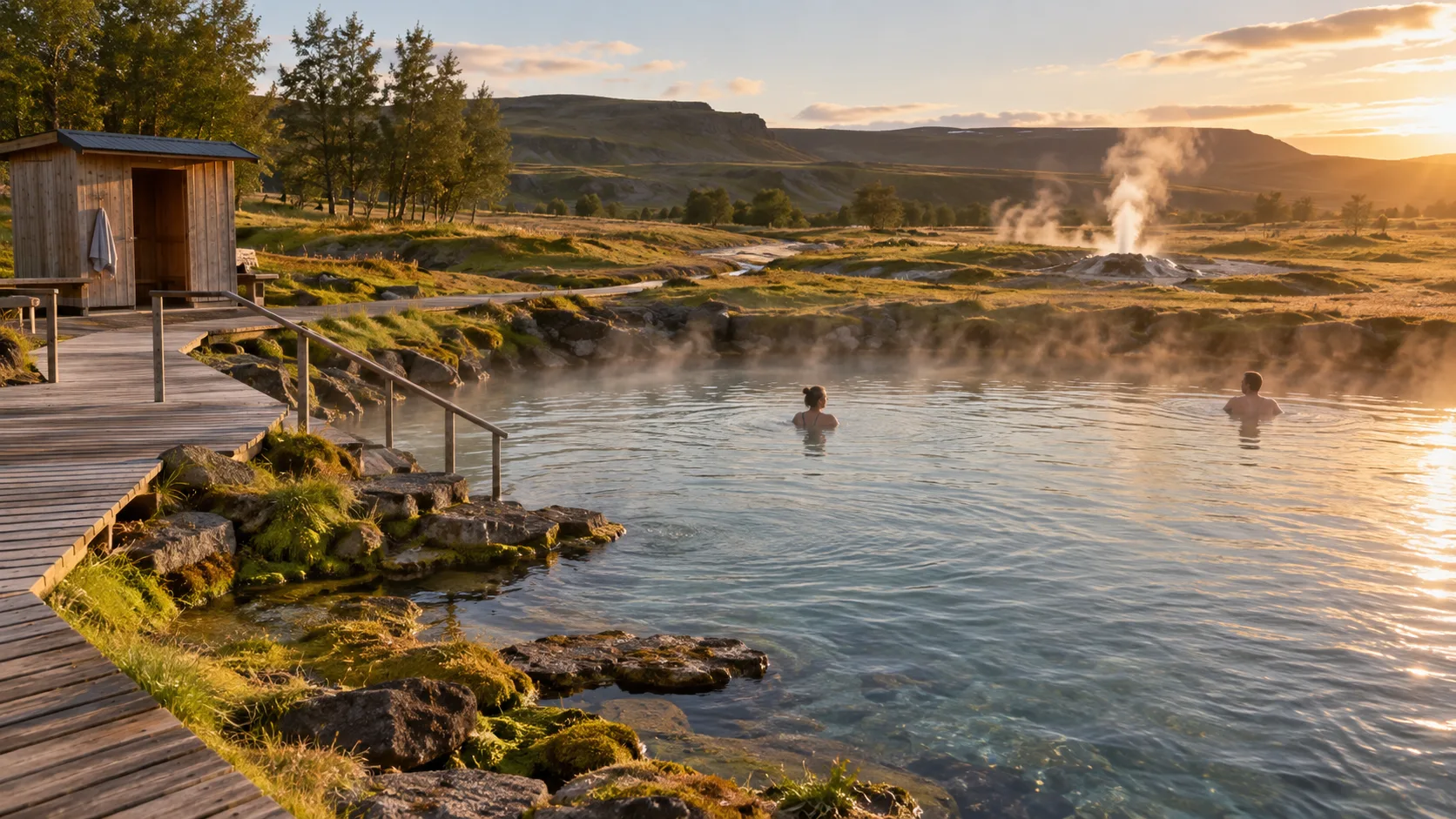
4. Secret Lagoon, Flúðir
Secret Lagoon is a managed historic bathing pool in Flúðir with changing facilities and active geothermal features nearby. Its Golden Circle location makes it easy to add after Gullfoss and Geysir without driving back toward Reykjavík first.
The water and surrounding ground demand attention, and the marked geothermal areas are for viewing rather than improvisational toe-testing. Reserve a time during busy months and verify road conditions in winter.
Best for: A straightforward Golden Circle soak with a rustic feel. Tradeoff: Simpler facilities and less visual drama than a luxury lagoon.
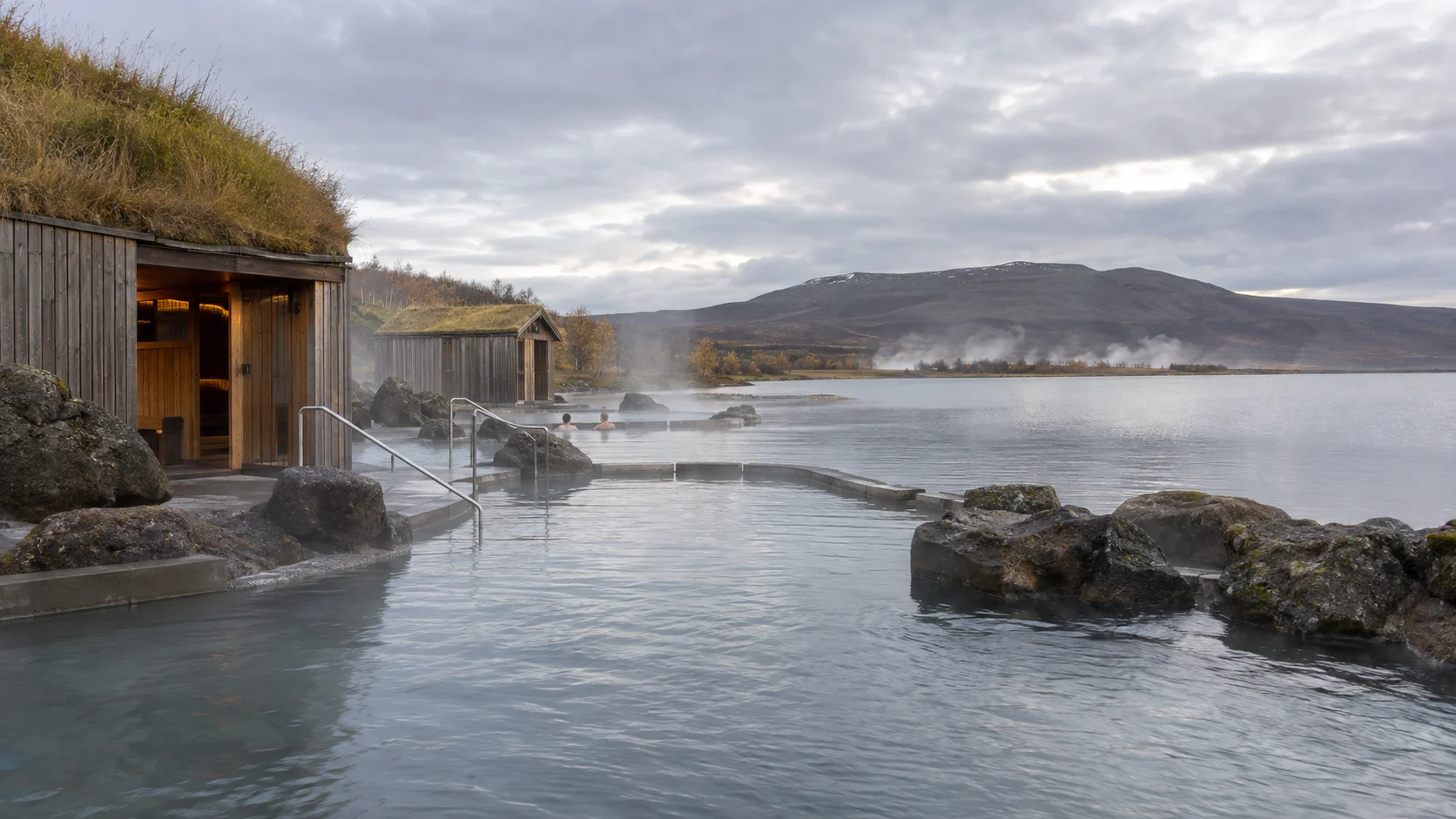
5. Laugarvatn Fontana, Golden Circle
Fontana combines geothermal pools, steam rooms fed by local heat, and lake access in Laugarvatn. It suits travelers who want proper facilities and a wellness stop between Þingvellir and the eastern Golden Circle sights.
A cold dip in the lake is optional, never a test of character. Check package inclusions, age rules, and current conditions before entering either hot or cold water.
Best for: A facility-rich Golden Circle circuit. Tradeoff: It feels more like a spa complex than a hidden country pool.
6. Reykjadalur hot river
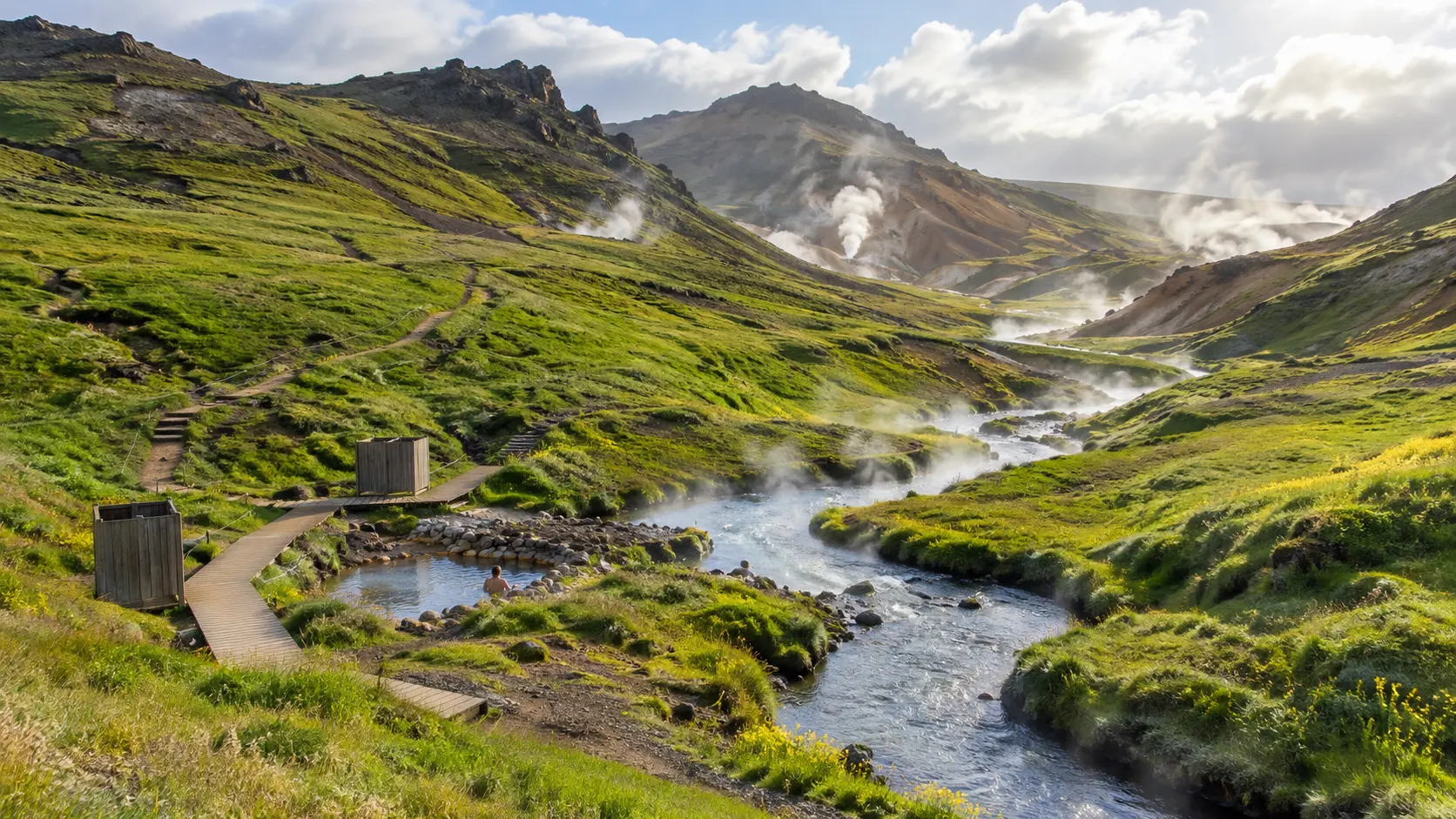
Reykjadalur requires a hike from the Hveragerði area to a managed bathing section of a warm river. Water temperature changes along the channel, and rain, snow, ice, wind, mud, erosion, or closure can turn a casual plan into the wrong plan.
Use only the designated bathing area, stay on constructed paths, and carry out everything. There are no luxury changing rooms waiting at the end, so pack a fast-drying towel, warm layers, and a waterproof system for dry clothes.
Best for: Capable hikers who want the journey to matter. Tradeoff: Weather exposure, limited privacy, no temperature control, and fragile terrain.
7. Hvammsvík Hot Springs, Hvalfjörður
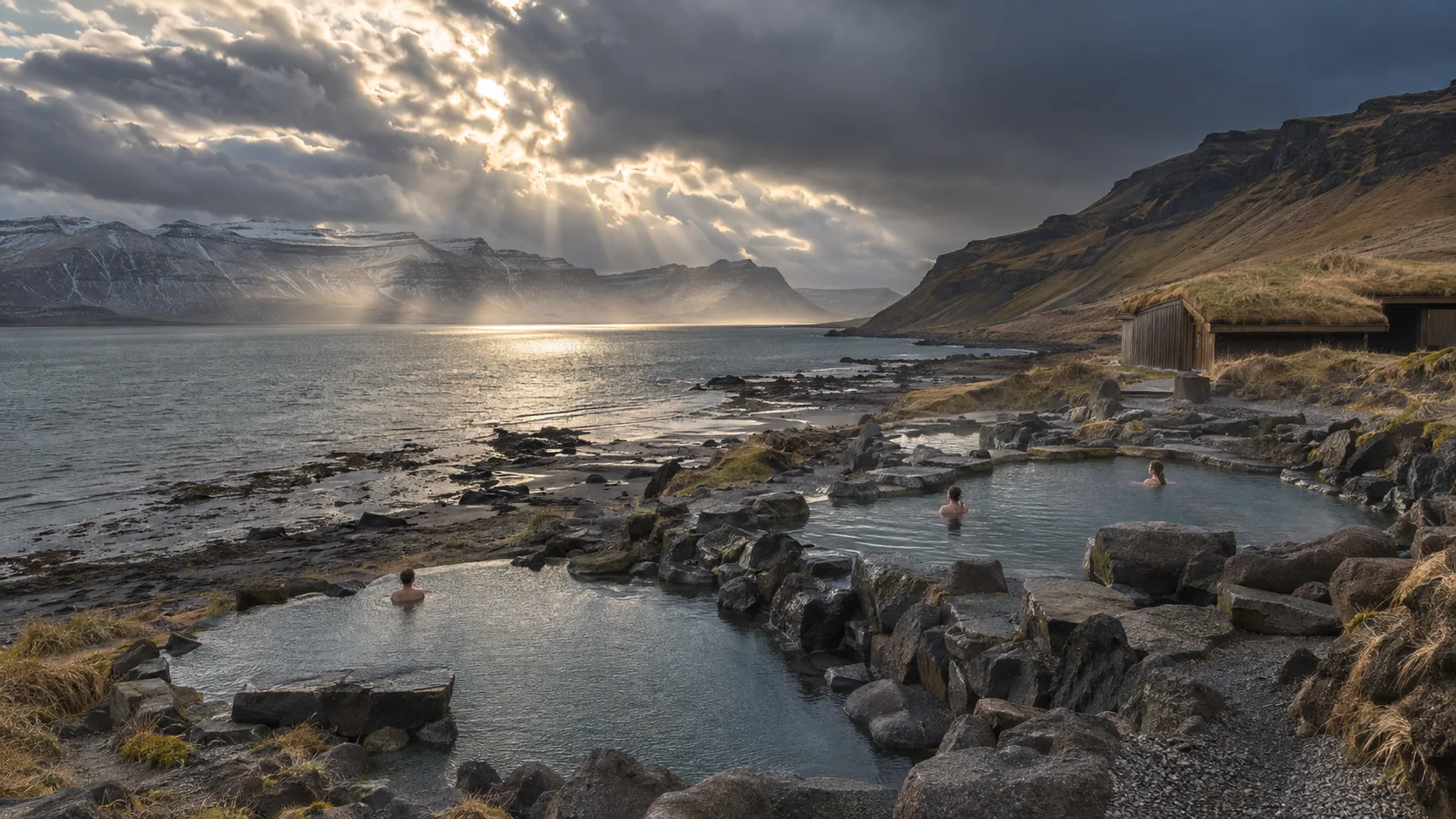
Hvammsvík arranges multiple seaside pools along Hvalfjörður, where tides and weather shape the experience. It is roughly a road-trip stop north of Reykjavík rather than a downtown attraction.
The current minimum age is 10, and anyone under 18 must be accompanied by an adult guardian. Winter drivers should confirm both the main route and final approach before leaving the city.
Best for: Coastal scenery and a west Iceland itinerary. Tradeoff: Limited family eligibility and a drive that deserves weather margin.
8. Krauma, Reykholt area
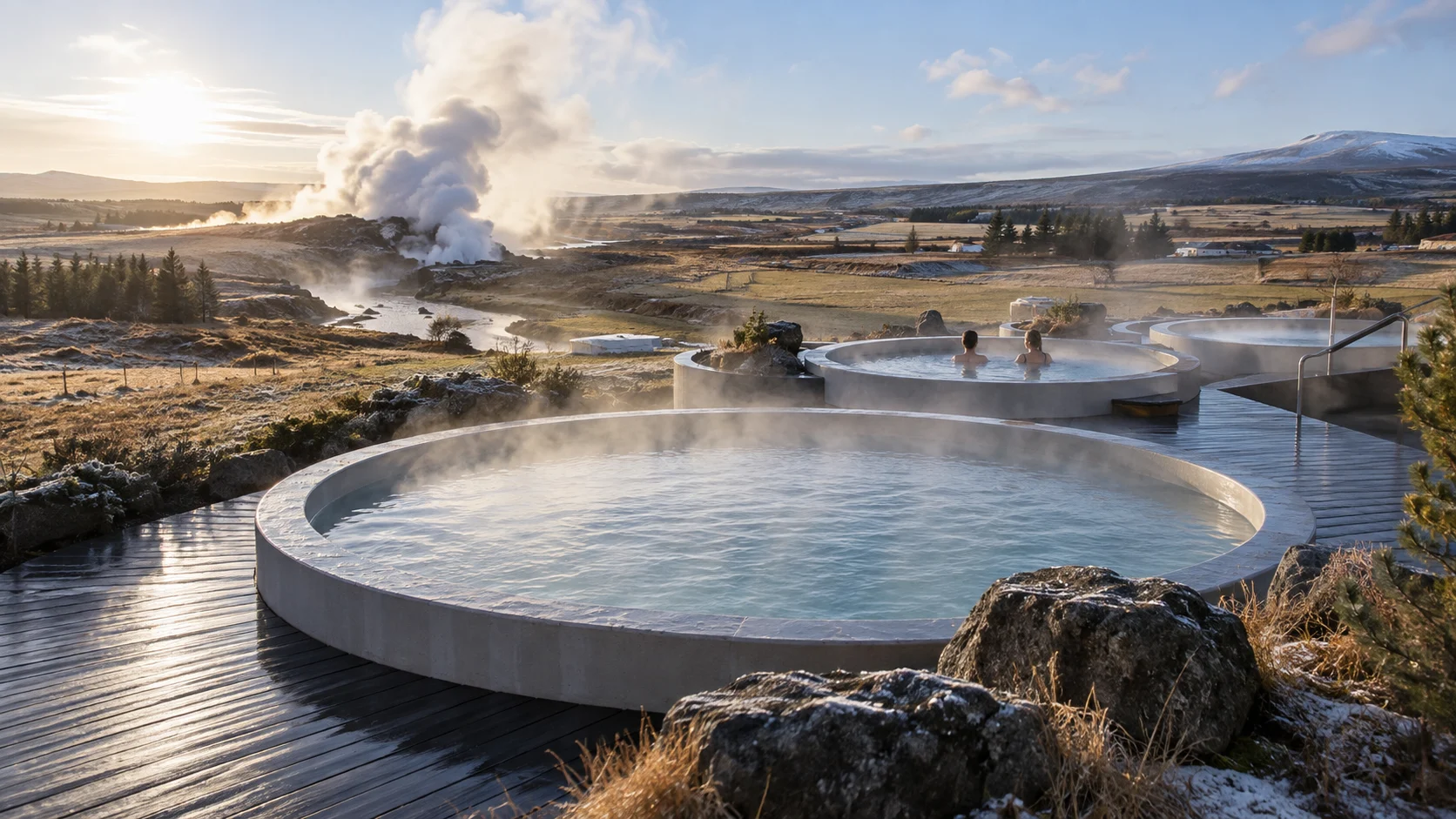
Krauma uses geothermal water from Deildartunguhver, tempered for a series of bathing pools near Reykholt. It pairs neatly with Borgarfjörður attractions and offers modern showers, dining, and relaxation rooms.
Do not enter Deildartunguhver itself, which is a powerful hot spring for observation. Krauma is the controlled bathing facility designed to make that geothermal resource safely usable.
Best for: West Iceland history and countryside drives. Tradeoff: A purposeful detour if the trip otherwise stays on the south coast.
9. Forest Lagoon, Akureyri
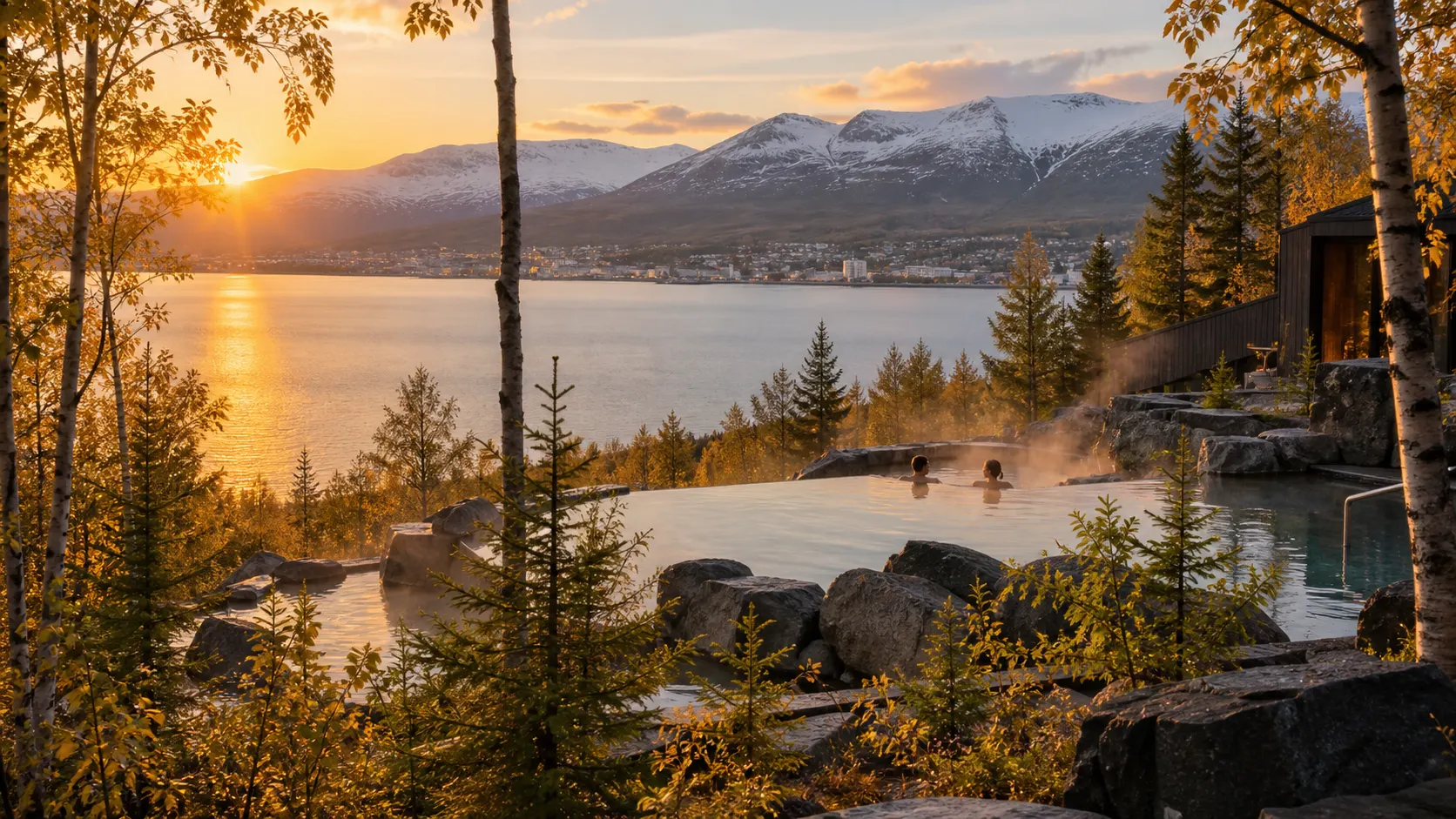
Forest Lagoon is a modern geothermal spa across the fjord from central Akureyri, with wooded surroundings and views toward Eyjafjörður. It is convenient for a north Iceland overnight or a generous cruise-port call.
Cruise travelers should compare transfer time, timed entry, and the ship’s all-aboard time in the Iceland cruise ports guide. A beautiful soak is less soothing when your towel is competing with the gangway clock.
Best for: Akureyri stays and polished northern scenery. Tradeoff: Cruise-day demand and premium admission.
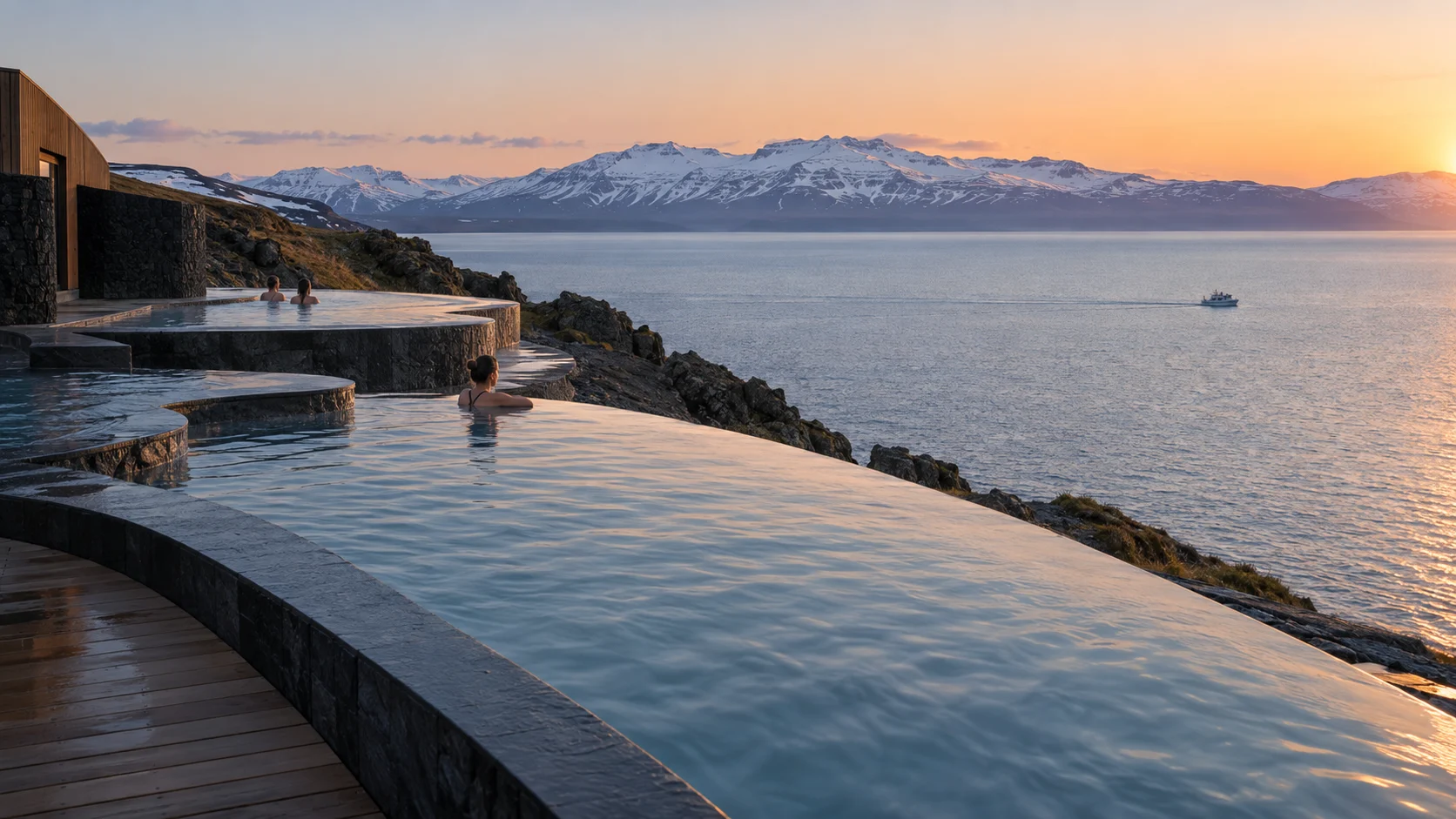
10. GeoSea, Húsavík
GeoSea overlooks Skjálfandi Bay from the edge of Húsavík, combining geothermal seawater with broad coastal views. It fits a whale-watching day particularly well, provided boat and bath reservations leave a realistic meal and changing buffer.
Sea views do not guarantee whales, northern lights, or clear weather. Book the facility you want, then treat wildlife and sky conditions as possible bonuses.
Best for: Húsavík overnights and coastal atmosphere. Tradeoff: It sits away from the standard Reykjavík and south-coast route.
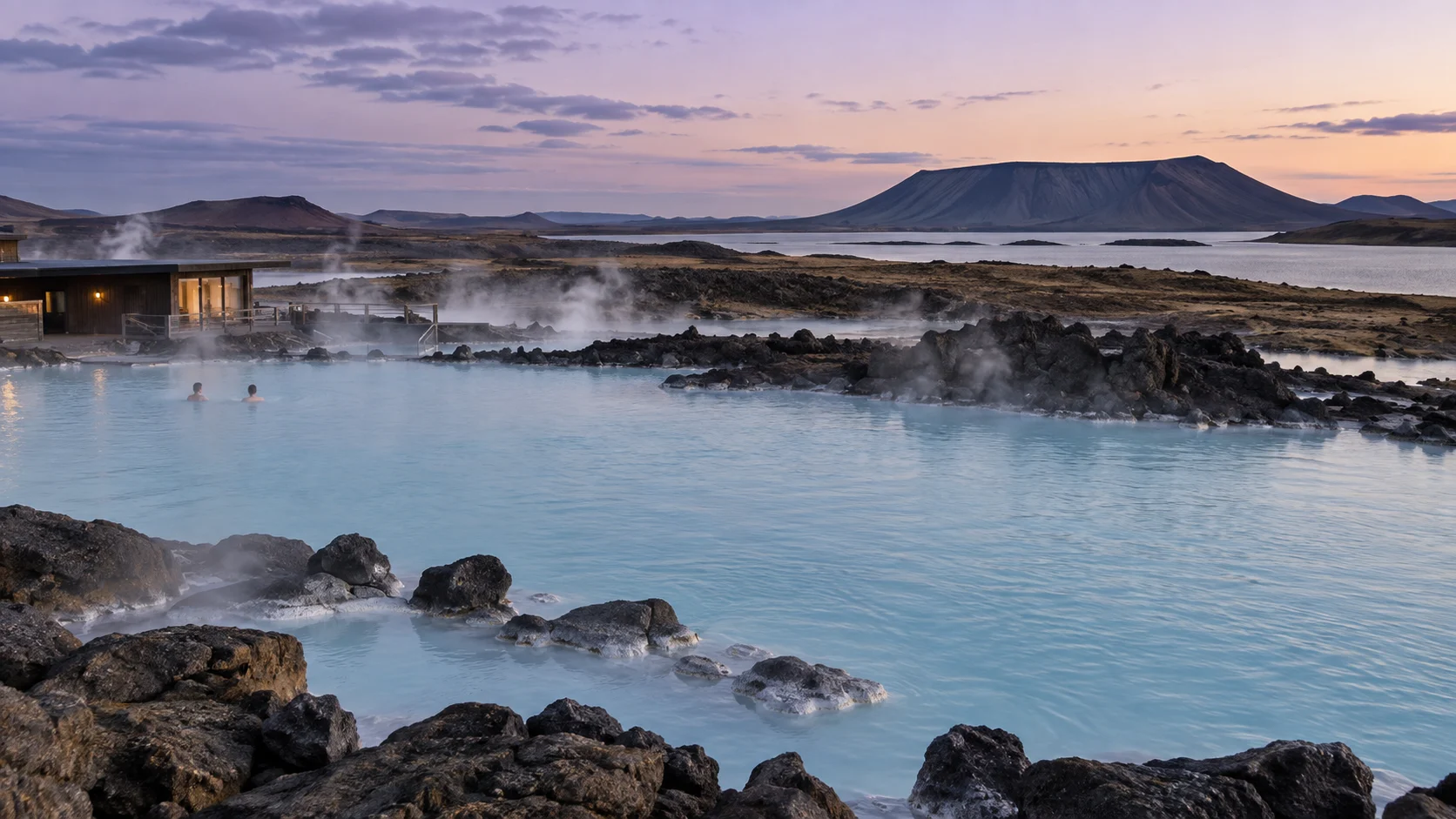
11. Mývatn Nature Baths
Mývatn Nature Baths provide a developed geothermal bathing experience within north Iceland’s volcanic landscape. They make geographic sense after Lake Mývatn sights, not as a heroic day trip from Reykjavík.
Confirm the facility’s current location, road approach, construction notes, and booking terms because operations have evolved. Protect at least two hours without sacrificing safe winter driving.
Best for: Ring Road travelers exploring Mývatn. Tradeoff: Strong weather exposure and considerable distance from the capital.
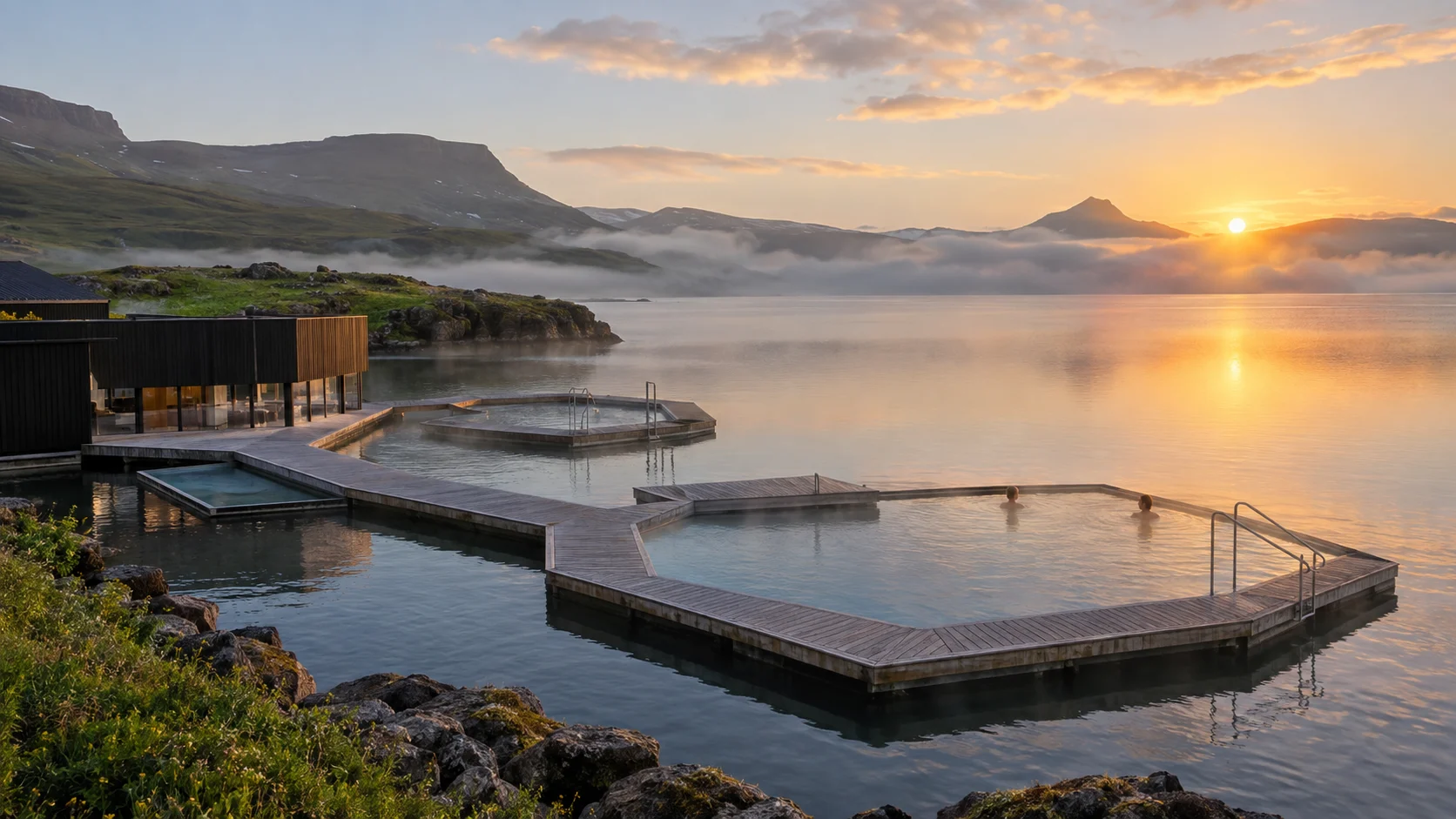
12. Vök Baths, East Iceland
Vök Baths float at Lake Urriðavatn near Egilsstaðir and provide changing rooms, geothermal pools, and lake views. They are an excellent recovery stop on an east Iceland drive because they belong to the route rather than requiring a cross-country chase.
Lake entry is optional and conditions matter. Check hours carefully outside peak summer, when road-trip arrival times and reduced daylight can narrow the usable window.
Best for: Ring Road and Eastfjords travelers. Tradeoff: Too remote for a short Reykjavík-based vacation.
Wild hot springs require more caution, not less
An undeveloped pool may be on private land, seasonally inaccessible, contaminated, too hot, or closed for restoration. Do not assume a pin copied from social media grants access or that clear water is safe.
Check alerts on SafeTravel Iceland and current conditions through the Icelandic Road and Coastal Administration. Never drive a closed road, park on fragile ground, step off marked paths in a geothermal area, or enter water without a safe exit.
Landmannalaugar and some highland bathing areas require seasonally open mountain roads and an appropriate vehicle under current rules. A rental car’s shape does not override its contract, road classification, river conditions, or official closure.
Iceland hot spring etiquette
At public pools and most managed baths, wash thoroughly without a swimsuit before entering the water. Use the designated shower, follow posted diagrams, and ask staff about private cubicles if modesty or accessibility is a concern.
- Remove outdoor shoes where changing-room signs instruct.
- Keep phones and photography out of changing and shower areas.
- Speak quietly and share small hot pots without taking over.
- Use glass-free water bottles and obey alcohol limits.
- Return towels, wristbands, and rented items as directed.
- Do not apply lotions immediately before entering the pool.
Health and temperature safety
Hot water can cause dizziness, dehydration, or overheating, particularly when combined with alcohol, illness, pregnancy, or some medical conditions. Follow facility time limits, hydrate, cool down gradually, and seek individual medical advice when needed.
Test managed pools using steps and handrails, but never touch or enter an unmarked geothermal feature. Iceland’s steaming ground can be dangerously hot even when the scenery looks calm.
Silica-rich water can make hair feel stiff, so use the facility’s conditioner guidance and keep long hair up if desired. Remove jewelry when an operator warns that minerals may affect metals.
Booking and packing checklist
- Reserve premium lagoons before fixing the day’s driving order.
- Read cancellation terms for weather, volcanic activity, and flight disruption.
- Confirm whether a towel, robe, sandals, and locker are included.
- Pack a swimsuit, dry base layer, warm hat, and waterproof bag.
- Bring easy footwear for wet floors and cold outdoor walkways.
- Carry a backup plan, usually a municipal pool on the same route.
For route-wide context, use the Iceland travel guide to connect bathing stops with lodging and transport. Waterfall fans can also compare the Iceland entries in this world waterfall shortlist, while keeping spray-soaked viewpoints and warm pools in separate clothing plans.
What the admission actually costs
These published adult prices are in Icelandic krónur and exclude transportation, food, and optional extras. They are useful for comparing the style of visit, but dynamic time slots and package changes mean the checkout price still controls.
- Venue and region: Blue Lagoon, Reykjanes
- Published admission basis: Comfort from ISK 11,990; Premium from ISK 14,990; Signature from ISK 18,490
- Age and access planning: Minimum age 2; allow roughly 45 to 60 minutes from Reykjavík when the access road is open
- Venue and region: Secret Lagoon, Flúðir
- Published admission basis: Adults 15+ ISK 4,500; children 14 and under ISK 260
- Age and access planning: Children accompanied, maximum three per adult; allow about 1.5 hours from Reykjavík
- Venue and region: Hvammsvík, Hvalfjörður
- Published admission basis: Published range ISK 5,900 to 15,100, depending on admission choice
- Age and access planning: Minimum age 10; under-18s accompanied; about 45 minutes from Reykjavík
I would choose Secret Lagoon when the Golden Circle is already on the route and the priority is a straightforward soak. Blue Lagoon’s higher-priced packages include different drinks, masks, and amenities, so compare what you will use rather than treating every upgrade as a better bath.
For Reykjadalur, start at the signed trailhead parking beyond Hveragerði and allow roughly 3 to 3.5 km each way to the bathing section, about 6 to 7 km total. Set aside two to three hours for hiking plus your soak, making a three-to-four-hour outing a kinder plan than squeezing it between timed attractions.
There is no spa-style admission package for the river, but parking or managed-access charges may apply and the approach can be muddy, icy, or closed. Bring your own towel and warm dry layers, and check the route conditions before leaving the parking area; I would use a serviced pool if visibility or footing is poor.
Choose one excellent soak per route
You do not need to collect geothermal pools like airport magnets. Choose the bath that fits your region, budget, children, mobility, and appetite for facilities, then keep a local pool in reserve when weather or geology edits the itinerary.