Can You Bring Alcohol on a Cruise? Rules by Cruise Line
Yes, some cruise lines let you bring a limited amount of wine, champagne, or beer, but the answer changes by line, age, embarkation port, and container. A bottle that is welcome on Disney may be confiscated on Carnival, so pack from your own booking’s policy, not from a friend’s last cruise.
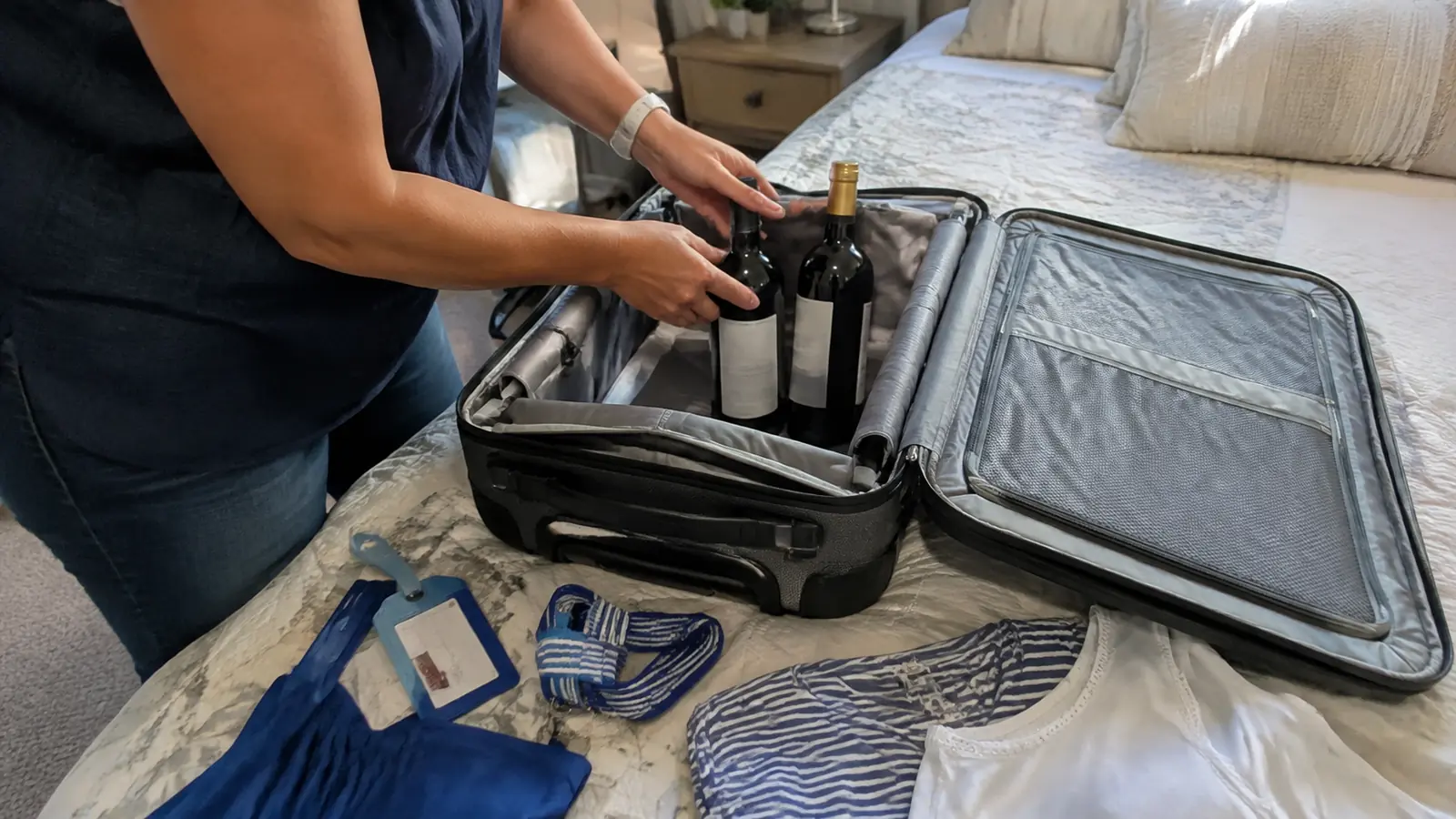
Recheck your cruise alcohol policy before packing
Recheck before sailing: Cruise lines can change limits, fees, age rules, and port exceptions after you book. Use the official policy linked for your line and confirm it again for your exact sailing before putting any beverage in a bag.
The short answer by beverage
- Wine or champagne: commonly allowed in a small quantity at initial embarkation, usually for guests of legal drinking age.
- Beer: prohibited as a personal carry-on by many mainstream lines, but Disney currently has a limited beer allowance.
- Liquor and spirits: generally prohibited as personal embarkation alcohol on the five lines compared here.
- Port and duty-free purchases: often collected and stored until late in the cruise rather than released for immediate drinking.
- Homemade or open alcohol: do not bring it; allowed beverages generally must be sealed and in original containers.
“One bottle” also does not tell you enough. You need to know whether the allowance is per adult, per guest of drinking age, per stateroom, per voyage, or available again at each port.
Royal Caribbean alcohol policy
As checked September 2026, Royal Caribbean allows each guest of drinking age to carry on one sealed 750 ml bottle of wine or champagne on embarkation day. Its official food and drink policy prohibits boxed wine and says beer, hard seltzer, and hard liquor seized on embarkation day will not be returned.
That allowance belongs to each qualifying guest, not to the cabin as a whole. A couple who both meet the line’s drinking-age rule can therefore bring two qualifying bottles, while a single qualifying guest in the same cabin can bring one.
Royal says bottles bought onboard, purchased in port, or brought beyond the initial allowance are stored and returned on the last day. If you plan to drink personal wine in a public venue, check the current corkage charge rather than assuming cabin rules follow the bottle into the dining room.
Consecutive cruisers may bring one qualifying bottle for each sailing, but must carry documentation and expect the extra bottles to be held for later voyages. That is an important exception for anyone using the logistics in this back-to-back cruise plan.
Carnival Cruise Line alcohol policy
Carnival currently permits guests age 21 and older to bring one sealed, unopened 750 ml bottle of wine or champagne per person at the beginning of the cruise. It must be in hand luggage, and Carnival’s official beverage and packing information prohibits guests from bringing beer or hard liquor.
Carnival lists a $15 corkage charge per 750 ml bottle when personal wine or champagne is consumed in the main dining room, specialty restaurant, or bar. Drinking it in the cabin avoids that listed public-venue fee, but the bottle still has to satisfy embarkation rules.
Do not confuse Carnival’s nonalcoholic allowance with its wine rule. The line permits a limited quantity of cans or cartons for soft drinks under separate size and carry-on conditions, but swapping those cans for beer does not work.
Alcohol bought in a port or onboard duty-free shop is generally held for collection near the end of the voyage. Ask when and where retrieval occurs because an early disembarkation time can make a forgotten bottle an expensive souvenir for the ship.
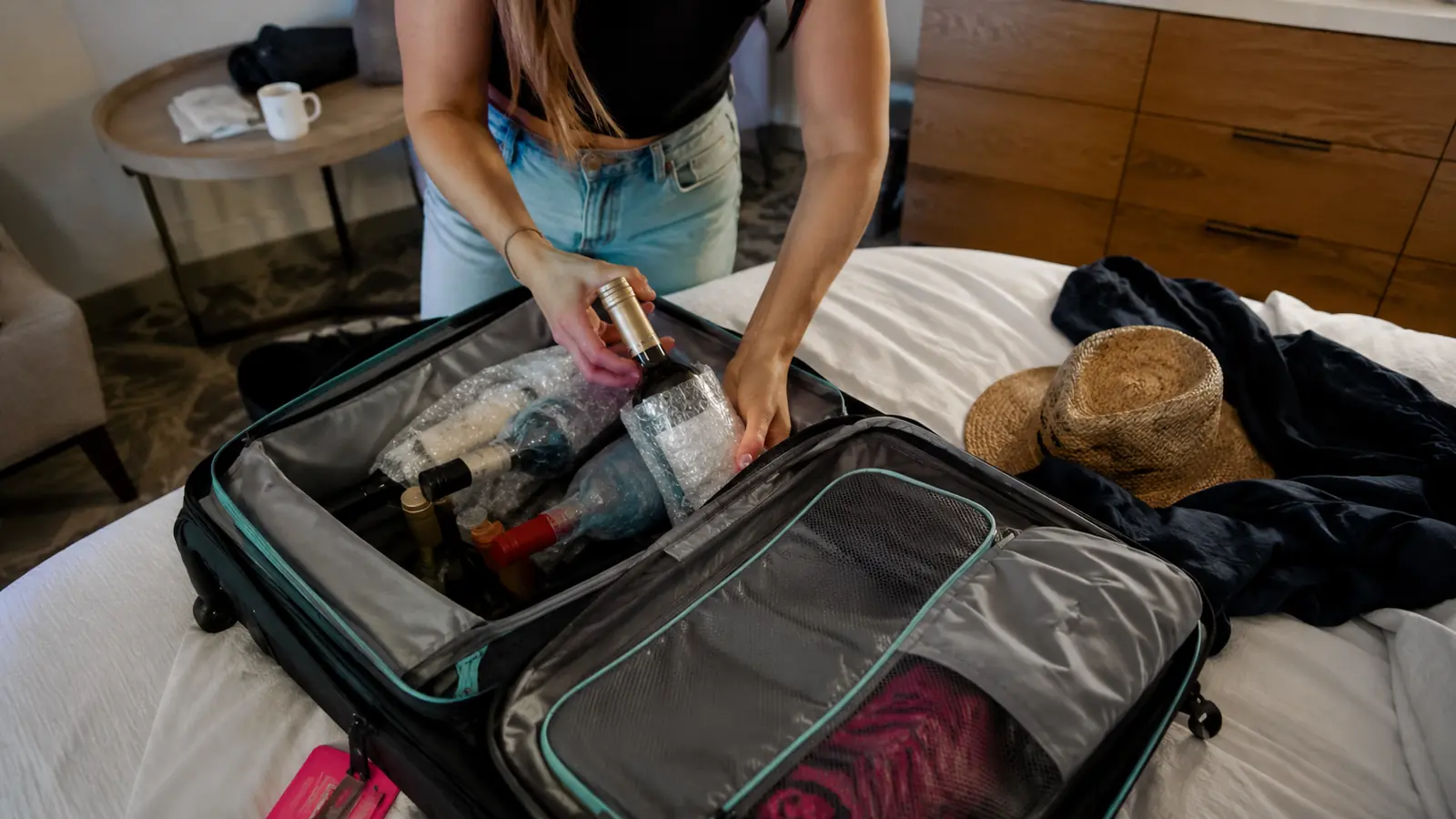
Norwegian Cruise Line alcohol policy
Norwegian takes a different approach: guests may bring sealed wine and champagne, while other personal alcohol is prohibited. NCL’s official wine and champagne policy lists corkage of $15 for a 750 ml bottle and $30 for a 1,500 ml magnum, with boxed wine prohibited.
The published page does not state a simple one-bottle limit, so do not translate that silence into permission for a case. Ask NCL for written confirmation if you plan to bring multiple bottles or sail from a port with stricter local screening.
NCL says guests with a qualifying beverage package are not charged its listed corkage fee. Confirm the package name and benefit on your reservation because promotions and inclusions change, and a package does not turn beer or liquor into permitted personal carry-on alcohol.
Port and onboard alcohol purchases are stored for later pickup under NCL’s policy. The line’s rules for nonalcoholic drinks are also stricter than some competitors, with narrow exceptions for medical devices and infant formula that should be arranged ahead.
Princess Cruises alcohol policy
Princess allows one bottle of wine or champagne, no larger than 750 ml, per guest of legal drinking age per voyage. The line’s official onboard FAQ says the bottle carries no corkage fee when consumed in the guest’s stateroom.
Princess currently lists a $20 corkage charge when that included bottle is consumed in a public area. Additional wine or champagne may be accepted under current terms, but each extra bottle is subject to the charge regardless of where it is consumed.
Spirits, beer, and other alcohol are not part of that personal embarkation allowance. Alcohol bought in port or duty-free may be collected for safekeeping and returned later, so it should not be the centerpiece of a private sail-away plan.
“Per voyage” matters to consecutive guests. Treat each booking segment as its own sailing and follow the security instructions rather than assuming all bottles for several segments will be released on day one.
Disney Cruise Line alcohol policy
Disney offers a beer option, but I would pack to the allowance in its current terms rather than an older cruise checklist. Its U.S. booking terms allow each guest age 21 or older one unopened bottle of wine or champagne up to 750 ml, or six beers up to 12 oz each, at embarkation.
Carry permitted drinks through security in your hand luggage. Read Disney’s current U.S. alcohol terms before packing, and confirm the dining-room corkage charge separately if you want the restaurant to serve your bottle.
Disney does not allow guests to bring liquor or spirits, including powdered alcohol, for personal consumption. Alcohol bought in ports, including wine, champagne, and beer, is stored until the cruise ends; alcohol removed from checked bags is not returned under the published terms.
Age and quantity can differ on specified Australia, New Zealand, and Singapore departures, so the North American rule is not portable worldwide. Check the contract and FAQ attached to the booked market, especially for an adult age 18 to 20.
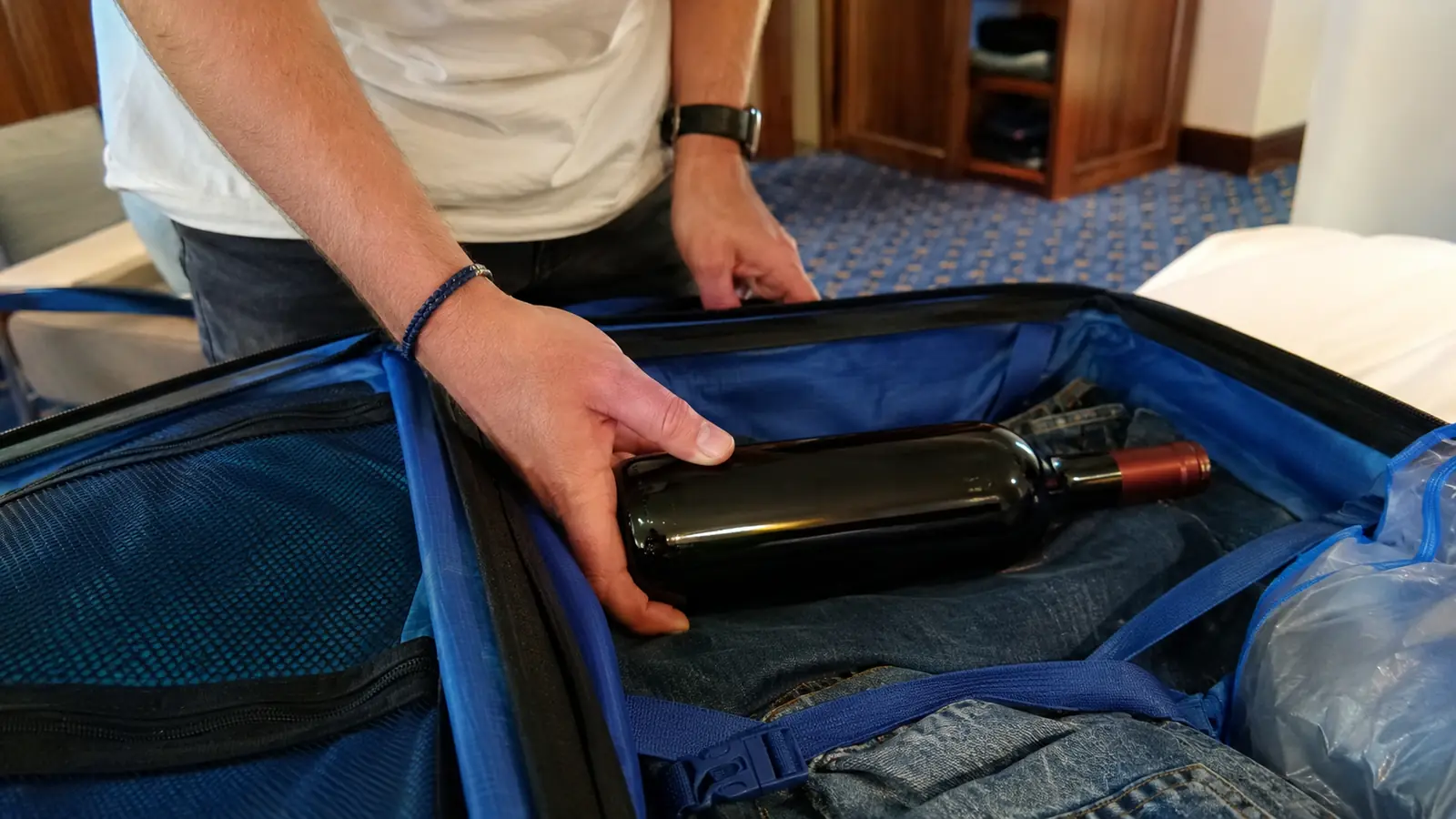
What “carry-on” really means
Bring permitted alcohol in the bag that goes through security with you, not the large suitcase handed to a porter. Several lines explicitly require hand carrying, and checked-bag screening can delay the case or result in removal without compensation.
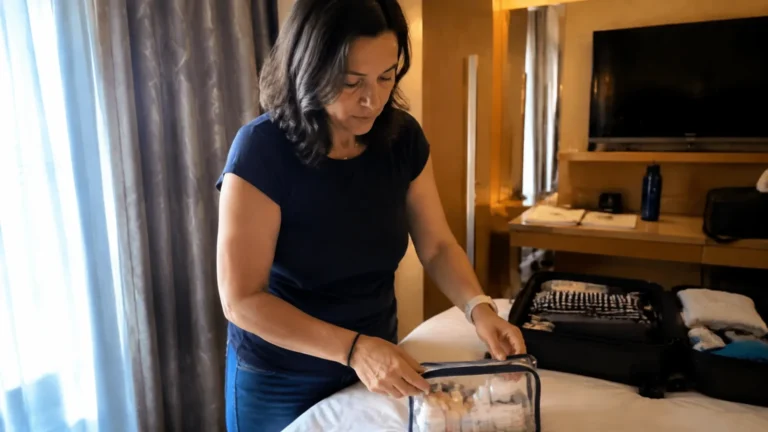
Keep the bottle in its unopened retail packaging and protect it with a padded reusable sleeve. A soft garment around the sleeve can reduce knocks, but the bag still needs to be light enough for you to manage through check-in.
Do not hide alcohol in shampoo bottles, refill water containers, use a “rum runner,” or tamper with seals. Concealment violates policy, can slow boarding, and may lead to confiscation or stronger action under the guest conduct rules.
If your carry-on already feels overfilled, revisit the organization ideas in this cruise luggage size guide. A permitted bottle is not useful if it crushes medication or makes the bag unsafe to lift.
Corkage fees without the mystery
Corkage is a service charge for consuming your own wine in specified onboard venues. It can apply even when you open and pour the bottle yourself, because the policy is tied to where it is consumed, not merely who touches the cork.
Ask whether the fee is charged at embarkation, when the bottle enters a dining venue, or regardless of location. Norwegian and Princess illustrate why this matters: their published rules assess personal wine differently from lines that waive a charge for cabin consumption.
A beverage package does not universally erase corkage. NCL currently publishes a package-holder exception, but that should never be applied to Royal Caribbean, Carnival, Princess, or Disney without each line saying so.
Can you bring alcohol back from a port?
You can often purchase it, but you may not be able to drink it onboard. Most mainstream lines scan returning bags and store port-purchased alcohol until the last night or disembarkation morning.
Disney’s current U.S. terms do not offer a fresh wine or beer allowance at each port. If you buy a bottle as a souvenir, plan to collect it at the end of the cruise and check the export, airline, and home-country import rules before buying.
Keep receipts, leave seals intact, and ask security for a claim slip when an item is held. Before disembarkation, check the collection location and time in the app or daily program.
Three rules travelers often mix up
Cruise-line rules
The line decides what can be brought through its security screening and consumed onboard. Its guest contract may also allow staff to refuse service, hold alcohol, revoke drinking privileges, or disembark a guest whose conduct creates a safety concern.
Port and national law
Local law controls purchase age, export, import, taxes, and prohibited products ashore. A cruise-line allowance never authorizes a purchase that the destination forbids.
Airline and airport rules
TSA, foreign security agencies, airlines, and aviation safety rules control bottles carried by air. A 750 ml wine bottle allowed onboard the ship is still too large for a normal airport liquids checkpoint unless packed according to applicable checked-bag rules.
What about drink packages?
A drink package buys specified beverages under specified price, venue, day, and service limits. It does not normally expand the personal carry-on allowance, permit sharing, or guarantee service to an intoxicated guest.
Compare the package’s daily cost, gratuity, port-day use, private-island eligibility, and included drinks against what you realistically order. This Royal Caribbean included-drinks breakdown is a useful reminder that water, basic coffee, tea, and selected beverages may already be available without either personal alcohol or a package.
If you mainly want one favorite wine with dinner, the allowed bottle plus corkage can cost less than a full package. If you value cocktails, specialty coffee, bottled water, and convenience all day, calculate the package separately instead of using carry-on wine as the deciding factor.
Special situations to check in advance
- Medical or dietary needs: contact the accessibility or special-needs team about required liquids rather than labeling alcohol as medical.
- Minors and young adults: the legal drinking age and any consent exception depend on the line and itinerary.
- Charters: a full-ship charter may have additional rules, but never assume it can weaken safety or port law.
- Back-to-back cruises: bring booking proof and follow security’s storage instructions for later segments.
- Flying to port: coordinate airline, airport, customs, and cruise rules before buying a bottle at home.
- Alcohol-free choices: check nonalcoholic beverage limits separately because they are not consistent across lines.
My practical packing recommendation
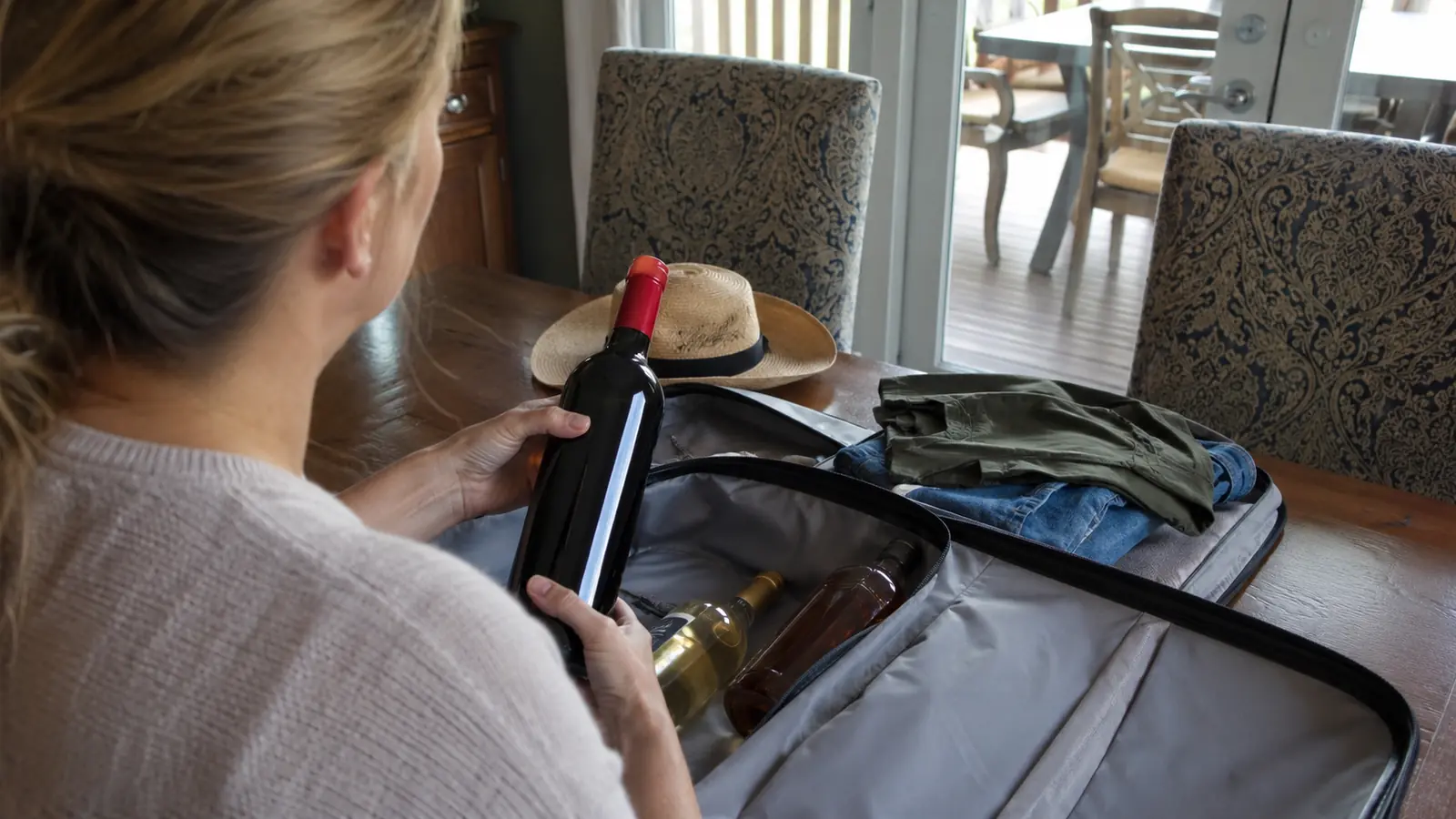
Screenshot the official rule a day or two before departure, circle whether the limit is per person or per cabin, and carry only a beverage clearly inside it. Put the qualifying sealed bottle in a padded hand-carried bag with the adult who receives the allowance.
Choose wine you would be happy drinking in the cabin if public-venue corkage changes the value. If the policy is unclear, leave the bottle home and buy onboard rather than asking terminal security to settle an argument while the ship is boarding.
The bottom line
Royal Caribbean, Carnival, Norwegian, Princess, and Disney all allow some form of personal wine or champagne under their September 2026 rules, but their limits and fees are not interchangeable. Disney also permits a limited beer option, while personal spirits are prohibited across this comparison.
The best rule is wonderfully unglamorous: check your own line, your own sailing, and the current date, then carry less than the maximum if you are unsure. That saves space, protects your first afternoon, and keeps a vacation bottle from becoming a security-desk donation.