Cruising With Toddlers: Childcare, Pools, and Practical Planning
A toddler cruise can be genuinely relaxing when the ship, cabin, and daily plan match your child. It can also become seven days of chasing naps past a closed nursery, so check the small-print details before falling for the giant waterslide in the brochure.
Is a cruise a good vacation with a toddler?
Cruising works well for families who value unpacking once, predictable meals, short walks back to the room, and flexible entertainment. It works less well when a child struggles with crowds, disrupted sleep, unfamiliar care, or long periods in a stroller or tour vehicle.
The best toddler cruise is usually not the ship with the most attractions. It is the sailing with an eligible child, usable childcare, a suitable water-play area, a workable cabin, and ports that do not require military-grade nap negotiations.
Test the idea with a shorter sailing from a practical homeport if your family is unsure. Four to seven nights gives time to settle in without committing to a remote itinerary or many consecutive sea days.
Check the minimum sailing age first
Cruise lines set minimum infant ages and often raise them for itineraries with long stretches at sea or remote destinations. The rule applies on the first day of the cruise, and an underage child can be denied boarding.
Royal Caribbean’s current infant policy, for example, generally requires six months, but raises the minimum to 12 months for named itineraries and cruises with three or more consecutive sea days. Treat this as an example, then verify your line and exact sailing in writing.
Do not book flights because a third-party search result says “family-friendly.” Check the cruise contract, age policy, child’s age on embarkation day, and any restrictions on linked land tours.
Choose the exact ship, not just the cruise line
Childcare, splash areas, cabin layouts, dining tools, and stroller routes can differ between ships in the same fleet. A brand-level promise is not proof that your vessel has a nursery.
Use the deck plan and current ship page to trace your likely day: cabin to breakfast, nursery, shaded deck, splash area, quiet lounge, dining room, and medical center. Count stairs, elevators, deck changes, and long corridors while imagining a sleeping 30-pound passenger.
Ask these childcare questions
- What ages are accepted, and must children be toilet trained?
- Is care drop-off, parent-supervised play, or both?
- Are reservations required, and what are the fees and cancellation rules?
- How much time can one child reserve, and can more be added onboard?
- Does care operate on embarkation day, port days, evenings, and meal times?
- How are parents contacted, and must they remain onboard?
- What illness, feeding, diapering, allergy, and comfort-item rules apply?
Capacity matters as much as opening hours. Disney says its nurseries serve young children in specific age bands and advises reserving because space is limited, while eligible ages differ on certain longer itineraries.
Book the care you most value first, perhaps one dinner or a sea-day break, rather than scheduling half the cruise before your child has seen the room. Some toddlers march in happily; others vote no with impressive clarity.
Check the water rules before promising pool time
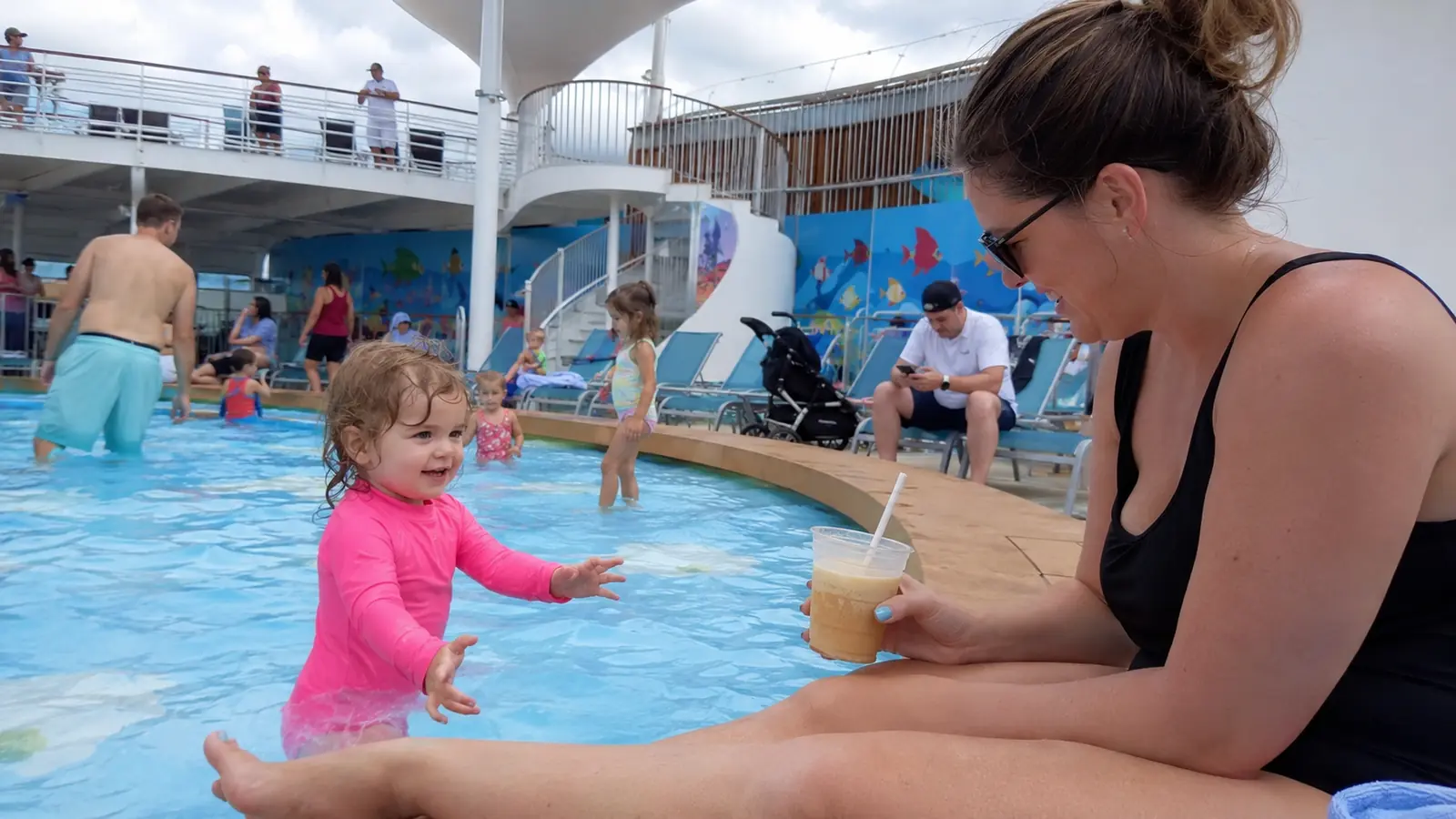
Children in diapers or not fully toilet trained generally cannot use ordinary cruise pools. The CDC explains that swim diapers are not leakproof, though some ships have specially designed water facilities that permit these children.
Confirm the exact splash area on your ship, its age and height rules, and whether it will operate in your weather and itinerary. A photo of fountains is not proof that diapers are allowed.
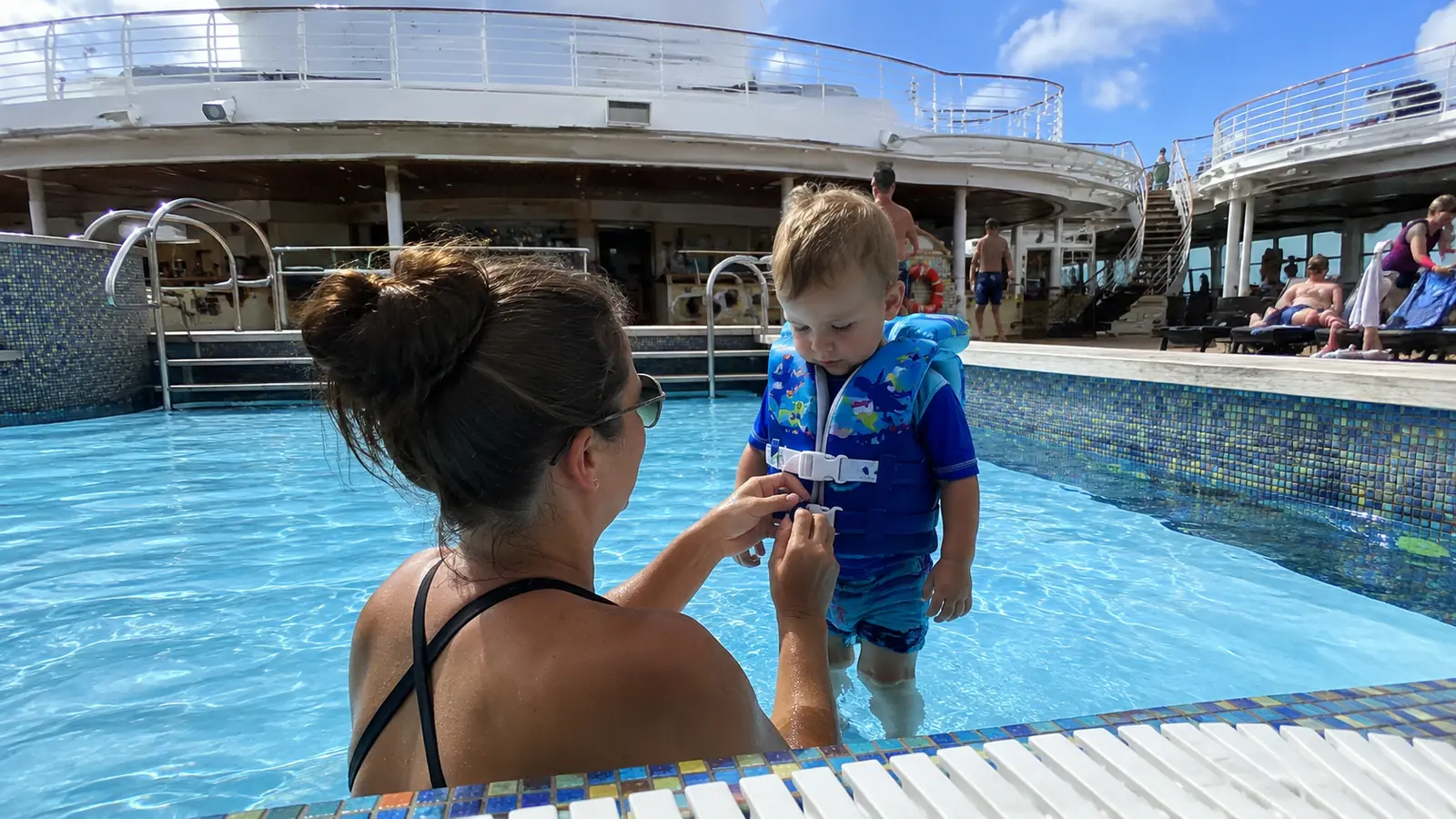
Bring more than one swimsuit and a dry layer because wind on deck can make a wet toddler cold quickly. Stay within arm’s reach around water, even when a lifeguard is present.
The two ship choices I would compare first
For a toddler who still wears diapers, I would start with Disney Dream and Oasis of the Seas because both combine a nursery with a specifically approved little-kid water area. These details were checked September 5, 2026, and the reservation confirmation should still name your child’s age and the exact ship.
Disney Dream: my first comparison for character-loving toddlers
- Drop-off care: “it’s a small world” nursery serves ages six months to three years on typical sailings, with a one-year minimum on certain longer itineraries.
- Diapers and reservations: This nursery accepts children who are not toilet trained, and advance reservations are important because capacity is limited.
- Fee model: Nursery care is charged by the hour, separately from the fare; confirm the current rate and cancellation deadline in the booking window.
- Approved water play: Nemo’s Reef is for children four and younger, and Disney requires swim diapers there for children who are not toilet trained.
- Parent role: Stay and supervise water play; the nursery reservation is the supervised drop-off option, while youth-space open houses require an accompanying adult.
I would choose Dream if a small splash session and familiar characters would make the child’s day, especially when parents want one reserved dinner together. The Disney pool rules still prohibit diapered children from the main pools, so Nemo’s Reef is the relevant feature to check.
Oasis of the Seas: my comparison for a family with older siblings
- Drop-off care: Royal Babies & Tots nursery serves ages six to 36 months, including children in diapers, subject to availability.
- Fee model: Royal Caribbean’s current youth-program page lists a U.S. hourly charge of $9 to $12 for nursery sessions on participating ships.
- Reservations: Register onboard and reserve the desired nursery sessions promptly; confirm how many hours can initially be booked and which time band costs more.
- Approved water play: Oasis is on Royal Caribbean’s Baby Splash ship list, and that designated area is the only permitted water option for a child who is not fully toilet trained.
- Older toddler option: Aquanauts begins at three and requires independent toilet training, with no diapers or pull-ups.
I would compare Oasis when older children also want the larger ship’s activities, but I would map the nursery-to-cabin walk before choosing a room. Parent-and-child play sessions are different from paid nursery care, and neither a general splash-park photo nor a supervised kids’ club guarantees access for a diapered two-year-old.
My pick by age and toilet training
For a one- or two-year-old in diapers, choose the ship whose nursery sessions and approved splash space fit your actual days, with Dream my character-focused starting point and Oasis my mixed-age-family comparison. For an independently toilet-trained three-year-old, a regular age-eligible club can reduce childcare spending, but I would first check the child’s comfort with unfamiliar staff and a new room.
A three-year-old who still needs toilet help should not be booked on the assumption that an older-child club will make an exception. Ask the line to confirm whether nursery care remains available for that exact birth date, since the upper age boundary matters as much as the minimum.
Pick a cabin that protects sleep
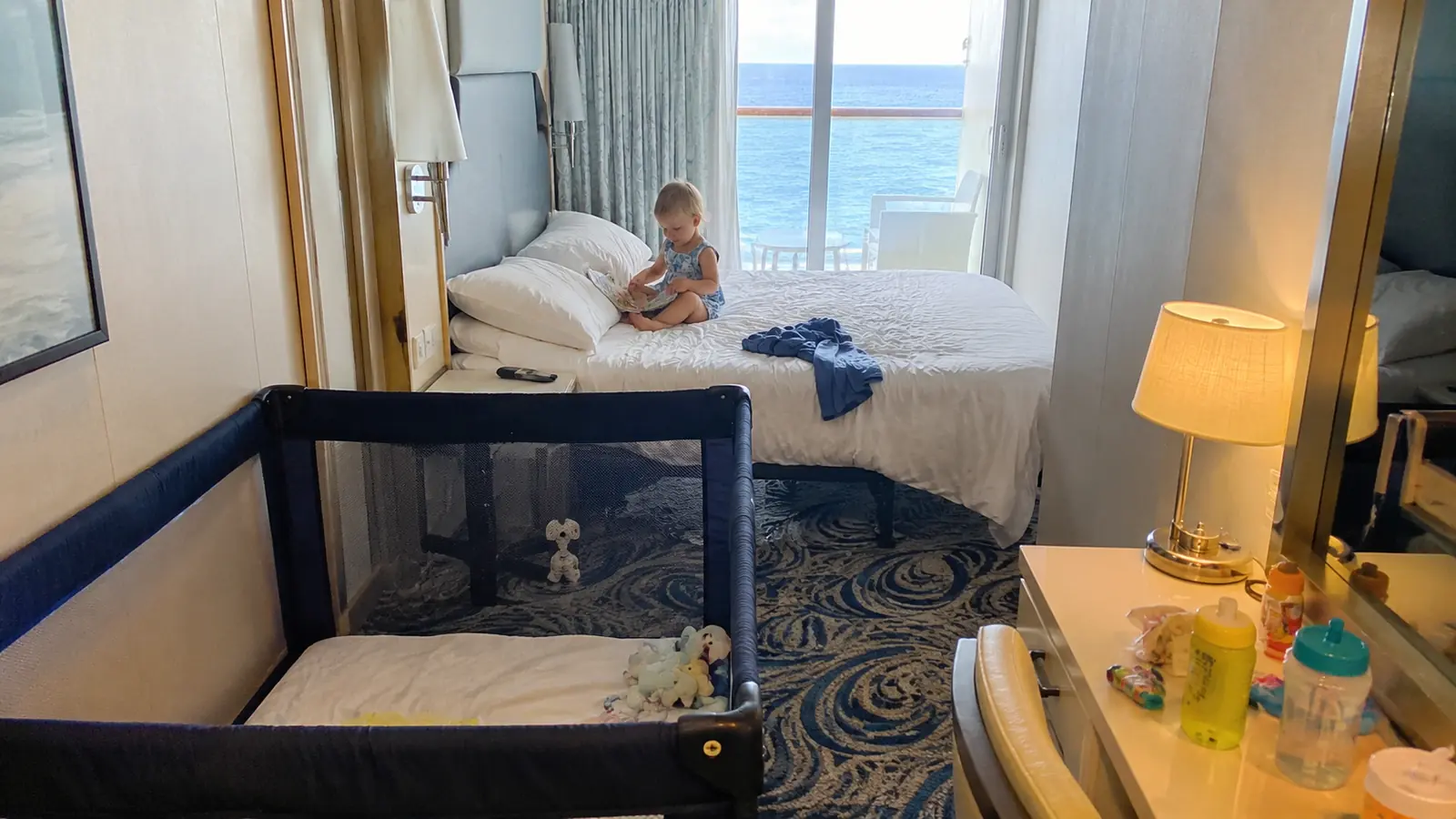
An inside cabin is usually dark and budget-friendly for naps, but adults have nowhere separate to sit after bedtime. A balcony offers breathing room, yet doors, railings, furniture, and supervision need serious attention.
Never leave a child alone on a balcony or use balcony furniture as climbing equipment near the rail. Confirm the door lock, then keep furniture away from the barrier and supervise every visit.
A suite, family cabin, or room with a curtain can preserve adult conversation after lights-out. Connecting cabins may work for larger families, but verify door configuration, occupancy rules, monitor range, and whether an adult must sleep in each room.
Request a crib or portable sleep space before sailing and ask for its dimensions, placement, mattress, and linens. “Available on request” may not mean guaranteed, and the setup can consume the walkway you admired in the wide-angle photo.
Check whether the bathroom has a tub, shower, handheld sprayer, step, or raised threshold. A collapsible toddler bath solution is useful only if the cruise line permits it and the cabin can actually fit it.
Make meals boring in the best way
Familiar timing and dependable foods matter more than sampling every restaurant. Ask about high chairs, whole milk, refrigeration, purees, warming, dishwashing, early dining, room service, and bringing sealed baby food.
If your child has a food allergy, contact the accessibility or dining team before travel and repeat the discussion onboard. Ask how orders are prepared and served rather than assuming a buffet label prevents cross-contact.
Pack enough preferred snacks for embarkation and shore days within customs and cruise-line rules. Food taken off the ship can face destination restrictions, so carry only what local authorities allow.
A cabin cooler may not maintain medication-safe temperatures. Families needing refrigerated medicine or milk storage should obtain the line’s written equipment and medical guidance instead of trusting the word “fridge” in an online forum.
Pack for the first six hours and the whole sailing
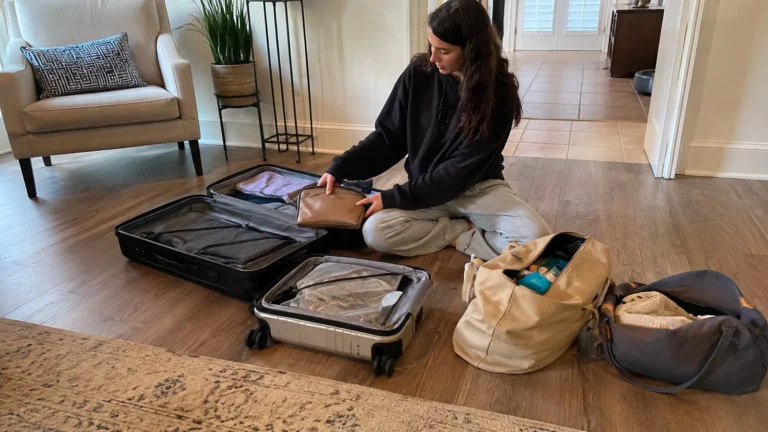
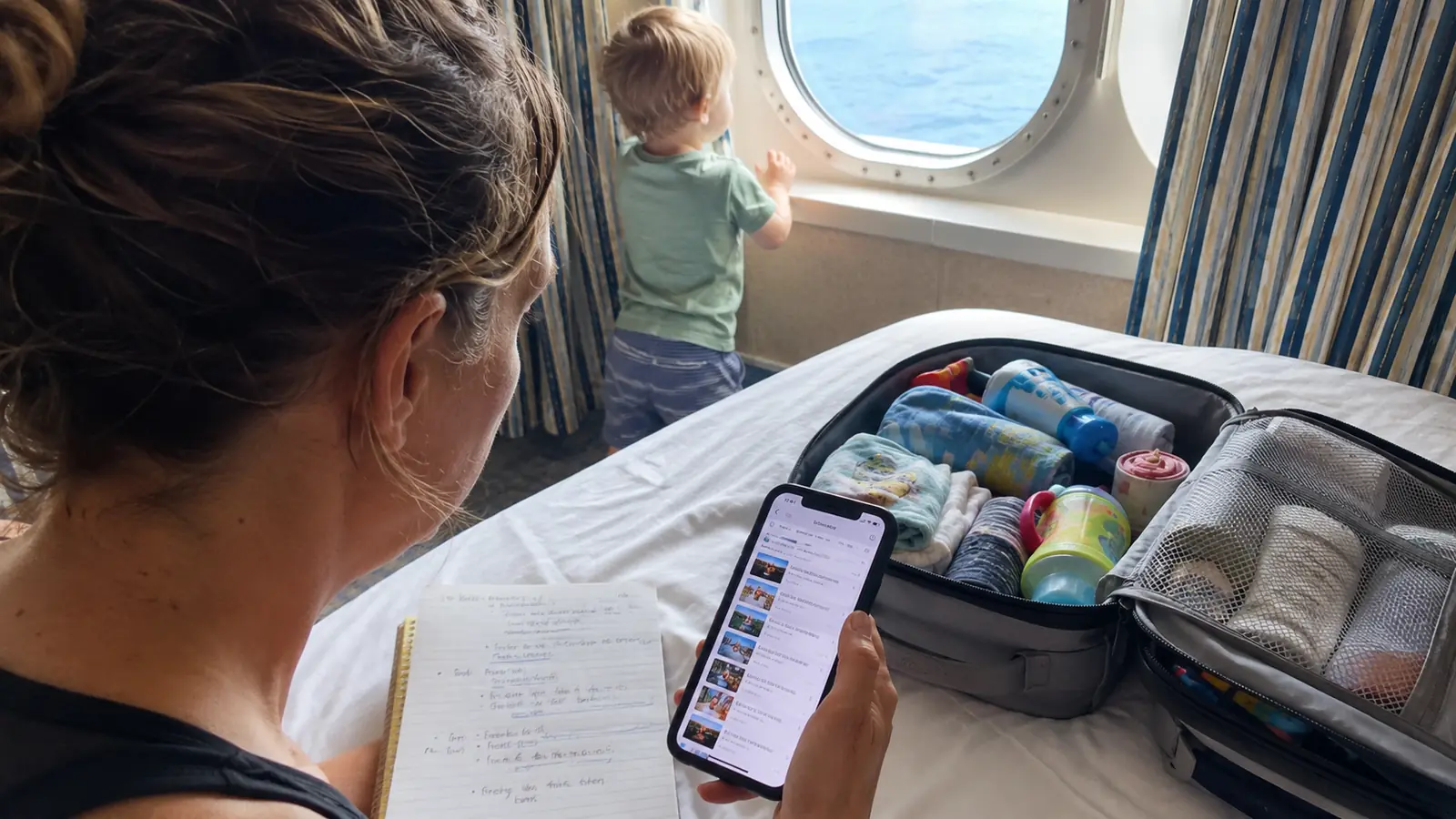
Checked luggage may reach the cabin later, so the carry-on needs diapers, wipes, a change of clothes for everyone, medications, feeding supplies, sunscreen, swim gear, sleep items, and documents. Keep every essential for the first afternoon with you.
Use the family modules in this cruise packing list, then add more diapers and wipes than the spreadsheet says feels emotionally reasonable. Ship shops may have limited brands, sizes, hours, and stock.
Bring a compact stroller that folds easily, plus a carrier if your child tolerates one. Measure the cabin doorway and storage space, and remember that tender boats, cobblestones, sand, stairs, and crowded elevators can humble an enormous stroller.
Pack prescribed medicines in original containers, a thermometer, dosing tool, basic first-aid supplies, sun protection, and oral rehydration products recommended by your clinician. Do not try a new motion-sickness medicine or sleep aid without pediatric guidance.
A comfort object, familiar pajamas, clips for curtains, and a quiet white-noise device can help with sleep. Verify electrical and prohibited-item rules because household extension cords, steamers, and some sound devices may not be allowed.
Protect the routine without worshiping it
Keep one reliable nap or early bedtime anchor and let the rest flex. A cabin nap can rescue dinner, while a stroller nap may rescue the adults who would like to see something beyond Deck 7.
On embarkation day, tour the nursery, locate diaper-changing stations, confirm dining, and walk the route to the muster location. Save the ship’s medical and guest-services numbers in both adults’ phones.
Expect bedtime to shift with time zones, announcements, hallway noise, and excitement. Schedule the most important activity after a reasonable sleep opportunity, not directly after a late show and a sunrise port arrival.
Plan toddler-sized shore days
Choose one main activity, a meal plan, shade, bathrooms, and an easy return. Long panoramic bus tours are rarely improved by a passenger who communicates exclusively through crackers and removal of shoes.
Check age, height, car-seat, stroller, boat, and walking requirements for every excursion. “Infants free” describes price, not whether the activity is comfortable or safe for your child.
Tender ports add queues, steps, motion, stroller handling, and weather uncertainty. A docked port with a nearby beach or walkable attraction may provide more actual fun than a famous stop requiring two transfers.
If using independent transportation, research local child-restraint law and arrange the correct seat in advance. Do not assume a taxi will carry one, install one properly, or have working belts.
Keep ship time and all-aboard time visible, and leave a generous return margin. A private tour can be flexible, but the ship’s departure will not become flexible because someone needed one final bathroom attempt.
Prepare for illness and small emergencies
Discuss the route, vaccines, chronic conditions, motion sickness, and medication doses with the child’s clinician. The CDC’s current guidance for traveling safely with young children emphasizes age-specific preparation rather than shrinking adult advice.
Ship medical centers are useful, but they are not full pediatric hospitals and care may cost extra. Ask your insurer about onboard treatment, foreign care, evacuation, trip interruption, and whether payment is required before reimbursement.
Wash hands with soap and water, especially after diaper changes and before eating, and keep a vomiting or feverish child out of group care. CDC cruise-health guidance tells ill travelers to seek the ship medical center and follow infection-control instructions.
Carry a recent photo and the child’s identification details, and decide which adult is responsible during each transition. Hold hands near railings and stairs, use cabin locks, and keep balcony and exterior deck supervision constant.
Budget for the toddler, not just the berth
A reduced child fare can still include taxes, port charges, gratuities, flights, transfers, insurance, nursery fees, and excursions. Price the family total, then compare cabin arrangements and a land vacation on the same dates.
Add diapers, laundry, checked bags, stroller transport, a pre-cruise hotel, car seats, and emergency supplies. These are not glamorous line items, but neither is discovering the only available diaper is two sizes too optimistic.
Compare cruise lines by the child’s actual age using current youth-program age bands, not a generic family ranking. Then layer in the booking and embarkation basics from the first-time cruise checklist.
A sea day and port day I would actually plan
Sea day: Start with breakfast near the cabin, then 30 to 45 minutes in the permitted splash area before changing into dry clothes for a snack. Follow with a short walk or quiet play, lunch, and the child’s normal cabin nap, leaving a reserved nursery session for a parent break only if the child is settling well.
After the nap, I would choose one activity, an early dinner, and the usual bedtime routine. These are suggested family time blocks, not published nursery or pool hours, so adjust them to the daily program and how the child feels.
Port day: Leave after breakfast for one nearby, easy-to-exit outing, bringing the stroller or carrier that suits the actual surface and a confirmed return plan. I would aim to return for lunch and the regular nap, leaving substantial margin before all-aboard instead of attaching an afternoon tour.
If the port requires a tender and the transfer would consume most of the child’s happy morning, staying aboard is a reasonable choice. A shorter port day can still be worthwhile when there is time for a beach look, snack, and unhurried family photo.
Toddler cruise questions
What is the best cruise length with a toddler?
Four to seven nights is a practical first range, especially from a convenient port with no long sea-day sequence. Choose fewer complicated ports over a packed itinerary.
Can toddlers use cruise kids’ clubs?
Sometimes, but standard drop-off clubs often begin at an older age than nurseries. Verify the exact ship’s age band, toilet-training rule, fees, capacity, hours, and whether parents may leave the ship.
Should I book a balcony with a toddler?
A balcony can give adults separate space during naps, but it requires unwavering supervision and safe furniture placement. An inside, ocean-view, or divided family cabin may be the better fit for your budget and comfort.
What makes a cruise toddler-friendly?
The winning combination is an eligible sailing, dependable age-appropriate care, a permitted splash facility, a sleep-friendly cabin, flexible food, manageable ports, and a medical plan. Book for those practical details, then let the characters and waterslides be the frosting.