How to Prepare for a Transatlantic Cruise
A transatlantic cruise is not simply a longer vacation at sea. It is a one-way travel chain with changing time zones, several consecutive sea days, limited replacement shopping, variable Atlantic weather, and an international arrival that rewards careful preparation.
How to Prepare for a Transatlantic Cruise
The best preparation starts with the route, not a generic packing list. An eastbound spring crossing, a westbound fall repositioning, and a direct ocean-liner crossing can have very different ports, temperatures, sea-day rhythms, and flight needs.
Build the trip in this order: documents, flights and hotels, insurance, medical needs, cabin, connectivity, then clothing. That sequence protects the expensive and nonreplaceable pieces before you debate how many dinner outfits to bring.
Know Which Kind of Crossing You Booked
A repositioning cruise moves a ship between seasonal regions and may add ports in the Caribbean, Atlantic islands, Western Europe, or the Mediterranean. A direct crossing devotes a larger share of the itinerary to uninterrupted ocean travel.
Do not compare fares without counting the full route. Add the one-way flight, pre-cruise hotel, airport-to-port transportation, baggage fees, gratuities, onboard purchases, insurance, and any post-cruise stay.
- Choose a direct crossing if ship life, reading, lectures, and an unhurried routine are the point.
- Choose a port-rich repositioning if you want the ocean experience balanced by destination days.
- Choose eastbound carefully if shorter clock-change days disrupt your sleep.
- Choose westbound carefully if fall storm uncertainty or a later arrival season affects your plans.
Ships usually adjust clocks in increments rather than switching all at once, but the captain determines the actual schedule. Eastbound changes commonly remove hours and westbound changes commonly add them, so protect sleep and avoid locking every morning into an early reservation.
Book the One-Way Travel Chain First
Most transatlantic cruises begin and end on different continents. Search airfare as a multicity or open-jaw trip, compare separate one-way tickets, and check whether the cruise line offers protected air without assuming it is automatically cheaper.
Arrive at the embarkation region at least one day early, with more margin when flights require connections or the port is several hours from the airport. A cruise ship will not wait for an independently delayed flight.
Map every transfer before booking. “London,” “Rome,” and “Paris” cruise departures may actually use Southampton, Civitavecchia, or Le Havre, so the city named in marketing can hide a substantial train or road journey.
Leave a post-cruise buffer if the arrival port uses immigration, if your airport is distant, or if you plan a same-day international flight. Disembarkation times are estimates, and a delayed berth can unravel a tight separate ticket.
Carry the Right Passport and Entry Documents
A transatlantic is not a closed-loop domestic-style cruise. The U.S. State Department’s cruise passenger guidance strongly recommends a passport book even when a cruise line does not require one because an emergency flight home requires the book.
Check every country on the itinerary, plus any country entered during a flight connection. Passport validity, blank-page, visa, transit, and authorization rules depend on citizenship and can differ between guests sharing one cabin.
The European Union’s Entry/Exit System has been fully operational at external Schengen border crossings since April 10, 2026 for covered non-EU travelers. Expect biometric and digital registration procedures rather than relying on an old passport-stamp description.
ETIAS is separate from EES and is not yet operating or accepting applications. The EU says ETIAS is scheduled to start in the last quarter of 2026, with the exact launch date to be announced; use the official ETIAS site rather than a third-party application service.
Save digital and paper copies of your passport identification page, insurance, itinerary, flight confirmations, prescriptions, and emergency contacts. Keep originals in your carry-on, never in luggage handed to an airline or porter.
Buy Insurance for the Actual Risks
Policy labels matter less than covered events and dollar limits. Compare trip interruption, missed connection, medical care abroad, medical evacuation, preexisting-condition terms, supplier failure, baggage delay, and the full nonrefundable cost of flights and cruise.
Ask how the policy handles an itinerary change, ship diversion, quarantine, or a missed embarkation caused by a flight. “Cruise coverage” is not a promise that every cruise-specific problem is covered.
Medicare generally has limited coverage outside the United States, and many domestic plans pay little or nothing abroad. Verify your own health plan in writing, then decide what supplemental medical and evacuation protection you need.
Plan for Several Consecutive Sea Days
A port-heavy cruise supplies its own structure, while an ocean crossing asks you to create one. Review the current ship’s indoor lounges, pools, library, lectures, classes, entertainment, promenade, laundry, and dining hours before choosing it.
Build a loose daily rhythm rather than a minute-by-minute schedule. One morning activity, one movement break, one social plan, and open time for reading or rest keeps sea days satisfying without turning them into work.
Bring compact entertainment that does not depend on the ship’s internet: downloaded books, podcasts, movies, puzzles, cards, a journal, or a small craft permitted by the line. Download files and sign into every app before leaving home.
If a long crossing sounds wonderful but a month at sea feels too large, compare the route patterns in my long-cruise itinerary planner. It helps separate a sea-day-heavy crossing from a port-intensive grand voyage.
Choose a Cabin for Ocean Days
You will use the cabin more on a crossing than on a seven-night port sprint. Storage, seating, natural light, temperature control, laundry access, and the distance to your favorite indoor venue deserve more weight.
For motion sensitivity, start low and near the middle of the ship, then confirm cabins sit above and below. My conditional cabin red flags explain how to screen pool-deck adjacency, connecting doors, obstructions, and far-forward locations.
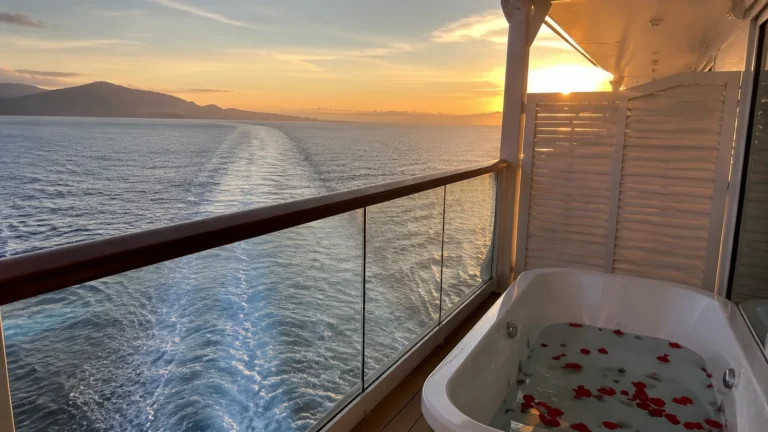
A balcony provides private air and a horizon view, but it may be windy, cool, wet, or temporarily restricted during rough conditions. Book it because you value the option, not because you expect to live outside every day.
An inside cabin can make a long itinerary affordable and wonderfully dark for sleep. Balance that saving against the need to visit public decks for daylight, weather awareness, and a stable horizon.
Prepare for Motion Before Sailing
The Atlantic can be smooth or lively in any season, and a forecast cannot guarantee the crossing. If motion sickness is possible, discuss prevention with a qualified clinician before departure rather than testing a new medication after symptoms begin.
The CDC cruise travel guidance advises travelers who get or may get seasick to ask a health care provider about medicine. Side effects, interactions, pregnancy, age, and existing conditions make individualized advice important.
Practical non-drug supports include looking at the horizon, getting fresh air when decks are open, eating modest meals, hydrating, sleeping, and avoiding long reading sessions when the ship moves. Follow the crew’s instructions when outdoor spaces close.
Bring enough regular medication for the cruise plus delay margin in original labeled packaging. Ask the line in advance about refrigeration, sharps, oxygen, mobility equipment, dialysis, dietary needs, and what its medical center can and cannot support.

Pack for a Weather Corridor, Not One City
Departure weather tells you almost nothing about the whole voyage. A crossing can move between warm subtropical ports, cool open ocean, wind-driven rain, air-conditioned interiors, and a European arrival in a different season.
Use a light base layer, warm midlayer, and wind-resistant waterproof outer layer. Add a compact hat, sunglasses, gloves for a cool northern route, and closed shoes with useful traction.
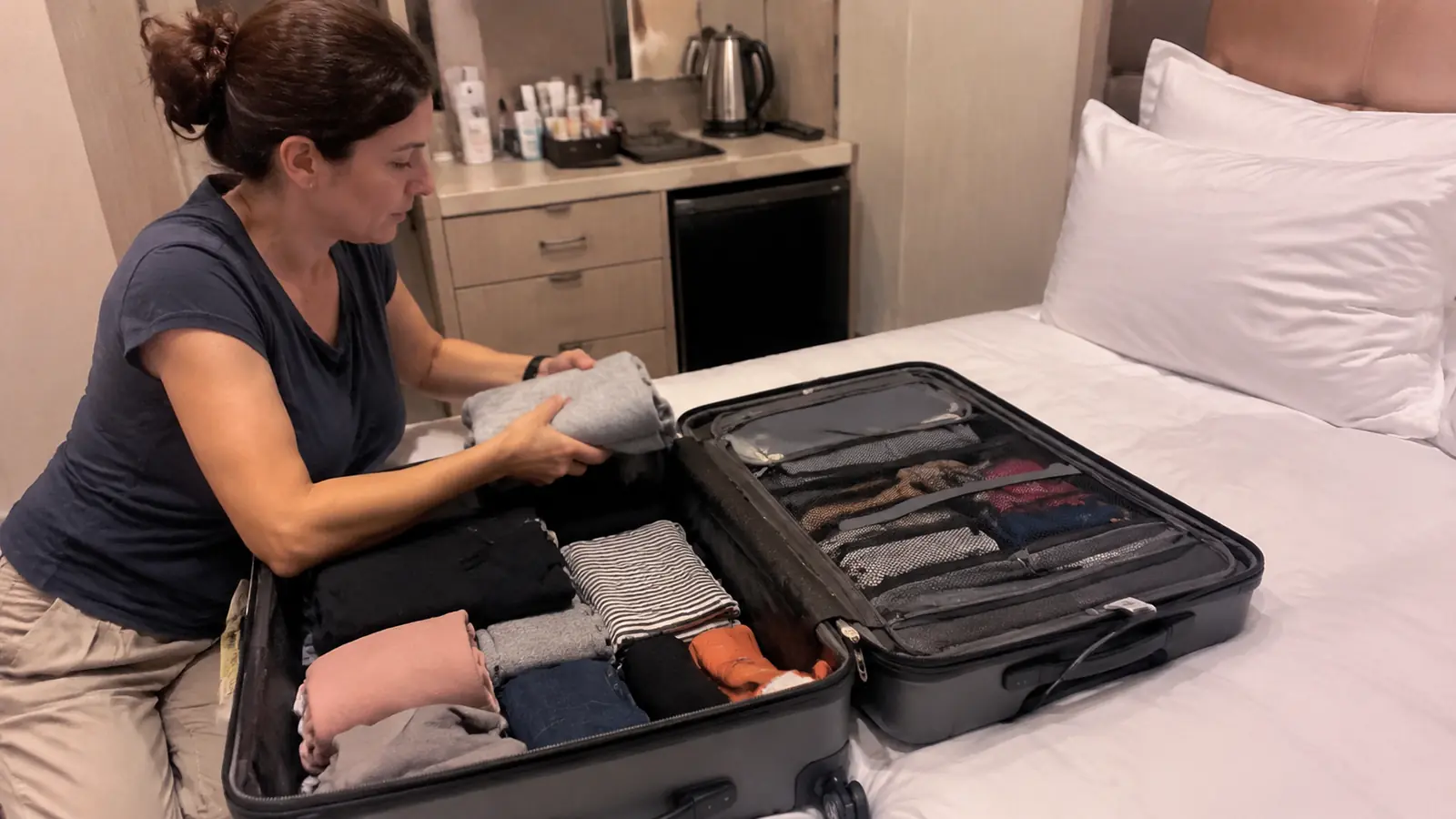
Pack a small capsule wardrobe whose pieces repeat, layer, and survive imperfect laundry timing. The cruise essentials checklist helps divide true necessities from cabin clutter.
Check the line’s current evening dress guidance, theme nights, and laundry options. Formalwear, self-service laundries, pressing, and bag specials vary by ship, and a long voyage does not justify packing a different outfit for every night.
Put these items in the carry-on
- Passport book, visas or authorizations, cruise documents, and insurance details.
- All medication, medical devices, and a written medication list.
- One change of clothes, sleepwear, and basic toiletries.
- Phone, chargers, approved plug adapters, and a small power bank.
- Glasses, hearing supplies, mobility essentials, and anything impossible to replace onboard.
Check the cruise line’s prohibited-items page before packing an adapter, extension lead, heating device, alcohol, tool, or sporting equipment. Cruise rules can be stricter than airline rules, and confiscation is a miserable start to embarkation day.
Make an Internet and Communication Plan
Ship internet depends on the vessel, plan, satellite coverage, congestion, weather, and task. Video calls, corporate security software, large uploads, and real-time gaming may not perform like home even when a premium plan permits them.
Tell family when you expect limited contact and give them the cruise line’s emergency contact process. Download airline apps, maps, translation files, authenticator backup codes, entertainment, and destination confirmations before embarkation.
If you must work, ask the line what the current package allows and create a failure plan. A deadline that cannot survive several hours without service does not belong in the middle of the Atlantic.
Budget for the Long Onboard Stretch
A low repositioning fare can encourage generous onboard spending. Price gratuities, drinks, specialty dining, spa visits, classes, laundry, internet, shore tours, and currency conversion before deciding the cruise is a bargain.
Track the folio every few days and resolve errors while the guest-services desk is calm. The cruise cost-control ideas are most useful when you apply only the ones permitted by your line and booking.
Prepare Your Body Clock
Ask where and when ship time changes, then keep your phone from making an unplanned automatic switch. Ship time controls dining, activities, excursions, and all-aboard, even when a device shows a different zone.
Move sleep gradually when possible, seek daylight at the appropriate part of the day, stay hydrated, and protect a consistent bedtime. On eastbound routes, schedule fewer early commitments after clock changes.
The long adjustment can be gentler than crossing by air because the ship changes time incrementally. It can still produce fatigue, and adding alcohol, late shows, and early breakfasts to every shortened day makes it harder.

Your Final Seven-Day Checklist
- Recheck every flight, terminal, hotel, transfer, and embarkation time.
- Confirm passport and entry rules for each traveler through official sources.
- Download documents and leave an emergency copy with a trusted contact.
- Refill medications and review the motion plan with your clinician.
- Check weather for embarkation and early ports without treating it as an ocean guarantee.
- Download offline entertainment, maps, tickets, and authentication backups.
- Pack the carry-on, weigh checked bags, and verify both airline and cruise restrictions.
Bottom Line
The smartest transatlantic preparation protects the travel chain first and the wardrobe second. Arrive early, carry a passport book, verify live entry rules, insure the risks you cannot absorb, and choose a cabin you can enjoy through repeated sea days.
Then leave breathing room in the schedule. The joy of a crossing is the rare stretch of time between continents, and good logistics let that spacious feeling begin before the ship leaves port.