Best Month-Long Cruise Itineraries for Every Travel Style
A month-long cruise can feel gloriously expansive or strangely repetitive, depending on the route. The best choice is not the itinerary with the most countries, but the one whose sea-day rhythm, climate, ports, and embarkation logistics match how you actually like to travel.
Which Month-Long Cruise Route Is Best for You?
Look for voyages between about 25 and 40 nights, plus world-cruise segments and back-to-back sailings that create a similar trip. Cruise lines change ships, ports, and dates every season, so use the route patterns below alongside the dated examples, then confirm the current sailing before booking.
- Best first long cruise: Mediterranean plus Atlantic crossing
- Best for island lovers: Hawaii and the South Pacific
- Best for wildlife and dramatic scenery: South America
- Best for easy flights from the United States: Panama Canal plus Caribbean
- Best for frequent port days: Southeast Asia and Japan
- Best cool-weather route: Northern Europe and the North Atlantic
- Best for slow-travel traditionalists: A world-cruise segment
1. Mediterranean and Transatlantic Combination
Best for: First-time long cruisers who want cities and restful sea days
Look for: 10 to 20 Mediterranean nights plus an Atlantic crossing
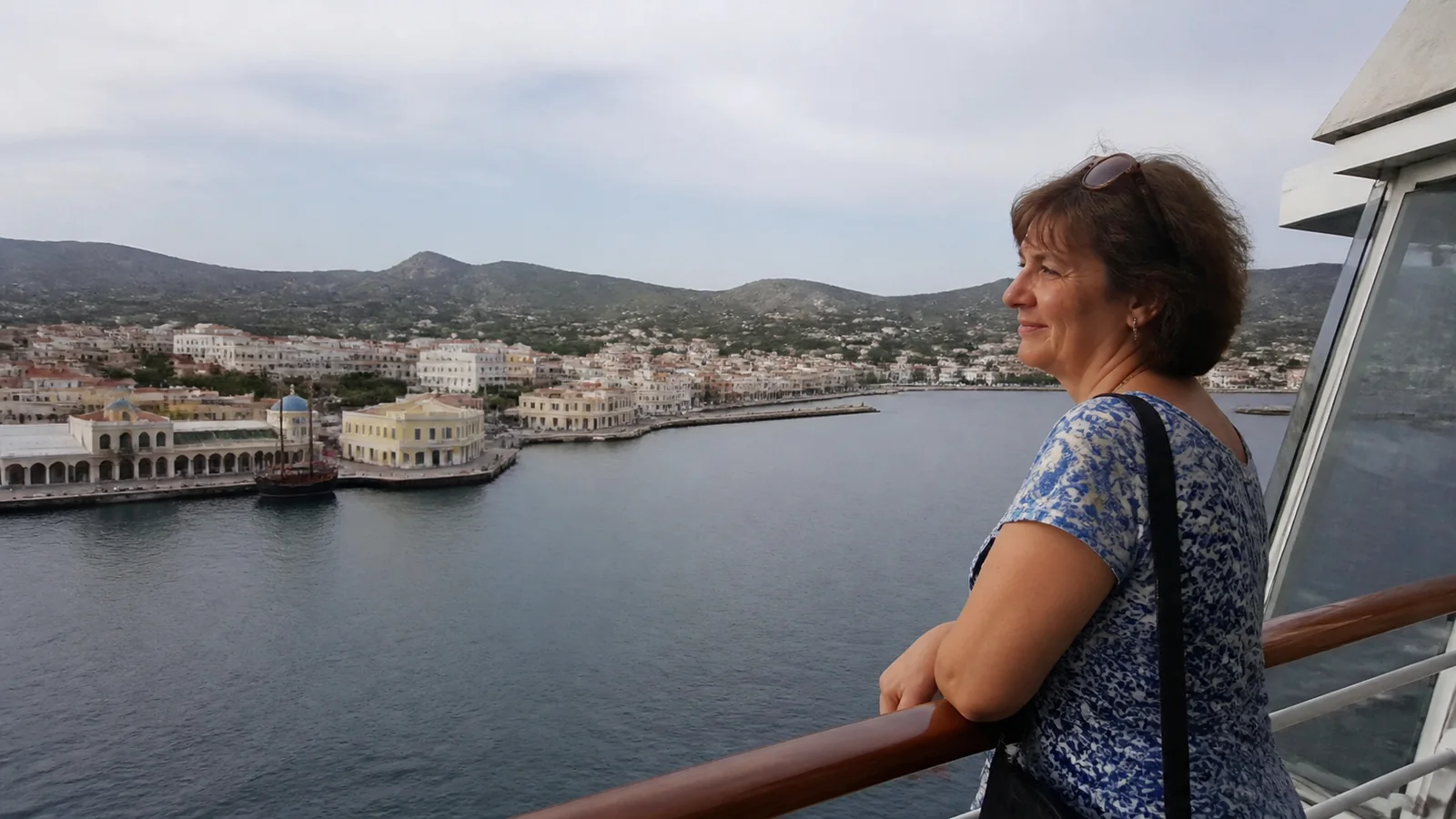
This combination gives you two vacations in one. The European portion may stack Barcelona, Rome, Greek islands, Adriatic ports, or the Canary Islands, while the crossing provides the quieter days you need after intense sightseeing.
Spring west-to-east crossings generally lead into Europe’s early cruise season, while fall east-to-west sailings can finish closer to home in Florida. Weather is never guaranteed, and the Atlantic can be cool or rough even when embarkation day is sunny.
Tradeoff: This is a brilliant rhythm if you enjoy museums, historic centers, and ship life. It is exhausting if the European section has six consecutive port days and you treat every stop like a ten-hour race.
Study the port mix using these distinctive European cruise ports, then deliberately choose two lighter days. A port missed for weather should disappoint you, not dismantle the entire reason you booked.
2. Hawaii, French Polynesia, and the South Pacific
Best for: Travelers who love sea days, warm weather, and remote islands
Look for: A one-way Pacific segment or mainland round trip with island calls
A Pacific itinerary can include Hawaii, Tahiti, Fiji, Samoa, Tonga, or New Zealand, but distance dictates the personality. Expect several sea days together, time-zone changes, and long gaps between major ports.
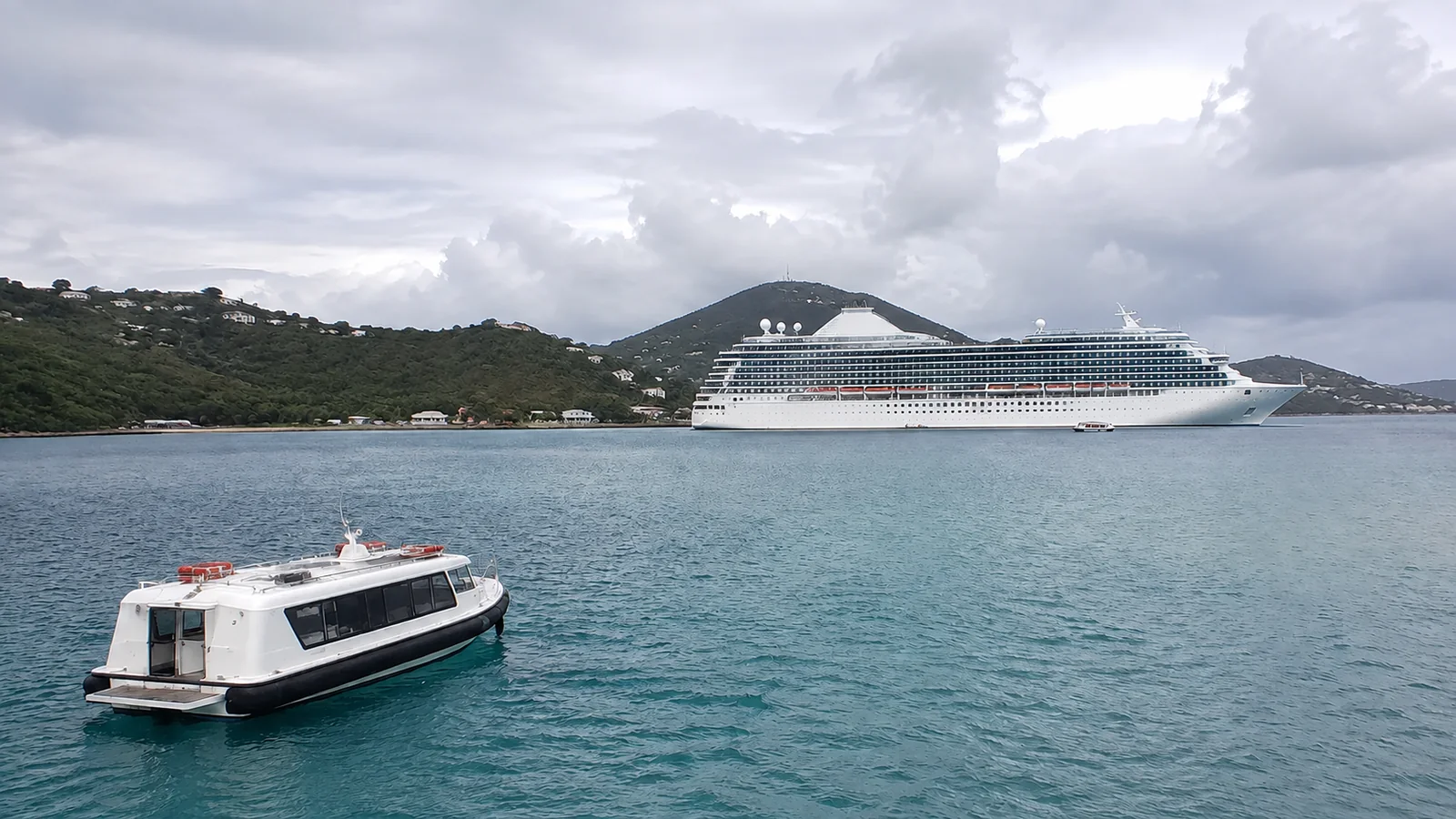
The reward is arriving at remote islands without unpacking repeatedly or arranging a chain of regional flights. The cost is that poor weather at one tender port can erase a highlight that has no substitute the next morning.
Tradeoff: Book this only if four or five consecutive sea days sound relaxing rather than confining. A ship with a covered pool, comfortable outdoor seating, enrichment, and enough dining variety matters more here than on a port-heavy Mediterranean cruise.

3. South America and Scenic Antarctica Cruising
Best for: Scenery, wildlife, and travelers comfortable with variable weather
Look for: Chilean fjords, Cape Horn, Buenos Aires, Patagonia, and scenic Antarctic days
A month can connect the Pacific and Atlantic coasts of South America, sometimes with an Antarctic scenic-cruising portion. It is a grand, coherent route with glaciers, cities, wildlife, and meaningful time at sea.
Read the wording carefully because “Antarctica experience” or “scenic cruising” does not mean passengers will land on the continent. Large ships typically sail in permitted waters and adjust the plan for ice, wind, visibility, and environmental rules.
Tradeoff: You gain scale and comfort but give up guaranteed close-up landings. If stepping ashore in Antarctica is essential, research an expedition ship and its operator standards instead of booking a conventional cruise based on a glacier photo.
The routing, climate zones, and port tradeoffs in our South America cruise overview will help you decide whether a full circumnavigation or shorter southern segment is the better fit.
4. Panama Canal, Caribbean, and Central America
Best for: Easier U.S. flights and a warm-weather first long cruise
Look for: Full canal transit plus Pacific Mexico, Central America, and Caribbean calls
This route minimizes the long-haul flight problem while still feeling geographically satisfying. A full Panama Canal transit provides the narrative center, with beach, nature, and city ports on either side.
Heat and humidity shape the experience, and tendering or long shore transfers can make a port day more demanding than the brochure suggests. Hurricane-season exposure varies with route and date, so evaluate the whole map rather than only the canal day.
Tradeoff: This is simpler logistically than a month in Asia or the South Pacific, but repeat Caribbean cruisers may find several ports familiar. Choose it for the canal and the long-voyage pace, not just a bigger tally of tropical islands.
5. Japan and Southeast Asia
Best for: Food, urban culture, and frequent port days
Look for: Overnight calls and fewer one-day country visits
An Asia itinerary can combine Japan, South Korea, Vietnam, Thailand, Singapore, Hong Kong, and other regional ports. The strongest version clusters ports logically and includes overnights, while the weakest version burns sea days racing between distant regions.
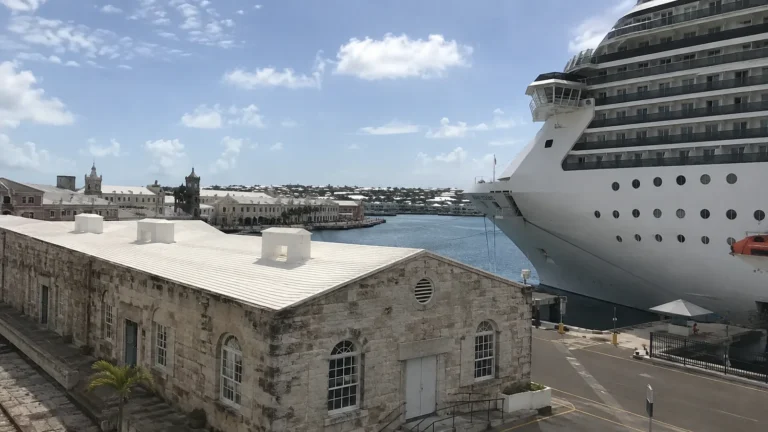
Port terminals may sit far from the city named on the itinerary. Research actual dock locations, immigration procedures, local holidays, and the last reliable transportation back before choosing an excursion.
Tradeoff: The cultural variety is thrilling, but consecutive port days, humidity, jet lag, and long transfers can wear you down. A month-long cruise should include permission to skip an attraction without feeling you wasted the trip.

6. Northern Europe, Iceland, and the North Atlantic
Best for: Fjords, cooler temperatures, and scenic sailing
Look for: Norway plus Iceland, the British Isles, Greenland, or a transatlantic crossing
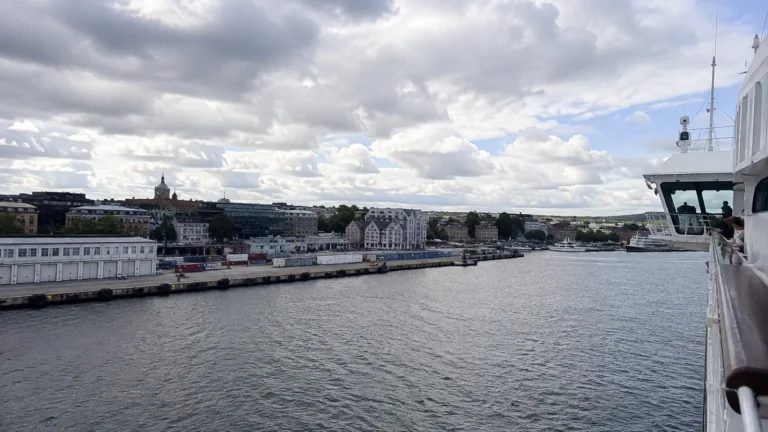
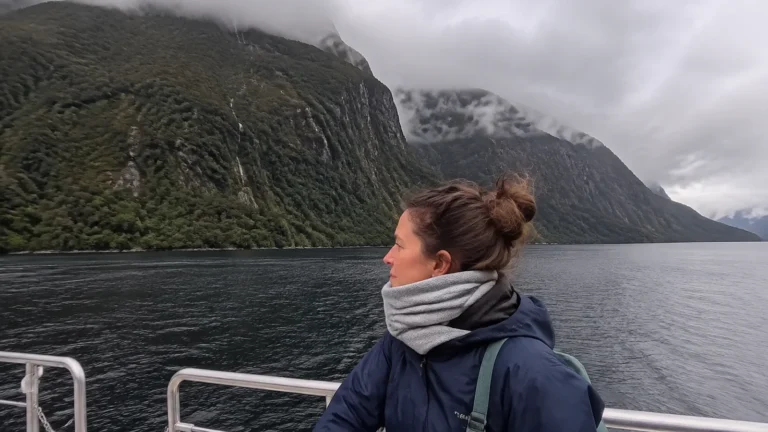
This route can deliver long daylight, waterfall-lined fjords, historic cities, and remote North Atlantic calls. It can also deliver fog, wind, rain, and missed tender ports, sometimes within the same week.
Use the Norway planning guide to identify which landscapes matter most, then favor itineraries with multiple fjord calls rather than one headline stop. One weather cancellation should not remove your only chance to see the scenery you booked for.
Tradeoff: This is an outstanding summer route for travelers who dislike tropical heat, but packing consumes more cabin space. Waterproof layers, walking shoes, and smart laundry planning matter more than formalwear variety.
7. World Cruise Segment
Best for: A traditional long-voyage atmosphere and unusual port sequences
Look for: A segment with practical embarkation and disembarkation cities
World cruises often sell shorter segments, allowing you to join for roughly a month without committing to three or four months. Princess currently markets world voyages across six continents, while Holland America describes Grand Voyages as journeys of 60 or more days and sells shorter portions of some routes.
That proves the product category exists, but it does not mean every segment is sold separately or fits exactly 30 nights. Search by date range, request the precise fare and inclusions, and confirm whether segment guests receive the same events or benefits as full-voyage passengers.
Tradeoff: You may get enrichment, a settled onboard community, and uncommon ports. You may also board midway through an established social rhythm and face one-way international airfare from a less convenient city.
Two real long voyages to compare
These examples were checked September 5, 2026 and show two very different ways to spend a month onboard. Use the ship and departure date to request a current quote, since available cabins and scheduled calls can change.
Noordam: 28 nights from Seattle, June 6, 2027
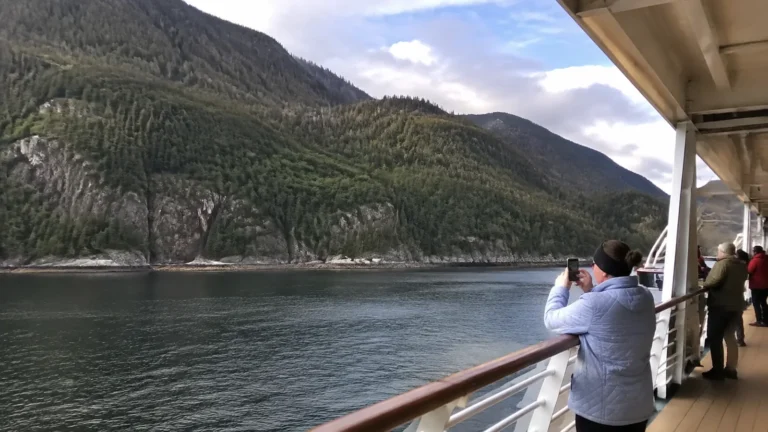
Holland America’s 2027 Alaska announcement confirms Noordam’s round-trip Seattle Arctic Circle Solstice voyage. The appeal is a deeper Alaska trip with a straightforward U.S. embarkation, rather than repeating a standard seven-night Inside Passage loop four times.
The dated day-by-day listing includes Ketchikan, Sitka, Icy Strait Point, Valdez, Nome, Kodiak, and an overnight Whittier call, alongside scenic cruising. Its longest consecutive run labeled simply “At Sea” is three days, June 20 through 22; scenic-only days also keep you onboard and belong in your personal no-port count.
I would put this first for a U.S.-based traveler who wants cooler weather, wildlife excursions, and more Alaska depth without an overseas flight. Choose it because the region interests you enough for a month, and remember that a scenic glacier entry on the schedule is not a walk ashore.
Grand Princess: 35 nights from Sydney, September 4, 2027
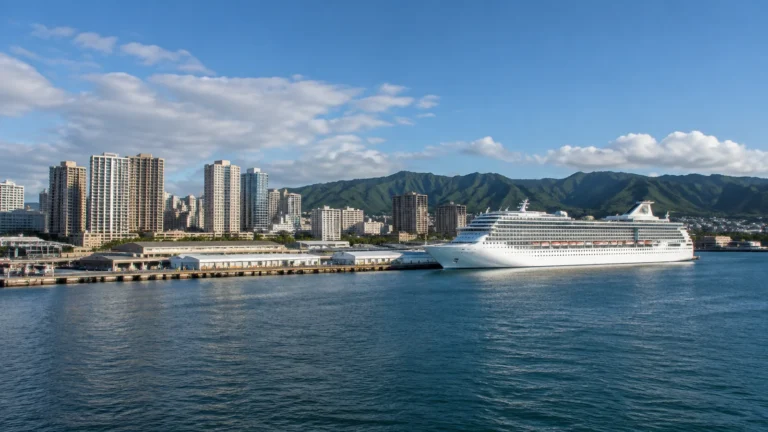
The published Grand Princess itinerary runs round-trip Sydney through October 9, 2027. Its port sequence is Auckland, Papeete, Moorea, Hilo, Kailua-Kona, Nawiliwili, Honolulu, Kahului, Apia, Suva, and Brisbane before Sydney.
There are five consecutive sea days between Moorea and Hilo, plus six itinerary days without a port between Kahului and Apia, including the date-line entry. The repeated and skipped calendar dates matter, so count the actual sequence rather than subtracting local arrival dates and assuming every calendar day is a separate vacation day.
I would choose this one if long stretches of ship life sound like part of the vacation, with books, walks, and unrushed meals between island clusters. From the United States, price the Sydney flights and a precruise stay before comparing it with the Seattle sailing; those travel days and costs are part of the decision.
What a sensible back-to-back pairing looks like
As a planning example, pair a 14-night Mediterranean sailing ending in Civitavecchia with the same ship’s immediately following 14-night crossing from Civitavecchia to Florida. That creates a 28-night trip with a busy European first half and a quieter ocean second half, unlike booking the same 14-night round trip twice.
This is a pairing to ask a cruise specialist to find, not an advertised departure or a claim that any two sailings can be combined. Require matching ship and turnaround date, compare repeated ports, confirm that the same cabin is available on both bookings, and have the line approve the combined itinerary and immigration arrangements before paying.
Month-Long Cruise or Back-to-Back Cruises?
A single voyage offers one booking, one onboard account, and an itinerary designed as a whole. Back-to-back cruises can produce better dates and cabin choices, but they may repeat menus, entertainment, ports, and the embarkation-day atmosphere.
Ask whether you must change cabins, re-clear immigration, attend another safety drill, or leave the ship between sailings. Also price the package as two cruises because deposits, promotions, shareholder credits, insurance, and cancellation terms may apply separately.
A back-to-back works best when the two halves have clearly different routes. Repeating the same seven-night loop four times is technically a month-long cruise and emotionally something else entirely.
How Many Sea Days Are Too Many?
Count the longest uninterrupted stretch, not only the total. Ten sea days scattered between ports feel different from five consecutive ocean days, especially if the ship is small or the weather keeps everyone indoors.
Before booking, inspect the daily schedule from a comparable sailing and evaluate the library, fitness classes, lectures, promenade, pools, laundry, and quiet seating. A ship built around short nightlife-heavy cruises may not be the ship you want for 30 days.
Cabin Choice Matters More for a Month
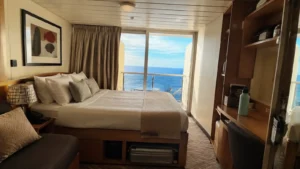
Choose a cabin you can live in, not merely sleep in. Storage, seating, natural light, temperature control, bathroom layout, laundry access, and distance from noisy venues become much more important after the first week.
An inside cabin can protect the budget and improve sleep, while a balcony provides private outdoor space during scenic cruising and illness. Before paying the premium, calculate its total 30-night cost and ask how often weather will make that balcony less usable.
Apply the location logic in our cruise essentials checklist, then study the exact deck plan. Avoid relying on a generic cabin-category photograph.
Documents, Visas, and Insurance
A passport book is the sensible baseline for an international month-long cruise. The State Department cruise guidance recommends one even when it is not required and says travelers may need visas for every stop, including ports where they do not plan to disembark.
Check passport validity and blank-page requirements country by country, then confirm the cruise line’s rules because it may be stricter. Do not assume the ship arranges every visa or that your eligibility matches another passenger’s nationality.
Insurance should be evaluated for the entire prepaid trip, one-way flights, missed connections, interruption, shipboard medical care, evacuation, and preexisting-condition rules. Read exclusions and benefit limits instead of treating “cruise coverage” as a complete description.
Health and Medication Planning
Schedule a travel-health appointment early enough to address the countries on your actual route. The CDC cruise travel guidance recommends bringing prescription and over-the-counter medicines for the whole trip plus extra for delays.
Carry medicine in original labeled packaging and verify legality at every destination, especially for controlled medications. Keep essential doses in your carry-on and bring a written medication list using generic names.
Ship medical centers are designed for urgent care, not refilling a month’s complicated prescriptions. If you use refrigerated medicine, oxygen, mobility equipment, or sharps, obtain written instructions from the cruise line well before final payment.
The Real Cost of a Month at Sea
Start with the fare, taxes, and port charges, then add gratuities, drinks, internet, laundry, specialty dining, excursions, visas, transfers, flights, insurance, and onboard medical contingencies. Multiply daily package prices by every eligible guest and all 30 nights before calling a promotion a bargain.
Port-heavy routes raise excursion and lunch costs, while sea-day-heavy routes can increase drinks, spa, casino, and specialty-dining spending. A simple onboard budget per week is easier to monitor than hoping one large credit covers everything.
Questions to Ask Before You Book
- What is the longest run of consecutive sea days?
- How many ports are tender calls or far from the named city?
- Which overnights and late departures are actually scheduled?
- Does the fare include gratuities, drinks, Wi-Fi, or laundry?
- Will the ship repeat menus and entertainment during segments?
- What visas apply to my passport and every listed port?
- Can my insurance cover the full trip value and evacuation exposure?
- Is the cabin comfortable enough for a month?

My Bottom Line
For a first month-long cruise, I would choose a Mediterranean itinerary paired with an Atlantic crossing or a Panama Canal route with varied coastal calls. Both create a satisfying story without requiring you to love a week of uninterrupted sea days.
Choose the South Pacific for ship time, South America for scale, Asia for port intensity, and Northern Europe for cool-weather scenery. The winning itinerary is the one whose least glamorous day still sounds like a vacation.