Great Lakes Cruise Itineraries: How to Choose Your Route
A Great Lakes cruise itinerary is not just a shorter or longer version of the same trip. Georgian Bay, Lake Superior, the Welland Canal, the St. Lawrence, and city-heavy lake routes deliver completely different vacations, so choose the route shape before comparing ships and cabins.
Start With the Route, Not the Number of Lakes
Sailing all five Great Lakes sounds like the obvious winner, but it usually means a longer, more expensive cruise with several operational days and a one-way flight plan. A focused seven-night itinerary can offer more time in Georgian Bay or Lake Michigan ports and may fit the experience you actually want.
This guide is intentionally about itinerary selection. For ship styles, operators, onboard inclusions, and the broader market, use the separate Great Lakes cruise overview.
The Five Main Great Lakes Cruise Itinerary Styles
- Seven-night Lake Michigan and Georgian Bay: Best for a first cruise with scenery and small ports
- Eight- or nine-night Toronto to Milwaukee: Best balance of cities, Niagara, canals, and Mackinac Island
- Eleven-night four-lake itinerary: Best for travelers who want more port depth without two full weeks
- Fourteen-night five-lake itinerary: Best for complete lake coverage and Lake Superior
- Great Lakes plus St. Lawrence: Best for combining the inland seas with Montréal or Québec City
Operators count days and nights differently, so compare the actual calendar and overnight hotel inclusions. An “eight-day” cruise may mean seven nights aboard, while a pre-cruise hotel can appear in the advertised itinerary without adding another sailing night.
1. Seven-Night Lake Michigan and Georgian Bay
Best for: First-time Great Lakes cruisers, limited vacation time, Mackinac Island, and Canadian Shield scenery.
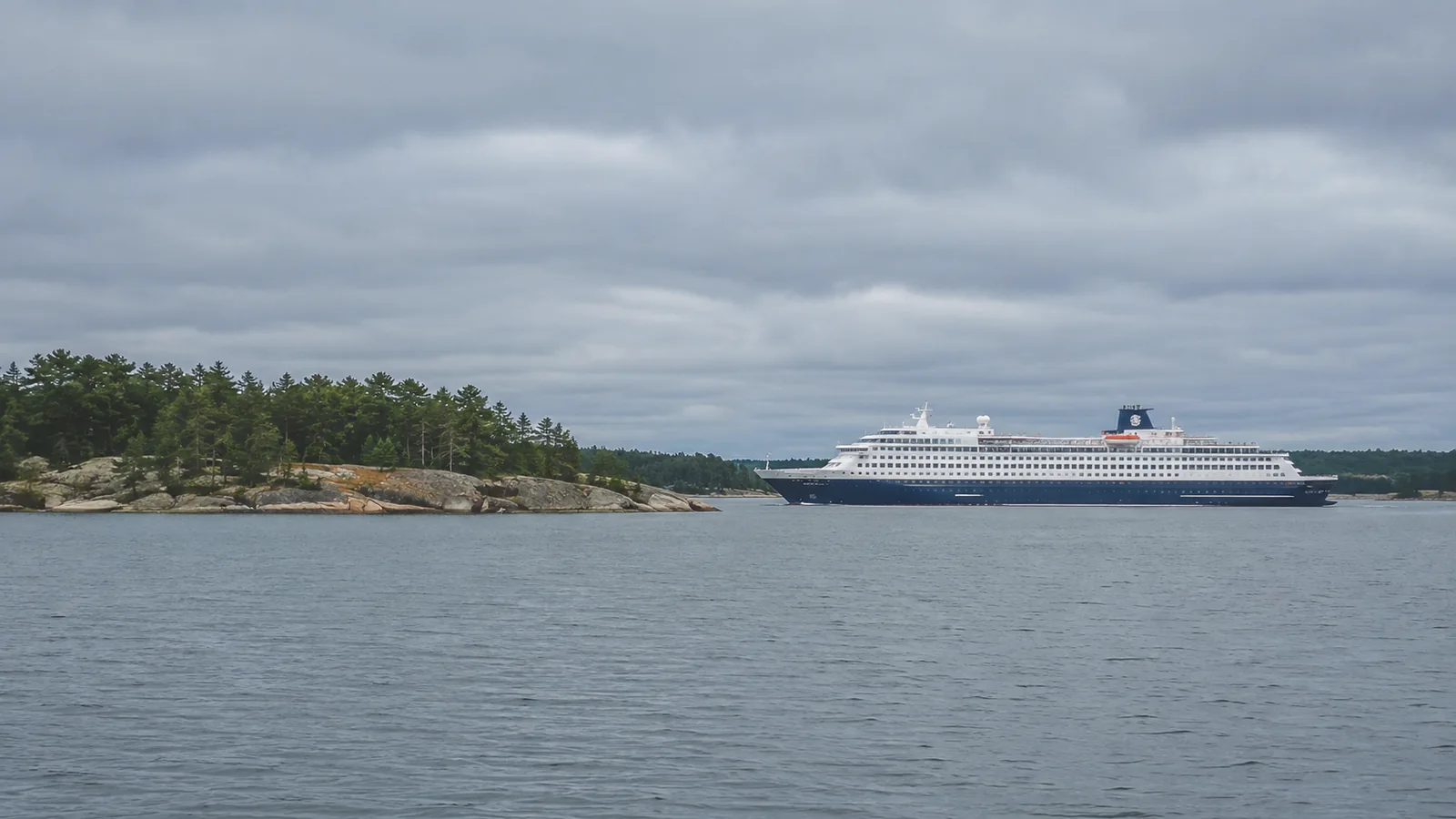
This route sails between Milwaukee and Midland, Ontario, through Lake Michigan, the Straits of Mackinac, Lake Huron, and Georgian Bay, with a St. Marys River call in the Soo area. Toronto is the airport and land-transfer gateway at the Ontario end; the seven-night ship route does not sail Lakes Ontario, Erie, or Superior.
The Pearl Seas seven-night schedule lists Midland as Day 1 on the reverse sailing and Toronto as the pre-cruise gateway. On the Milwaukee departure, Midland is Day 7 and Toronto is the Day 8 gateway, so the Midland-to-Toronto connection is overland rather than an extra lake passage.
I would have Pearl Seas confirm the coach pickup, airport or hotel endpoint, transfer inclusion, and earliest safe flight before booking airfare. The public day-by-day grid establishes the gateway distinction but does not give enough transfer detail to promise a particular coach schedule.
Why choose it
Mackinac Island delivers a memorable no-private-car port day, while Georgian Bay brings rock, forest, channels, and communities that feel distinct from the larger lakefront cities. The shorter length also limits airfare, hotel, and onboard spending compared with a two-week sailing.
What you give up
You do not see Niagara Falls, Cleveland, Detroit, Lake Erie, or Lake Superior. Travelers who view lake count as the main achievement may leave feeling that the trip ended just before the bigger geographic story.

2. Eight- or Nine-Night Toronto to Milwaukee
Best for: A first Great Lakes overview with Niagara, a canal transit, major museums, and Mackinac Island.
This is the strongest all-around route when the itinerary links Toronto, the Welland Canal or Niagara region, Cleveland, Detroit, Lake Huron, Mackinac Island, and Milwaukee. It usually covers four lakes, missing only Superior, while mixing engineering, urban culture, maritime history, and resort-island atmosphere.
PONANT’s current Toronto-to-Milwaukee program uses the Welland Canal to move between Lake Ontario and Lake Erie. The canal transit is a real itinerary feature rather than dead time, but lock timing and vessel traffic can shift the day’s pace.
Why choose it
You get more variety per vacation day than on the scenery-led Georgian Bay route. Toronto and Milwaukee make useful pre- or post-cruise cities, Cleveland and Detroit support museum-focused excursions, and Mackinac breaks up the urban sequence.
What you give up
Port calls can feel brisk, and Niagara may be reached by bus from a lake or canal gateway rather than by docking beside the falls. Lake Superior remains absent, so this is a broad sampler rather than the full five-lake claim.
3. Eleven-Night Four-Lake and Georgian Bay Route
Best for: Travelers who want the balanced route with more Canadian small ports and less rushing.
An eleven-night itinerary usually builds on the Toronto-to-Milwaukee spine by adding Georgian Bay communities or a dedicated cruising day. Pearl Seas currently lists a route with Toronto, Niagara Falls, Cleveland, Detroit, Midland, Parry Sound, Sault Sainte Marie, Mackinac Island, and Muskegon or Holland.
The published eleven-night Georgian Bay itinerary is useful because it shows the trade clearly: more time and price than the seven-night route, but more city and canal context than the short version. It still does not include Lake Superior.
Why choose it
The extra nights let the itinerary breathe without committing to a full two weeks. It suits travelers who value guided touring and regional context more than checking all five lake names.
What you give up
The sailing is long enough to require real vacation time but not long enough to reach Superior. If Duluth, Thunder Bay, or the vast open-water feel of the largest lake is essential, step up to the five-lake route.
4. Fourteen-Night Five-Lake Collection
Best for: Lake Superior, geographic completeness, expedition-style shore days, and travelers comfortable with a high total price.
A full collection usually runs between Toronto and Duluth and covers Ontario, Erie, Huron, Michigan, and Superior. It may include the Welland Canal, Niagara region, Cleveland, Detroit, Mackinac Island, Georgian Bay or Fathom Five, Door Peninsula, Soo Locks, and Canadian Lake Superior ports.
Viking’s current Great Lakes Collection is a 15-day, 14-night Toronto-Duluth itinerary offered in either direction. Its route illustrates why this is a different category: Lake Superior and more remote scenery arrive only after the ship has already crossed multiple lakes and borders.
Why choose it
This route makes the scale of the Great Lakes understandable. Superior feels meaningfully wilder and more expansive, while the progression through locks, cities, islands, and shield country creates a true voyage rather than a string of nearby ports.
What you give up
Two weeks aboard increases fare, gratuities, insurance exposure, and time away, while one-way Duluth air service is less flexible than Chicago or Toronto. Weather can also reshape tender, landing, and small-port plans, so book for the regional arc rather than one fragile stop.
5. Great Lakes and St. Lawrence Seaway
Best for: Travelers who want Montréal or Québec City and see the lakes as part of a larger waterway story.
These routes continue east from Lake Ontario through the St. Lawrence system, sometimes linking Milwaukee with Toronto, Kingston, Montréal, and Québec City. The appeal is cultural range and river-to-lake continuity rather than maximum time on remote lake scenery.
Pearl Seas currently publishes a 15-night Québec City-to-Milwaukee itinerary that includes Montréal, Kingston, Toronto, Niagara, Cleveland, Detroit, Georgian Bay, Sault Sainte Marie, Mackinac Island, and Lake Michigan ports. Direction and individual calls vary by departure.
Why choose it
Québec City and Montréal are worth dedicated pre- or post-cruise time, and Kingston adds another layer of Canadian history. This is the strongest route for travelers who want food, architecture, and cities alongside locks and freshwater cruising.
What you give up
The route can be 15 nights without reaching Lake Superior, depending on the exact sailing. It also creates the most complicated one-way airfare and border plan, especially for travelers who are not U.S. or Canadian citizens.
How Important Is Each Signature Stop?
Mackinac Island
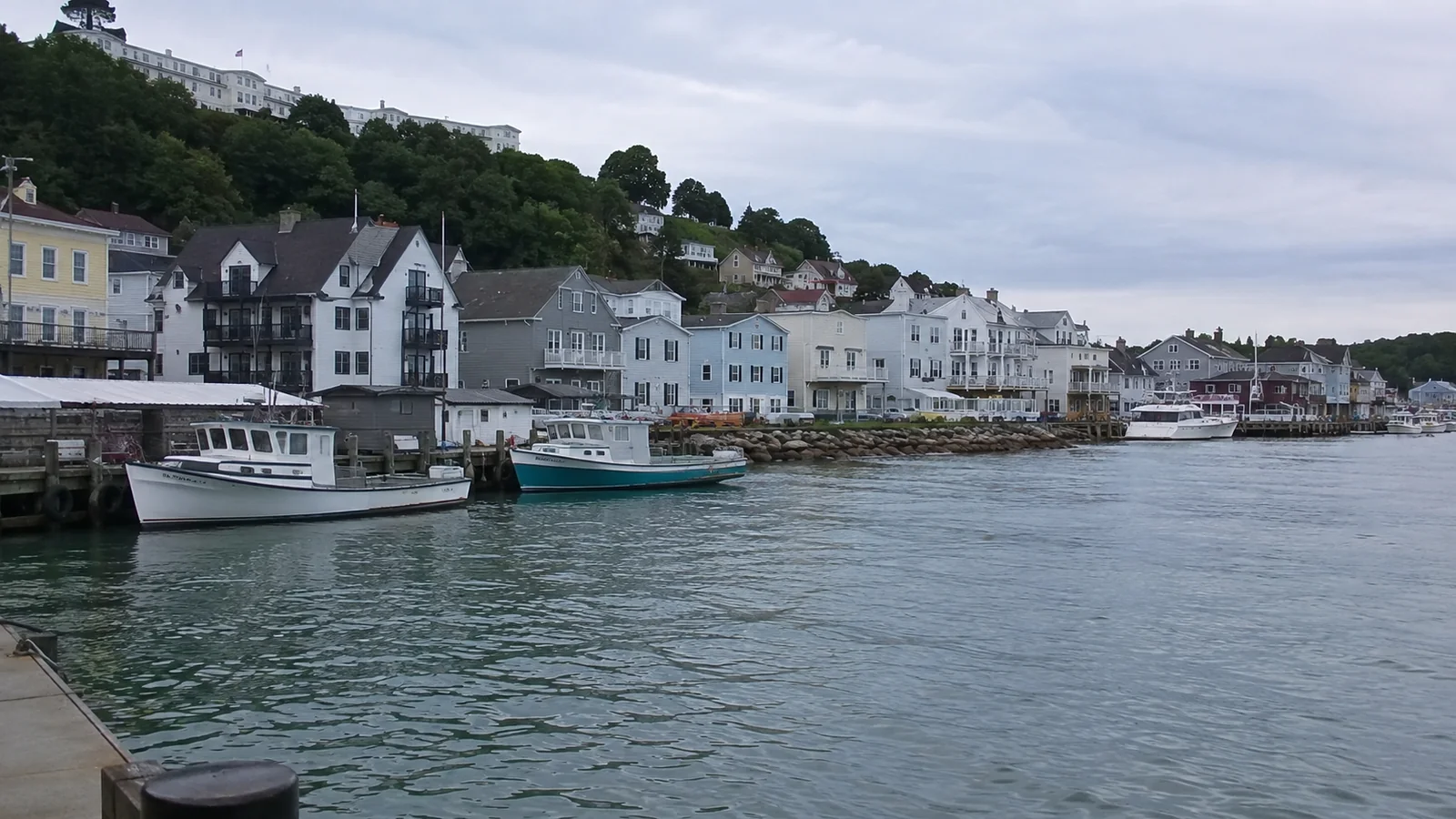
Mackinac is the most broadly appealing Great Lakes cruise port because private automobiles are not the ordinary visitor system and the island combines history, biking, horse-drawn transport, views, and an easy waterfront. It belongs high on a first-time itinerary, although summer crowds are real.
Niagara Falls
Niagara is a major sight but not a conventional dockside port. Read the day-by-day details to learn where the ship berths, how long the bus transfer takes, whether border formalities are involved, and which viewpoints or boat experiences are included.
Sault Ste. Marie and the Soo Locks
The Soo is essential when engineering and maritime trade interest you. Some itineraries call on the U.S. side, others the Ontario side, and a transit through the locks is different from viewing the complex from shore.
Georgian Bay
Georgian Bay is the right priority for rock-and-pine scenery, smaller communities, and time outside major cities. Port access can involve tenders or local arrangements, so mobility requirements should be checked against each call.
Lake Superior
Superior justifies the two-week itinerary for travelers who want the biggest landscapes and do not mind cooler, less predictable conditions. A Duluth endpoint alone does not prove a route explores the lake deeply, so inspect the intervening ports and cruising days.
Choose the Direction Carefully
Toronto-to-Milwaukee and Milwaukee-to-Toronto versions may look interchangeable, but flight schedules, hotel prices, and where you want recovery time can make one direction much easier. I prefer ending in the city with the simpler flight home, then adding pre-cruise nights where a delay would be most damaging.
Duluth works beautifully as a Lake Superior gateway but has fewer nonstop options than Toronto, Chicago, or Detroit. Price the open-jaw airfare before selecting a cabin, not after the cruise fare becomes nonrefundable.
Documents and Border Logistics
Most Great Lakes itineraries cross between the United States and Canada, sometimes more than once, and every traveler must satisfy the requirements tied to citizenship and itinerary. A closed-loop assumption borrowed from a Caribbean cruise can be dangerously wrong here.
The U.S. State Department recommends a passport book for cruise passengers because a passport card cannot be used for an emergency flight home. Non-U.S. citizens should verify Canadian and U.S. visa or electronic authorization rules before deposit, including whether multiple entries are permitted.
When to Take a Great Lakes Cruise
The operating season generally runs from late spring into early fall, with the broadest choice in summer. May and June can be cool, July and August bring the warmest conditions and busiest ports, and September trades some demand for shorter days and greater weather variability.
Fall color is not guaranteed on a specific sailing because timing varies by latitude, elevation, weather, and year. Pack layers and rain protection in every month, and expect wind or fog to alter outdoor plans.
Great Lakes Cruise Itinerary Costs
These are small-ship cruises with far higher per-day fares than mainstream Caribbean sailing, even when shore tours and more onboard items are included. Compare the final cabin price, single supplement, included excursions, drinks, Wi-Fi, gratuities, port charges, flights, transfers, and pre-cruise hotel.
A seven-night itinerary is not automatically the best value if it omits your top priorities, while a five-lake cruise is not automatically worth the premium. Divide the true trip total by nights and by must-have experiences, not by the number of lake names in the brochure.
Pre- and Post-Cruise Planning
Arrive at least one day early because most routes are one-way and the ship will not wait for a delayed flight. Toronto, Milwaukee, Chicago, Duluth, Montréal, and Québec City all reward extra time, but airport-to-port distances and transfer systems differ.
Road trippers can use the Great Lakes driving itinerary to add a land segment before or after sailing. For Wisconsin gateways, this guide to Wisconsin cities worth visiting helps distinguish Milwaukee from Door County and smaller lakefront stops.
My Great Lakes Itinerary Picks
For a first trip under ten nights, choose the Toronto-Milwaukee route with Niagara, the Welland Canal, Detroit or Cleveland, and Mackinac Island. Choose the seven-night Georgian Bay itinerary if nature and small ports matter more than major museums.
For the most complete trip, book the Toronto-Duluth five-lake route and accept the airfare and price. Pick the St. Lawrence extension only when Montréal or Québec City is a genuine priority, because otherwise those extra days pull attention away from the lakes you came to see.

Match the airport city to the actual ship port
For the eight- or nine-night four-lake trip and the eleven-night version, Toronto is a ship endpoint as well as an air gateway, while Milwaukee is the western ship port. Chicago can be an alternative airport for Milwaukee, but it requires a separate ground connection.
The five-lake collection uses Toronto and Duluth as ship endpoints, and the St. Lawrence extension uses Milwaukee and Québec City on the cited sailing. Montréal is a call on that extension, so do not book a flight there simply because its name appears prominently in the itinerary.