Van Rental in Europe: How to Choose, Book and Drive
A van can turn a Europe trip into a wonderfully flexible adventure, but it can also become an oversized suitcase with parking anxiety. The right choice depends on who is traveling, where everyone will sleep, which borders you will cross, and whether those dreamy old-town streets are actually part of the driving plan.
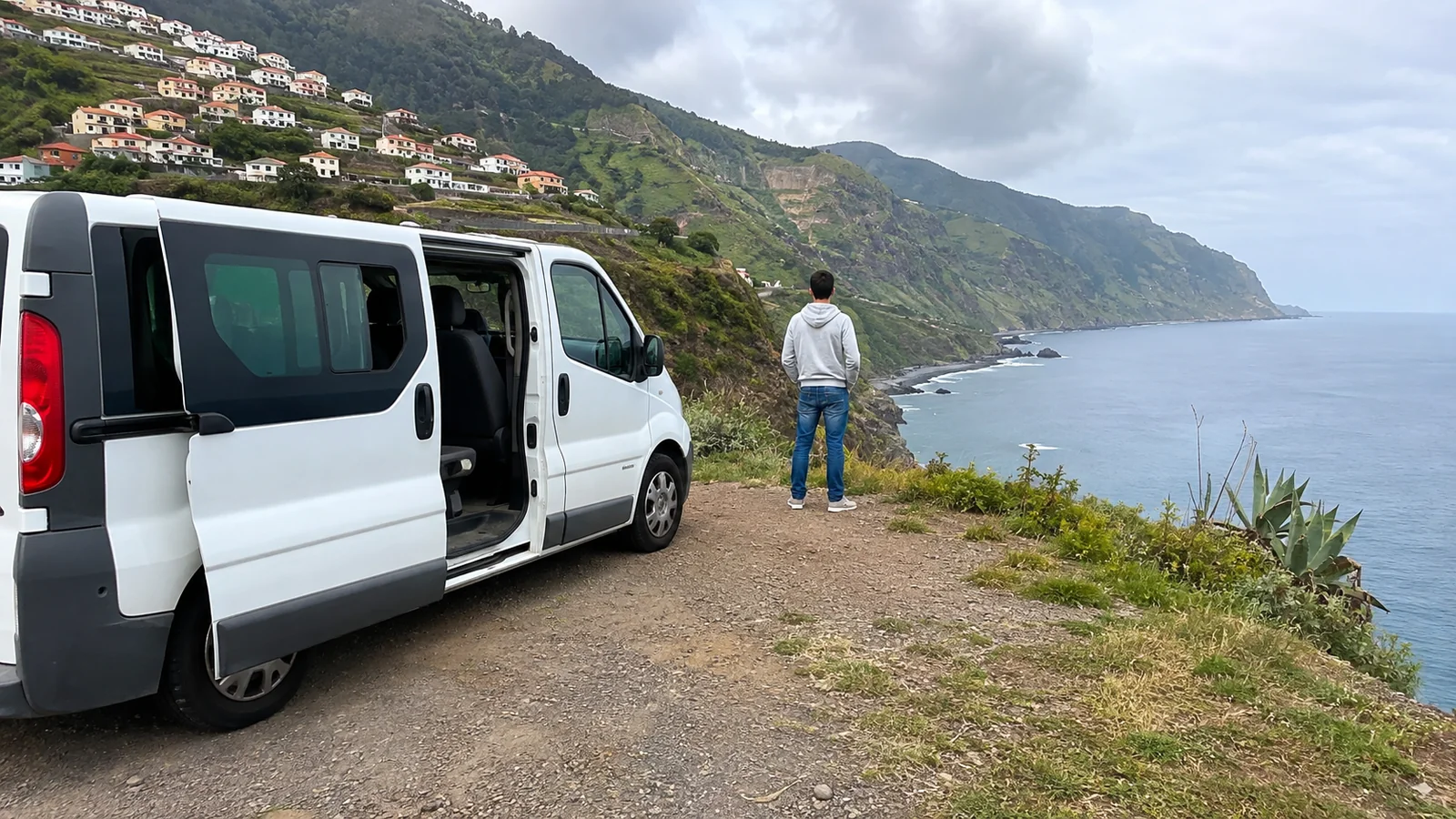
Is renting a van in Europe a good idea?
A European van rental makes sense when several travelers need one vehicle, the route includes rural areas, or a campervan is central to the trip. It makes less sense for a city-heavy itinerary connected by fast trains.
The best van is not the one with the most beds or luggage space. It is the smallest vehicle that safely fits every person, legal seat, bag, and overnight need.
Europe is not one rental market with one driving rulebook. License recognition, required equipment, winter tires, toll systems, city restrictions, parking, and wild-camping rules vary by country and sometimes by municipality.
That variability is manageable if you choose the route before the vehicle. Booking the van first and discovering a restricted border or 6-foot-6-inch garage later is a much less charming order.
Your main van rental options in Europe
Passenger minivan or people carrier
A passenger minivan typically seats five to seven people and drives more like a large car. In European search results it may be called an MPV, people carrier, minibus, or passenger van.
This is usually the easiest option for a family or small group sleeping in hotels. It fits more parking structures than a campervan and often uses less fuel than a full-size nine-seat vehicle.
Seat count does not equal luggage capacity. A seven-passenger model with every seat upright may hold far fewer large suitcases than the booking photo suggests.
Eight- or nine-seat passenger van
A larger passenger van can keep a group together and reduce the number of drivers. It also brings extra length, height, turning radius, parking difficulty, and sometimes a higher road-charge category.
Confirm that every seat has a proper belt and that child restraints can be installed in the required positions. Do not count a seat based on a stock photo or model family.
Groups should compare one van with two smaller cars. Two cars cost more in fuel and tolls, but they may offer better luggage room, flexibility, and easier parking.
Compact campervan
A compact campervan often combines a small kitchen and sleeping setup in a vehicle closer to minivan size. It suits two travelers who value mobility and can live with tight storage, bed conversion, and limited bathroom facilities.
Some have a pop-top roof, which adds standing and sleeping room but may be unusable in strong wind. Others have no toilet, shower, heating, or hot water despite looking wonderfully complete in wide-angle photos.
Motorhome or large camper
A motorhome provides more living space, fixed beds, a toilet, and often a shower. It also carries the highest parking, clearance, narrow-road, fuel, and campsite burden.
Rental sites sometimes group campervans and motorhomes together even though the experience is very different. Record the exact length, width, height, weight category, transmission, fuel, and sleeping layout before paying.
Cargo van
A cargo van is designed to move goods, not vacationers. It may have only two or three legal passenger seats and should never be treated as a cheap group shuttle or improvised camper unless the rental agreement, registration, equipment, and local laws explicitly allow that use.
Carrying passengers in the load area is unsafe and usually illegal. A mattress does not turn an ordinary commercial rental into a lawful motorhome.

When a van beats the train
A van shines on routes built around villages, national parks, farm stays, trailheads, coastlines, and accommodations outside town centers. It also helps families carry child gear without changing platforms several times.
It is less convincing for London, Paris, Amsterdam, Rome, Barcelona, or a chain of other major cities. Parking, congestion charges, low-emission zones, one-way streets, and theft risk can consume the freedom you rented it to create.
For city-to-city travel, compare the van’s complete price with rail tickets and local transit. Our Eurail versus Interrail guide explains who can buy each rail pass and why reservations still matter.
A lovely hybrid trip often works best: use trains for major cities, then collect a van for the rural portion. Airport locations are not automatically the easiest, because a suburban or rail-station branch may avoid city driving and airport surcharges.
Where I would start comparing actual rentals
For a group sleeping in hotels, I would compare Europcar’s seven- and nine-seat passenger categories with a quote from Auto Europe. The latter is a booking intermediary, so check the named rental supplier and its counter conditions before paying.
For a couple planning to camp, I would start with a compact camper such as roadsurfer’s Surfer Suite and compare it with a larger vehicle only if the sleeping or bathroom arrangement demands it. Its published base measurements are about 16 feet 1 inch long and 6 feet 5 inches high, with roof or bike equipment changing the clearance you need.
That is a shortlist to price, not a claim that one company is cheapest in every city. Give each supplier the same dates, exact driver details, border list, mileage, insurance choice, and pickup/drop-off branch so the comparison means something.
A seven-day rental comparison you can actually use
Suppose a passenger van quote is €700 for seven days, with €140 for your chosen damage protection, €70 for another driver, €120 for fuel, and €100 for tolls and parking. That illustrative vehicle total is €1,130, or about €188 each for six travelers, before hotels, food, and any security deposit.
A €900 camper quote with €140 protection, €140 fuel, and €210 in campsite charges totals €1,390 before food and other extras. These are worked examples, not sampled market rates; replace every amount with a dated quote and add the hotels needed for the passenger-van trip before deciding which is cheaper.
The kind of route I would book
For a Bavaria trip, I would spend the Munich city days without a van, then collect it for two nights around Füssen and two around Garmisch-Partenkirchen before returning to the same branch. That gives the vehicle a useful job connecting rural stays and trailheads without paying to park it through the entire city break.
I would reserve lodging or a lawful campsite before fixing the vehicle size, then check its access and parking limits against the actual model. Keep this loop within Germany unless you have written permission for an Austrian detour, and leave the final morning for the return inspection rather than a last mountain outing.
Choose the route before the rental company
Write down every country the van will enter, including a brief transit. Add ferry crossings, islands, mountain passes, non-EU borders, and the final drop-off country.
Send that list to the rental company before booking and keep written approval. The European Union’s official car-hire guidance says renters planning to drive in several countries must tell the company so it can supply correct documentation, insurance, and breakdown cover.
Schengen’s lack of routine immigration checks at many internal borders does not create automatic vehicle permission. Rental contracts can restrict countries because of insurance, theft risk, roadside assistance, registration, or customs rules.
Crossing between EU and non-EU countries deserves special attention. Switzerland, the United Kingdom, parts of the Balkans, and other non-EU destinations may change documentation, customs, road-charge, or coverage requirements.
One-way international rentals can carry large relocation fees or be unavailable for vans. If the route is flexible, a loop from the same branch is normally simpler.
Driver’s license and International Driving Permit rules
A U.S. driver’s license may be accepted in some European countries, while others require or strongly expect an International Driving Permit alongside it. Rental-company rules can be stricter than the legal minimum.
An IDP translates license details and does not replace the physical license. The U.S. State Department’s international driving guidance directs U.S. travelers to obtain an IDP from AAA or AATA before the trip and to carry the U.S. license too.
The EU does not impose one recognition rule for non-EU licenses. Its official guidance tells visitors to check each country’s authority or the relevant embassy or consulate.
Do not rely on an online vendor promising an instant “international license.” An unofficial document may be worthless to police, a rental desk, or an insurer.
Every additional driver must meet the contract’s age, license-history, and document rules. Young-driver and senior-driver restrictions vary by company, country, and vehicle class, and large vans may have a higher minimum age.
Check the license category and vehicle weight
Many ordinary passenger vans and lighter campervans can be driven with a standard car license, but the legal threshold depends on the license and jurisdiction. Large motorhomes may cross a weight or passenger-capacity boundary that requires another category.
Ask for the vehicle’s maximum authorized mass, not merely its empty weight. Passengers, water, luggage, bikes, food, and equipment all count toward payload.
An overweight camper can be unsafe, illegal, and outside coverage. If the listed payload barely handles the travelers and bags, choose a different vehicle rather than planning to “pack lightly” later.
Manual versus automatic transmission
Manual transmissions remain common in European rental fleets, especially among vans. An automatic should be booked as a guaranteed feature where possible, not treated as a request the counter will surely honor.
Do not make a tall rental van the place to learn manual shifting, mountain starts, and unfamiliar roundabouts at once. The price difference for an automatic can be money very well spent.
Check whether the vehicle uses gasoline, diesel, electricity, or a hybrid system. Putting the wrong fuel in a van can create a large charge and may not be covered by standard damage protection.
Rental insurance without the alphabet soup
Start with third-party liability, which covers injury or damage you cause to others within its terms. The EU car-hire page says third-party liability must cover each rental vehicle and should be included in the rental price for EU rentals.
Collision or damage waivers typically reduce your financial responsibility for damage to the rental vehicle, but they often carry an excess, which Americans usually call a deductible. Theft protection can have a separate excess and conditions.
Read exclusions for tires, wheels, glass, roof, underside, interior, awning, pop-top, keys, incorrect fuel, water damage, and driving on prohibited roads. These are exactly the parts of a van that meet low branches, curbs, narrow gates, and camping mishaps.
Credit-card rental coverage may exclude vans, vehicles above a value or weight, long rentals, motorhomes, certain countries, or liability. Call the benefit administrator with the exact vehicle class and get the answer in writing.
Your U.S. auto policy may not cover overseas rentals, and the State Department warns that even accepted insurance might not meet local requirements. “My card covers rentals” is not a complete insurance plan.
Deposits, cards, and the real rental price
Many companies require a physical credit card in the lead driver’s name and place a security hold that can be substantial for a camper. Debit cards, virtual cards, mobile wallets, and another traveler’s credit card may not qualify.
Confirm the deposit amount, available credit, release process, and accepted card type with the actual rental company. A broker’s booking confirmation may not contain every counter requirement.
The EU also notes that online car hire does not automatically receive a 14-day cooling-off period. Read cancellation terms before paying, especially for a custom camper booking or nonrefundable rate.
Build the real price from:
- Rental rate and required taxes
- Insurance and deductible reduction
- Additional-driver and young-driver fees
- One-way or cross-border charges
- Mileage limits
- Fuel, charging, tolls, and vignettes
- Parking, campsites, and city permits
- Child seats, bedding, kitchen kits, and cleaning
- Ferries and vehicle reservations
- Airport or after-hours fees
A cheap daily rate can lose badly once mandatory equipment and mileage appear. Compare identical trip assumptions rather than the first number on each website.
Measure people, luggage, and beds honestly
Collect every traveler’s height, mobility needs, child-seat needs, and bag plan. A bed described as “double” may be shorter or narrower than an American traveler expects.
Ask for dimensions in writing, then convert them before booking. A 75-inch bed is 6 feet 3 inches long, and that missing space is hard to ignore after three nights.
For passenger vans, request a luggage photo with every intended seat raised. Roof boxes can affect height, fuel use, theft exposure, and ferry pricing.
Camper layouts that require converting the dining area each night save space but add daily work. Make sure the toilet can be reached when beds are set up and that bags have somewhere legal to ride while moving.
Child seats and passenger safety
Child-restraint laws depend on the country, child’s age, height, and weight. Check every country on the route and reserve the correct seat well ahead of time.
Bring a familiar seat only after confirming that it is approved for use in the destination and compatible with the van. U.S. and European approval standards and attachment systems are not interchangeable by assumption.
Every passenger needs a designated travel seat with a belt while the vehicle is moving. Camper beds, benches without approved restraints, and the floor are not travel seats.
Loose cookware, bottles, and luggage become hazards in a sudden stop. Use the supplied latches and secure every heavy object before driving.
Low-emission zones and city access
European cities use a patchwork of low- and zero-emission zones, congestion charges, limited-traffic areas, permits, stickers, and camera enforcement. A clean modern rental is not automatically exempt or automatically registered.
The European Commission’s urban vehicle access page notes that most European access regulations are low- or zero-emission zones and that foreign vehicles create particular challenges. Check each city through its official authority and ask the rental company what it has already registered.
Do this before entering the zone, not after a camera records the plate. Rental agencies may add an administration fee when forwarding a fine, on top of the government penalty.
Historic centers can also use resident-only streets unrelated to emissions. Park outside and take transit when signs, road width, or local rules turn the city into a navigation puzzle.
Tolls, vignettes, and ferries
Some countries collect tolls at booths or electronically by distance, while others require a time-based motorway vignette. Bridges, tunnels, mountain roads, and ferries may add separate charges.
Ask whether a valid vignette or toll transponder is already attached and how charges reach your account. Never buy a digital vignette from a search ad without confirming the official seller and plate details.
Vehicle height, length, axles, weight, or registration class can move a van into a more expensive category. A camper’s road and ferry cost may therefore differ from a passenger car on the same route.
Reserve popular vehicle ferries early and enter the correct dimensions. Arriving in a longer model than booked can trigger a higher fare or no available space.
Parking a van in Europe
Record the exact height in both feet and meters on a card beside the steering wheel. A van that stands 6 feet 8 inches tall is about 2.03 meters, so a 2-meter garage is not “close enough.”
Do the same for length and width, including mirrors, bike racks, roof equipment, and an open pop-top. Navigation apps do not consistently understand vehicle dimensions or legal restrictions.
Street spaces can be shorter and narrower than North American drivers expect. A hotel that advertises parking may mean a mechanical garage or an off-site lot with a height limit.
Never leave passports, electronics, or visible luggage in the van. A covered cargo area lowers temptation but does not make valuables secure.
Can you sleep anywhere in a campervan?
No. Parking and camping are legally distinct in many places, and rules for overnight stays vary by country, region, municipality, protected area, and landowner.
A legal parking space does not necessarily allow sleeping, leveling blocks, an awning, outdoor furniture, cooking, or waste discharge. Check local official rules and use established campsites or designated motorhome areas when uncertain.
Wild camping has become a romantic catchphrase that hides a great deal of local law and environmental pressure. If a location depends on ignoring a sign, blocking access, or hoping enforcement does not arrive, it is not a clever free campsite.
Book campsites in popular regions and peak summer weeks. Confirm electrical connection, water, waste disposal, arrival cutoff, vehicle length, and whether bedding or towels are part of the camper rental.

Picking up the van without surprises
Allow more time than for a standard car. Photograph and video every side, roof edge, wheel, windshield, mirror, interior panel, seat, appliance, and existing mark with the employee present.
Make sure damage is recorded on the checkout form before leaving. Test lights, signals, wipers, air-conditioning, heating, cameras, doors, locks, windows, seat adjustments, and charging cables.
For a camper, ask for a demonstration of:
- Bed conversion and pop-top operation
- Freshwater and wastewater systems
- Toilet and waste disposal
- Cooking fuel shutoff
- Electrical hookup and house battery
- Heating, ventilation, and refrigerator
- Awning and leveling equipment
- Emergency and roadside procedures
Do each task yourself once while staff can correct you. A rushed explanation becomes very expensive when a roof is forced or the wrong tank is filled.
Returning the van
Clarify fuel level, charging level, waste tanks, toilet cassette, dishes, bedding, exterior cleaning, and interior cleaning. “Return clean” needs a written definition for a camper.
Photograph the vehicle, odometer, fuel gauge, and parking location at return. Obtain a signed receipt or digital closure if the branch is staffed.
After-hours drop-off transfers risk to you differently under different contracts. If the vehicle remains your responsibility until staff inspect it, a convenient key box deserves careful thought.
A practical van rental checklist
- Choose passenger van, compact camper, or motorhome based on the actual trip.
- List every country, ferry, city zone, and one-way need.
- Confirm license, IDP, age, and driver-category requirements.
- Get cross-border permission and coverage in writing.
- Check transmission, fuel, weight, payload, and dimensions.
- Verify every legal seat, child restraint, bed, and luggage space.
- Price insurance, deposit, mileage, tolls, parking, and campsites.
- Map low-emission zones and overnight rules.
- Inspect and photograph the van at pickup and return.
Our road trip planning tips can help with pacing and daily driving, while these Europe travel tips cover the broader details beyond the steering wheel.
Is a Europe van rental right for you?
Choose the van when the road itself connects places that public transportation serves poorly, or when sleeping in the vehicle is an intentional part of the experience. Choose rail and local rentals when most nights sit in historic city centers.
If you love the idea of a compact outdoor stay but not the toilet cassette, glamping pods can deliver the cozy part without asking you to drive the bedroom through a medieval lane.
The right van gives a group room to move and a route room to breathe. The wrong one turns every garage sign into a math exam, so measure carefully, get permissions in writing, and let the itinerary choose the vehicle.