Carnival Pride Rooms to Avoid: Exact Facts and Better Picks
Carnival Pride has no universally bad cabin, but it does have a few locations that deserve a closer look before you pay. The smartest choice depends on whether you care most about sleep, an open view, low motion, short walks, or accessible features.
Carnival Pride Rooms to Avoid: Exact Facts and Better Picks
This guide uses Carnival’s current standard and accessible deck-plan PDF. Carnival can revise categories, venues, and symbols, so match every cabin number against the plan attached to your exact booking before changing rooms.
The useful distinction is simple: a deck plan can prove that a room is below a pool, beside a lobby, connecting, or sold with an obstructed view. It cannot prove that you will hear chairs, feel sick, meet loud neighbors, or dislike the walk.
Carnival’s current Pride ship page lists the ship’s accommodations and public venues, while its linked official Carnival Pride deck plan provides the cabin-by-cabin layout. Keep both open while comparing a fare.
Fast Answer: The Pride Cabins to Check Twice
- 4202, 4203, 4205, and 4207: Carnival explicitly identifies these category 4K rooms as having picture windows with obstructed views.
- Deck 8 cabins: These sit directly below Deck 9’s fitness, pool, dining, open-deck, and Serenity footprints, depending on position.
- Rooms beside lift and stair lobbies: The adjacency is factual, but any corridor noise is passenger-dependent.
- Connecting cabins: A connecting door is shown by a symbol on the official plan and may provide less acoustic separation than a solid wall.
- Very forward and high cabins: These can feel more pitch than a lower, central room when the sea is active.
- Aft-facing rooms: The wake view is a real benefit, while the long walk, possible vibration, and weather exposure are tradeoffs.
If you are a light sleeper, start on Deck 6 or 7 with passenger cabins directly above and below. Then remove connecting rooms and the cabins nearest a lift lobby from your shortlist only if those details bother you more than extra walking.
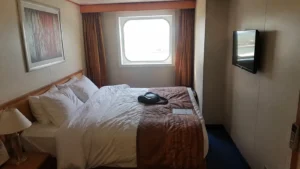
4202, 4203, 4205, and 4207: Proven Obstructed Windows
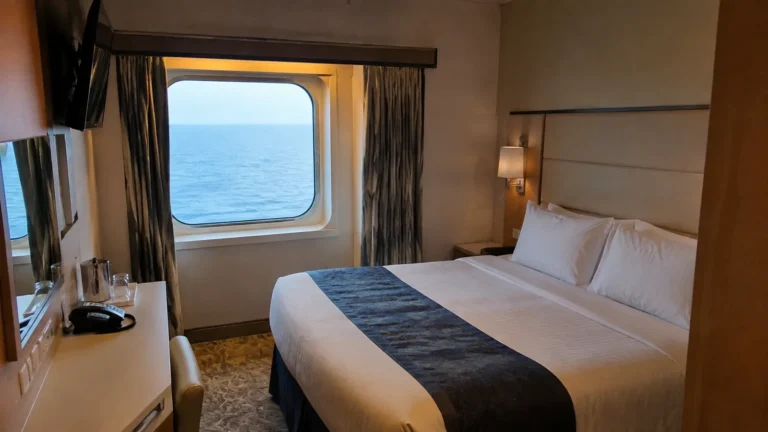
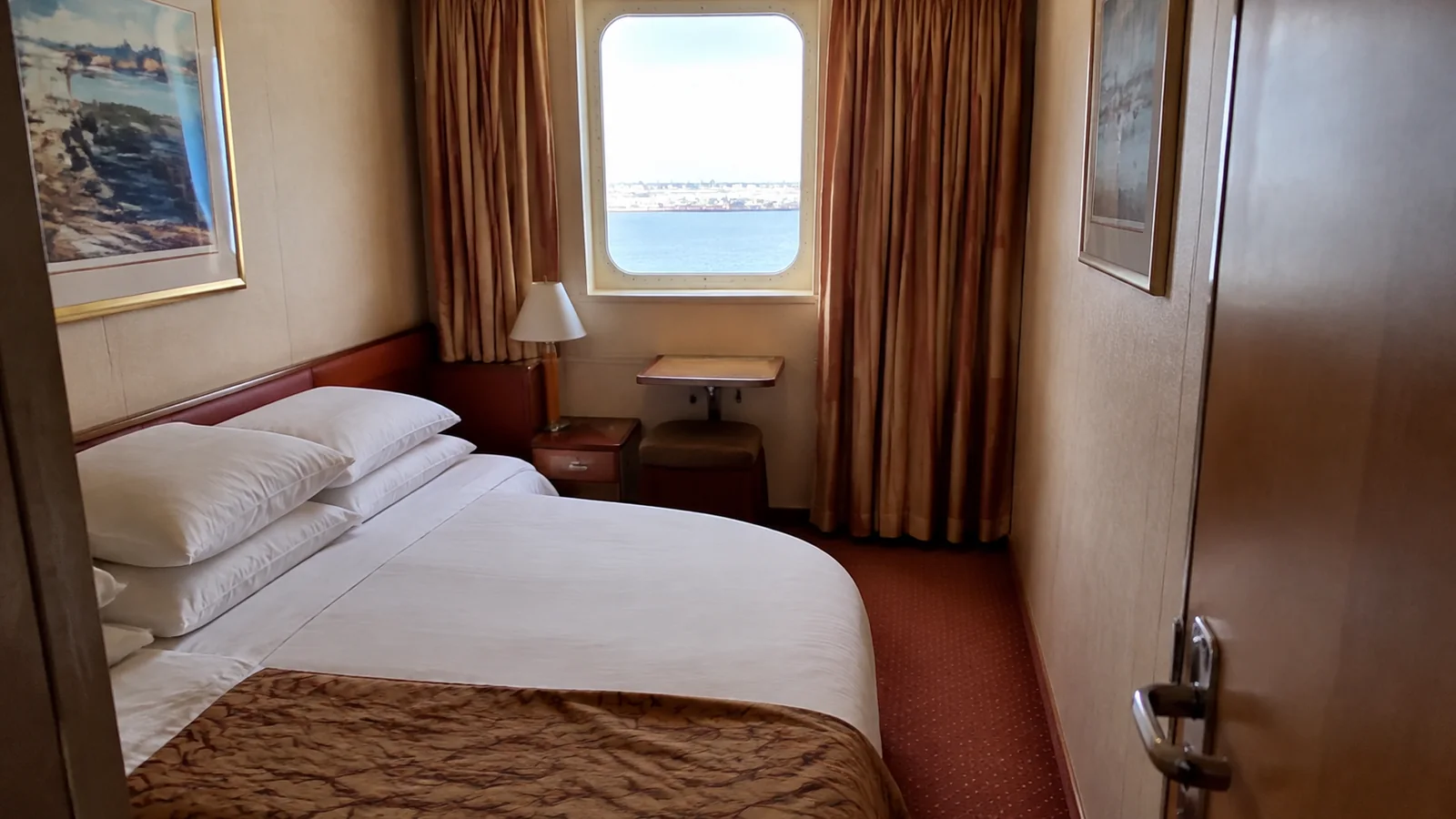
Carnival’s plan specifically says that these four category 4K staterooms have a picture window instead of a French door. They are still sold as “Interior with Window (obstructed views),” so the daylight is real but an open ocean panorama is not part of the promise.
This is a high-confidence reason to pause if your vacation depends on watching the sea from bed. The word “obstructed” does not tell you the exact angle, equipment placement, or percentage of blocked glass, so request current room photos before paying more than an ordinary interior rate.
When a 4K room can be a smart value
Choose one when natural light matters and the price stays close to an inside cabin. Skip it when you are comparing it with a true ocean-view or balcony primarily for scenery.
Do not confuse these four rooms with category 7A Balcony (Obstructed Views) or category 9A Premium Balcony (Obstructed Views). Carnival lists all three product types separately, and the obstruction experience is not interchangeable.
Better choice for a clear view
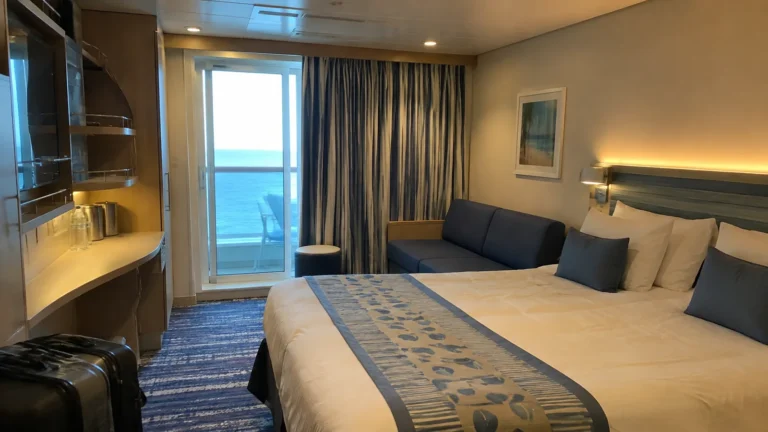
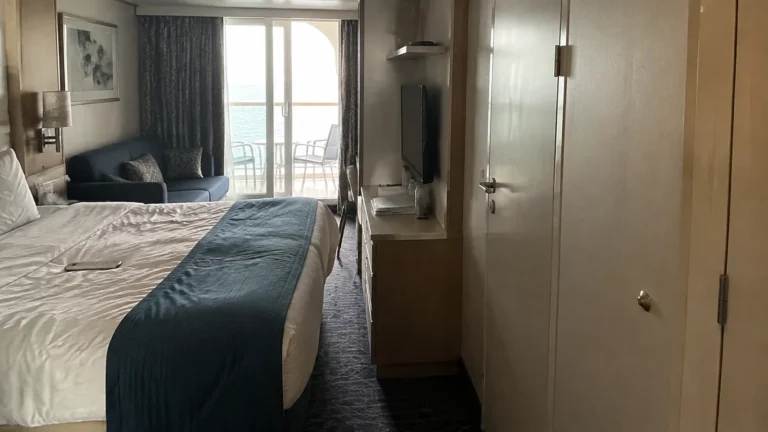
Select a cabin that Carnival currently sells as an unobstructed Ocean View, Balcony, Extended Balcony, or suite, then confirm the exact category code. Marketing photos show a category, not necessarily your assigned room’s sightline.
Deck 8: Convenient, but With Public Space Above
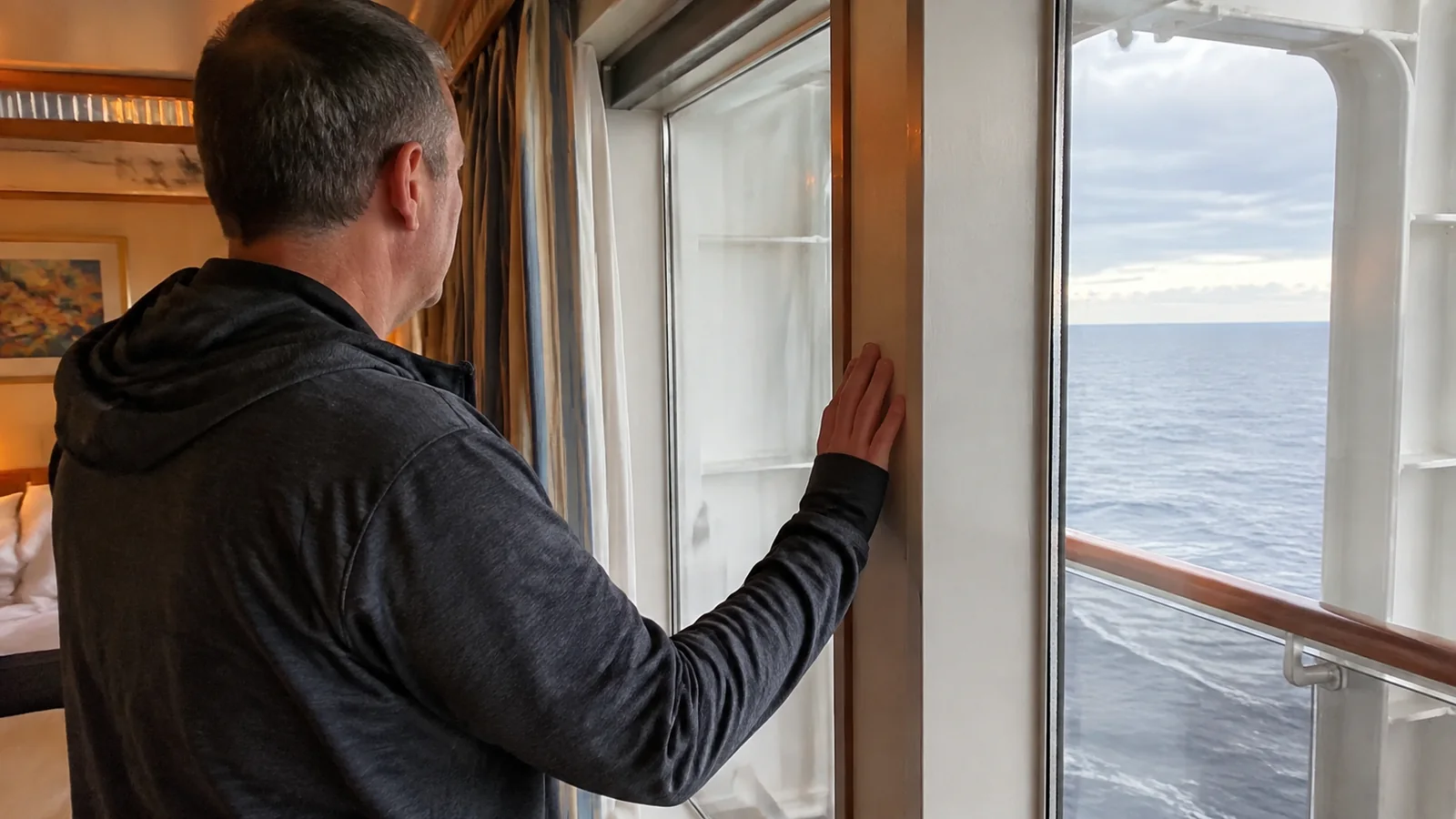
Carnival Pride’s Panorama Deck cabins run from the forward 8101 and 8102 area through the aft 8273 and 8268 area. Directly above, Deck 9 changes from the fitness center to open deck and pools, Mermaid’s Grille and Lido dining, then the aft Serenity and pool area.
That structural fact makes Deck 8 the clearest sleep-sensitive caution on the ship. It does not mean every Deck 8 guest hears noise, because insulation, operating hours, weather, maintenance, passenger behavior, and the exact overhead footprint all matter.
Forward Deck 8 below the fitness area
Forward Deck 8 rooms sit beneath the Deck 9 fitness-center footprint. Early exercise, dropped equipment, or cleaning could be noticeable, but the plan alone cannot establish frequency or volume.
This area still works for spa and gym fans who value a short vertical trip. A sleep-first traveler should compare the same broad forward position one deck lower.
Midship Deck 8 below open deck and pools
The middle section lies under pool zones and exterior circulation. Chair movement, deck washing, music, and footsteps are plausible risks, particularly outside the hours when you prefer to sleep.
The upside is excellent access to the Lido deck without relying on a long elevator ride. Families who expect to spend every afternoon at the pool may happily accept that bargain.
After-midship and aft Deck 8
Farther aft, the overhead footprint transitions through Lido dining and the adult-only Serenity area. Food-service setup, cleaning, chairs, and foot traffic may matter more than late-night entertainment here.
Do not assume Serenity means silent, because “adult-only” describes access rather than soundproofing. Compare a Deck 7 cabin in the same fore-aft zone if quiet matters more than reaching breakfast quickly.
Cabins Closest to Lift and Stair Lobbies
The official plan shows several central and aft lift banks, with rooms opening near the adjoining corridors. A cabin beside that route may receive more passing conversation, but elevators themselves are not automatically noisy inside every room.
This tradeoff flips for travelers with limited stamina, parents pushing a stroller, or anyone who wants the shortest route to dining. Do not move 100 yards down a corridor to solve a sound problem you have never had if the walk will affect every day.
How to evaluate the exact doorway
Look at which way the cabin door faces, whether a small wall separates it from the lobby, and whether the path continues toward a major venue. A room around the corner can behave differently from one whose door faces the landing directly.
Near-lift convenience is valuable on this 963-foot ship. The better filter is “directly exposed to a busy path” rather than “anywhere near an elevator.”
Connecting Cabins: Great for Groups, Less Certain for Quiet
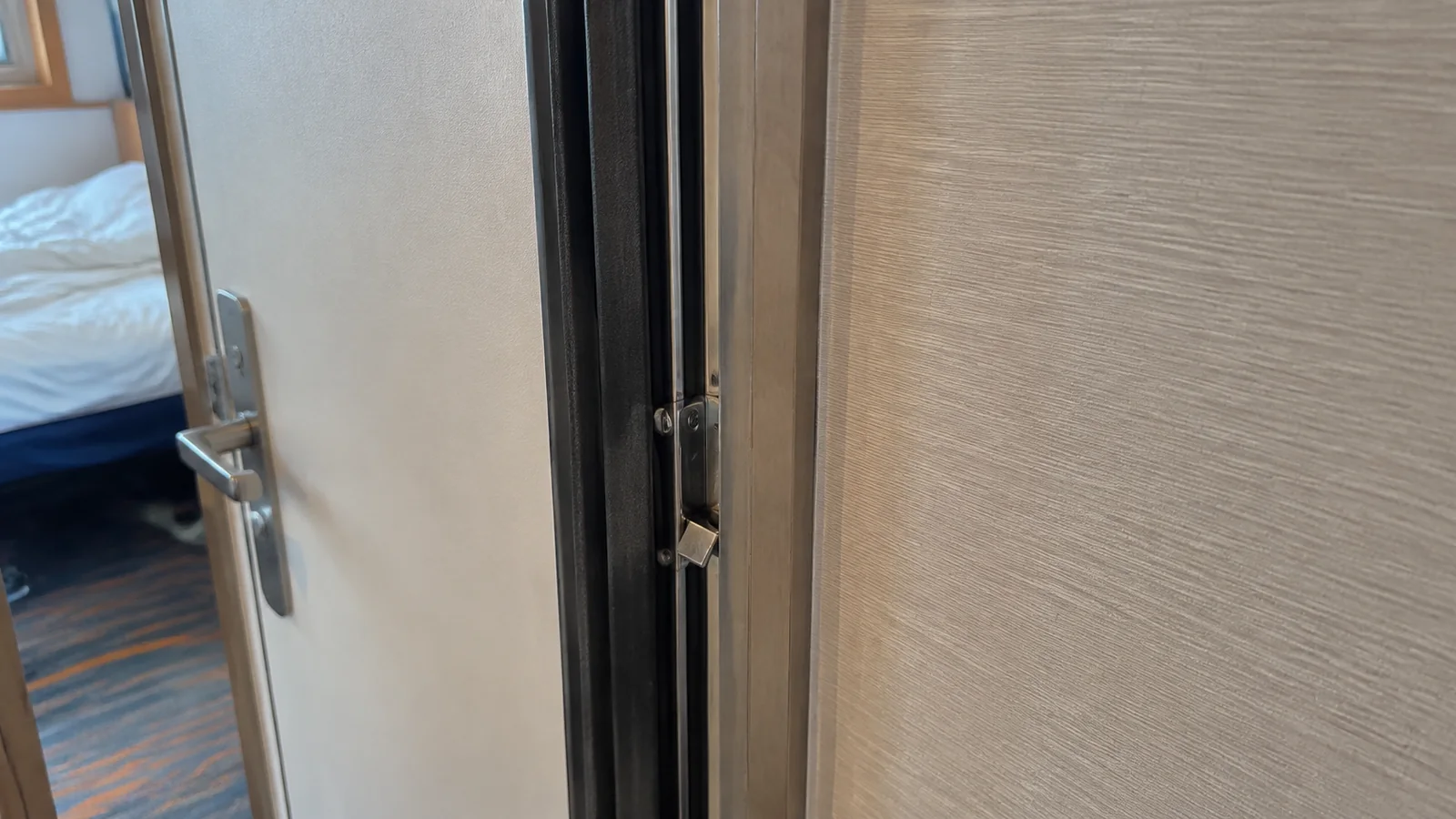
Carnival marks connecting pairs with opposing triangle symbols on the official plan. The door is a verified structural feature, while increased neighbor sound is a possibility rather than a guaranteed outcome.
Book the pair when your family needs it, because the communication and shared planning benefit is substantial. If you do not know the neighboring party and are extremely sound-sensitive, a comparable non-connecting room removes one uncertainty.
Always confirm both numbers when booking a pair. Adjacent rooms are not necessarily connecting, and cabins with similar numbers may be separated by a corridor bend, service space, or stair tower.
Forward Cabins and Motion Sensitivity
Motion is usually more noticeable far forward and higher on the ship when pitch increases. Sea state, speed, heading, weather, and your own sensitivity matter more than any promise attached to a cabin number.
Pride’s forward cabins can also mean a longer walk to the aft Normandie Restaurant and Serenity area. In return, they can be convenient for the Taj Mahal theater, forward observation areas, and some embarkation routes.
Better choice for motion concerns
Start with a lower, more central cabin near the ship’s longitudinal middle. This can reduce one motion variable, but it cannot prevent seasickness or make a rough itinerary smooth.
If motion has affected you before, discuss prevention with a qualified clinician and follow medication directions. Cabin selection helps at the margins; it is not medical treatment.
Aft-View Extended Balconies and Vista Suites
Carnival’s plan places aft-view extended balconies and corner Vista Suites across multiple cabin decks. Their stern perspectives and larger outdoor footprints can be exactly why someone books Pride.
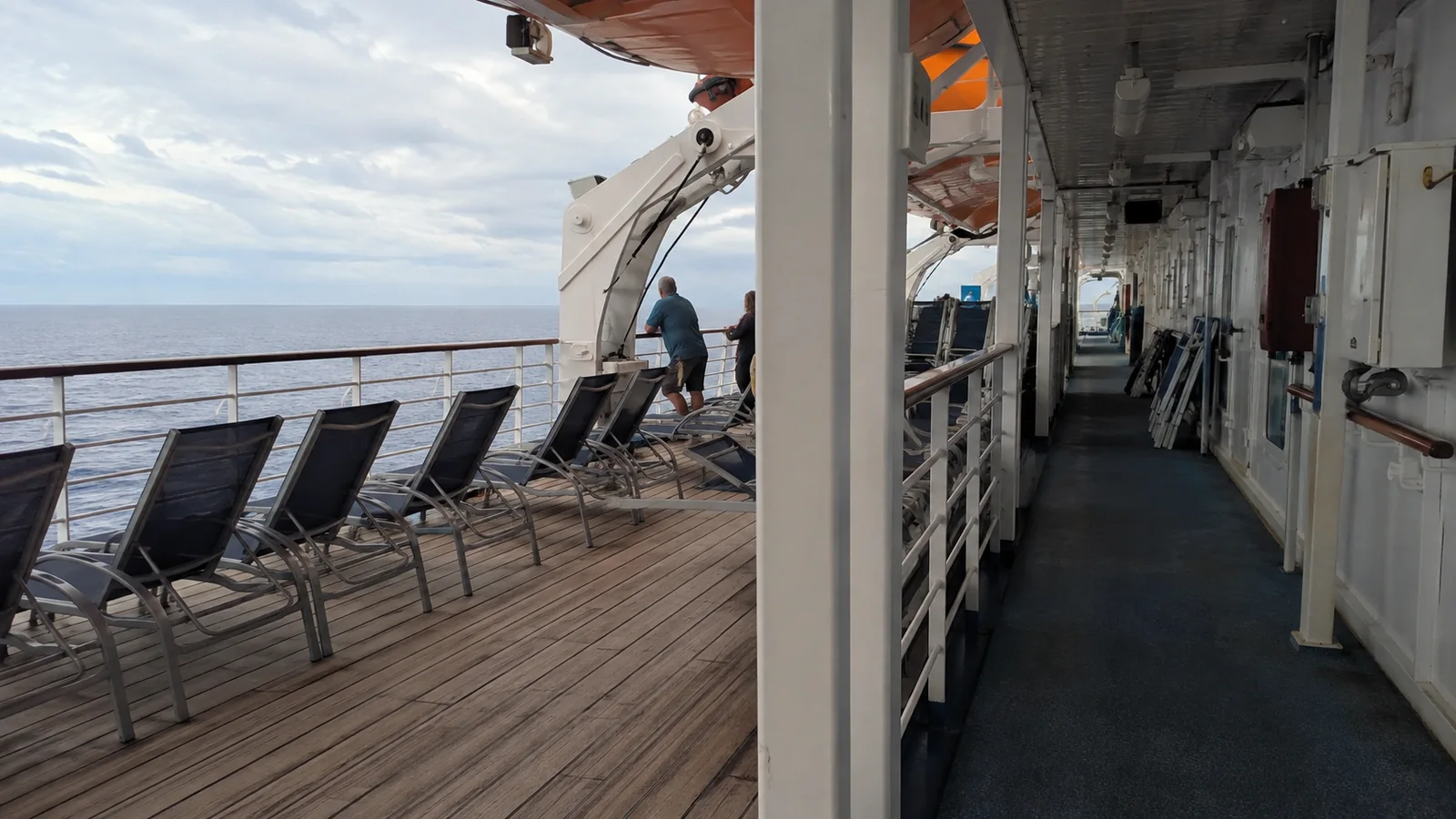
The tradeoffs can include a longer walk to forward venues, more noticeable vibration during certain maneuvers, wind or sun exposure, and occasional residue on exterior surfaces. Those are possible operating experiences, not defects guaranteed in every aft room.
Keep an aft cabin when the wake view is your priority and you do not mind distance. Choose central Deck 6 or 7 when predictable walking routes and a cabin-only buffer above and below matter more.
Deck 1 Rooms Near Lounge or Service Footprints
Riviera Deck combines cabins with the Butterflies Lounge forward and a large galley footprint aft. The plan proves those same-deck relationships, but internal bulkheads and crew routing are not fully explained by the public diagram.
Rather than blacklist a long number range, inspect the rooms at each end of the passenger corridor and ask what shares the nearest wall. A low cabin may offer a motion advantage that outweighs occasional venue or service activity.
Why Deck 6 and Deck 7 Are the Easiest Quiet Picks
Empress Deck 6 and Verandah Deck 7 are dominated by passenger accommodations, with cabins on the decks immediately above and below most positions. That buffer removes the most obvious pool, gym, theater, and galley adjacency questions.
Deck 7 is my simplest starting point for a light sleeper who still wants a balcony-heavy deck. Deck 6 can be equally sensible, especially when its fare or central location is better.
Neither deck guarantees silence. Connecting doors, nearby families, housekeeping routes, mechanical systems, and weather still exist, so check the exact square of space around your proposed cabin.
Accessible Cabins Are Not Upgrade Inventory
Carnival separates accessible rooms into Fully Accessible Cabins, Fully Accessible Cabins with Single Side Approach, and Ambulatory Accessible Cabins. The company’s accessibility guidance explains that these categories serve different mobility needs and contain different clearances and bathroom features.
Do not reserve an accessible cabin merely to gain floor space, and do not trade one away because a standard cabin looks quieter. The correct turning radius, bed approach, shower setup, doorway, and route to muster are safety and independence requirements.
Carnival also states in its mobility-device safety information that a device must fit inside the cabin and cannot be stored in a hallway. A standard cabin has a 22-inch entry doorway unless a fully accessible room was reserved, so verify the device and room dimensions with Guest Access Services.
If you need an accessible room, ask Carnival to confirm the current classification for the exact cabin and sailing. Deck-plan symbols are the beginning of that conversation, not a complete accessibility assessment.
Choose a Pride Cabin by Traveler Type
For the lightest sleeper
Choose a non-connecting room on Deck 6 or 7, several doors away from a lift lobby, with cabins above and below. Add soft earplugs and a white-noise option because no ship cabin is acoustically isolated.
For a pool-focused family
Deck 8 can be worth the possible overhead activity because Deck 9 is one flight away. A cabin near the right stair bank may save more daily effort than a theoretically quieter room several decks down.
For a budget traveler
Compare a category 4K obstructed-window room with a true interior, then price the entire trip. If daylight costs only a little more and you understand the obstruction, 4202, 4203, 4205, or 4207 may be a clever choice rather than a room to avoid.
Our Carnival ship comparison can also help you decide whether Pride’s smaller Spirit-class layout suits you before you over-optimize one cabin.
For a motion-sensitive traveler
Favor lower and central over high and far forward. Keep the route in the decision, since ocean crossings and seasonal weather can matter more than moving three doors along the same hall.
For a traveler who hates long walks
Prioritize the lift bank serving your most-used venues and dining room. Check the deck plan route rather than relying on “midship,” because a central room can still require a long horizontal walk to an aft destination.
A Five-Minute Booking Check
- Open the current Pride plan for your sailing, not a generic Spirit-class diagram.
- Locate the exact cabin and identify the spaces above, below, across, and beside it.
- Confirm the category code, occupancy, bed symbols, connecting symbol, and view label.
- Decide which one issue matters most: sound, motion, view, walking, price, or accessibility.
- Compare one alternative in the same category before paying a change fee or higher fare.
Save a screenshot of the plan and your cabin description at booking. That record makes it easier to discuss a material category or accessibility discrepancy later, while ordinary venue noise remains subjective.
If this is your first sailing, fold the room decision into these first-time cruise planning steps. A perfect cabin cannot fix a missed flight, wrong document, or late port arrival.
Carnival Pride Cabin FAQs
What is the quietest deck on Carnival Pride?
Deck 6 or 7 is the strongest general starting point because most cabins are buffered by other cabins. The quietest exact room still depends on connecting doors, corridor traffic, neighbors, maintenance, and sea conditions.
Should I avoid every cabin on Deck 8?
No. Deck 8 has public areas above, but it is extremely convenient for the Lido deck and may suit sound-tolerant travelers, families, and anyone who dislikes elevators.
Are 4202, 4203, 4205, and 4207 bad rooms?
They are not bad, but Carnival explicitly sells them as obstructed-view category 4K rooms. Book for daylight and value, not for an uninterrupted ocean view.
Are cabins near elevators always noisy?
No. The plan proves proximity, while the amount of passing noise varies; for many travelers, short walks are the more important benefit.
Can Carnival change my selected cabin?
Booking terms and operational needs govern assignments, upgrades, and changes. Review your confirmation, avoid accepting an automatic upgrade when location matters, and recheck the cabin in the cruise planner before sailing.
What should I pack for a potentially noisy room?
Soft earplugs, a small white-noise source, and any permitted sleep aids you already use can help. The cruise essentials checklist is useful for the rest, but leave prohibited appliances and extension cords at home.
The Bottom Line
The most defensible Pride cautions are the four named 4K obstructed-window rooms and Deck 8’s public-space overhead relationships. Everything else is a personal tradeoff that should be weighed against price, walking distance, view, motion sensitivity, and accessible needs.
For the simplest quiet-first answer, choose a non-connecting Deck 6 or 7 cabin with cabins above and below. Then stop chasing perfection and spend that energy choosing the sailing whose itinerary actually excites you.