3-Day Cruises Without a Passport: What Actually Qualifies
A three-day cruise can be a practical getaway for a U.S. citizen without a passport book, but the trip is not document-free. Start with a same-port U.S. round trip, verify the exact foreign stop and cruise-line policy, and bring the approved proof of citizenship and identification in the format your carrier requires.

The Best 3-Day Candidates
- Florida round trip: a Bahamas itinerary returning to the same Florida port.
- Southern California round trip: an Ensenada itinerary returning to the same California port.
- True domestic sailing: a U.S.-only itinerary, when one is actually offered and does not add a foreign port.
- Not a candidate: any cruise beginning and ending at different ports.
- Needs extra scrutiny: a route with an added country, special territory, or carrier passport requirement.
Three days describes the duration, not the border rule. A two-night, three-night, or weekend-labeled cruise can still require a passport because of its endpoints, ports, citizenship rules, or cruise-line terms.
Two real short itineraries to compare
Examples: both of these operator-published routes have three nights aboard and span four calendar dates. Treat them as concrete starting points, then select an available departure and verify the documents against that booking.
- Ship and carrier: Utopia of the Seas, Royal Caribbean
- Complete route: Day 1 Port Canaveral, Florida; Day 2 Nassau, Bahamas; Day 3 Perfect Day at CocoCay, Bahamas; Day 4 Port Canaveral
- Why I would choose it: A Florida-based traveler who wants a large activity-filled ship and two island calls
- Ship and carrier: Carnival Radiance, Carnival
- Complete route: Day 1 Long Beach, California; Day 2 at sea; Day 3 Ensenada, Mexico; Day 4 Long Beach
- Why I would choose it: A Southern California traveler who values a nearby departure and a full sea day
Royal Caribbean publishes the Utopia Bahamas and Perfect Day route, and Carnival publishes the Radiance Baja Mexico route. Port order and availability can change with the selected date, so save the exact itinerary before paying.
Royal Caribbean eligibility: a qualifying U.S.-citizen traveler on a permitted same-port round trip may use an official government-issued birth record, with government photo ID required at 16 and older. Follow Royal Caribbean’s current document requirements, including its original or official-document format, rather than assuming an ordinary photocopy is accepted.
Carnival eligibility: its travel-document policy permits alternate citizenship evidence on qualifying same-port U.S. cruises and explicitly allows a clear printed photocopy of an eligible government-issued birth certificate. Guests 16 and older using this route also need the required government photo ID.
These examples do not extend U.S.-citizen eligibility to permanent residents or other nationalities, and they do not cover an international flight. I would choose the departure I can reach with the least stress, then carry a passport book whenever possible for the emergency flexibility explained below.
First Confirm That the Cruise Is Closed-Loop
A closed-loop cruise begins and ends at the same U.S. port. Port Canaveral to Nassau and back to Port Canaveral may fit, while a sailing from Miami to Fort Lauderdale does not, even though both ports are in Florida.
CBP’s Western Hemisphere Travel Initiative guidance allows eligible U.S. citizens on many closed-loop cruises to return by sea with approved proof of citizenship and government photo identification. That federal reentry framework does not force a foreign country or cruise line to accept the same papers.
Open the itinerary details and write down the exact embarkation and disembarkation terminals. Marketing phrases such as “round-trip Florida” or “weekend escape” are too vague for a document decision.
Three-Day Bahamas Cruises From Florida
The classic short option leaves a Florida port, visits Nassau or a cruise-line private destination, and returns to the same port. Miami, Port Canaveral, and Fort Lauderdale are common gateways, although schedules and ports change.
This route archetype may allow an eligible U.S. citizen to sail with an accepted government-issued birth certificate plus photo ID. Verify the exact sailing with the Bahamas, the operating cruise line, and CBP before paying.
The State Department’s Bahamas page lists passport validity and entry information for international travelers. Cruise passengers using a closed-loop exception should not assume the general country page replaces line-specific cruise instructions.
Why Florida Is Usually the Easiest Search
Florida offers the densest cluster of short Caribbean and Bahamas sailings, so it is easier to filter for a true same-port loop. More choice also makes it easier to reject an itinerary with unclear document wording.
Compare the total trip, not just the cruise fare. Airport distance, one pre-cruise hotel night, port transportation, parking, and a safe flight buffer can cost more than the cabin.
Private Islands Still Count as Foreign Travel
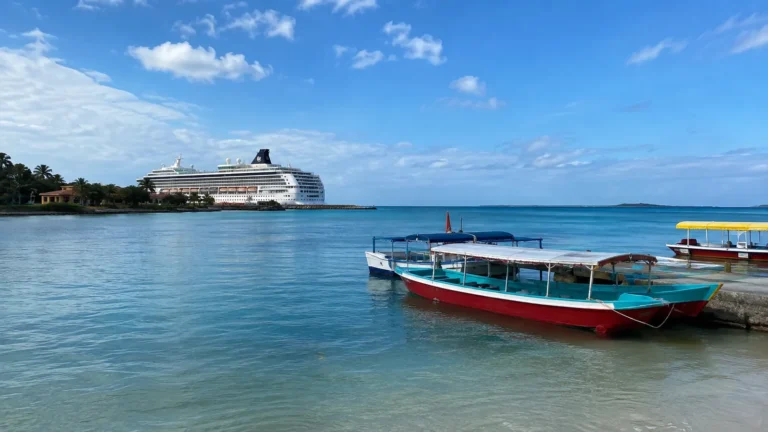
A cruise-line private island in The Bahamas is not U.S. territory merely because the same company operates the beach facilities. The country’s entry framework and the carrier’s documentation policy still matter.
Do not arrive with only a driver’s license because the itinerary feels resort-like. A REAL ID can satisfy domestic airport identification rules, but it is not proof of U.S. citizenship for this cruise.

Three-Day Ensenada Cruises From Southern California
Short sailings from Long Beach, Los Angeles, or San Diego may visit Ensenada and return to the same U.S. port. These can be closed-loop candidates for eligible U.S. citizens, subject to Mexico and carrier requirements.
Confirm that the ship returns to the exact port, not another terminal elsewhere in Southern California. Also check whether the itinerary adds another international stop or ends in Mexico.
The dedicated Mexico cruise passport explainer covers round-trip, one-way, and emergency-flight scenarios in more detail. The short length never converts a Mexico cruise into domestic travel.
What the Mexico Stop Changes
Mexico’s regular entry rules and the cruise manifest process coexist with the U.S. closed-loop exception. A carrier may approve a birth certificate for a particular round trip while requiring a passport on a different Mexico itinerary.
If you plan to fly into Mexico to meet the ship, leave early, or return from Mexico, you need international air documents rather than sea-only alternatives. A passport card and birth certificate are not valid substitutes for a passport book on an international commercial flight.
Are There Three-Day U.S.-Only Cruises?
Occasional domestic coastal, river, and inter-island products stay within the United States, but availability is more limited than Bahamas and Mexico weekends. Confirm that the published route never touches a foreign port and that the carrier does not impose a passport rule of its own.
Flights to the embarkation city have separate TSA identification rules. Since May 7, 2025, travelers age 18 and older need REAL ID-compliant identification or another accepted document for domestic air screening.
A U.S.-only itinerary can simplify border documentation, but it does not erase proof-of-age, identity, or child-consent requirements. The cruise line remains the final boarding gatekeeper under its contract.
What to Bring Instead of a Passport Book
For an accepted closed-loop cruise, a U.S.-born adult commonly needs a government-issued birth certificate plus valid government-issued photo ID. “Commonly” matters because the line may specify original, certified, or copy rules that differ from another carrier.
Carnival’s current travel-document instructions accept an original or clear printed copy of a government-issued birth certificate for certain sailings, along with qualifying photo ID. Royal Caribbean currently says its birth-certificate option requires the original state-certified document, which shows why you must follow your own line rather than generic advice.
Other accepted citizenship evidence may include a Consular Report of Birth Abroad, an original naturalization or citizenship certificate, a passport card, or a qualifying Enhanced Driver’s License. Availability and format depend on the carrier and itinerary.
Documents That Commonly Fail
- A hospital birth notice, souvenir certificate, or paper with baby footprints.
- Baptismal papers or a voter registration card.
- A driver’s license by itself, including REAL ID.
- A digital image when the carrier requires a physical original.
- A temporary paper driver’s license without accepted photo identification.
- A Puerto Rico birth certificate issued before July 1, 2010.
Royal Caribbean’s unacceptable-document list specifically rejects several of these items for its U.S. cruises. Another line’s wording may differ, but a looser blog interpretation should never override the carrier checking you in.
Fix Name Differences Before Embarkation
Your reservation, citizenship evidence, and photo ID should show a consistent identity. If a birth certificate uses a prior surname, carry an official marriage certificate, divorce decree, adoption record, or court name-change document linking the names.
Ask whether the supporting record must be original or certified. A three-day cruise can be denied at the terminal just as quickly as a three-week voyage if staff cannot connect the documents.

Children Need Their Own Documentation
Every child needs accepted citizenship evidence, even when the line does not require a separate photo ID below its stated age. Royal Caribbean, for example, says guests 15 and younger using its approved birth-certificate pathway do not need the extra government photo ID.
A child traveling without a parent or legal guardian may need a notarized carrier consent form. When only one parent travels, or surnames differ, carry custody, birth, marriage, adoption, or consent records appropriate to the situation.
Do not treat this as a universal age rule. Verify the child against citizenship, itinerary, cruise line, and any airline involved.
Non-U.S. Citizens and Permanent Residents
The closed-loop birth-certificate shortcut discussed here is for eligible U.S. citizens, not every U.S. resident. Lawful permanent residents generally need a valid Permanent Resident Card and may also need their national passport and destination visas.
Visa holders, refugees, asylees, dual nationals, and travelers with pending immigration matters should obtain guidance for their exact status from government authorities and the carrier. A weekend duration does not relax immigration rules.
NCL’s travel-document page explicitly separates U.S. citizens, resident-card holders, and non-U.S. citizens and warns that passports are required on several itinerary types. Use that level of traveler-specific detail with whichever line operates the ship.
The Passport Card Is Only a Partial Solution
A valid U.S. passport card can work for certain land and sea travel from Canada, Mexico, Bermuda, and parts of the Caribbean. It cannot be used for international air travel.
The card may simplify scheduled embarkation and sea return but does not solve the emergency problem. If you need to fly home from Nassau or Ensenada, the passport book is the useful document.
Why I Still Recommend the Passport Book
The State Department recommends a passport book for all cruise passengers in case an emergency requires an international flight. A ship can leave while a guest is hospitalized, and a traveler who misses all-aboard may need to fly to the next port or home.
Travel insurance can reimburse some covered costs, but it does not waive airline or border-document requirements. Carry the insurer’s assistance number and understand medical, evacuation, interruption, and missed-connection terms.

How to Compare Short Cruises
First confirm documentation, then compare actual vacation time. A “three-day” listing may mean three nights, two nights, or calendar days displayed by a booking site, and late boarding plus early disembarkation makes the usable leisure window shorter.
Next compare ship, cabin, port time, and included dining rather than choosing on fare alone. The cruise-line comparison by traveler type helps sort family energy, adult atmosphere, food, budget, and inclusions.
Finally, price taxes, port fees, gratuities, drinks, specialty dining, parking, flights, transfers, and one pre-cruise hotel night. A slightly higher cruise fare from a drivable port may cost less overall.
Pack for Fast Embarkation
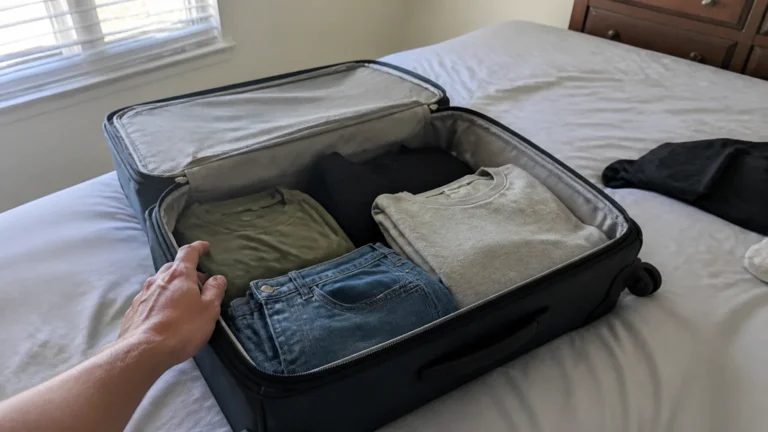
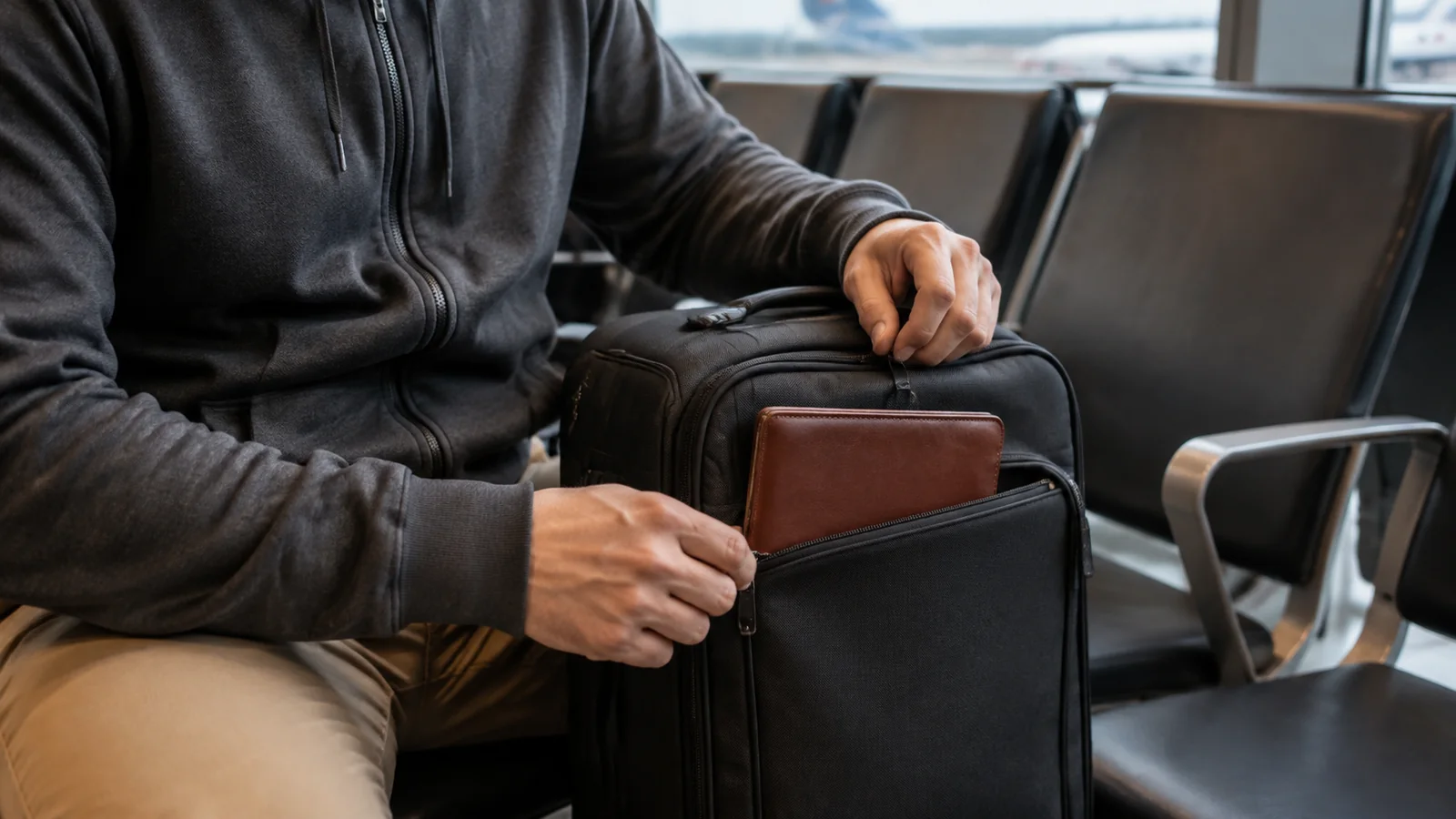
Keep every travel document in a waterproof folder inside your personal item. Never put identification in checked luggage, because bags may be taken before document inspection and delivered to cabins later.
For such a short trip, one carry-on often saves time at both ends. This cruise essentials checklist helps trim duplicates without forgetting medicine, chargers, sunscreen, and embarkation-day basics.
Seven Checks Before You Pay
- Confirm the ship starts and ends at the identical U.S. port.
- List every country and territory on the itinerary.
- Check CBP’s sea-reentry framework for your citizenship.
- Check official destination entry information.
- Run each traveler through the carrier’s live document tool.
- Resolve names, child consent, expiration, and document format.
- Repeat the check before final payment and online check-in.
Save the written requirements shown for your sailing, then watch for updates. Telephone advice can clarify a confusing line, but it does not replace the carrier’s final written terms or a border authority’s decision.
For more route archetypes, the broader closed-loop and domestic cruise planner covers Caribbean, Bermuda, Alaska, Canada, and Hawaii possibilities. Keep the same discipline: no named route is passport-free for every traveler.
Bottom Line
The most practical three-day cruise without a passport book is usually a same-port Bahamas round trip from Florida or Ensenada round trip from Southern California that your cruise line approves for your exact documents. Bring the passport book whenever possible, because it provides the cleanest boarding proof and the ability to fly internationally when a short getaway takes an unexpected turn.