Bahamas Cruise Passport Rules: What U.S. Travelers Need
Some U.S. citizens can take an eligible closed-loop Bahamas cruise without a passport book, but that is an exception, not a blanket rule. Your citizenship, itinerary, cruise line, documents, and possible need to fly home all matter.
The short answer for U.S. citizens
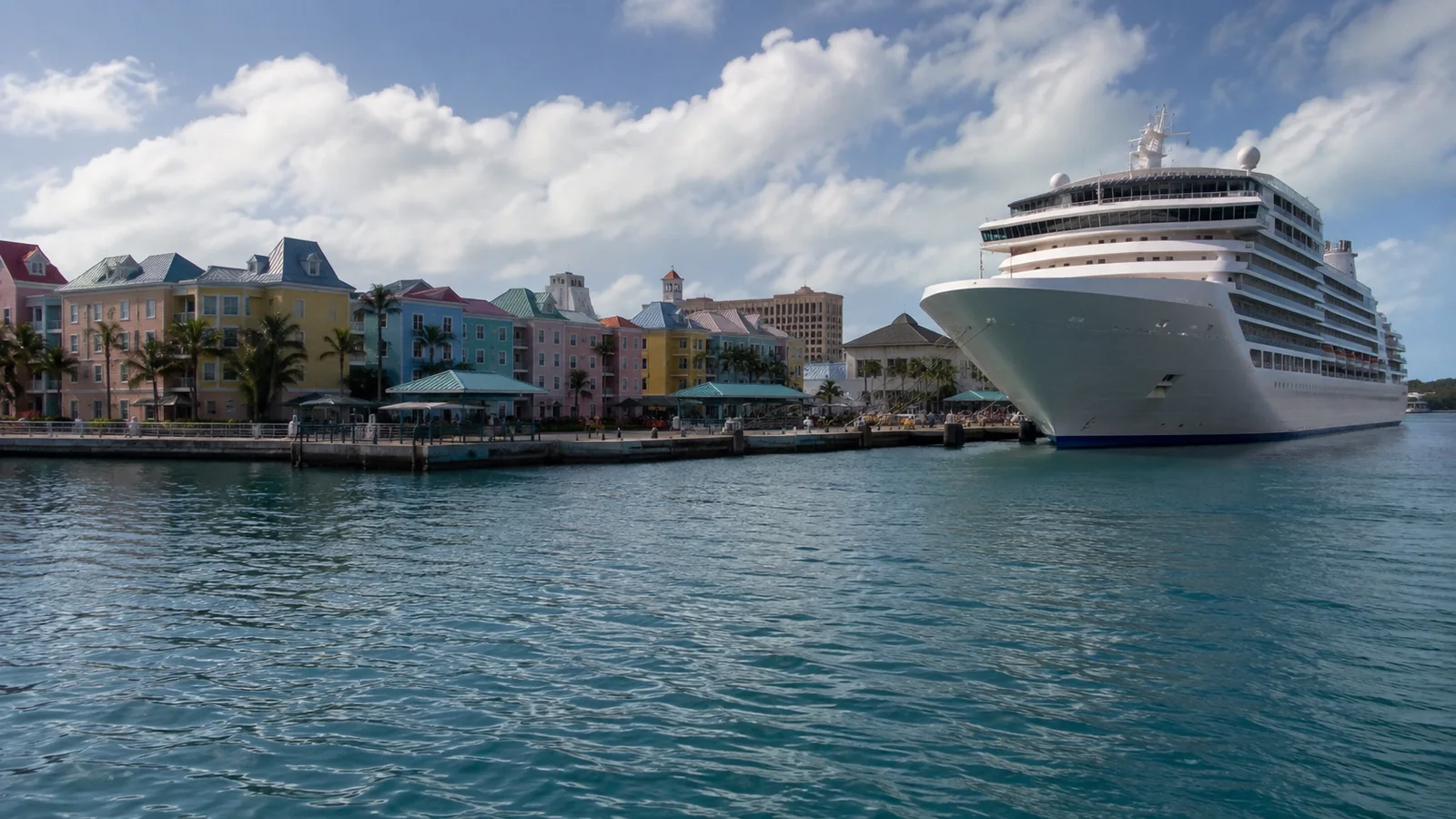
If your cruise starts and ends at the same U.S. port, your line may accept an approved proof of U.S. citizenship plus government-issued photo identification instead of a passport. A valid passport book is still the safest and most flexible document.
The closed-loop exception is mainly about returning to the United States by sea. It does not force a cruise line to board you, override Bahamian entry rules, cover another country on the itinerary, or let you fly internationally.
- Closed-loop from the same U.S. port: A passport book may not be mandatory for an eligible U.S. citizen if the line accepts alternate documents.
- Starts and ends at different ports: Do not rely on the closed-loop exception; follow the line’s exact passport requirement.
- Starts or ends outside the United States: Expect a passport book and check every visa or authorization requirement.
- Flying to or from The Bahamas: A U.S. passport book is required for ordinary international air travel.
- Non-U.S. citizen: Requirements depend on nationality, U.S. immigration status, Bahamian rules, and the cruise line.
Make the eligibility decision for each traveler before choosing excursions or paying a nonrefundable fare. Use this order: citizenship, exact route, then the booked operator’s document list.
- Your situation: U.S. citizen, same U.S. departure and return port
- Decision: Alternate citizenship and identity documents may qualify
- Next check: Line permits them for every port and accepts your physical document format
- Your situation: U.S. citizen, different endpoints or foreign embarkation
- Decision: Do not apply the closed-loop exception
- Next check: Passport and entry requirements for the full itinerary
- Your situation: Flight to or from The Bahamas
- Decision: Use the international air-travel document requirements
- Next check: Passport validity, nationality and airline checks
- Your situation: Permanent resident or other non-U.S. citizen
- Decision: U.S.-citizen birth-certificate advice does not apply
- Next check: Nationality-based passport/visa rules and U.S. reentry status
- Your situation: Child on any route
- Decision: Assess individually
- Next check: Citizenship document, age-based photo-ID policy and parental-consent requirements
What is a closed-loop Bahamas cruise?
A closed-loop cruise begins and ends at the same U.S. port. Miami to Nassau and back to Miami fits that definition, while Miami to Nassau ending in Fort Lauderdale does not.
The distinction matters because U.S. Customs and Border Protection allows U.S. citizens on qualifying closed-loop cruises to return with certain citizenship and identity documents. That federal reentry accommodation is narrower than “Bahamas cruises do not need passports.”
Check the exact port names, not just the state. Starting in Miami and ending at Port Canaveral is not returning to the same port.
A back-to-back cruise can also change the analysis. If two connected segments create different start and end ports, review each booking and the combined trip with the line rather than assuming the first segment’s rule carries forward.
Four separate rulebooks decide whether you can travel
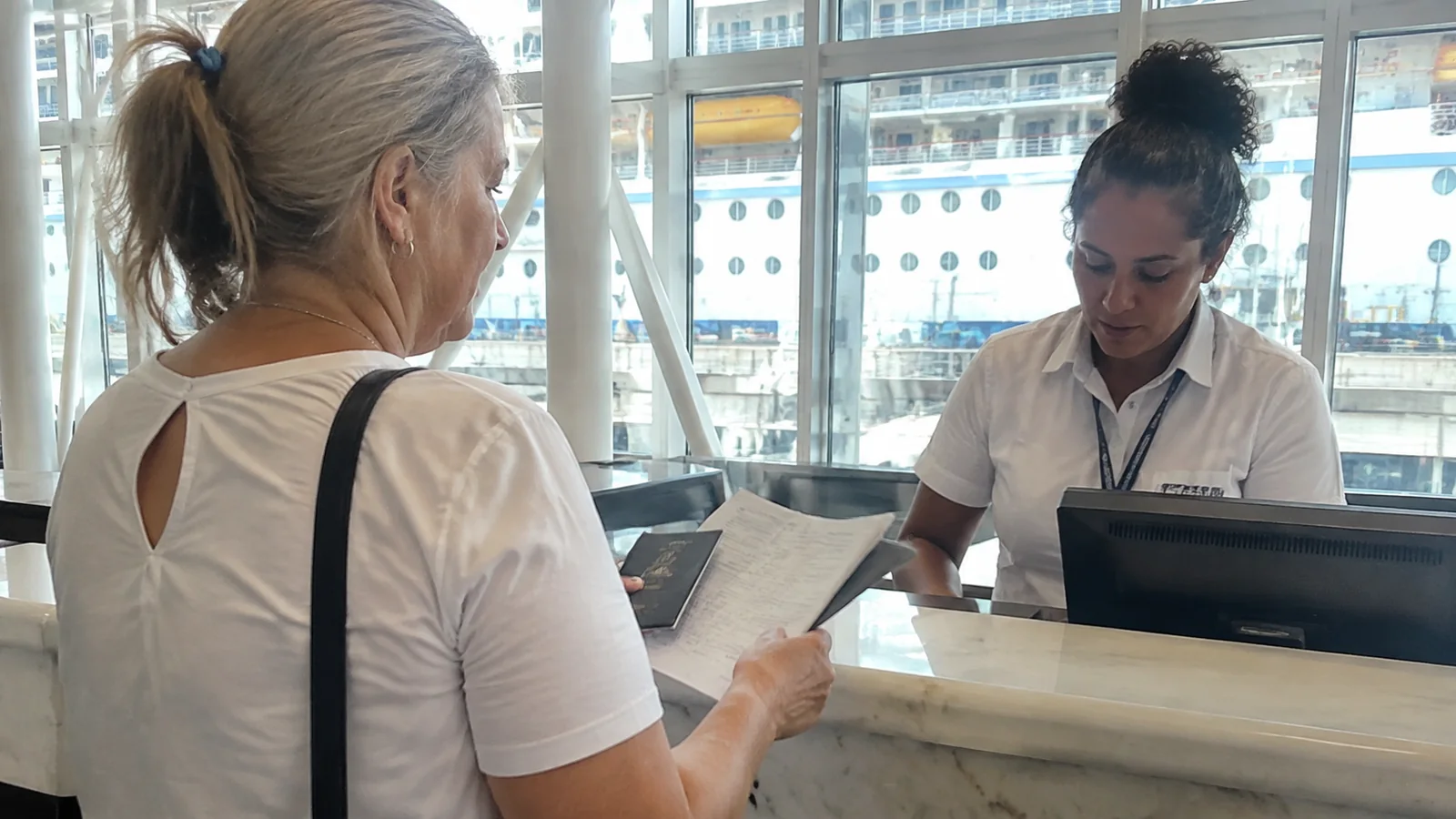
Most passport confusion comes from blending four questions into one. You need a “yes” from every authority that applies.
1. U.S. reentry rules
CBP controls what U.S. citizens present when returning to the United States. Its closed-loop accommodation may allow an eligible traveler to return by sea with proof of citizenship and identity instead of a passport book.
That does not mean a driver’s license alone is enough. A standard license proves identity, not U.S. citizenship.
2. Bahamian entry rules
The Bahamas controls admission to its territory. The U.S. State Department’s Bahamas page says U.S. citizens are generally required to present a valid passport, while cruise travelers may use another Western Hemisphere Travel Initiative compliant document such as a passport card.
The Bahamas Department of Immigration separately tells visitors to hold onward travel and valid travel documents, with requirements varying by nationality. Because general visitor criteria and cruise processing are not identical, use the rule for your nationality and manner of arrival.
3. Cruise-line boarding rules
The cruise line checks documents before boarding and can apply stricter rules than the minimum government reentry rule. If the line requires a passport book for your sailing, a birth certificate does not overrule it.
Lines also differ on originals, certified copies, ordinary photocopies, digital images, expiration buffers, name matching, and additional ports. Read the current document page attached to your reservation and get written clarification if anything is ambiguous.
4. Every other port on the itinerary
A sailing marketed as a Bahamas cruise may also call in another country. That port can trigger a passport, visa, or other document requirement even if you plan to stay on the ship.
Save the complete port list rather than only the cruise’s marketing name. A sailing advertised as a Bahamas getaway may include another country whose entry requirements also apply.
What documents may work on an eligible closed-loop cruise?
For a U.S.-born citizen, some cruise lines accept a government-issued birth certificate plus an unexpired government-issued photo ID on eligible sailings. Travelers under the line’s stated age threshold may not need the photo portion, but they still need the required citizenship document.
Do not bring a hospital souvenir certificate, baptismal paper, voter card, or a phone photo and assume it counts. The issuer, format, and copy rules matter.
Naturalized citizens may have additional accepted proof, such as a Certificate of Naturalization, when the line permits it. A Consular Report of Birth Abroad may serve U.S. citizens born abroad under some policies.
Carnival: its travel-document policy allows a clear printed photocopy of an eligible government-issued birth certificate without certification or notarization on qualifying sailings. That allowance does not make a hospital souvenir certificate or a photo displayed on your phone acceptable.
Royal Caribbean: its document guidance specifies official government-issued birth records and photo ID for guests 16 and older using that document route. I would follow its original or official-document wording rather than transferring Carnival’s photocopy allowance to Royal Caribbean.
Passport book versus passport card
A passport book has pages for border processing and visas and is the most broadly useful choice for an international itinerary. Its expiration date, condition, and the name printed inside still need checking.
A passport card is a limited-use document for eligible land and sea travel, including U.S. reentry from the Caribbean. The State Department’s cruise guidance explains its scope and recommends carrying a book when cruising.
If you already own both, check the book’s expiration as well as the card’s before assuming your travel wallet is ready. Keep the document details with your booking records so you can confirm them during online check-in.
Why a REAL ID is not enough
A REAL ID-compliant driver’s license helps satisfy federal identification requirements for U.S. domestic air travel. It does not prove U.S. citizenship and is not a passport for international travel.
If a line allows a birth-certificate route, the license may provide the identity half while the approved birth certificate provides citizenship. The star on the license does not eliminate the citizenship document.
An Enhanced Driver’s License is different from a standard REAL ID and is issued only by participating jurisdictions. Confirm that the exact enhanced document is accepted by the line for your sailing; the star on an ordinary REAL ID is a different designation.
When you definitely should carry a passport book
Some situations make the answer much clearer. Treat a passport book as required or functionally essential when any of these apply.
- Your cruise line says it is required for the sailing.
- The cruise begins or ends outside the United States.
- The voyage begins and ends at different ports and the line requires a book.
- You fly into or home from The Bahamas.
- Another country on the itinerary requires it.
- Your nationality or visa situation requires a passport.
If one traveler in your party has a different citizenship or legal status, that person may need a different document set. A shared cabin reservation does not create shared eligibility.
The emergency problem with cruising without a passport
Imagine a traveler becomes ill in Nassau and remains in a hospital after the ship leaves. A birth certificate and driver’s license may have been accepted for the original closed-loop sailing, but they are not ordinary documents for boarding an international flight to the United States.
The traveler may need emergency assistance and an urgent passport process before flying. That adds time, stress, expense, and uncertainty during an already difficult event.
The same issue appears when someone misses all-aboard, a relative at home has an emergency, or the ship cannot complete the expected route. A passport book does not prevent the problem, but it removes one major barrier to solving it.
Travel insurance is separate again. A passport establishes identity and nationality for travel, while insurance may or may not pay covered medical, delay, lodging, or transportation expenses under its policy.
Rules for children and family groups
Children are U.S. citizens with document requirements of their own. Do not assume an infant can travel under a parent’s passport or that a school ID replaces proof of citizenship.
On an eligible closed-loop sailing, a cruise line may accept an approved birth certificate for a child and waive photo ID below a stated age. That age and the acceptable birth-certificate format must come from the line’s current rules.
A child traveling without both parents may need a signed or notarized consent letter, custody order, death certificate, or other relationship documentation. Requirements differ by line, country, and family situation.
If names differ across the reservation, parent, child, birth certificate, and ID, bring the official documents connecting them. Marriage certificates, divorce decrees, adoption records, or court-ordered name changes may prevent a terminal dispute.
Families should handle this months ahead, not during online check-in. The 90-day cruise planning system gives documentation a fixed place before packing and excursion decisions take over.
U.S. permanent residents and non-U.S. citizens
A U.S. Permanent Resident Card documents immigration status in the United States, but it is not a passport from the traveler’s country of citizenship. The Bahamas and each itinerary country can apply entry or visa rules based on nationality.
Many lines require permanent residents to carry the physical green card plus a valid passport from their country of citizenship. Expired cards, extension notices, pending applications, and conditional status need itinerary-specific verification.
Canadian citizens, visa-waiver travelers, and other foreign nationals should not use U.S.-citizen closed-loop advice. Check Bahamian entry rules, U.S. entry or reentry documents, transit-country rules, and the cruise line together.
A visa may still be required even if the guest never plans to leave the ship. Nationality, residence, and the countries visited matter more than where the cruise was purchased.
Birth certificate mistakes that can stop a vacation
The most common mistake is bringing a hospital record or decorative certificate instead of a government-issued vital record. The second is relying on a digital image when the line requires an original or particular type of copy.
Name mismatches create another failure point. The reservation and travel documents should match, with official linking paperwork for a legal change.
Puerto Rico birth certificates issued before July 1, 2010 are not accepted under current cruise-line policies that reflect the territory’s replacement law. Travelers affected by that rule need an updated certificate or another accepted citizenship document.
Damage, lamination, missing seals, and unreadable copies can invite questions even when a policy appears to allow the document. Ask the cruise line before departure if the physical record is unusual.
How to verify your exact Bahamas cruise
- Write down your citizenship and immigration status.
- Confirm the exact departure and arrival ports.
- List every foreign port, including technical or optional calls.
- Open the cruise line’s document tool for that specific reservation.
- Check Bahamas entry and visa rules for your nationality.
- Check U.S. reentry rules for the planned mode of travel.
- Ask how your documents would work if you had to fly home.
- Save the written requirements and recheck them before departure.
Include documentation in your list of questions to ask before a cruise. A phone representative’s casual assurance is less useful than a current written rule tied to the booking.
What to carry on embarkation day
Keep original travel documents in your personal carry-on, never in checked luggage handed to a porter. You may need them before the checked bag reaches your cabin.
- Passport book or the exact approved citizenship and identity combination.
- Boarding documents and reservation details.
- Visa or travel authorization required for any nationality or port.
- Name-change documents where names do not align.
- Minor consent, custody, or guardianship records when applicable.
- Physical Permanent Resident Card and national passport when required.
- Copies stored separately for recovery assistance, not as assumed boarding substitutes.
Check validity against the cruise line’s rule, not only the Bahamas minimum. A line may require months of passport validity beyond the cruise even when a country page states a shorter period.
Can you get off the ship in The Bahamas without a passport?
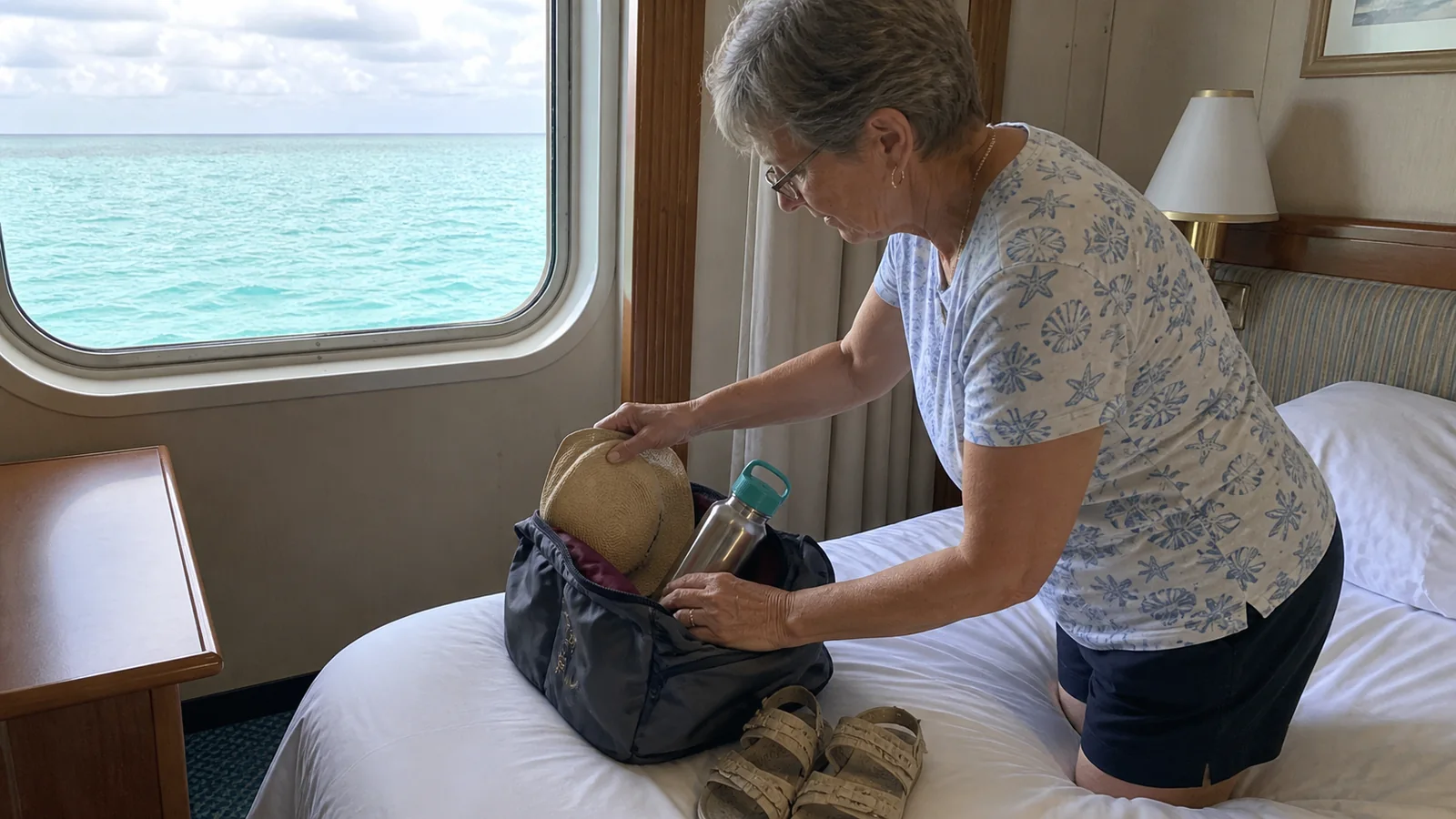
On many eligible closed-loop sailings, U.S. citizens admitted under the line’s approved document process can go ashore in Nassau, Freeport, or a private destination. That answer still depends on the traveler, line, itinerary, and current Bahamian processing.
Bring the ship card and the identification the line tells you to carry ashore. Do not carry irreplaceable documents casually if the line secures or processes them differently, but make sure you can access your passport in an emergency.
Private islands and cruise-company destinations are still in foreign territory. A branded pier, beach club, or wristband does not turn The Bahamas into the United States.
Does travel insurance replace a passport?
No. Insurance may reimburse a covered disruption, but it does not establish citizenship, satisfy immigration, or authorize international air travel.
Read coverage for medical treatment abroad, evacuation, trip interruption, missed connection, and document loss. Also check whether the policy requires reasonable efforts to hold proper travel documents.
Frequently asked questions
Can I cruise to The Bahamas with only a driver’s license?
Generally, a standard driver’s license alone is not enough for a U.S. citizen because it does not prove citizenship. An eligible closed-loop sailing may accept it as photo identification when paired with an approved citizenship document.
Does online check-in mean my documents are approved?
Completing check-in does not replace the physical document inspection at the terminal. Carry the documents required by the line even if the app has already issued a boarding pass.
Does a child need a passport for a Bahamas cruise?
Some U.S.-citizen children can sail on eligible closed-loop itineraries with an approved birth certificate under the line’s rules. Open-loop, international-departure, nationality, custody, or itinerary factors can change the answer.
What if my cruise visits The Bahamas and another country?
Check the entry rules for every country and the cruise line’s complete itinerary policy. One additional port can create a passport or visa requirement that a Bahamas-only answer misses.
What if my passport expires soon?
Compare its expiration date with both destination and cruise-line validity rules. Renew early if it does not meet the strictest applicable requirement or leaves too little margin for a delayed return.
My recommendation
A qualifying U.S. citizen may be able to cruise round trip from the same U.S. port to The Bahamas without a passport book when the line accepts alternate documents. That narrow answer should never be shortened to “you do not need a passport for The Bahamas.”
Bring a valid passport book whenever possible, verify the exact sailing in writing, and treat every traveler’s status separately. I would finish that check before final payment, then keep the accepted documents in my carry-on on embarkation day.