Sapphire Princess Cabins to Avoid and Better Rooms to Book
Sapphire Princess cabin advice gets messy when one traveler’s perfect open balcony is another traveler’s privacy nightmare. This guide starts with Princess’s current official deck plan, names only defensible locations, and separates what the ship’s layout proves from noise, motion, and comfort issues that may or may not affect your voyage.
Quick Picks: Cabins to Reconsider by Sensitivity
- Light sleeper: study Aloha Deck cabins below Lido Deck public areas, plus Emerald Deck rooms above entertainment venues.
- Privacy seeker: reconsider uncovered Dolphin Deck balconies before booking a mini-suite.
- Motion-sensitive cruiser: avoid the far-forward and far-aft ends, especially higher cabins.
- Early-to-bed traveler: check rooms near the Terrace Pool, elevators, theaters, and nightclub spaces.
- Uninterrupted-view shopper: verify every marked obstruction and railing type in the live cabin description.
- Limited-mobility traveler: avoid choosing an extreme bow or stern location merely to save money.
“Avoid” means poor fit, not defective room. Lido access, a large exposed balcony, or a spot beside the elevators can be a genuine advantage when it matches the way you cruise.
Start With Princess’s Current Deck Plan
Open the official Sapphire Princess ship page and select Deck Plans, then enter or verify your sailing information when Princess offers that step. This article was checked against the reviewed plan, and Princess explicitly warns that plans can change.
The line’s official deck-plan tool also says photos, configurations, and square footage can vary by ship, stateroom, category, and deck location. A cabin screenshot without a date or category label is not enough evidence for a major purchase.
Check the cabin’s own deck first, then the deck directly above and below. On Sapphire Princess there is no Deck 13, so Aloha Deck 12 sits immediately below Lido Deck 14.
Aloha Deck Cabins Under Lido Deck
Aloha is the most important deck to inspect if overhead activity wakes you. The current plan places Aloha staterooms beneath Lido’s forward cabin section, central pool areas, Horizon Court, and aft outdoor spaces.
That adjacency is proven, but “constant chair noise” is not. Sound varies by exact position, surface, operating routine, weather, and your own sensitivity, so the honest conclusion is possible overhead disturbance rather than guaranteed misery.
Forward Aloha Cabins
The forward A100-series and low A200-series rooms are under Lido’s forward accommodation section rather than the main pool. They may offer a better overhead buffer than cabins aligned with open recreation spaces, although bow motion and a long walk to aft dining remain possible tradeoffs.
Choose low-numbered forward rooms only if your stomach tolerates pitching. A calm sailing can feel easy anywhere, while a rough one makes the ship’s ends more noticeable than the center.
Midship Aloha Cabins
Cabins around the middle of Aloha require the closest comparison with Neptune’s Reef and Pool, Calypso Reef and Pool, their surrounding deck areas, and nearby food service above. The map proves the public-space relationship, not the time or volume of any sound.
A room here can be brilliantly convenient for swimmers, families, and buffet breakfasts. For a late sleeper, Baja or Caribe in a cabin-sandwich location is the safer starting point.
Aft Aloha Cabins and the Terrace Pool
Aloha continues aft toward the Terrace Pool, which Princess’s official accessible-route description confirms is at the stern of Deck 12. Cabins nearest that outdoor area may see more passing guests than rooms deeper in a standard corridor.
The reward is fast access to an aft-facing outdoor space and a shorter trip to Horizon Court above. The cost can be a longer walk to the theater and other forward venues, plus potentially more stern movement.
Lido Deck Cabins Beside Public Recreation Areas
Lido Deck has a limited forward cabin section rather than a full ship-length corridor. Rooms in this section share a deck with pools, casual food, bars, Horizon Court, and outdoor circulation, though the elevator and corridor layout provides some separation.
These rooms are not automatically noisy. Their defensible downside is public-area proximity, while their equally real advantage is exceptionally easy access to outdoor decks and meals.
Study Lido’s low-numbered cabin run and note how far your door sits from the public transition. If daytime naps and early bedtimes drive your choice, a midship room on a cabin-only deck offers a cleaner acoustic bet.
Emerald Deck Cabins Above Entertainment
Emerald Deck 8 contains staterooms, while Promenade Deck 7 below carries major public and entertainment spaces. Forward Emerald cabins sit over the Princess Theater zone, and the aft section approaches the area over Club Fusion.
Performance bass, applause, rehearsals, and closing-time activity are possible, not certain. The exact show schedule and sound transmission are operational matters that a printed plan cannot establish.
Forward E100 and E200 Rooms
Scrutinize the forward E100-series and early E200-series cabins by aligning them with the theater below. These can still be good-value rooms for travelers who attend the late show and do not retire early.
The bow location adds a separate motion consideration. If you are both noise-sensitive and prone to seasickness, moving toward midship on Decks 9 through 11 removes two uncertainties at once.
Aft E700 Rooms
At the opposite end, the E700-series approaches the Club Fusion footprint below and the stern above. Check the exact vertical relationship rather than condemning every E700 room, because venue edges and cabin positions do not line up evenly.
Aft rooms appeal to travelers who value rear-deck access and do not mind the walk. If late-evening quiet is nonnegotiable, select a cabin with staterooms directly underneath instead.
Dolphin Deck Mini-Suites and Balcony Privacy
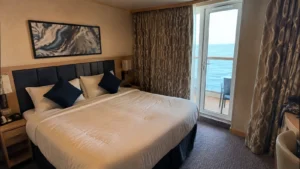
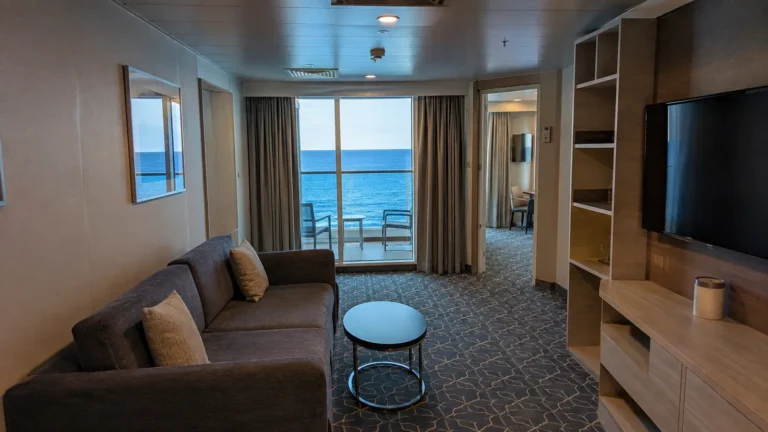
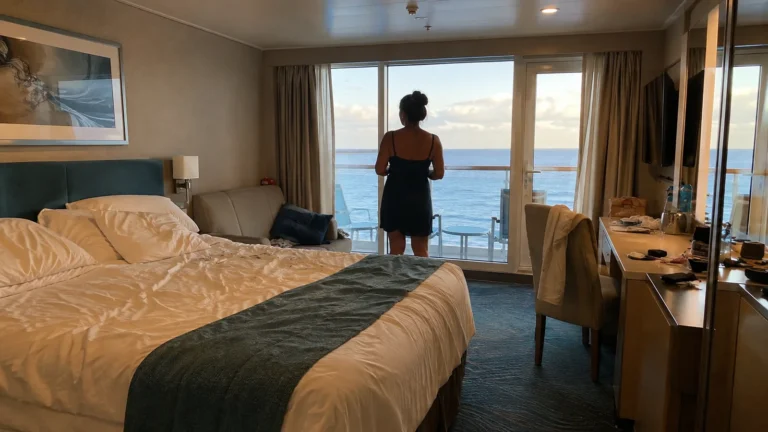
Dolphin Deck 9 is dominated by staterooms, including rows of mini-suites with balconies that are more open to the decks above than many cruisers expect. An open balcony is not an obstruction, but it changes shade and privacy.
Some travelers love the brighter, outward-facing feel and broad sky view. Others dislike being visible from balconies above or having less overhead cover during sun or rain, so decide which experience you actually want before paying for extra cabin space.
Princess notes that balcony railings may be solid steel or toughened glass and that view status is judged from the balcony railing. Confirm the specific room’s plan notes instead of treating every Dolphin balcony, or every balcony on the ship, as structurally identical.
Caribe and Baja: Often the Best Starting Point
Caribe Deck 10 and Baja Deck 11 are largely accommodation decks, which makes them attractive for people seeking cabins above and below. Midship rooms here also shorten the walk to multiple elevator banks and usually reduce motion compared with the extreme ends.
Caribe balconies are often chosen for a balance of outdoor space and cover, while Baja appeals to cruisers who value an accommodation-deck setting. Still verify the actual category, railing, connecting symbols, and nearby blank spaces because the deck name alone does not settle the choice.
If you are packing for a longer Princess itinerary, use this practical cruise essentials list to avoid filling the cabin with bulky duplicates. A calm room feels much less calm when every surface is buried.
Plaza Deck Cabins Near the Piazza
Plaza Deck 5 combines a forward cabin section with central public areas such as the Piazza and guest services. The rooms closest to that transition trade quick access for possible foot traffic and activity near a social hub.
Lower-deck cabins can be appealing to motion-sensitive passengers because they sit closer to the ship’s vertical center. Choose deeper into the cabin corridor if you want that motion advantage without being immediately beside a public-space boundary.
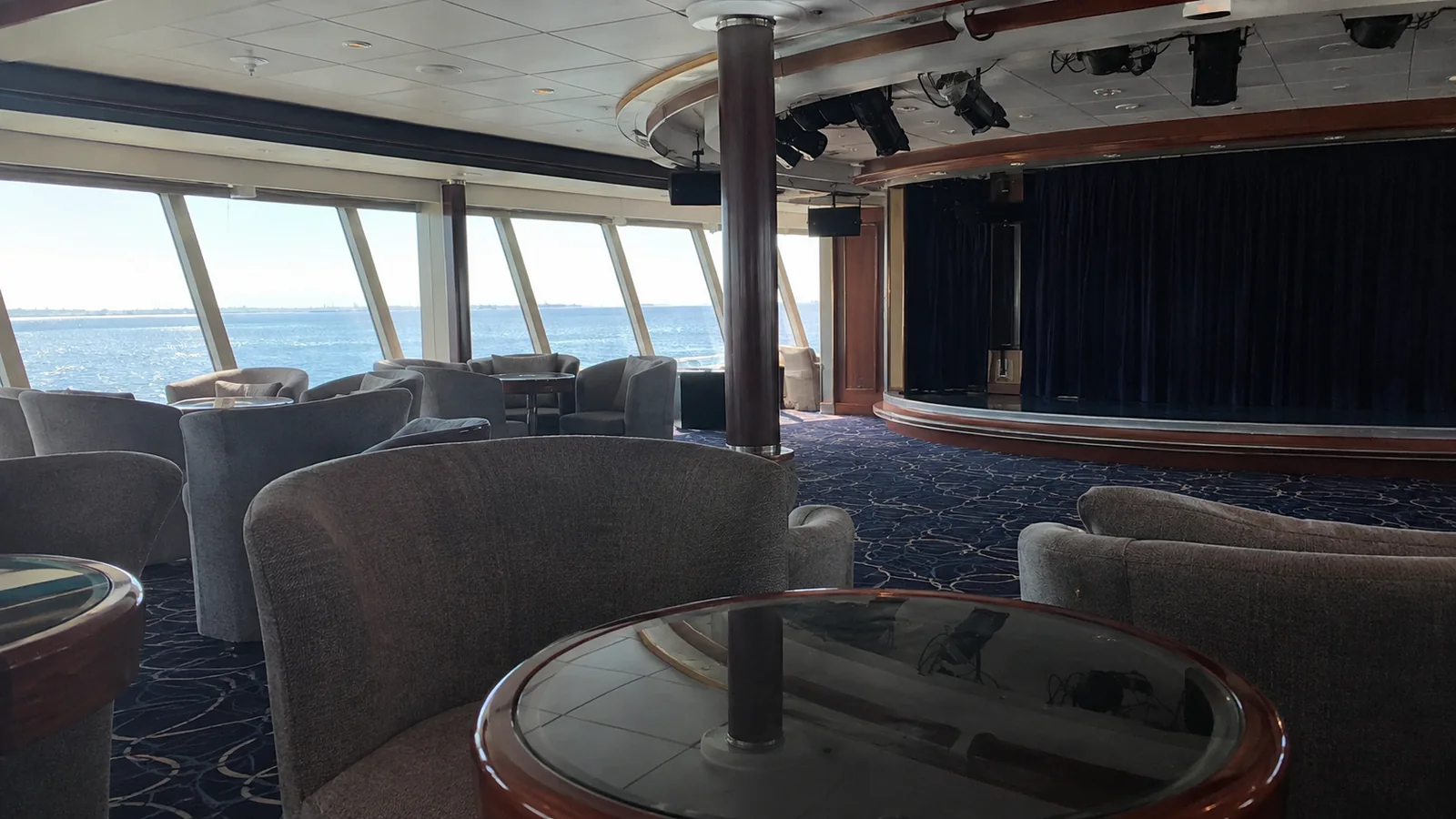
Obstructed Oceanview Rooms on Emerald Deck
Princess’s plan marks view limitations by category and symbol, and the line says views are considered unobstructed unless noted otherwise. On Emerald Deck, exterior oceanview rooms around the lifeboat area need cabin-by-cabin confirmation rather than a vague warning about the whole deck.
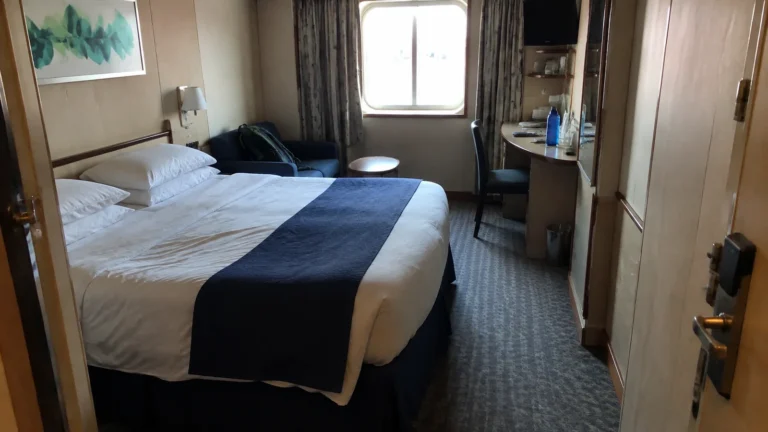
An obstructed view can still bring natural light at an inside-cabin price, making it a smart value. The mistake is paying for it while imagining a clean horizon, so read the live disclosure and ask what type of obstruction applies.
Do not infer the percentage blocked from a category name or old photograph. Tender equipment, davits, deck hardware, and sightline angle can make neighboring windows feel quite different.
Connecting, Multi-Berth, and Family Cabins
The deck-plan legend identifies connecting rooms, upper berths, and cabins that can accommodate additional guests. A connecting door is useful for a family group but may offer less sound separation than some guests prefer.
Extra berths also change the room when deployed, and Princess warns that rollaway use restricts cabin space. Confirm where each person sleeps, whether beds block balcony access, and how daytime setup works before booking four people into the least expensive category.
Sapphire Princess also has two family suites created from interconnecting cabins, according to the official ship fact sheet. They solve a different problem than two unrelated travelers being assigned a connecting pair.
Elevators, Laundry Rooms, and Unlabeled Spaces
Cabins near elevator banks can receive more passing conversation, but they save substantial walking and the lift machinery is not necessarily against the cabin wall. Judge corridor exposure, not the mere presence of an elevator icon.
Self-service laundries can create daytime door and conversation activity, especially on long voyages. If the current plan labels one near your cabin, decide whether easy laundry access outweighs a possible stream of neighbors.
Never declare an unlabeled white block a pantry, crew stair, or mechanical room without confirmation. A blank shape proves only that the guest plan does not identify the space.
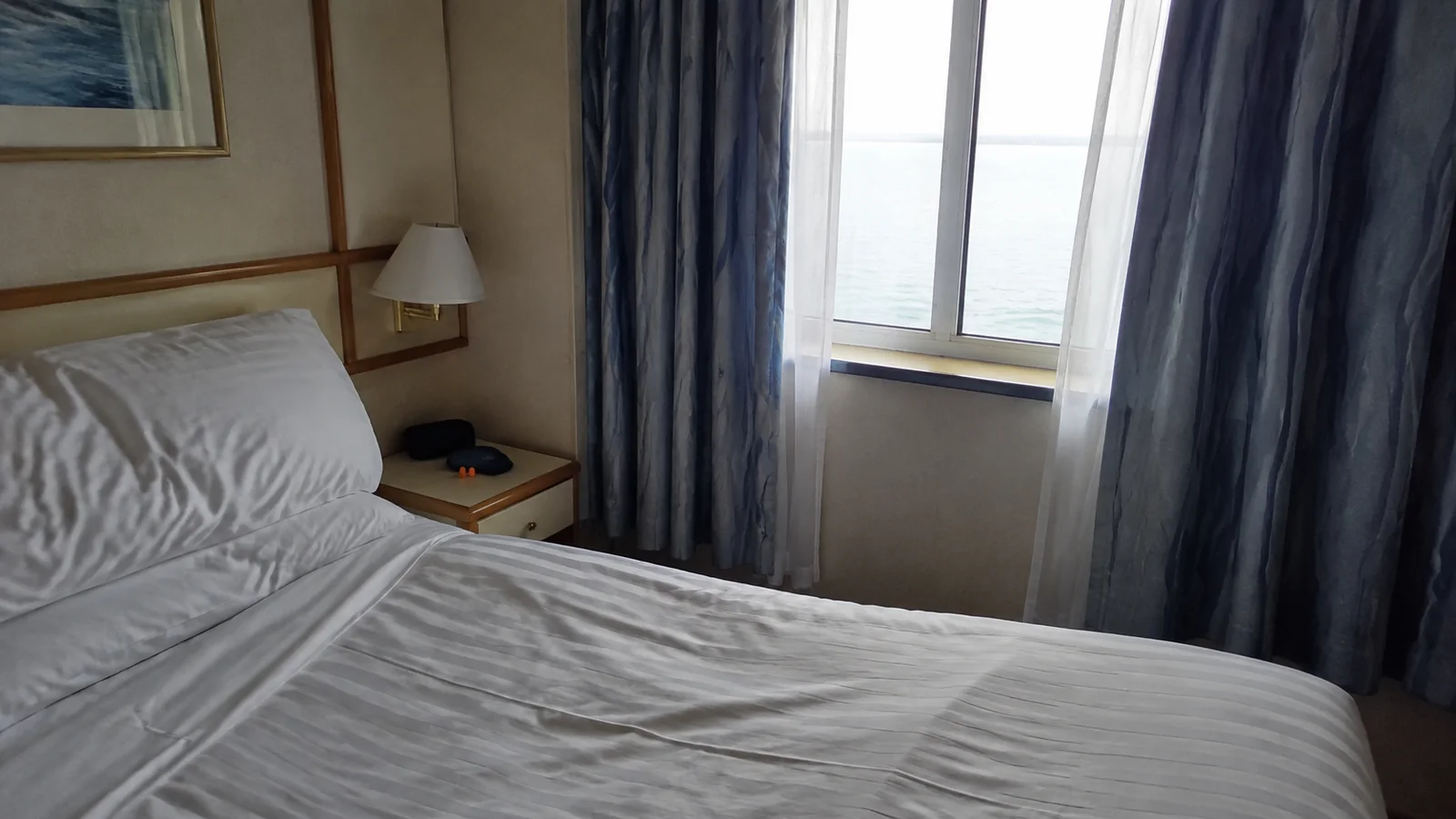
Accessible-Cabin Etiquette and Practical Fit
Princess’s Accessibility at Sea information describes fully accessible rooms with wheelchair or scooter maneuvering space, wider doors, roll-in showers, and grab bars. These are purpose-built accommodations, not opportunistic upgrades.
The ship’s official accessible-route page identifies specific inventory, including E301 through E304, C300 through C303, B300 through B303, A300 through A303, and additional inside or oceanview rooms. Book one only when someone needs its features, then confirm whether fully accessible, single-side-approach, or ambulatory-accessible design matches that guest.
Mobility devices must be stored in the cabin rather than left in the corridor, and Princess advises checking dimensions before travel. A central accessible room near an elevator may be a much better choice than a theoretically quieter room at the end of a long hallway.
Best Location by Traveler Type
- Light sleeper: midship Caribe or Baja, with cabins above and below.
- Motion-sensitive guest: a lower, midship room near the central elevators.
- Pool-focused family: Aloha or Lido can be worth the activity tradeoff.
- Balcony privacy seeker: compare Caribe and Baja before an open Dolphin balcony.
- Scenery lover: choose a balcony by cover and sightline, not a promise about port or starboard.
- Long-voyage traveler: favor a short elevator walk and sensible laundry access.
Sapphire Princess sails itineraries where climate and sea conditions can change the cabin experience, including Alaska. This month-by-month Alaska cruise comparison helps balance balcony weather, daylight, crowds, and wildlife possibilities without promising any sighting.
What to Check Before Booking
- Open the official plan and verify Sapphire Princess, your sail date, and the exact cabin.
- Inspect one deck above and below for pools, theaters, restaurants, clubs, and cabin buffers.
- Read every legend symbol for obstruction, connecting door, berth, and accessibility.
- Compare balcony cover, railing type, and category description.
- Estimate the walk to the elevator bank and venues your party will actually use.
- Save the plan and fare terms shown at purchase, especially for a guarantee category.
A guarantee fare is only a bargain if you can accept any location permitted by its terms. If open-balcony privacy, theater adjacency, motion, or walking distance would upset you, paying to select a specific cabin is the more sensible splurge.
Finally, compare Princess’s atmosphere and inclusions with other lines before chasing a particular room category. The honest cruise-line comparison puts those tradeoffs ahead of a one-size-fits-all ranking.
The safest all-around Sapphire Princess choice is a midship cabin on a mostly residential deck with rooms above and below. The best personal choice may be entirely different, but now you can make that trade with the actual structure in view.