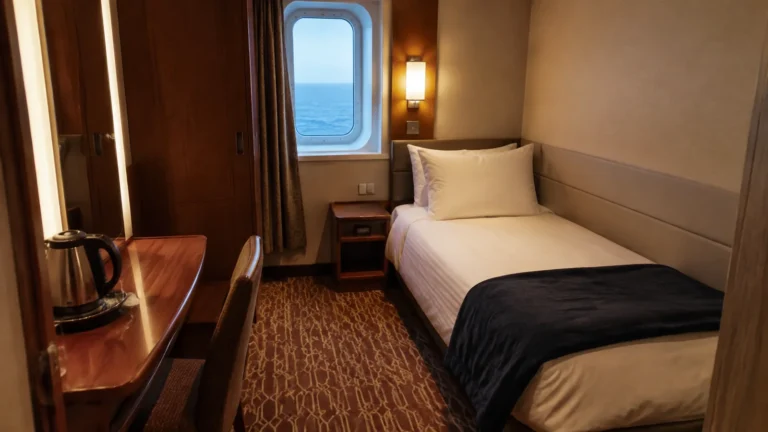
Queen Mary 2 Cabins to Avoid: Exact Rooms & Better Choices
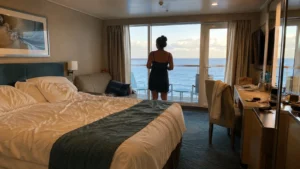
A grand suite sounds like an easy upgrade until the one thing you wanted was a balcony and it does not have one.
On Queen Mary 2, I’d settle these room numbers and view differences before spending more on a name that promises a different vacation from the one I have in mind.
Queen Mary 2 cabins to compare first
- 10001 and 10002: the forward Royal Suites on Deck 10 have no private balcony.
- 8050 and 8052: examples of the Deck 8 balconies with lifeboat-obstructed views, worth reconsidering for scenery-focused trips.
- 5114 and 5118: Atrium View Inside rooms looking into the Grand Lobby, not oceanview accommodation.
- BU, BV, BY and BZ sheltered balconies: low-deck outdoor spaces with hull-framed openings, a different experience from an open glass-front balcony.
- Aft Deck 6 accommodation: compare the Deck 7 dining and promenade areas above, rather than assume the Queens Room ballroom or G32 nightclub is overhead.
My first comparison is a central Deck 5 room when sheltered outdoor space suits the trip, or a higher clear-view balcony when an open outlook matters more. A fixed view or balcony limitation is different from a nearby venue that may or may not create audible noise.
Use the sailing-specific plans linked from the Queen Mary 2 page. Cunard provides different configurations for different departure periods, and a future refit diagram should not decide the features of an earlier room assignment.
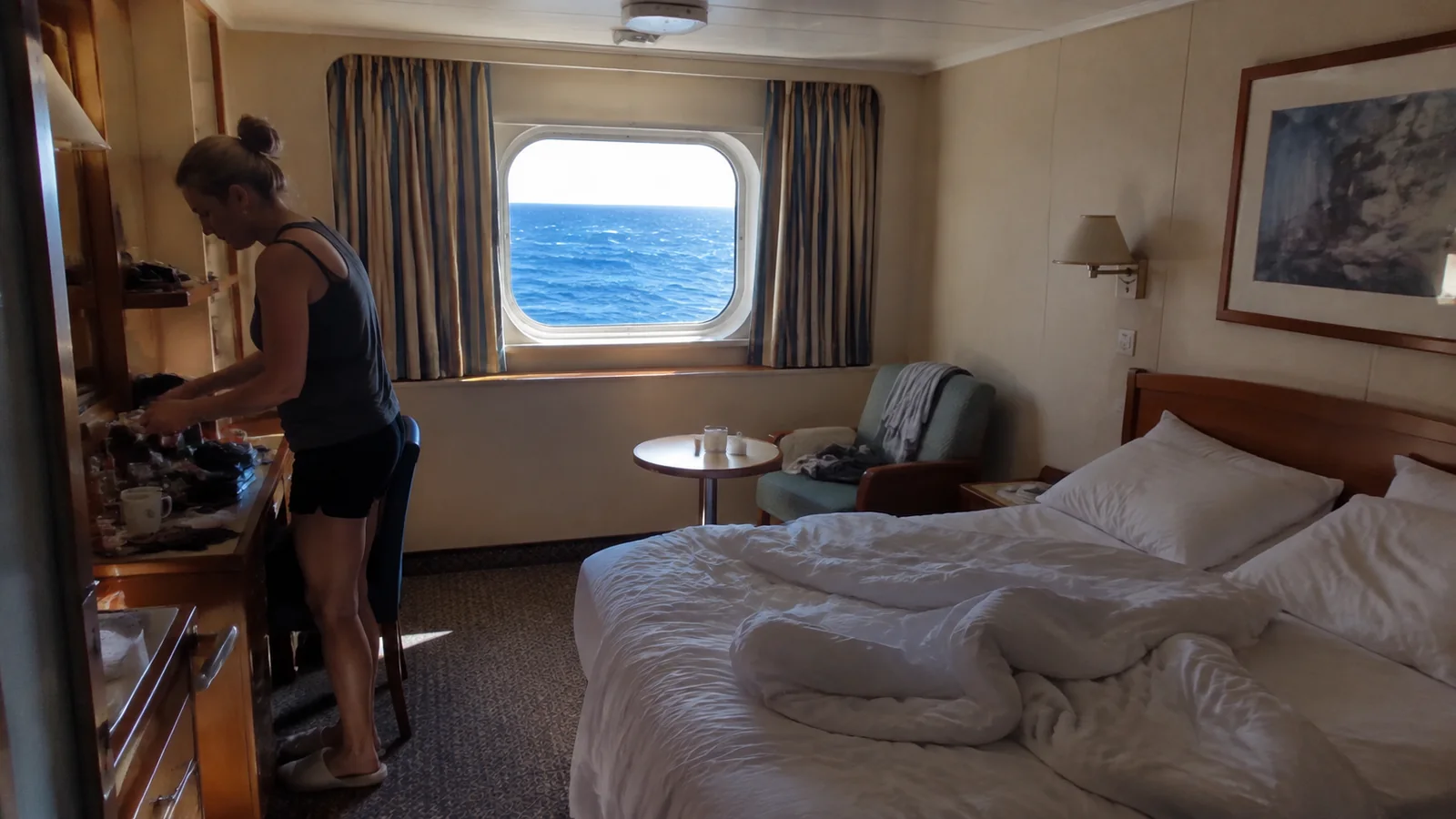
10001 and 10002: Royal Suites without private balconies
These Q3 Royal Suites occupy the forward end of Deck 10. They offer a premium indoor experience, but no private balcony to step onto with your morning coffee.
Choose one for its interior and confirmed suite benefits, not as an automatic improvement over an ordinary balcony room. More living space does not replace outdoor access when that is your favorite part of cruising.
The Cunard accommodation plan explicitly marks Royal Suites as having no balcony. That is a permanent feature to understand before an attractive offer encourages you to focus only on the suite tier.
My alternative: another suitable suite with a balcony confirmed against the exact number, or a well-positioned balcony stateroom when outdoor time matters more than suite space. Keep the Royal Suite on the shortlist only when its actual features are what I want.
The forward position also deserves a separate decision about movement and walking distance. Neither its name nor its large interior makes the room a more central location.
8050 and 8052: lifeboats are part of the Deck 8 view
These Deck 8 balconies are examples in the lifeboat-obstructed accommodation. Not pay nearly the same fare as a confirmed clearer-view room when the balcony is meant for long afternoons watching the ocean.
The useful photograph includes the chair-height view, railing and boat or equipment together. A shot taken standing close to the rail can show an attractive horizon while hiding the foreground you see during normal use.
DB, DC and DF are the obstructed-view balcony grades to recognize on the plan. Their different locations do not make every room’s outlook identical, so I’d compare the particular number rather than buy a percentage guessed from someone else’s cabin.
My alternative: a confirmed clear-view balcony when open sea-watching is the goal. For a traveler who mainly wants fresh air and plans to use public decks for scenic moments, an honestly priced obstruction may be perfectly acceptable.
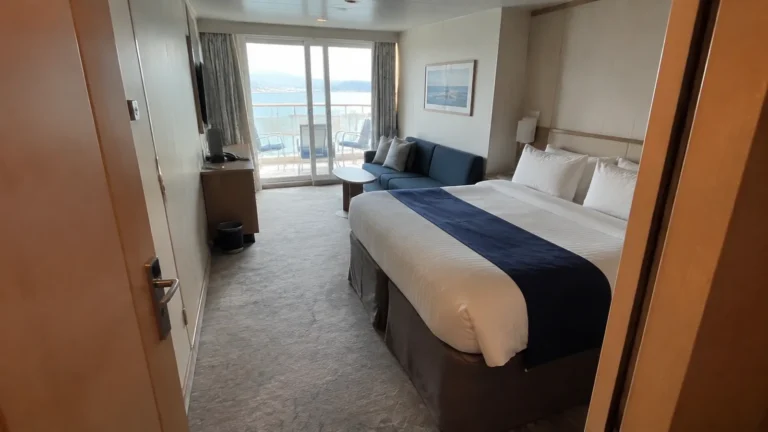
A large window or balcony door is not proof of an unobstructed view beyond it. Keep the physical outlook attached to the room price instead of allowing the standard cabin photograph to set an expectation the location cannot meet.
5114 and 5118: an atrium window is not an ocean window
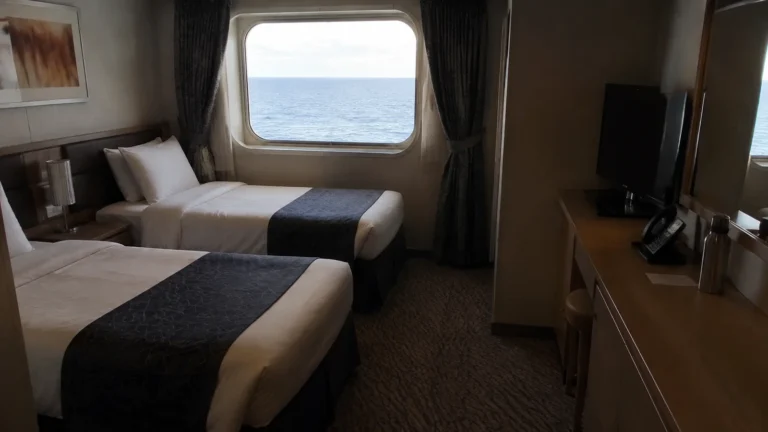
These HB Atrium View Inside rooms look into the Grand Lobby area. Choose one for that interior view, not as a way to obtain ocean daylight at an inside-cabin price.
The window can make the room feel different from a conventional interior without giving you a sea-facing outlook. It also relates to a shared public space rather than a private stretch of ocean.
Be comfortable using the curtains when privacy matters and compare how much I expect to enjoy the atrium view. If the window will stay covered for most of the trip, an ordinary interior may offer equally useful accommodation for less.
My alternative: a conventional interior for a dark retreat, or a true oceanview when daylight is the important upgrade. Moving to another Atrium View room does not change the direction the window faces.
The numbered QM2 diagrams distinguish the inward-facing rooms from the outside accommodation. A window symbol is only useful once you know what is on its other side.
BU, BV, BY and BZ: sheltered balconies are a deliberate design choice
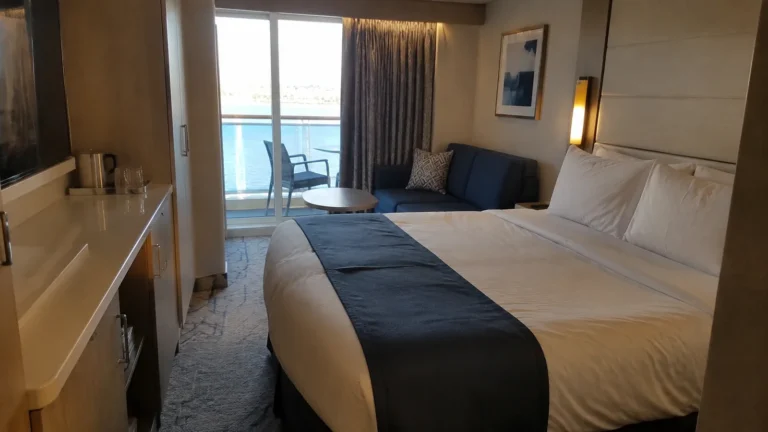
These sheltered-balcony grades occupy Decks 4, 5 and 6. Their outdoor areas sit within hull-framed openings rather than providing the same open glass-front setting as the higher balconies.
I can see the appeal of that protected space on a breezy crossing. Be less enthusiastic when my ideal afternoon means sitting low in a chair with as much unobstructed water in sight as possible.
The lower solid section can affect the seated outlook, while standing near the opening gives a different perspective. A sheltered balcony is not the same as a lifeboat-obstructed balcony, even though both deserve a careful view comparison.
My alternative: a confirmed glass-front balcony higher in the ship when a more open panorama is the priority. Keep a sheltered Deck 5 room when its outdoor protection, lower position and residential neighbors are the features I value.
A good balcony is the one whose usable space matches your plans, not automatically the one with the most open sky. Decide whether shelter or the chair-height view matters more before choosing between the categories.

Deck 6 aft: dining and promenade activity, not a nightclub overhead
Deck 7 contains Kings Court, the Grill restaurants aft and the outdoor promenade around the ship. A Deck 6 room should be compared with whichever of those spaces actually occupies its ceiling.
Consider restaurant preparation or furniture movement beneath dining areas, and footsteps beneath the promenade. Neither is the same noise mechanism as a late-night dance club.
The Queens Room ballroom and G32 nightclub are aft on Deck 3. They belong in a different location assessment from the Princess Grill and Queens Grill restaurants on Deck 7.
My alternative: a suitable Deck 5 cabin with accommodation above when a residential ceiling matters more than immediate promenade access. Not move rooms to escape a nightclub that is not actually overhead.
My floor-plan guide explains how to align the elevator banks across these long diagrams. Similar venue names are not a substitute for following the actual room position.
Deck 4 aft and the upper pool-area rooms need different comparisons
Aft Deck 4 accommodation is where I’d examine the relationship to the Deck 3 ballroom and nightclub below. For an early bedtime, I’d prefer accommodation beneath the room when suitable alternatives are available.
At the other end of the selection, Deck 12 rooms near the Pavilion Pool and Bar have a same-deck public-area transition to consider. High does not automatically mean secluded, just as low does not automatically mean quiet.
Choose the upper location for its actual room features and useful route, not as a universal upgrade from a lower residential cabin. The forward position also matters when movement sensitivity or walking endurance is a priority.
Deck 13 has its own mix of accommodation, laundry and outdoor facilities, which can vary with the sailing’s configuration. Use the right plan before transferring a numbered room recommendation from a different departure period.
Grill dining and suite layouts should be priced separately
Cunard’s accommodation tier shapes your dining experience as well as your room. Decide whether those dining benefits matter before letting a Grill offer outweigh a balcony or location I already prefer.
The Q2 group includes different suite configurations, including single-level accommodation and duplex layouts. Internal stairs and bedroom separation should be confirmed for the actual room rather than assumed from a broad category description.
The Cunard accommodation guide helps distinguish the tiers. My suite comparison guide helps weigh useful space and benefits against features you may not use.
Rather keep the room that works for our daily routine than move into a grander name with an unwanted staircase or no balcony. An upgrade should improve the vacation you are planning, not just the reservation’s category.
Beds, laundrettes and the route you will use every day
Confirm any extra bed and conversion requirements before choosing a room for several guests. A daytime photograph with the sofa in place does not show how comfortably everyone moves around once it becomes a bed.
Nearby laundry can be especially useful on a longer voyage, but I’d choose several doors away from its entrance when otherwise equal rooms are available. The same principle applies to elevators: a short turn from the lobby often offers a good balance.
Arrange necessary bathroom and mobility-device features through Cunard’s accessibility team. A room with equipment space should not be assumed to provide every accessible bathroom feature the traveler requires.
Preserve a usable room and manageable walking route before moving to a remote cabin for theoretical quiet. A suitably equipped lower room can be a better choice than a larger suite that does not meet the actual needs of the guests.
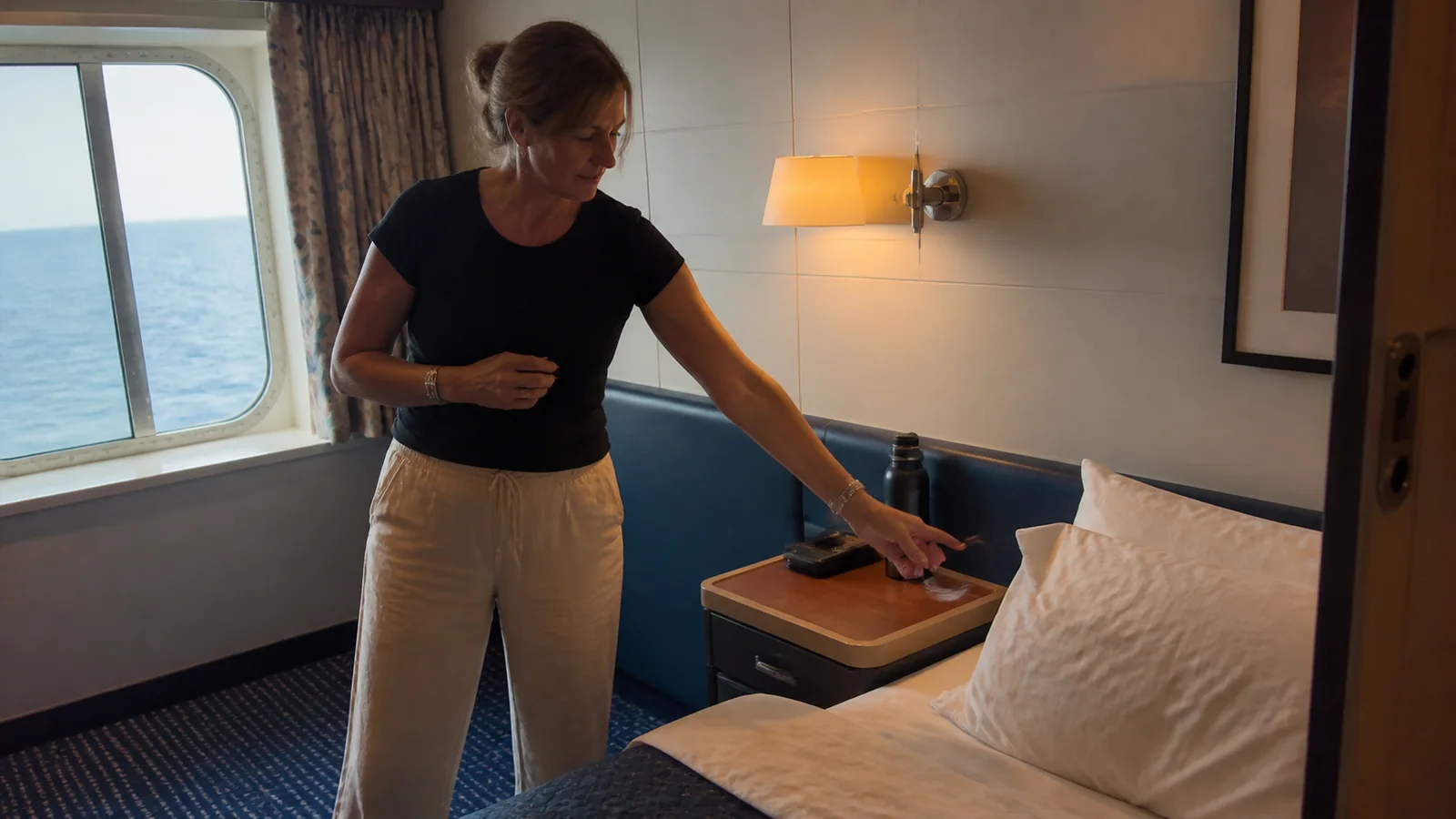
The Queen Mary 2 cabin that makes the most sense
Compare a central Deck 5 sheltered balcony with a higher clear-view balcony, then choose according to how I want to spend time outside. Protect a residential ceiling, suitable beds and a useful elevator route before paying for dining status or extra interior space.
A guarantee only works when its possible windows, balconies and layouts are all acceptable. My cabin-selection checklist keeps those fixed features ahead of an upgrade that may remove the very benefit you wanted.