Norwegian Bliss Cabins to Avoid: Rooms & Better Picks
I am all for breakfast close to my Norwegian Bliss cabin, just not so close that someone else’s chair becomes my alarm clock.
These are the specific rooms and layout compromises I’d compare before choosing between a convenient location and a bedroom that better suits the way I travel.
Norwegian Bliss cabins to check first
- 15120 and 15122: forward Deck 15 examples beneath Garden Café, worth reconsidering if sleeping through breakfast matters.
- 15200 and 15202: port-side Deck 15 examples beneath the children’s water-play surroundings, a different concern from buffet setup.
- 15248 and 15250: aft port-side examples to scrutinize against the fitness-center footprint above.
- 9790 and 9792: starboard Deck 9 examples in the area over The Cavern Club, where evening music is the relevant downstairs activity.
- 13106: a wheelchair-accessible Haven forward penthouse without a separate bedroom, not the same layout as the standard category illustration.
Begin with a non-connecting midship room on Deck 11 or 12, with accommodation above and below, then compare Deck 10 or 14 when the fare or route is better. The noise cautions identify public-space neighbors, not a guarantee of disturbance in every room.
Keep the official Bliss plans handy for the specific room offered. Match the elevator banks when comparing decks, because the drawings are not always displayed at the same scale.
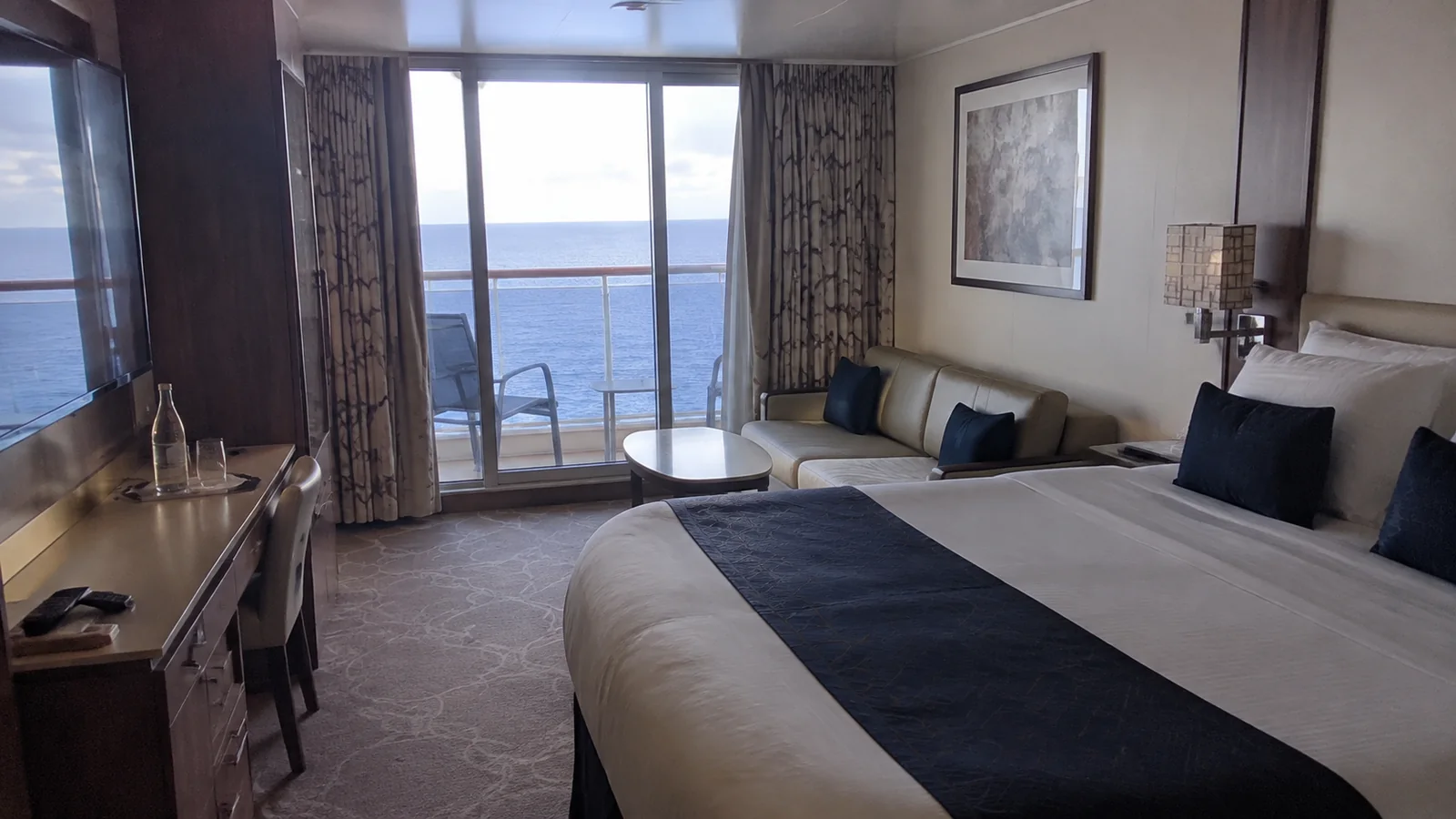
Deck 15 cabins below Deck 16 public spaces
Deck 15 contains cabins from the forward area near the Observation Lounge through the aft end of the ship. Deck 16 above includes the Garden Café, open-air café seating, bars, sun decks, pools, the Kids’ Aqua Park, fitness center, salon, and spa.
That makes Deck 15 the first place I’d examine if quiet ceilings are a priority. Morning buffet preparation, deck-chair movement, footsteps, workouts, or daytime pool activity are possible, but the type and timing depend on the exact footprint above your room.
Do not label the whole deck noisy. For example, a cabin below a low-traffic treatment area presents a different risk from one below buffet seating, and the official plan does not publish the behind-the-scenes work schedule.
15120 and 15122: I’d compare these forward rooms with Garden Café overhead. They make more sense for someone who heads to breakfast early than for a traveler hoping to sleep through the first round of setup and clearing.
15200 and 15202: these port-side examples need a separate look at the children’s water-play surroundings. Afternoon activity and deck movement are the concern here, rather than the same breakfast routine as the forward rooms.
15248 and 15250: farther aft on the port side, I’d scrutinize the fitness-center relationship. A workout space is a different ceiling from the salon on the other side or a treatment room farther back, so I’d not copy one warning across both sides of the ship.
Better pick: choose a comparable Deck 14 cabin with guest rooms immediately above, or move to Deck 11 or 12 when a more central location suits you. The sensible upgrade for a light sleeper is the residential buffer, not the higher deck number.
If you sleep early, travel with a toddler, or wake at the smallest thump, a cabin on Decks 10 through 14 with cabins directly above and below is the simpler bet. If you want quick access to food and outdoor decks, Deck 15’s location may be worth the modest risk.
Deck 9 cabins over busy parts of Deck 8
9790 and 9792 are starboard examples I’d scrutinize in the area over The Cavern Club. If I wanted to be asleep while the live music continued downstairs, I’d choose a room with bedrooms below instead.
The opposite side does not have the same venue arrangement: The Cellars is port-side, while The District Brew House sits farther forward opposite Food Republic. Farther aft, Cagney’s brings a dining-and-clearing consideration rather than the same live-music concern.
Not use 9180 or 9780 as a blanket boundary promising that everything forward has cabins underneath. The forward public-room transition and the venue footprints need their own alignment, especially when comparing drawings at different scales.
Better pick: a checked midship room on Deck 10 or 11 can retain a manageable route to The Waterfront while adding accommodation between your bedroom and the Deck 8 venues. That is where I’d spend a modest fare difference for earlier nights.
Open Decks 8 and 9 side by side and trace your cabin straight down. If the venue name matters to you, ask Norwegian or your travel advisor to confirm the alignment rather than guessing from a compressed image.
Deck 9 can still be wonderfully convenient for dining and evening entertainment. A night owl may happily trade a small noise possibility for fewer elevator rides, while an early sleeper may prefer the residential buffer of Decks 10 through 14.
Deck 5 cabins beside the youth area
Deck 5 has a forward cabin section and a large youth-program area farther aft. Norwegian lists Splash Academy, Entourage, and Guppies on this deck, so the nearby elevator lobby and shared approach can attract families at opening and pickup times.
The cabins are not inside the clubs, and proximity does not prove constant noise. Still, travelers seeking an adults-only-feeling corridor may prefer a residential deck away from youth facilities.
Families may see the same position as a practical win. A short walk back after evening pickup can be far more valuable than a perfectly hushed hallway at every hour.
Far-forward cabins if motion bothers you
A ship can pitch at the bow in rough water, and movement generally feels more pronounced farther from its center. That makes the most forward cabins on any accommodation deck a cautious skip for travelers who already know they are sensitive.
This is a physics-based possibility, not a flaw unique to Bliss and not a forecast for your sailing. Route, wind, swell, speed, direction, and stabilization all affect what you feel.
Forward rooms can also place you close to the Observation Lounge or offer appealing views in some categories. If scenery and quiet corridor traffic matter more than motion, they can be an excellent fit.
For the gentlest practical choice, start near the ship’s center on a lower cabin deck and avoid a room directly beside a busy public zone. Anyone worried about seasickness should discuss prevention with a qualified medical professional before sailing.
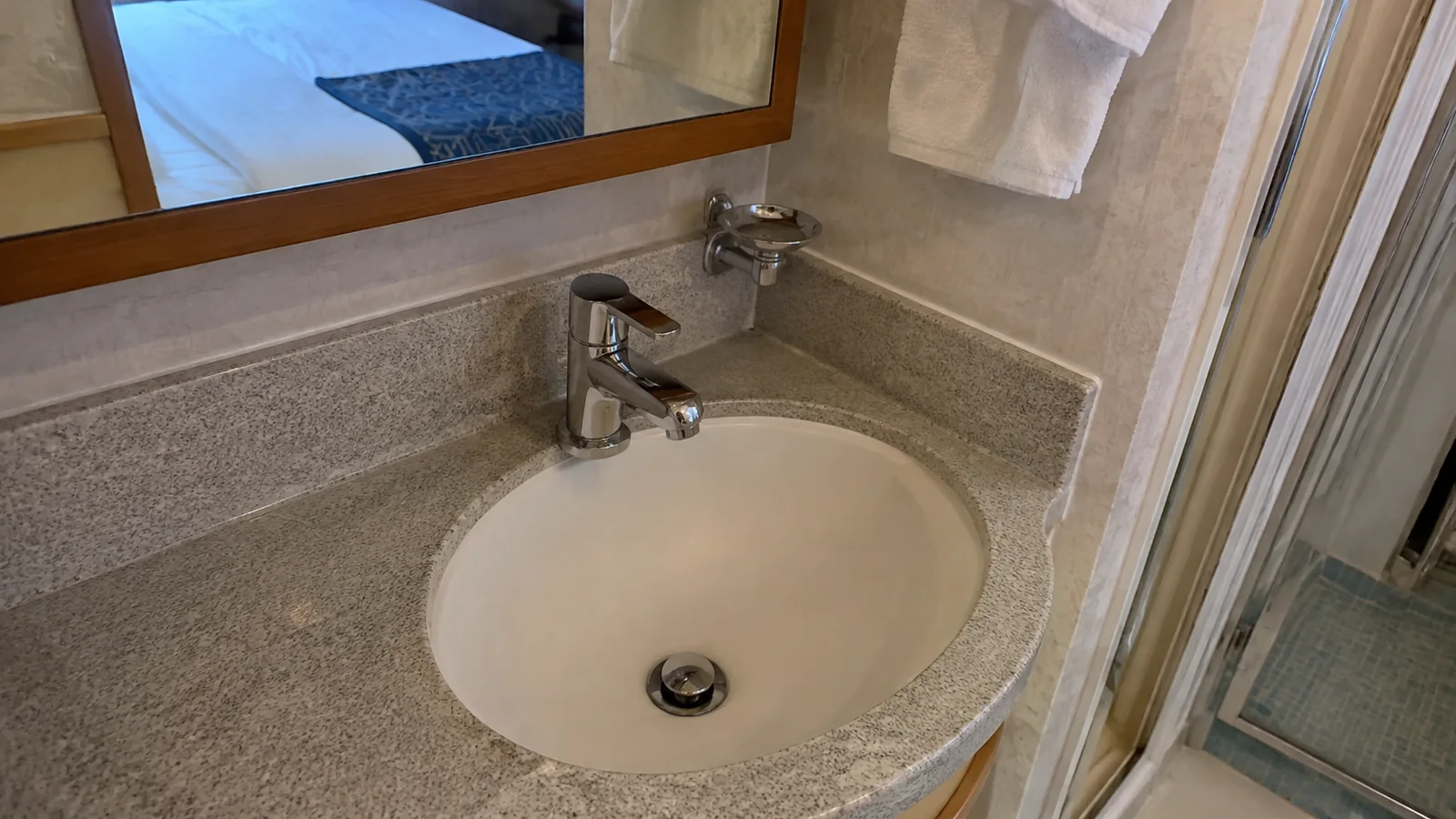
Far-aft and low cabins if vibration wakes you
Some travelers notice vibration near the stern, particularly during docking maneuvers, acceleration, or certain sea conditions. Lower cabins near the bow may likewise hear or feel operational activity when thrusters or mooring equipment are used.
Those effects can be brief and are not guaranteed in a named room. Avoid reviews that turn one sailing’s weather, maintenance issue, or docking schedule into a permanent verdict on an entire section.
Aft-facing balconies and suites remain popular because of their wake views and outdoor space. Choose them for the experience if you tolerate some possible movement, not because someone online promised silence.
Connecting cabins when you are not traveling together
The official deck key marks connecting cabins, which have an interior door linking two rooms. The door stays locked when the rooms are booked separately, but some guests find that a door transmits more voices or television sound than a solid wall.
That is a reasonable comfort preference, not a security warning. If you do not need the connection and are a very light sleeper, pick an otherwise comparable room without the connecting symbol.
For families, the same feature can solve a real problem by creating shared access without squeezing everyone into one cabin. Confirm occupancy, bedding, and whether both specific cabins connect before booking.
Cabins near elevators, stairs, and crew doors
Elevators themselves are not automatically loud, and a nearby cabin can save a surprising amount of walking on a large ship. The bigger variable is people talking while they wait, especially after shows and during port mornings.
A room opening directly toward a lobby or stair approach therefore deserves a little thought if hallway voices wake you. Moving several doors down often preserves convenience while reducing passing traffic.
Blank white areas and unmarked doors on a deck plan should not be treated as harmless storage. They may be crew workspaces, mechanical areas, or service routes, so ask what an unidentified space is before choosing the neighboring cabin.
Studios are smart for some solo travelers, not all
Norwegian’s Bliss stateroom overview describes Studios as solo-focused rooms with a full-size bed, separate bath area, and access to the private Studio Lounge. They avoid the traditional single supplement, but they are compact interior cabins.
A Studio may disappoint someone who needs natural light, a balcony, generous floor space, or room for a mobility device. For a solo traveler who values a social lounge and spends little waking time in the cabin, it can be one of the ship’s cleverest choices.
Guarantee cabins when location matters
A lower fare is less attractive if it removes the one choice that protects your sleep. Norwegian’s Guarantee stateroom explanation says the booking secures a category, not a deck, location, or specific bed arrangement, and assignment can happen as late as sailing day.
That is a fair trade for flexible travelers who prioritize price. It is a poor match if you must be midship, close to another cabin, away from a public deck, or in a particular accessible configuration.
Read the current rate terms before paying because promotional names and conditions can change. Saving money is fun only when you can genuinely accept every room the contract allows Norwegian to assign.
Accessible cabins are not an upgrade shortcut
Accessible cabins can include essential clearance, bathroom, alarm, and communication features that are unavailable in standard rooms. They are limited accommodations for guests who need them, not a strategy for getting extra floor space.
Norwegian’s accessible cruising guidance directs guests to its Access Desk and Accessibility and Medical Questionnaire. The line advises advance notice of at least 45 days for many needs and 90 days for interpreters, although travelers should contact the team as early as practical.
Book an accessible room when someone in your party needs its features, and explain those needs accurately. If you only want a larger cabin, choose and pay for a room designed for that purpose.
Suite 13106: a different Haven bedroom layout
Haven forward-facing penthouse 13106 is wheelchair accessible and does not have a separate bedroom. Not book it from a standard penthouse illustration and expect a door between the sleeping and living areas.
For someone who needs the accessible layout, that distinction is a planning question, not a reason to give up essential access features. Confirm the sleeping arrangement in the Haven room descriptions and discuss suitable alternatives with NCL when bedroom separation is also necessary.
Compare the actual beds and balcony before upgrading
Two balcony cabins in the same broad category can have different deck positions, nearby doors, bed arrangements, occupancy limits, and balcony shapes. The colorful category code is only the beginning of the decision.
Check the small symbols beside the exact room number for connecting doors, capacity, accessible design, and other notes. Then confirm the current square footage and sleeping setup with Norwegian because images and sample floor plans may not show your precise cabin.
If you are still learning the vocabulary, these cruise cabin red flags explain the same location logic across different ships. My practical Norwegian cruise tips can help with the rest of the booking and onboard details.
A simple way to pick a quieter Bliss cabin
First, choose a cabin deck with another cabin deck both above and below, which generally points you toward Decks 10 through 14. Then move toward midship if motion is a concern and several doors away from the nearest elevator lobby if hallway chatter bothers you.
Next, reject any connecting-room symbol you do not need and investigate every blank service space beside the cabin. Finally, verify the bed setup, occupancy, balcony type, and accessibility against the exact room number before the deposit becomes difficult to recover.
Do not chase a mythical perfectly silent cabin. Ships operate around the clock, neighbors vary, and even a well-buffered room can hear an occasional door or announcement.
A small white-noise machine, earplugs, and reasonable expectations belong in the backup plan. These easy cruise cabin ideas add comfort without pretending you can control an entire deck.
My bottom line
For most noise-sensitive travelers, a non-connecting midship cabin on Deck 10, 11, 12, 13, or 14 is the safest starting point on Norwegian Bliss. It places you between residential decks and avoids the clearest public-space adjacencies on Decks 9 and 15.
That does not make Deck 9, Deck 15, the bow, the stern, or a Studio a bad choice. It simply means their benefits come with tradeoffs you should choose knowingly, which is exactly what a good cabin decision should feel like.