Namaqualand Flower Season: A Smart 5-Night Route
Namaqualand’s wildflower season looks effortless in photographs, but a great trip takes patience, sunny weather, and a route that follows current blooms rather than an old blog’s perfect day. This five-night plan gives the flowers room to surprise you without pretending nature accepts reservations.
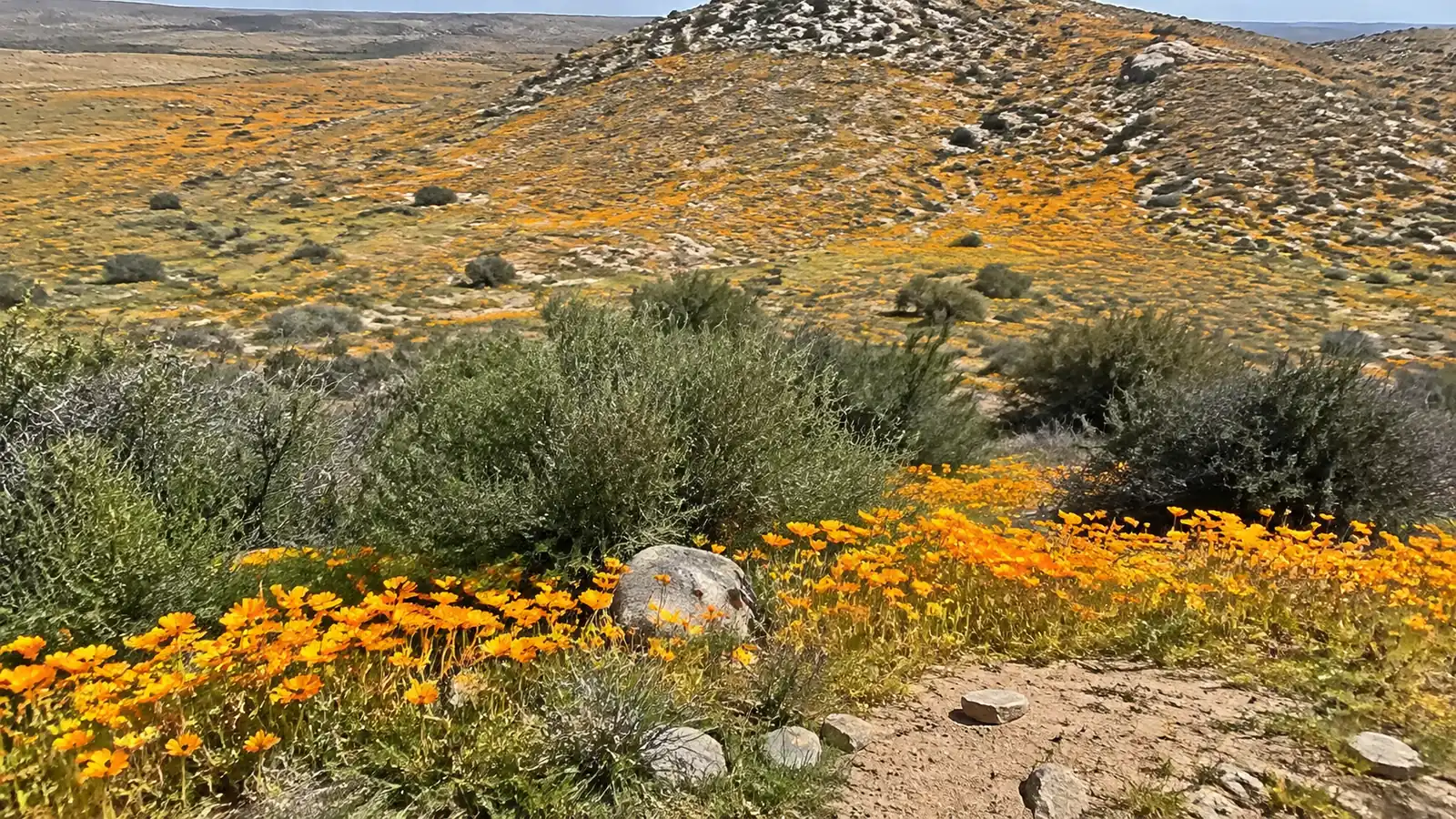
Where is Namaqualand?
Namaqualand spans a vast, arid region of northwestern South Africa, extending into Namibia. Most flower trips focus on South Africa’s Northern Cape and the northern West Coast, using towns such as Nieuwoudtville, Vanrhynsdorp, Kamieskroon, and Springbok as bases.
Northern Cape tourism uses the spelling Namakwa for the district and several official routes, while Namaqua appears in the national park’s name. Namaqualand is the broader geographic and cultural term travelers will see most often.
This is not one fenced field where every flower opens together. Rainfall, temperature, sun, soil, elevation, wind, and species move the best displays from town to town and week to week.
When is Namaqualand flower season?
July through September is the broad season, with August and early September the most popular planning window. In a strong year, some areas begin earlier or continue later, while a difficult rain pattern can leave famous locations patchy.
SANParks describes early August through September as the transformation period in Namaqua National Park. Its recent annual updates often discuss a possible peak from mid-August to mid-September, always subject to weather.
Do not confuse a regional season with a guaranteed bloom date. A field that was orange on August 20 last year may be green, closed, grazed, or finished on the same date this year.
Check fresh flower reports from SANParks, local tourism offices, accommodations, and visitor centers during the week before each drive. My flower-event planning guide makes the same useful distinction between a calendar and a living bloom.
A flexible north-to-south route often follows the season’s broad progression, but it is not a law. Elevation and local rainfall can make two nearby valleys behave like completely different spring calendars.
Why the flowers sometimes stay closed
Many of the most visible daisies open best in warm, direct sunshine and can remain tight on cold, cloudy, or wet days. SANParks has advised flower visitors to favor sunny days around 64°F or warmer during recent seasons.
Late morning through midafternoon is often the sweet spot, commonly around 11 a.m. to 4 p.m. Start earlier for driving and a visitor-center update, but do not panic if the landscape looks sleepy at breakfast.
Keep the sun behind you because many flowers face the light. A route heading generally west in the morning and east later can improve the view, though actual roads and bloom reports should lead the plan.
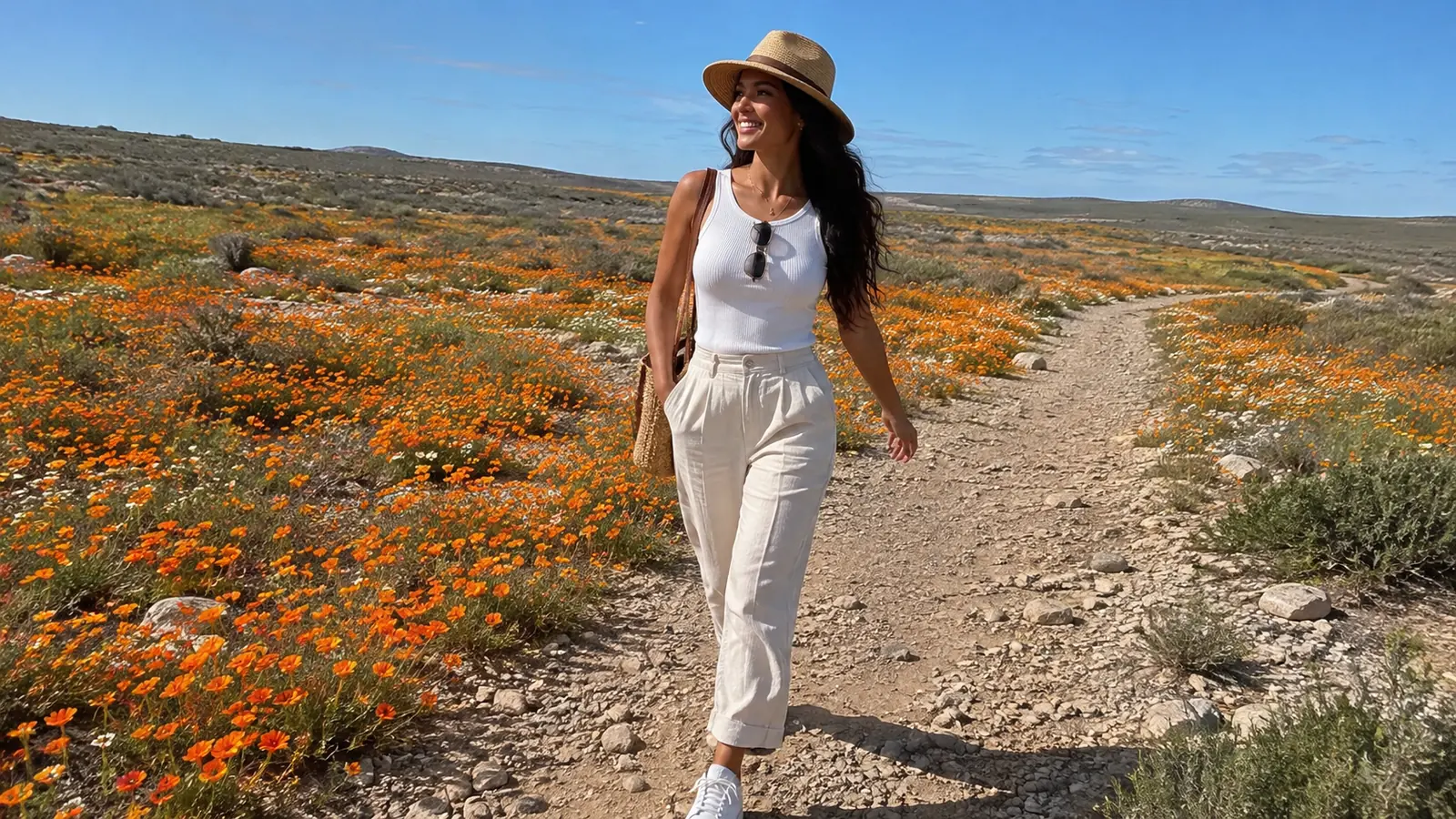
A realistic five-night flower route
Night 1: Vanrhynsdorp or Nieuwoudtville
Drive north from Cape Town and break the journey around Vanrhynsdorp, or continue up the escarpment to Nieuwoudtville if daylight and energy allow. Do not schedule a remote arrival after dark simply to squeeze in another pin on the map.
Nieuwoudtville is known for varied bulbs, renosterveld, nearby farms, and seasonal displays that can differ from the daisy carpets farther north. Local flower routes may cross private land or charge admission, so ask the visitor office what is open that day.
Spend the next morning on two or three recommended sites rather than chasing every marker. Smaller flowers reward getting out of the car and looking closely, not photographing the first orange patch through a windshield.
Nights 2 and 3: Kamieskroon and Namaqua National Park
Kamieskroon is the practical gateway to the Skilpad section of Namaqua National Park. Staying nearby gives you two weather chances and lets you enter after the blooms have had time to open.
SANParks lists a roughly 3-mile circular Skilpad trail through the famous flower landscape and a shorter trail focused on variety. Ask at the office for the current map, road conditions, gate hours, and the day’s strongest areas.
The park is about 307 miles from Cape Town and about 42 miles south of Springbok, according to SANParks. Those distances explain why Namaqualand deserves several nights instead of a heroic day trip.
Day visitors using an ordinary sedan should stay on approved roads. The park’s current visitor guidance says sedans and two-wheel-drive vehicles can use inland areas, but a four-wheel-drive vehicle is needed to see much more of the park.
Nights 4 and 5: Springbok
Springbok is the region’s main service center and a useful base for Goegap Nature Reserve, Nababeep, and route decisions farther north or west. It also provides fuel, groceries, repairs, and medical services that are limited inside the national park.
Goegap can combine wildflowers with desert scenery, succulents, and wildlife, depending on conditions. Confirm gates, road suitability, tours, and current bloom information directly because reserve access can change.
Use one day for the strongest locally reported flower loop and keep the other flexible. If clouds settle over the uplands, a scenic drive, museum, food stop, or coastal outing prevents the vacation from becoming a grumpy stakeout.
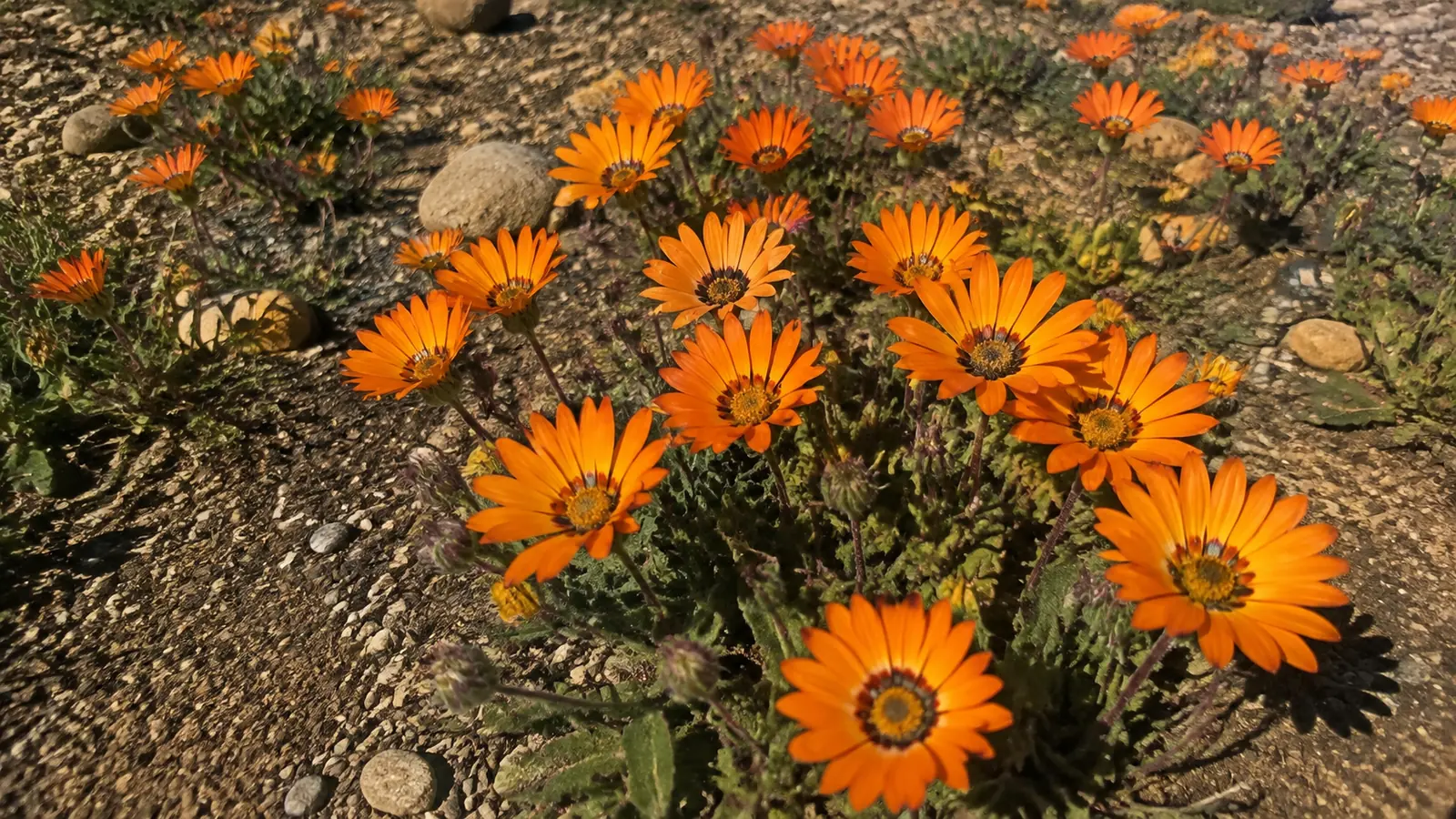
Should you add the Namaqua coast?
The Atlantic coast offers empty-feeling beaches, rocky scenery, shipwreck history, and a striking contrast between succulents and sea. It is a wonderful addition for travelers with more time, the correct vehicle, and realistic comfort expectations.
Do not treat the Skilpad-to-coast route as a casual shortcut. SANParks calls the route to its coastal camp strictly four-wheel drive, estimates four to six hours, and says drivers must collect the route booklet at the office.
The longer Caracal 4×4 route can take six to eight hours, and sections may close after rain. Fuel, recovery capability, water, tires, navigation, and daylight all matter more than the promise of an untouched beach.
Ordinary-car travelers can reach some coastal towns by public roads, depending on current conditions, without attempting a park trail. Ask locally before choosing Hondeklipbaai, Port Nolloth, or another coastal detour.
Driving Namaqualand safely
Distances are long, cellular service can be inconsistent, and livestock or wildlife may enter roads. Fill the tank before remote legs, download offline maps, carry drinking water, and avoid driving after dark.
The U.S. State Department currently lists South Africa at Level 2 due to crime, terrorism, unrest, and kidnapping. Its South Africa travel advisory specifically recommends locked doors and closed windows and warns against driving outside metropolitan areas at night because of crime and road hazards.
Do not leave luggage, camera bags, or phones visible in a parked vehicle. Ask your accommodation about the safest fuel stops, roads, parking, and arrival routine for the current season.
South Africans drive on the left, and rental-car agreements can restrict gravel roads or four-wheel-drive trails. Confirm tire coverage, glass coverage, roadside support, spare-wheel equipment, and every road you plan to use.
Where to stay
Book early for August and September, especially on weekends. Small towns have limited inventory, and the best-located guesthouses can fill long before anyone knows whether that week’s bloom will be exceptional.
Choose refundable reservations when possible and prioritize hosts who actively track flower conditions. A gorgeous room is lovely, but a host who knows which road turned colorful yesterday is practically a member of the expedition.
Northern bases around Springbok work for Goegap and regional services, Kamieskroon serves Namaqua National Park, and Nieuwoudtville adds different habitats in the south. Splitting bases saves backtracking and lets the trip follow the general movement of the season.
SANParks offers limited accommodation and rustic coastal camping inside the park, with facilities varying sharply by location. Read the exact camp description before booking because “inside the park” does not promise a restaurant, fuel, bright lighting, or strong connectivity.
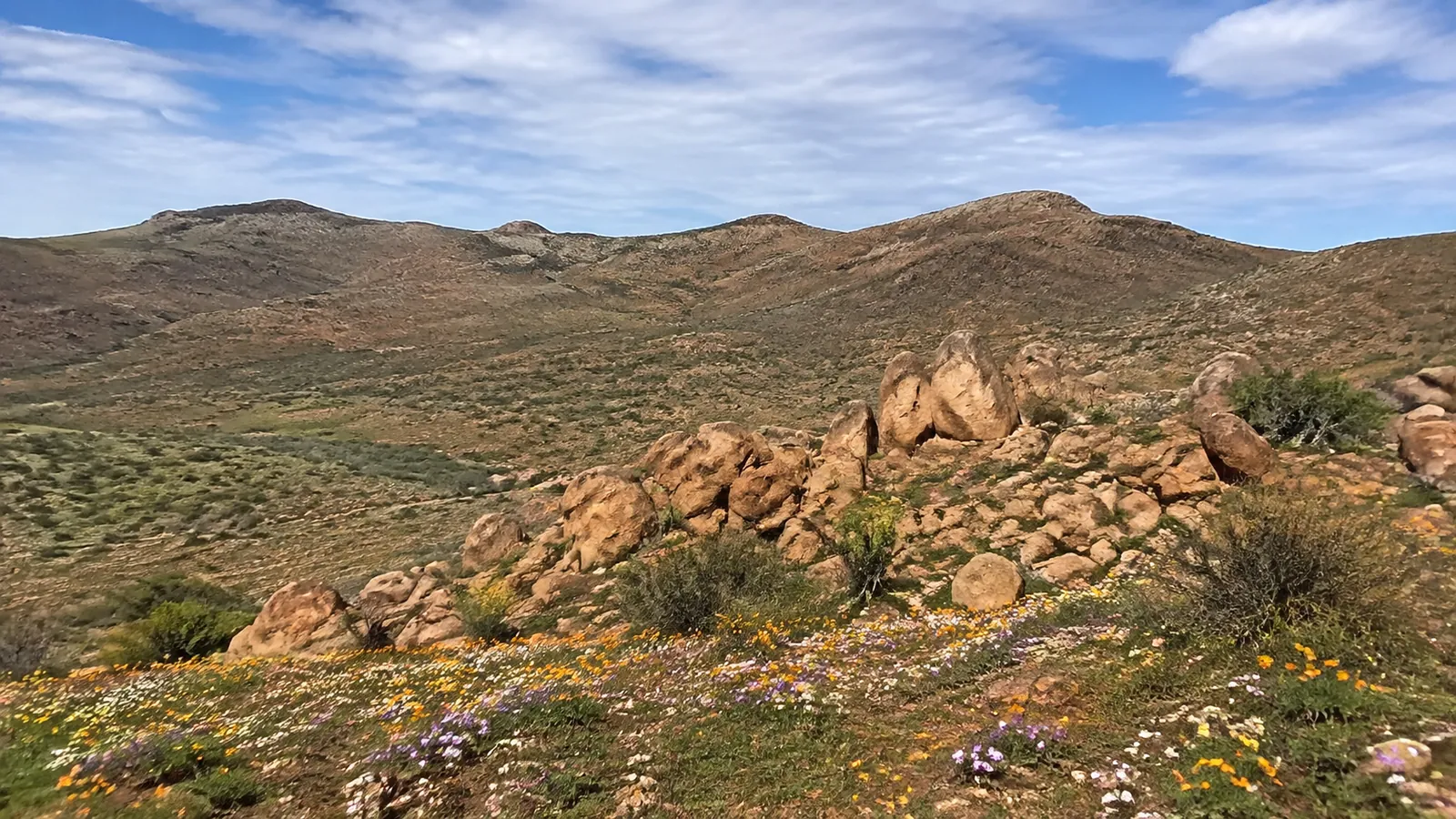
What to pack for Namaqualand
- Sun hat, sunglasses, sunscreen, and a warm wind layer
- Closed walking shoes and long pants for rough vegetation
- Refillable water bottles plus extra vehicle water
- Offline maps, charging cables, and a power bank
- Binoculars and a camera with spare batteries
- Basic first-aid supplies and personal medication
- A headlamp for minimally lit camps
- Snacks and a full-size spare tire for remote routes
Mornings can feel cold, afternoons warm quickly, and the coast can be windy. Layers beat one perfect flower-field outfit, especially when you kneel to study a tiny bloom and discover the ground is damp.
Responsible flower viewing
Stay on signed roads and paths, use established pullouts, and never drive into a field. Do not pick flowers, collect seeds, move rocks, or cross private fences without permission.
SANParks explicitly states that removing flowers, plants, or other natural material is an offense. A close-up photo is a much better souvenir because it leaves the subject alive for pollinators and the next visitor.
Support local guides, guesthouses, cafes, fuel stations, and farm stalls rather than treating small towns as scenery dispensers. Namaqualand is a lived cultural landscape, not a giant seasonal set.
Climate variability shapes these displays, and long-term environmental change raises bigger questions than whether one holiday gets perfect daisies. My guide to countries vulnerable to climate change provides useful context without blaming one quiet bloom year on a single cause.
Can you combine Namaqualand with Cape Town?
Yes, and Cape Town is the most common gateway for a road trip. Allow at least five nights north of the city, plus separate Cape Town time, rather than treating the drive as a scenic afternoon.
Travelers continuing along the coast can use my Africa cruise route comparison to understand where Cape Town fits into larger sea itineraries. A cruise call cannot replace a multi-day inland flower drive during the short season.
My honest Namaqualand advice
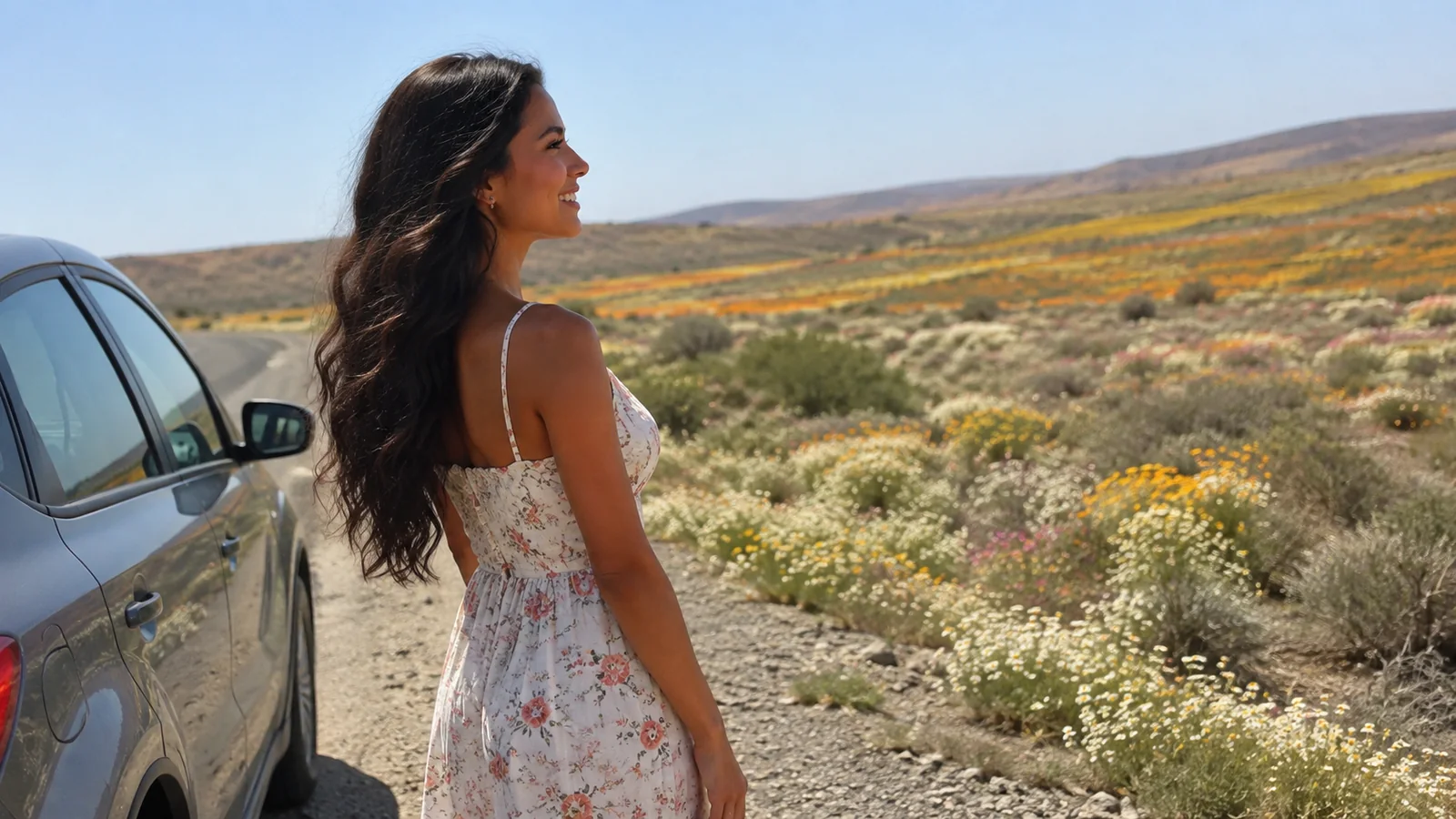
Plan for August or early September, then let fresh reports and sunshine choose the day’s exact road. Give yourself multiple bases, daylight driving, a suitable vehicle, and at least one non-flower reason to enjoy the region.
The famous carpets are thrilling, but the tiny blooms, granite hills, succulent diversity, quiet towns, and Atlantic edge make the trip whole. Go looking for a living landscape rather than one copied photograph, and Namaqualand has many more ways to reward you.