Africa Cruises: Choose the Right Region, Route and Season
An Africa cruise is not one route with interchangeable zebras. Southern African loops, Indian Ocean islands, West African expeditions, Mediterranean calls, and Nile river journeys differ in season, ship style, port infrastructure, visa rules, and how much wildlife can honestly fit into a day ashore.
First, choose which Africa cruise you mean
- Southern Africa: Best for Cape Town, Namibia, South African coastal cities, and selected safari access.
- Durban and Mozambique: Best for shorter regional sailings, beaches, and warm-water itineraries.
- Indian Ocean: Best for Mauritius, Réunion, Seychelles, Madagascar, and longer island routes.
- West Africa: Best for small-ship expedition landings, culture, and rare ports on longer voyages.
- North Africa: Best as part of a Mediterranean or Canary Islands itinerary.
- Nile River: Best for an archaeology-centered Egypt trip with a ship, hotels, flights, and touring combined.
Do not start with a continent-wide attraction list. Start with the exact itinerary, mark every sea day and overnight, then investigate what each port can support within the available hours.
Southern Africa: the easiest ocean-cruise starting point
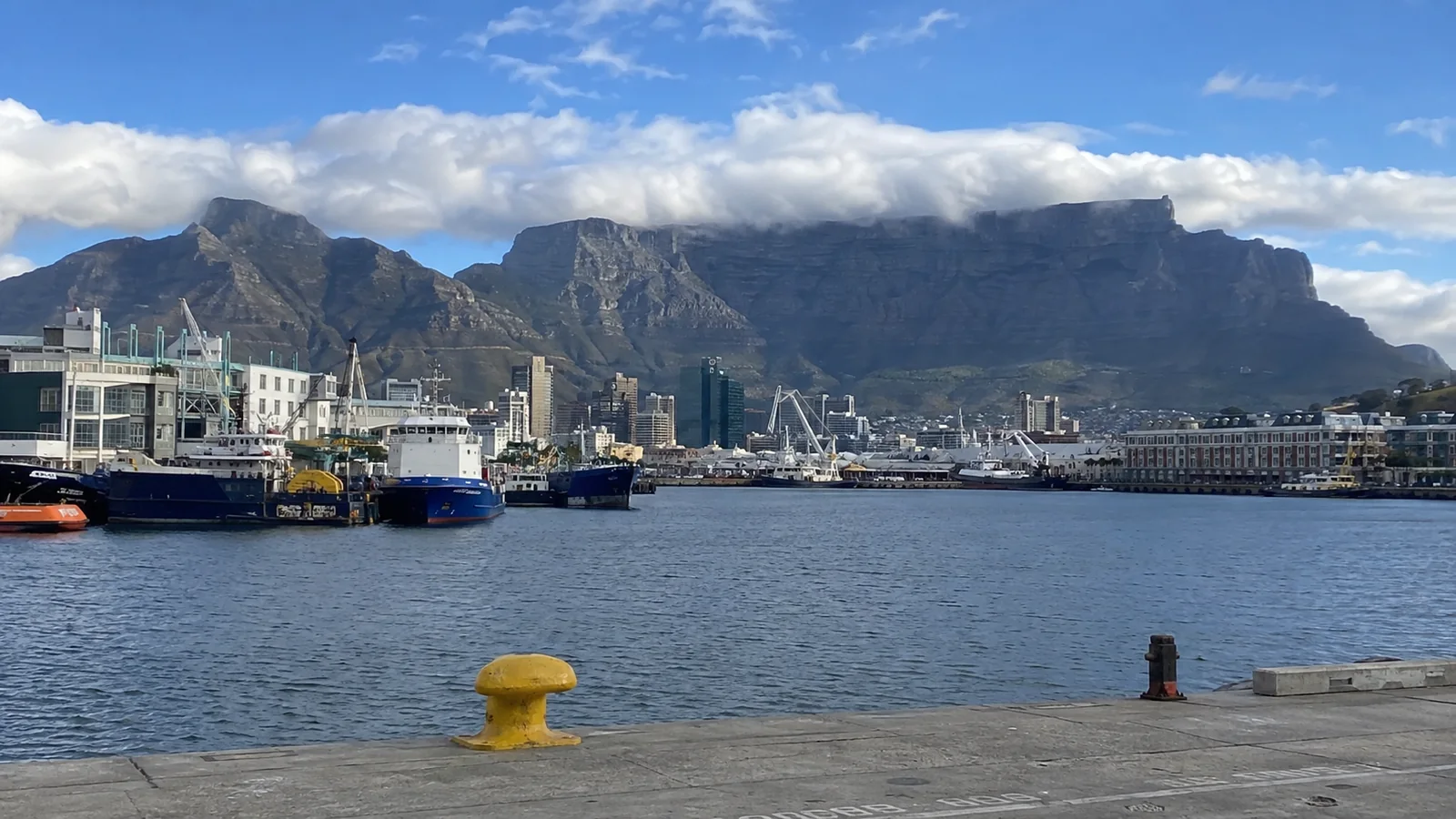
Cape Town is the region’s strongest embarkation city because it supports several pre-cruise days and connects to South African and Namibian routes. Typical calls may include Mossel Bay, Gqeberha, Durban, Richards Bay, Lüderitz, and Walvis Bay, but every sailing uses a different combination.
Choose this region for city culture, coast, wine country, desert landscapes, marine wildlife, and safari possibilities. The current MSC South Africa program shows both domestic coast options and longer Indian Ocean connections, while luxury and world-cruise lines offer less frequent patterns.
Cape Town deserves at least two hotel nights because wind can disrupt exposed attractions and arrival delays can threaten a same-day embarkation. Build Table Mountain, Robben Island, Cape Peninsula, museums, or wine country around live conditions rather than promising all five between breakfast and dinner.
South African ports are not equivalent safari gates
Richards Bay and Durban can connect to KwaZulu-Natal wildlife areas, while Gqeberha is associated with access toward Addo Elephant National Park and private reserves. Drive time, gate hours, port clearance, animal movement, and ship schedule determine whether any particular safari works.
Cape Town excursions marketed as “Big Five” often use private reserves reached by a substantial drive, not Kruger National Park. Check the reserve name, vehicle time, conservation model, group size, meal plan, and actual game-drive duration before deciding the label earns the price.
Namibia: desert and coast, not a generic safari day
Walvis Bay is a gateway to dunes, lagoons, marine trips, desert landscapes, and longer inland touring. Lüderitz offers a smaller port experience with colonial-era architecture, coast, and access toward the abandoned mining settlement of Kolmanskop when current tours and permits align.
Namibia pairs naturally with Cape Town because the route follows the Atlantic coast, but port days can involve wind, sand, cool coastal air, and long drives. Pack layers and protect cameras from fine dust, which is very talented at discovering zippers you considered closed.
Durban and Mozambique: shorter, warmer regional cruises
Durban supports round-trip cruises toward Mozambique as well as longer voyages toward Mauritius and Réunion. The current MSC route family includes Portuguese Island and other regional calls, though ship, port, and season vary by year.
These sailings fit travelers who want a shorter cruise from southern Africa or a beach-forward break. They are less suitable for someone expecting a broad survey of the continent, since a compact round trip may visit one country and a private-island-style destination.
Small-boat landings, wind, swell, and local operating conditions can change an island day. Check whether the stop is docked or tendered, what shade and facilities exist, and whether accessibility needs can be supported from ship to shore.
Indian Ocean islands: beautiful and logistically complex
Mauritius, Réunion, Seychelles, Madagascar, and Zanzibar can appear on Indian Ocean, repositioning, or expedition itineraries. These routes combine beaches, volcanic landscapes, forests, reefs, wildlife, and multicultural ports, but long distances create more sea days and fewer interchangeable departure dates.
Choose the itinerary for its least replaceable ports, then inspect how long the ship actually stays. A six-hour call labeled “Madagascar” is not the same trip as an expedition voyage with multiple landings and guides.
Tropical weather and cyclone risk vary by basin, island, and month, so use current meteorological and cruise-line updates near departure. Travel insurance needs meaningful trip-delay, missed-connection, medical, and evacuation coverage rather than a cheerful policy title.
Zanzibar is not a quick doorway to the Serengeti
A Zanzibar cruise call is best used for Stone Town, a beach, spice-country touring, or a carefully chosen island activity. The Serengeti requires flights, ground transport, park logistics, and multiple days, so save it for a pre- or post-cruise extension.
Use the route logic in this Serengeti planning guide before attaching a safari to an Indian Ocean cruise. The same warning applies to Kilimanjaro, which is a full expedition rather than a jaunty shore excursion.
West Africa: best for experienced, flexible travelers
West African calls often appear on expedition ships, long repositioning voyages, or world cruises rather than weekly mass-market loops. Dakar is a frequent gateway, with possible routes toward Cape Verde, the Bissagos Islands, Ghana, The Gambia, and ports farther south.
PONANT’s current Bissagos expedition schedule illustrates the small-ship model: round trips from Dakar with expedition activities and island calls. Other itineraries may travel the Atlantic coast toward Namibia and South Africa, creating a very different mix of sea days and formal ports.
Choose West Africa for culture, history, birdlife, coastal landscapes, and communities not served by frequent cruise calls. Do not choose it because a generic brochure promises pristine places while ignoring heat, humidity, landing conditions, limited infrastructure, and the need for culturally respectful guided visits.
North Africa: usually part of another regional route
Morocco, Tunisia, and Egypt’s Mediterranean or Red Sea ports often sit within broader Europe, Canary Islands, Middle East, or Suez itineraries. This can be efficient for travelers who want one or two African calls without the time commitment of sailing far down the continent.
Long inland excursions to Marrakech, Luxor, Cairo, or major archaeological sites need special scrutiny. Compare drive time with time at the destination, restroom and meal arrangements, security procedures, accessibility, and the return guarantee.
Nile cruises are a separate kind of trip
A Nile river cruise typically sails between Luxor and Aswan as one component of a larger Egypt itinerary. Packages may include Cairo hotels, domestic flights, guided temple visits, transfers, and the ship, while lower fares may cover fewer pieces.
Viking’s current Africa and Middle East program explicitly separates Nile river voyages from ocean routes along Africa’s coasts. Uniworld, AmaWaterways, and Egyptian operators offer other ship sizes, cabin styles, tour pacing, and inclusion models.
Pick the season by region and priority
Southern African ocean programs often concentrate around the Southern Hemisphere’s warmer months, while expedition and world-cruise schedules may appear in narrow annual windows. Nile cruises operate across more of the year, but heat can make summer touring demanding.
Wildlife timing is even more specific because rainfall, water, vegetation, migration, and park location all matter. No month guarantees a particular species, dramatic hunt, migration crossing, or camera-ready committee of lions.
- For Cape Town and Namibia: Prioritize route, pre-cruise margin, and wind-flexible days.
- For South African safari access: Choose the reserve and port first, then the date.
- For islands: Check rainfall, cyclone exposure, marine conditions, and tender likelihood.
- For West Africa: Let the specialist ship’s operating season narrow the calendar.
- For the Nile: Balance cooler weather against peak demand and crowding.
Visas and passport rules require a port-by-port audit
Africa has no continent-wide visa, passport-validity, or blank-page rule. Create one row in your private checklist for every country visited, including technical calls and overnight ports, then verify requirements for your nationality with official immigration or embassy sources.
Ask the cruise line which visas it obtains, which it can facilitate onboard, and which remain entirely your responsibility. Get the answer in writing, because “cruise passengers usually do not need one” is not an immigration document.
South Africa also has specific documentation rules for children traveling through its ports of entry. Families should check the current Border Management Authority guidance early, particularly when a child travels with one parent, another adult, or a different surname.
Yellow fever and route-dependent health planning
Some African countries have yellow fever risk, and some require proof of vaccination based on where a traveler has been or transited. The CDC country-by-country yellow fever and malaria tool specifically tells travelers to consider the full itinerary, including relevant airport transfers.
South Africa may require a yellow fever certificate after travel through a risk country even when the cruise ends there. Its Border Management Authority entry guidance is the current official checkpoint, and the route before arrival matters.
See a travel-medicine clinician well before departure for individualized vaccine, malaria, medication, and medical-history advice. Port days can involve mosquitoes, heat, food and water exposure, long drives, dust, altitude, or limited emergency access even when the ship feels comfortably familiar.
Build shore days that can actually return on time
For every excursion, record ship time, local time, clearance, meeting point, road distance, activity time, last tender, and all-aboard. Private tours need a clear contingency plan, emergency contact, and conservative return buffer.
Ship excursions reduce some return risk but do not automatically offer the best group size, wildlife ethics, or value. Independent tours can be excellent when operators are established, permits are valid, and the schedule is designed around that ship call.
Compare the whole fleet and service style with this cruise-line decision framework. First-timers should also work through these first-cruise booking checks before adding visas and multi-country flights to the learning curve.
What to pack for an Africa cruise
Pack breathable layers, a light rain shell, sun protection, closed shoes, a warmer layer for desert or ocean wind, and modest clothing for religious or community visits. Your exact route may need swimwear, binoculars, insect precautions, formalwear, or expedition gear, but no single safari costume unlocks the continent.
Small safari aircraft and expedition craft may impose lower baggage limits than the international flight or cruise ship. Confirm dimensions, weight, soft-sided-bag requirements, and camera allowances before packing, especially for a fly-in extension.
Frequently asked questions
What is the best Africa cruise for a first visit?
A Cape Town-based southern Africa itinerary is usually the easiest starting point because it supports a substantial pre-cruise stay and varied coastal touring. Choose a port with a credible safari option if wildlife is essential rather than assuming every route provides one.
Can an Africa cruise include a real safari?
Yes, but quality depends on the named reserve, transit time, vehicle time, group size, and port schedule. The strongest safari experience is often a multi-night pre- or post-cruise extension rather than a rushed port day.
How long should an Africa cruise be?
Short Durban regional sailings can take under a week, while coast-spanning, island, and West African routes often need two weeks or much longer. Choose duration after identifying must-visit ports and acceptable sea days.
Are Africa cruises safe?
Safety varies by country, city, port, current event, activity, and traveler. Review government advisories, line updates, insurance exclusions, operator credentials, and same-day local guidance instead of assigning one safety label to an entire continent.
The best route is the one you can name precisely
Choose southern Africa for the broadest first-time ocean option, the Indian Ocean for islands, West Africa for specialist expedition depth, North Africa for a Mediterranean combination, or the Nile for an Egypt-centered land-and-river trip. Then verify every port, season, health requirement, and transfer on that exact itinerary.
Africa is far too large for one cruise to “cover,” and that is good news. A focused route leaves room for real places, realistic wildlife, and fewer days spent discovering that two dots on a brochure map are 700 miles apart.