One Day in Milwaukee, Wisconsin: The Perfect Itinerary
Milwaukee reveals itself twice on a first visit: first as a brick-and-brew city, then as a lake city when the blue horizon opens behind the Art Museum.
This itinerary connects that surprise to the Historic Third Ward, local food, and RiverWalk while leaving enough room to enjoy each stop.
Is Milwaukee worth visiting for one day?
Absolutely. Milwaukee’s lakefront, museums, food halls, and compact central neighborhoods can fill a strong one-day visit whether you arrive from home, stay downtown, or stop during a longer Great Lakes trip.
Milwaukee is accessible by car, Amtrak, intercity bus, and air, so choose the route that fits your broader trip. From Madison, downtown is roughly 80 miles east and the drive usually takes about 1 hour 20 minutes in normal conditions.
I recommend Milwaukee for art lovers, food-focused travelers, couples, friend groups, and families who want a city day without Chicago’s extra distance. It is one of the strongest choices in my guide to Wisconsin cities worth visiting.
The city has too much for one comprehensive day. Choose one major museum, one neighborhood, and one waterfront walk, then save the Harley-Davidson Museum, breweries, sports, and outer neighborhoods for another visit.
My perfect one-day Milwaukee itinerary
8:45 a.m.: Arrive near the lakefront
Reach the lakefront between 8:30 and 9:00 a.m., adjusting for your hotel or starting city. That window leaves a buffer for parking and a short look at the water before the Milwaukee Art Museum opens.
Check the museum’s opening time and Milwaukee’s major-event calendar before departure, since a festival or game can change the final approach.
9:00 a.m.: Park near the lakefront
The Milwaukee Art Museum’s garage is convenient when the museum is your anchor, but capacity, hours, and rates can change. Review the official Milwaukee Art Museum visitor information and compare nearby public garages if an event is expected.
I would park once for the museum and lakefront, then walk or use transit for the central portion of the day. Driving a few blocks between downtown stops adds garage exits and one-way streets without saving much time.
Do not leave bags visible in the car, and photograph the garage level. A long city day is not improved by searching identical concrete rows at 6:00 p.m.
9:15 a.m.: Walk the Lake Michigan waterfront
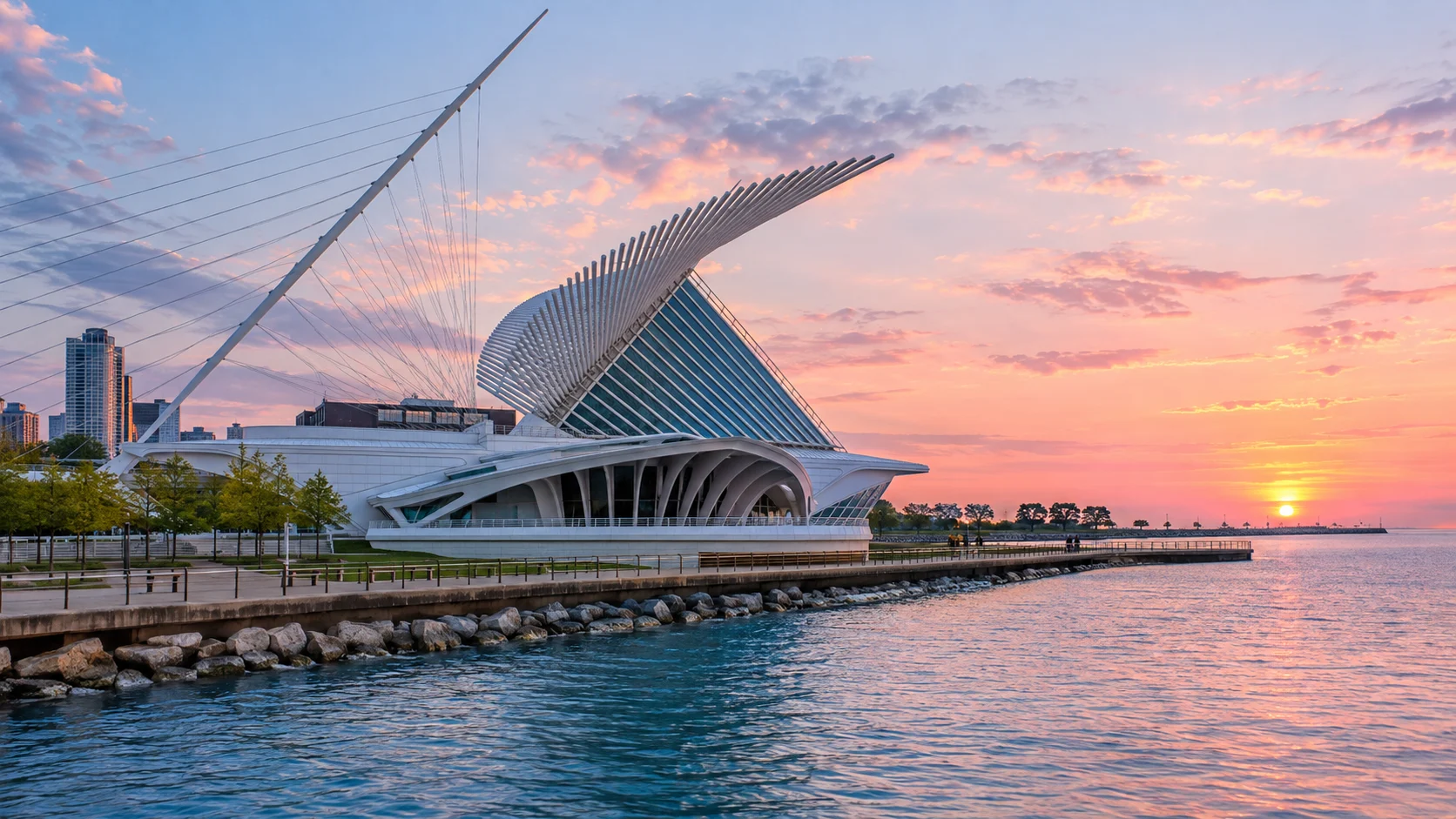
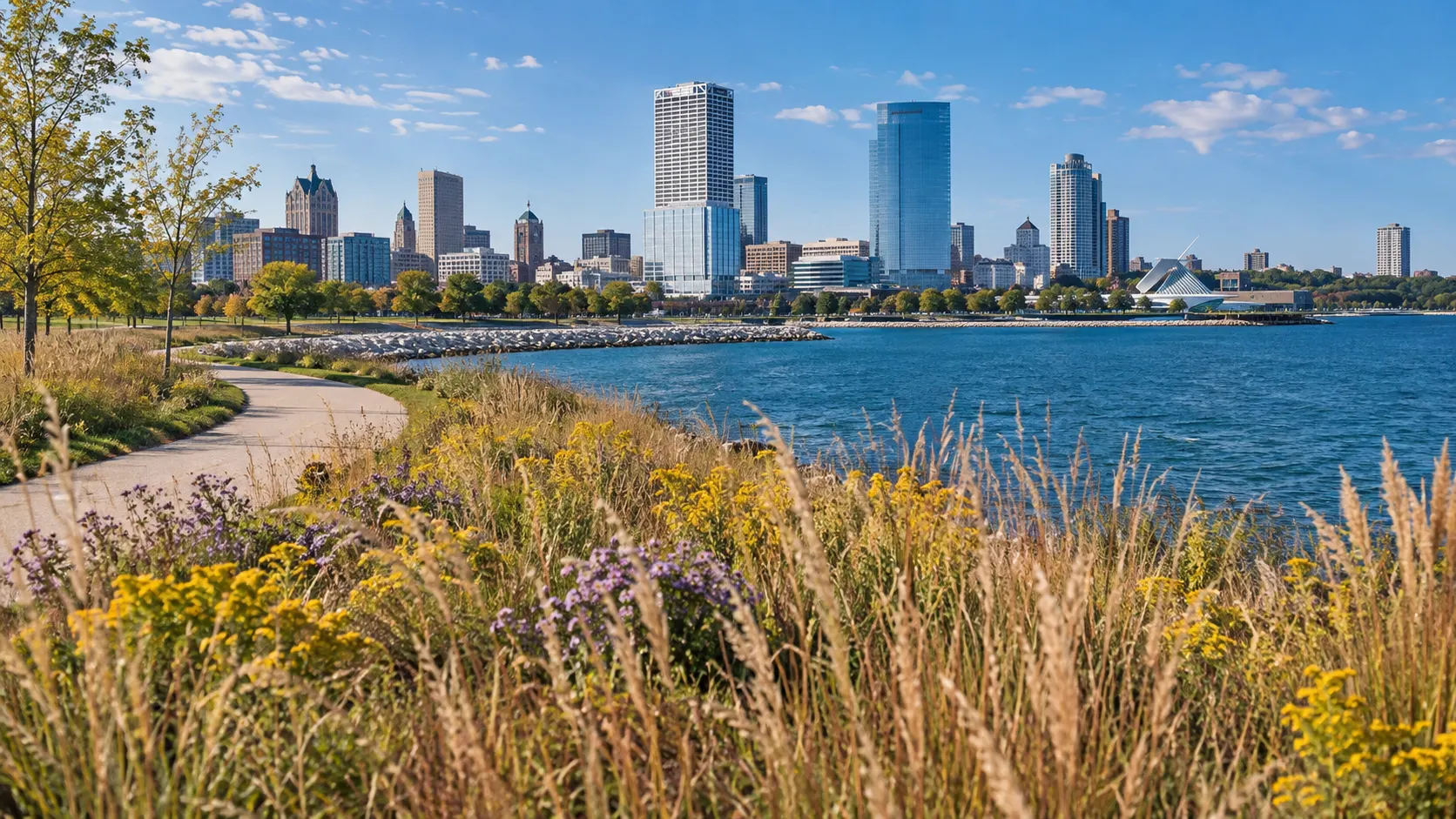
Start outside on the museum campus and look across Lake Michigan before entering any building. The white wings of the Quadracci Pavilion, the lake horizon, and the surrounding paths establish Milwaukee’s setting better than beginning in a shop or restaurant.
Walk toward Lakeshore State Park if weather and mobility allow, but keep the loop short enough to return for museum opening. The park’s paved areas and open views suit a gentle morning rather than a strenuous hike.
Lake wind can be significantly colder than conditions a few blocks inland. Bring a layer in spring and fall, and expect exposed sun in summer.
If rain or severe cold makes the walk unpleasant, use that time for coffee and enter the museum when available. This itinerary has enough indoor options to survive imperfect weather.
10:00 a.m.: Visit the Milwaukee Art Museum
The Milwaukee Art Museum is my first-choice paid attraction for a first visit because both the collection and building matter. The Santiago Calatrava-designed Quadracci Pavilion meets the lake in a way that feels specific to Milwaukee rather than interchangeable with another city museum.
Allow two to two and a half hours. Focus on the galleries that interest you, the pavilion architecture, and the lake views instead of trying to study every object.
Hours, exhibitions, admission, and the Burke Brise Soleil schedule can change because of weather, maintenance, and programming. Check the museum directly before departure rather than promising the group that the wings will move at a particular time.
The museum provides accessibility information for entrances, galleries, mobility devices, and visitor services. Travelers who need a particular accommodation should confirm it before buying tickets.
Families who want hands-on science more than art may substitute Discovery World next door. Do one or the other in a single-day itinerary, since both can absorb half the day.
12:30 p.m.: Walk or ride to the Historic Third Ward
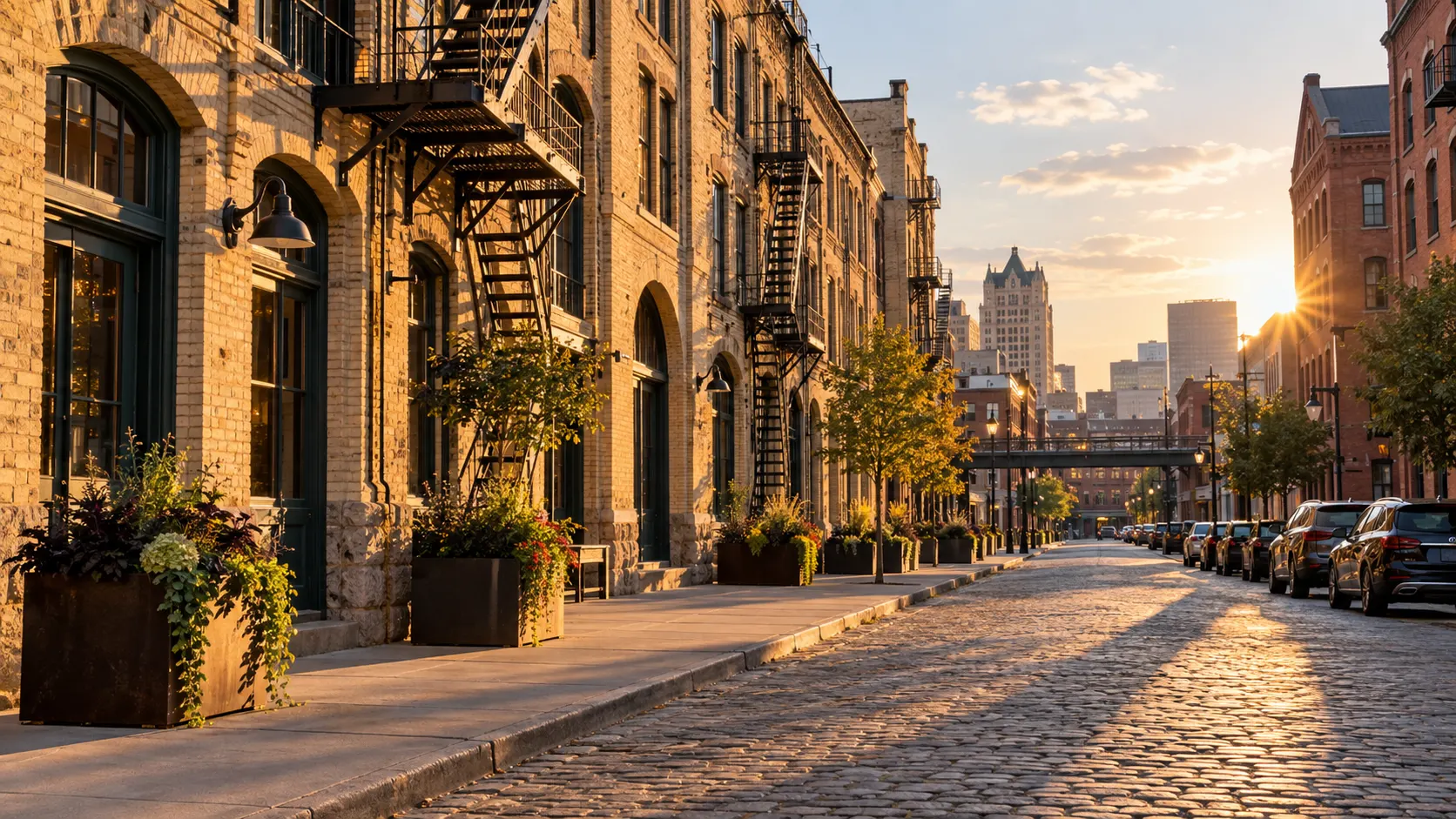
The Historic Third Ward sits southwest of the lakefront and is the best neighborhood to pair with the museum. Its former warehouses now hold restaurants, galleries, shops, offices, and the Milwaukee Public Market.
Walking works for active visitors, but weather and construction may favor transit. The Hop streetcar connects downtown districts, and its current routes, service times, and fare information should be checked on the day of travel.
If anyone has limited walking tolerance, use the streetcar between zones and preserve energy for the museum and market. The goal is not to prove that the whole itinerary can be completed on foot.

1:00 p.m.: Lunch at Milwaukee Public Market
The Milwaukee Public Market is the most flexible lunch stop for a group because everyone can choose separately. Independent vendors sell seafood, sandwiches, cheese, coffee, baked goods, prepared meals, wine, spices, and Wisconsin gifts.
Walk through the full market before ordering. St. Paul Fish Company suits seafood fans, West Allis Cheese & Sausage Shoppe provides a distinctly Wisconsin option, Thai-namite handles a very different craving, and C. Adam’s Bakery is the dessert stop worth remembering.
My brother and I once ordered from the first counter that tempted us, then spent the rest of lunch pointing out what we would have chosen five stalls later. I always make one full lap before committing now, no matter how good the first sandwich smells.
Vendor hours can differ from the market’s building hours, and seating becomes competitive at lunch. One person should find an appropriate table only after the group understands the market’s seating expectations.
The second-floor Palm Garden offers indoor seating, while weather may make nearby outdoor space appealing. Travelers who dislike crowds should eat early or choose a Third Ward restaurant instead.
The market’s lot provides limited parking benefits under current policies, but I would not move a car from the museum solely for that reason. Garage rates and validation rules change, while the short walk or streetcar ride keeps the day simpler.
2:15 p.m.: Explore the Historic Third Ward
Give the neighborhood at least an hour after lunch. Walk Broadway and nearby blocks, look at the converted warehouse architecture, and enter shops or galleries that genuinely interest you.
The Historic Third Ward Association maintains current business and event information. Check it for gallery nights, markets, festivals, and street closures that may affect the visit.
I recommend MOD GEN for plants, home goods, and gifts if that matches your interests, but no single store is mandatory. The Third Ward works because of the neighborhood as a whole.
Do not fill the hour with only retail. Walk toward the river, notice the industrial buildings, and use a café or public space for a short rest.
3:15 p.m.: Walk a section of the Milwaukee RiverWalk
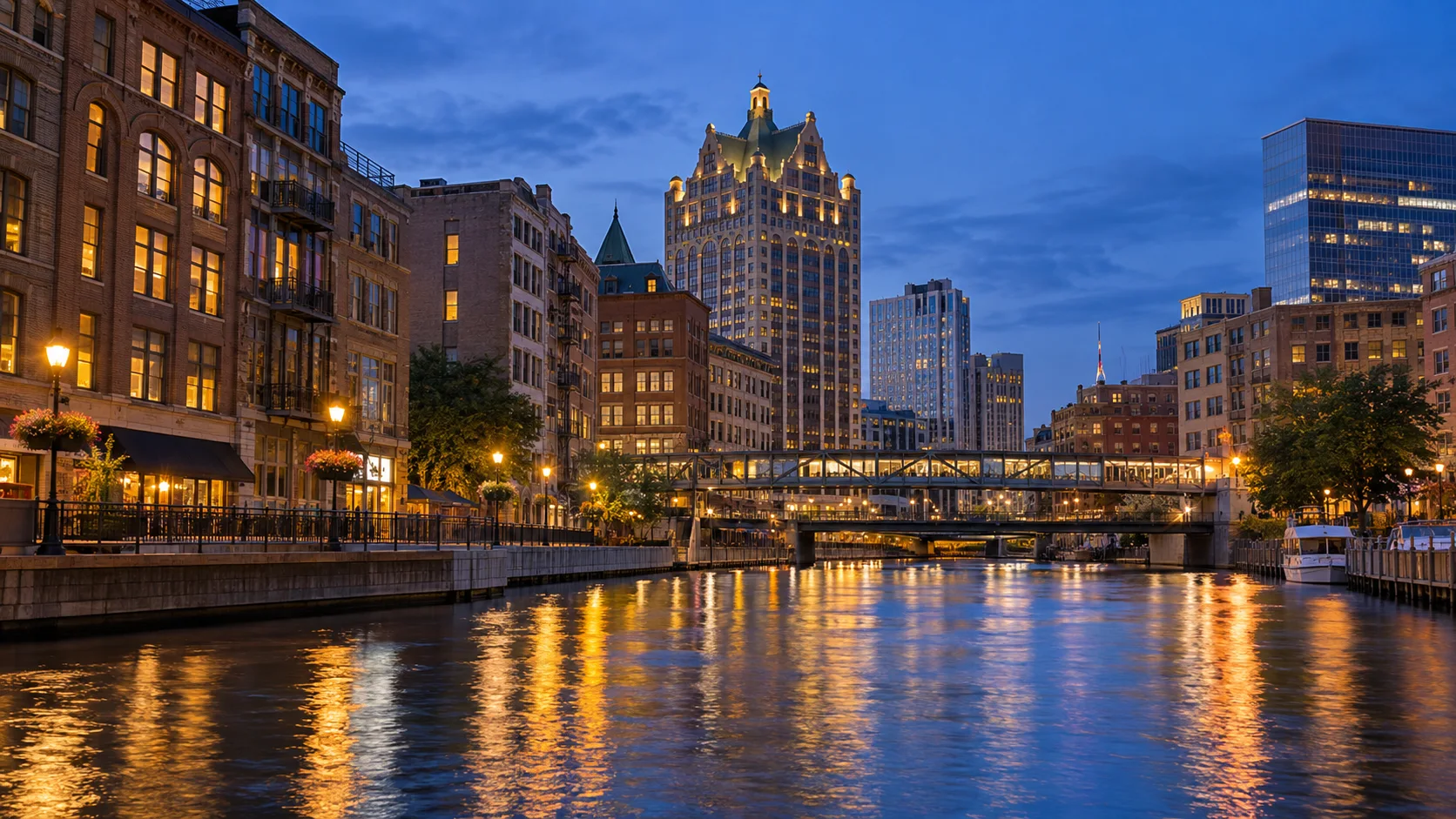
Join the RiverWalk in or near the Third Ward and follow it north through downtown. The route links riverfront buildings, bridges, patios, public art, and boat activity, giving you a second waterfront after Lake Michigan.
You do not need to complete the entire system. A 35- to 45-minute section gives you a feel for how the river connects the Third Ward and downtown while still delivering you to the Bronze Fonz around 4:00.
Use the official Milwaukee RiverWalk guide to choose access points, but expect occasional construction or detours. Street crossings, bridge approaches, and weather can affect accessibility even when much of the route is paved.
4:00 p.m.: Find the Bronze Fonz
The Bronze Fonz stands beside the river near Wells Street and honors Arthur Fonzarelli from Happy Days, which was set in Milwaukee. It is deliberately playful and takes only a few minutes.
I would include it because a one-day city itinerary needs at least one stop that is not educational, expensive, or serious. Take the photo, enjoy the river setting, and continue rather than treating it as a major attraction.
A friend who insisted the Bronze Fonz was too cheesy ended up directing a full miniature photo shoot once we reached it. The stop takes minutes, delivers a laugh, and keeps the afternoon from feeling like a string of worthy cultural obligations.
4:30 p.m.: Choose your final Milwaukee hour
If the weather is beautiful, continue along the RiverWalk or return toward Lake Michigan. This is best for visitors who have already spent enough time indoors.
If the group wants a drink, choose a riverfront or Third Ward establishment and keep the driver’s needs central. Milwaukee has an excellent beer culture, but a tasting crawl does not belong before anyone’s onward drive.
If shopping ran short, return to the Public Market for Wisconsin cheese, spices, or a bakery item. Check closing times before assuming every vendor will still be open.
Families may prefer the lakefront or a park break. Do not add another full museum at 4:30 p.m., even if everyone insists they still have energy.
5:30 p.m.: Have dinner or wrap up the day
For dinner, stay in the Third Ward or Walker’s Point so the route remains compact. Bavette La Boucherie suits travelers wanting a meat-focused lunch or dinner, while Odd Duck in Walker’s Point is a better fit for shareable small plates and a more deliberate reservation.
Those choices can be busy and schedules change, so reserve when possible and confirm the current location and hours. A casual Public Market lunch followed by an early drive is equally valid.
If you are driving onward, check traffic before committing to dinner because major games, concerts, festivals, and weekday rush hour can slow the route out of downtown. Overnight visitors can linger over dinner or return to the lakefront for sunset without trying to fit another attraction into the evening.
How long should you spend in Milwaukee?
Allow eight to ten hours for this lakefront, museum, Third Ward, and RiverWalk route, not including travel into the city. A half day is enough for one museum and a meal, but it will not provide the same rounded introduction.
Two or three days are better for brewery tours, sporting events, the Harley-Davidson Museum, and neighborhoods beyond downtown. If you are staying overnight, use this one-day route as the central-city foundation and give each additional district its own block of time.
How to customize this itinerary
For families
Replace or shorten the art museum with Discovery World, keep lunch at the Public Market, and reduce the RiverWalk to a manageable segment. Children usually enjoy the day more when each indoor stop has a clear endpoint.
For art and architecture lovers
Spend three or more hours at the Milwaukee Art Museum, keep lunch quick, and use the Third Ward’s galleries as the afternoon focus. Skip the Bronze Fonz if that time would be better used in a special exhibition.
For food-focused travelers
Treat the Public Market as a tasting lunch, reserve a serious dinner, and browse specialty shops between meals. Do not add a brewery tour unless it replaces the museum or RiverWalk.
For a Great Lakes trip
Keep the lakefront morning and expand Lakeshore State Park, then continue with the broader route in my Great Lakes road trip itinerary. Milwaukee makes more sense when Lake Michigan remains visible in the plan.
Off the Beaten Path: Local Finds Most Visitors Miss
Frank Lloyd Wright’s Burnham Block: Six modest American System-Built Homes sit together on West Burnham Street, far from the grand-house image many people associate with Wright. The nonprofit that restored the block offers reserved interior tours of two homes on select dates.
If no tour fits your visit, the exteriors still make an interesting architecture detour from the public sidewalk. These are real neighborhood homes, so keep voices low, avoid driveways and never treat a front porch as a photo platform.
Kaszube’s Park on Jones Island: Milwaukee’s smallest park is a patch of grass and a marker surrounded by port infrastructure, not a manicured destination. It preserves the memory of the Kashubian fishing community that lived here before the harbor and wastewater facilities reshaped the island, a history documented by the Milwaukee Public Library.
The strange contrast is the point: a tiny memorial to a vanished village sits inside a working industrial landscape. Go in daylight, follow posted port restrictions and expect a brief stop with no tourist services.
Havenwoods State Forest: Wisconsin’s only urban state forest protects 237 acres of woods, grassland and wetlands on Milwaukee’s north side. The Wisconsin DNR maps more than six miles of trails, a nature center, ponds and a 120-foot bridge, yet many downtown visitors never hear its name.
I like Havenwoods as an outdoor reset when the lakefront is windy or the central museums feel crowded. No state-park vehicle sticker is required, but review property notices and trail conditions before making a special drive.
Forest Home Cemetery and Arboretum: This active cemetery holds the stories of Milwaukee beer barons, Civil War veterans, civic leaders and reformers among mature trees and elaborate monuments. Its official self-guided tours turn a quiet walk into a surprisingly layered city-history lesson.
Visit only during posted grounds hours, give funeral activity complete privacy and use the tour map instead of wandering onto private ceremonies. I would choose one themed route rather than trying to find every famous name.
Parking and getting around
Choose a garage based on your first major stop, read posted rates, and leave the car until the central itinerary is finished. Event pricing can override normal expectations.
Downtown Milwaukee is walkable by city standards, but this plan still covers several miles. The Hop can reduce walking between the lakefront edge, downtown, and Third Ward depending on its current route.
Rideshare is useful if weather deteriorates or dinner takes you away from the parked car. Build enough time to return before the garage closes, if the selected facility has limited hours.
Accessibility notes
The Milwaukee Art Museum and Public Market publish visitor information and should be contacted for current accommodations. Historic buildings, busy food counters, construction, snow, and bridge approaches can make the practical route less uniform than a map implies.
Travelers using mobility devices should favor The Hop or short rides between zones and verify elevator access at selected garages. A shorter paved RiverWalk segment is better than committing to a distance before seeing conditions.
Service animals and pets are not interchangeable under indoor venue rules. Dog owners should build an outdoor version around parks and the river, using my pet-friendly travel planning guide and checking each venue directly.
What to bring
- Supportive walking shoes
- A layer for Lake Michigan wind
- Sun protection for exposed waterfront paths
- A small reusable bag for market purchases
- A portable phone charger for maps and parking
- Downloaded museum tickets and dinner confirmation
Keep the day bag compact enough for museum galleries and crowded market aisles. Leave unnecessary luggage out of the vehicle and at home.
What I would skip
Skip combining the Milwaukee Art Museum, Harley-Davidson Museum, Discovery World, a brewery tour, and a baseball game. Any two of those can dominate an entire day.
Skip moving the car between every stop. The Third Ward, market, RiverWalk, and downtown connect more naturally on foot or by streetcar.
Skip making the city only about beer. Breweries matter to Milwaukee, but the lakefront, architecture, art, food, and neighborhoods provide a fuller introduction.
I would also skip a detailed outer-neighborhood detour on the first visit. Bay View, Walker’s Point, Brady Street, and Wauwatosa each deserve more than a hurried drive-through.
Frequently asked questions
Do you need a car in Milwaukee?
You do not need a car for this central itinerary. Milwaukee can be reached by car, train, bus, or plane, and drivers can park once while using walking, transit, or rideshare between downtown stops.
Is one day enough?
One day is enough for a strong introduction built around the lakefront, one museum, the Third Ward, and RiverWalk. It is not enough for every major attraction.
Is Milwaukee good in winter?
Yes for museums, restaurants, and the Public Market, but lake wind, snow, and ice can shorten outdoor portions. Confirm hours and substitute indoor time without trying to force the summer version.
Is this itinerary good without the art museum?
Yes. Substitute Discovery World, the Harley-Davidson Museum, or more lakefront time according to your interests, but choose only one main paid attraction.
How much walking should you expect?
The full version can easily reach four to six miles. Transit, rideshare, and a shorter RiverWalk segment can reduce that significantly.
Final recommendation
I recommend starting beside Lake Michigan, spending late morning at the Milwaukee Art Museum, eating at the Public Market, and letting the Third Ward flow into a short RiverWalk. It is a coherent first look at the city rather than a random pile of attractions.
Save the brewery tour, game, second museum, and outer neighborhoods for another visit. Leaving something worthwhile for later is a strength, not a failure, whether you live nearby or may not return for years.