7 Best Dog Beaches in the USA: Rules and Best Fits
A great dog beach is not simply a beach that permits dogs. It is a clearly managed stretch where the leash rule, crowd level, water, access, and wildlife protections all fit the dog beside you.
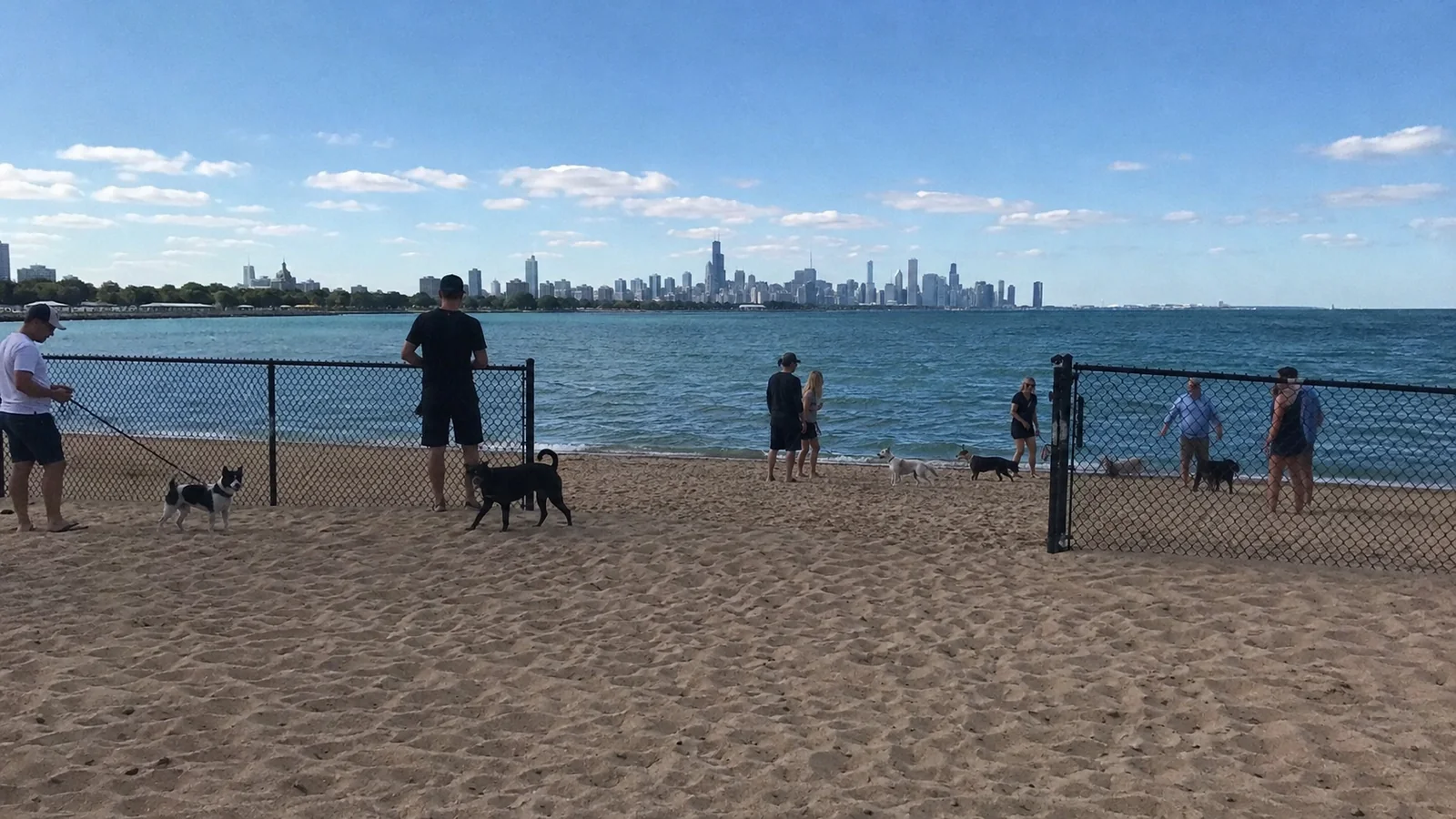
Pick the beach for your dog, not the postcard
An off-leash beach only works for a dog with reliable recall around waves, food, wildlife, children, and unfamiliar dogs. A long leash or fenced area is the kinder choice for a dog who bolts, guards toys, overwhelms smaller animals, or panics in surf.
Every beach below has a different rule structure, and signs at the access point take priority over this list. Storm damage, water quality, nesting birds, erosion, special events, and maintenance can change access with little notice.
- Best scenic off-leash option: Carmel Beach, California
- Best Oregon Coast stop: Cannon Beach, Oregon
- Best long Florida stretch: Jupiter Dog Beach, Florida
- Best fenced-area combination: Fort De Soto Park, Florida
- Best leashed island walk: Jekyll Island, Georgia
- Best urban dog beach: Montrose Beach, Illinois
- Best flexible leashed coastline: Cape Cod National Seashore, Massachusetts
1. Carmel Beach, California
Carmel Beach gives capable dogs unusual freedom in a beautiful setting. Dogs may be off leash on the sand when they remain under voice control, while the Scenic Pathway and other parts of Carmel require a leash.
This is an open beach, not a fenced dog park. Use a physical leash if recall becomes optional around gulls, another dog’s ball, picnics, or fast water.
The main Ocean Avenue access uses a sand ramp, while several Scenic Road approaches use stairs. A ramp does not make loose, sloped sand easy for every wheelchair, walker, older person, or dog with mobility limitations.
The city provides waste bags at access points and tells owners to leash dogs at the bottom of stairs or ramps when leaving. Check closures and the complete Carmel Beach rules before you arrive.
Who Carmel Beach fits
Choose Carmel for a socially steady dog with excellent recall and an owner who wants a scenic walk more than a contained play session. Skip peak weekend hours if your dog needs substantial personal space.
Carmel also fits naturally into a slower Pacific Coast road trip. Book pet-friendly lodging by reading its current size, number, fee, and unattended-pet rules rather than trusting a generic “pets welcome” label.
2. Cannon Beach, Oregon
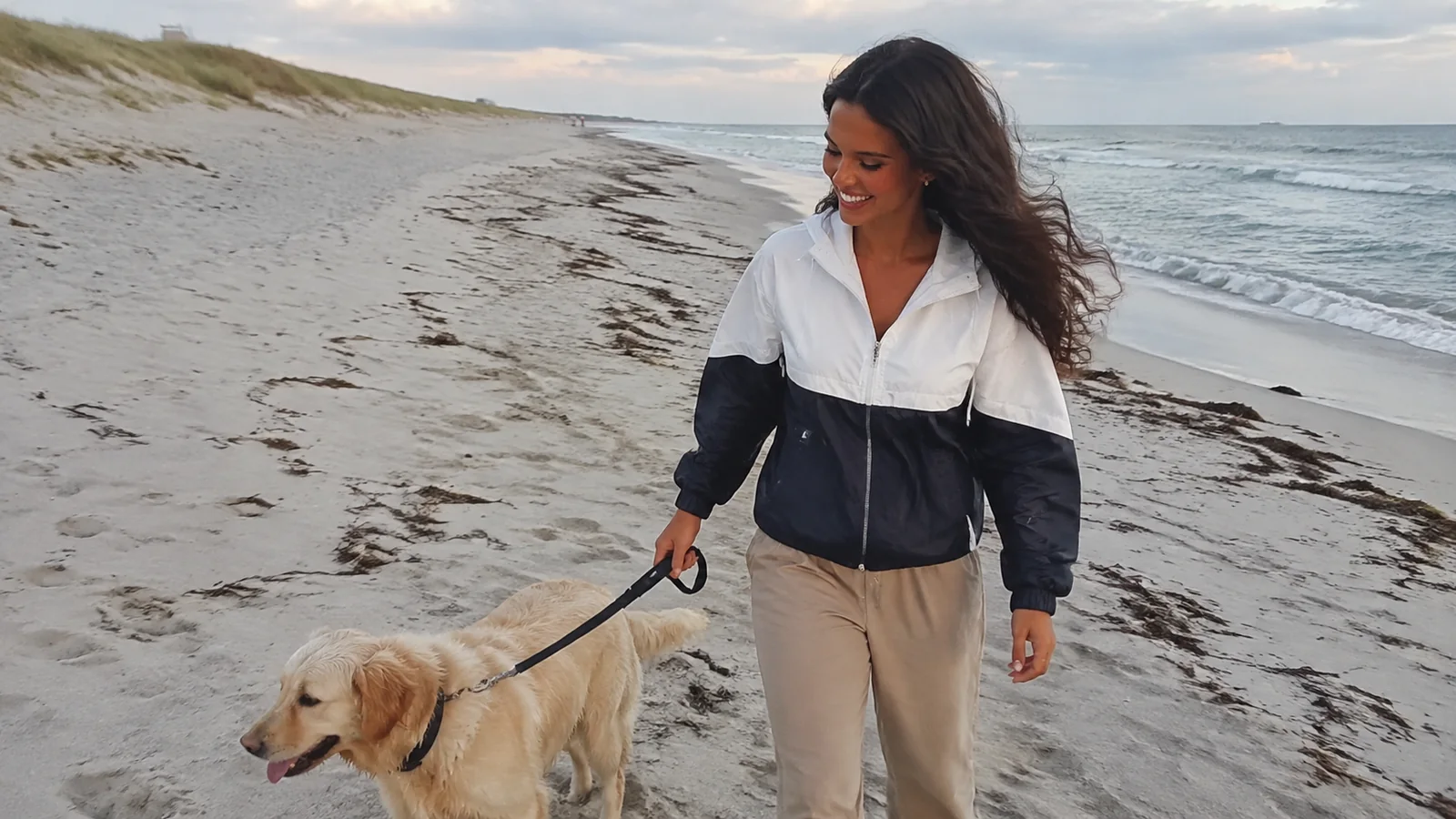
Cannon Beach allows dogs on the beach when leashed or under the owner’s voice control. “Voice control” means the dog returns immediately and remains physically manageable, not that the owner can eventually catch up.
Keep a physical leash on near Haystack Rock’s protected marine garden and any posted bird or tidepool area. A curious dog can disturb nesting birds, injure delicate intertidal life, or become stranded as water rises around rock formations.
The Oregon Coast can be cold, windy, and deceptively forceful in every season. Watch for sneaker waves and drifting logs, stay off wet logs near moving water, and do not throw a ball into surf that you would not enter yourself.
For dogs who prefer walking to wrestling, visit early and continue along open sand away from the busiest landmark cluster. Review the city’s current dog rule before departure and obey access-point signs if a wildlife closure is narrower than the general policy.
Who Cannon Beach fits
Choose Cannon Beach for a dog comfortable with cool weather and long sandy walks. Reactive dogs may find the combination of loose dogs, families, wildlife, and a famous landmark too busy during summer afternoons.
A coastal itinerary from Oregon into Northern California needs more than dog-friendly pins. This Vancouver-to-San Francisco route helps separate United States 101, California 1, border, and overnight decisions.
3. Jupiter Dog Beach, Florida
Jupiter’s dog-friendly zone extends approximately 2.5 miles between beach crossovers 26 and 57. Dogs do not have to remain leashed on the sand, but only non-aggressive, social dogs responsive to voice commands belong there.
Leash your dog between the vehicle and the beach, remain within the signed zone, and supervise continuously. The beach remains open to people who may not want contact, so “friendly” is not permission for your dog to approach everyone.
Florida heat makes an early start the practical default. Check sand with your own hand, bring fresh water and a bowl, provide shade breaks, and turn around if panting or fatigue stops resolving during rest.
The town publishes a current crossover map and beach rules on its Jupiter dog beach page. Save the correct access point before driving, because “Jupiter Beach” includes areas outside the dog zone.
Who Jupiter fits
Jupiter works for a dog with dependable recall who enjoys distance and water. It is a poor first off-leash experiment for a newly adopted dog, an escape artist, or any dog whose recall has only been tested in a fenced yard.
4. Fort De Soto Park, Florida
Fort De Soto combines a designated dog beach with two separate fenced areas for large and small dogs. Water stations sit near the fenced areas, and the dog-beach entrance is at the far southwest corner of the dog park.
That layout gives you choices: beach first, fenced social time, or a quick retreat when one environment becomes too stimulating. Fences reduce escape risk, but they do not prevent rough play, resource guarding, or conflict at gates.
Pinellas County currently lists the park as open daily from 7 a.m. to sunset and charges a vehicle parking fee. Confirm payment methods, dog-park rules, storm recovery, and temporary closures on the official Fort De Soto page.
Fort De Soto also protects shorebirds and sea-turtle habitat, so stay inside the dog area and respect every rope, sign, and seasonal buffer. A dog beach designation does not open the rest of a conservation property to pets.
Who Fort De Soto fits
Choose Fort De Soto when your group wants a defined dog destination with fenced and shoreline options. Dogs uncomfortable in shared enclosures can skip the fenced space and stay leashed until the owner confirms the exact beach rule onsite.
5. Jekyll Island, Georgia
Jekyll Island is the strongest choice here for owners who prefer a leash-required beach walk. Pets are allowed on most beaches and in parks year-round, but they must be physically controlled on a leash no longer than 16 feet.
An electronic collar does not replace the physical leash. Dogs are prohibited on the protected beach section between South Dunes Picnic Area and a point 2,000 feet southeast of St. Andrews Picnic Area.
Keep dogs out of dunes, remove waste, and fill holes before leaving. The island’s official safety page also requires visitors to avoid wildlife, turtle nests, and restricted habitat.
Driftwood Beach is photogenic, but roots, branches, tide, and limited sightlines make a short leash sensible. Never tie a dog to driftwood or allow climbing on unstable wood for a photograph.
Who Jekyll Island fits
Jekyll fits dogs that enjoy sniffing walks but should not share an off-leash play zone. It also works for families who want bicycle paths, historic areas, and wildlife-focused activities that humans can rotate through while someone rests with the dog.
6. Montrose Beach Dog Friendly Area, Chicago
Montrose offers a legal dog-friendly area at the north end of a busy Lake Michigan beach, within Lincoln Park. The Chicago Park District lists the site at 601 West Montrose Avenue and identifies 3.83 acres.
Chicago requires a current Dog Friendly Area tag, including for visitors from outside the city. Arrange the tag through a participating veterinarian before the trip, since arriving with only an out-of-town license is not the same thing.
Keep your dog leashed while approaching and leaving, close gates behind you, and remain out of the people-only beach and bird-protection areas. Inspect the perimeter before unclipping, especially if your dog can swim around a barrier or squeeze through a gate.
Lake Michigan behaves like a large body of open water, not a shallow dog pool. Wind, waves, cold water, algae advisories, and beach closures can all turn a planned swim into a shoreline walk.
Who Montrose fits
Montrose is best for a city-based owner who can secure the required tag in advance and wants a social, dedicated area. A shy dog may be happier during a quiet weekday window or on a leashed lakefront walk outside prohibited beach zones.
Travelers making Montrose one stop on a regional drive can use this Great Lakes road trip itinerary to keep Chicago from swallowing the schedule. Check every hotel’s parking and pet policies separately.
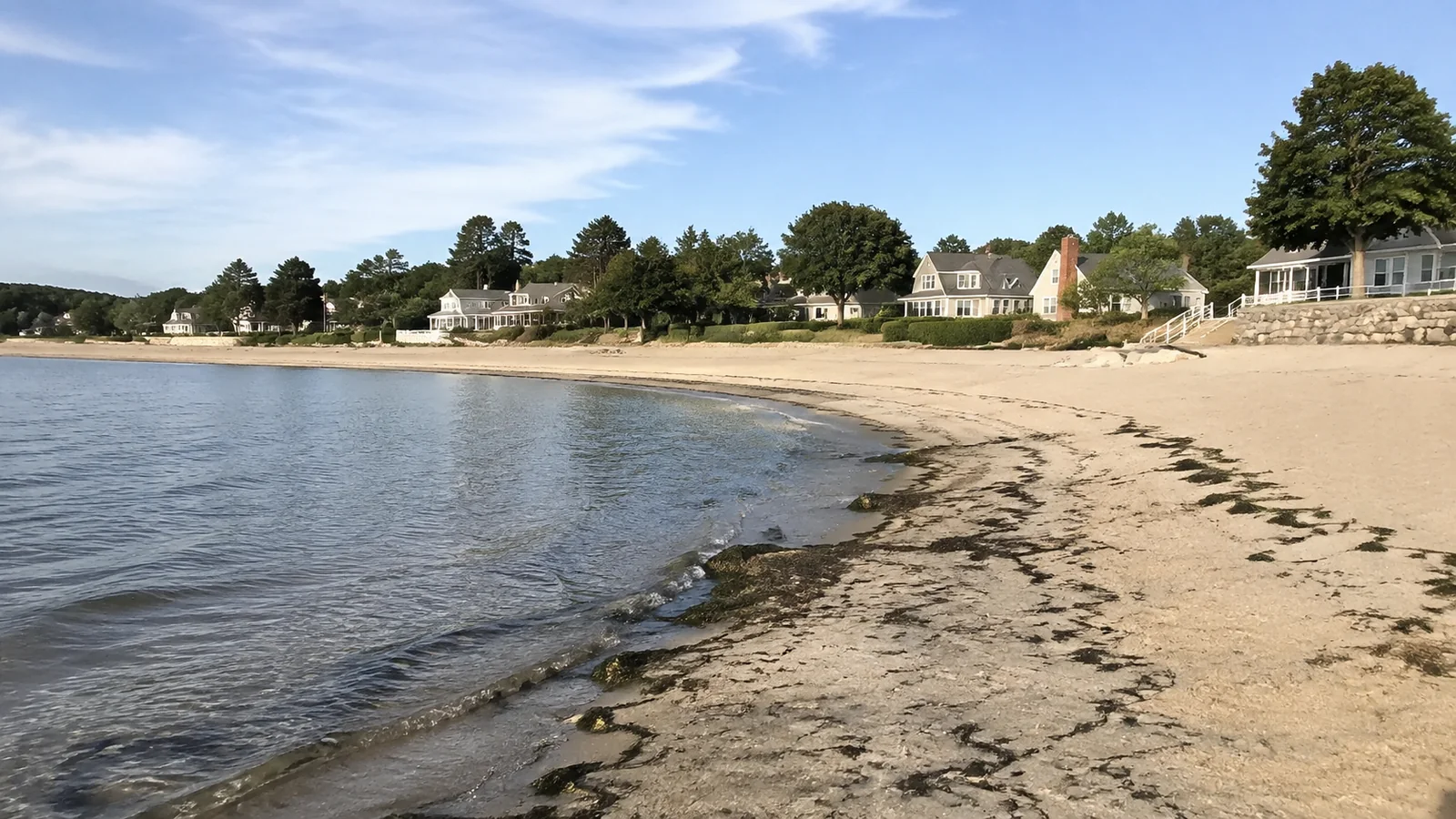
7. Cape Cod National Seashore, Massachusetts
Cape Cod National Seashore can be wonderfully flexible for leashed dogs, but only when owners understand its moving boundaries. Where pets are allowed, the leash maximum is 6 feet and waste must be packed out.
During summer, dogs are not permitted on lifeguard-protected beach sections, although they may sometimes pass through to an open area. A shorebird closure beyond that section can remove the passage entirely.
Recurring and additional pet closures protect nesting, staging, and migrating birds, and the live boundary can change daily. Signs at the entrance and on the sand outrank a screenshot from breakfast.
The National Seashore and adjacent towns have different regulations, so verify the manager before applying one rule to another beach. Start with the National Park Service pet map and closure page, then check the selected town if your access is municipal.
Who Cape Cod fits
Choose Cape Cod for an owner willing to plan around a 6-foot leash and conservation closures. It is not the best spontaneous summer option for someone who expects every ocean beach to remain open to dogs all day.
How to compare any dog beach in five minutes
- Boundary: Save the exact legal access point and end markers.
- Control: Confirm off leash, voice control, or physical leash, including the approach path.
- Timing: Check seasonal dates, permitted hours, tides, and sunset.
- Health: Check water-quality, algae, heat, and wildlife notices that morning.
- Facilities: Verify parking, shade, potable water, rinse stations, waste bins, and restrooms.
- Fit: Decide whether the crowd, fencing, surf, and loose-dog culture suit your dog.
Then open the official manager’s page again on arrival. Dog policies are local, and a broad travel-directory label cannot show a temporary nesting closure or a washed-out access path.
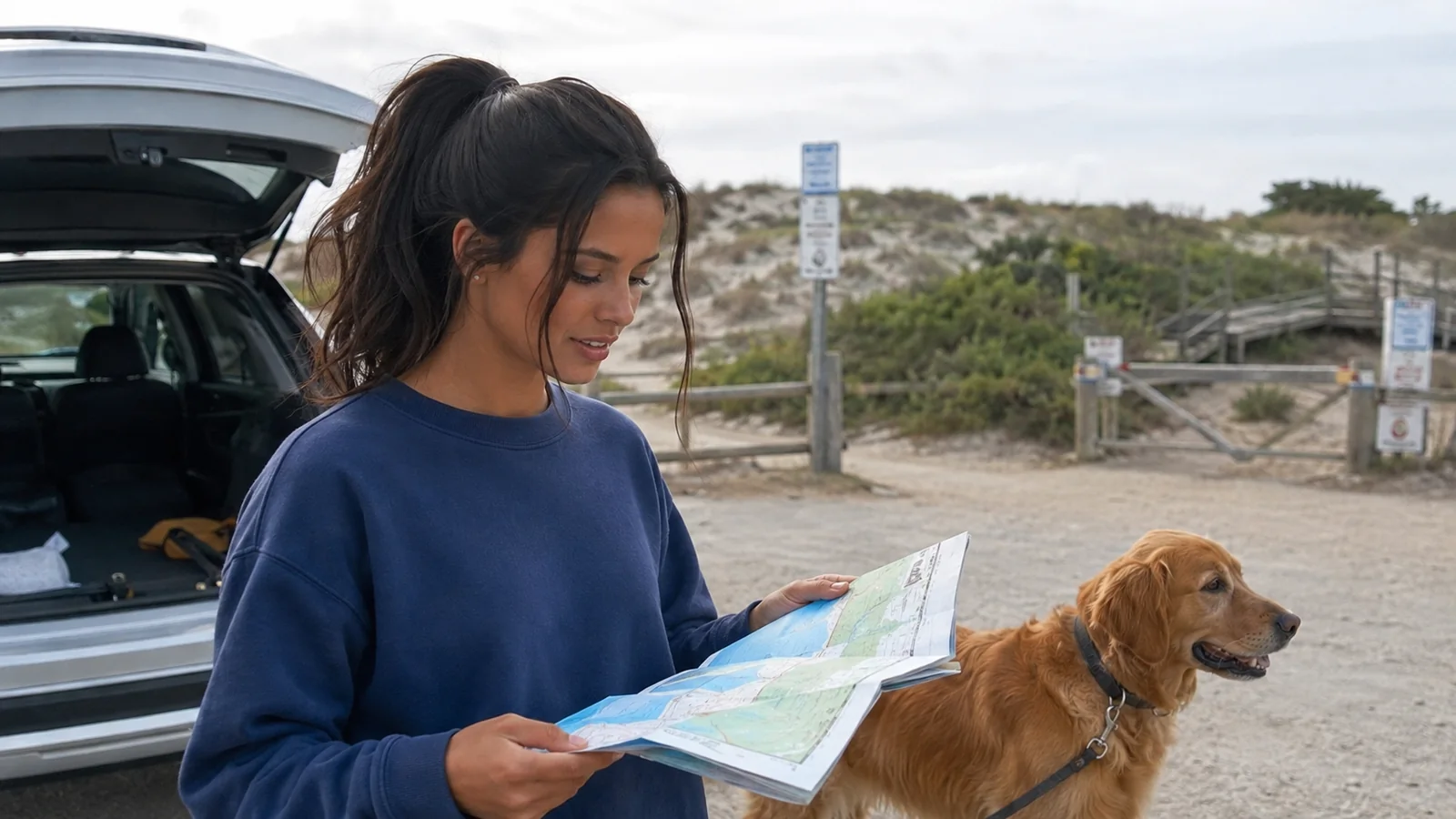
Pack for the dog you have
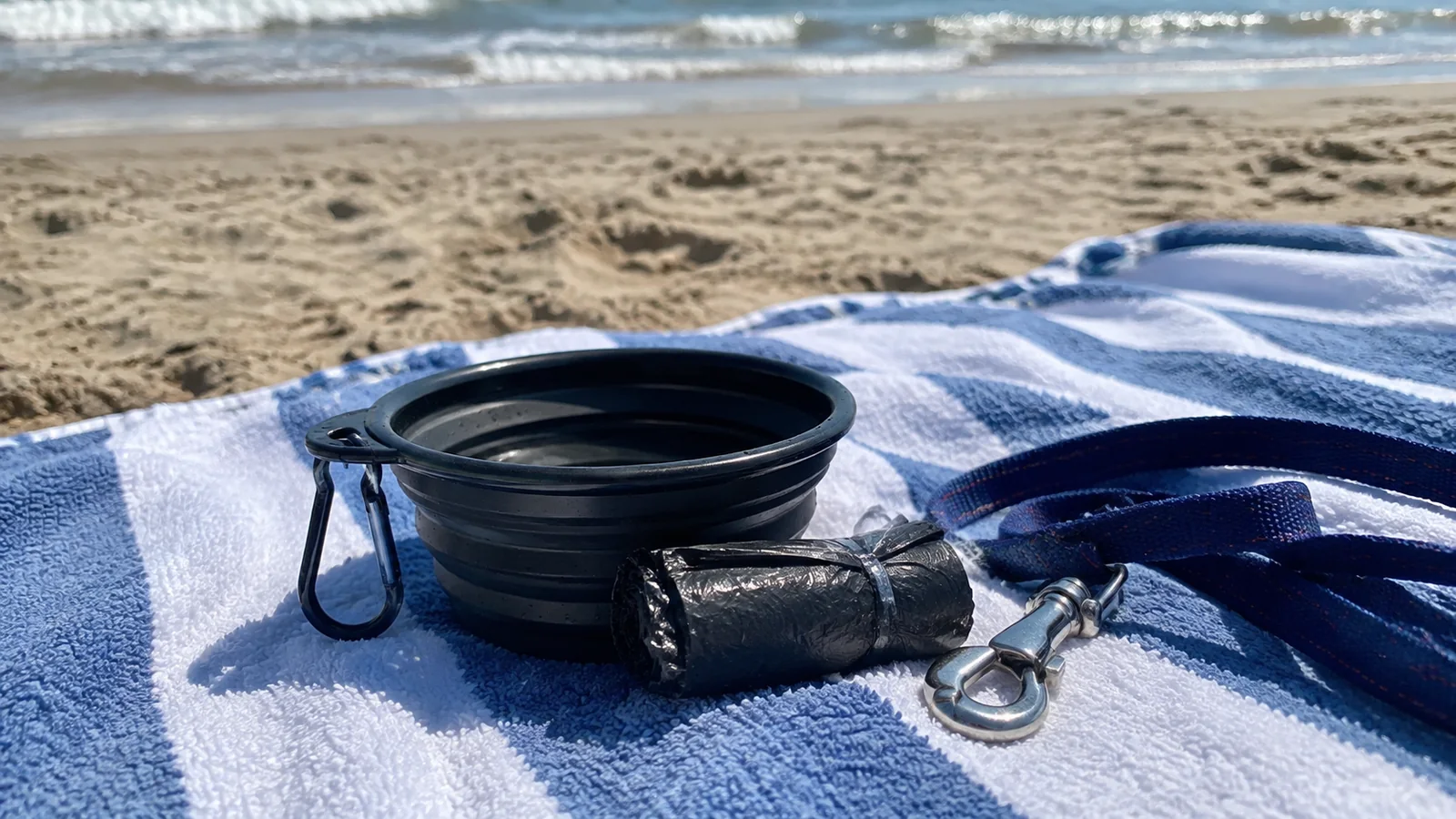
- A fixed-length leash plus a backup
- A properly fitted collar or harness with current identification
- Fresh water and a collapsible bowl
- More waste bags than you expect to need
- A towel and fresh water for rinsing salt and sand
- Shade, paw protection, or a cooling plan appropriate to the weather
- Vaccination and license records required by the destination
- A pet first-aid kit and local veterinary contact
Leave favorite toys home if your dog guards them, and skip food treats in a crowded off-leash cluster. Resource conflict can begin faster than an owner can close a snack pouch.
Dog beach safety without the drama
Do not force a reluctant dog into water or assume every dog can swim. Waves, exhaustion, cold, swallowed water, and disorientation create risks even for strong swimmers.
Bring fresh water and interrupt attempts to drink from the ocean or lake. If your dog becomes weak, confused, repeatedly vomits, collapses, struggles to breathe, or simply looks wrong, leave the beach and contact a veterinarian promptly.
Separate dogs before tension escalates, not after a fight. Stiff posture, hard staring, hovering over toys, repeated pinning, and attempts to hide behind the owner are reasons to leash up and reset.
Never let a dog chase seals, birds, turtles, deer, or other wildlife. The beach may welcome pets while still closing the habitat animals need for nesting, resting, and feeding.
Common questions about dog beaches
Does “dog-friendly” mean off leash?
No. Jekyll Island and Cape Cod National Seashore are dog-friendly under physical-leash rules, while Carmel and Jupiter allow qualified dogs off leash in defined areas.
Is a fenced dog beach safe for every dog?
No. Fencing helps contain dogs, but crowding, gate behavior, shared toys, and mismatched play styles still require active supervision.
Can my puppy visit a dog beach?
Ask your veterinarian when the puppy’s vaccinations and parasite protection make a shared dog area appropriate. Even then, choose a quiet, short, controlled introduction instead of a crowded off-leash debut.
When is the best time to go?
Early morning often brings cooler sand, easier parking, and fewer people. The best window still depends on tide, weather, seasonal pet hours, water quality, and local wildlife closures.
What if my dog has unreliable recall?
Use a legal physical leash and choose Jekyll Island or another leash-required shore. An open dog beach is not a safe classroom for testing whether recall works around the ocean.
The best dog beach ends with an easy exit
You should be able to leash up, rinse off, and leave before your dog is overheated, exhausted, or overwhelmed. Pick the beach whose rules support that quiet success, even if a more famous one looks better in photographs.