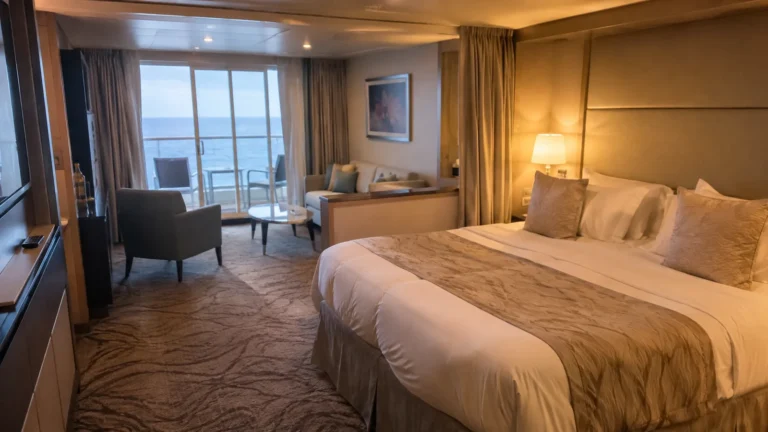
Odyssey of the Seas Cabins to Avoid, Plus Quiet Picks
The Odyssey of the Seas cabins to check most carefully sit above lively public rooms, below the pool deck, beside entertainment spaces, or in an obstructed-view category. None is automatically bad, but a cabin that fights your sleep, motion, privacy, or view priorities is the wrong bargain.
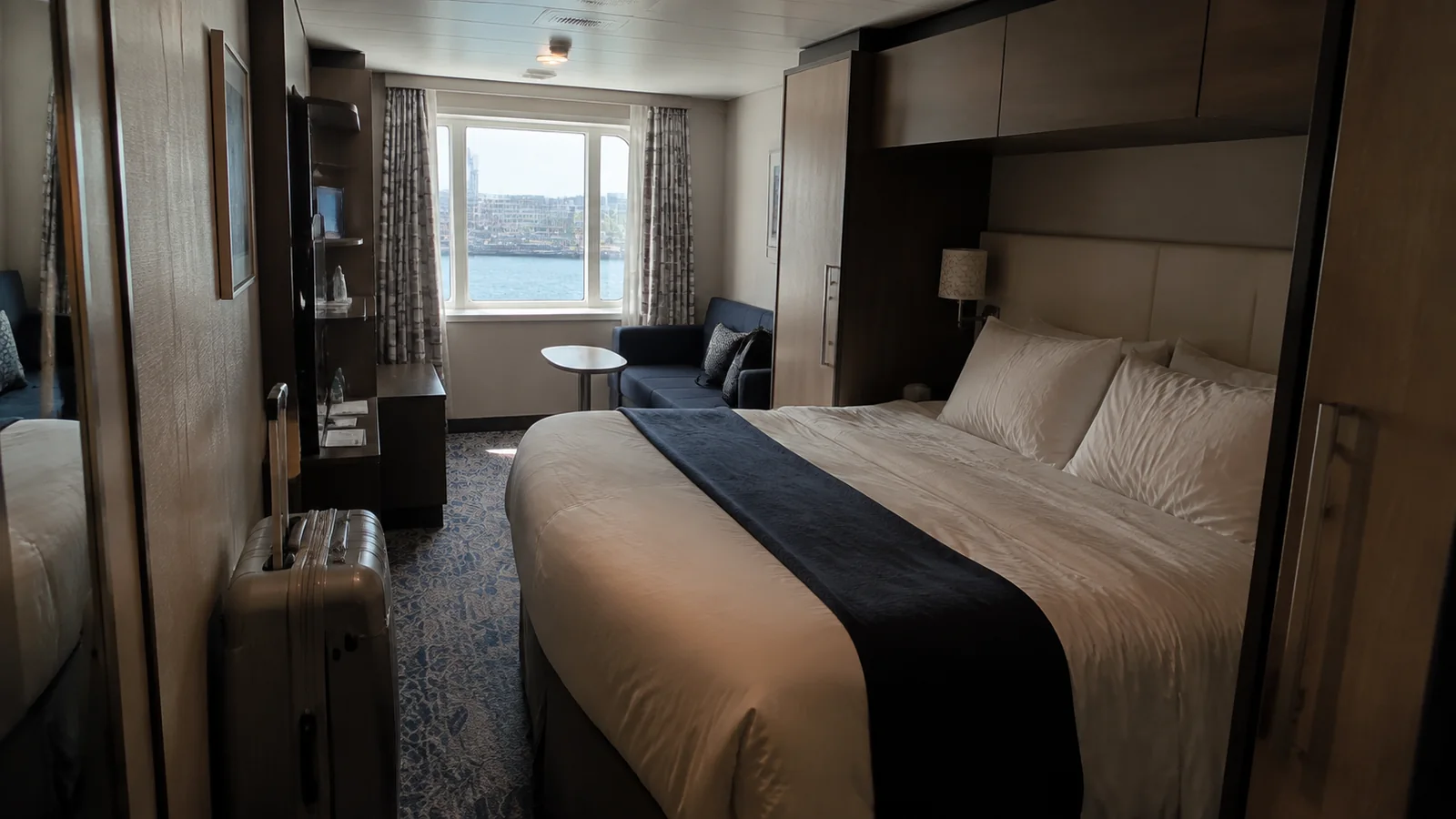
Use the plan for your sailing dates
Royal Caribbean’s official planner currently shows a deck-plan profile for sailings from March 1, 2026 through April 25, 2027, plus a later profile beginning in 2027. This guide was checked against the current Odyssey of the Seas deck plans.
Select your own sailing-date range before comparing cabins because categories and venues can change. A screenshot from an older cruise forum is not a substitute for the plan attached to your departure.
The official Odyssey ship page is useful for checking the current attraction and venue lineup. Pair it with the dated deck profile instead of assuming every promotional feature sits near your room.
The plan can establish what is above, below, and beside a room. It cannot guarantee noise, vibration, smooth water, or a particular guest’s satisfaction.
The quick list of Odyssey cabins to check twice
- Deck 6 rooms above the Royal Esplanade, restaurants, bars, and entertainment spaces.
- Deck 13 rooms directly below Solarium, pools, Splashaway Bay, dining, and open deck.
- Deck 3 rooms beside the Music Hall and Casino Royale.
- Category 2E Obstructed Ocean View Balcony cabins when a clear horizon matters.
- Far-forward or far-aft rooms if motion is a concern.
- Connecting cabins when you do not need the shared doorway.
- Guarantee assignments when exact location is essential.
These are decision points rather than a blacklist. The same proximity that bothers an early sleeper can delight someone who wants the fastest possible trip home from a late show.
Deck 6 cabins above public venues
Deck 6 is the main lower-neighbor caution because Deck 5 is almost entirely public. The official plan places the Royal Theatre, Royal Esplanade, restaurants, Schooner Bar, Bionic Bar, Giovanni’s Italian Kitchen, shops, and the aft Two70 area beneath different sections.
Forward Deck 6
Forward rooms beginning around the 6118 and 6518 area sit above or near the theater and forward Esplanade footprint. Shows, rehearsals, doors, music, and post-performance traffic may be noticeable in some rooms, but the plan does not prove cabin-level volume.
This section also lies at the bow, where pitching can feel stronger in rough seas. Choose it for theater access only if that convenience outweighs your motion or bedtime concerns.
Midship Deck 6
Long midship runs sit above restaurants, bars, shops, and Esplanade circulation. Operating hours and speaker or kitchen placement create different risks, so “Deck 6” is too broad to be a useful verdict.
Line up the cabin walls with Deck 5 and identify the exact space underneath. A retail shop is a different neighbor from a music venue, even when both share a deck number.
Aft Deck 6
The aft end includes rooms above or close to Two70, with the Deck 6 library and The Boardroom in the same rear zone. Two70 can host entertainment and events, making schedule-sensitive sound a reasonable possibility.
Central Decks 8 through 11 usually offer a simpler cabin-above and cabin-below pattern. They preserve access to the main elevator banks without sitting directly on top of Deck 5 venues.
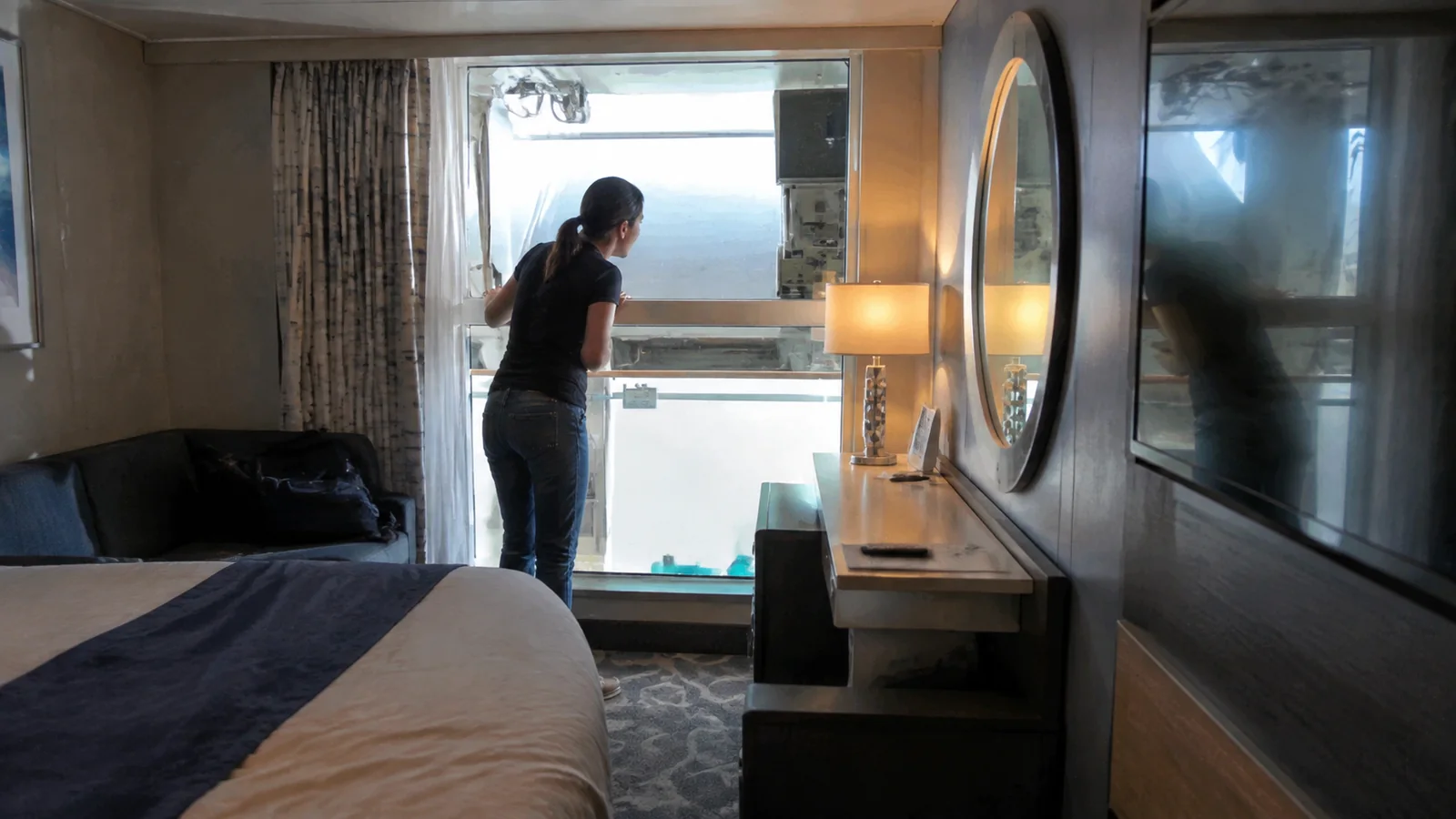
Deck 13 cabins below Deck 14
Every Deck 13 cabin deserves an overhead check because Deck 14 is public from bow to stern. The upper deck includes the Solarium, pools, bars, Splashaway Bay, Teppanyaki, El Loco Fresh, Coastal Kitchen, and Windjammer areas.
Possible sounds include chairs, carts, pool activity, music, food-service setup, and cleanup. Exact exposure changes with the room’s vertical position and the venue’s schedule.
Forward Deck 13
The forward cabin block sits below Solarium and nearby dining or bar space. That may be calmer than the family pool zone at some hours, but it is still a public deck with early and daytime operations.
These rooms are also high and forward, which can amplify motion for sensitive travelers. A lower central cabin is the more conservative choice when seasickness concerns outrank Solarium convenience.
Midship Deck 13
Midship rooms align below the main pool complex and Splashaway Bay. Pool programming, deck furniture, children at play, and cleaning are conditional overhead risks.
A family may value the short trip upstairs enough to accept that exposure. A light sleeper should compare Deck 10 or 11 instead.
Aft Deck 13
The aft run lies below dining and service footprints, with the Suite Lounge at the end of Deck 13. Food-service setup, carts, and guest traffic may matter more than pool noise in some positions.
Suite Lounge proximity is a perk for eligible guests and a corridor consideration for nearby cabins. Neither benefit nor disruption is universal.
Deck 3 beside Music Hall and the casino
Odyssey’s Deck 3 cabin runs flank the Music Hall and Casino Royale rather than sitting on a quiet residential corridor. The current plan shows rooms 3146 through 3240 on one side and 3546 through 3640 on the other side of this central public zone.
Those numbers verify location, not noise. Music, gaming activity, guest movement, and venue doors create a plausible risk, while walls, vestibules, and exact distance change what reaches a room.
These low decks can be useful for motion-sensitive travelers and offer easy access to dining and entertainment. If early sleep matters, move to a central cabin-only deck while keeping a reasonably low elevation.
Obstructed Ocean View Balcony category 2E
Royal Caribbean’s current cabin inventory includes category 2E, named Obstructed Ocean View Balcony. The obstruction is a product fact, but the plan does not assign one universal percentage to every cabin in the category.
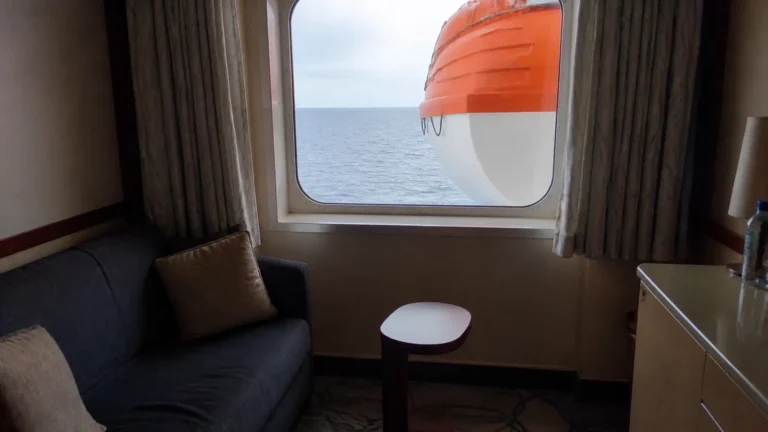
Lifeboats, davits, ship structure, or deck equipment can affect the sightline differently. Confirm the exact cabin in the interactive plan and ask where the obstruction sits relative to eye level and the balcony railing.
An obstructed balcony can be good value when fresh air matters more than a perfect panorama. It is a weak fit for a scenic itinerary if watching the coast from a seated position is a priority.
Virtual balconies are screens, not windows
Some interior rooms use a virtual balcony display to show an exterior camera feed. That can make the space feel more connected to outside conditions, but it does not provide daylight, fresh air, or a direct optical view.
Check whether the feature can be turned off or dimmed if darkness matters. Buy it as a useful screen feature, not as a substitute for a true ocean-view cabin.
Forward and aft motion tradeoffs
Far-forward cabins can feel more pitching when the bow meets swells, while aft rooms may transmit more vibration or turning sensation. Weather, route, speed, and individual sensitivity control the actual experience.
Low and central remains the conventional location for someone worried about motion. High forward cabins near upper attractions are the opposite end of that compromise, even when the view and access are tempting.
A guarantee cabin leaves assignment within the booked rules to the cruise line. Choose a specific room if motion, connection, obstruction, or venue adjacency could change the trip.
Connecting cabins and family layouts
Odyssey offers connecting rooms and multi-room family or suite configurations. A connecting door is excellent when your group uses it, but may provide less acoustic separation than a solid wall.
That is a structural difference, not proof that neighboring voices will be audible. Sound-sensitive couples who do not need the door can remove one variable by booking a non-connecting cabin.
Do not confuse “connecting” with “adjacent,” because rooms next door may not have an interior doorway. Verify every cabin number and occupancy rather than assuming two nearby colors create a family suite.
Elevators, stairs, and service spaces
An elevator does not make a cabin noisy by itself, and a nearby bank can save many long walks on this large ship. The actual concerns are lobby conversations, corridor turns, and frequent passing traffic.
Blank gray areas can contain crew corridors, machinery, storage, ducts, or structural space. Ask Royal Caribbean what a space represents rather than accepting a confident online guess with no plan evidence.
A few doors away from an elevator lobby often balances convenience and separation. Travelers with limited stamina should prioritize an accessible route over theoretical quiet.
Accessibility requires exact verification
Royal Caribbean says all ships have staterooms designed for guests with mobility disabilities and others who need their features. Its current stateroom overview says accessible rooms range from 159 to 298 square feet and offer a 5-foot turning radius in sleeping, bathroom, and sitting areas.
Those fleet-wide ranges do not describe every Odyssey room. Confirm the exact doorway, bathroom, bed approach, balcony threshold, equipment storage, and route with the Accessibility Department.
Accessible inventory should be reserved by travelers who need the features. A larger floor plan is not a casual upgrade, and a standard cabin photo cannot establish usable clearance.
Quieter Odyssey of the Seas locations
- Central Decks 8 through 11: broad areas have cabins above and below.
- Midship rather than extreme ends: the conservative choice for motion.
- Non-connecting cabin: removes the shared-door variable.
- Unobstructed balcony or ocean view: safer when scenery matters more than price.
- A few rooms from an elevator: useful access without sitting directly on the lobby.
No cabin is guaranteed silent. Neighbors, maintenance, rough weather, and rolling luggage retain a charming independence from deck-plan logic.
How to check your exact cabin
- Select the Royal Caribbean plan profile matching your sailing dates.
- Search the exact cabin number in the interactive plan.
- Compare the same position one deck above and below.
- Note venues, pools, kitchens, theaters, elevators, and blank service spaces.
- Confirm category, occupancy, connection, bed arrangement, and obstruction.
- Contact Accessibility for exact measurements when relevant.
- Save the cabin description and recheck it before final payment.
Our cruise booking comparison helps decide whether direct booking or an advisor offers the better follow-up path. The answer matters most when you need a specific cabin rather than a guarantee assignment.
New cruisers can also use these first-time cruise tips to connect cabin choice with embarkation, dining, and onboard planning. A quiet room is more helpful when you can also find it after dinner.
After booking, the cruise packing list keeps cabin extras practical. A good location beats trying to construct soundproofing from magnetic hooks and optimism.
Frequently asked questions
What is the quietest deck on Odyssey of the Seas?
Central areas of Decks 8 through 11 offer the cleanest broad cabin-above and cabin-below pattern. Exact connections, elevators, and service spaces still need checking.
Should I avoid every Deck 13 cabin?
No. Deck 13 is convenient for pools and dining, but light sleepers should identify the exact public venue overhead and accept the conditional activity risk.
Are obstructed balconies bad?
No, especially when fresh air matters and the discount is meaningful. They are a poor match only when a clear scenic view is part of the purchase.
Is Deck 3 too close to entertainment?
Its cabin corridors flank Music Hall and Casino Royale, which is a factual proximity. Whether activity reaches a specific room depends on distance, doors, walls, and schedule.
The bottom line
Check Deck 6 for venues below, Deck 13 for pool and dining activity above, Deck 3 for entertainment adjacency, and every category 2E balcony for its exact sightline. Then match those facts to your own priorities.
For the simplest quiet-first choice, begin midship on Deck 8, 9, 10, or 11 with cabins above and below. That is not a promise of silence, but it removes several avoidable deck-plan surprises.