CPAP on a Cruise: Water, Power and Packing Tips
I would arrange distilled water and approved power before taking a CPAP on a cruise, then test the complete setup when the cabin opens. The machine belongs in your carry-on with its mask, tubing, power supply, and the small parts needed to make it work.
Cruise lines can accommodate CPAP users, but water delivery, cord rules, outlets, and request procedures vary. Confirm the arrangement for your ship and cabin.
The setup I would confirm first
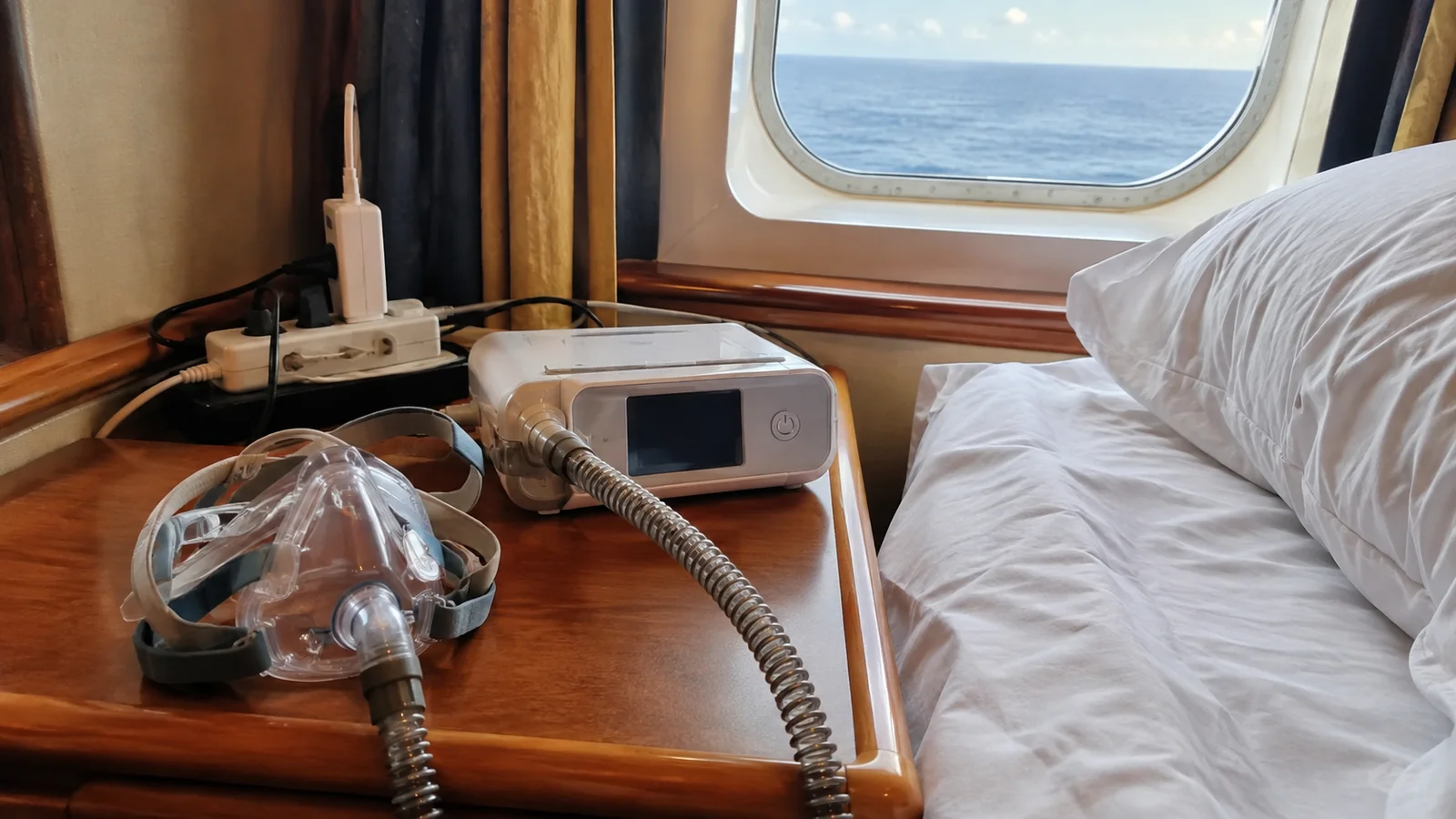
- Where the machine will sit and which outlet will power it.
- Whether the line supplies an approved extension cord if needed.
- How to request distilled water, how much to order, and whether it costs extra.
- Whether your device, battery, and accessories meet cruise and airline rules.
- What to do if equipment fails or the prescribed therapy cannot be used.
I would treat this as a bedside setup rather than a packing task. A machine can make it aboard perfectly safely and still be unusable if its proprietary power supply is at home.
Send a specific request to the cruise line
Use the accessibility or special-needs process named by your cruise line. Include the reservation number, ship, sailing date, cabin, machine type, and the actual assistance you need.
Royal Caribbean’s special-needs page explains how to request CPAP/BiPAP support. Use the current request method shown there and keep the confirmation rather than relying on a casual booking note.
Ask whether the request has reached the onboard team and when any water or cord will arrive. If no acknowledgment appears, follow up with the contact listed by the line.
Two travelers using machines in the same cabin should say so explicitly. The room needs a workable arrangement for both devices, including safe cord routes and enough bedside space.
If the cabin changes after you submit the form, reconfirm the request against the new number. A delivery assigned to the original room is not useful after a last-minute upgrade.
Distilled water: confirm the product and delivery
Ask your equipment provider or manufacturer what water your humidifier requires. Do not assume ordinary bottled drinking water is the same as distilled water.
Carnival offers distilled water for CPAP machines through its pre-cruise shop. Other lines may use an accessibility request, room service, or a different ordering process.
I would order or request it in advance and save the receipt or response. Check the current price and delivery details rather than carrying forward a price from an old cruise review.
Work out the quantity using your normal equipment routine and the length of the trip. Ask whether additional water is available onboard if the initial amount is insufficient.
If you want to bring your own supply, check the cruise line’s current medical-water exception and carrying instructions. A medical exception may have different conditions from the general beverage policy.
Plan water for the nights before and after the cruise
The ship’s delivery cannot help at the airport hotel. I would arrange whatever the manufacturer recommends for the pre-cruise stay and keep enough flexibility for an unexpected overnight delay.
Ask the hotel what it can supply or identify a practical place to buy the required water after arrival. Do not build the plan around a shop that closes before your flight lands.
Avoid packing a full bottle inside a machine with water still in the humidifier chamber. Follow the manufacturer’s travel instructions so liquid does not reach parts that need to remain dry.
If the correct water is unavailable, ask the manufacturer or equipment provider about an appropriate temporary arrangement. Do not change prescribed therapy or improvise a substitute based only on another passenger’s suggestion.
The CPAP stays with you during travel
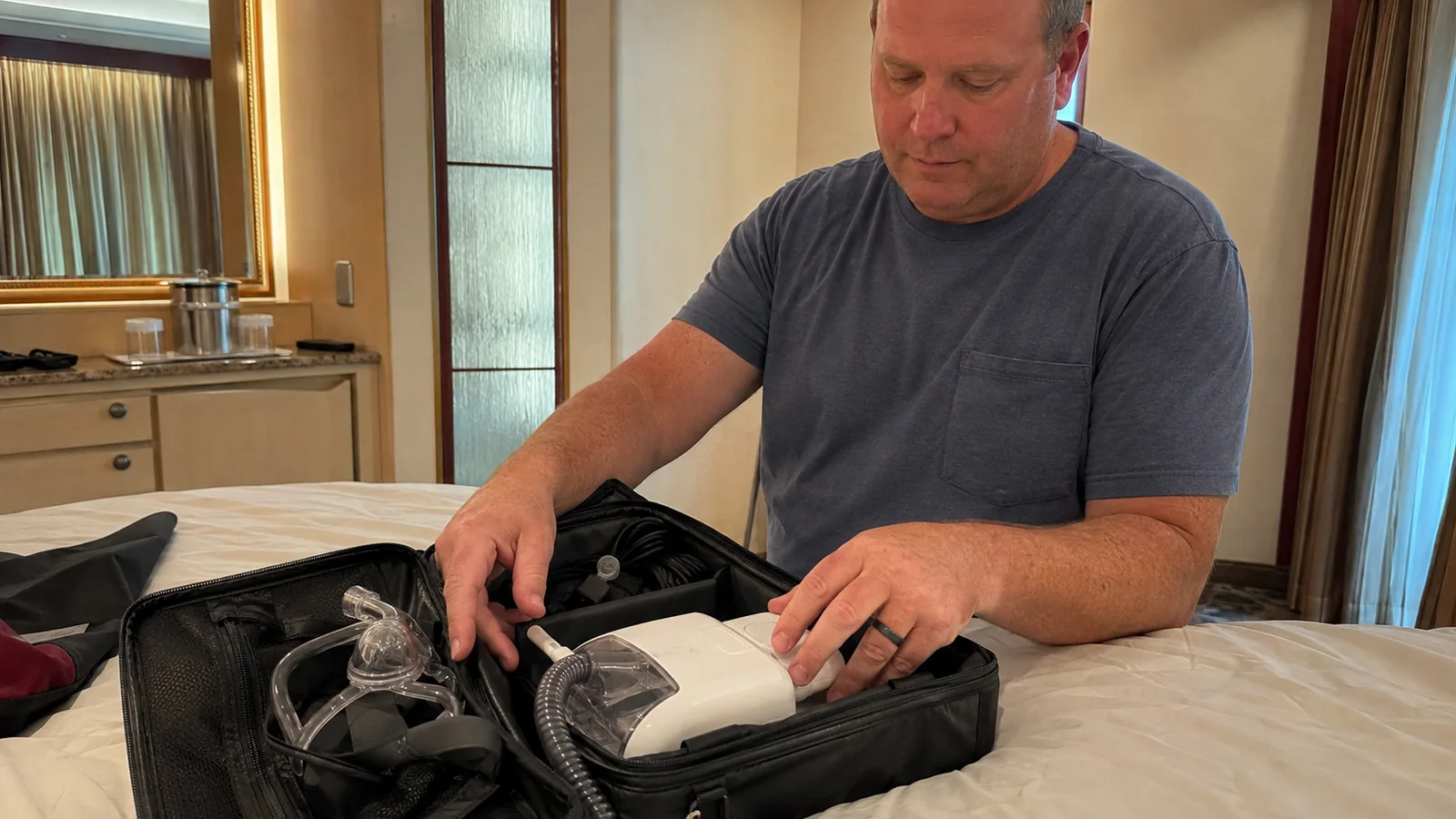
Use a protective case that holds the device and its required accessories securely. I would put an identification tag inside as well as outside, with medical details kept private.
Carry it through airport transfers and cruise embarkation rather than handing it to the luggage porters. Cabin baggage delivery can take time even when nothing goes wrong.
For U.S. airport screening, review TSA’s CPAP and respiratory-equipment guidance. Check the airline separately for assistive-device baggage treatment, onboard use, and batteries.
A device being allowed in a bag does not mean you can operate it during a flight without further arrangements. Ask the carrier about the exact model and any notice or documentation it requires.
My cruise packing tips can help organize the other bags so the medical case stays manageable. I would keep nonessential souvenirs and snacks out of a case being treated as medical equipment.
Outlets and extension cords need a ship-specific answer
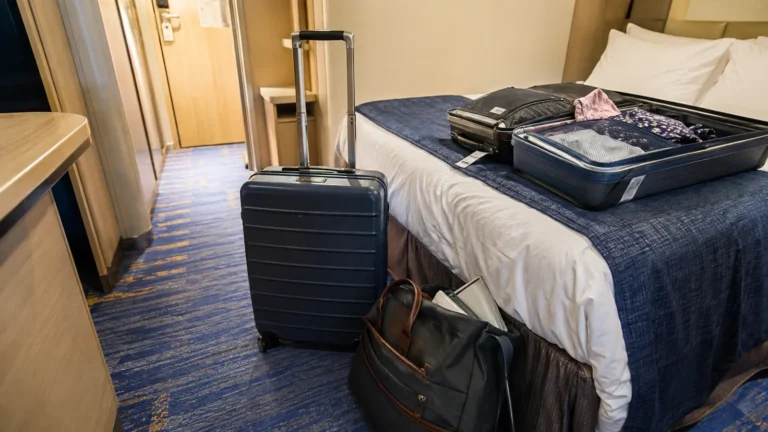
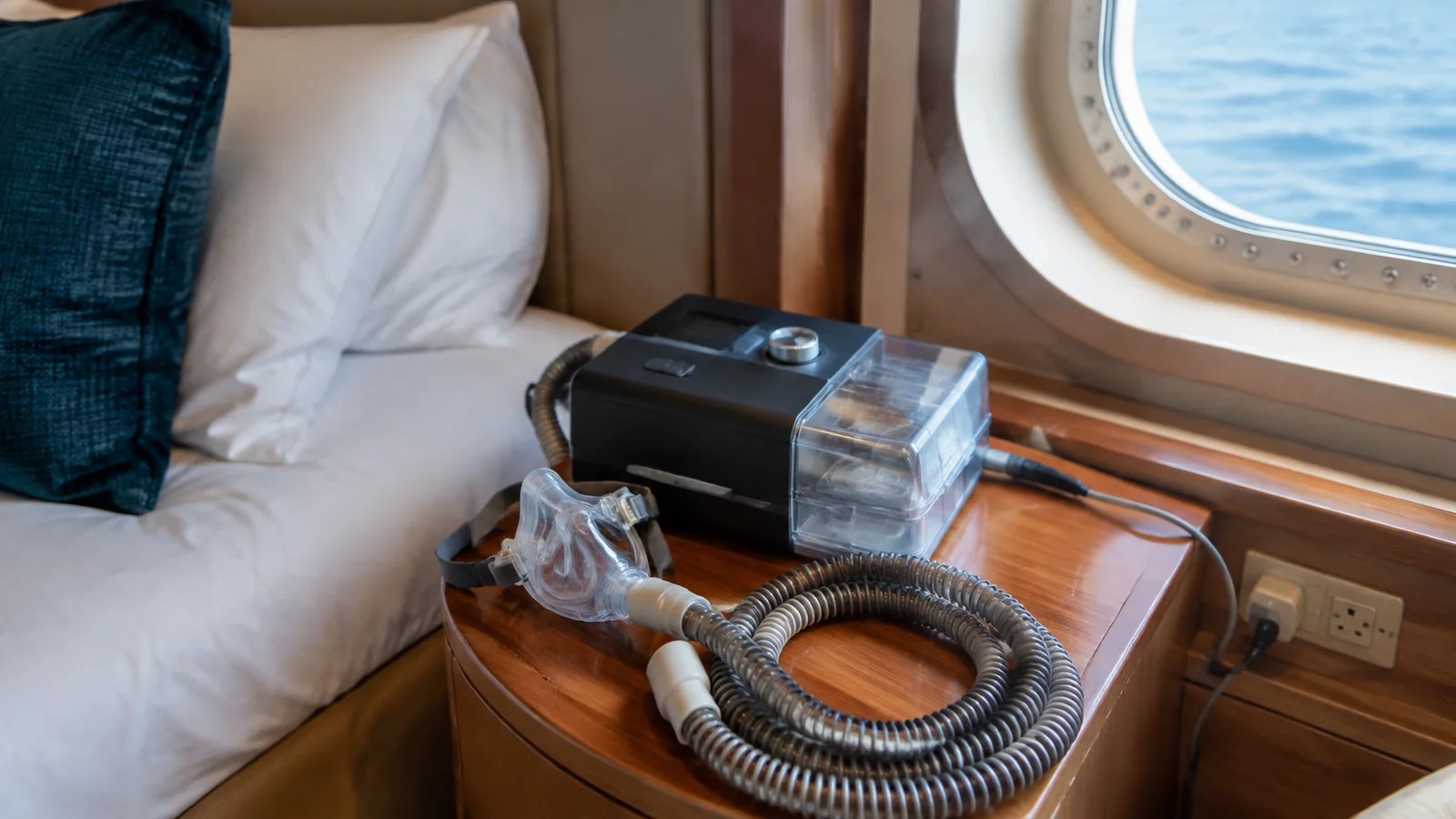
Look at the cabin’s current layout and ask where usable outlets sit relative to the bed. A generic photo of the same cabin category may not show the exact electrical arrangement.
Some rooms have convenient bedside power; others require a longer route from the desk. A USB socket is not automatically a suitable supply for a CPAP’s power adapter.
Cruise lines restrict electrical accessories, and policies for personal extension cords can differ. Ask the line what it permits and request its approved solution rather than packing an ordinary household power strip.
A surge protector can remain prohibited even if it is sold as a travel accessory. I would not rely on a retailer’s “cruise safe” description when the cruise line’s own rules say otherwise.
Use my guide to reading cruise floor plans to assess the bedside space and walking route. Electrical details still need confirmation because most deck plans do not show individual sockets.
Check voltage without guessing
Read the input label on the device’s own power supply and compare it with the power available onboard. A plug adapter changes the plug shape; it does not necessarily convert voltage.
Ask the manufacturer about any adapter, battery, or alternative power cable you intend to use. I would prefer the specified compatible accessory over an inexpensive generic item with uncertain specifications.
Do not assume a bathroom shaver outlet can power the device. Ask the crew which outlet is appropriate if there is any doubt.
If the equipment needs continuous power while the cabin is empty, mention that requirement before sailing. Some room systems can affect outlet behavior, and the answer needs to match the specific setup.
A battery is a separate decision
Ask your clinician or equipment provider whether backup power is necessary for your situation. Then confirm compatible equipment and realistic runtime with the manufacturer.
Runtime can depend on settings and accessories such as humidification or heated tubing. I would not treat a battery’s marketing maximum as a guarantee for my normal overnight setup.
Airlines and cruise lines apply their own battery rules, including restrictions related to battery type, capacity, packing, and charging. Submit the actual specifications when asking for approval.
Keep any required battery documentation with the device. Do not assume an airline approval automatically satisfies the ship’s requirements, or the reverse.
Test the complete system on embarkation day
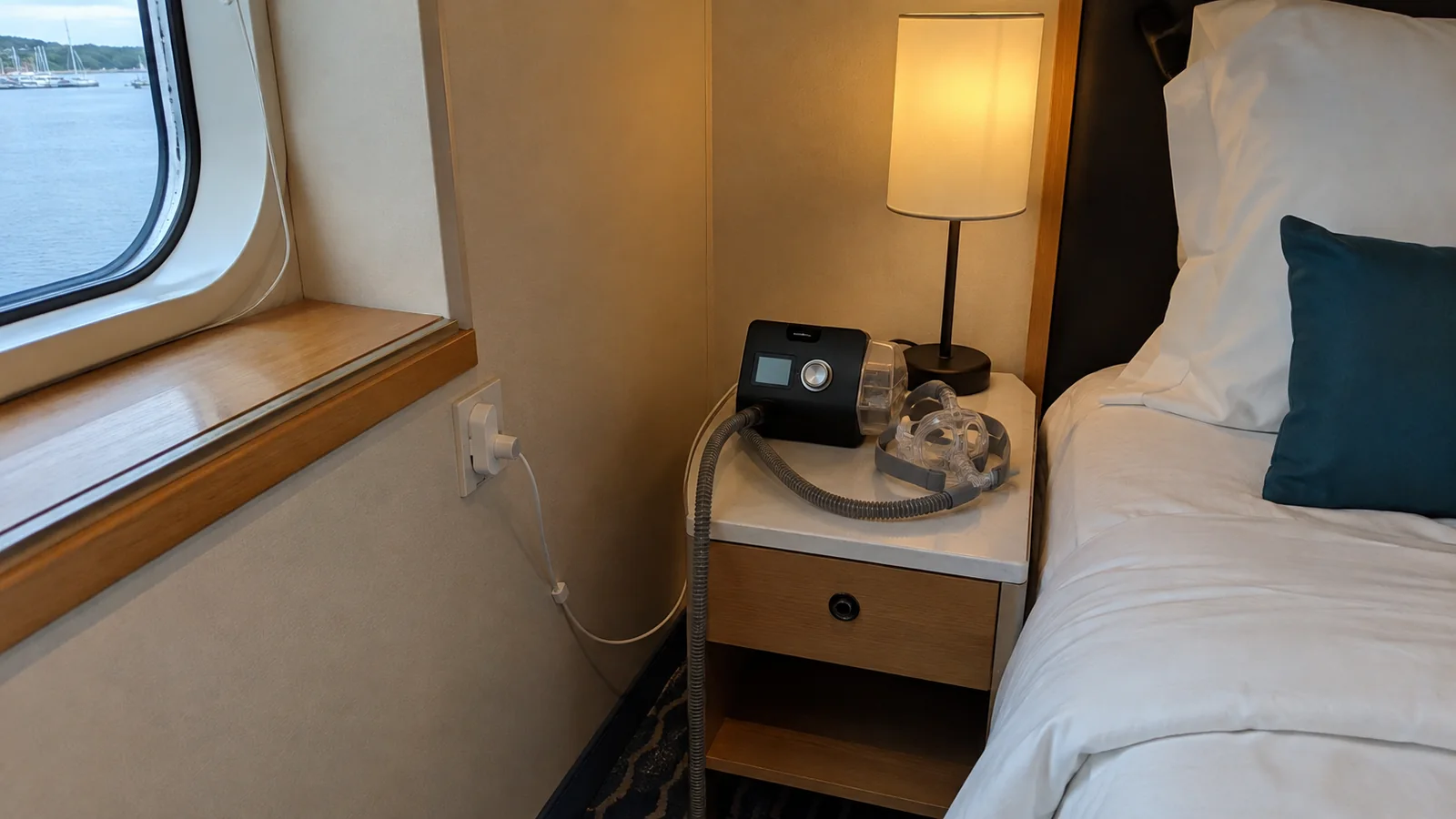
Once the cabin is available, place the machine where it will be used, connect the approved power supply, and check the water delivery. Turn it on according to the manufacturer’s instructions before unpacking around it.
Ask the cabin team to help address a cord that creates a trip hazard. The route should not block the bathroom, cabin door, or another traveler’s path out of bed.
Keep the device on an appropriate stable surface with its air intake clear. Do not improvise padding, covers, or storage that could interfere with ventilation.
My practical cruise cabin tips can help free up space, but the equipment’s operating instructions take priority over an organizing trick. A tidy nightstand is useful only if the machine works safely there.
Cleaning and spare parts
Follow the manufacturer’s cleaning instructions and bring the recommended supplies in permitted quantities. Ask your equipment provider how to manage the usual routine in a small cabin if you need an alternative arrangement.
Pack the small replacements that are appropriate for your model and that you know how to use. A spare mask cushion or connector may be much easier to carry than to locate during a short port visit.
Keep a record of the model, serial number, supplier contact, and prescribed settings. That record helps a professional understand the setup if something fails; it is not a reason to adjust the therapy yourself.
Allow cleaned parts to dry as directed, without blocking cabin exits or placing them where housekeeping might mistake them for discarded items. I would explain the setup briefly to the steward if its placement is unusual.
If water, power, or the machine is missing
For a missing delivery or unsuitable cord, contact the department responsible for the request as soon as you notice the problem. Give the cabin number and show the confirmation so staff can trace it.
For a device malfunction, use the manufacturer’s support process and tell the ship’s medical team if you cannot use prescribed therapy. The medical center may not have replacement parts or a substitute machine.
Do not change pressure settings, bypass a damaged component, or make an electrical repair based on an online tip. Ask the appropriate professional what to do next.
The CPAP packing check I would use
- Machine, correct power supply, mask, tubing, and humidifier components.
- Necessary spare parts and manufacturer-approved cleaning supplies.
- Prescription or relevant equipment documentation and supplier contacts.
- Cruise-line confirmation for water, power, and any battery arrangement.
- A plan for hotel nights, delays, and equipment trouble.
My preferred routine
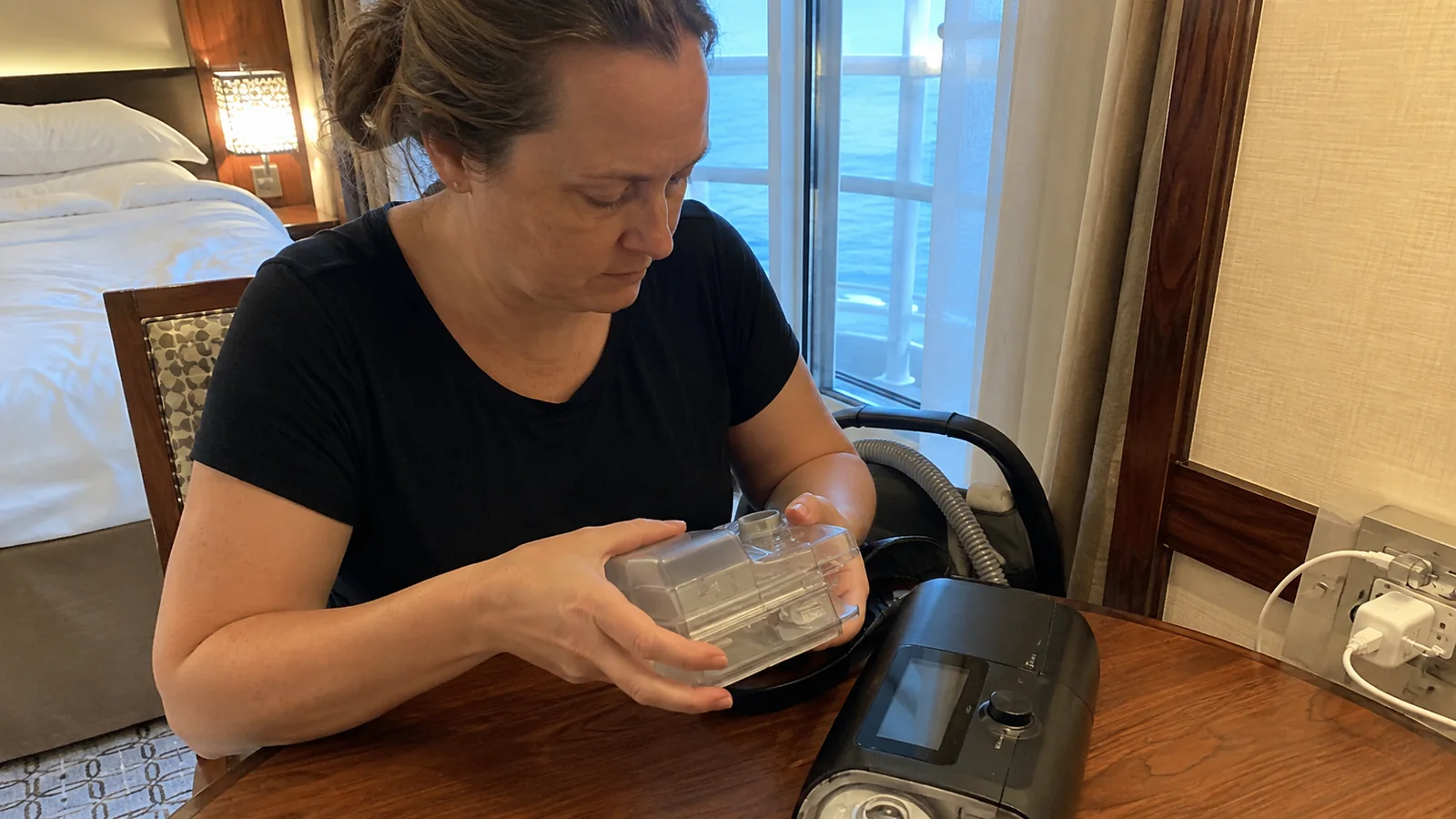
I would carry the whole system personally, check it when the cabin opens, and resolve missing pieces that afternoon. Having the machine ready before bedtime leaves the evening free for the vacation instead of a search for the right cable.