Bringing Medication on a Cruise: Rules and Storage
I would bring cruise medication in my carry-on, keep the pharmacy labels, and check the rules for every country on the itinerary. A valid prescription at home does not automatically make a medicine legal abroad, and a cabin minibar does not automatically provide suitable medical refrigeration.
The three things to settle before sailing are permission, supply, and storage. Once those are confirmed, packing becomes much easier.
My medication checklist before final payment
- List every prescription, nonprescription medicine, supplement, and medical device you plan to carry.
- Check destination restrictions using the active ingredient, not only the brand name.
- Ask your prescriber about an appropriate extra supply and any required letter.
- Confirm refrigerated storage and access arrangements with the cruise line.
- Plan airport security, transfers, the first afternoon onboard, and the trip home.
I would start earlier for controlled medicines, injections, refrigeration, or a long international itinerary. Those arrangements can require more than adding a note to a cruise reservation.
A prescription is evidence, not universal permission
The CDC’s advice on traveling abroad with medicine explains that countries can restrict medicines that are commonly prescribed elsewhere. Quantity limits, permits, and documentation can differ from one destination to the next.
Check the departure country, each port, any country used for an overnight stay, and places where airport transit rules may apply. I would ask the relevant embassy or national authority when the published instructions do not clearly cover the journey.
Use the generic drug name, strength, formulation, and quantity in that question. “My anxiety medicine” or a U.S. brand name may not identify the substance clearly enough for an official answer.
Do not assume staying aboard avoids every legal requirement. Ask how the destination treats medicines remaining on a visiting vessel when a rule is unclear.
I would keep the reply with the prescription rather than relying on a travel forum. Another passenger’s uneventful trip does not establish what is permitted on yours.
Controlled medicines need a deliberate check
Pain medicines, stimulants, sleep medicines, and some anxiety treatments can trigger additional requirements. The category depends on the substance and destination, so I would check the exact medicine rather than treating every prescription alike.
The International Narcotics Control Board’s traveler guidance is a useful starting point for country information on controlled medicines. Confirm the current rule with the destination authority because published country submissions may not answer every situation.
Ask whether a permit is required, how far ahead to apply, what quantity is allowed, and whether a doctor’s letter needs specific wording. Some requirements concern the length of treatment as well as the number of tablets.
If a medicine cannot legally accompany the trip, discuss alternatives with your prescriber before making nonrefundable plans. Do not stop, substitute, or change a prescribed treatment on your own to fit a vacation.
Keep the original labels readable
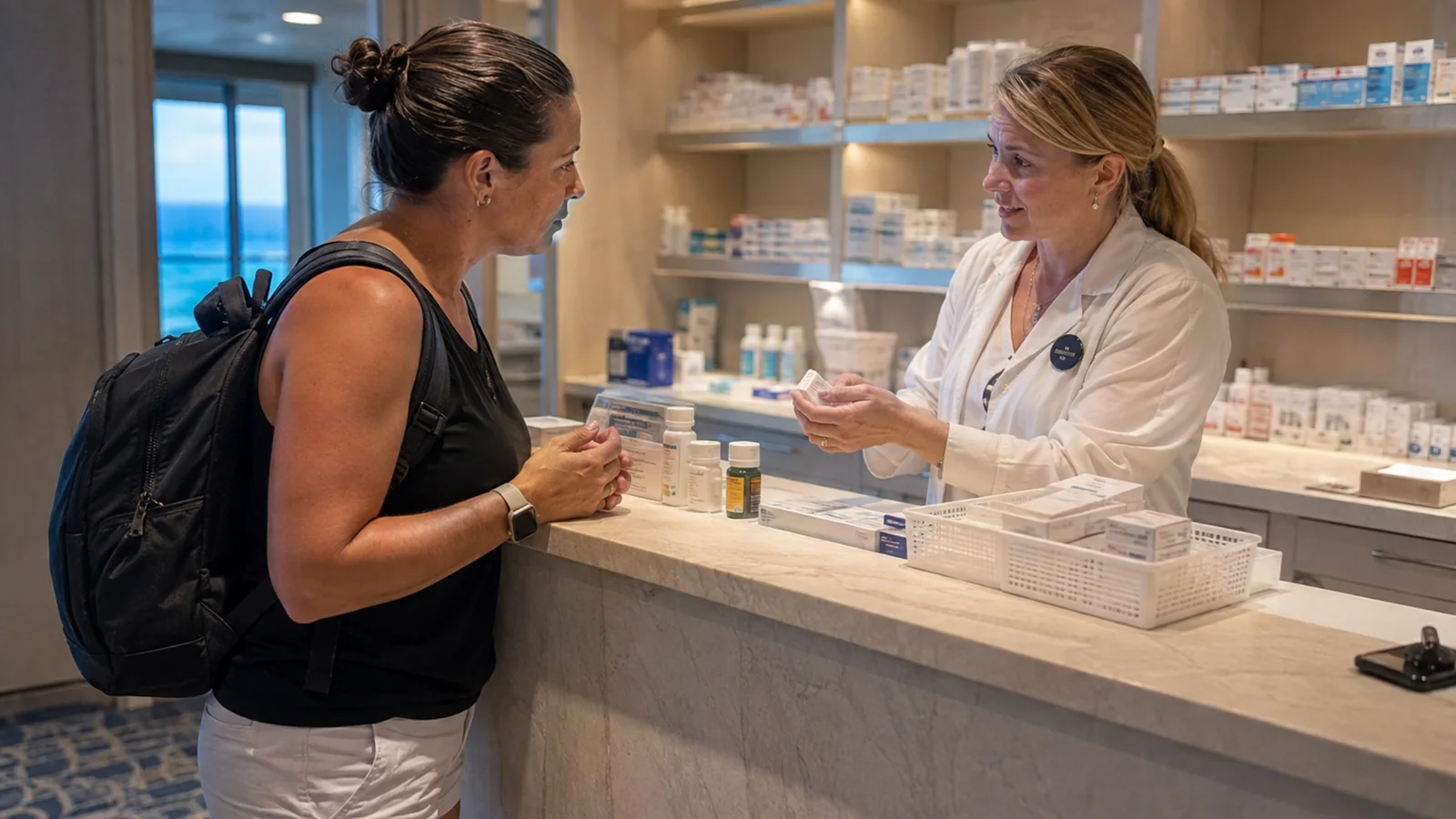
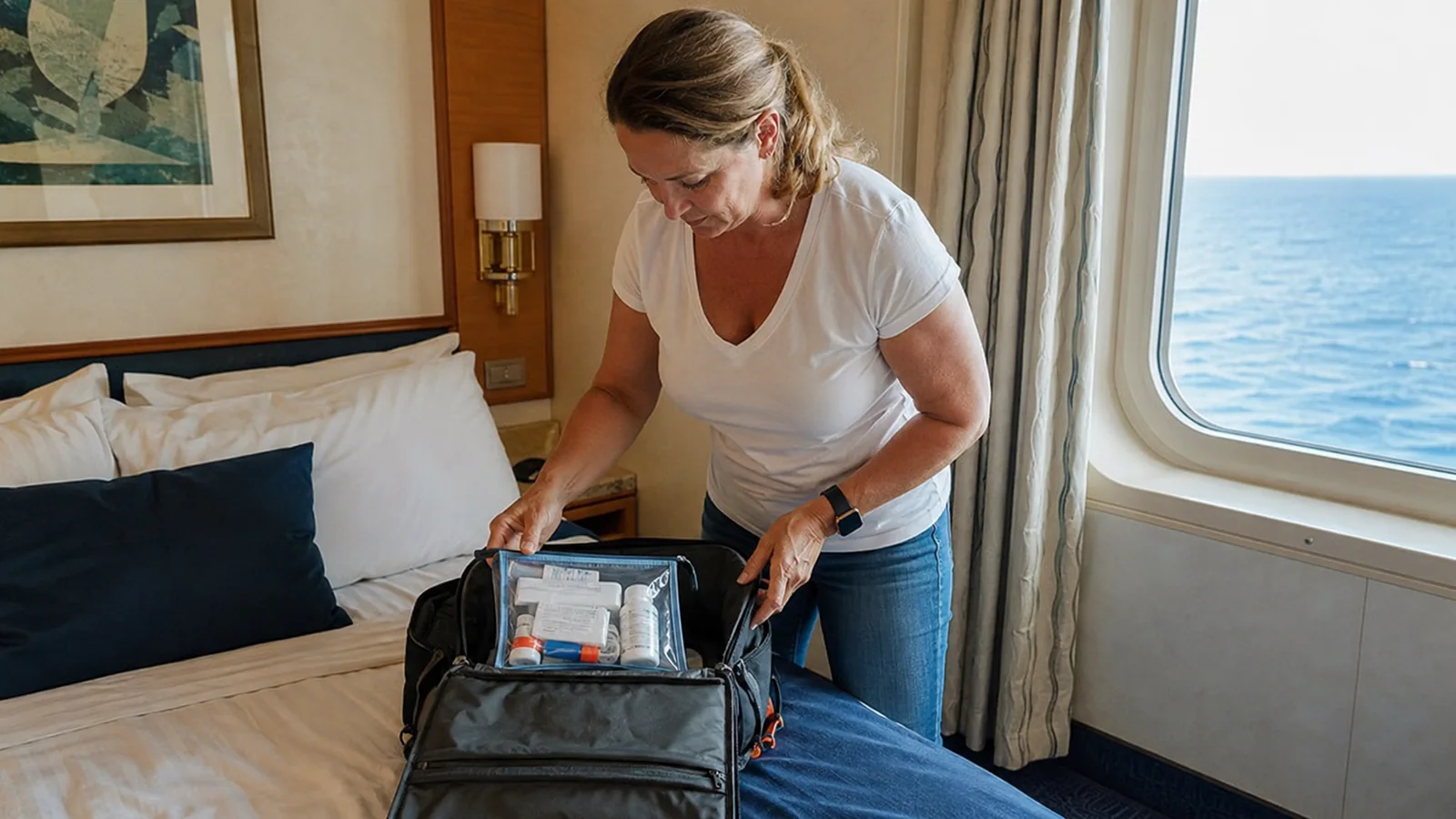
I would carry medicines in their original labeled containers or pharmacy-prepared packaging, with the traveler’s name matching the booking documents. Include a medication list using generic names so a clinician abroad can identify the treatment.
A weekly organizer can make daily routines easier, but it should not be your only record of what the pills are. Ask the destination authority whether the medicine must remain in its original container during travel.
If bulky packaging creates a problem, ask the pharmacist about a smaller labeled container. I would solve that at the pharmacy rather than transferring several medicines into an unmarked bag.
A prescriber letter is especially useful for injections, controlled drugs, unusual quantities, and medical equipment. Ask what information the destination requires before requesting the letter so it does not need to be rewritten.
Pack enough without ignoring quantity limits
Ask your prescriber and pharmacy for enough medicine for the cruise, travel days, and a reasonable delay margin. Insurance refill timing and destination limits can affect how much you can obtain and carry.
I would count the full journey from leaving home to returning, including the pre-cruise hotel. A seven-night sailing can easily create more than seven days away from your normal pharmacy.
Keep the supply you need under your control during flights and embarkation. If you divide backup supplies between bags or companions, first check that doing so is consistent with documentation and import requirements.
Never put the only supply in a checked suitcase. My cruise packing tips emphasize planning for delayed bags, and medication is the clearest reason to take that seriously.
Airport security is a separate set of rules
Passing airport screening does not establish permission to import a medicine into another country. Airline baggage rules, security screening, customs, and cruise-line policies answer different questions.
In the United States, TSA permits medically necessary liquids above the usual liquid limit in reasonable quantities, with declaration and additional screening procedures. Check the rules of other departure airports separately.
Keep the medication and supporting documentation easy to remove for inspection. If you use cooling packs, needles, or a pump, review the applicable screening instructions before reaching the checkpoint.
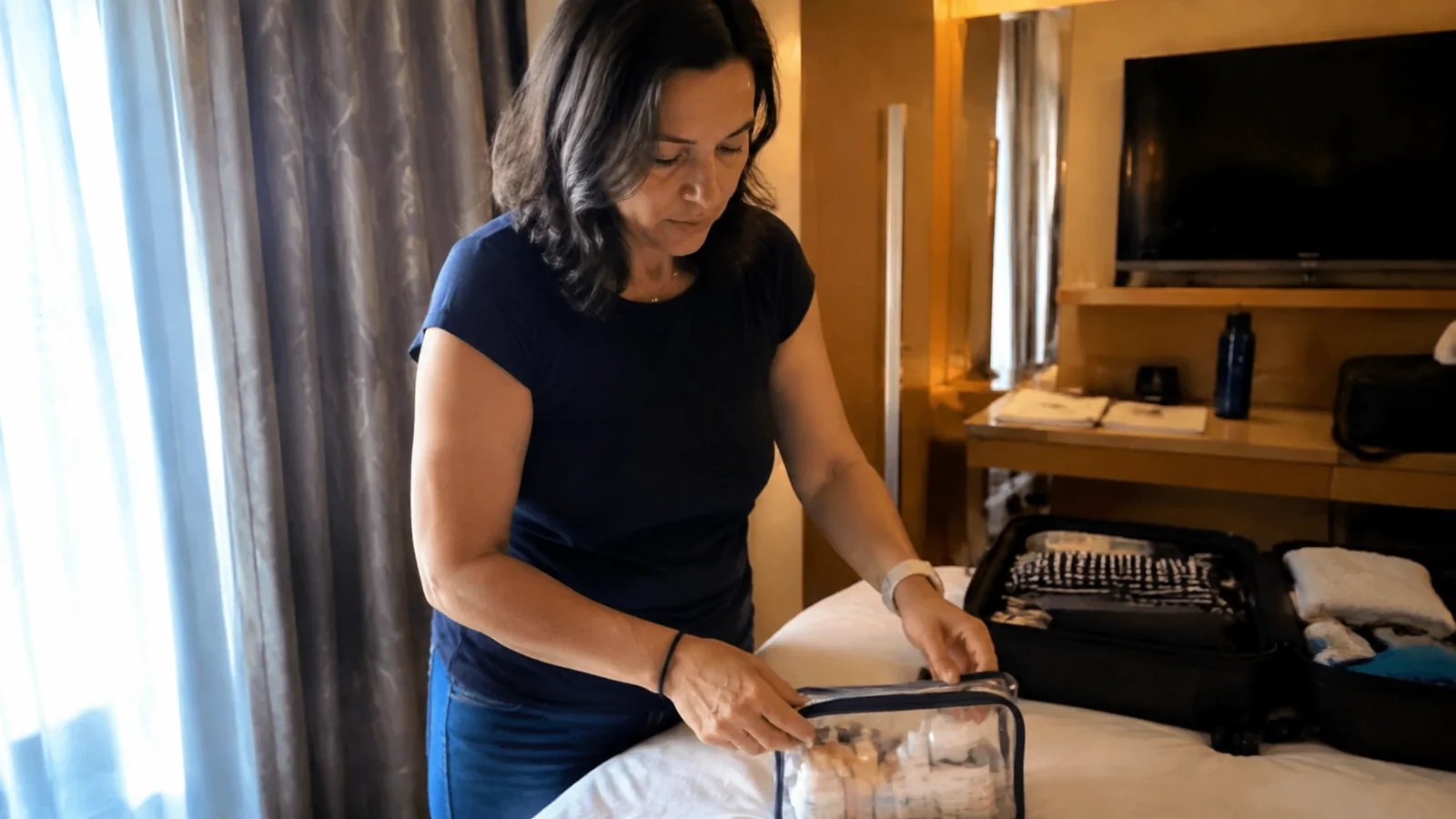
I would allow extra time without packing the supplies where an officer has to empty my entire bag to find them. A small organized medical pouch makes the process less awkward and keeps the labels protected.
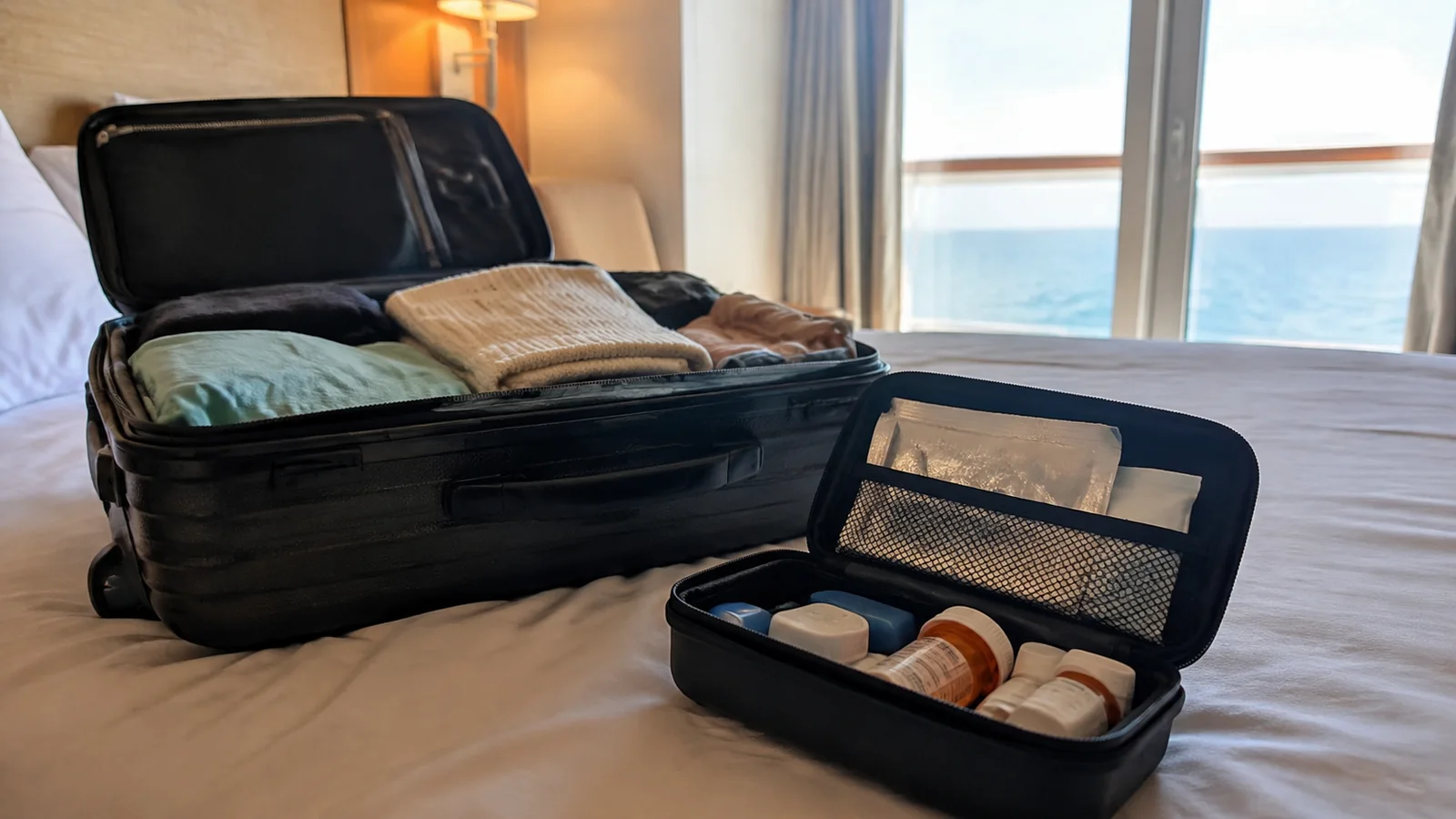
Refrigeration starts before you reach the cabin
Ask the pharmacist for the storage range of your exact product, including differences between unopened and in-use supplies. Do not apply one insulin product’s instructions to every injectable medicine.
Write down the acceptable temperatures in Fahrenheit, how long the product can be outside that range, and what to do after an excursion. Your manufacturer or pharmacist should supply those answers.
Plan cooling for the flight, airport wait, transfer, hotel, terminal, and time before cabin access. I would not rely on the ship’s refrigerator for the hours before I can reach it.
Use an appropriate travel container according to its instructions and protect medication from direct contact with frozen packs if freezing would damage it. A bag that feels cool is not proof that it maintains the required temperature.
Ask your pharmacist whether a temperature monitor would be useful for the particular medicine and journey. The goal is to know whether the storage plan worked, not to guess from the weather outside.
Confirm what the cruise line will actually provide
Contact the line’s accessibility or medical-needs department before sailing and specify the storage requirement. Ask whether suitable refrigeration can be provided in the cabin or whether another arrangement is necessary.
A minibar may be a beverage cooler, and its temperature may not suit a medical product. “There is a fridge in the room” is therefore not enough information to close the request.
If storage is elsewhere, ask when you can access it and how doses will be collected. That arrangement must work with the prescribed schedule, including early port departures and evenings.
On embarkation day, verify the actual setup before the temporary cooling solution runs out. I would keep the written request handy and contact the named department promptly if the arrangement is missing.
Needles, sharps, and routine equipment
Bring the supplies required to use the medication, not just the medicine itself. Depending on the treatment, that may include needles, a delivery device, testing supplies, batteries, or a compatible charger.
Ask the cruise line how to request a sharps container and where it should remain in the cabin. Used needles should not go loose into a wastebasket or ordinary recycling.
Keep enough essential equipment in the carry-on to cover delayed luggage. My often-forgotten cruise items checklist can help with the smaller pieces, but check every proprietary part against your own device.
If a sensor, pump, or other device has special screening or operating instructions, carry them. I would also save the manufacturer’s support contact offline in case a replacement or troubleshooting question arises.
Time zones can complicate a familiar routine
Ask your clinician or pharmacist how to handle time-zone changes for medicines that require careful spacing. Do not assume every treatment should immediately follow the ship’s displayed time.
Make a written schedule for the travel days if the answer is complicated. Include the medicine name and the time reference being used so a companion can understand the plan if needed.
Phone clocks may change automatically while the ship keeps a different local time. I would check alarms after a time change rather than discovering the difference when a dose is overdue.
Never double a dose or change intervals simply to catch up without following the product’s missed-dose advice or professional instructions. The correct response depends on the medicine.
Port days need a smaller version of the same plan
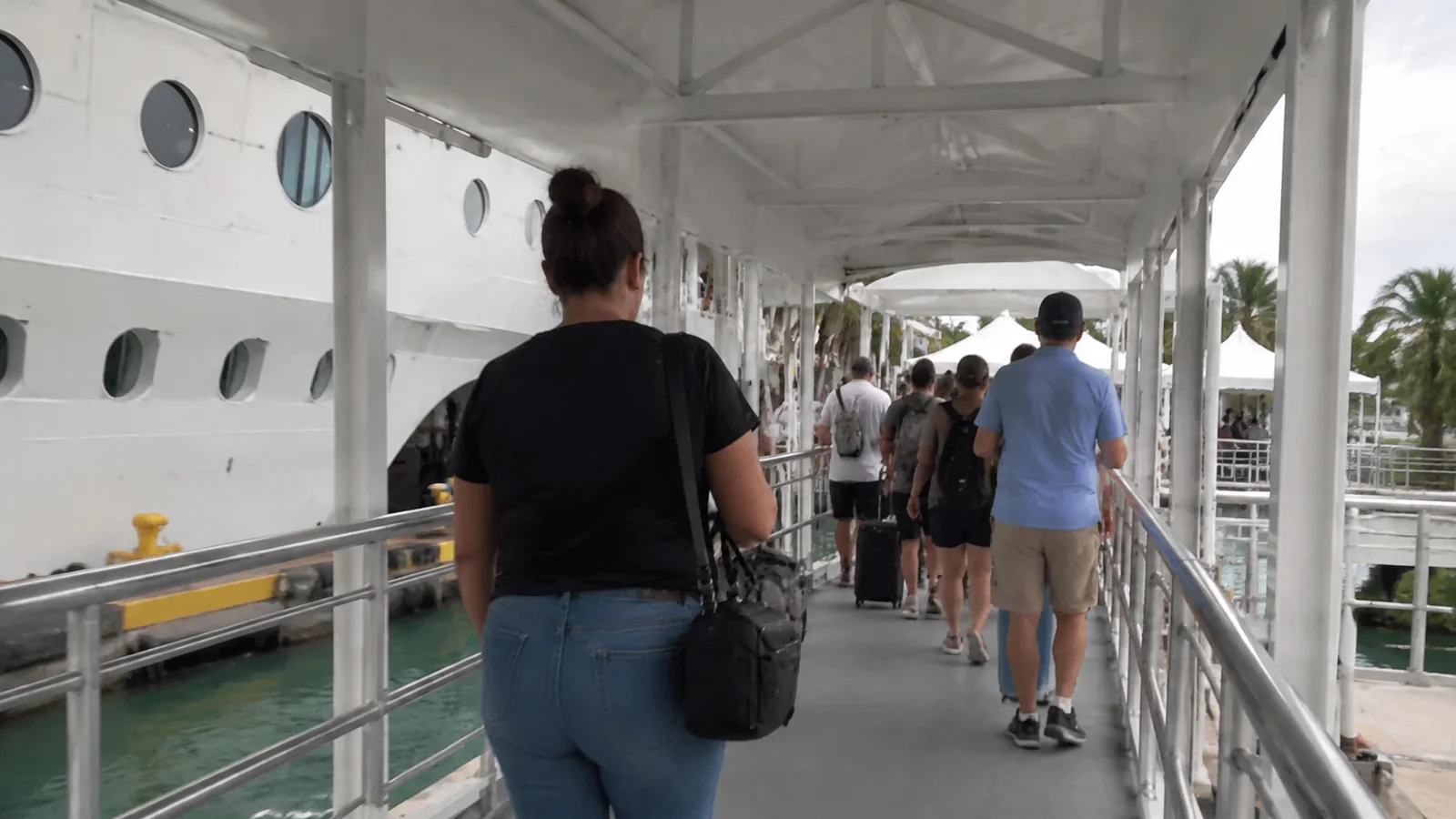
Carry medication you may need while ashore, plus any appropriate delay margin permitted by local rules. Keep it protected from heat, direct sunlight, and water according to its storage instructions.
An excursion bus, beach bag, or parked vehicle can become much hotter than the surrounding air. I would choose a day bag and cooling arrangement for the actual outing, not just the short walk off the ship.
Keep the relevant label or documentation with medicines taken ashore. My cruise packing list can serve as a reminder to move essential items into the port bag each morning.
If medicine is lost or damaged
Contact the ship’s medical center promptly when essential medication is missing, spoiled, or unusable. Tell them the generic name, dose, last dose taken, and any symptoms or time-sensitive concerns.
The ship may not stock your exact medicine, and a shoreside pharmacy may require a local prescription. I would not buy an unfamiliar substitute from a port shop without qualified advice.
Contact your insurer’s assistance service when arranging replacement care or an interrupted journey. Keep receipts and records, but do not delay urgent medical attention while resolving reimbursement.
The medication plan I would book around
I would choose a trip only after confirming that the required medicine can travel legally, remain usable, and be taken on schedule. Labels, enough supply, and a tested storage plan matter much more than making the medical pouch look tidy.