Landmarks in Greece: 12 Icons and How to Plan the Route
Greece has enough temples, theaters, palaces, monasteries, and fortified towns to turn a relaxed vacation into an archaeological obstacle course. This shortlist compares the landmarks that add the most meaning to an Athens stay, mainland circuit, or island trip, with honest notes about time, heat, stairs, ferries, and advance tickets.
Choose your Greek landmark route first
- Three or four days: Acropolis, Ancient Agora, and one Athens museum
- Five to seven days: Athens plus Delphi or a Mycenae and Epidaurus loop
- Eight to ten days: Athens, Delphi, Meteora, and selected Peloponnese sites
- Crete trip: Knossos plus Heraklion’s archaeological collections
- Mykonos stay: Delos, only when boat timing and weather cooperate
- Rhodes stay: Medieval City and Palace of the Grand Master
- Santorini stay: Akrotiri, with Ancient Thera as a separate outing
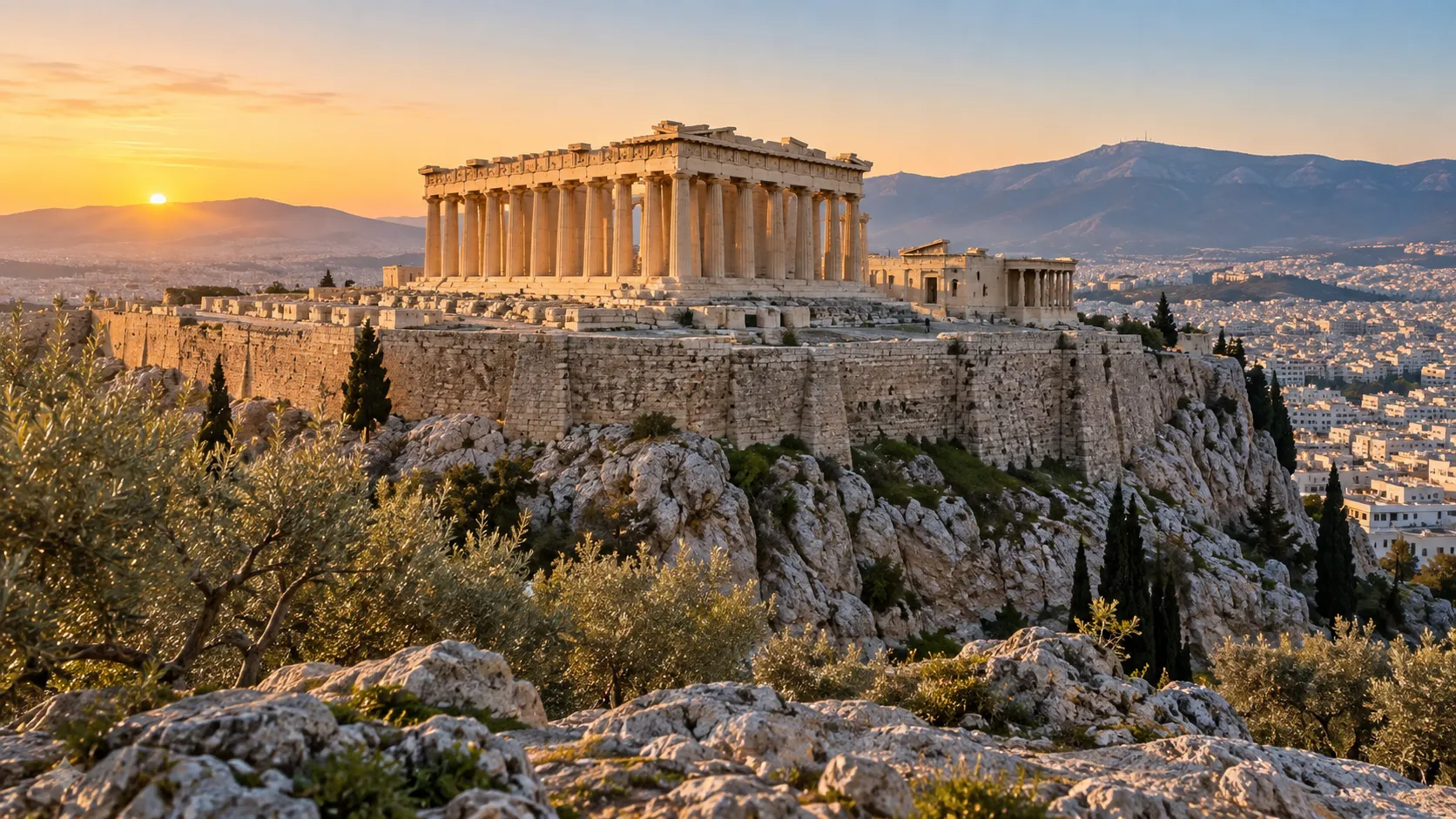
1. The Acropolis and Parthenon, Athens
The Acropolis is the essential first landmark because the hill gathers the Parthenon, Erechtheion, Temple of Athena Nike, Propylaea, and ancient slopes into one readable setting. It also gives Athens a visual center that helps the rest of the city make sense.
Buy through Greece’s official Hellenic Heritage ticket service and follow the selected entry instructions. The Ministry of Culture’s Acropolis page carries current opening, ticket, closure, and accessibility details, which matter during heat, wind, restoration work, or labor action.
Go early, wear shoes with grip, and bring water because polished stone, slopes, and limited shade are a surprisingly bossy combination. Visitors needing the lift or a step-reduced route should arrange access in advance and confirm same-day operation.
Best fit: Every first Athens visit. Tradeoff: Crowds and exposure make timing more important than squeezing in another attraction before lunch.
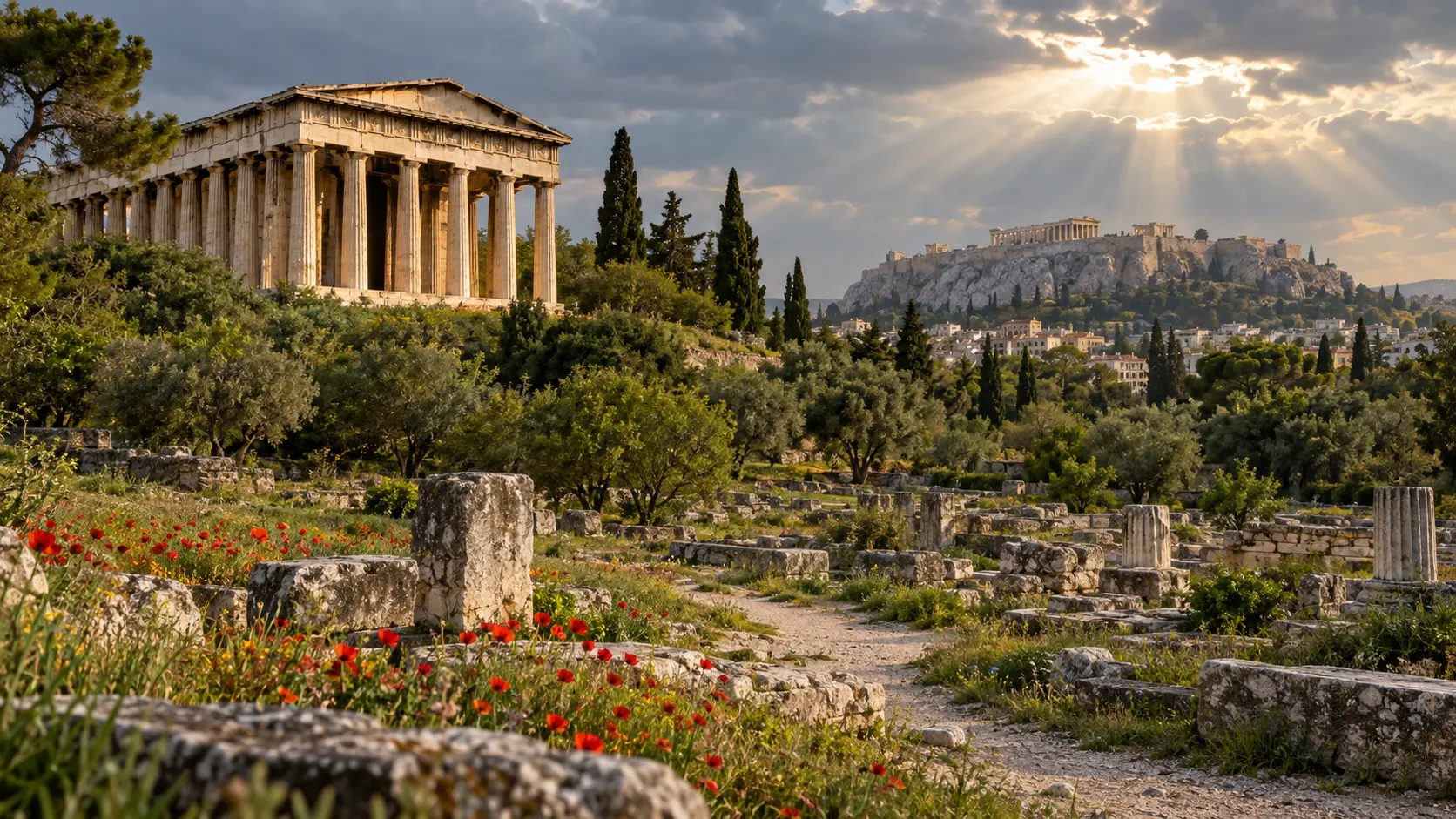
2. Ancient Agora and Temple of Hephaestus, Athens
The Ancient Agora explains daily civic, political, religious, and commercial life better than one more monumental temple. Its unusually well-preserved Temple of Hephaestus and the reconstructed Stoa of Attalos make the sprawling ruins easier to interpret.
Allow at least 90 minutes and pair it with Monastiraki or the Acropolis, not a cross-city museum sprint. Uneven paths and sun exposure reward supportive shoes and an early start.
Best fit: Travelers interested in democracy, philosophy, and how ancient Athens functioned. Tradeoff: The site asks for imagination, so an audio guide or licensed guide adds real value.
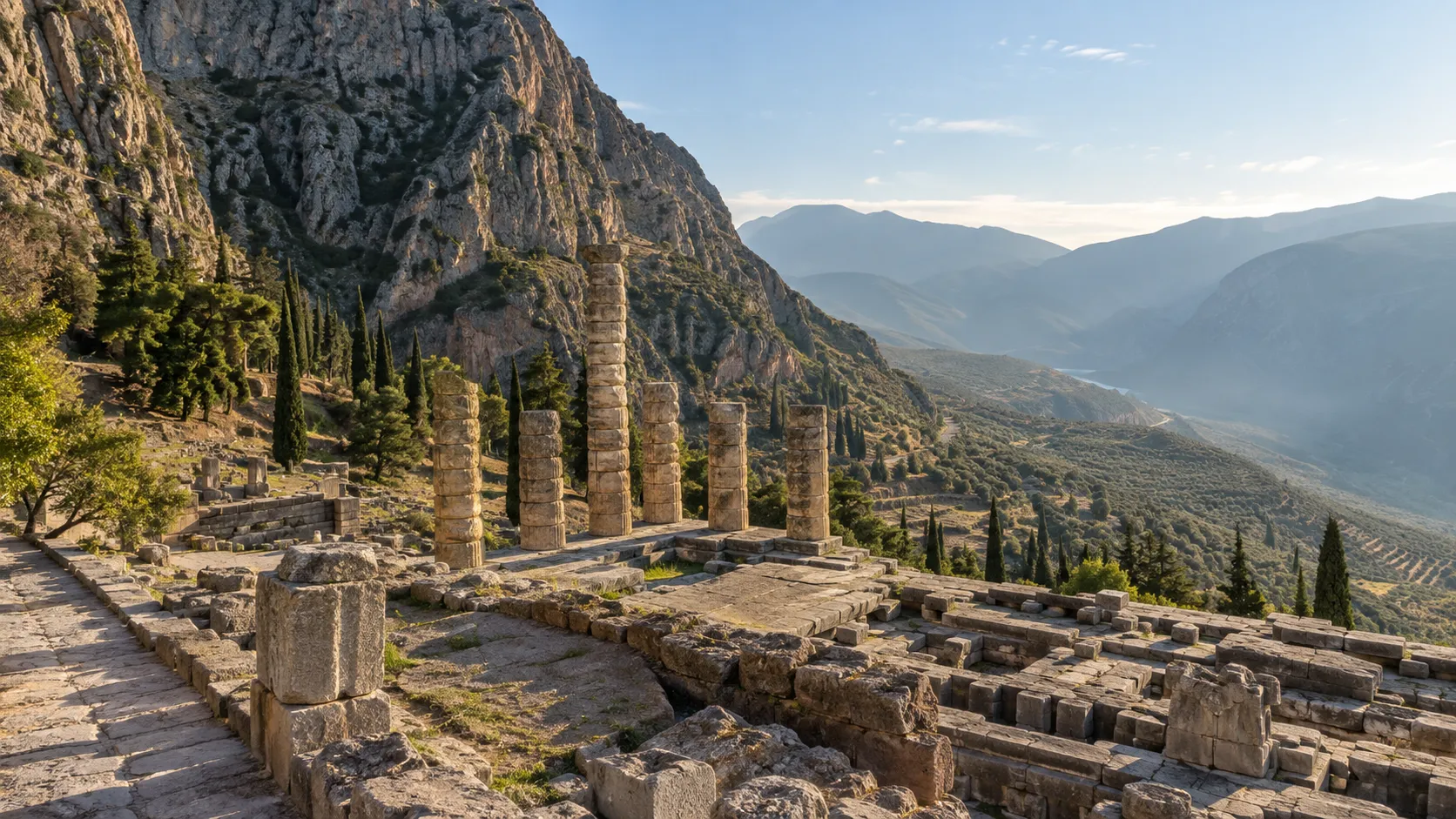
3. Delphi, Central Greece
Delphi climbs a mountain slope beneath dramatic cliffs, with the Temple of Apollo, Sacred Way, theater, stadium, and museum tied to the ancient oracle. The landscape is not decorative background; it is part of why the sanctuary feels so powerful.
The site sits roughly 115 miles from Athens, making a long day trip possible but not gentle. An overnight in Delphi or nearby Arachova creates room for the museum, upper site, changing weather, and a meal without watching the bus clock like an oracle of doom.
Best fit: Mythology, mountain scenery, and a first mainland extension. Tradeoff: Steep paths and a long return make it tiring for travelers with limited mobility.
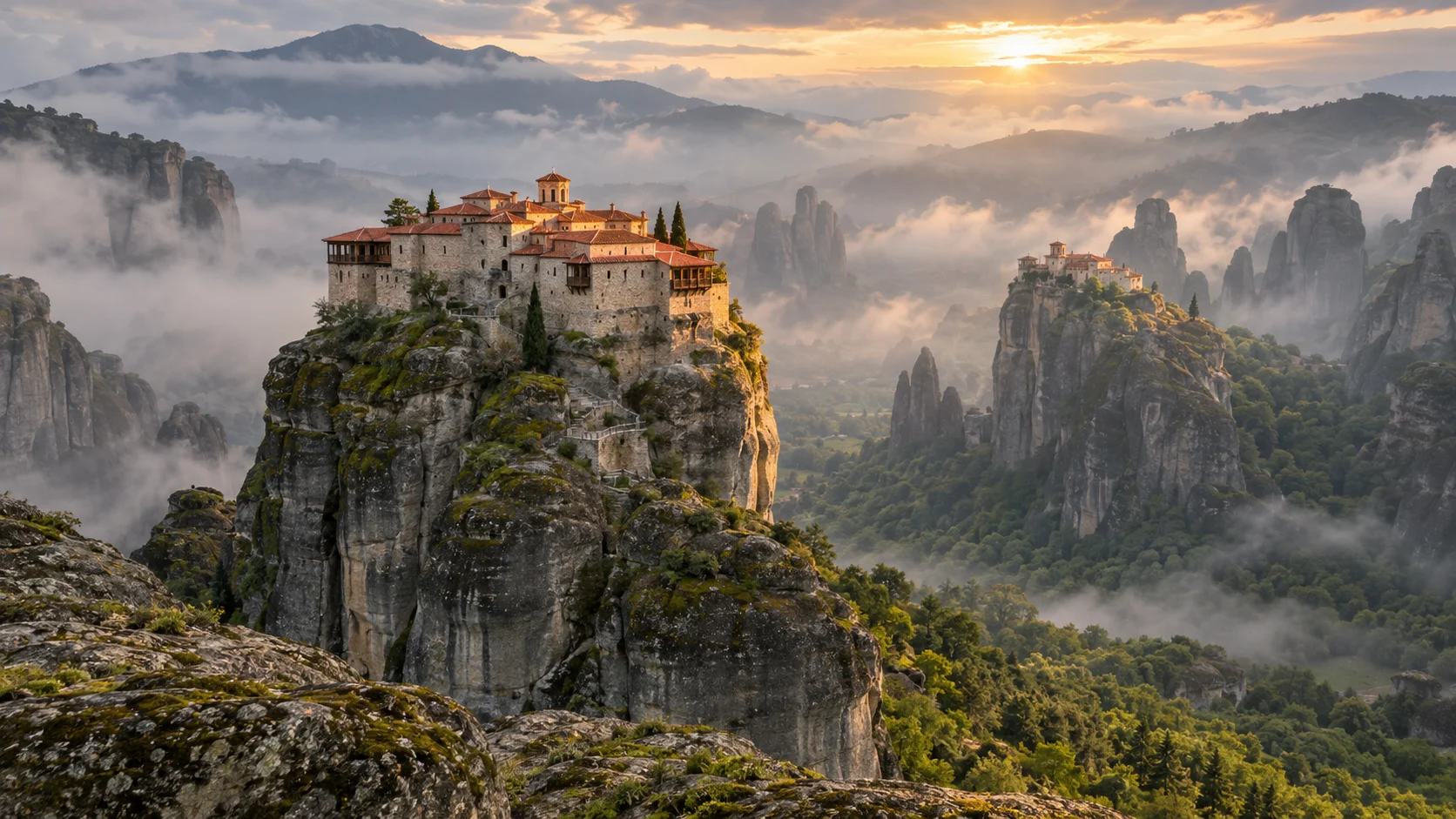
4. Meteora monasteries, Thessaly
Meteora’s active Orthodox monasteries occupy sandstone towers above Kalambaka and Kastraki. The landmark is both a living religious landscape and an extraordinary feat of access, not simply a scenic rock formation.
Each monastery sets its own closing day and seasonal hours, so consult the current Meteora monastery schedule shortly before travel. Shoulders must be covered, and monastery-specific dress rules apply even during a July heat wave.
St. Stephen is generally the least stair-intensive visitor option, while others require substantial climbing after limited parking. Two nights nearby let you see monasteries at different times and avoid treating the area as a blurry stop between highways.
Best fit: Sacred architecture, landscapes, and photography. Tradeoff: The monasteries are far from Athens and not equally accessible.
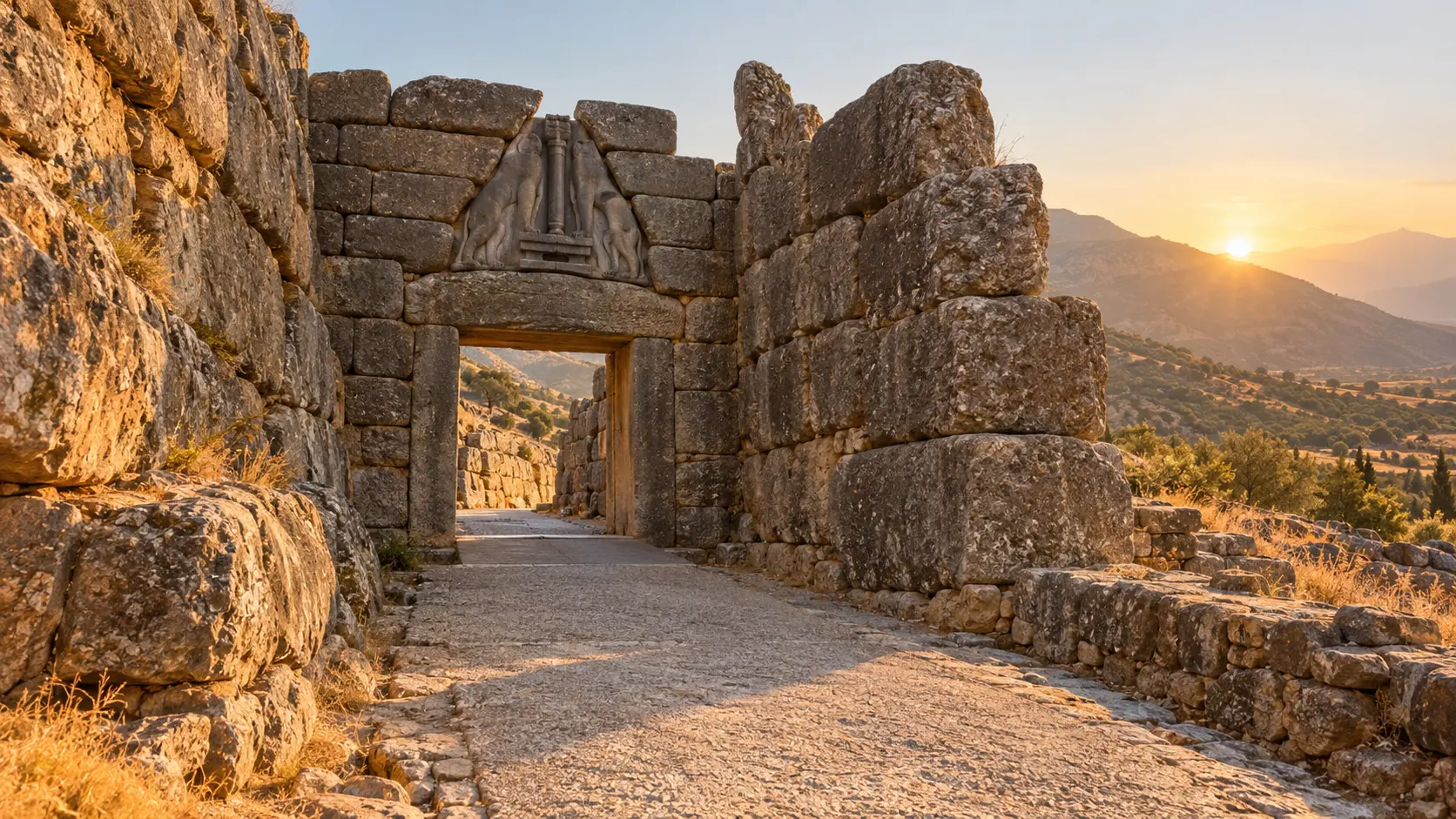
5. Mycenae, Peloponnese
Mycenae brings Bronze Age Greece into focus through the Lion Gate, massive walls, Grave Circle A, palace remains, and the nearby Treasury of Atreus. It is the place to separate Mycenaean history from the later classical world most visitors meet in Athens.
Base in Nafplio or combine Mycenae with Epidaurus using a car, driver, or well-timed tour. The exposed hillside becomes fiercely hot, so arrive early and save the museum for the brightest part of the day.
Best fit: Homer readers, archaeology fans, and Peloponnese road trips. Tradeoff: Public-transport connections are less convenient than a structured tour.
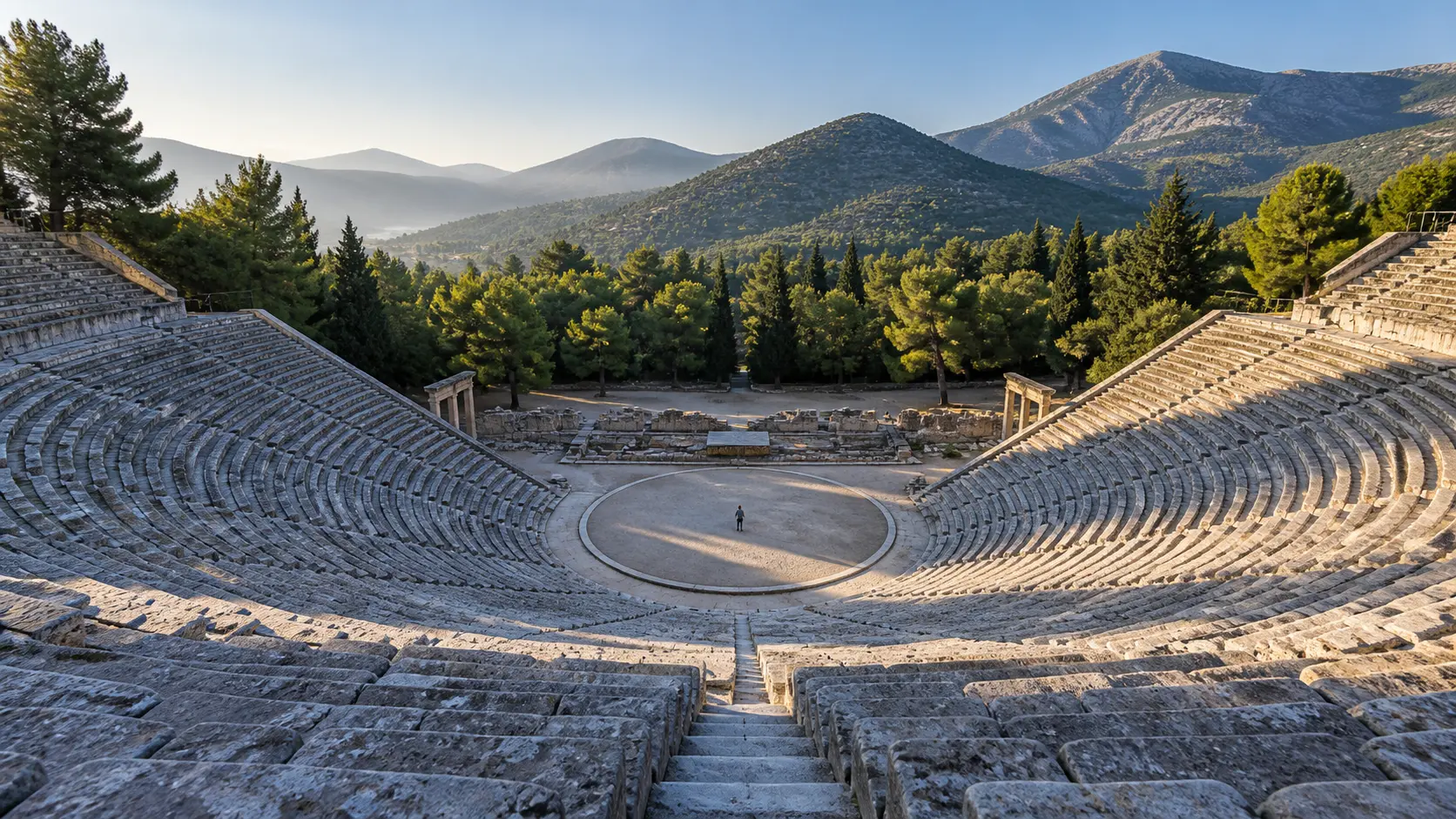
6. Ancient Theater of Epidaurus
Epidaurus combines the Sanctuary of Asklepios with a fourth-century BCE theater celebrated for its design and acoustics. The broader healing sanctuary matters as much as the famous semicircle, so do not photograph the theater and flee.
Summer performances change access and bring separate ticketing, traffic, and evening schedules. Check the official site and festival calendar, then pair Epidaurus with Nafplio rather than forcing it into the same day as distant Olympia.
Best fit: Theater, architecture, and ancient medicine. Tradeoff: A quiet daytime visit and a live performance are different experiences with different logistics.
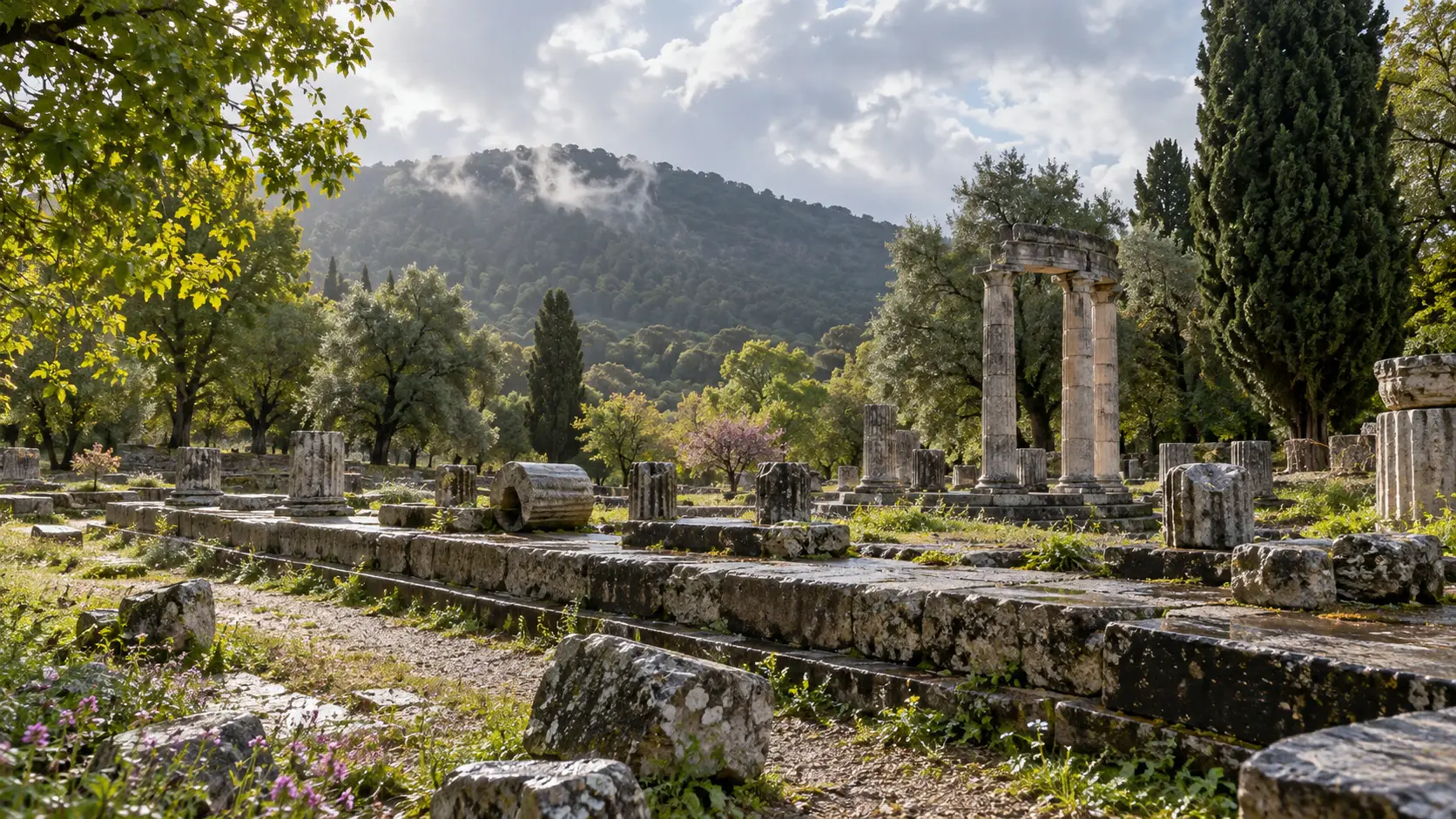
7. Ancient Olympia
Olympia preserves the sanctuary that hosted the ancient Olympic Games, including the stadium, Temple of Zeus remains, workshop associated with Phidias, and museums. Running the stadium is optional; interpreting a ruin after heatstroke is not recommended.
The site belongs in a western Peloponnese itinerary and is too far from Athens for a pleasant casual day trip. Stay locally or connect it with the Mani, Pylos, or another carefully paced road route.
Best fit: Sports history and longer mainland drives. Tradeoff: Considerable travel time for ruins that become meaningful through context rather than vertical spectacle.
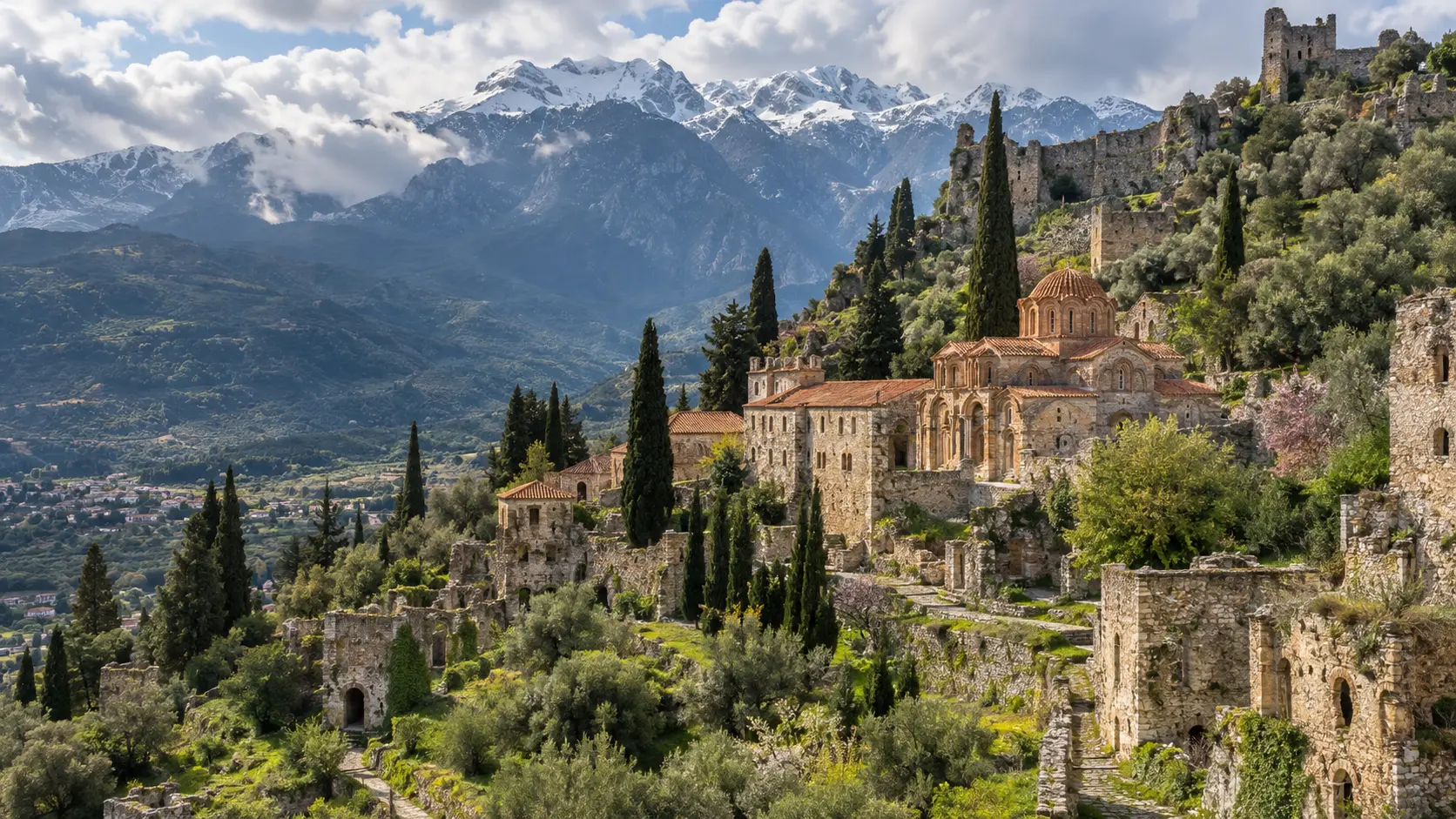
8. Mystras, near Sparta
Mystras spreads Byzantine churches, palaces, houses, and monasteries over a steep hillside beneath a fortress. Frescoes and layered urban remains make it an excellent corrective to the idea that Greek history stopped when classical temples did.
Upper and lower entrances can reduce backtracking when transport is coordinated, but the site still involves slopes, cobbles, and stairs. Bring water and modest clothing for active religious spaces.
Best fit: Byzantine history and Peloponnese travelers who want more than antiquity. Tradeoff: Heat and terrain make a quick midday stop a poor plan.
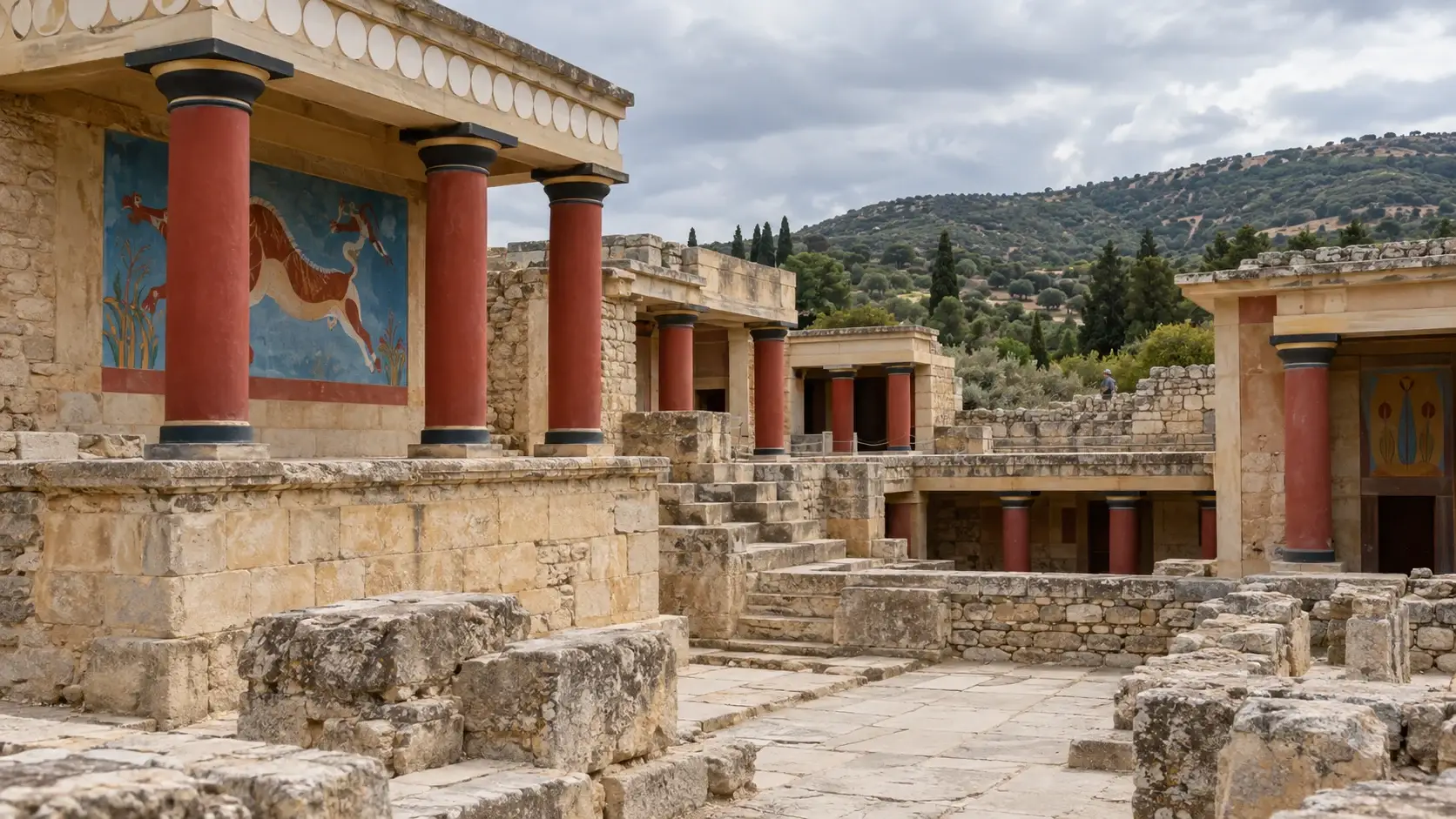
9. Knossos, Crete
Knossos near Heraklion is the most famous Minoan palace, associated with complex ceremonial, administrative, storage, and residential spaces. Its twentieth-century reconstructions are visually memorable and debated, which makes a good guide especially helpful.
In 2025, the UNESCO World Heritage list added Knossos with five other Minoan palatial centers as one serial property. Pair the site with the Heraklion Archaeological Museum so original objects restore detail that the palace alone cannot provide.
Best fit: Crete itineraries and Bronze Age history. Tradeoff: Summer crowds and limited shade argue for the first available entry period.
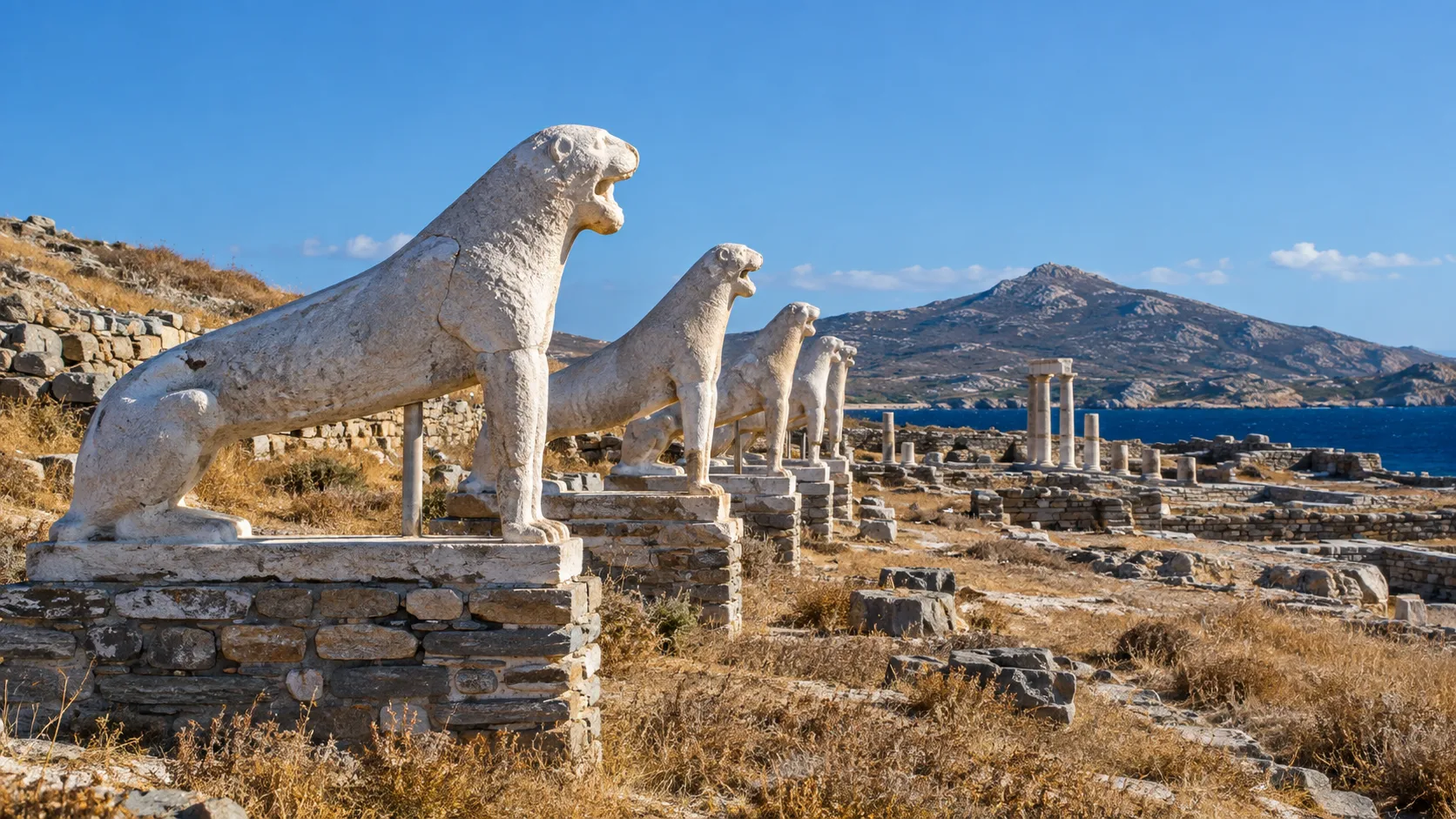
10. Delos, Cyclades
Uninhabited Delos was a sacred center and major trading port, with sanctuaries, mosaicked houses, the Terrace of the Lions, and broad views across an exposed island. Most visitors arrive by excursion boat from Mykonos, so weather and return times control the day.
Check the Ministry of Culture’s Delos status and hours plus your licensed boat operator before departure. Carry water, sun protection, and shoes for broken stone because shade and easy retreat are scarce.
If arriving by ship, the distinction between Tourlos docking and tendering can decide whether Delos is realistic. Our Mykonos cruise-port planner helps protect the return buffer.
Best fit: Archaeology lovers with a full Mykonos day. Tradeoff: Boats, wind, heat, and a fixed return make this a poor improvised excursion.
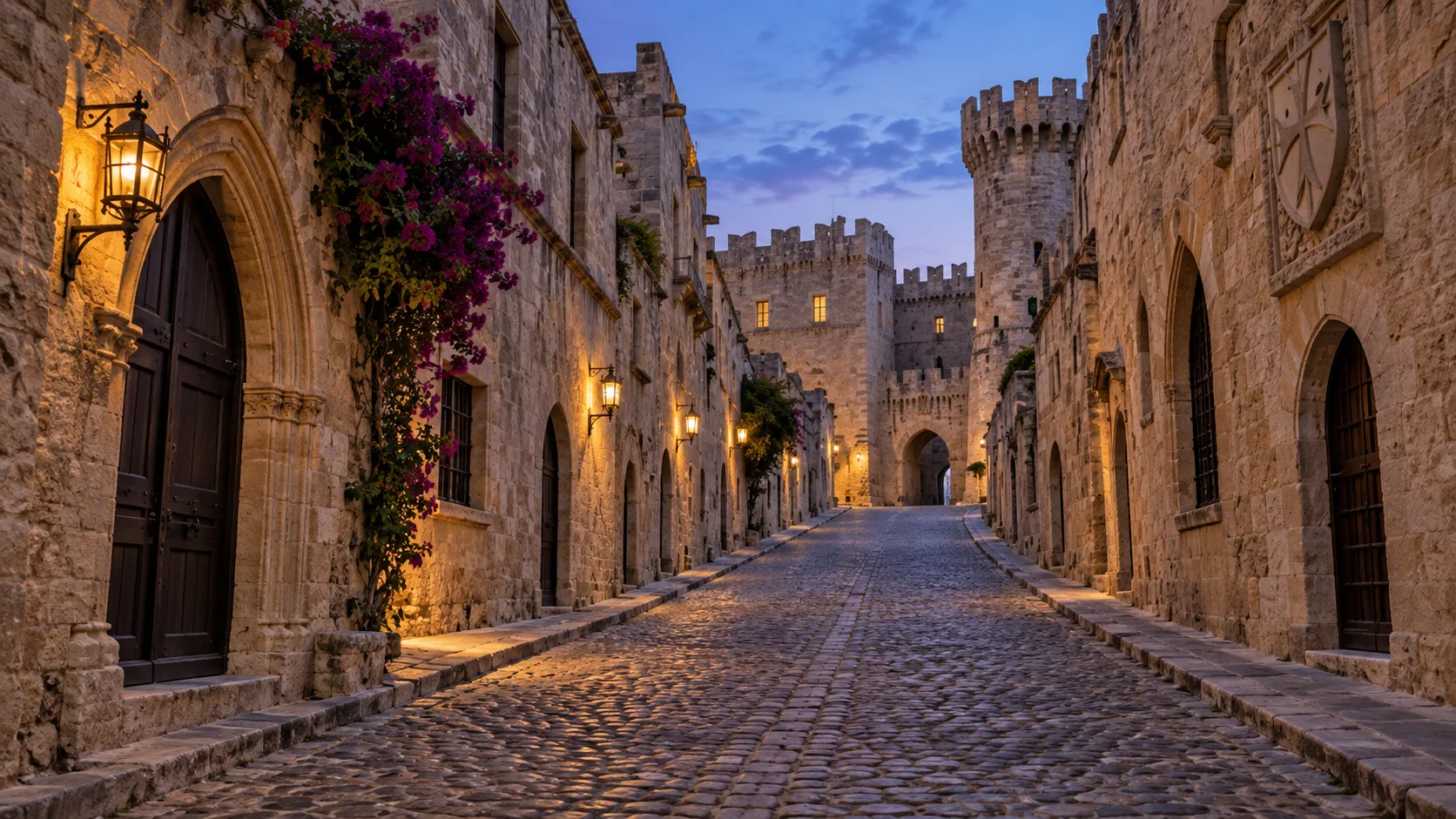
11. Medieval City of Rhodes
Rhodes Old Town surrounds the Street of the Knights, defensive walls, gates, religious buildings, and the Palace of the Grand Master with layers from Byzantine, Hospitaller, Ottoman, Italian, and modern periods. It is a functioning neighborhood, not a sealed museum set.
Stay overnight if possible, when many day visitors have left and the lanes become easier to read. Cobbles are atmospheric but unforgiving, so mobility planning should include exact hotel access and taxi drop points inside or near the walls.
Best fit: Travelers who want an inhabitable historic city and island beaches in one base. Tradeoff: Cruise-day congestion can turn the central lanes into a slow-moving parade.
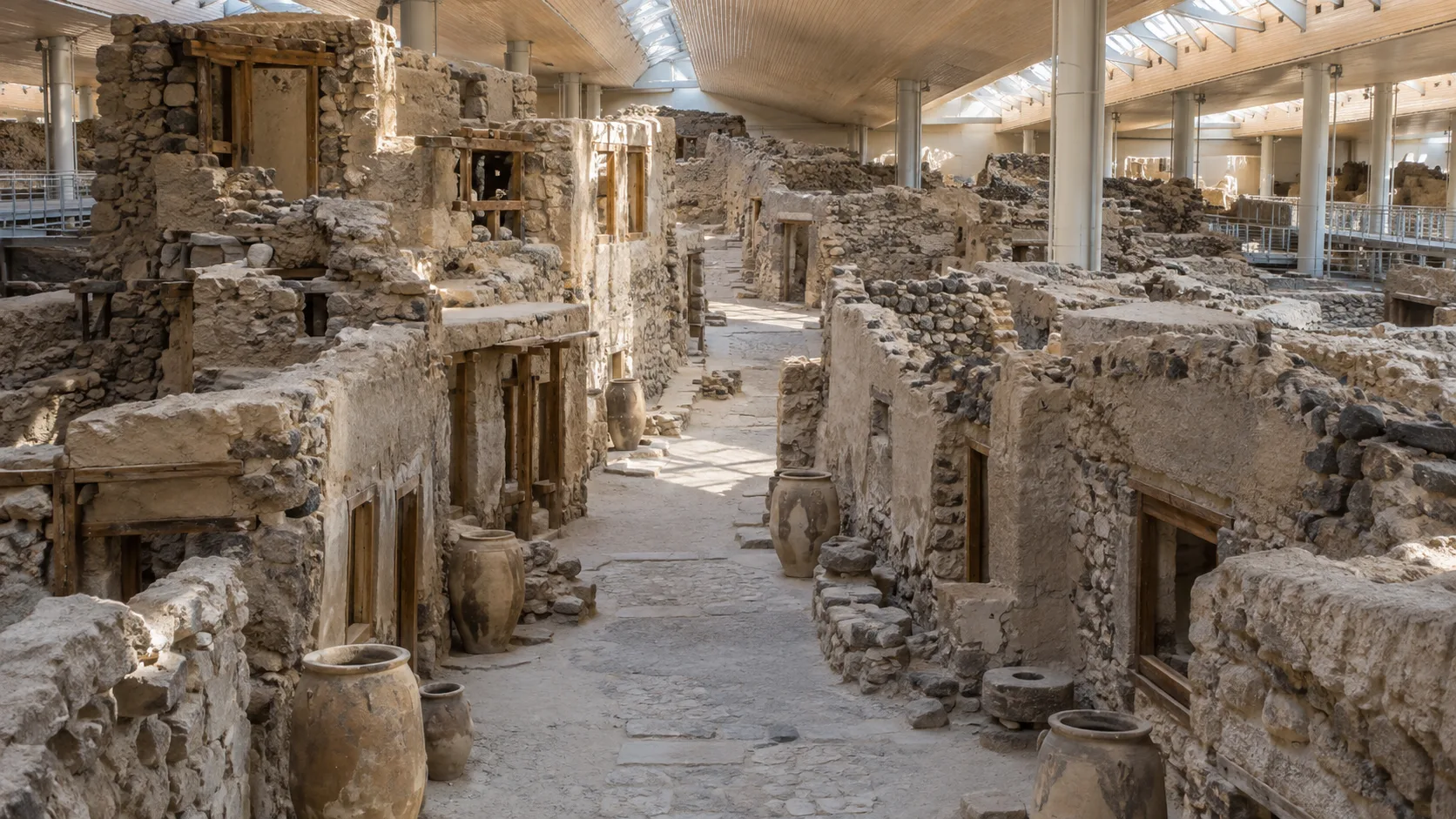
12. Akrotiri, Santorini
Akrotiri preserves a Bronze Age settlement buried by volcanic material, with multistory buildings, streets, storage vessels, and sophisticated urban systems under a protective roof. It adds human history to an island too often reduced to blue domes and sunsets.
The archaeological site is in southern Santorini, away from Oia and the main caldera viewpoints. Use a bus, rental car, driver, or tour, and verify current opening days because official schedules can vary seasonally.
Best fit: Santorini visitors who want archaeology without a ferry. Tradeoff: The famous wall paintings are largely viewed in museums, so context before or after the site helps.
Famous landmarks that need special planning
Mount Athos is not a casual add-on because entry is permit-controlled and subject to religious access rules. Ancient Thera requires a separate steep Santorini outing, while Cape Sounion’s Temple of Poseidon works as an Athens coastal half day when traffic and opening hours align.
Tickets, closures, and accessibility
The official Hellenic Heritage platform sells admission for many state museums and archaeological sites, but not every landmark uses one combined product. The Acropolis Museum, monastery donations, performances, and private tours may require separate transactions.
Never assume last year’s hours, free-entry rules, or combination ticket remains valid. Heat, wildfire risk, wind, religious services, restoration, strikes, and capacity controls can change access with little warning.
Accessibility also varies within one landmark: a museum may be step-free while its associated hillside is not. Contact the site directly about elevators, accessible entrances, companion policies, restrooms, wheelchairs, surfaces, and same-day equipment status.
Build a realistic first trip
For seven days, spend three in Athens, overnight near Delphi, then use two nights around Meteora before returning. For a Peloponnese week, combine Athens with Nafplio, Mycenae, Epidaurus, Mystras, and one western stop only if driving days remain humane.
For islands, choose one major archaeological day per island and preserve time for the place as it exists now. Our Greek island cruise comparison explains why exact port hours matter more than the number of famous names in a brochure.
Budget travelers staying on Paros can reach other Cycladic islands, but ferry tickets and weather introduce dependencies. Start with our Paros cost planner, then price each landmark day separately.
What to bring to Greek landmarks
- Supportive shoes with grip for polished marble, cobbles, and loose paths
- Refillable water bottle where site rules allow it
- Hat, sunscreen, and light clothing with shoulder coverage available
- Downloaded tickets, identification, and eligibility documents for reduced admission
- Offline maps and the site’s official contact information
- A modest layer for monasteries and active churches
Frequently asked questions
What is the most famous landmark in Greece?
The Acropolis of Athens, especially the Parthenon, is the clearest answer. It is also a complex of monuments, so allow time for the slopes and nearby museum rather than treating it as one quick building.
Can you visit Delphi and Meteora in one day?
A rushed tour may connect them, but seeing both well in one day is not realistic from Athens. Overnight near Delphi or Meteora and give the route at least two days.
Which Greek landmark is best with limited mobility?
The Acropolis Museum and parts of major museums are easier than steep archaeological landscapes, while St. Stephen is generally the most approachable Meteora monastery. Confirm exact access directly because lifts, routes, and assistance can change.
How many landmarks should I plan per day?
Two substantial sites in Athens or one major remote site is a comfortable rule. Heat, interpretation, meals, and transport consume time that a map does not show.
Final choice
Begin with the Acropolis, then choose Delphi for sacred landscape, Meteora for living monasteries, the Peloponnese for a road circuit, or one island landmark that fits your base. Greece rewards depth much more generously than landmark bingo.