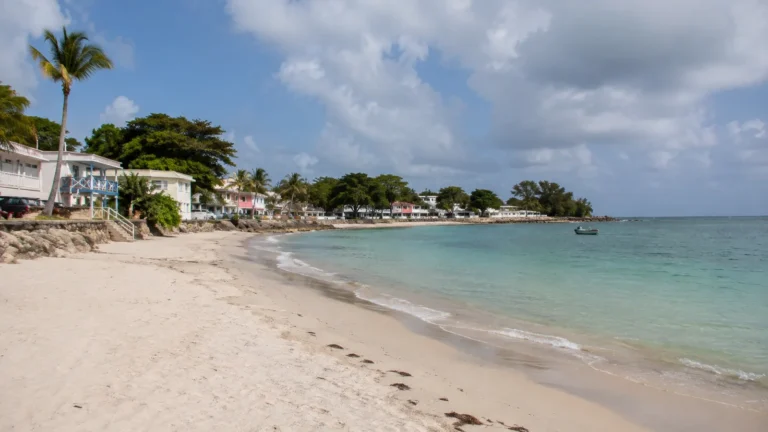
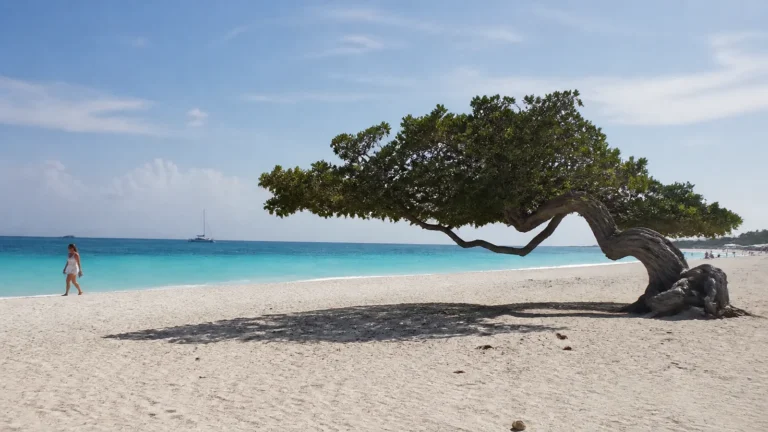
Curaçao Island Guide: Where to Stay, Beaches, and 5-Day Plan
Curaçao becomes much easier to plan once you separate Willemstad, the developed eastern beaches, and the wilder west. Give the island at least five days, rent a car for the spread-out sights, and resist turning every blue cove into a 20-minute photo stop.
Is Curaçao right for your trip?
Curaçao suits travelers who want colorful city streets, small protected coves, shore snorkeling, independent driving, and a strong food scene in one vacation. It is less suited to anyone expecting a single endless white-sand beach or a fully walkable island.
The island sits in the southern Caribbean near Aruba and Bonaire and is a constituent country within the Kingdom of the Netherlands. Dutch and Papiamentu shape local life, while English and Spanish are widely useful in visitor settings.
Five nights is the practical minimum for Willemstad, a west-coast beach day, and one nature or boat day. Seven nights lets you repeat a favorite beach, dive or snorkel without rushing, and leave room for wind or a slow morning.
If your real priority is comparing island landscapes before choosing a country, Curaçao’s coves and cityscape sit in a different category from the volcanic and lush options in this beautiful-island shortlist. Choose Curaçao for variety within a compact driving trip rather than for one enormous resort beach.
Where to stay in Curaçao
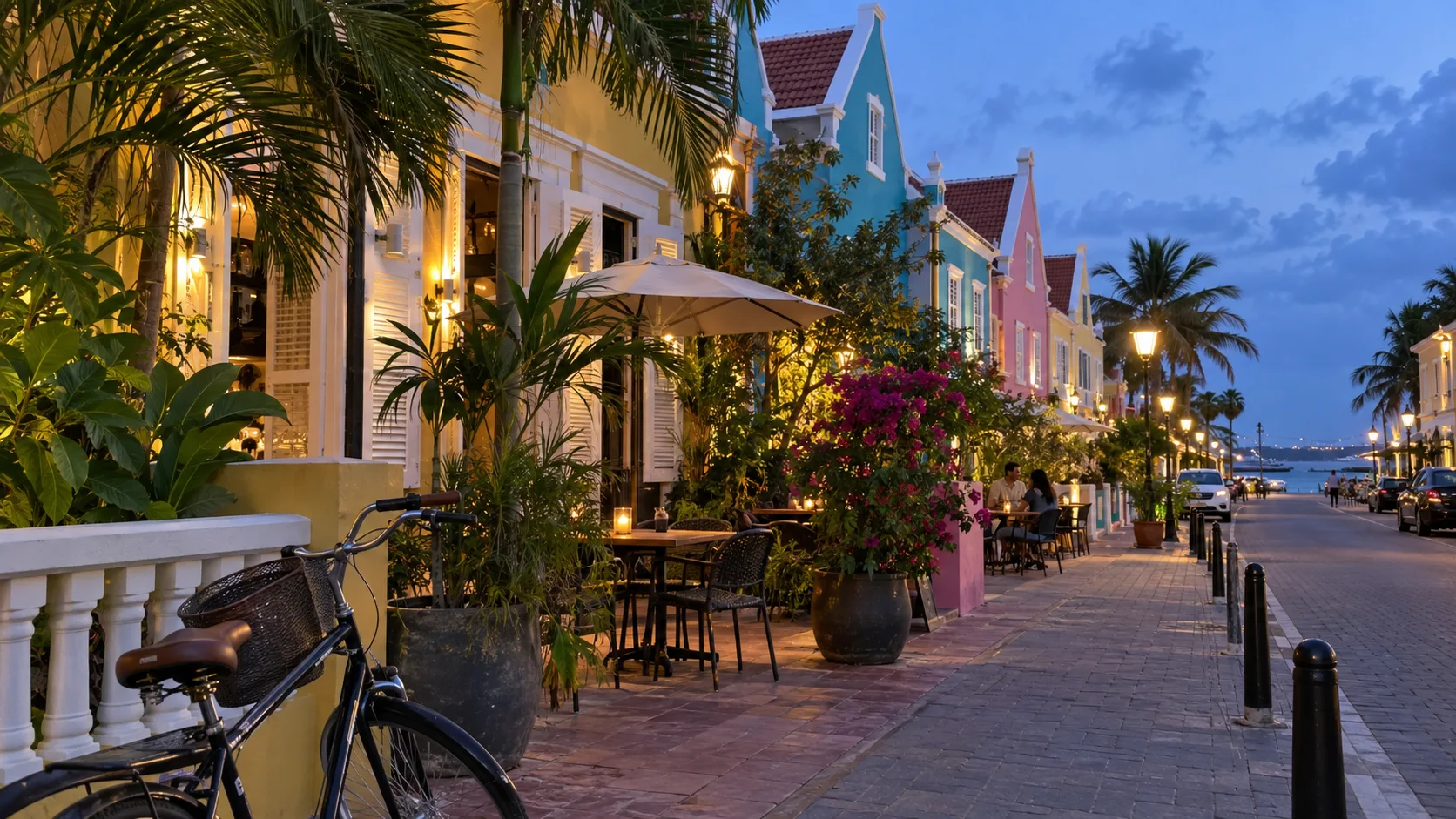
Pietermaai for restaurants and evenings
Pietermaai is the best fit for couples and friends who want boutique lodging, restaurants, bars, and a walk into central Willemstad. Music and street activity can carry into the night, so check recent room-specific reviews if sleep matters.
You can skip a car on pure city days, then rent one for the west. Confirm parking before booking because “Willemstad” covers more than one walkable block.
Punda and Otrobanda for historic Willemstad
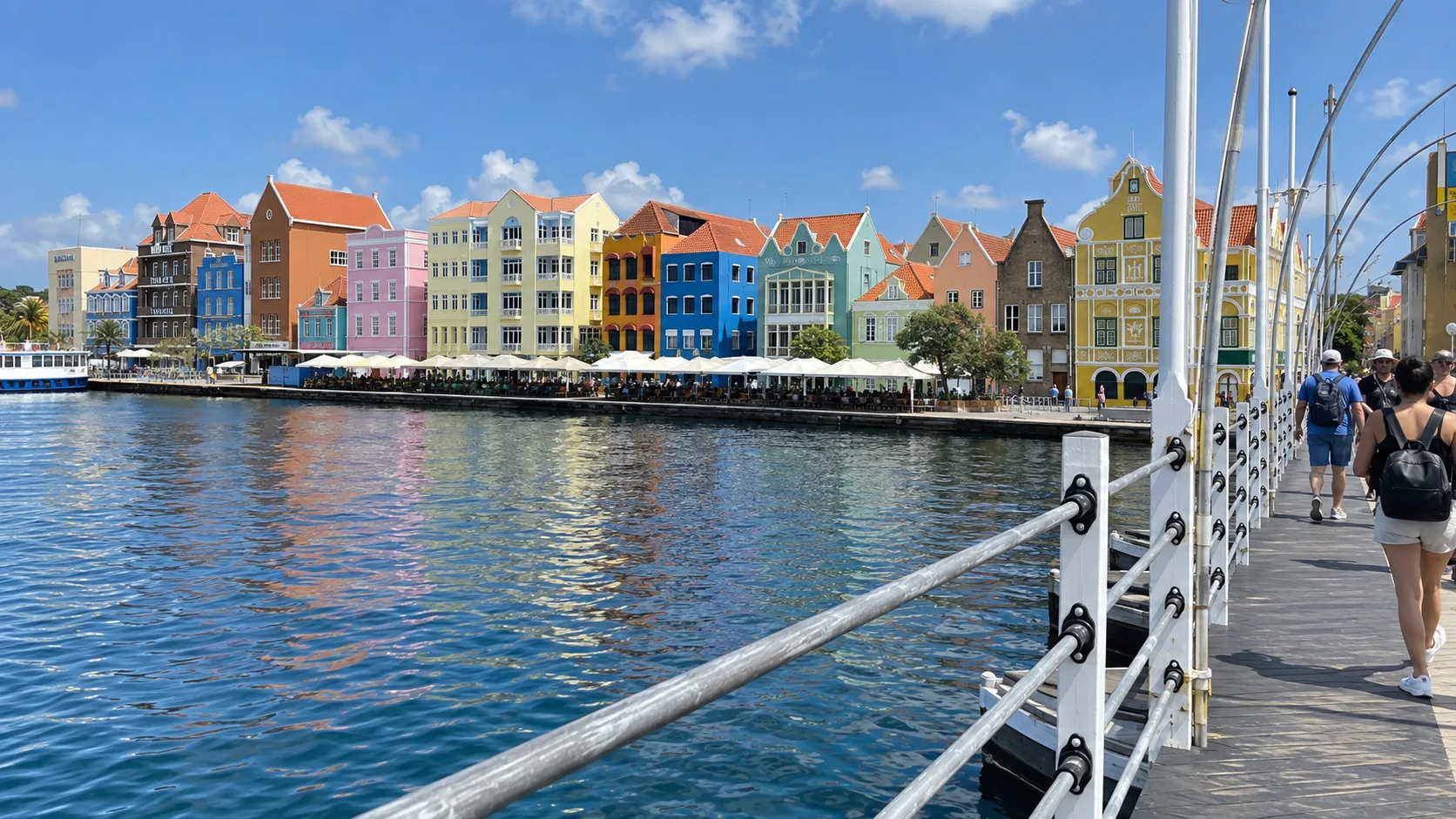
Punda places you among the familiar colorful facades, shops, and waterfront streets, while Otrobanda offers its own lanes, murals, lodging, and quick harbor access. The Queen Emma Bridge links the sides when it is in position, with harbor movements occasionally interrupting the crossing.
UNESCO’s Historic Area of Willemstad profile explains how the city developed as distinct districts around the natural harbor. Stay here when architecture, meals, and evening walks matter as much as beach time.
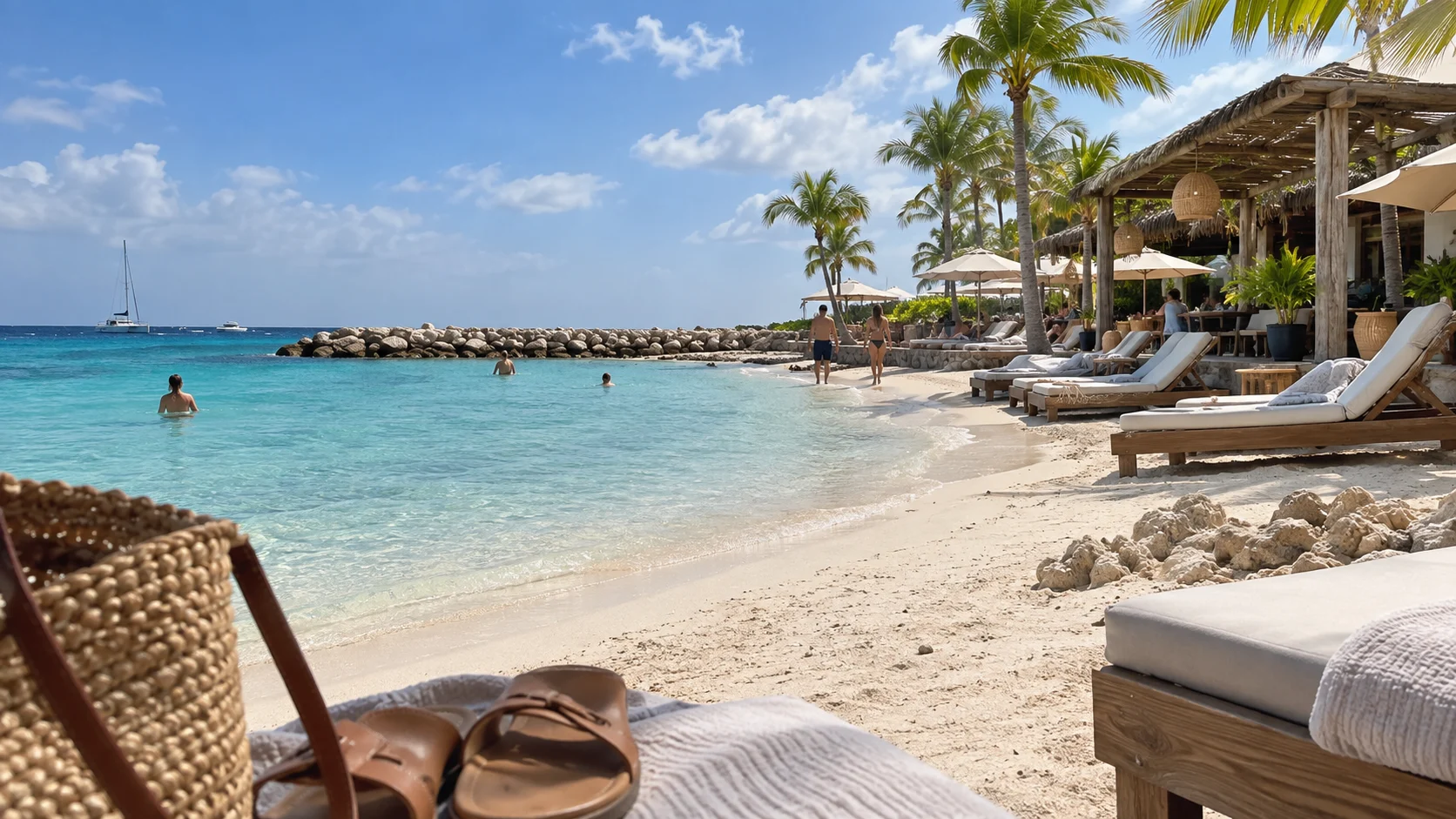
Mambo Beach for easy resort energy
Mambo Beach works for families and first-time visitors who want restaurants, beach clubs, shopping, and organized activities together. The beach is developed and often involves admission or chair costs, so convenience rather than untouched nature is the value.
It is a simple base for a short trip without constant decision-making. You will still need a car, taxi, or tour for western coves and national parks.
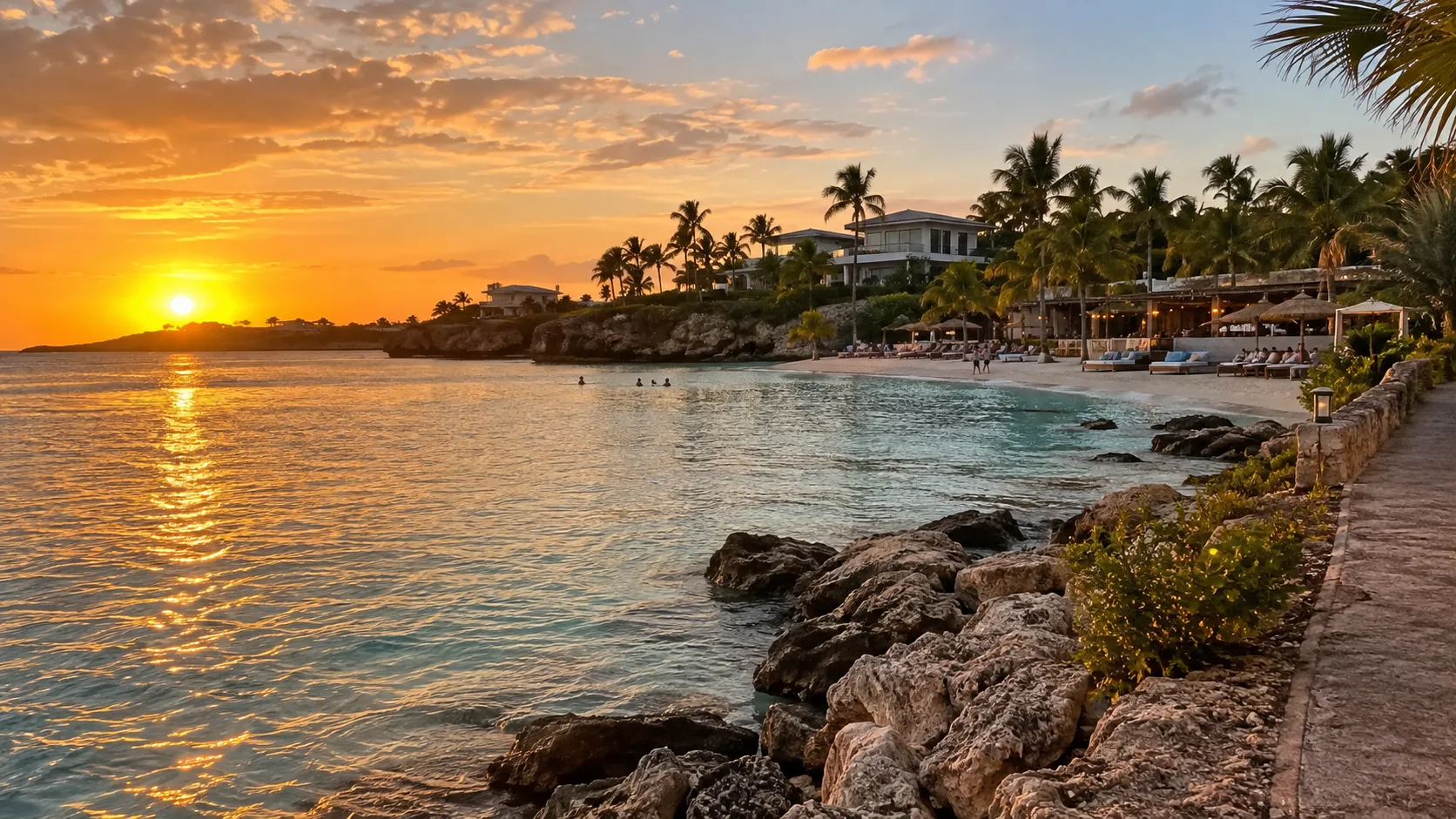
Jan Thiel for villas and beach clubs
Jan Thiel suits families or groups sharing a villa, especially when a pool, kitchen, groceries, and planned beach-club days are priorities. It feels removed from central Willemstad, making a rental car useful for city dinners and wider exploring.
Blue Bay for a quiet resort base
Blue Bay combines resort lodging, a protected beach, diving, and golf in a convenient location west of Willemstad and the airport. Choose it when you want several easy resort days plus selected drives, not a walkable city neighborhood.
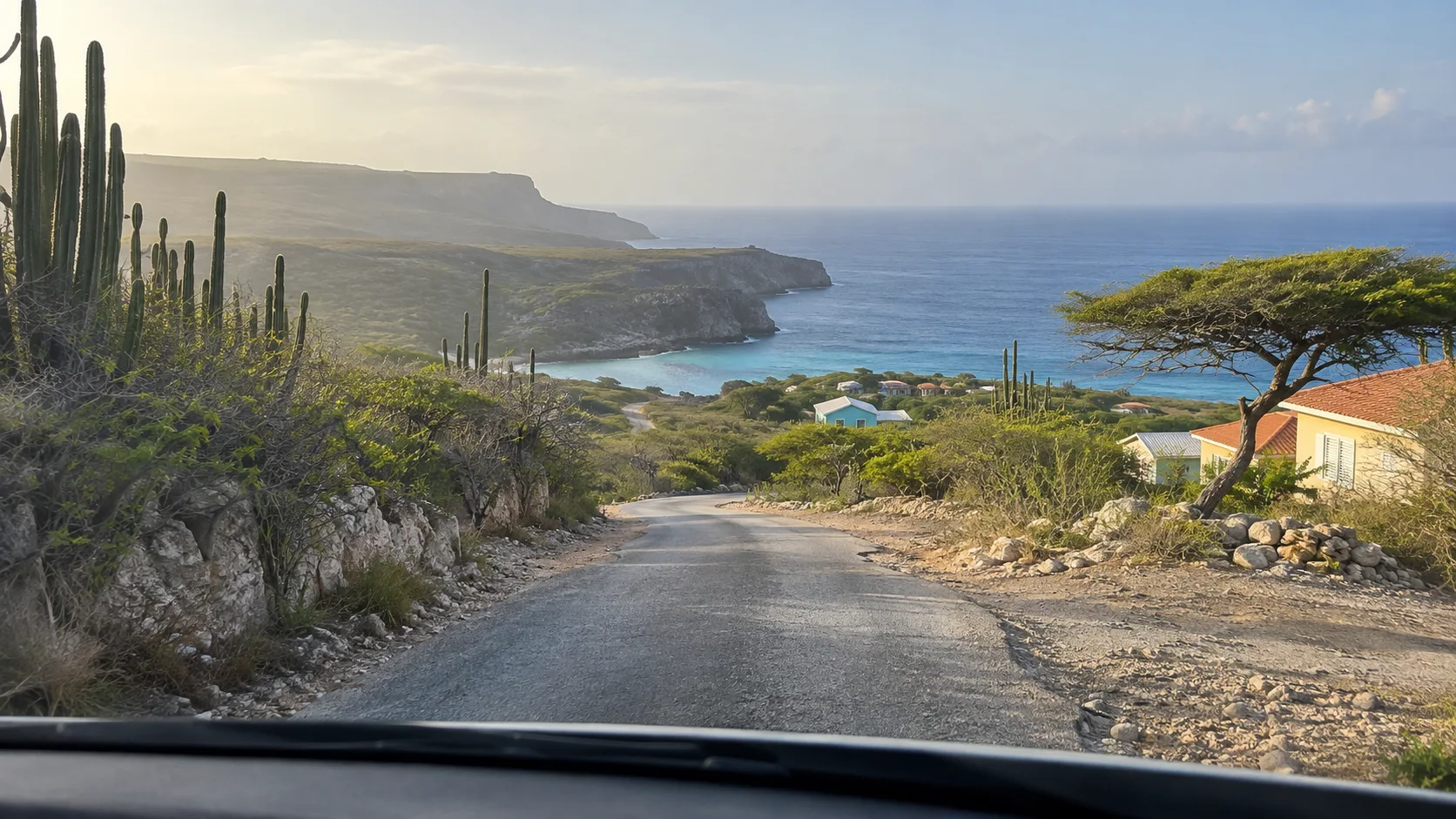
Westpunt for nature and early water time
Westpunt shortens the drive to northern beaches, Christoffel National Park, and Shete Boka. It is the best base for divers, hikers, and quiet-seeking travelers, but restaurant, grocery, and nightlife choices are much thinner than around Willemstad.
A split stay can solve the tradeoff on a weeklong trip. Spend three nights west and four near the city only if moving rooms creates more value than one extra hour in the car.
Do you need a rental car?
Yes for most five- to seven-day vacations, particularly if beaches and parks are the priority. The Curaçao Tourist Board says the easiest way to explore is by car because attractions are spread out and the heat makes long walks or bike rides taxing.
Public buses serve some routes but are not a flexible beach-hopping system, and there is no need to test that on a tightly scheduled day. Taxis work for airport and dinner rides, while a guided tour is smarter if nobody wants to drive.
Reserve an automatic transmission if required, inspect the car, photograph damage, and ask how insurance and roadside assistance work. Do not leave passports, electronics, or visible bags in the vehicle at a beach.
Driving is on the right, and roundabouts require attention. Download an offline map, keep water in the car, and group the west-coast stops so you are not repeating the same road every day.
Best Curaçao beaches by trip style
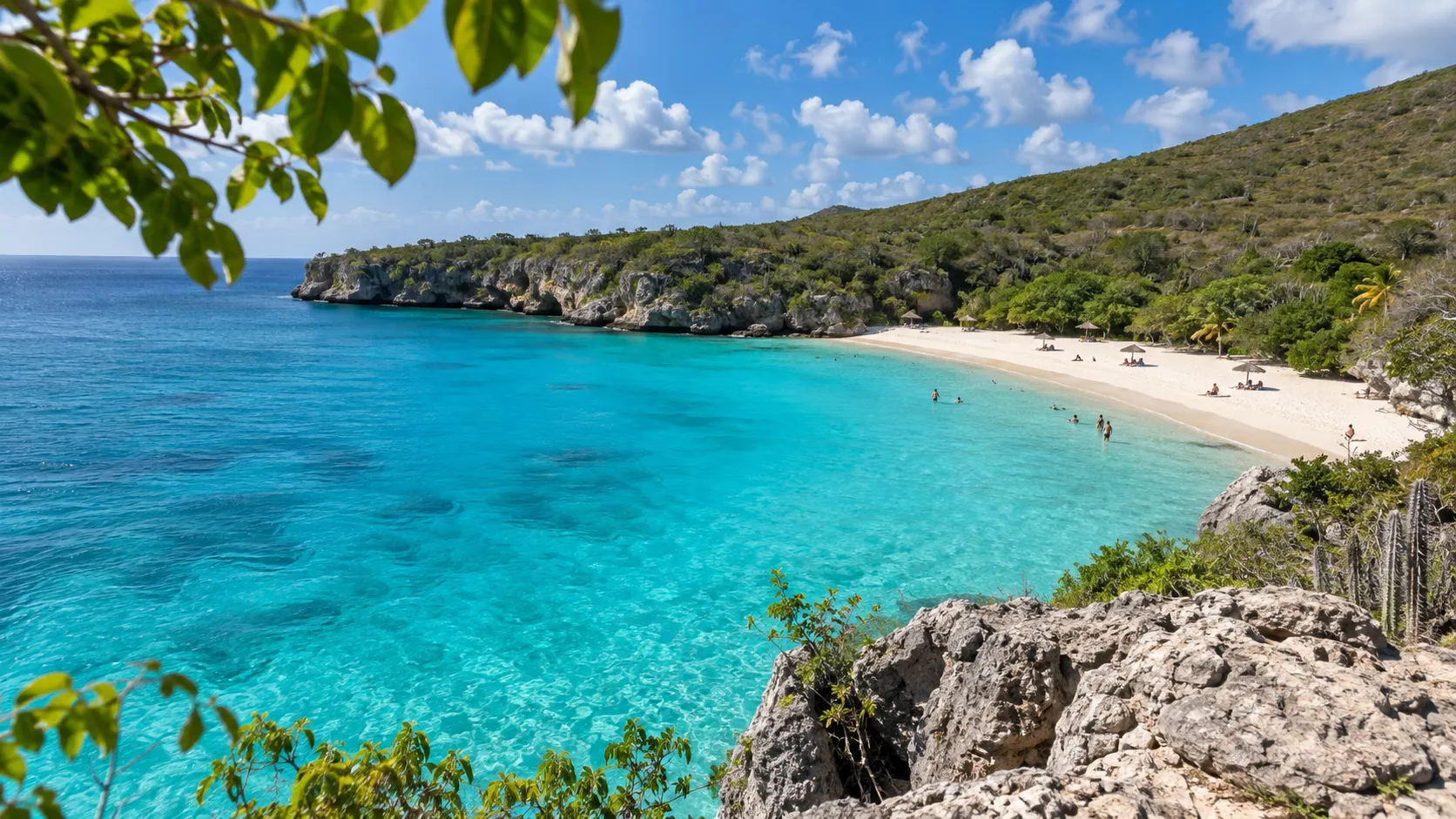
Grote Knip for the classic view
Grote Knip, also called Playa Kenepa Grandi, is the wide blue-cove scene many travelers picture before arriving. Go early for easier parking and a quieter swim, then pair it with nearby Kleine Knip rather than racing across the island.
A beautiful overlook does not guarantee gentle water. Check conditions, watch your entry, and keep children within reach.
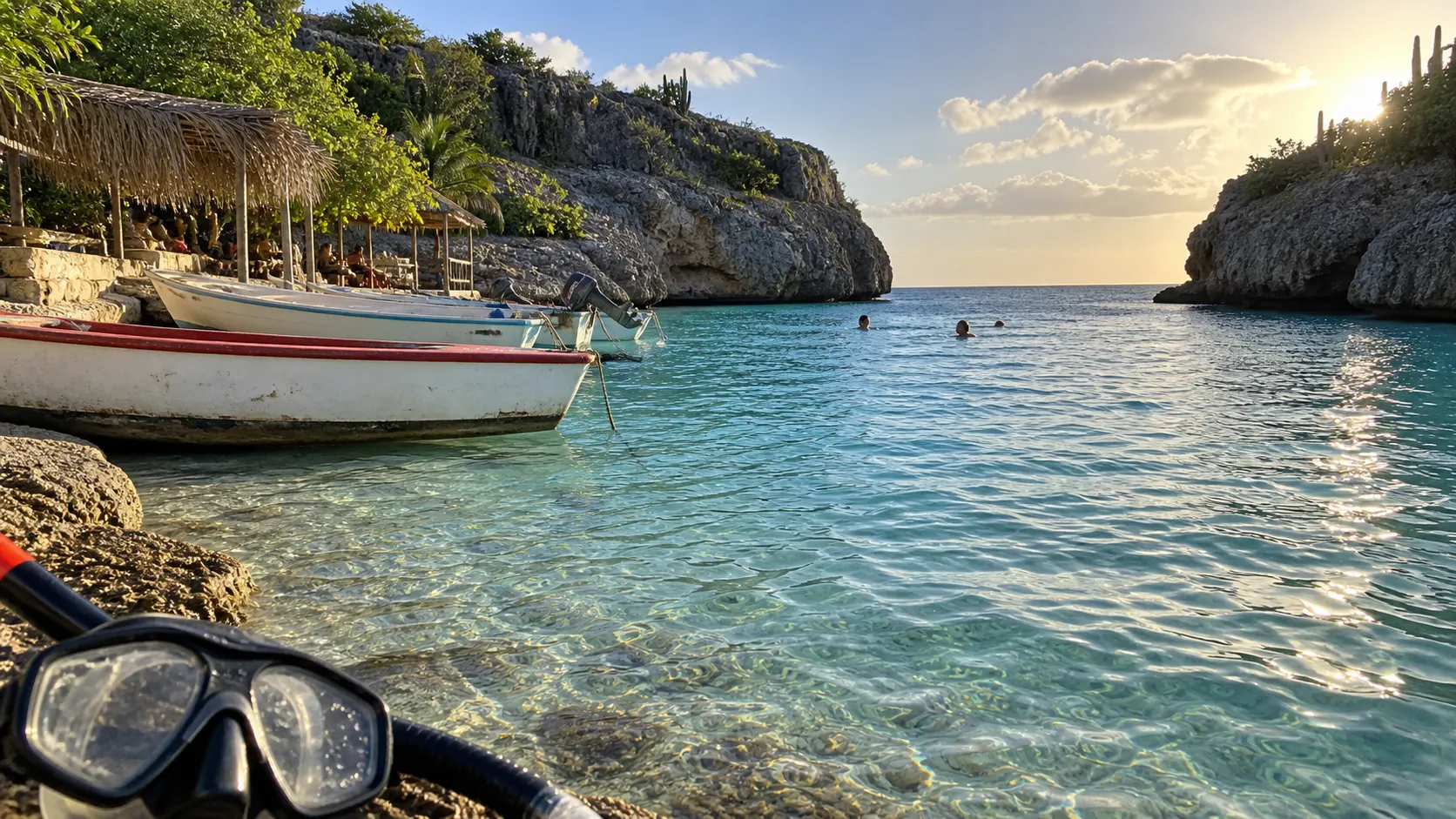
Playa Lagun for a smaller snorkeling cove
Playa Lagun is a narrow, protected-looking bay between cliffs with shore snorkeling potential. The compact sand can feel crowded quickly, so use it as a morning swim and lunch stop rather than demanding an empty all-day beach.
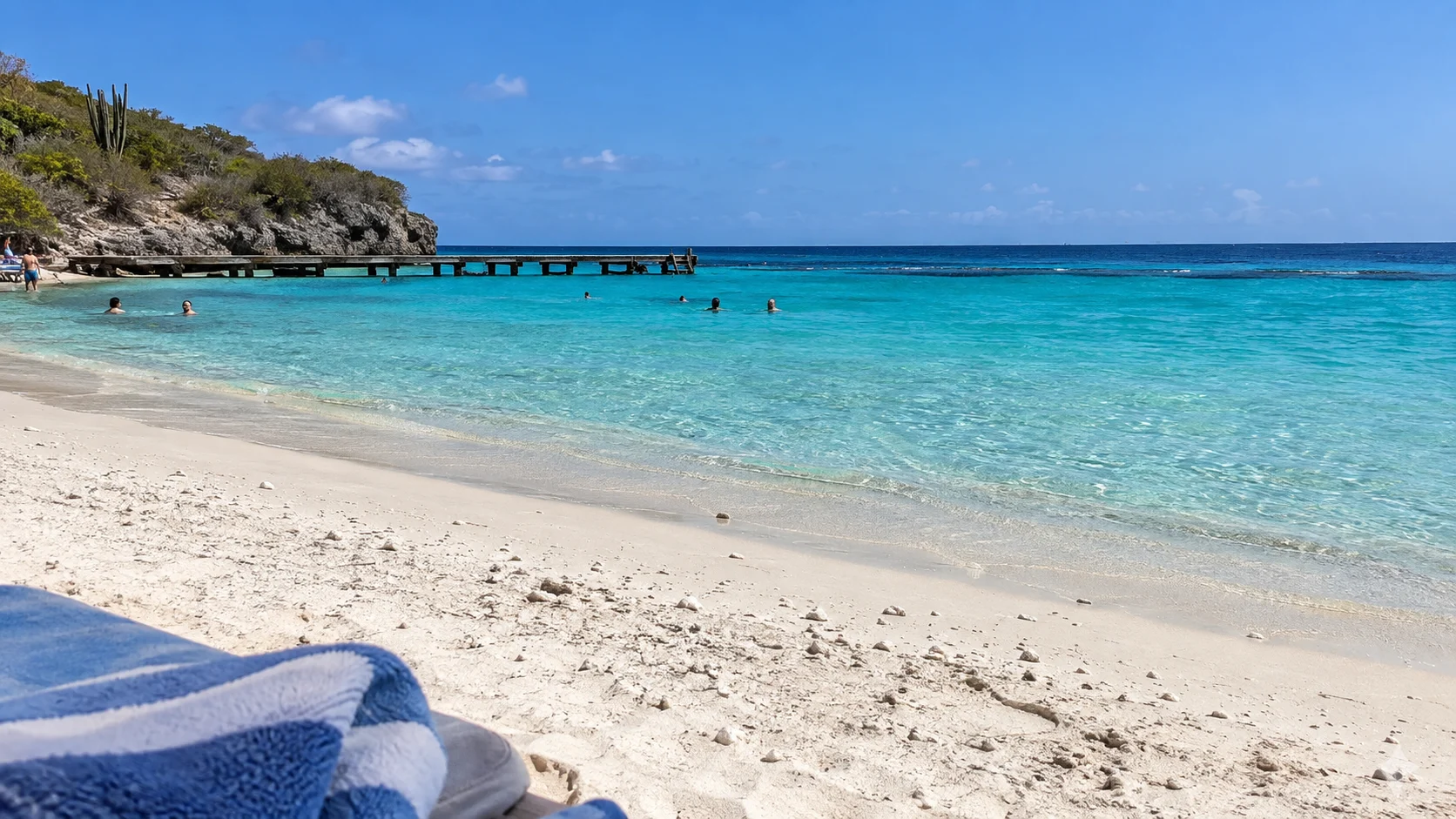
Playa Porto Mari for facilities and snorkeling
Porto Mari is an easy full-day choice because it combines a developed beach, restaurant, chairs, restrooms, and a reef reached from shore. Expect admission and rental charges, and never treat a wildlife sighting as guaranteed.
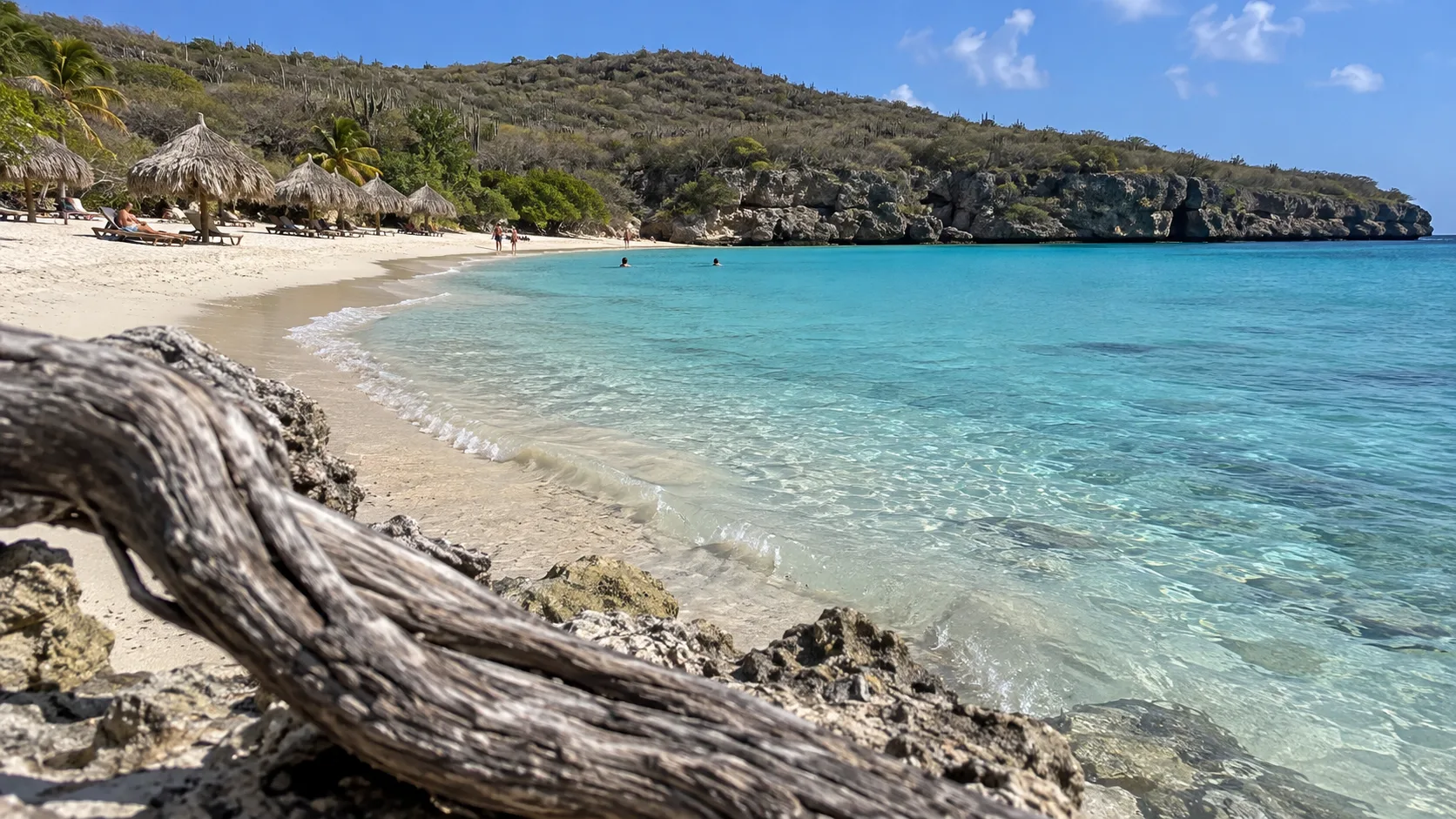
Cas Abao for a polished beach day
Cas Abao suits travelers who want pale sand, clear-looking water, shade rentals, food, and dive support without a resort stay. It can fill during popular periods, making an early start more useful than squeezing it behind two other beaches.
Playa Piskadó for a complicated turtle encounter
Playa Piskadó, also called Playa Grandi, is known for turtles drawn around fishing activity. It is not a petting pool, and visitors should never chase, touch, crowd, or feed marine animals.
Go with realistic expectations about a working fishing beach, water entry, and crowds. Choose a responsible guide if you are not confident about snorkeling etiquette or conditions.
Tugboat Beach for shore snorkeling
Tugboat Beach near Caracas Bay is popular for snorkeling around a small submerged wreck close to shore. Boat traffic, entry surfaces, depth, visibility, and current still require judgment, so use a buddy and ask local operators about that day’s conditions.
Mambo or Jan Thiel for convenience
Choose Mambo or Jan Thiel when loungers, food, restrooms, activities, and a social atmosphere matter more than solitude. Both make an easy final day because logistics are predictable and dinner is nearby.

Klein Curaçao for a boat day
Klein Curaçao is an uninhabited island southeast of the main island, reached on organized boat trips. The appeal is a long beach, bright water, snorkeling possibilities, and the old lighthouse landscape, but the crossing can be rough.
Compare boat size, shade, restrooms, food, snorkel supervision, accessibility, and cancellation policy. Take motion-sickness precautions in advance if a clinician says they are appropriate for you.
Things to do beyond the beach
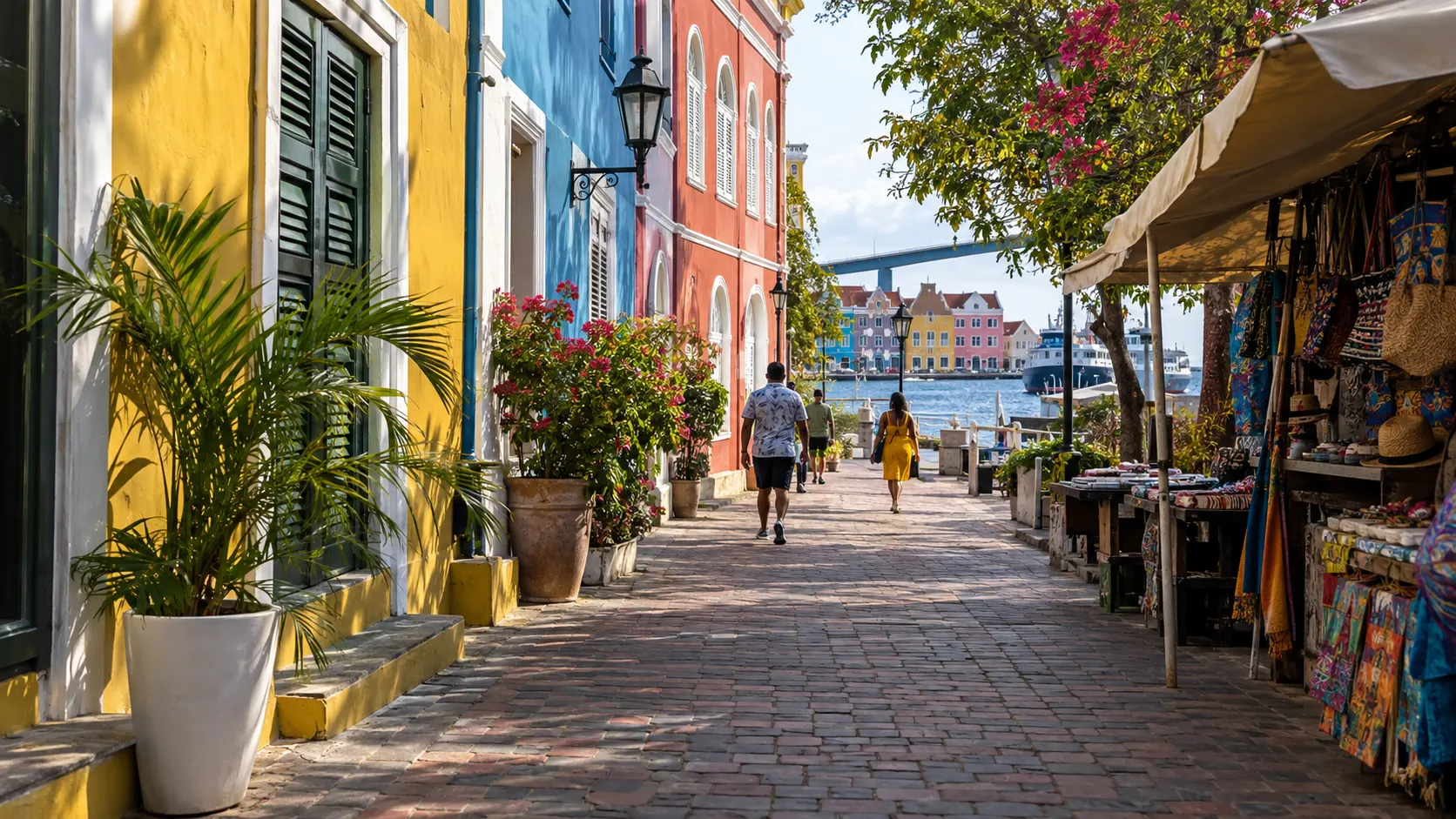
Walk Willemstad slowly
Give Punda, Otrobanda, Pietermaai, and Scharloo more than one hurried loop. Look for markets, museums, murals, harbor views, places of worship, and architecture while leaving time for a shaded lunch.
Learn the city as a living place rather than a colorful backdrop. A guided history or food walk adds context that a row of photos cannot.

Visit Shete Boka National Park
Shete Boka protects a rugged, wave-exposed section of the north coast with inlets, cliffs, trails, and Boka Tabla. This is a scenery day, not a swimming beach, and spray or waves can make edges dangerous.
Combine it with Christoffel or a west-coast swim only if you start early. Check current hours, heat, road conditions, and closures before driving north.
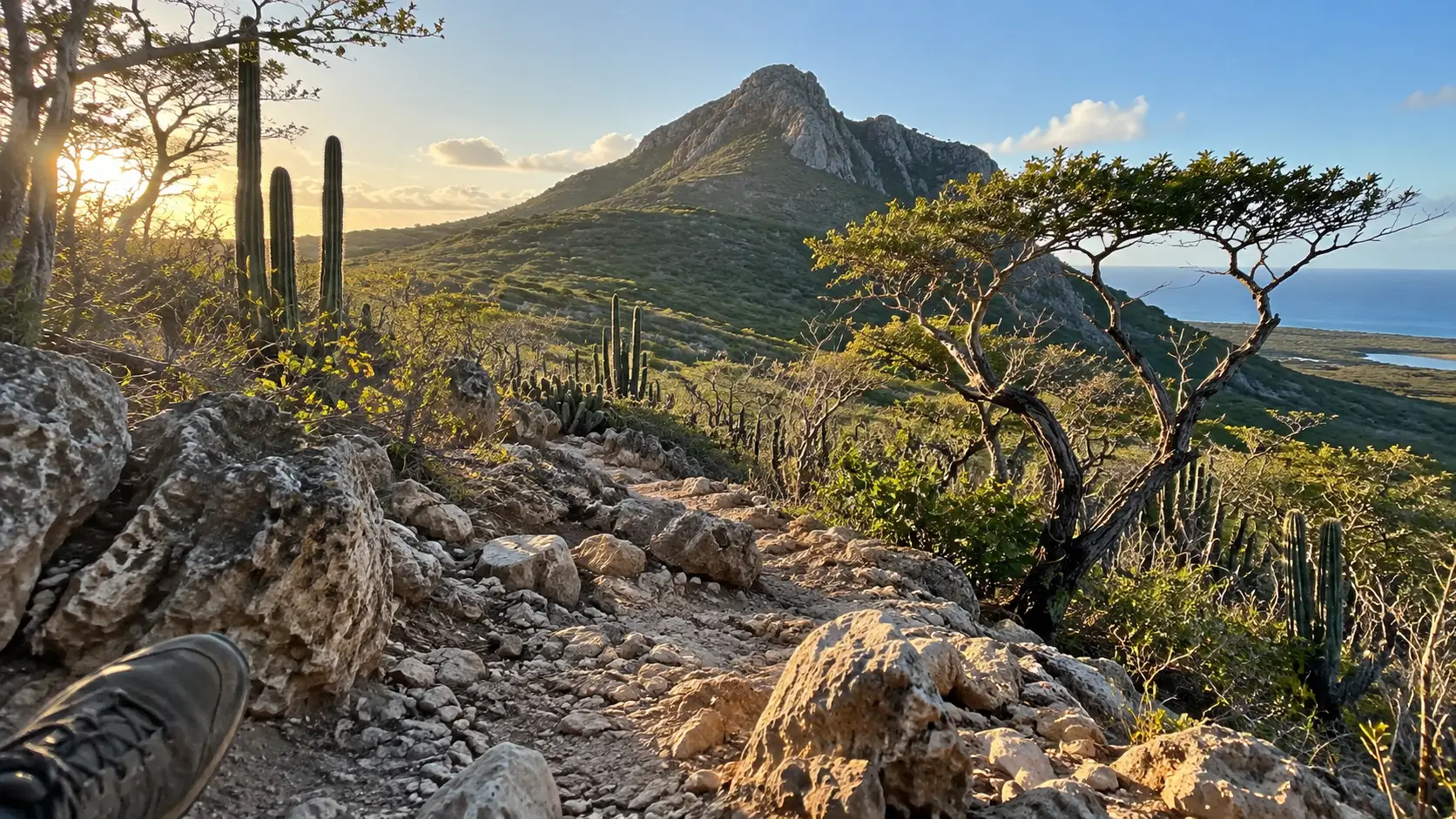
Hike or drive Christoffel National Park
Christoffel National Park offers hiking, scenic drives, nature, and the Savonet Museum. Its official hours and fees page currently requires Mount Christoffel climbers to start by 10 a.m. because of heat, but confirm that rule for your date.
The summit route is a real hike with steep and hands-on sections, not a casual overlook stroll. Start near opening, carry ample water, wear proper shoes, and choose an easier park route when fitness or heat is a concern.
Snorkel or dive responsibly
Curaçao is especially appealing because many reefs can be approached from shore. Entry can involve rock, coral rubble, steps, or surge, so water shoes and local advice may matter as much as the colorful site name.
Never stand on coral, feed fish, take marine life, or snorkel alone. A dive shop or guide is worth the cost for equipment fit, conditions, entry points, and choosing a site that matches your ability.
A practical five-day Curaçao itinerary
Day one: settle into Willemstad
Check in, walk your immediate neighborhood in daylight, and cross between Punda and Otrobanda if the bridge is available. Make this a food and architecture day rather than adding a distant beach after a flight.
Day two: western coves
Drive west early and choose two beaches, not five. A strong pairing is Grote Knip for the view and Playa Lagun or Porto Mari for snorkeling and facilities.
Day three: Christoffel and Shete Boka
Start at Christoffel near opening, choosing the mountain only if the route fits your ability. Continue to Shete Boka, then cool off at one west-coast beach if time and energy remain.
Day four: Klein Curaçao or a dive day
Choose a boat trip when a remote beach is essential, or book guided shore diving and keep your feet on the main island. Do not schedule a late nonrefundable dinner after a boat day with variable return conditions.
Day five: an easy eastern day
Use Mambo, Jan Thiel, Tugboat Beach, or the Curaçao Rif Mangrove Park according to your energy. Return to Willemstad for the museum, neighborhood, or restaurant you skipped on arrival day.
With two extra days, add another west-coast beach, a food or history tour, and one completely unscheduled morning. That breathing room is where Curaçao starts feeling like a vacation instead of a scavenger hunt.
Best time to visit Curaçao
Curaçao stays warm throughout the year, with trade winds often easing the feel of the heat. The island’s wetter stretch is generally concentrated from October through December, but showers and storm systems do not follow a vacation promise.
January through March brings winter demand, while spring and early summer can produce a useful balance of room availability and weather. Curaçao lies farther south than most Caribbean islands, but it is not immune to tropical weather, rough seas, flooding, or flight disruption.
Carnival season changes the atmosphere and booking pressure, while major holidays increase demand. Check the current event calendar before selecting dates, whether you want the celebration or a quieter week.
Entry requirements and arrival
Entry rules depend on citizenship, passport, route, and length of stay. Verify requirements with Curaçao authorities and your airline, then review current destination information before buying a nonrefundable ticket.
Visitors must complete the online Digital Immigration Card for each trip, including children. The official Curaçao entry portal states that the DI Card is free, so avoid third-party sites charging to submit it.
Save the confirmation offline and carry the travel documents used for the application. Curaçao Express Pass is an optional separate process for eligible travelers, not a replacement for the required DI Card.
Money and trip costs
Curaçao’s currency is the Caribbean guilder, introduced in 2025 and pegged to the U.S. dollar. The official tourism guidance lists US$1 as Cg1.79, with a common commercial transaction rate of Cg1.82.
U.S. dollars are commonly accepted, but change may come in guilders and the merchant’s conversion matters. Carry a modest amount of cash for small vendors, buses, tips, or restrooms, and let your bank know about the trip if required.
A Curaçao budget should include airfare with bags, airport transfer, lodging taxes and fees, rental car, fuel, beach admissions, chairs, food, one guided water day, and insurance. A kitchen controls breakfast and lunch costs, while an inland apartment can cost less than a beach resort.
The nine-island Caribbean total-cost comparison shows when Curaçao’s car-and-apartment model beats an all-inclusive package elsewhere. The answer depends on party size and airfare, not the island’s reputation.
Curaçao for cruise visitors
A cruise call is not a miniature version of a weeklong stay. Start with the berth and all-aboard time, then choose Willemstad, one beach, or one western tour rather than attempting the complete island.
The Curaçao cruise-port plan separates Mega Pier and inner-harbor arrivals and builds a return buffer. Overnight visitors can ignore that compressed timeline and use rental-car days more efficiently.
Curaçao questions
Is Curaçao expensive?
It can be, especially at oceanfront resorts, beach clubs, and imported-food restaurants. Apartments, local meals, grouped car days, and free or lower-cost coves can create a more moderate total.
Can I visit without a car?
Yes if you stay in central Willemstad or a full-service beach area and book selected tours. A car is the better tool for independent west-coast beaches and parks.
Is Curaçao good for families?
Yes for families comfortable with heat, driving, and water-focused days. Choose lodging with a kitchen or pool, use developed beaches with restrooms, and verify currents, shade, and child-seat availability.
Is Curaçao good for couples?
Yes, particularly for couples who want restaurants and historic walks between beach days. Pietermaai offers evenings on foot, while Westpunt provides a quieter nature-first stay.
Is the tap water drinkable?
Local tourism authorities describe Curaçao’s tap water as safe to drink, but travelers with medical concerns should follow their clinician’s advice. Refill a bottle and reduce the pile of single-use plastic that follows a week of beach days.
Plan Curaçao in three clear pieces
Give Willemstad its own day, group the western beaches into one or two car days, and reserve one day for a park, dive, or Klein Curaçao. That structure protects the island’s variety without spending the whole vacation changing parking lots.
Choose the lodging for the evenings you want, verify the free official entry form, and check conditions before entering the water. Curaçao is at its best when the bright-blue coves and colorful streets have enough time to be more than a checklist.