Cruise Embarkation Day: My Hotel-to-Cabin Timeline
Cruise embarkation day goes more smoothly when you arrive during your assigned window, keep essentials with you, and leave the first afternoon flexible. I would get to the departure city before sailing day when flying, then build the morning around the terminal appointment.
The ship’s departure time is the deadline you see on the itinerary, but it is not the time you can arrive at the pier.

The order I would follow
- Before travel: complete check-in, verify documents, and confirm the terminal and arrival appointment.
- Before leaving the hotel: eat breakfast, check every original document, and separate carry-on essentials from tagged suitcases.
- At the port: hand over checked bags at the correct ship’s baggage area, then follow document checks and security.
- After boarding: confirm the safety-drill instructions, find lunch, and keep track of when cabins open.
- Before settling into vacation: complete every required muster step and deal with any essential cabin or accessibility issue.
This is a sequence, not a promise that boarding takes a particular number of minutes. Immigration clearance, an arriving ship’s delay, weather, or terminal congestion can move the whole afternoon.
The night before: make the morning easy
I would download the cruise app and sign in while the hotel internet is working. Save the boarding pass in whatever offline format the line supports, and keep a paper backup if that makes the group easier to manage.
Check the ship name, departure date, terminal, and arrival window together. A hotel shuttle may serve several ships, and the address for a large port can lead to the wrong entrance.
Lay out the original documents for each traveler and check the expiration dates one last time. Do not assume the person who handled online check-in also packed everyone else’s passport.
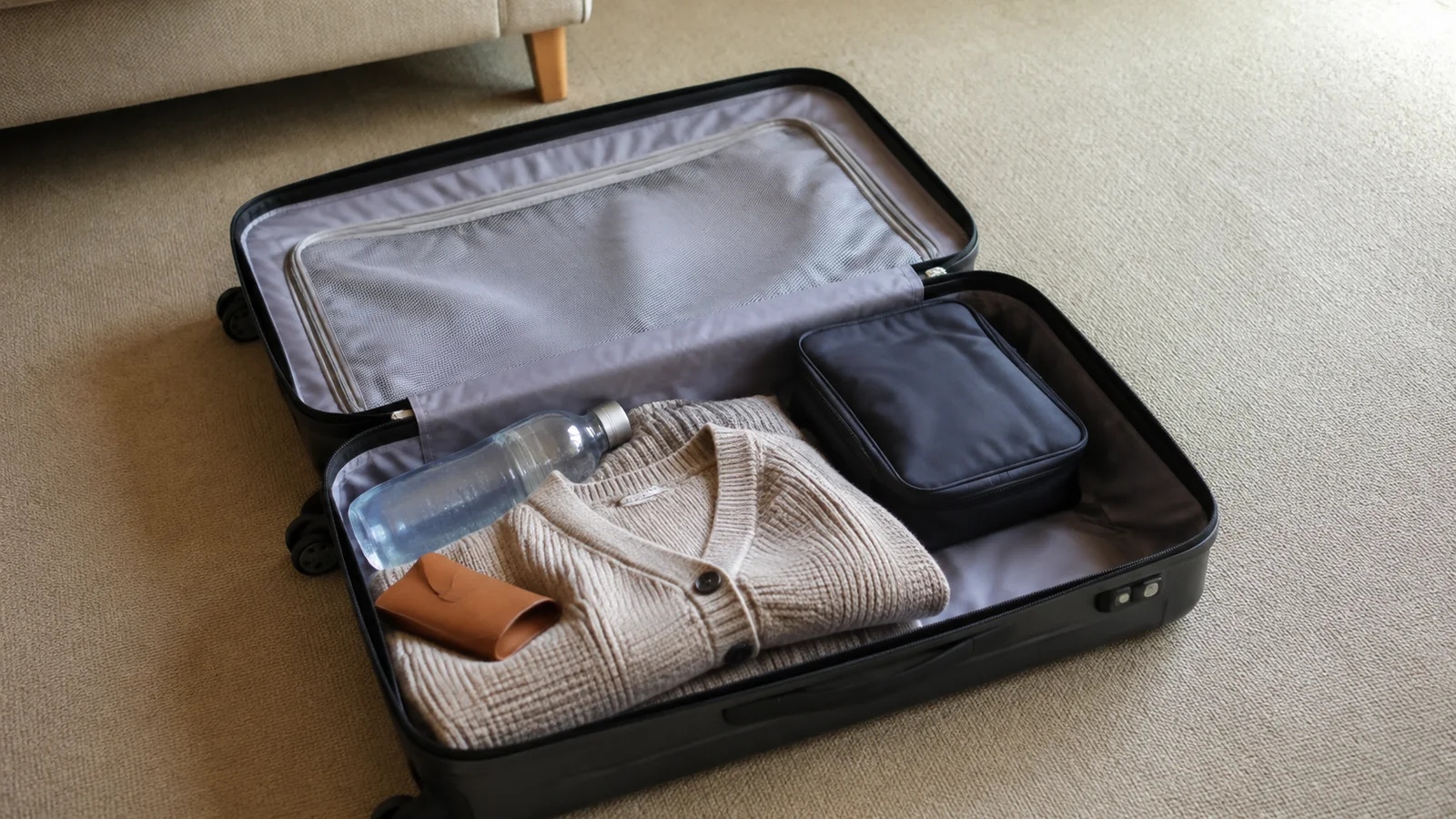
My cruise packing tips can help with the bigger packing job, but this evening’s priority is separating what must stay with you. Medication, travel documents, valuables, and essential medical supplies should not disappear into a porter cart.
If an item needs advance approval, keep the written response with its model or prescription details. I would resolve a medical equipment question before travel, not hope someone at the curb can approve it.
Breakfast and checkout: avoid starting hungry
Eat before leaving for the terminal, even if the plan is to have lunch onboard. Boarding can start later than expected, and an arrival appointment is not a restaurant reservation.
I would wear shoes suitable for walking and standing, with a light layer that works in air-conditioning. Keep rain protection accessible if the forecast calls for showers, because the ride may end outside the terminal doors.
Before checking out, look in the safe, bathroom, charging outlets, and refrigerator if you used it. These small spaces are easier to miss than a suitcase sitting in the middle of the room.
Ask about storing bags or using the lobby if checkout is earlier than your terminal window. I would rather spend an extra hour comfortably at the hotel than assume the port has seating for early arrivals.
When choosing a hotel transfer, ask whether its quoted departure time is fixed or depends on filling a vehicle. A shuttle that circles other properties needs more room in the schedule than a direct ride.
Build the drive around the arrival appointment
Suppose your assigned arrival window begins at noon and the hotel is roughly a 30-minute drive away. I would add a realistic allowance for traffic and baggage handoff, then choose a departure time that gets me to the terminal during that window.
That is an example to work through with your own route, not a universal instruction to leave at 11:00. Parking a car, returning a rental, or boarding a shuttle can change the calculation substantially.
Keep the final check-in deadline separate from the arrival appointment. For example, Royal Caribbean’s check-in guidance requires guests to be checked in at least 90 minutes before scheduled sailing, subject to itinerary-specific instructions.
I would not aim for that last permissible moment. A delay at the port gate is much easier to absorb when your plan follows the earlier arrival window.
For Florida departures, compare the actual airport and port combination in my Florida cruise-port guide. Orlando’s airport and Port Canaveral, for example, are separate destinations, not neighboring terminal buildings.
At the curb: check the ship before handing over bags
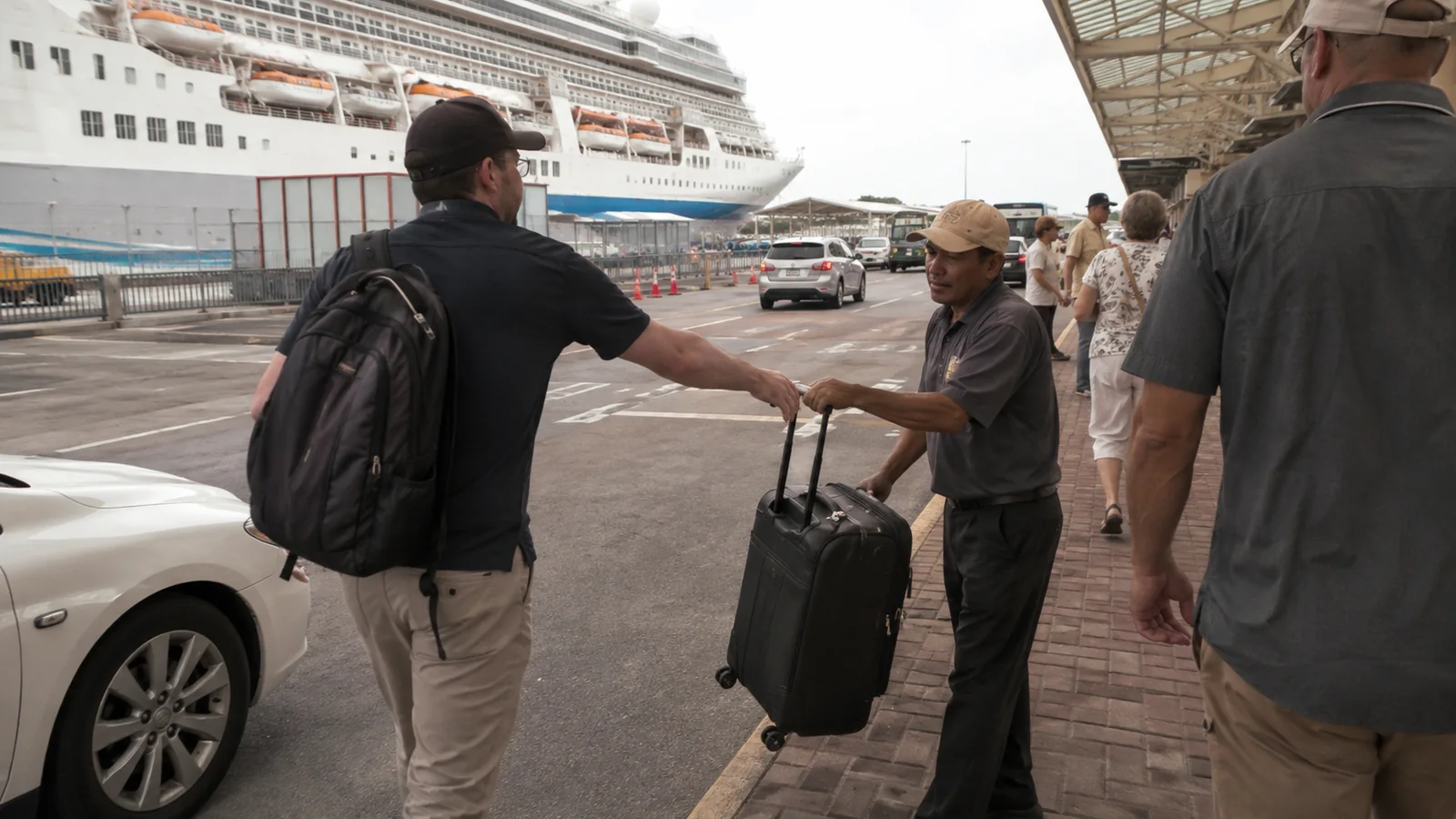
Tell the driver the ship name and verify the signs at the baggage area. Before unloading, make sure you are at the correct terminal for today’s sailing.
Use the designated porter or baggage-drop area, and check that each suitcase has the current cruise luggage tag. Old airline or cruise tags can create confusion, so I would remove anything that no longer serves a purpose.
Keep your carry-on beside you while the larger bags are being moved. This is the moment to double-check that passports, medication, phones, and boarding passes have not been packed in the bag you are handing over.
If you tip a porter, treat it as a gratuity for handling your bags, not payment for faster delivery. Keep a few small bills handy so you are not searching through your document wallet in a traffic lane.
Take a quick photo of your suitcases and their tags before departure. If a bag later goes missing, its color, size, and distinctive details are more useful than saying it is a black suitcase.
Inside the terminal: follow the local order
Document review and security do not always happen in the same order at every port. Follow the staff directing your sailing instead of looking for a sequence from a video filmed elsewhere.
Keep the boarding pass and original travel documents accessible until staff have finished checking them. A downloaded passport photo is a useful emergency record, but it is not a substitute for the required boarding document.
The State Department’s cruise guidance explains why a passport book is the stronger option for Americans who may need to fly home unexpectedly. I would carry one even on an eligible cruise that permits another document combination.
If someone needs mobility assistance, identify the appropriate staff member rather than joining a queue that is difficult to manage. An assistance request does not remove document or safety requirements, but it can change how the person moves through the terminal.
Once cleared, check your boarding group and wait where directed. The first available seats may be more valuable than standing near a closed boarding door with your bags.
Boarding: do the necessary jobs before wandering
Keep your cruise pass handy for the gangway scan, then step clear before stopping for photos or opening a map. Other travelers need space to finish boarding behind you.
Find the day’s schedule and safety instructions as soon as you can. Depending on the line, you may need to watch a briefing, check in at a muster station, or attend a scheduled assembly.
For Carnival, the HUB app’s safety information directs guests to their assigned station to check in with a team member. Watching or reading something on your phone should never be treated as proof that every required step is finished.
I would complete any available muster steps before a long lunch or pool session. If your line uses a scheduled group drill, set aside that time and plan to arrive where instructed.
Lunch while cabins are being prepared
Ask which included lunch venues are open rather than assuming the buffet is the only choice. The ship’s daily schedule is more reliable than a restaurant list that does not show embarkation hours.
Choose somewhere you can manage your carry-on without blocking an aisle. I would skip a crowded buffet queue if a simpler open venue gives the group a place to sit together.
Keep the first afternoon’s bag small enough to carry between lunch, muster, and a lounge. A full-size suitcase may fit through security at some ports, but carrying it onboard yourself also means keeping control of it until room access is permitted.
Families should hold enough diapers, formula, permitted snacks, and spare clothes to cover a delayed afternoon. My family cruise comparison also helps set expectations about youth facilities, which may offer open-house visits before regular sessions begin.

When your cabin opens
Wait for the announcement or explicit instruction that rooms are ready. An open hallway door does not necessarily mean the crew has released every cabin in that section.
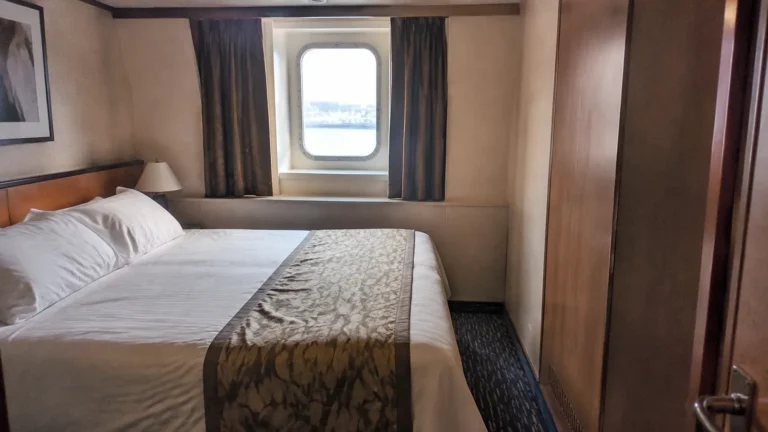
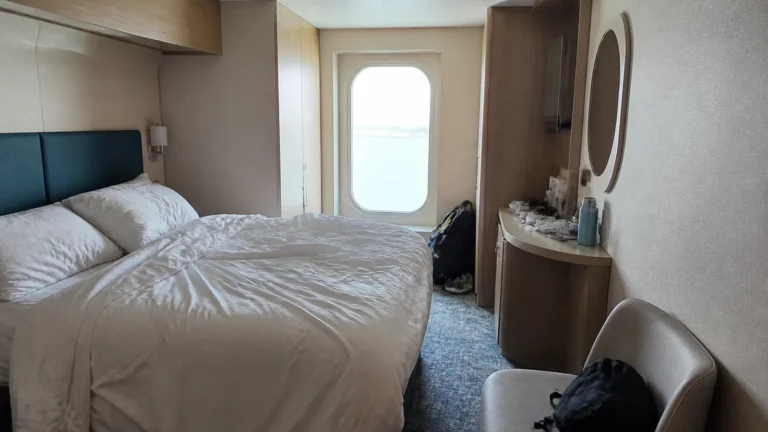
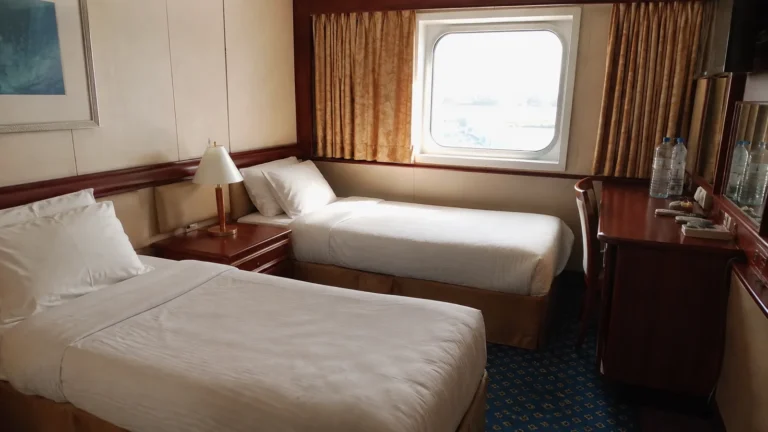
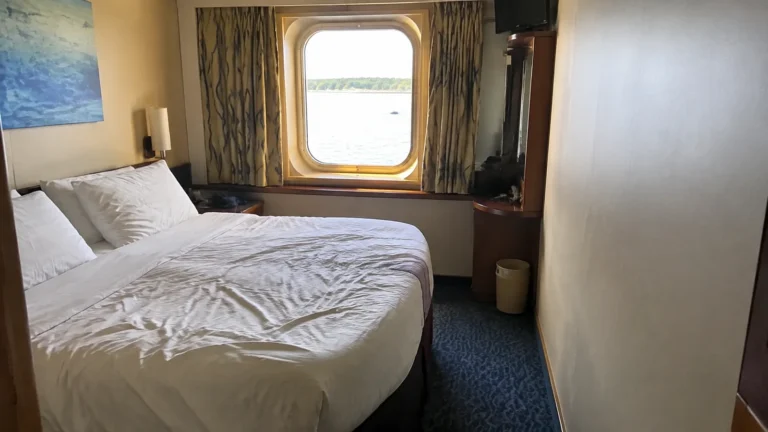
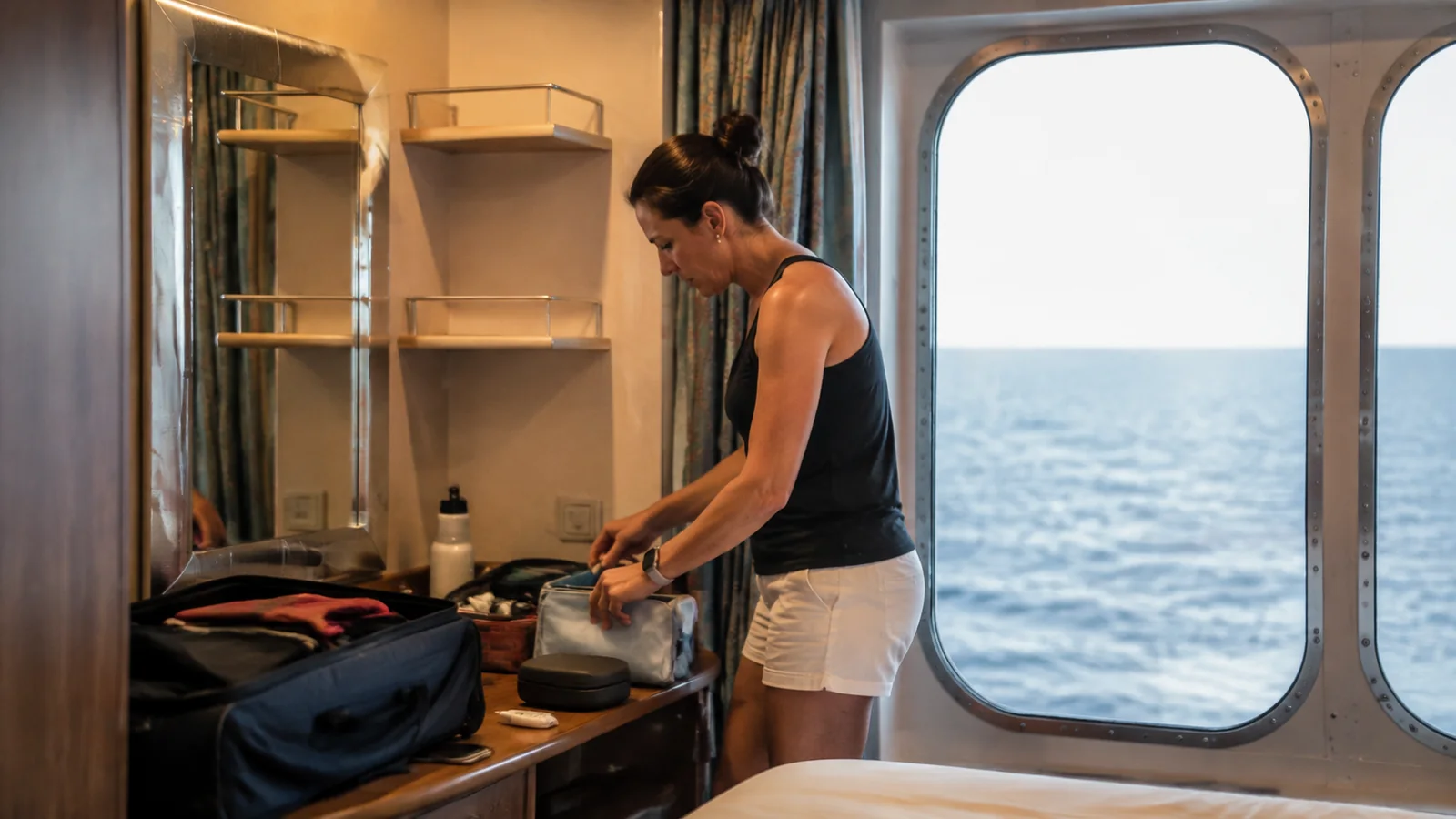
Check the room number before entering, then make sure your key works and the basic setup fits your booking. Look at the beds, bathroom, climate controls, and any requested accessibility equipment before unpacking everything.
Report a missing required bed arrangement or a bathroom problem promptly. These are easier to describe while the room is still clear and you can show the steward exactly what needs attention.
Your checked luggage may follow later, even if your neighbors already have theirs. Cabin readiness and baggage delivery are separate jobs.
Before sail-away: keep the essentials simple
Confirm every person in the party has completed the required safety briefing. Then choose a meeting spot that includes a venue name and recognizable landmark if you plan to split up.
Review cellular roaming settings before the ship leaves shore coverage. I would use airplane mode with Wi-Fi enabled for the ship’s app, then check the cruise line’s instructions for any internet package I bought.
Put travel documents and valuables away securely once you no longer need them for embarkation. Keep the cruise card or other ship credential accessible for purchases and moving around.
Do not squeeze a spa appointment, specialty lunch, pool time, and unpacking into one rigid hour. I would protect a relaxed first evening over checking off every embarkation-day suggestion.
Questions that can change the plan
What if the ship tells us to arrive later?
Follow the updated notice and adjust your transportation. Do not assume the original boarding pass time overrides a direct operational message about your sailing.
What if the app will not load?
Use your saved boarding information and ask staff for help with the reservation. Keep original documents available even if the app has already accepted their details.
What if our bags have not arrived before dinner?
Change into the spare clothes you carried and ask the appropriate onboard desk when to report a missing bag. Do not spend the evening searching restricted service areas yourself.
My embarkation-day priority
I would aim for a comfortable arrival during the assigned window, with every required document and first-day essential under my control. Once onboard, safety instructions, food, and cabin access come before an ambitious activity schedule.