Cozumel Dive Sites: Best Reefs by Skill and Cruise Timing
Cozumel deserves its dive reputation, but the best site is not the one with the most dramatic name. It is the reef that matches your recent experience, current conditions, boat schedule, gas plan, and cruise return time while protecting the marine park you came to see.
Best Cozumel Dive Sites by Traveler Type
- Newly certified diver: Paradise Reef or another sheltered, shallower site chosen by the operator
- Rusty certified diver: Confined-water refresher or easy checkout dive before a wall
- Intermediate reef lover: Palancar Gardens, Paso del Cedral, Tormentos, or Yucab when conditions fit
- Experienced wall diver: Santa Rosa Wall or Columbia Wall with an honest current assessment
- Advanced diver seeking swim-throughs: Palancar Caves or Punta Sur only with suitable training and conditions
- Mixed diver and snorkeler group: A private or small boat able to separate profiles safely
- Short cruise call: A morning two-tank boat with pier-specific pickup and a firm return buffer
These are starting points, not promises. Cozumel diving is current-driven, and a normally relaxed site can become unsuitable while a skilled local divemaster chooses a calmer alternative.
First, Confirm Your Cruise Terminal
Cozumel has three international cruise terminals: Punta Langosta, SSA Mexico’s International Pier, and Puerta Maya. The municipal government identifies all three, and Punta Langosta sits closest to central San Miguel while the other two are farther south.
Your dive operator’s “pier pickup” may mean a marina, hotel dock, beach-club landing, taxi meeting point, or the public area outside terminal security. Use the exact terminal on your ship’s app and compare it with current Cozumel port information, then get written meeting instructions with a map pin.
Do not write only “Cozumel port” on the reservation. Two ships from the same company can use different facilities, and a terminal mistake can erase the time buffer that makes an independent dive sensible.
Why Cozumel Diving Feels Different
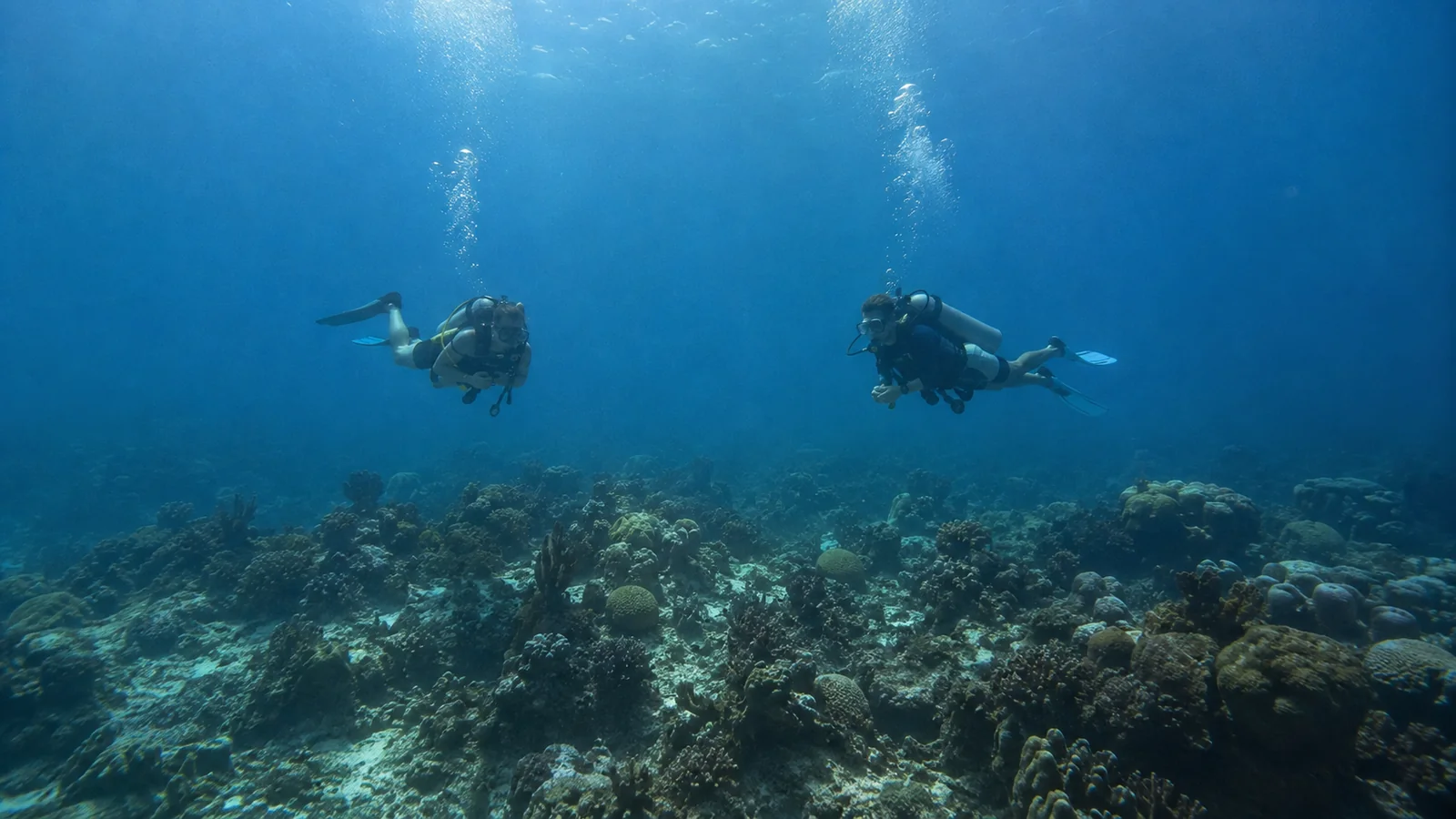
Most popular boat dives are drift dives along the island’s western reef system. Divers descend together, travel with the current, deploy a surface marker when appropriate, and are collected by a boat that follows the group’s progress.
Drift diving can be wonderfully efficient, but current can separate buddies or stretch a group with different air consumption. Divers Alert Network says current diving can range from leisurely to challenging and emphasizes preparation in its current-diving guidance.
Tell the operator your certification, total dives, date of last dive, deepest recent dive, air consumption, current experience, and any mobility or medical limits. “Advanced card” is not a useful substitute for what you have actually done lately.
Marine Park Rules Every Diver Should Know
Much of Cozumel’s celebrated southern reef corridor is protected within Parque Nacional Arrecifes de Cozumel. Mexico’s national protected-area authority instructs visitors to use authorized boats and guides, remain about 5 feet from reef structure, avoid anchoring, and never touch or feed marine life.
The official CONANP visitor rules also prohibit sunscreen, fishing, gloves, knives, and pointers within the park. Wear sun-protective clothing on the boat and ask the operator how it handles the conservation bracelet or entrance fee rather than assuming it is included.
A reef hook, camera stick, or gloved hand does not become harmless because the current is inconvenient. If buoyancy is not stable enough to stay clear of coral without grabbing, choose a refresher and sandy-bottom skills dive first.
Best Cozumel Dive Sites for Newer Divers
Paradise Reef
Paradise is commonly used for easier profiles, night dives, training, and cruise-friendly outings because operators can select shallower sections. It still has boat traffic and current, so “beginner site” does not mean unsupervised or stationary.
Ask whether your booking is shore entry or boat entry, how the group will descend, and where the boat retrieves divers. A first drift dive is much calmer when those steps are discussed before anyone is balancing fins on a crowded gunwale.
Chankanaab
Chankanaab can support shore-access training, refresher work, and a shorter dive day near established facilities. It is a particularly useful option when a nondiving companion wants a park day, but entrance, equipment, guide, and marine-park charges may be separate.
Cozumel Parks publishes current facility details and entry policies through its official FAQ. Confirm the operator’s access arrangement and do not assume a general park ticket includes scuba.
Villa Blanca and Other Northern Training Options
Villa Blanca and nearby sites can be chosen for shore or short boat profiles depending on the shop. Entry conditions, boat traffic, surge, and visibility vary, so let the day’s reality outrank an internet ranking.
For a diver returning after years away, the correct “site” may be a pool or confined-water session. Losing half a day to a refresher is cheaper than discovering an unfamiliar inflator, weight system, or mask problem in moving water.
Best Sites for Intermediate Reef Divers
Palancar Gardens
Palancar Gardens combines coral formations, sand channels, and swim-through possibilities without requiring the most aggressive profile in the system. It is a strong first Palancar choice for divers with solid buoyancy and recent boat experience.
Swim-throughs are optional, not a test of courage. Ask for the open route if overhead-like passages, equalization, camera handling, or group spacing create stress.
Palancar Horseshoe and Palancar Bricks
These Palancar sections can deliver larger coral structure, channels, and wall edges. Site names cover broad areas, and operators may use different entry points, so depth and difficulty come from the planned profile rather than the label.
Paso del Cedral
Paso del Cedral is loved for lively reef structure and the possibility of turtles, nurse sharks, rays, and schooling fish. Wildlife is never guaranteed, and the current may make photography more work than expected.
Keep the camera clipped off until buoyancy and group pace are settled. A close wildlife shot is not worth dropping below the plan or finning into coral while looking through a screen.
Tormentos and Yucab
Tormentos and Yucab are useful intermediate choices with coral heads, channels, and abundant reef life when conditions cooperate. They can also be selected as second dives after a deeper first profile, but the guide must set that day’s actual maximum depth and gas plan.
Columbia Shallows
Columbia Shallows offers a gentler way to experience the southern reef area than committing to the wall. It suits divers who prioritize color, bottom time, and an easier profile over depth bragging rights.
Best Cozumel Walls for Experienced Divers
Santa Rosa Wall
Santa Rosa is a classic Cozumel wall, with drop-offs, reef structure, and currents that can change the feel quickly. It belongs with divers who can control depth without a visible bottom, maintain buddy contact, and make a stable blue-water safety stop.
If a divemaster moves the group elsewhere, that is judgment, not disappointment. The reef will still be there on a future trip, while a rushed cruise schedule cannot absorb a preventable incident.
Columbia Wall
Columbia Wall can offer towering coral formations and deep blue water, but the operator should match the route to certification and recent experience. Ask about planned depth, current, descent method, minimum gas, and whether the group may separate by computer limits.
Palancar Caves
Palancar Caves is known for larger formations and swim-through routes. Divers uncomfortable with enclosed passages should say so before entering the water, because going around is a sound choice and not a lesser dive.
Punta Sur, Maracaibo, and Barracuda
These names often top advanced wish lists, but they are poor sites to demand during a cruise call. Punta Sur can involve deeper profiles and swim-through decisions, while Maracaibo and Barracuda are associated with more demanding conditions and stronger current.
Only consider them with the training, recent experience, gas planning, and operator assessment they require. A responsible shop may decline based on weather, current, group composition, park access, or port time, and that answer should increase your confidence in the shop.
How to Choose a Cozumel Dive Operator
- Confirm CONANP authorization and how park access is handled.
- Give your ship, terminal, gangway window, and all-aboard time.
- Ask for the maximum group size and guide-to-diver ratio.
- Confirm tank size, valve type, gas options, computer expectation, and rental gear.
- Ask whether a refresher or checkout dive is required after inactivity.
- Get the weather-cancellation and ship-miss policies in writing.
- Confirm emergency oxygen, communications, first-aid equipment, and lost-diver procedure.
Fast boats can reduce transit, but speed is not a safety program. Crew attentiveness, maintenance, oxygen, a clear briefing, diver accounting, and a conservative return plan matter more than shaving minutes off the ride.
If the dive is one part of a general island day, use the terminal logistics in this Cozumel cruise port planner. Trying to bolt a two-tank dive, beach club, ruins, and downtown shopping onto one call usually shortchanges all four.
Gear to Bring From the Ship
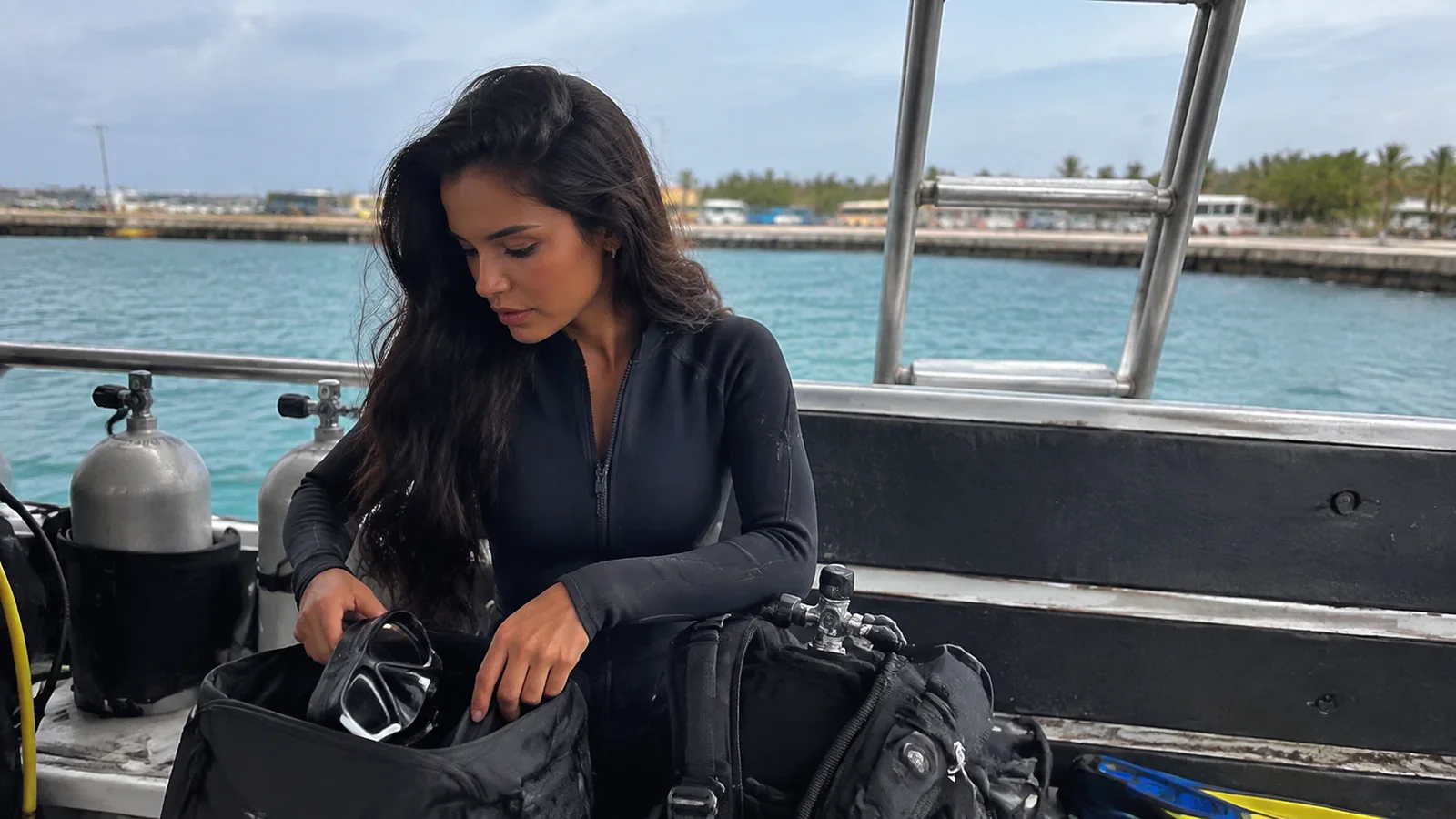
Bring certification proof, photo identification, dive computer if you know it, swimsuit, rash guard or exposure protection, dry clothes, towel if not supplied, water, and reef-safe sun coverage that complies with park rules. Keep medicine and valuables in a small dry bag that can be secured onboard.
A delayed suitcase is why serious divers often carry a personal mask, computer, and critical prescription items during travel. The larger cruise essentials list helps organize documents and embarkation gear without encouraging a suitcase full of gadgets.
Carry your own delayed surface marker buoy only if trained to deploy it and the operator wants individual divers equipped. DAN notes that surface signaling equipment helps boats locate divers in open water, but equipment without practiced technique is not a substitute for group control.
Cruise Timing and Missed-Port Risk
Book a morning departure whenever possible and give the operator ship time, not a guessed local time. Confirm whether the ticket uses local time or ship time, where pickup occurs, and what happens if the vessel docks late or skips Cozumel.
Independent operators do not control the cruise ship. I would target a return to the terminal area at least 90 minutes before all-aboard, with more cushion for a remote marina, large group, tender operation, or uncertain weather.
The neighboring Costa Maya port guide is useful if both Mexican Caribbean calls appear on the itinerary. Keep them separate: Cozumel is the stronger scuba day, while Costa Maya may better absorb ruins or a relaxed beach plan.
Flying After Diving
A cruise departure at sea level is not the same as boarding a pressurized flight, but post-cruise air travel can create a tight interval after a late dive call. Divers Alert Network recommends at least 12 hours before flying after one no-decompression dive and at least 18 hours after multiple dives in a day or multiple dive days.
DAN advises substantially longer than 18 hours after dives requiring decompression stops and notes that longer intervals reduce risk further. Use the full flying-after-diving guidance, your training, and medical advice rather than treating minimums as a guarantee.
Weather, Current, and Backup Plans
Wind and port restrictions can cancel small-boat operations even when sunshine is visible from the balcony. Northerly weather can particularly disrupt the normally protected west side, while tropical systems can affect the region during the broader Atlantic hurricane season.
Build a land backup that does not require a second nonrefundable reservation. San Miguel, the island museum, a food-focused walk, or an operator-approved shore session may salvage the day, depending on why boats stopped.
My Honest Site Ranking
Palancar Gardens is the best all-around first Cozumel boat dive, Paradise is the most practical starting point for newer or rusty divers, and Paso del Cedral is the wildlife-lover pick. Santa Rosa earns the classic-wall title, while Punta Sur belongs on an advanced wish list, not a cruise-day demand.
If budget decides whether you stay longer, this Caribbean cost comparison explains why Cozumel makes more sense as a dive-focused stay than as a generic cheap beach trip. The best Cozumel dive is the one your skills, conditions, conservation rules, and clock all agree you should make.