Carnival Cruise Luggage Size and Packing Rules
Carnival’s luggage rules are straightforward once you separate the ship’s measurements from your airline’s limits. The key numbers are 50 pounds, 16 by 24 inches when the bag lies flat, plus a carry-on that holds everything you cannot afford to lose.
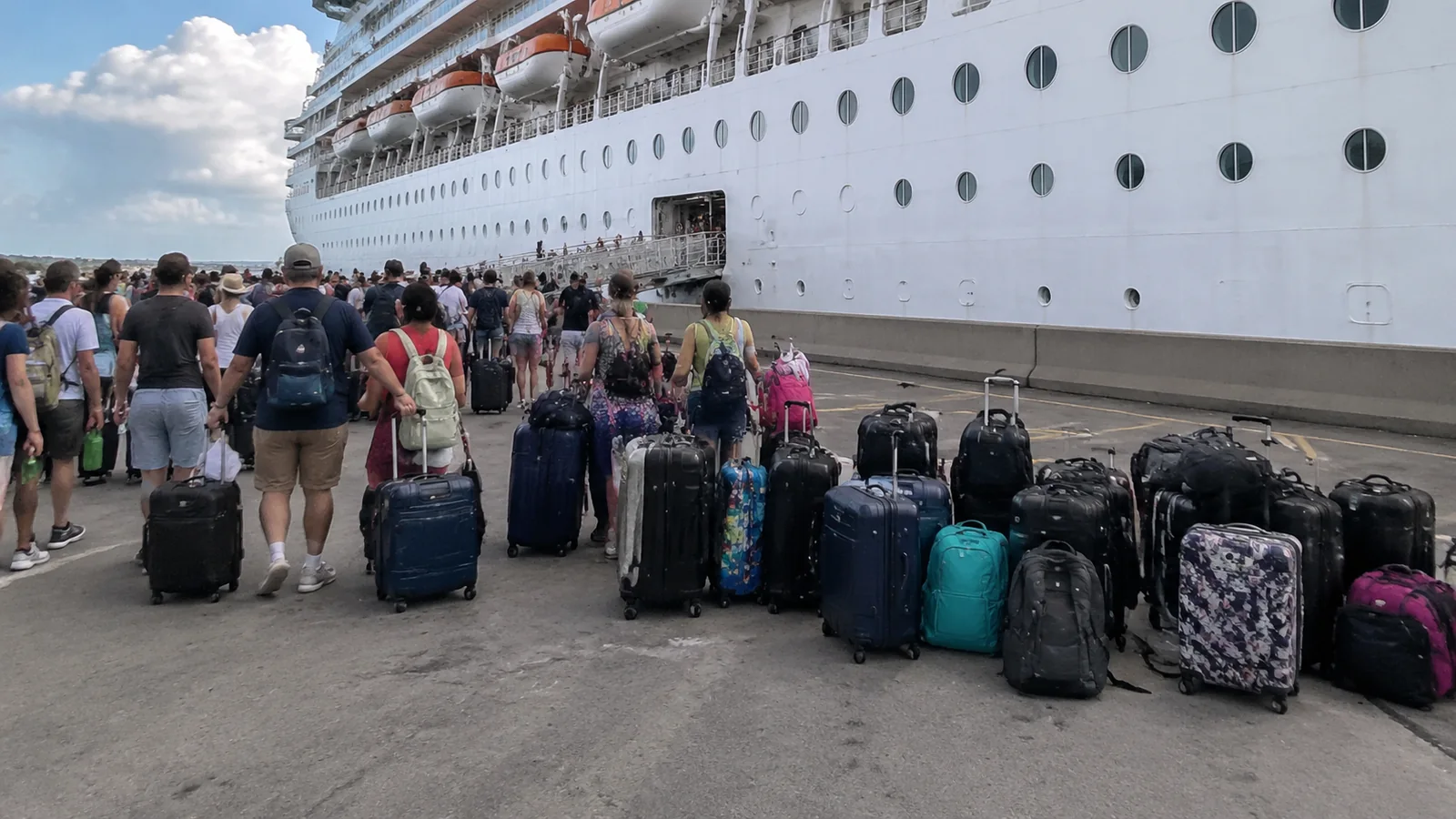
Carnival luggage limits at a glance
Carnival suggests a maximum of one bag per person for cruises lasting three to five days and no more than two bags per person for sailings of six days or longer. I would aim for less whenever you can comfortably repeat outfits or use laundry.
According to Carnival’s current luggage guidance, each checked suitcase and carry-on suitcase should weigh no more than 50 pounds. When lying flat, a bag must not exceed 16 inches high by 24 inches wide, and Carnival says its length is not a factor.
The unusual measurement describes the bag lying flat, not standing on its wheels like an airline sizing display. Measure the packed suitcase at its thickest and widest points, including bulging pockets and handles that do not retract.
Carnival advises leaving luggage unlocked for security screening. Oversized or locked bags may be delayed, so prepare the bag for screening before handing it over.
Checked bag or carry-on?
A checked bag goes to a porter at the cruise terminal, passes screening, and is delivered to your cabin area later. A carry-on stays with you through terminal screening and boarding until your stateroom becomes available.
That timing makes the carry-on more important than its name suggests. Carnival says guests arriving before 1:30 p.m. usually check bags with a porter, while checked-baggage service ends two hours before the ship’s published sailing time.
Arrive after the porter cutoff and you may have to take all your luggage aboard yourself. Final boarding is a separate and firm deadline printed on the boarding pass, so allow enough time for both screening and boarding.
Put these in your embarkation carry-on
- Passport or other required citizenship and identity documents
- Boarding pass and any visa or health documentation
- Prescription medication, medical supplies, and essential devices
- Wallet, keys, jewelry, electronics, and other valuables
- Power banks and spare lithium batteries
- A change of clothes, swimsuit, sunscreen, and basic toiletries
- Items needed for a child, dietary need, or first afternoon onboard
- Permitted wine, champagne, and nonalcoholic beverages
Your checked bag may reach the cabin after dinner, and a delayed bag is inconvenient even when eventually found. Pack the carry-on so you can comfortably manage the first evening and the next morning if luggage delivery takes longer than expected.
Airline rules come first when you fly
Carnival’s 50-pound guidance may resemble an airline limit, but the two systems are independent. Your airline sets its own dimensions, weight tiers, fees, carry-on allowance, and rules for sports equipment, mobility devices, and international connections.
Pack to whichever rule is stricter at each stage. A suitcase accepted at the cruise terminal can still trigger an airline oversize charge, while a cruise carry-on may be too large for an aircraft overhead bin.
Weigh the packed bag at home, then leave several pounds of margin for shopping and scale differences. If the return flight has a stricter allowance than the outbound flight, use the return limit from the beginning.
Air rules also matter for batteries. The Federal Aviation Administration requires spare lithium batteries and power banks in carry-on baggage, with terminals protected against short circuit, and specifies battery-size limits.
Carnival’s rules for power banks and electrical items
Carnival also requires power banks, portable chargers, and e-cigarettes in carry-on luggage only. Its current prohibited-items guidance says these devices must not be left charging unattended in a stateroom and must be kept away from heat, including direct sunlight through a window.
Do not pack clothing irons, garment steamers, immersion heaters, heating blankets, coffee makers, hot plates, toasters, humidifiers, or electric heating pads. Hair dryers, curling irons, flat irons, and electric shavers are generally permitted as personal-grooming devices.
Carnival currently lists non-surge power strips, multi-outlet adapters, and extension cords as generally permitted, but it may remove unsafe items. Confirm the latest Carnival safety policy before departure.
Never rely on a product listing that calls something “cruise approved.” Check the actual item against Carnival’s policy before buying it for your trip.
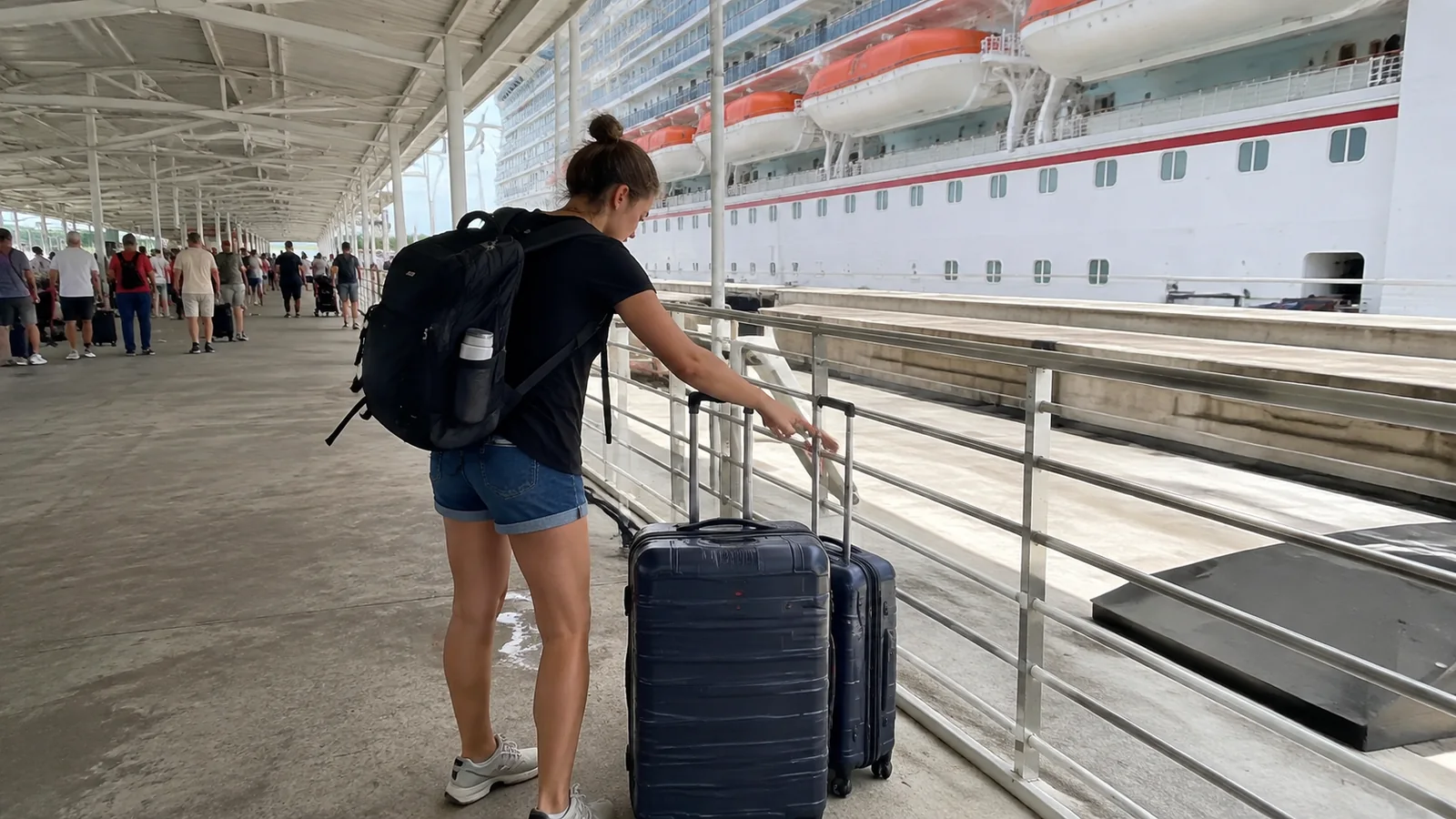
Medication and medical-device packing
Carnival directs guests to hand-carry medications, valuables, documents, and items requiring special handling. Bring enough medication for the scheduled trip plus a reasonable delay, and do not count on the ship’s medical center to stock or replace a specific prescription.
Original labeled containers and a prescription copy can simplify questions, especially for controlled medicines. Check destination rules because a drug legal at home may be restricted abroad.
Keep time-sensitive doses where you can reach them during boarding, and account for time-zone changes with your prescriber or pharmacist. This is practical organization, not a substitute for individual medical advice.
CPAP machines must be carried aboard rather than checked. Carnival allows guests to buy distilled water before or during the cruise, or hand-carry their own distilled water with the machine.
A small personal cooler up to 12 by 12 by 12 inches is permitted as carry-on luggage for medications or allowed nonalcoholic beverages. Contact Carnival’s Guest Access team before sailing if you need refrigeration, oxygen, sharps disposal, electrical support, or another accommodation.
What drinks can go in Carnival luggage?
For cruises departing from the United States, beverages must follow Carnival’s separate carry-on policy. Do not put wine, soda, juice, or other permitted drinks in checked luggage.
Nonalcoholic beverages
Each person may carry on up to 12 sealed, unopened cans or cartons, with each container holding 12 ounces or less. Carnival does not allow guests to bring water, soda, or other nonalcoholic drinks in plastic or glass bottles.
That allowance can include items such as soda, sparkling water, energy drinks, juice, and milk. Both the individual container size and the total quantity must meet the allowance.
Wine and champagne
Each guest age 21 or older may carry on one sealed, unopened 750 ml bottle of wine or champagne at the beginning of the cruise. Beer, hard liquor, and fortified wines over 15% alcohol by volume are outside the exception.
Carnival currently charges a $15 corkage fee if the brought bottle is served in the main dining room, a specialty restaurant, or a bar. Review the full liquor and beverage section close to sailing, particularly for departures outside the United States.
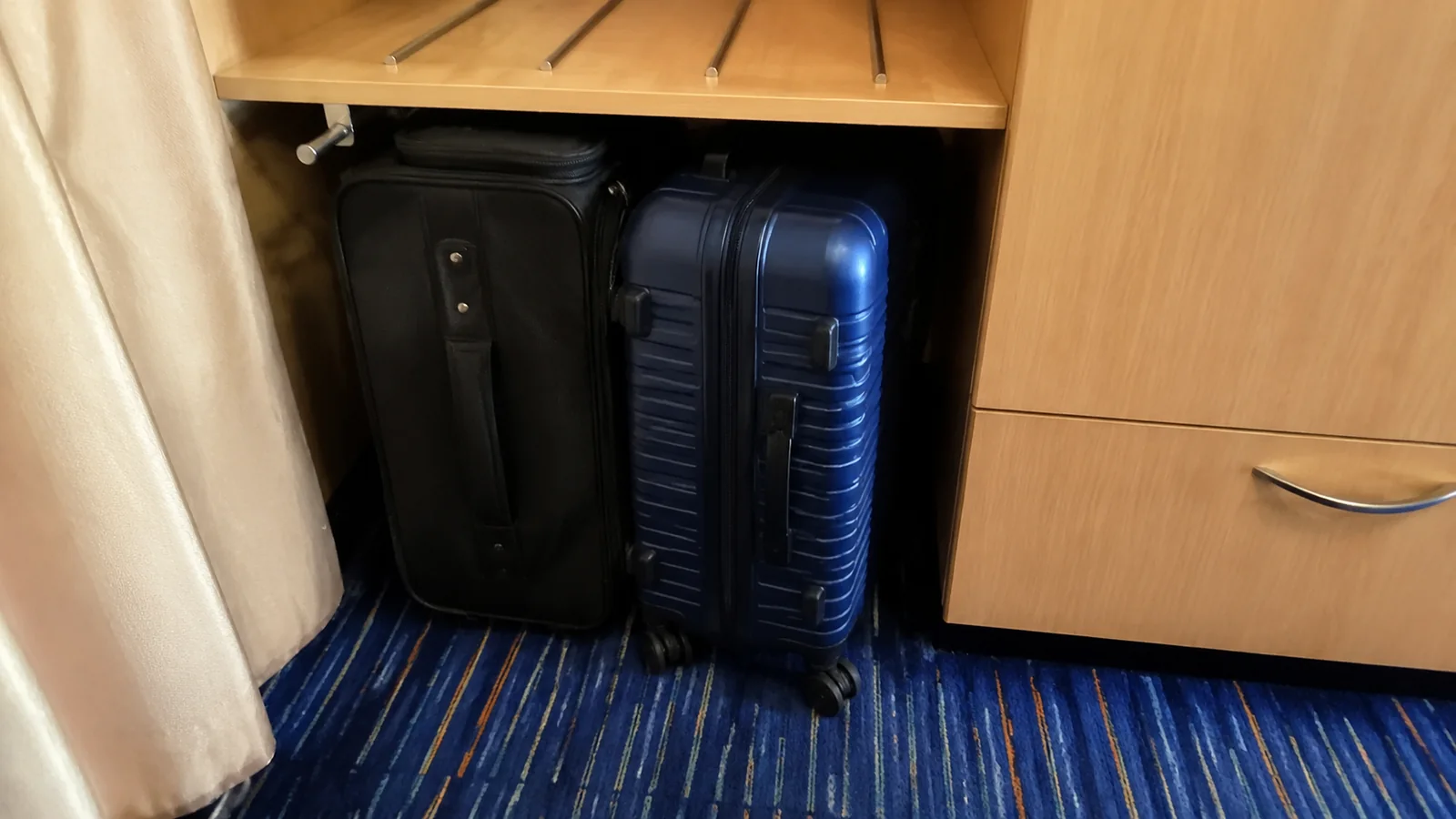
What not to pack
Carnival screens all luggage and can confiscate an item it considers dangerous or a risk to the ship, guests, or crew. Some confiscated items are disposed of without compensation, so check questionable items before you pack them.
The current list prohibits weapons, illegal drugs, marijuana and CBD products, fireworks, flammable materials, most compressed-gas cylinders, candles, incense, and various heating devices. State legality or a medical-marijuana label does not override Carnival’s shipboard prohibition.
Bluetooth speakers, portable speakers, satellite phones, routers, satellite dishes, hoverboards, wheeled shoes, and several types of recreational equipment also appear on the current list. Rules for knives, scissors, dive equipment, medical oxygen, mobility devices, and smart glasses include details or exceptions, so check the original policy instead of a social-media summary.
Pack only factory-sealed snacks. Agriculture rules can also prevent food, fruit, plants, flowers, and animal products from leaving the ship in the United States.
A practical packing system that fits the limits
Begin with the core list in this cruise packing guide, then add a small module for climate, formal or theme nights, shore activities, and medical needs. This makes it easier to see duplicates and leave unnecessary extras at home.
For a three-to-five-day cruise
A single checked bag per person is Carnival’s suggestion, and many travelers can share one when climates and dress needs are simple. Build around repeatable bottoms, interchangeable tops, one evening layer, swimwear, sleepwear, and two or three useful pairs of shoes.
For six days or longer
Carnival suggests no more than two bags per person, but laundry and outfit repetition often make the second bag unnecessary. Check the ship’s self-service or paid laundry options and cabin storage before assuming more luggage creates more comfort.
For Alaska or cool-weather routes
Use light, compressible layers rather than one enormous coat, then add a waterproof outer layer, warm hat, gloves, and grippy shoes. Wear the bulkiest footwear and jacket during travel if airline weight is tight, provided you can still move comfortably through the terminal.
For families
Divide essential clothing across the adults’ checked bags so one delayed case does not contain every child’s outfit. Keep diapers, formula or feeding supplies, medications, comfort items, and a complete change of clothes in the carry-on.
A clear packing plan is one of the quiet heroes in these first-time cruise tips. It also leaves you with less to organize in a small cabin.
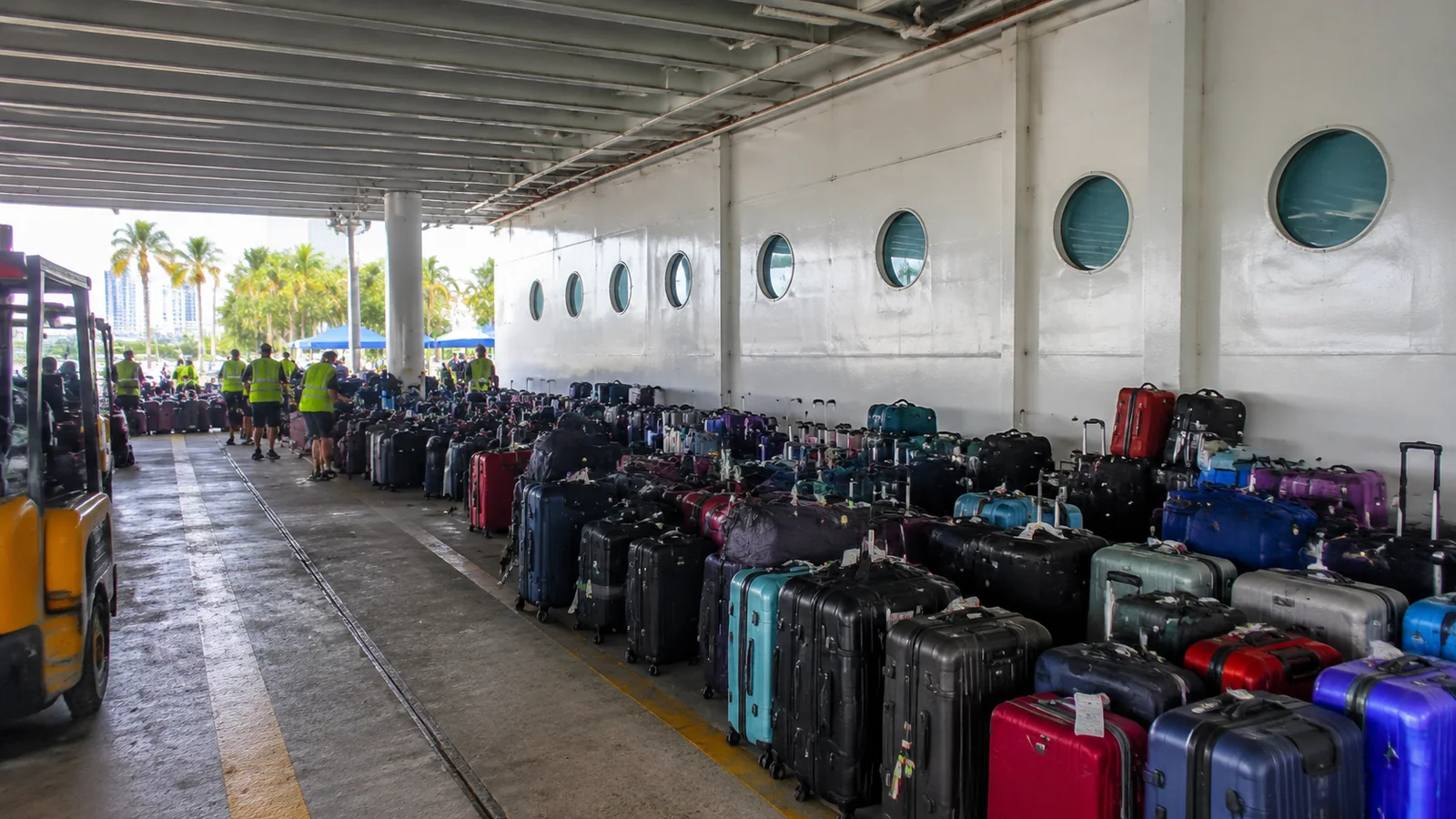
Luggage tags and porter handoff
Personalized Carnival tags become available in electronic documents after online check-in. Print them, complete any required information, and attach them before reaching the terminal, while keeping airline tags from confusing the handoff.
Use a sturdy tag holder or secure the paper as directed, and place identification inside the bag as backup. Keep a photograph of the suitcase and its contents in case you need to describe a missing or damaged bag.
Porters are not Carnival employees, so retain your documents and carry-on rather than handing over everything on wheels. A clearly labeled checked bag plus a manageable carry-on leaves your hands freer during boarding.
Plan for the trip home too
Keep a foldable tote or luggage scale for the return, but do not let souvenir space become permission to overbuy. Airline weight fees can erase the savings from duty-free shopping with remarkable efficiency.
Set aside travel clothes and essential medication before putting checked bags out for collection on the final night. If choosing self-assist debarkation, every traveler must be able to control their own luggage through hallways, elevators, gangways, and the terminal.
Budget for transfers, bag fees, laundry, and onboard purchases alongside broader cruise money-saving choices. Before leaving home, check the wheels and handles under the weight you actually plan to carry.
Frequently asked questions
Does Carnival weigh cruise luggage?
Carnival publishes a 50-pound guideline for both checked and carry-on suitcases, so pack to it whether or not a particular terminal weighs every bag. Porters, screening equipment, and your return airline still have to handle the case.
Can Carnival luggage be larger than an airline carry-on?
Carnival uses its own stated maximum of 16 inches high by 24 inches wide when the bag lies flat, with length not a factor. An airline uses different dimensions, so a bag acceptable to Carnival may still fail the airline’s carry-on test.
When will checked luggage reach the cabin?
Delivery happens after boarding and can continue into the evening, with no useful promise that your particular bag will arrive first. Carry anything needed for embarkation day and the first night.
Can you bring a power bank on Carnival?
Yes, but Carnival requires power banks and portable chargers in carry-on luggage only and prohibits leaving them charging unattended. Flyers must also follow FAA and airline battery limits.
Can you bring bottled water on Carnival?
Not in ordinary plastic or glass bottles under the U.S.-departure beverage policy. Carnival permits a limited quantity of sealed cans or cartons in carry-on luggage and sells bottled water for cabin delivery.
The simple Carnival luggage rule
Keep each suitcase at or below 50 pounds and within the 16-by-24-inch flat measurement, then treat the carry-on as your first-day survival kit. Check Carnival and your airline again before departure, because the safest packing list is the one built from today’s rules rather than last year’s screenshot.