Best Family Cruises: Match the Ship to Your Family
The best family cruise is the one whose ship, itinerary, cabin, childcare, and price fit your actual family. Disney storytelling may delight one child, Royal Caribbean’s giant attractions another, and a quieter Alaska ship the teen who would rather watch whales than meet anyone wearing a name tag.
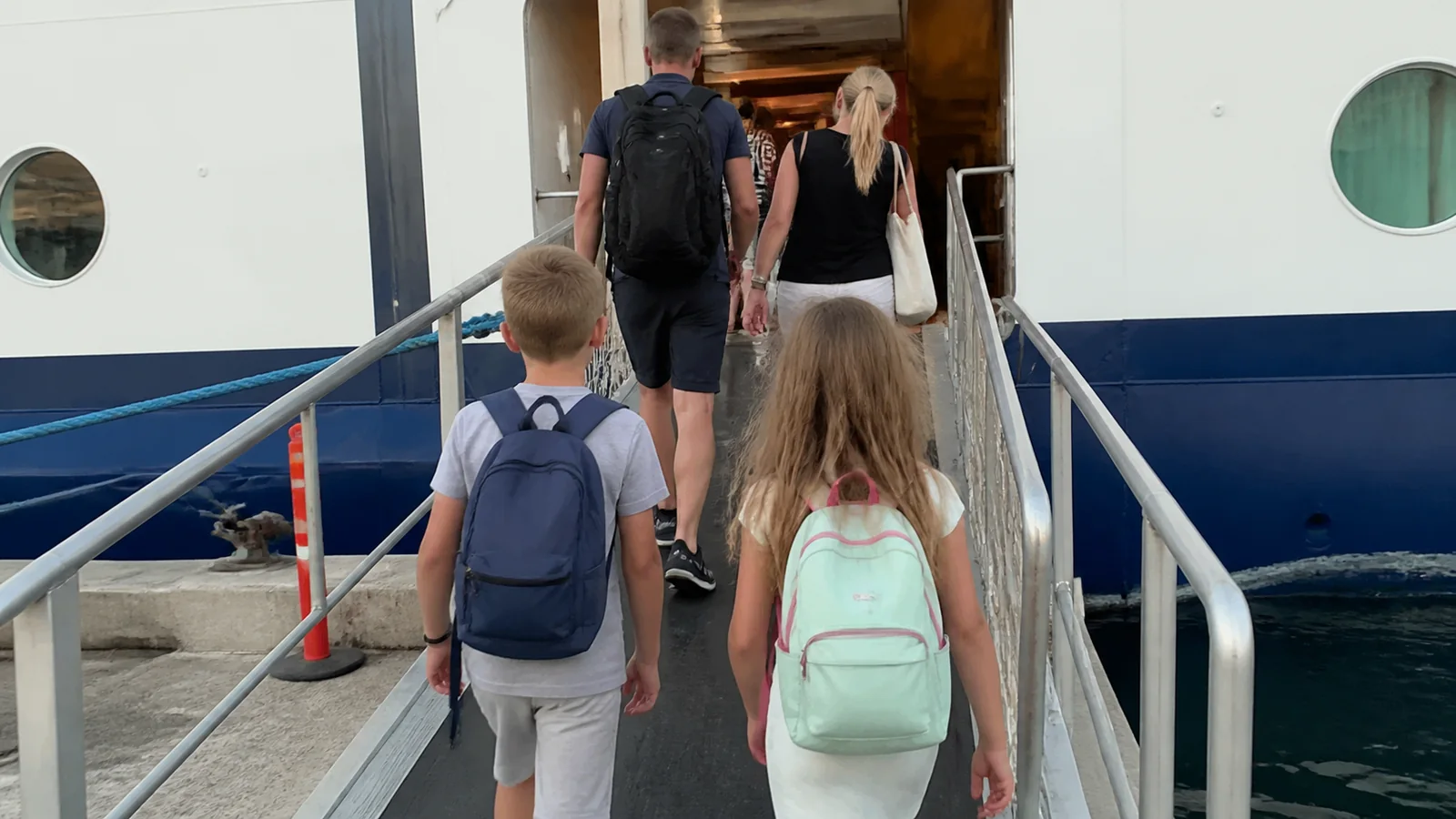
There is no universal best family cruise
Family cruise rankings often compare brands as if every child of the same age has identical interests, sleep habits, sensory needs, and tolerance for organized fun. They do not, which is fortunate because one endless game of dodgeball would be a bleak future for civilization.
Start with the youngest traveler and the hardest nonnegotiable. That might be a nursery, connecting cabins, a refrigerator for medication, an accessible shower, familiar food, a direct flight, or enough sea-day activity for three teenagers.
Then choose the exact ship, not merely the cruise line. Kids clubs, splash areas, waterslides, family cabins, entertainment, and dining arrangements vary across a fleet and can change after refurbishment.
The youth-program age bands below match the cruise lines’ live program pages, but hours, capacity, nursery availability, toilet-training rules, fees, and registration procedures can still vary by ship and sailing. Confirm the exact ship before paying for a family trip.
Best for immersive family entertainment: Disney Cruise Line
Disney is the clearest fit for families who value character interactions, theatrical storytelling, themed spaces, and programming designed around children. The fare can be higher than a comparable mainstream cabin, so the match is strongest when your family will use those Disney-specific experiences.
As of the check date, Disney’s official youth overview lists the nursery for ages 6 months to 3 years, Oceaneer Club for ages 3 to 10, Edge for ages 11 to 14, and Vibe for ages 14 to 17. Nursery care costs extra and requires reservations, while secured Oceaneer programming requires eligible children to be toilet-trained.
Disney works particularly well when the adults enjoy the theme too, since much of the value appears in shared entertainment and atmosphere. It is less compelling if the children dislike characters, the family mostly explores independently, or the fare forces uncomfortable compromises elsewhere.
Ship choice still matters. Water features, restaurant concepts, kids-club spaces, cabin layouts, and headline shows differ across Disney’s expanding fleet, and advertised experiences remain subject to operating schedules and availability.
Best for big-ship activity choice: Royal Caribbean
Royal Caribbean is a strong contender for active families who want waterslides, climbing, surf simulators, ice shows, large pool decks, and many dining choices. The newest, largest ships offer the broadest menus of attractions, but they also require more planning and may command higher fares.
The current Royal Babies & Tots page lists nursery drop-off for ages 6 to 36 months on select ships for an hourly fee. The page also states that the nursery is not available on every vessel, making the ship name more important than the logo.
Adventure Ocean serves older children in age-based programming, while teens have separate activities and gathering spaces. Group structure and operating times can vary by ship and sailing, and popular sessions may reach capacity.
Check minimum heights, ages, footwear rules, reservations, and extra charges for every must-do attraction. A child being tall enough in the vacation daydream does not help at the measurement sign.
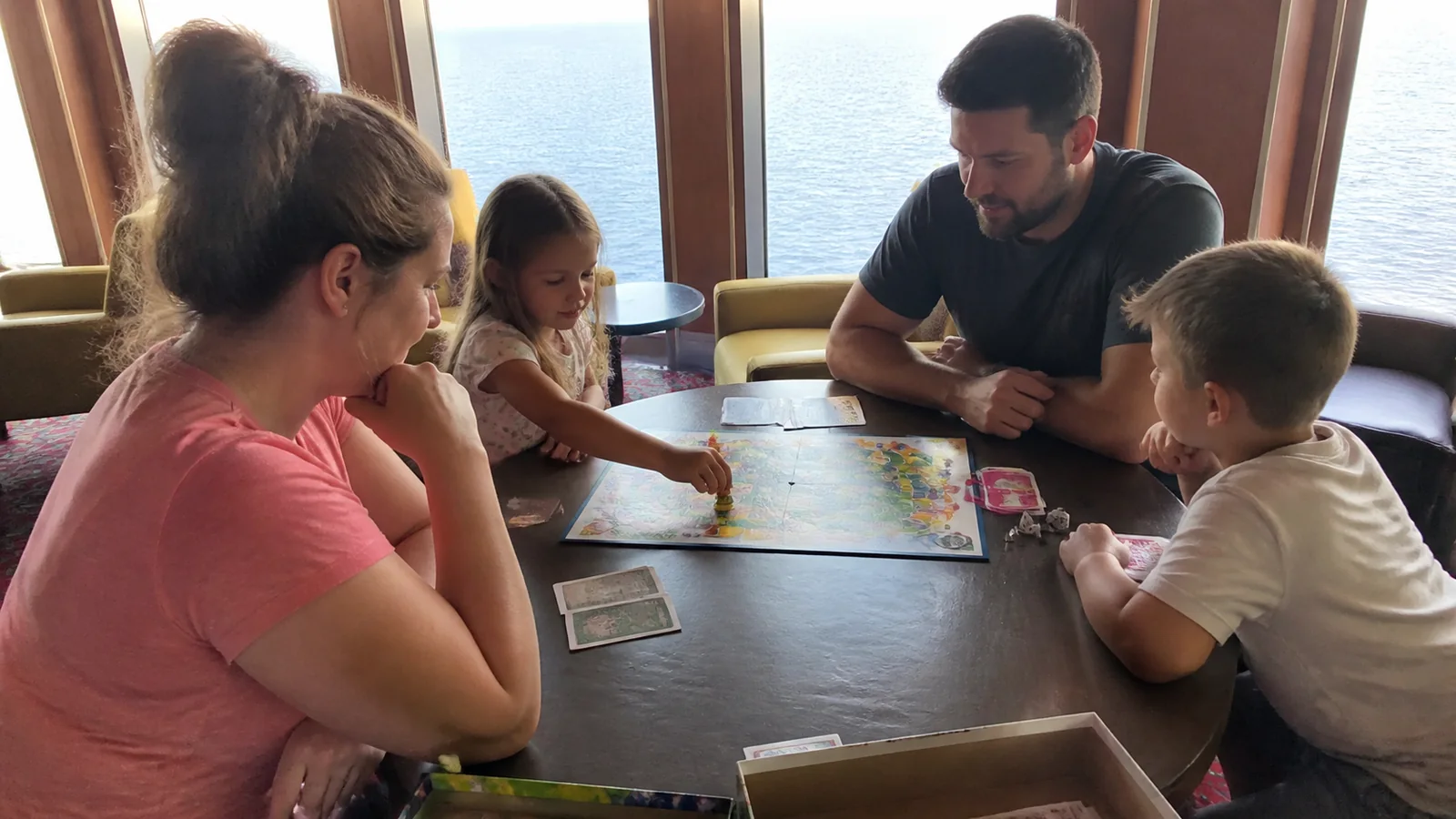
Best for lively value and broad U.S. departure choice: Carnival
Carnival often suits families seeking casual energy, familiar food, pool-deck fun, comedy, and drive-to options from several U.S. regions. Value depends on the final trip cost and ship, not a promotional fare viewed before taxes, gratuities, drinks, and activities.
Carnival’s current family program page divides Camp Ocean into Penguins ages 2 to 5, Stingrays ages 6 to 8, and Sharks ages 9 to 11. Circle “C” covers ages 12 to 14, while Club O2 covers ages 15 to 17.
Under-2 care uses separate activities, time windows, and fees rather than simply joining standard Camp Ocean all day. Verify diaper, feeding, and after-hours policies as well as whether a particular ship has the attractions shown on the brand’s general family page.
Carnival is appealing when convenience and shared fun outweigh the need for a polished, quiet atmosphere. Families sensitive to noise or crowds should scrutinize cabin position, sailing length, and holiday timing.
Other lines worth matching, not dismissing
Norwegian Cruise Line can fit families who value flexible dining, contemporary entertainment, and activity-heavy ships. MSC may appeal for large modern vessels, varied home ports, and an international onboard environment, while Princess and Celebrity can suit families wanting a calmer mainstream experience.
Those broad descriptions are starting points, not guarantees. Compare the specific youth program, child age bands, nursery availability, family cabin, ship facilities, itinerary, and total package price on the exact departure.
Luxury and small-ship lines may provide more space, service, or destination focus but less supervised youth programming. They can be excellent for travel-ready teens and multigenerational adults, yet a poor fit for a preschooler who needs a daily playroom.
Expedition cruises reward curious older children who can follow instructions and enjoy wildlife or science. Minimum ages, Zodiac boarding, physical demands, and landing rules vary sharply, so never book one based on a generic “family-friendly” label.
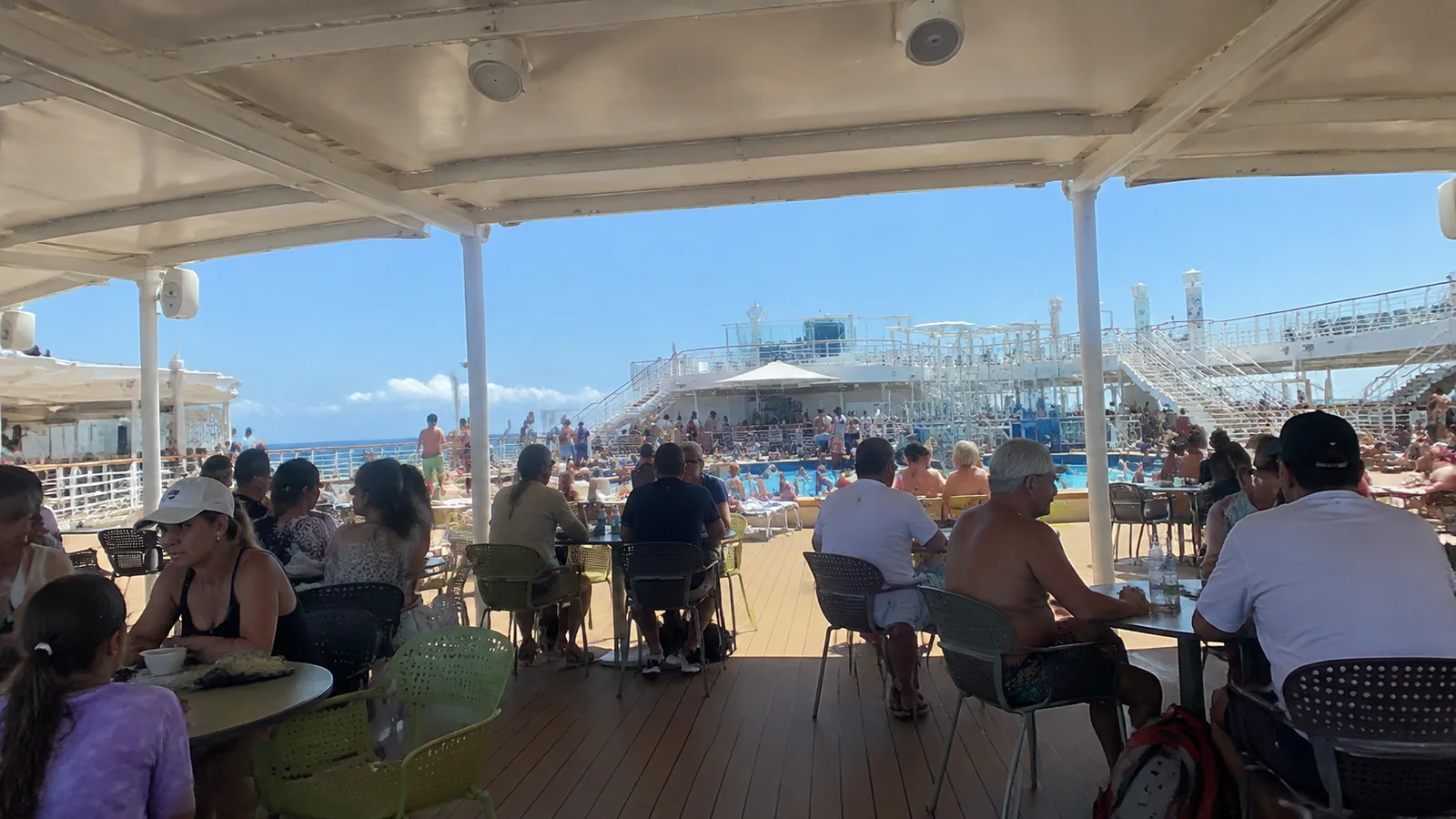
Three real ships I would compare first
Disney Wish for babies, toddlers, and character-loving children
Disney Wish is my first inquiry when Disney characters, family shows, and a nursery matter more than the biggest thrill rides. Its Toy Story Splash Zone gives younger children a specific water-play option, while the Oceaneer Club serves older children within its stated age rules.
Disney’s current pool restrictions list Toy Story Splash Zone for ages four and younger and require swim diapers for children who are not toilet trained. That permission applies to the designated splash area, not the ship’s swimming pools.
The nursery program covers eligible children from six months through age three on standard itineraries, with a higher minimum on certain longer routes. Nursery care costs extra and needs available space, so I would reserve the slots that make an adult dinner possible rather than assuming unlimited drop-off care.
Compare a family stateroom with two connecting rooms if naps and early bedtimes will shape the trip. I would pay particular attention to the actual connecting-door symbols and sleeping arrangement, since two nearby rooms do not automatically connect.
Icon of the Seas for elementary-age kids and mixed generations
Icon combines the Surfside family area with a much wider menu of pools, shows, and active attractions, making it my pick when siblings and grandparents want different things during the day. The tradeoff is a very large ship, so I would plan meeting points and choose cabin location around the places your family will use most.
The Family Infinite Ocean View Balcony category sleeps up to six, with a separate kids’ bunk area and a split bathroom. That can be useful for parents and children, while grandparents may prefer their own connecting or nearby cabin for privacy and a different bedtime.
I would choose Icon over Wish when the children’s excitement centers on active ship time rather than Disney storytelling. Before paying for a headline attraction, check the exact height and participation rules; a first grader’s age alone does not establish slide eligibility.
Mardi Gras for teens and a casual family style
Mardi Gras gives families an energetic setting with WaterWorks, sports activities, and the BOLT roller coaster. Its Family Harbor cabins also provide access to a dedicated lounge with breakfast and snacks, which can simplify meals for younger siblings.
Carnival’s Circle C serves ages 12 to 14, while Club O2 serves ages 15 to 17, so siblings may be assigned different teen spaces. I would discuss that before booking and encourage teens to attend an early meet-up while still leaving them control over how social they want to be.
BOLT costs extra and currently requires riders to be between 52 and 77 inches tall, with additional weight and accompaniment limits. Check the complete rules and likely ride spending before treating the coaster as the deciding reason to choose this ship.
I would choose Mardi Gras for teens who want casual food, peers, and active afternoons, then compare two connecting cabins with a shared family room. A second bathroom and some privacy can be more useful than a higher cabin category that still puts everyone in one sleeping space.
Best family cruises by age
Babies under 1
The best ship has an eligible sailing age, reservable nursery care if needed, a safe sleep setup, appropriate washing facilities, and an itinerary with manageable medical access. Many lines use a six-month minimum for standard routes and a higher minimum for longer or remote itineraries, but rules differ.
For example, Carnival’s current ticket contract requires infants to be at least 6 months at embarkation and at least 12 months on specified transoceanic and remote itineraries with more than two consecutive sea days. That is Carnival’s rule, not a universal cruise standard.
Count feeding supplies, diapers, formula rules, stroller storage, bath setup, and port transportation before choosing. The practical detail in cruising with toddlers is useful even before the toddler years officially begin.
Toddlers and preschoolers
Prioritize secure childcare, toilet-training rules, splash facilities that permit your child, early dining, quiet nap access, and a cabin with safe bed arrangements. A shorter cruise from a drive-to port can reduce travel fatigue, although embarkation day remains a very stimulating way to skip a nap.
Do not assume a diapered child can use the main pool. U.S. Vessel Sanitation Program records show that specific ships receive approval for designated baby-only water facilities, reinforcing that families must identify the exact approved splash area rather than treating every pool as interchangeable.
Elementary-age children
This is the easiest age for many mainstream youth clubs because children can join broad activity menus and express what they like. Choose between character-rich programming, sports and slides, creative clubs, or destination-led learning based on the child rather than the parent’s brand loyalty.
Build downtime into sea days. A ship can offer twelve exciting activities before lunch and still contain a child who needs crackers and forty-five minutes of silence.
Tweens
Tweens care about being grouped with peers, not younger children, and may resist a club that feels too structured. Verify exact age boundaries, open-house opportunities, sign-in privileges, communication rules, and whether their friend or sibling falls into another group.
Ships with water attractions, sports courts, arcades, movies, and casual food provide fallback options when the club is not a match. Discuss spending limits for arcades and snacks before boarding.
Teenagers
Teens often value independence, reliable messaging, later activities, interesting food, and a private peer space more than mascot appearances. A port-intensive Europe, Alaska, or Japan itinerary may beat a waterpark ship for a teen who loves photography, history, wildlife, or trains.
Agree on check-in times, buddy expectations, cabin curfew, charging devices, port rules, and who may leave the ship with whom. The cruise line’s minimum-age and supervision policies remain the floor, not the family plan.
Pick the itinerary for family energy
Caribbean and Bahamas
Warm-weather routes are easy to understand and pair well with pool-focused ships, beaches, and private destinations. Heat, sun exposure, storms, tendering, water safety, and the cost of beach extras still require planning.
Alaska
Alaska works for families interested in wildlife, scenery, trains, glaciers, and active excursions. Weather changes quickly, ports can be rainy, and the most exciting tours may have age, height, weight, or mobility restrictions.
Round-trip and one-way routes create different airfare and land-trip possibilities. Families starting in Canada can use the logistics in Alaska cruises from Vancouver to compare Canada Place, airport transit, documents, and pre-cruise timing.
Mediterranean and Northern Europe
Europe offers extraordinary history and variety but can demand early mornings, long transfers, heat, cobblestones, and consecutive port days. Older children who enjoy sightseeing may thrive, while younger ones may prefer fewer marquee cities and more playground-level flexibility.
Short cruises
Three- and four-night cruises lower the time commitment and can test whether the family enjoys ship life. Fixed travel costs consume a larger share of the budget, and the fast schedule can feel busier than a seven-night trip.
Choose a short cruise for convenience, not solely because it is short. A cross-country flight, hotel night, and two airport days can make a weekend sailing impressively inefficient.
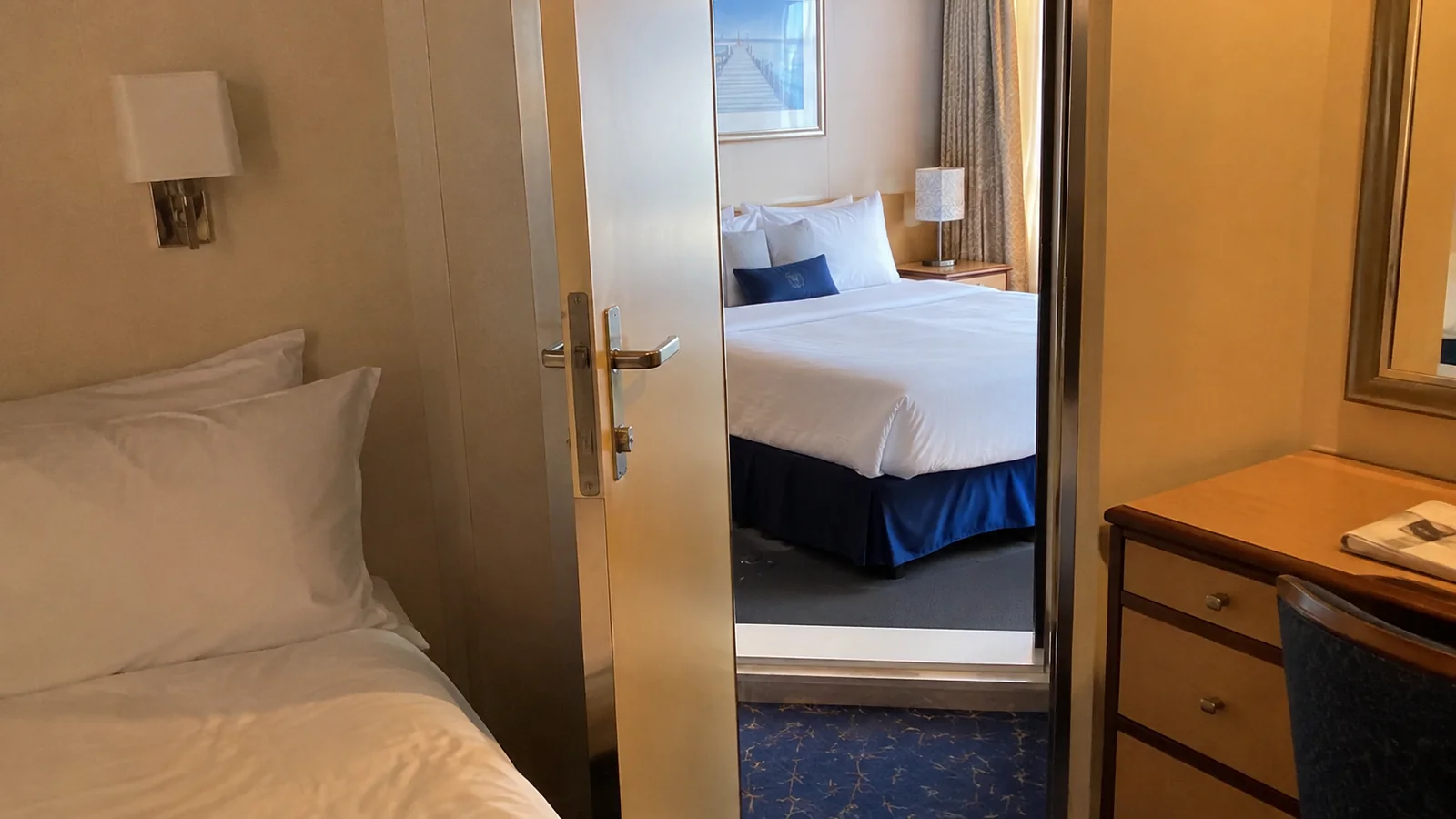
The cabin can make or break the trip
Confirm the legal occupancy and actual bed arrangement before booking. “Sleeps four” may mean two main beds plus an upper berth and sofa, which is different from two bedrooms and a small diplomatic mission.
Connecting cabins give older children space and adults privacy, but not every adjacent pair connects. A family suite may offer a second bathroom or divided sleeping area, while two standard cabins can sometimes cost less.
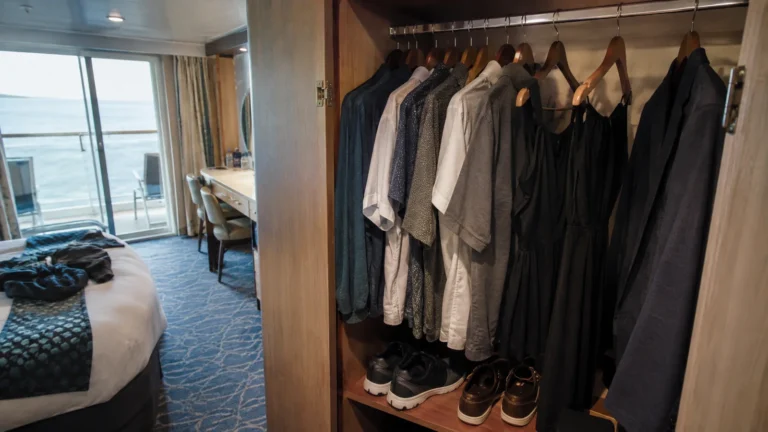
Ask about cribs, bed rails, tub versus shower, refrigerator performance, outlets, stroller parking, balcony locks, and night-light options. Never leave young children alone on a balcony, and do not rearrange safety equipment without crew guidance.
Location matters too. A cabin under the pool deck or beside a music venue may challenge early bedtimes, while a room far from elevators adds distance every time someone forgets the sunscreen.
Kids clubs are not automatic babysitting
Read eligibility, registration, capacity, pickup authorization, late-night fees, meal policies, toileting requirements, and medical or behavioral support before sailing. Programs may close between sessions and can change schedules for port days.
Some children walk in and wave goodbye before the parent finishes the form; others refuse the doorway. Visit during open house when offered, introduce the space without pressure, and maintain a backup plan for adult time.
Do not assume one-to-one care, help with toileting, medication administration, or individualized behavioral support. Ask the accessibility or special-needs team in writing what can be provided for your child.
Accessibility and sensory fit
Families with mobility, communication, sensory, dietary, or developmental needs should compare the whole travel chain. The cabin may be accessible while a tender, excursion bus, historic site, or beach transfer is not.
Ask about accessible cabins, pool lifts, quiet spaces, show effects, priority boarding, dietary procedures, youth-program support, refrigeration, sharps disposal, and evacuation assistance. Make requests by the line’s deadline and bring written confirmation.
A giant ship offers more choices but also more noise, lights, walking, and transitions. A smaller ship can be calmer but provide fewer retreat spaces, so the right answer depends on the person.
Family dining without nightly negotiations
Flexible dining helps around naps and excursions, while fixed seating provides a predictable routine and familiar service team. Buffet variety can solve different appetites, but busy periods and carrying several plates introduce their own circus act.
Review included venues, children’s menus, allergy procedures, dress expectations, reservation rules, and room-service charges. Notify the line of dietary needs before travel and speak with dining staff onboard rather than relying on an informal social-media answer.
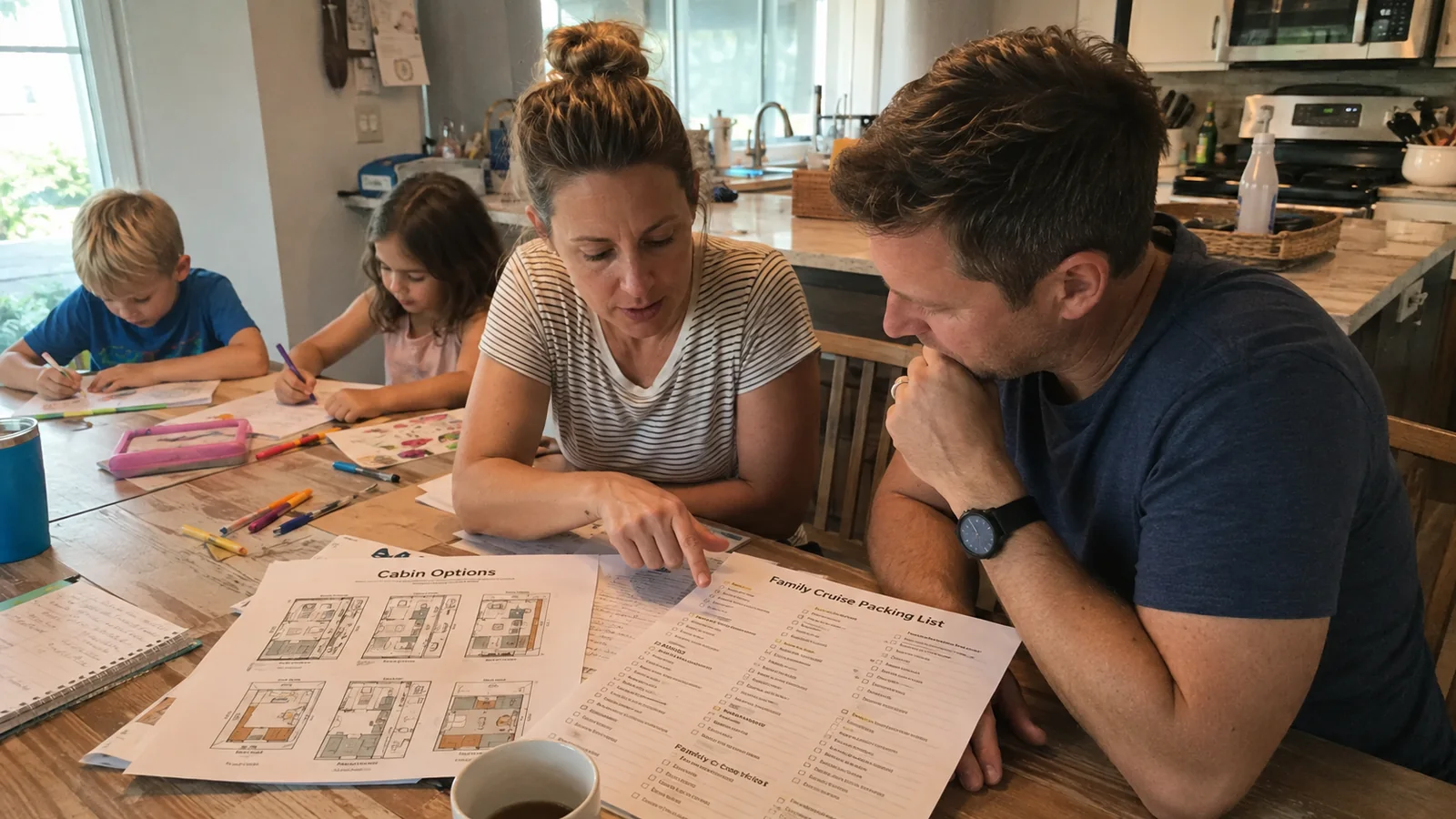
What a family cruise really costs
Compare the final cabin price for the whole family, not the eye-catching per-person lead fare. Third- and fourth-guest promotions can reduce cost, but taxes, fees, gratuities, and eligibility terms still apply.
- Cruise fare and required charges for every traveler
- Flights, hotel, parking, and transfers
- Gratuities or service charges
- Nursery, late-night care, and premium activities
- Drinks, Wi-Fi, specialty meals, and arcade spending
- Excursions with child pricing and age limits
- Passports, consent documents, and insurance
- Stroller, car-seat, laundry, and supply logistics
A more expensive line can be better value when it includes experiences your family would otherwise buy. A low fare can also be exactly right when everyone wants the included pool, club, and pizza rather than a collection of packages.
Documents for children
Requirements depend on citizenship, itinerary, cruise line, and who travels with the child. The U.S. State Department warns that some countries require a signed, notarized consent letter from an absent parent, proof of sole custody, or written permission when a minor travels without a parent.
Check the State Department’s current travel-with-minors guidance, every destination, and the cruise line. Bring originals or approved copies exactly as required, and make sure names match the reservation.
A closed-loop itinerary does not erase destination or cruise-line document rules. Passports are especially useful if an emergency requires the family to fly internationally.
Questions to ask before booking
- Is every child old enough for the ship, route, club, and must-do excursions?
- Does the exact ship have a nursery, splash area, teen lounge, and family cabin?
- Which programs cost extra or require reservations?
- Can siblings or friends in different age bands attend together?
- What help is available for disability, allergy, medication, or sensory needs?
- How many consecutive sea days and early port mornings are realistic?
- What documents are required when one parent or a grandparent travels?
- What is the total trip cost after childcare, packages, and transportation?
Once booked, use the practical sequence in these first-time cruise tips for check-in, arrival, embarkation bags, and reservations. Let each child choose one priority and each adult protect one period of downtime.
Frequently asked questions
Which cruise line is best for families?
Disney is strong for immersive theming, Royal Caribbean for big-ship activities, and Carnival for casual fun and convenient U.S. departures. The best choice still depends on the exact ship, children’s ages, route, cabin, needs, and final price.
What age is best for a first family cruise?
There is no perfect age. Wait until the child meets the route’s minimum age and choose a ship with facilities the family can actually use.
Are kids clubs included?
Standard daytime programs for eligible children are often included on mainstream lines, while nurseries, late-night care, and special activities may cost extra. Hours, capacity, and eligibility vary.
Can children stay in their own cabin?
Cruise lines set minimum ages and adjacency rules for cabins, and policies differ. Book through a representative who can document the approved arrangement rather than assuming connecting door means independent reservation.
Should a family cruise for three, four, or seven nights?
Three or four nights make a low-commitment test when the port is nearby, while seven nights spread out travel costs and allow a gentler pace. Match the length to travel time, school schedule, and family stamina.
The best choice for your crew
Choose the itinerary your family wants, the ship that supports everyone’s daily life, and the cabin where sleep is plausible. Verify the youngest child’s rules first, the most complex accessibility or document need second, and the flashy attractions after that.
No line wins every family. The real victory is a ship where the children find something they love, the adults receive an occasional complete sentence, and nobody discovers at the pier that the birth certificate is still on the kitchen counter.