Port and Starboard on a Cruise Ship: Easy Meanings and Cabin Advice
Port is the ship’s left side and starboard is the ship’s right side when you face forward toward the bow. Those sides never switch, even when you turn around, the ship reverses, or your balcony seems to face the terminal.
Port vs starboard: the instant answer
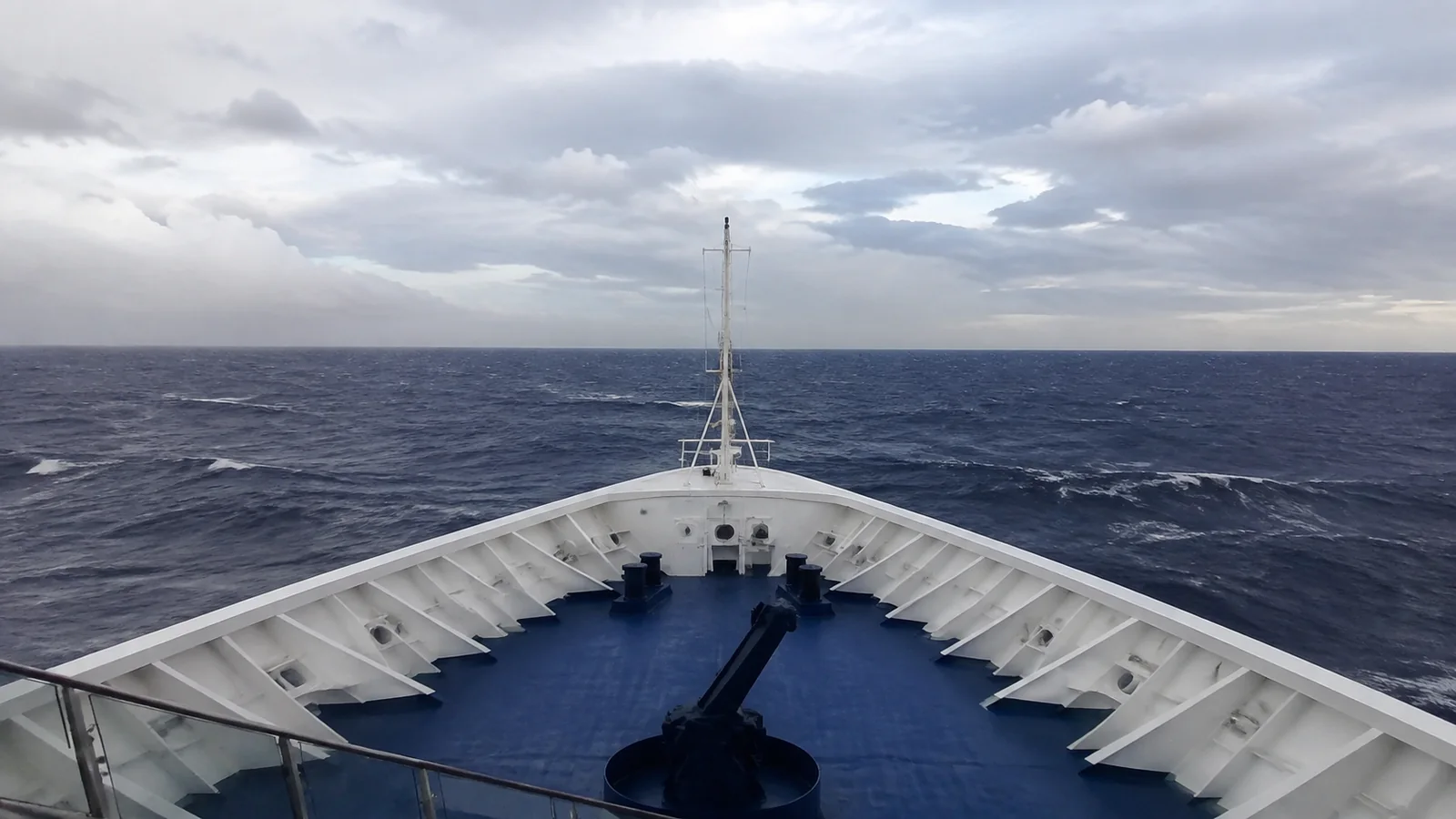
Stand as though you are looking in the same direction the ship normally travels. Your left is port, your right is starboard, the front is the bow, and the back is the stern.
- Port: left side when facing the bow.
- Starboard: right side when facing the bow.
- Bow: front of the ship.
- Stern: back of the ship.
- Forward: toward the bow.
- Aft: toward the stern.
The key phrase is “when facing the bow.” If you are walking aft toward the back of the ship, port will be on your right-hand side, but it is still the ship’s port side.
That fixed reference is exactly why mariners use the terms. NOAA’s port and starboard explanation notes that left and right change with a person’s orientation, while the named sides of a vessel remain unambiguous.
The easiest ways to remember port and starboard
The simplest memory trick is that port and left both have four letters. If port is left, starboard has to be right.
My backup trick is “red port wine.” Port is associated with the red sidelight, while starboard is associated with green.
You can also picture a printed ship diagram with its bow pointing up. Port runs down the left edge of the page and starboard runs down the right.
Use whichever clue comes to mind fastest because this is not a maritime vocabulary test. The goal is to hear “gangway on the starboard side” and start walking the correct way without touring the whole deck first.
Why ships do not just say left and right
Imagine two people facing each other in a corridor. One person’s left is the other person’s right, which is a silly amount of ambiguity when a crew is moving equipment or responding to an emergency.
Port and starboard belong to the ship rather than the speaker. A crew member on the bridge, a technician below deck, and a passenger facing aft all mean the same physical side.
The U.S. Navy’s nautical vocabulary uses the same fixed definitions: port is left and starboard is right when facing the bow. The convention works on a cruise ship, ferry, sailboat, naval vessel, or tender.
Where the words came from
Starboard traces back to early steering arrangements. Before a centered rudder became standard, a steering oar was commonly positioned on the right side, the steering side of the vessel.
That hardware made the opposite side more convenient against a wharf, which helped the older term larboard give way to port. “Larboard” and “starboard” sounded too similar in noisy conditions, while “port” was harder to mishear.
You do not need the history to navigate a modern ship, but it explains why the words are more than cruise-line jargon. They grew from practical ship handling and became a durable safety language.
Port and starboard navigation lights
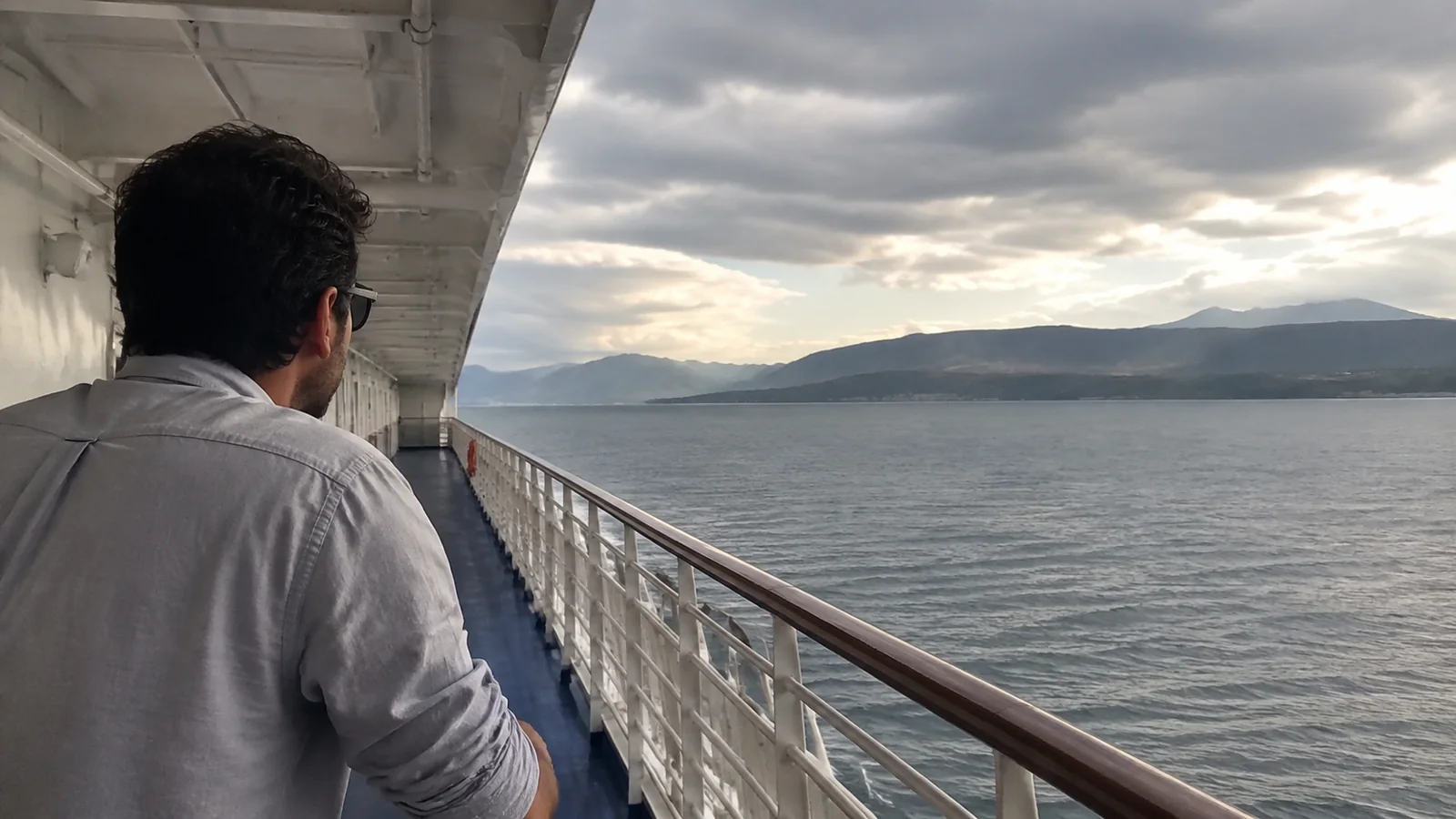
At night, a vessel’s sidelights help other mariners understand its orientation. Starboard shows green and port shows red.
The official U.S. Coast Guard Navigation Rules define a green sidelight on the starboard side and a red sidelight on the port side. The rules also specify white masthead and stern lights, but a cruise passenger mainly needs the red-left and green-right connection.
If you see only a ship’s red sidelight, you are looking toward its port aspect. If you see green, you are looking toward its starboard aspect, although distance and angle can make nighttime identification more complex than a memory trick suggests.
Do not confuse a vessel’s sidelights with channel markers. Buoyage systems describe which side of a channel to keep a marker on under a particular direction of travel, which is a different subject with regional rules.
Does port mean the side next to the cruise port?
No. The word port can mean a harbor, but a ship’s port side is always its fixed left side when facing forward.
A cruise ship may place its port side or starboard side alongside the pier. The captain and port team choose an orientation based on the berth, traffic, wind, tides, maneuvering plan, loading needs, maintenance, security, and the next movement.
A ship can also dock bow-in on one visit and stern-in on another. Even a photo from last week’s call cannot promise which way your sailing will face.
This is the first big cabin lesson: “port side” does not mean “port view.” It may give you the terminal, open water, another ship, a harbor wall, or a beautiful city depending on that day’s berth.
Which side of a cruise ship is better?
Neither side is always better. Route direction, turns, berth assignment, weather, time of day, and the scenery you care about can all change the answer.
On an open-ocean sea day, both sides usually have ocean views. On a round-trip itinerary, a coastline that appears on one side during the outbound portion may appear on the other later, but a route does not always retrace the same water.
One-way coastal cruises can make side more relevant, yet even there the ship may weave through channels or spend much of the trip away from land. A map showing a simple northbound or southbound line hides many turns.
My cabin rule is to choose deck and fore-aft location first, then use side as a tiebreaker. Being under a nightclub or beside a service area can affect every night, while a hoped-for pier view may last a few hours.
Before booking, use the cabin-location red flags to check what sits above, below, across from, and beside the room. Obstruction, connecting doors, elevator traffic, and public-deck adjacency are tied to the exact cabin, not the word port or starboard.
Which side is best for an Alaska cruise?
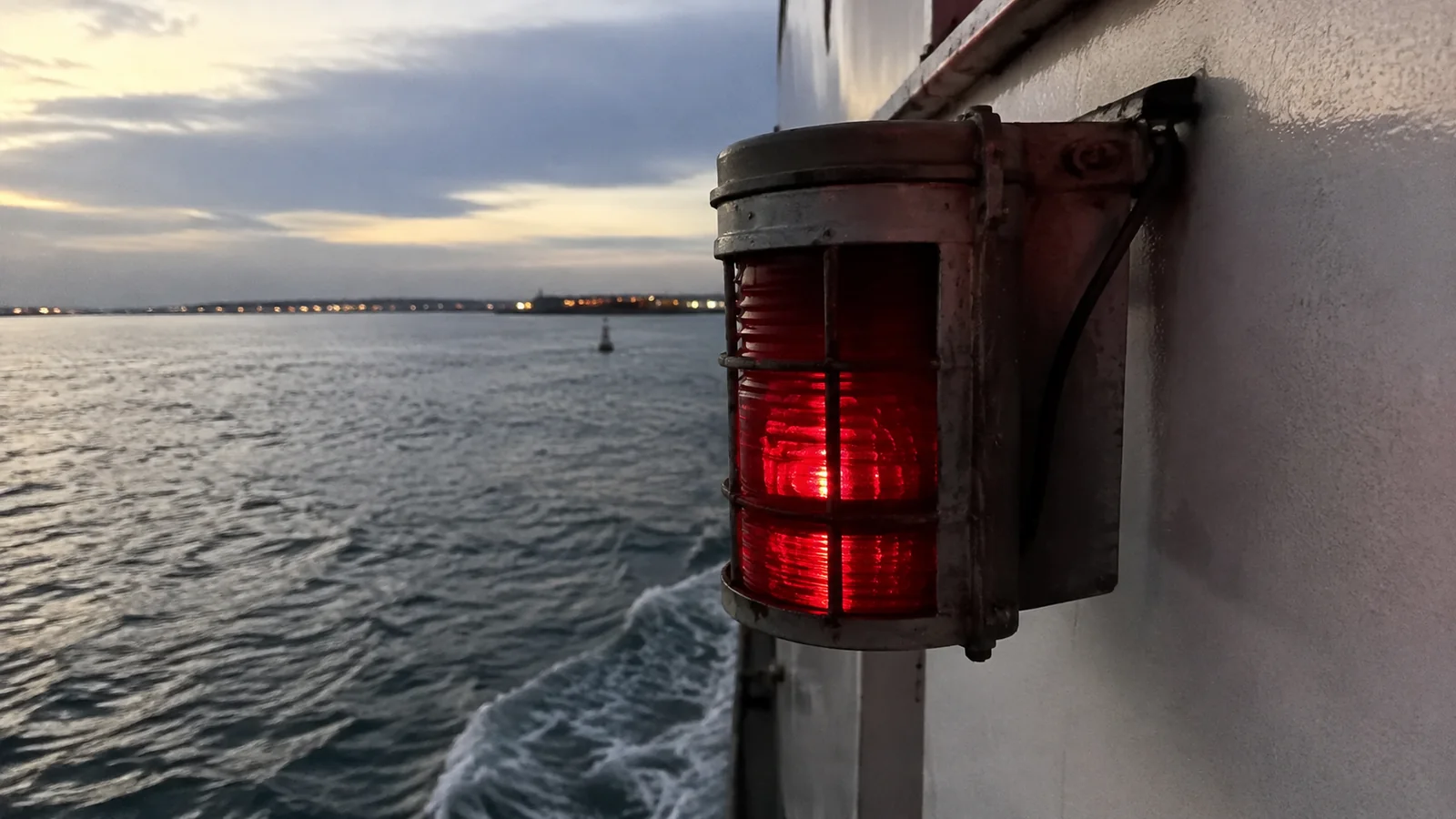
You will often hear “starboard northbound, port southbound” for Alaska because mainland scenery may lie in that general direction on parts of a one-way route. It is a useful starting idea, not a view guarantee.
Inside Passage channels twist, islands interrupt the mainland view, ships take different routes, and weather can hide land. Round-trip cruises also change direction during the week, which weakens any one-side rule.
For glacier viewing, the bridge may turn or hold the ship to give both sides an opportunity when conditions allow. That maneuver is not promised, and a balcony cannot show scenery on the opposite side.
The best solution is to use open decks for the main scenic event. Our Alaska cruise planning guide can help you choose the glacier and port pattern first, which matters more than guessing one balcony side.
Which side is best for a Mediterranean cruise?
There is no universal Mediterranean answer because itineraries loop around islands, approach ports from different directions, and use different berths. A cabin facing land at one stop may face open water or a container terminal at the next.
If one sail-in truly matters, study that dated route and port layout, then accept that operational needs can still change the view. Venice-area terminals, Barcelona, Naples, Greek islands, and Adriatic ports all create different geometry.
Sun exposure can matter during summer, but “choose port for shade” is too crude. The ship changes heading, sunrise and sunset shift by location and date, and a balcony can alternate between sun and shadow during the same day.
What about Panama Canal, transatlantic, and river cruises?
For the Panama Canal, locks and landmarks appear on both sides, while ships ahead or behind may become part of the view. An open deck lets you switch sides as the transit unfolds and see forward or aft as well.
On a transatlantic crossing, people sometimes choose a side for more or less sun. The useful side depends on direction, season, latitude, weather, and the ship’s changing course, so no single rule covers every crossing.
River cruises keep both banks close enough to feel scenic, but one side may face the pier when docked. River vessels also raft beside one another, which can place another ship directly outside either cabin side.
If a view is the whole reason for booking, ask about French balconies, window height, and possible rafting rather than relying on port versus starboard. A cabin category and docking practice can matter more than the bank you imagined.
How docking changes the cabin view
Berth orientation is an operational decision, and it can change even after an itinerary is published. Harbor authorities may reassign a berth, another vessel may occupy the expected spot, or the ship may need a particular side accessible for work.
The pier-facing side can be fascinating if you enjoy lines, forklifts, pilots, and the choreography of arrival. It can be less appealing if you wanted privacy and wake to a terminal window or another balcony a short distance away.
The water-facing side may feel calmer at the pier, but it can also look toward industrial harbor operations. Neither label guarantees the postcard.
Close curtains before changing clothes whenever the ship is docked because another ship, terminal, or hillside can suddenly be closer than expected. That little habit is more reliable than predicting the berth.
How to read side information on a deck plan
Most deck plans show the bow and stern with a ship silhouette, arrow, or labeled outline. Find the bow first, face the same direction in your mind, and then identify port on the left and starboard on the right.
Do not assume odd cabin numbers always indicate one side across every fleet. Numbering patterns vary by cruise line and ship, so learn the plan in front of you rather than importing a rule from another vessel.
Check the exact sailing-date profile when a cruise line publishes more than one deck plan. A refurbishment can change categories, connecting-room markings, public spaces, or even cabin inventory.
Side-specific features can influence a particular room. A designated smoking area, outdoor movie screen, lifeboat, promenade, or crew-work space may affect only one stretch of one deck, but that is a deck-plan issue rather than a general port-starboard issue.
What “gangway on the port side” means
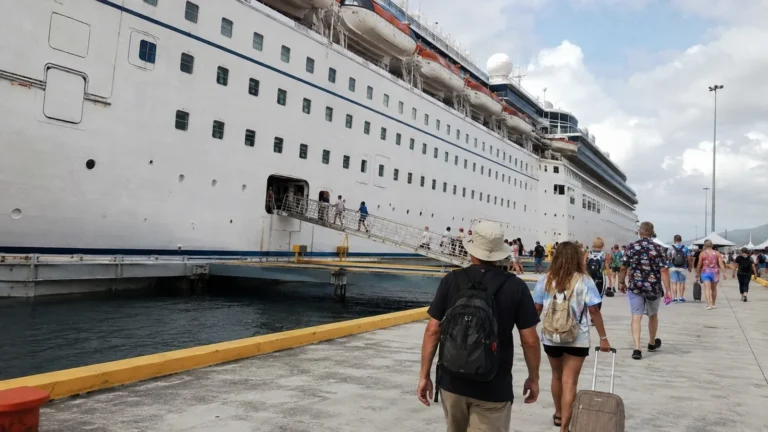
A gangway is the controlled route between the ship and shore. If an announcement says “gangway on Deck 4, port side,” go to Deck 4 and then to the ship’s left side while facing forward.
The active gangway can change with the tide or port setup, and a ship may use more than one. Follow the day’s signs and crew instructions instead of returning automatically to the door used that morning.
At embarkation, passengers often enter through a terminal bridge high on one side of the ship. That entrance side tells you nothing permanent about future ports or the side used for disembarkation.
For the rest of the process, the first-time cruise tips cover documents, carry-on planning, and the details that matter more than memorizing every nautical word.
What “tenders on starboard” means
A tender is a smaller vessel that carries passengers between the cruise ship and shore when the ship does not use a pier. If tender boarding is on the starboard side, the platform is on the ship’s right side when facing the bow.
The tender may approach a different side later if wind, swell, or operations change. Listen for the deck and side in each announcement, since knowing only “starboard” will not help if you are eight decks too high.
Tender tickets, priority rules, accessibility, last-tender time, and weather cancellations are separate issues. The cruise tender guide explains how to plan a port day when a small boat sits between the ship and shore.
Port and starboard during muster and emergencies
Do not choose an assembly station or lifeboat based on your cabin side. Your assigned muster information and the crew’s instructions control where you go.
An emergency may block the most obvious route, which is one reason crew directions matter. Learn the route shown for your station, attend or complete the required safety process, and keep corridor signs in mind.
Port and starboard help instructions stay precise, but they are not a substitute for listening. “Proceed to starboard” means the ship’s starboard side regardless of the direction you happen to be facing.
Does POSH mean “port out, starboard home”?
It is a wonderfully sticky story: wealthy passengers supposedly booked port-side cabins sailing from Britain to India and starboard cabins coming home to avoid the strongest sun. The initials would spell POSH.
The problem is evidence. Merriam-Webster’s discussion of the POSH origin story says the acronym explanation appeared much later and is not supported as the word’s actual origin.
Keep POSH as a trivia tale, not a cabin-booking system. Modern routes, air-conditioning, balcony construction, changing headings, and berth assignments make the slogan even less useful for today’s cruise.
Common port and starboard myths
- “Ships always dock on the port side.” They can dock on either side.
- “Starboard cabins are better.” A side has no universal advantage across routes.
- “Port side means port view.” Port is a fixed side, not a promise to face the terminal.
- “One side always sees land.” Routes turn, islands intervene, and ships spend time offshore.
- “The red light is starboard because red means right.” The vessel’s red sidelight is port; green is starboard.
- “Cabin-number parity tells the side on every ship.” Numbering conventions vary.
How I would choose between two identical cabins
First, I would inspect what is above, below, beside, and across the corridor. Then I would compare obstruction, distance to elevators, connecting doors, public-deck exposure, and the walking route to places I will use daily.
Only after those checks would I use port or starboard as a tiebreaker. A well-located cabin on the supposedly wrong side is usually a better bet than a noisy or obstructed cabin chosen for one theoretical view.
If the itinerary has a signature sail-in, I would note the likely side but plan to watch from an open deck. That gives me permission to move when the best scenery, light, or wildlife appears somewhere else.
The bottom line
Port is left and starboard is right when you face the bow, and those names stay attached to the ship. Remember “port and left both have four letters,” plus “red port wine” for the navigation light.
For cabin choice, no side always has the best view or faces the pier. Choose the right deck and room location first, treat side as a route-specific preference, and follow current announcements for gangways and tenders.