What Does a Pineapple Mean? Hospitality, History and Symbols
A pineapple usually means welcome, hospitality, abundance, tropical style, or simply a love of pineapples.
Its meaning changes with context, though, and the upside-down version has picked up a separate modern association in some adult social circles.
The short answer
- Upright pineapple: usually hospitality, welcome, abundance, tropical decor, or food.
- Upside-down pineapple: sometimes used informally by people interested in swinging or consensual non-monogamy.
- Pineapple emoji: usually fruit, summer, vacation, or tropical context unless a conversation gives it another meaning.
- Pineapple decor: most often decorative and welcoming, not a coded statement.
- Pineapple jewelry or clothing: cannot reliably tell you anything about someone’s relationship style without context.
The important part is that symbols are ambiguous. Orientation can change the likely interpretation, but it never creates consent or gives strangers permission to make assumptions about the person using it.
Why pineapples became associated with hospitality
The pineapple originated in South America and was cultivated in the Americas long before Europeans encountered it. When the fruit reached Europe, its unusual appearance, difficult cultivation, and high cost helped turn it into a luxury object.
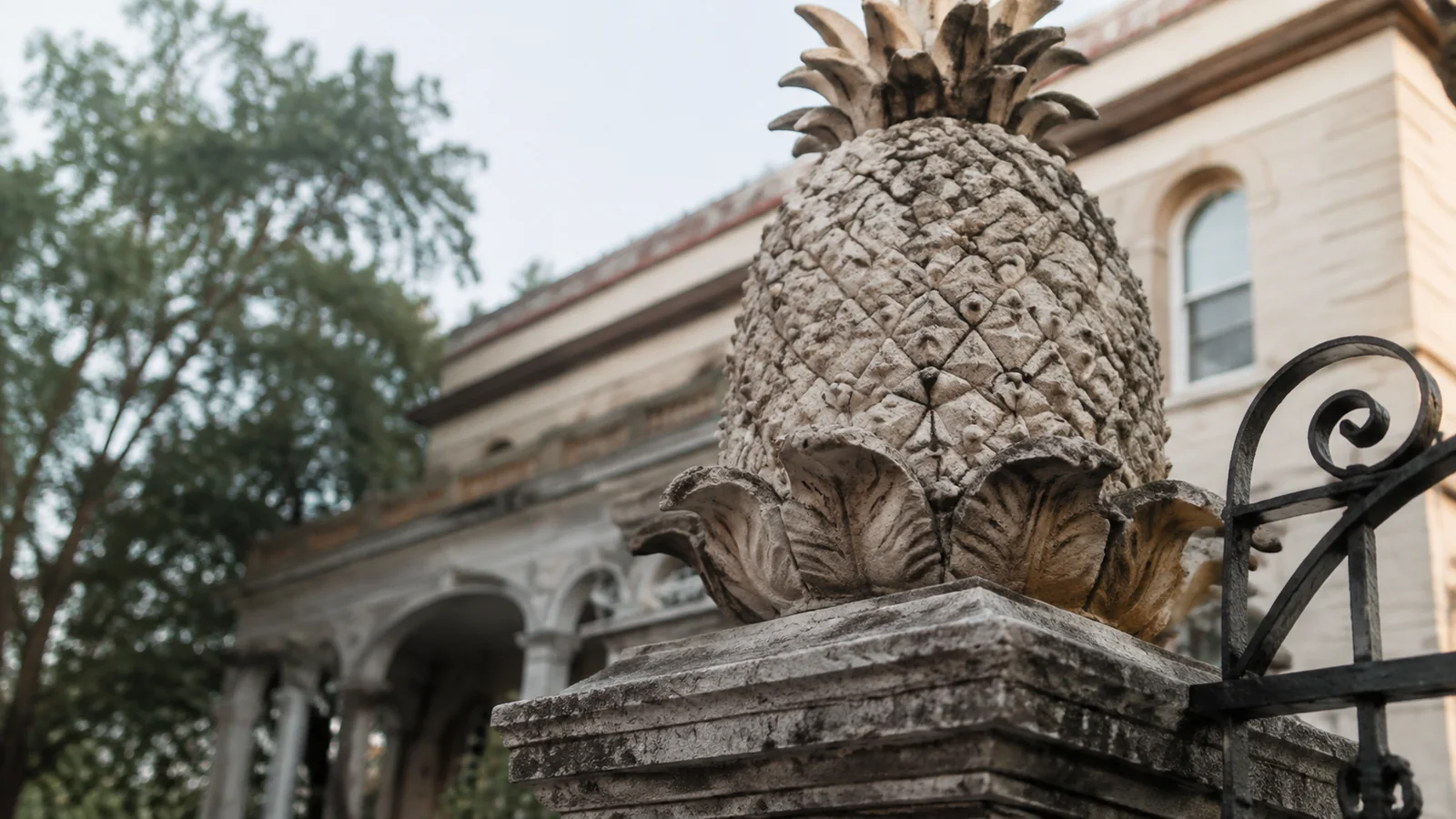
The Smithsonian Libraries’ history of the pineapple explains that Europeans associated the fruit with exoticism, wealth, power, and eventually hospitality. By the eighteenth century, pineapple shapes appeared in entryways, gateposts, ceramics, silverware, and other decorative arts.
The simple hospitality story is a little too neat
You may have heard that colonial hosts put pineapples on the table specifically to announce that guests were welcome. The real history is more complicated than that tidy internet explanation.
Colonial Williamsburg has noted that pineapples were rare and expensive but that there is not good evidence people at the time consistently described the fruit itself as a hospitality symbol for that exact reason. The symbolism became established, but the popular origin story is often told with more certainty than the evidence supports.
That does not mean the modern hospitality meaning is fake. It means the symbol developed through luxury, display, decorative fashion, hosting, and later tradition rather than one perfectly documented custom.
Pineapples were also symbols of wealth and status
Fresh pineapples were difficult and costly to obtain in Europe for centuries. Wealthy households displayed them at important meals, and historical accounts even describe fruit being used primarily for show rather than immediately eaten.
George Washington’s Mount Vernon notes that the English upper class treated pineapples as impressive gifts and prominent table displays. The fruit’s rarity made it a visible sign that a host could afford something unusual.
That history helps explain why pineapple motifs moved into architecture and decorative objects. A carved pineapple on a gatepost or a pineapple-shaped finial could communicate refinement and fashionable taste even when no fresh fruit was present.
The history also includes colonialism and slavery
The cheerful modern hospitality symbol has a darker historical layer that is worth acknowledging. Pineapples became European luxury goods through colonial trade networks tied to exploitation and plantation slavery.
The Smithsonian specifically connects the pineapple’s status symbolism with colonialism and enslaved labor. That does not make every pineapple decoration today a statement about that history, but it is part of the fuller story behind the symbol.
What does an upside-down pineapple mean?
In some modern adult social circles, an upside-down pineapple is used as an informal signal of interest in swinging or other forms of consensual non-monogamy. The association is widely discussed online, but it is not an official or universal code.
Someone may display an upside-down pineapple intentionally, accidentally, ironically, or simply because the design was turned around. The symbol alone does not tell you what a person wants.
If your question is specifically about the cruise version of that meaning, I have a separate guide to the upside-down pineapple on cruises. That article covers cabin-door decorations, onboard etiquette, privacy, and why a symbol is never a substitute for a conversation.
Does an upright pineapple mean the same thing?
Usually not. An ordinary upright pineapple is far more commonly associated with hospitality, tropical decor, food, summer, vacation, and general cheerfulness.
It is a mistake to see a pineapple on someone’s shirt, suitcase, porch, or drink cup and jump to an adult interpretation. Context and orientation matter, and even an upside-down pineapple remains ambiguous.
What does a pineapple mean at a house?
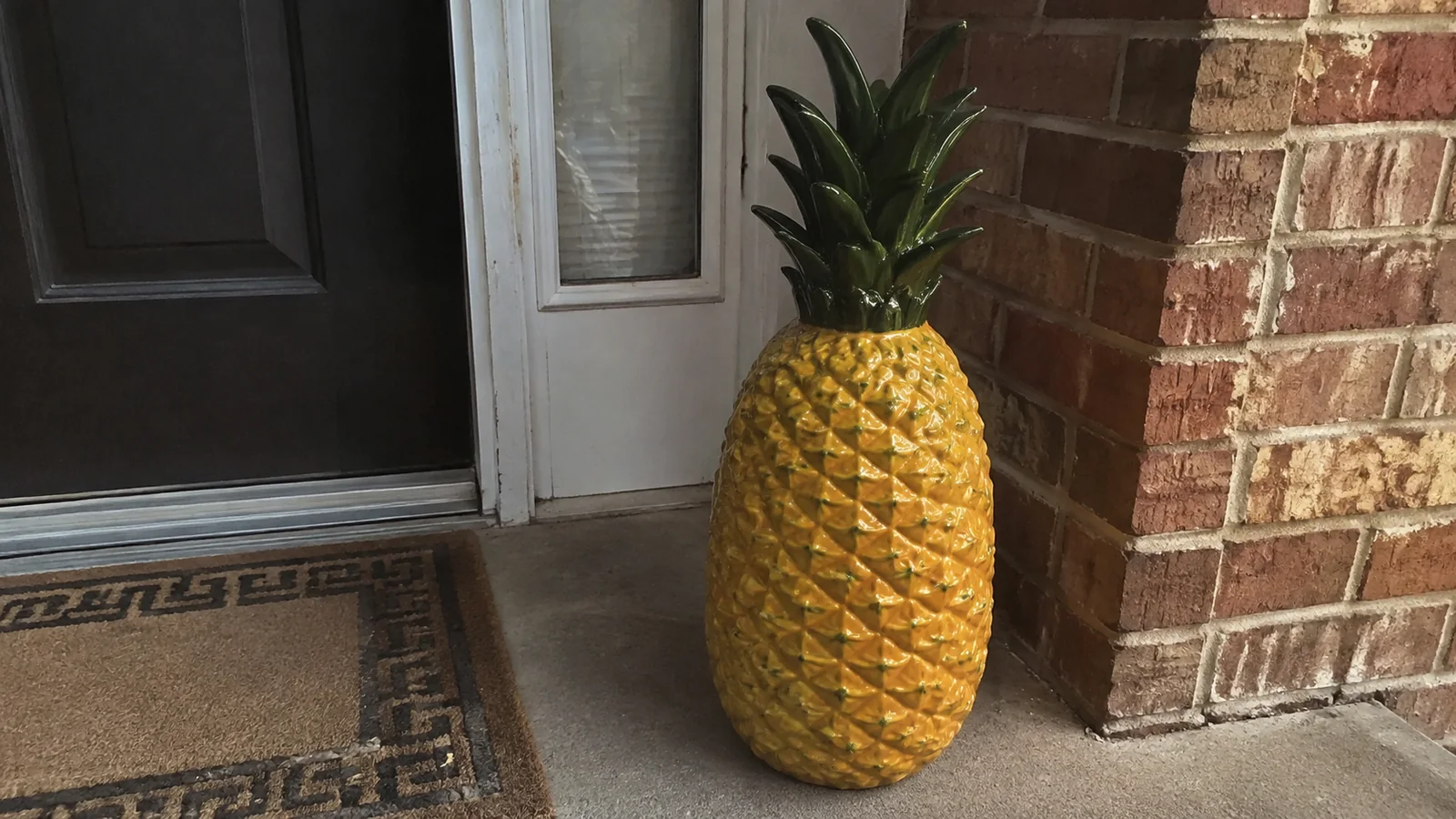
A pineapple on a front door, porch, gate, welcome sign, or kitchen item usually draws from the hospitality tradition. It can simply mean welcome, warmth, abundance, or a decorative preference.
Pineapple motifs became common in American decorative arts long before modern internet slang. That is why you will see them on historic architecture, door knockers, finials, serving pieces, linens, and housewares.
What does a pineapple door knocker mean?
A pineapple door knocker is normally a decorative hospitality symbol. It fits the long tradition of using pineapple forms around entrances and places associated with welcoming guests.
There is no reason to read a sexual meaning into a standard upright pineapple door knocker. Treat the ordinary historical and decorative interpretation as the default unless the owner clearly says otherwise.
What does pineapple decor mean in a kitchen?
Usually it means the owner likes a classic hospitality motif or tropical design. Pineapples appear on dishes, towels, cutting boards, wallpaper, signs, and serving pieces because the image is visually distinctive and has a friendly association.
A kitchen pineapple is one of the weakest places to infer any secret meaning. Food and hospitality are already the obvious context.
What does a pineapple emoji mean?
The pineapple emoji normally means pineapple, tropical fruit, summer, a beach vacation, cocktails, or a playful tropical mood. Like many emojis, it can take on secondary meanings inside a particular community or conversation.
Do not assume the adult meaning from one emoji dropped into a caption. Read the surrounding words and relationship between the people using it.
What does pineapple jewelry mean?
A pineapple necklace, bracelet, earring, pin, or charm can symbolize hospitality, friendship, tropical travel, or personal style. It can also be used intentionally by someone who knows the modern upside-down symbolism.
The design alone still does not reliably identify someone’s relationship preferences. If the pineapple is upright, the ordinary decorative meaning is especially likely.
What does a pineapple on clothing mean?
Pineapples have been common on vacation shirts, swimsuits, pajamas, children’s clothes, resort wear, and novelty clothing for years. Most of those designs are exactly what they look like: tropical graphics.
An upside-down pineapple placed very deliberately on adult-themed merchandise may be more likely to carry the newer meaning. Even then, it is better to understand the symbol than to make assumptions about the person wearing it.
What does a pineapple gift mean?
A pineapple-themed housewarming gift often draws directly from the welcome and hospitality tradition. It can be a cheerful way to wish someone abundance, warmth, or a happy home.
Fresh pineapple, pineapple serving dishes, ornaments, or decor can all carry that friendly meaning without any hidden message. Context makes this one straightforward most of the time.
Why do hotels and restaurants use pineapples?
Hospitality businesses have an obvious reason to borrow a historic welcome symbol. A pineapple logo or decorative motif can suggest warmth, generosity, food, tropical travel, or a sense of arrival.
That use is especially common in places with resort, coastal, Caribbean, Southern, or historic design influences. It should normally be read as branding rather than coded social messaging.
What does a pineapple mean on a cruise?
An upright pineapple on a cruise can be as ordinary as it is anywhere else. Cruise ships are full of tropical drinks, vacation clothing, door decorations, and island-themed designs.
An upside-down pineapple may be used intentionally as an adult social signal, which is why the cruise connection gets so much attention online. The dedicated cruise pineapple guide covers that narrower question without turning this broader symbolism guide into a cruise article.
Can someone turn a pineapple upside down as a joke?
They can physically do it, but that does not make it a good prank. Turning someone else’s door decoration, magnet, bag tag, or sign upside down can attach a meaning the owner never intended.
Leave other people’s belongings alone. A joke that changes the apparent message on someone’s cabin or hotel door is funny only if the person involved actually thinks it is.

Is the upside-down pineapple an official code?
No government, cruise line, hotel association, or universal lifestyle organization assigns an official meaning to the pineapple. Its adult interpretation is a social convention used by some people, not a regulated symbol.
That is why certainty is the wrong approach. A person who recognizes the association may still use a pineapple for completely unrelated reasons.
Does a pineapple mean someone is a swinger?
No. A pineapple by itself does not tell you someone’s relationship style, sexual interests, or boundaries.
An intentionally upside-down pineapple in a clearly adult social setting can make that interpretation more plausible, but the person using it still decides what it means. A symbol can hint at context; it cannot answer for a human being.
Consent matters more than symbols
This is the most important rule around the modern adult meaning. A pineapple is never permission to touch someone, enter a private space, photograph them, make sexual comments, or ignore a refusal.
If adults want to communicate interest, respectful conversation does the real work. Clear agreement matters more than whether a fruit is pointing up or down.
How to read the context without stereotyping
Start with the ordinary explanation. A pineapple in a kitchen probably relates to food or decor, while one on a tropical shirt probably relates to vacation style.
Only move toward a more specific interpretation when the orientation, setting, surrounding language, and owner’s own behavior support it. Even then, leave room for the possibility that you are wrong.
Other pineapple meanings you may encounter
- Welcome and hospitality: the most established decorative meaning.
- Abundance and prosperity: tied to the fruit’s historic rarity and status.
- Tropical travel: common in resort and vacation imagery.
- Food and cocktails: often the literal explanation.
- Friendship or housewarming: a modern extension of welcome symbolism.
- Adult social signaling: associated mainly with the upside-down version in some communities.
Symbols accumulate meanings over time rather than replacing the older ones. That is why the same pineapple can make sense on an eighteenth-century-inspired gatepost, a beach towel, and a modern social-media post for completely different reasons.
The bottom line
An upright pineapple is usually a symbol of hospitality, welcome, abundance, tropical style, or food. Its long decorative history grew from rarity and status and is also connected to the larger history of colonial trade and slavery.
An upside-down pineapple can carry a modern adult meaning, but it is informal, context-dependent, and never a substitute for consent. When in doubt, assume less and let the person using the symbol explain what they mean.