Bermuda Cruises: Ports, Overnights and Island Planning
A Bermuda cruise is less about collecting ports and more about using one island well. The best itineraries give you enough time to explore beyond Royal Naval Dockyard, enjoy an evening ashore, and keep a sensible buffer for ferries, buses, weather, and the ship’s final all-aboard.
Is a Bermuda cruise right for you?
Bermuda works beautifully for travelers who prefer depth over a rapid string of Caribbean stops. Many itineraries stay overnight, so your cabin becomes a floating hotel while you build separate west, central, and east-end days.
It is not technically in the Caribbean; Bermuda sits in the North Atlantic. That location helps explain its seasonal cruise pattern, milder winter water, changeable weather, and easy access from several U.S. East Coast gateways.
Do not choose only by the lowest advertised fare. Compare hours in port, number of nights alongside, embarkation travel, cabin, included dining, and how much transportation you will need once you arrive.
My favorite planning rule is to value a useful Bermuda morning more than a flashy ship feature you may never use. A late arrival or early departure can shrink an itinerary that looks generous on paper.
Where Bermuda cruise ships dock
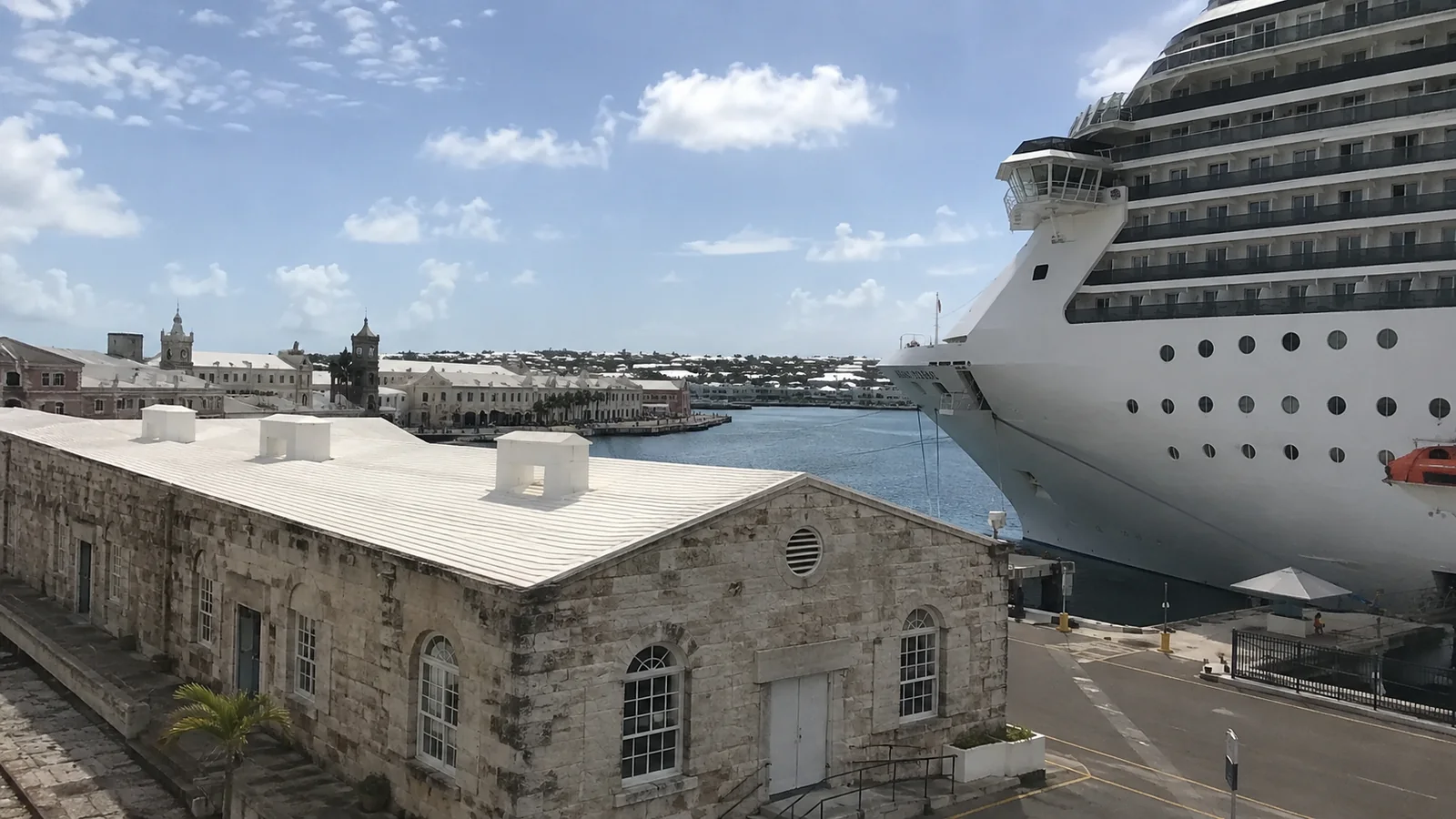
The official Bermuda cruise guide identifies King’s Wharf and Heritage Wharf at Royal Naval Dockyard as the principal berths for large ships. Both terminals are in the same West End complex, not in the City of Hamilton.
That distinction matters because a listing that says “Bermuda” does not tell you how far your cabin is from Horseshoe Bay, Hamilton, or St. George’s. Open the cruise line’s day-by-day itinerary and confirm the named berth for every call.
King’s Wharf and Heritage Wharf
King’s Wharf and Heritage Wharf place you directly at Royal Naval Dockyard. The National Museum of Bermuda, shops, restaurants, excursion departures, buses, taxis, and ferries are all within the wider Dockyard area.
The two berths are close enough that your island strategy is essentially the same. What changes is the walking route from the gangway and the crowd pattern when two large ships are alongside.
Dockyard is convenient for West End sights and an easy launch point for the ferry to Hamilton. It is not a walkable base for central Bermuda beaches or the historic streets of St. George’s.
Hamilton
Smaller vessels may berth in the City of Hamilton, putting Front Street and central-island connections immediately outside. That is a very different experience from a large ship at Dockyard.
Hamilton makes an evening ashore especially easy because you do not need a return ferry to reach the gangway. Confirm the ship and sailing rather than assuming every “Hamilton” search result applies to your itinerary.
St. George’s
Some smaller-ship itineraries call at St. George’s in the East End. The historic town is the attraction, while Royal Naval Dockyard sits at the opposite end of the island.
A St. George’s call rewards a walking-focused day around the town and nearby east-end sights. If the itinerary involves tendering or a seasonal ferry connection, build more weather and return-time margin than you would at a fixed berth.

Why an overnight changes everything
An overnight means the ship stays in Bermuda after dinner rather than sailing away that afternoon. You can often go ashore in the evening, but the gangway policy and any temporary onboard cutoff still come from your ship.
The first gift is a relaxed return. You can enjoy Hamilton after sunset, attend an event, or linger over dinner without racing a same-day departure.
The second gift is weather flexibility. If the beach forecast looks poor on day one, switch to museums or Hamilton and save the sand for a clearer window.
The important catch is that the final day is still a cruise-port day with a hard all-aboard. I would plan the farthest excursion on the full middle day and keep the last morning geographically simple.
Getting around without a conventional rental car
Bermuda’s buses and ferries operate together as Shorelink, with 11 bus routes and four ferry routes listed on the government’s official Shorelink page. Schedules and service alerts can change, so check them after docking rather than building a plan around an old screenshot.
Visitors cannot rent conventional cars, although electric two-seat microcars are available from private operators. Taxis, regulated app-based rides, buses, ferries, scooters, and bicycles round out the options.
Ferries
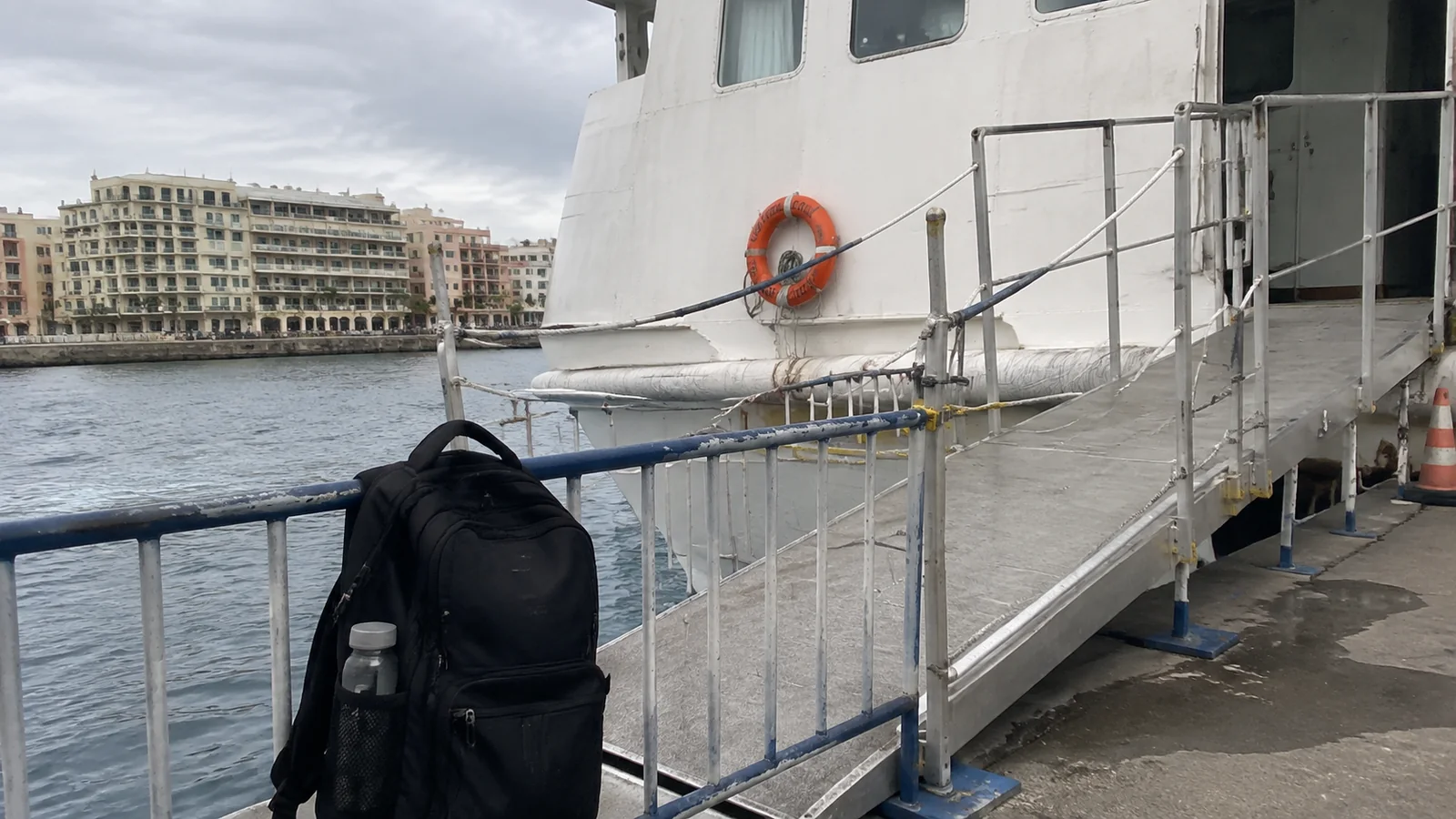
From Dockyard, the ferry is usually the cleanest route to Hamilton when the schedule lines up. The seasonal route toward St. George’s can also save a long bus journey, but it does not operate with the same pattern year-round.
Never make the last possible public ferry your only route back before departure. Leave room for a full boat, service change, weather disruption, or a walk from the terminal to the gangway.
Buses
Public buses are useful for beaches and destinations between the major hubs. They are not dedicated cruise shuttles, and popular stops can become crowded when multiple ships arrive.
The pink and blue bus-stop poles indicate direction relative to Hamilton, which is a charming system once you know it. Ask the driver where to exit, then track your return time rather than relying on frequency alone.
Taxis and app-based rides
Taxis are the easiest choice for a small group that wants a direct trip or a flexible island tour. Agree on whether the ride is metered, hourly, or quoted, and confirm the currency before setting off.
Bermuda introduced regulated app-based ride booking in 2026, but availability can tighten when ships, flights, and local events overlap. A phone app is useful, not a substitute for a return buffer.
Microcars and scooters
Microcars offer independence, but Bermuda’s roads are narrow, winding, and left-driving. Parking, charging, weather, and the driver’s comfort deserve more attention than the novelty of the vehicle.
Scooters are a poor place to learn two-wheeled road skills under vacation pressure. Choose public transportation or a taxi if anyone in the group feels uneasy.
Three practical Bermuda port-day plans
A gentle Dockyard day
Stay in the West End for the National Museum, harbor views, shops, and a relaxed meal. This is the best arrival-day or final-morning plan because it minimizes transportation risk.
Add a prebooked nearby water activity only if its cancellation and return policies are clear. The plan should still feel satisfying if wind changes the water portion.
A Hamilton and south-shore day
Take the ferry from Dockyard to Hamilton, explore the city, then continue by bus or taxi toward a south-shore beach. Reverse the order when the morning forecast favors swimming and the afternoon looks better for town.
Horseshoe Bay is famous for a reason, but it is not the only strip of sand. A taxi driver or local transport staff can help match your time, mobility, and crowd tolerance to a practical beach.
An East End day
St. George’s, forts, coastal scenery, and nearby beaches can fill a full day. From Dockyard, use the seasonal ferry when available or arrange transportation that leaves a generous return margin.
This is not my final-morning choice from a West End berth. The island is small, but a slow cross-island trip can become stressful when the gangway is waiting for nobody.
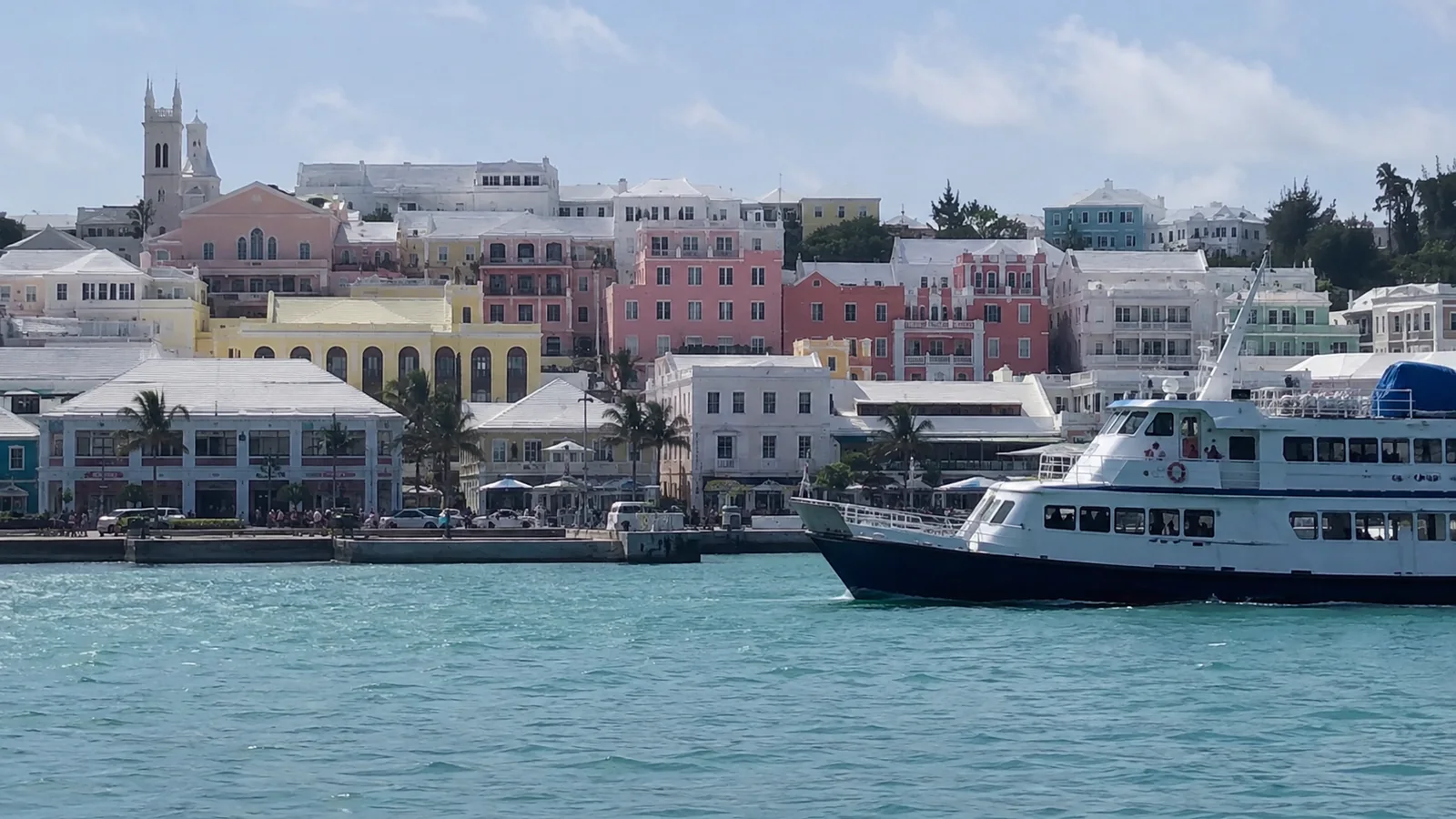
A Hamilton walk followed by a south-shore beach
From the Hamilton ferry terminal, I would walk Front Street, turn inland toward Queen Elizabeth Park, then continue to City Hall on Church Street and the Cathedral of the Most Holy Trinity. Allow about 90 minutes for this self-guided loop with photo stops, checking opening times before including an interior visit.
For more context, the City of Hamilton’s Town Crier tour currently lists a 90-minute walk from City Hall on weekday mornings from April through December. Confirm the date directly, particularly around holidays, instead of arriving for a schedule copied from an older seasonal listing.
After an early lunch around Front Street, take a taxi south to Horseshoe Bay for two or three beach hours. I would allow roughly 25 to 40 minutes for that transfer as a planning cushion, then return west toward Dockyard rather than backtracking through Hamilton.
Choose Warwick Long Bay as the scenic alternative if you prefer a quieter-looking stretch and can manage fewer conveniences. For an optional view before the beach, add Fort Hamilton only if the group is happy with an uphill detour and the additional walking.
An East End route with named stops
Start in King’s Square in St. George’s, walk to St. Peter’s Church, then continue toward the Unfinished Church before heading north to Tobacco Bay. I would allow 60 to 90 minutes for town and the church exteriors, then about 20 to 30 minutes for the hillier walk toward the beach with stops.
Tobacco Bay is my practical beach choice here because its beach business offers a more organized base for a drink, food, or equipment inquiry. Spend about 90 minutes enjoying the shoreline, and keep snorkeling conditional on the day’s water conditions.
Continue east toward Fort St. Catherine, allowing around 15 to 20 minutes for the walk and 45 to 60 minutes for the fort if open. St. Catherine’s Beach beside the fort is the alternative for a beach-and-history combination; check the actual public access and services rather than assuming resort facilities are included.
Return to town by taxi if heat or hills make the walk less appealing, then take your confirmed ferry connection or a prearranged road transfer back west. I would use this plan on an overnight call, when a seasonal ferry change or a slower lunch does not put the final boarding deadline under pressure.
For Dockyard-to-St. George’s travel, reserve a broad one-hour block around an operating direct ferry plus boarding time, or roughly 75 to 90 minutes for a taxi journey as a planning allowance. The live timetable and traffic decide the actual trip, so do not build the last day around the final possible connection.
Best time for a Bermuda cruise
The core cruise season generally follows the warmer part of the year, when beach days and water activities are most appealing. Spring can feel fresh and less intensely humid, summer brings warmer swimming conditions and bigger crowds, and fall can offer warm water with greater tropical-weather awareness.
Bermuda’s climate is subtropical, not endlessly tropical. Pack for wind and showers even when the forecast looks friendly, and remember that ocean water can feel cool outside peak summer.
Atlantic hurricane season runs June 1 through November 30, according to the Bermuda Weather Service. That does not mean every late-season cruise is risky, but itinerary changes, missed calls, or rougher conditions are possible when a system threatens the region.
Choose the month based on your priority rather than a mythical perfect week. Our month-by-month cruise timing guide helps compare Bermuda with other seasonal regions.
Passport and entry logistics
Rules depend on nationality, itinerary structure, departure country, and how you would return if separated from the ship. Check Bermuda’s requirements, your cruise line’s document instructions, and the border rules for the country where your cruise ends.
The Bermuda Government says cruise visitors are not currently required to complete its visitor arrival form, as confirmed on the official visitor entry page updated in 2026. Recheck close to sailing because entry processes can change.
For U.S. travelers, some closed-loop cruises may accept documents other than a passport book, but “accepted” is not always the same as “best.” The U.S. State Department notes that a passport card works for certain sea entries, including Bermuda, but not for international air travel on its cruise travel guidance.
A passport book gives you a much better recovery option if illness, a family emergency, or a missed departure forces you to fly. Our closed-loop cruise passport guide walks through the decision without pretending every sailing has one rule.

What to budget beyond the cruise fare
Bermuda can be expensive, so price the trip honestly. Include embarkation travel, gratuities, drinks, specialty dining, transportation passes or taxis, beach rentals, admissions, food ashore, and travel insurance.
Do not buy an unlimited transport pass automatically. Compare its current price with the number of rides you will realistically take, especially when one day is spent at Dockyard.
An overnight can save money because you do not need a hotel in Bermuda, but it can also tempt you into more dinners and evening rides ashore. Decide which experiences deserve the splurge before the gangway opens.
What to pack
Bring reef-safer sun protection, a hat, comfortable walking shoes, a light rain layer, swimwear, and a dry change for buses or taxis. Add a compact evening layer because wind on the water can make a warm day feel cooler after sunset.
Do not carry beach sand onto public transportation, and pack a small towel or cover-up that helps you board dry. Our complete cruise packing list covers documents, medication, embarkation-day essentials, and cabin helpers.
Common Bermuda cruise mistakes
- Assuming King’s Wharf is in downtown Hamilton.
- Planning the East End on a short final morning from Dockyard.
- Relying on an old ferry schedule or making the last sailing the only return plan.
- Booking a conventional rental car that visitors cannot actually rent.
- Treating an overnight as permission to ignore the ship’s gangway instructions.
- Carrying only a passport card when an emergency flight would require a passport book.
The bottom line
The best Bermuda cruise gives you useful time, a clearly identified berth, and at least one day that is not squeezed by arrival or departure. Dockyard, Hamilton, and St. George’s create very different transportation plans, so the port name matters as much as the ship.
Confirm the berth, protect the final-day buffer, and let the weather decide which day becomes beach day. That little bit of structure leaves plenty of room for Bermuda to feel relaxed.