Scuba Diving in Goa: Beginner Options, Season, and Safety
Scuba diving in Goa is usually a boat-based add-on to a beach vacation, not a guaranteed clear-water reef day. Choose between a supervised try dive, a real certification course, and a guided certified dive, then verify the operator, current season, equipment, boat, medical process, and emergency plan before paying.
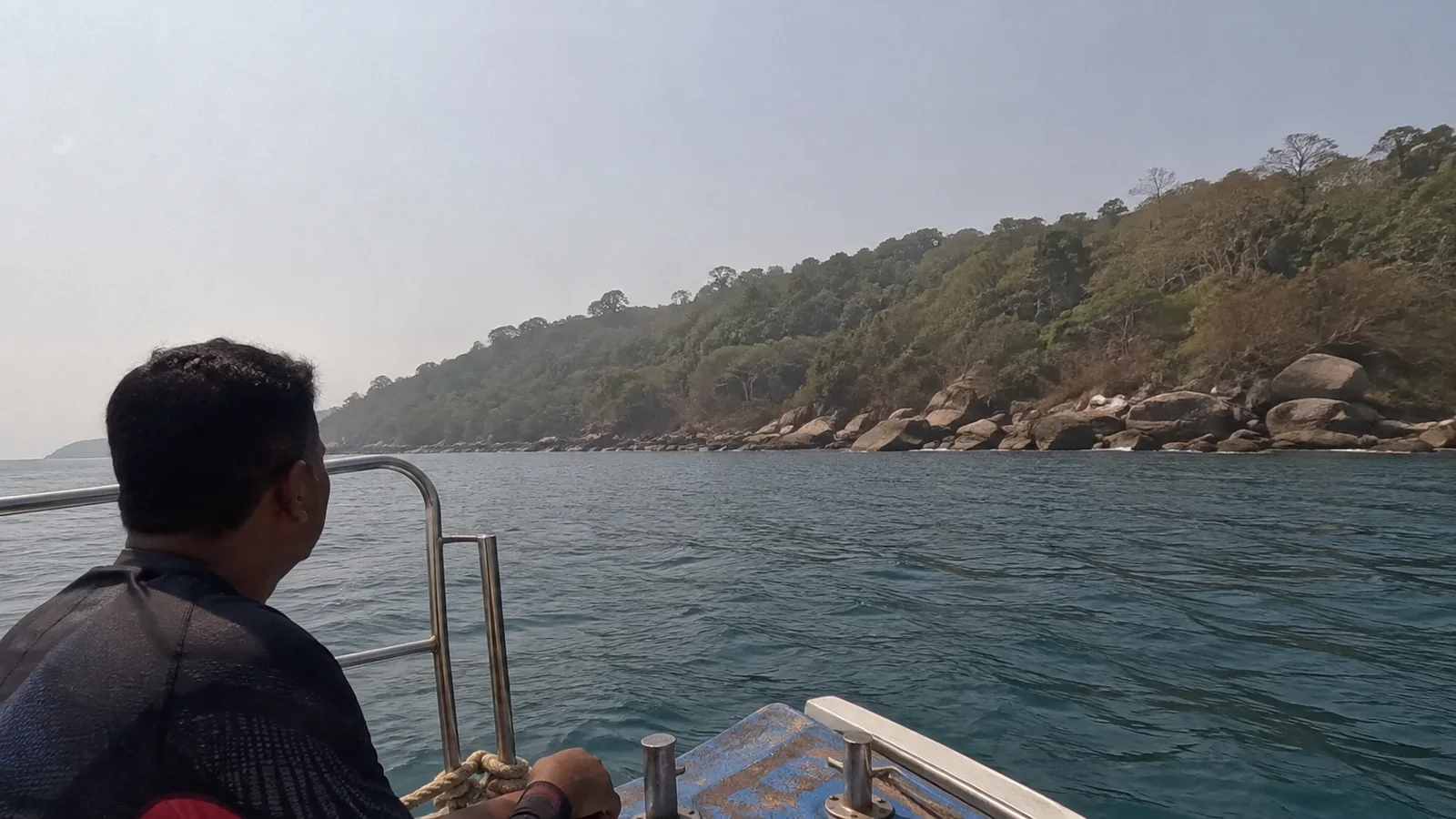
Is Scuba Diving in Goa Worth It?
Goa works best for a traveler who wants one underwater day alongside beaches, food, heritage, and nightlife. It is a weaker match for anyone expecting guaranteed visibility, guaranteed wildlife, or a dive-resort schedule that runs regardless of monsoon and sea state.
Grande Island is the best-known focus in official Goa tourism material, with boat trips serving a variety of named sites around the area. Conditions and diver ability should choose the site on the day, not the photograph attached to a package.
The current Goa Tourism Development Corporation scuba listing describes a full-day-style Grande Island excursion and says operations will be live from November. Treat that note as a reason to confirm current operating dates directly, not as a permanent annual promise or an operator ranking.
First Decide What You Are Booking
Try Dive for a First Experience
A recognized introductory scuba program should include a medical screen, safety explanation, equipment orientation, controlled skills, and direct professional supervision. It is an experience, not a shortcut to independent diving.
PADI’s official Discover Scuba Diving FAQ sets a maximum open-water depth of 40 feet and states that the program does not provide certification. A participant can remain shallower or stop before open water if comfort, equalization, or conditions are not right.
Ask the Goa seller for the exact program name, training agency, professional number, supervision ratio, maximum depth, skill session, and open-water sequence. “Scuba package” and “underwater photos” do not tell you whether the activity follows a recognized introductory standard.
Certification Course
An entry-level certification requires knowledge development, confined-water training, open-water dives, and assessment. A brief tourist dip cannot be relabeled into that credential with a plastic card.
Request the agency syllabus, instructor credentials, course schedule, learning materials, required dives, certification level, equipment, and complete price in writing. Compare the proposal with the agency’s official description before booking travel around it.
Guided Dives for Certified Divers
Bring proof of certification and describe your recent diving honestly. Your guide should know when you last dived, your comfortable depth, experience with low visibility or current, and whether you need a refresher.
Ask about depth, bottom conditions, current, descent method, navigation, gas policy, boat pickup, surface signaling, and buddy assignment. A site name is less important than whether the day’s plan fits the least experienced diver.
Goa Dive Season and Weather
Goa’s offshore recreational dive season is generally built around the post-monsoon and drier months, but opening and closing dates vary by operator and year. The current GTDC scuba page’s November restart note is more useful than an old blog claiming every boat starts on a fixed October date.
The southwest monsoon can bring heavy rain, swell, runoff, rough boat conditions, and suspended operations. Goa remains a worthwhile monsoon destination for food, culture, and land activities, but do not assume scuba will be available.
Even within the operating season, wind, tide, rainfall, current, and boat capability control the day. Check India Meteorological Department forecasts, local marine warnings, and the operator’s morning assessment.
No month guarantees a visibility distance. Sediment, plankton, recent rain, swell, and site exposure can change what you see from one day to the next.
Grande Island and Other Goa Labels
Grande Island appears in official Goa tourism descriptions, along with site names such as Suzy’s Wreck, Coral Garden, Bounty Bay, Lobsters’ Avenue, and Shelter Cove. A named site should be treated as a possible plan, not a promise that every boat visits it or that it suits every diver.
Some trips sold as “Goa scuba” prioritize a mixed boat excursion with snorkeling, sightseeing, food, photos, or nondiving companions. Certified divers seeking multiple purposeful dives should ask whether the boat and schedule are built for diving or for a general day tour.
Confirm the actual jetty because the booking office, hotel pickup, training site, and boat departure can be far apart. Goa Tourism also describes Grande Island excursions from Sinquerim, while other operations may use different coastal bases.
Two sites worth understanding before you choose
Suzy’s Wreck: SSI’s local site description gives a range of approximately 2 to 12 meters, or 7 to 39 feet, for this shallow wreck. The appeal is the fish life around an artificial reef, and PADI identifies it as suitable for introductory and certified diving when conditions permit.
I would choose an outside tour of the wreck for a beginner interested in marine life, without entering enclosed spaces. A shallow wreck can still have sharp edges, poor visibility, and surge, so the instructor’s route matters more than the headline depth.
Shelter Cove: SSI describes a sandy bay used for training, with depths around 3 to 12 meters, or 10 to 39 feet, and plate and whip corals deeper down. I would investigate this first for a skills-focused day, especially if calm conditions give the instructor a comfortable place to review buoyancy.
Its connection toward Coral Garden includes a swim-through, which is not a reason for an introductory diver to enter an overhead space. Bounty Bay and Lobsters’ Avenue may also appear on the day’s shortlist, but I would choose between verified conditions and the guide’s proposed profile instead of paying extra for a site name.
Real programs and the time they need
A one-day introduction: Dive Goa’s introductory program starts with pool skills, followed by a departure from Sinquerim jetty for a closely supervised island dive. Its North Goa base makes this a practical first inquiry for someone staying around Candolim or Sinquerim, with a full day left open for the operation.
A slower introduction or certification: Scuba Evolution India’s Discover Scuba program is advertised as 1.5 days, while its Open Water course takes four days. PADI lists the center at Hotel Lua Nova in Baga with an onsite pool and classroom, so I would stay nearby for consecutive training days.
For an already-certified diver: Scuba Evolution’s two-dive outing lists a guide, boat, equipment, tanks, and refreshments. Reserve the morning and much of the afternoon, confirm the jetty and return estimate directly, and report how recently you last dived.
I would favor Dive Goa for a one-day introduction near Sinquerim and Scuba Evolution’s longer course for someone whose main goal is certification. Neither choice guarantees a particular site, and I would skip a departure whose briefing, supervision, or conditions do not feel right.
North Goa or South Goa Base?
Choose lodging around the trip you want beyond diving, then price the early-morning transfer to the confirmed jetty. A bargain room at the opposite end of Goa can mean a very early start and a costly private ride.
North Goa suits travelers centering busier beaches and nightlife, while central or South Goa locations can simplify some airport and Vasco-area logistics. The operator’s written pickup map matters more than a broad north-versus-south label.
Goa has two commercial airports, Dabolim and Manohar International at Mopa. Confirm which one appears on the ticket and keep the final dive day separate from flight day according to training and current no-fly guidance.
How to Vet a Goa Dive Operator
Goa Tourism’s affiliation claim for its listed center is a starting point, not a substitute for checking current professional status on the date you dive. Independent shops should face the same verification.
- Exact training agency, center status, and supervising professional number
- Program name and maximum depth for noncertified participants
- Certification and recent-experience requirement for each certified dive
- Group size, in-water ratio, buddy plan, and language of instruction
- Regulator, buoyancy device, mask, exposure suit, weight, and cylinder inspection
- Emergency oxygen, first aid, communications, and trained responders
- Boat capacity, captain credentials, life jackets, shade, and reentry method
- Emergency action plan, evacuation route, and nearest appropriate medical facility
- Weather cancellation, refund, reschedule, and partial-trip terms
Verify the professional through the named certification agency’s official database when available. A PADI or SSI logo in an advertisement does not prove that the instructor supervising your group is currently authorized.
Walk away if a seller skips the medical form, cannot identify the instructor, rushes skills, promises to physically hold a beginner underwater, or has no oxygen plan. The deposit is not more important than the safety system.
Medical Fitness Comes Before the Boat
Scuba changes pressure around the ears, sinuses, and lungs while adding exertion and equipment load. Complete the current Diver Medical Participant Questionnaire or the equivalent required by the operator honestly.
The form may direct you to physician evaluation based on symptoms, health history, medication, surgery, pregnancy, or fitness. Arrange that review before the refund deadline rather than asking the shop to ignore a flagged answer at the jetty.
Do not dive while ill, congested, intoxicated, severely fatigued, or unable to equalize. This guide cannot decide whether any individual condition or medication is compatible with diving.
Boat-Day Reality
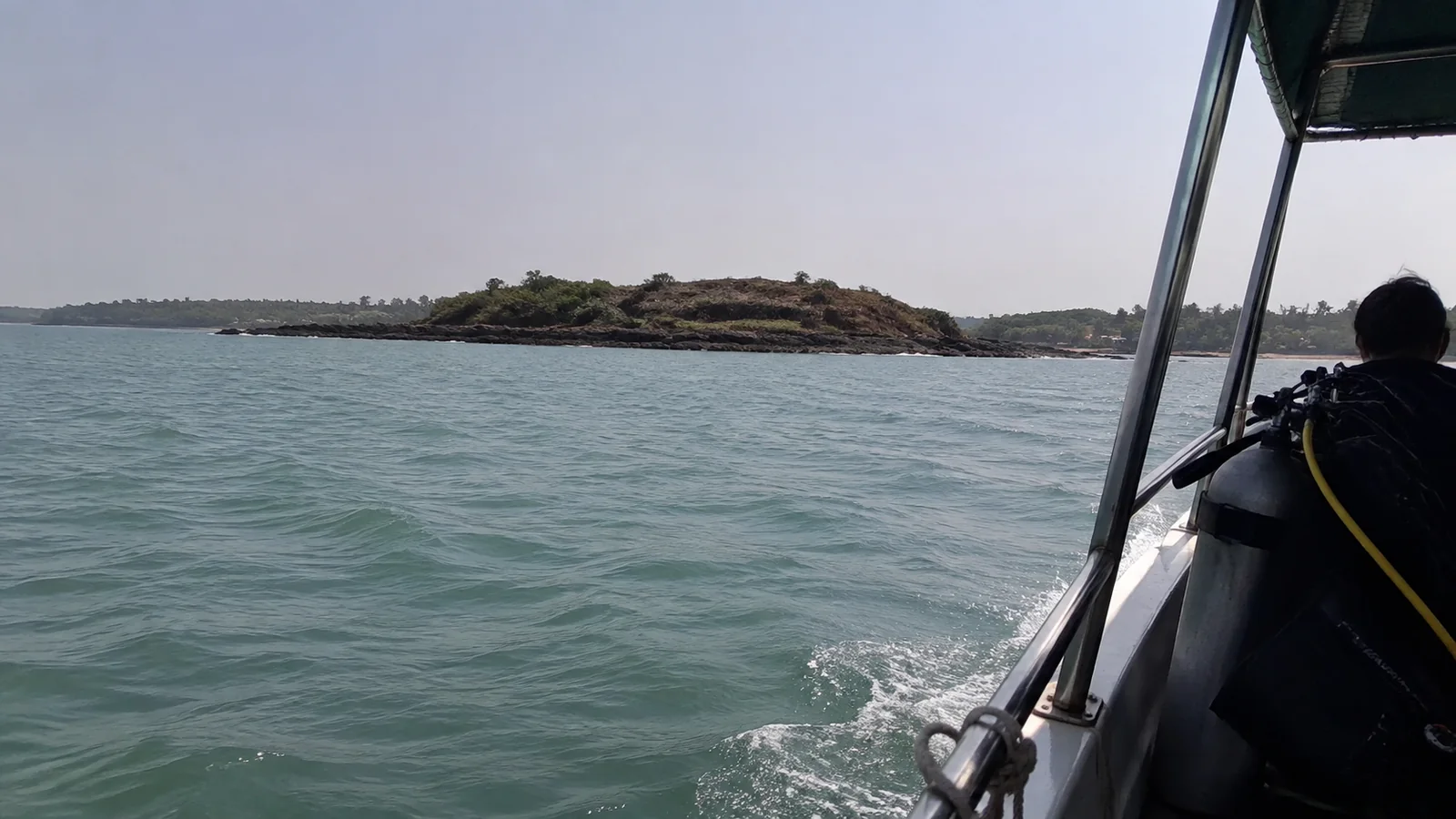
A Goa dive day can involve a road pickup, jetty wait, boat ride, equipment changes, snorkeling guests, and a return that moves with conditions. Ask for meeting time, realistic return window, food, drinking water, shade, restroom situation, seasickness planning, and what nondivers do.
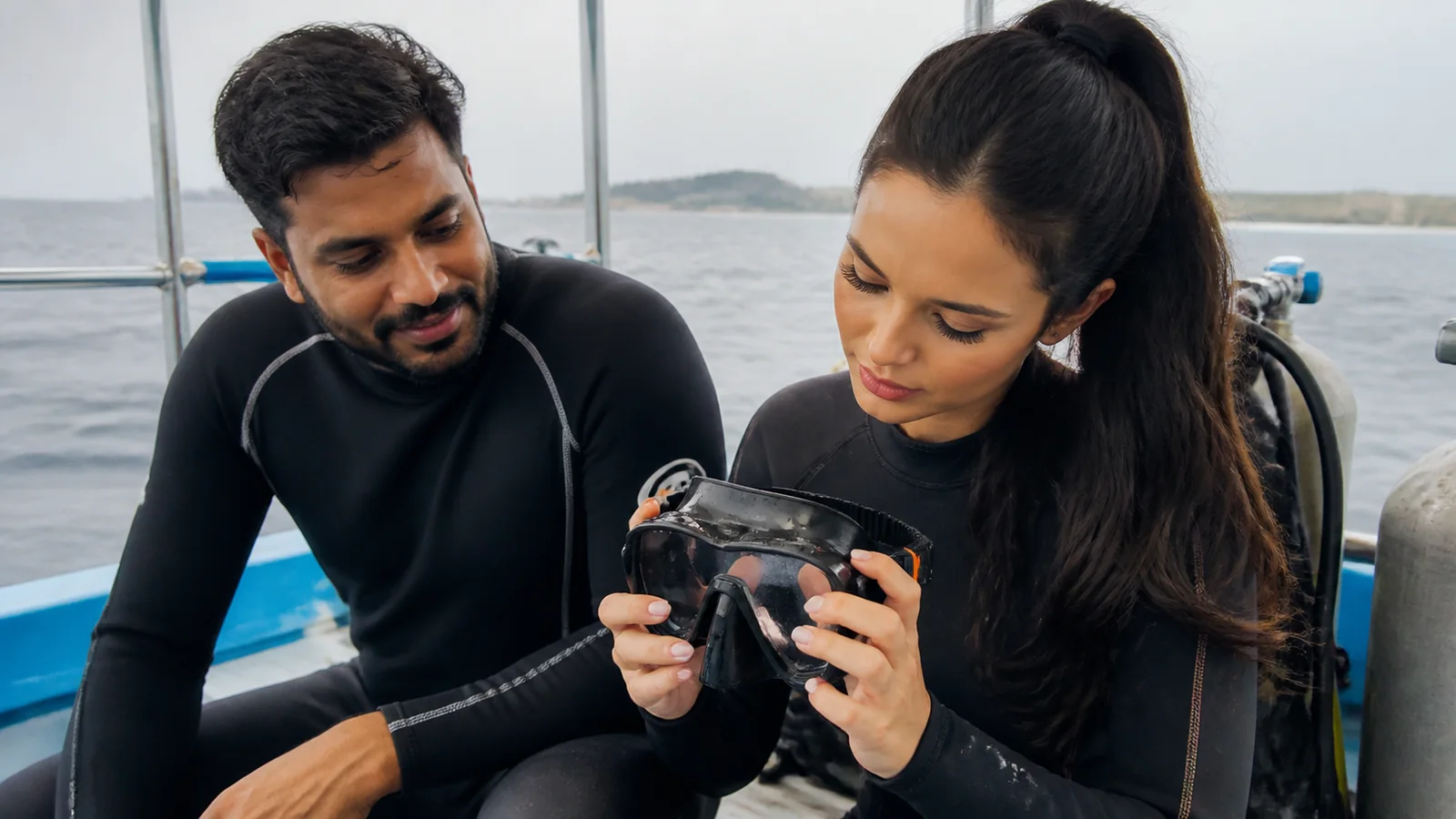
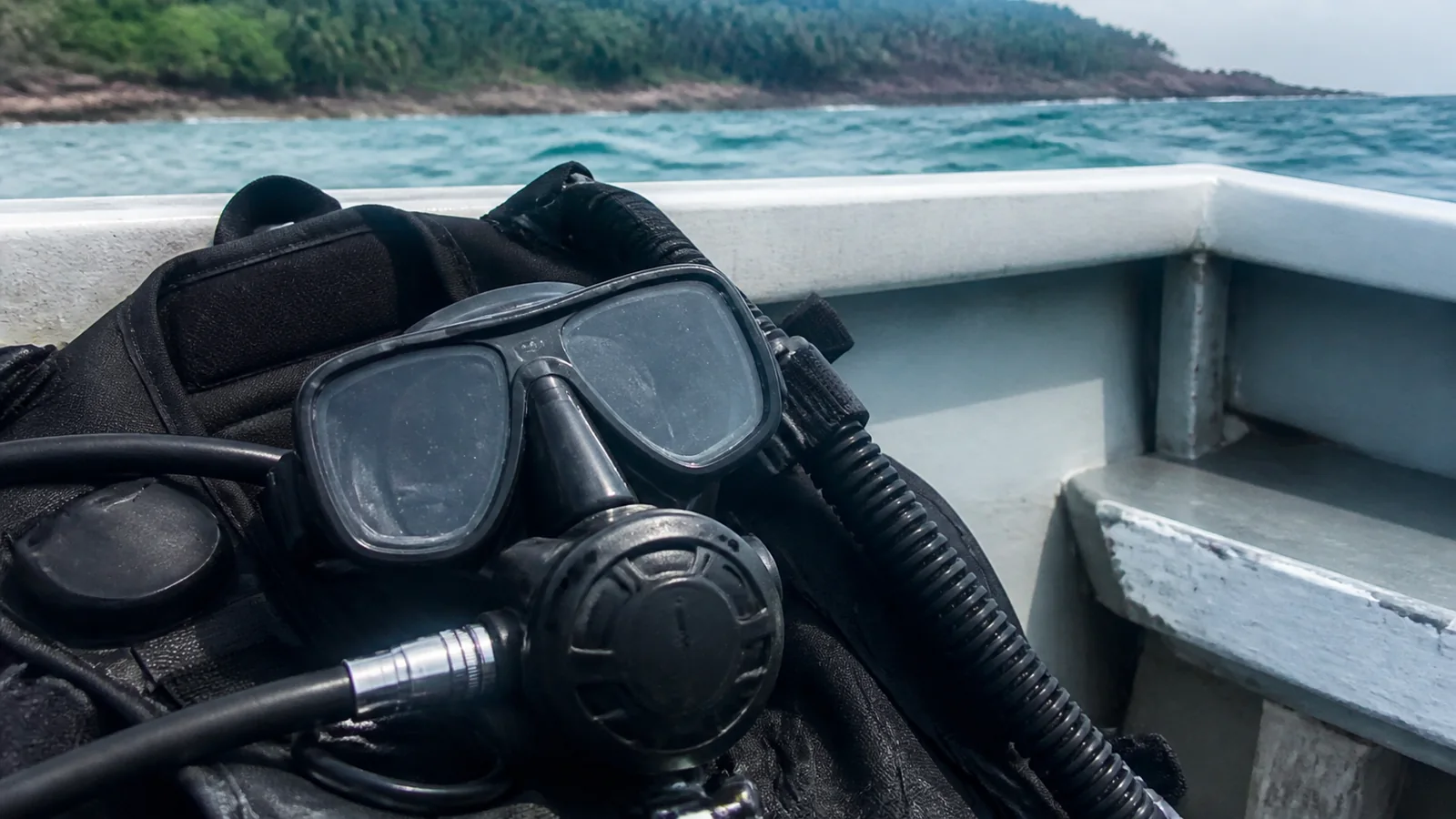
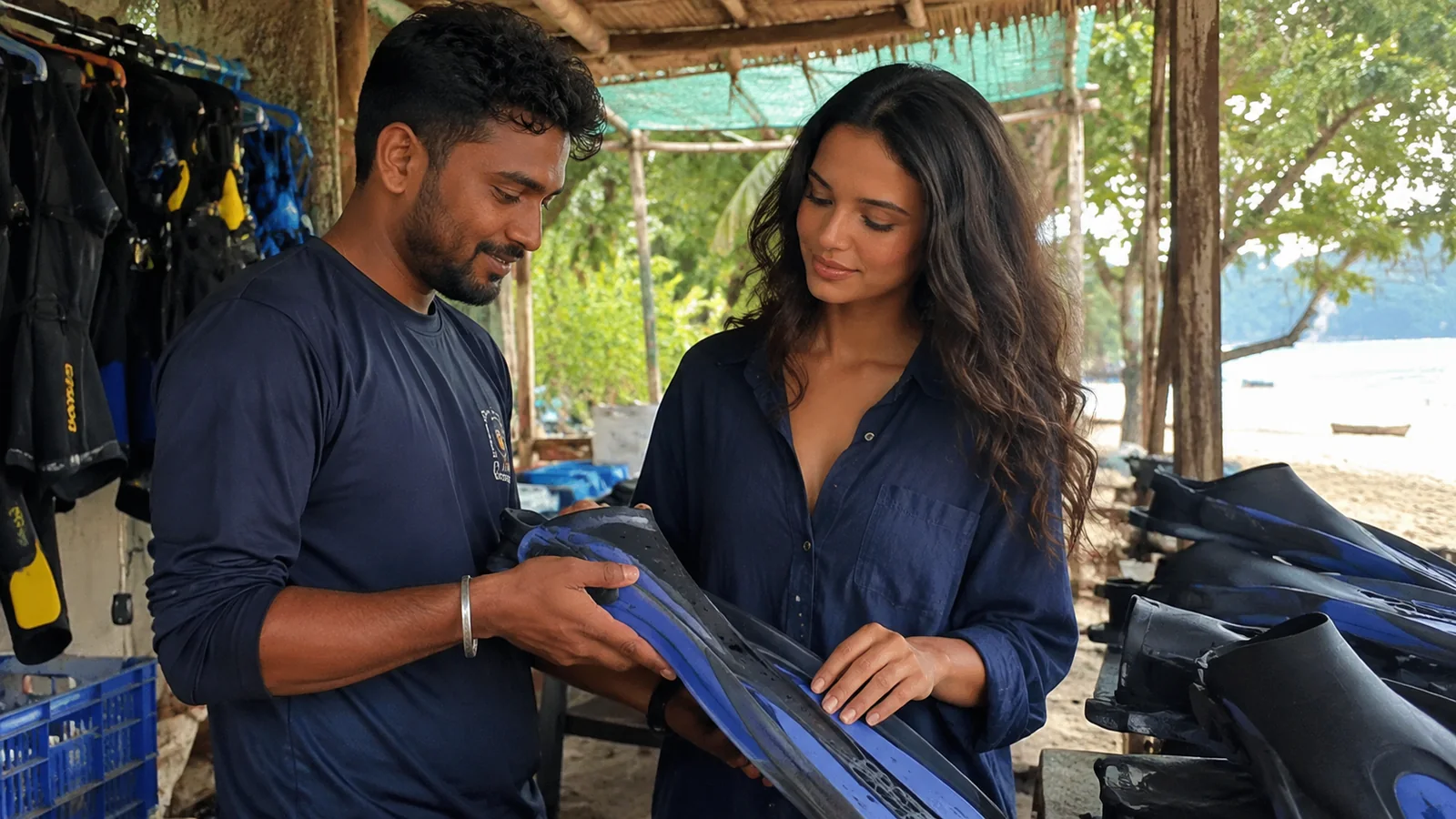
Try on all rental equipment before the boat leaves. A badly fitting mask, loose fin, restrictive suit, or unfamiliar buoyancy device is harder to solve offshore.
Certified divers should assemble or inspect their own setup within training and complete a buddy check. Beginners should receive a real briefing and skills session, not equipment fitted while the boat races toward the site.
Emergency and Insurance Planning
Ask the operator to describe what happens after a suspected diving injury, including oxygen, communication, boat return, road transfer, medical assessment, and access to recompression treatment. “We have never needed it” is not an emergency plan.
Many health and travel policies restrict scuba, training, depths beyond certification, or evacuation. Divers Alert Network’s dive accident insurance overview explains why dive-specific medical and transport costs may need separate coverage, but you must read your own contract and eligibility rules.
Store insurer assistance numbers, local emergency contacts, certification details, medications, allergies, and a passport copy offline. Contact local emergency services first during an active emergency, then follow the assistance process required by your coverage.
Do not schedule diving immediately before flying. Follow the most conservative applicable direction from your training, dive computer, medical professional, operator, and current no-fly guidance.
Wildlife and Reef Behavior
Goa’s official tourism page markets fish diversity and mentions possible dolphins on the boat ride, but marketing language is not a sighting guarantee. Choose the trip even if the day’s wildlife is modest and the water is less clear than a brochure image.
Do not chase, touch, feed, stand on, collect, or reposition marine life for a photograph. Keep fins controlled above the bottom and maintain buoyancy around wreck structure and reef growth.
Certified wreck training and overhead-environment training matter. Seeing a wreck does not authorize penetration, and a guide’s hand signal does not expand your certification.
India travel advisory
The U.S. Department of State currently rates India Level 2, Exercise Increased Caution, with higher-risk areas named separately. The India travel advisory should be rechecked before departure; Goa is served by the U.S. Consulate General in Mumbai and is not one of the advisory’s named no-travel border regions.
Goa is not one of the named border or conflict zones in the advisory, but nationwide personal-security guidance still applies. Recheck the advisory, use established transportation, protect valuables, avoid isolated late-night beach areas, and share the boat operator and return time with someone ashore.
Verify current passport, visa, arrival, medication, and driving rules separately through official sources. A tourism or dive booking does not confirm that an international traveler meets India’s entry requirements.
What to Pack
- Certification card and recent log details
- Medical clearance when the screening process requires it
- A well-fitting personal mask, if you own one
- Sun protection and a cover-up for the boat
- Reusable water bottle and operator-approved snacks
- Dry bag with offline documents and emergency contacts
- Motion-sickness plan that is medically appropriate for you
- Surface signaling equipment for trained certified divers
Bring exposure protection based on the operator’s current water report, not a generic packing list. If you are building a broader trip kit, our practical travel essentials focus on comfort and logistics without assigning products by body type.
Goa Compared With Other Dive Trips
Goa is convenient when the vacation already centers India and one or two boat days are enough. Nearby Tarkarli diving offers a smaller Konkan-coast base, but it shares the need for monsoon caution and operator verification.
For a destination with two ocean coasts and remote park logistics, compare our Panama scuba guide. For established drift diving with marine-park rules, the Cozumel dive-site planner is the more relevant contrast.
The Bottom Line
Goa can deliver an enjoyable first supervised experience or a guided day for certified divers, but the package name tells you very little about quality. Verify the live operating season, program standard, supervising professional, boat, equipment, weather policy, medical process, and emergency plan.
Keep the schedule flexible and let current conditions cancel the dive without drama. A safe, well-briefed day is the goal, while perfect visibility, one exact site, and dolphins beside the boat are bonuses nobody can promise.