Kona Manta Ray Night Dive and Snorkel: How to Choose
Kona’s manta ray night experience can be extraordinary, but it is still a nighttime ocean activity with boats, wildlife, darkness, and no guaranteed sightings. Choose between snorkeling and scuba honestly, screen the operator carefully, and treat comfort in open water as a safety requirement rather than a personality test.
What happens on a manta night tour?
Choose the site and harbor together
- Site: Manta Village, Keauhou Bay
- Usual departure and time tradeoff: Keauhou Harbor; local boats can reach the site in about 3 to 5 minutes, with roughly 30 to 45 minutes in the water on many short snorkel tours.
- My choice: My first choice for a confident swimmer staying in Keauhou who wants a short evening outing.
- Site: Manta Heaven, Garden Eel Cove near the airport
- Usual departure and time tradeoff: Honokōhau Harbor; allow roughly 20 to 30 minutes of boat travel each way, with longer overall schedules for two-tank dive trips.
- My choice: Compare this for Kailua-Kona or north-coast stays, particularly if a certified diver wants an afternoon dive followed by the manta dive.
For a concrete short-trip example, Hawaii Island and Ocean Tours lists about 80 minutes total with around 30 minutes snorkeling. That total includes more than the boat ride, so ask whether check-in, fitting, briefing, and changing are inside the advertised duration.
Jack’s Diving Locker explains the two established sites, and its two-dive charter illustrates why a diving evening can be much longer than a single snorkel. Site choice is the captain’s conditions-based decision, not a guarantee attached to the harbor.
I would choose Keauhou’s shorter transit for a first manta snorkel if you are based nearby and meet the operator’s swimming requirements. From Kailua-Kona, compare the full drive, check-in, and boat schedule instead of driving south solely because the boat ride is shorter.
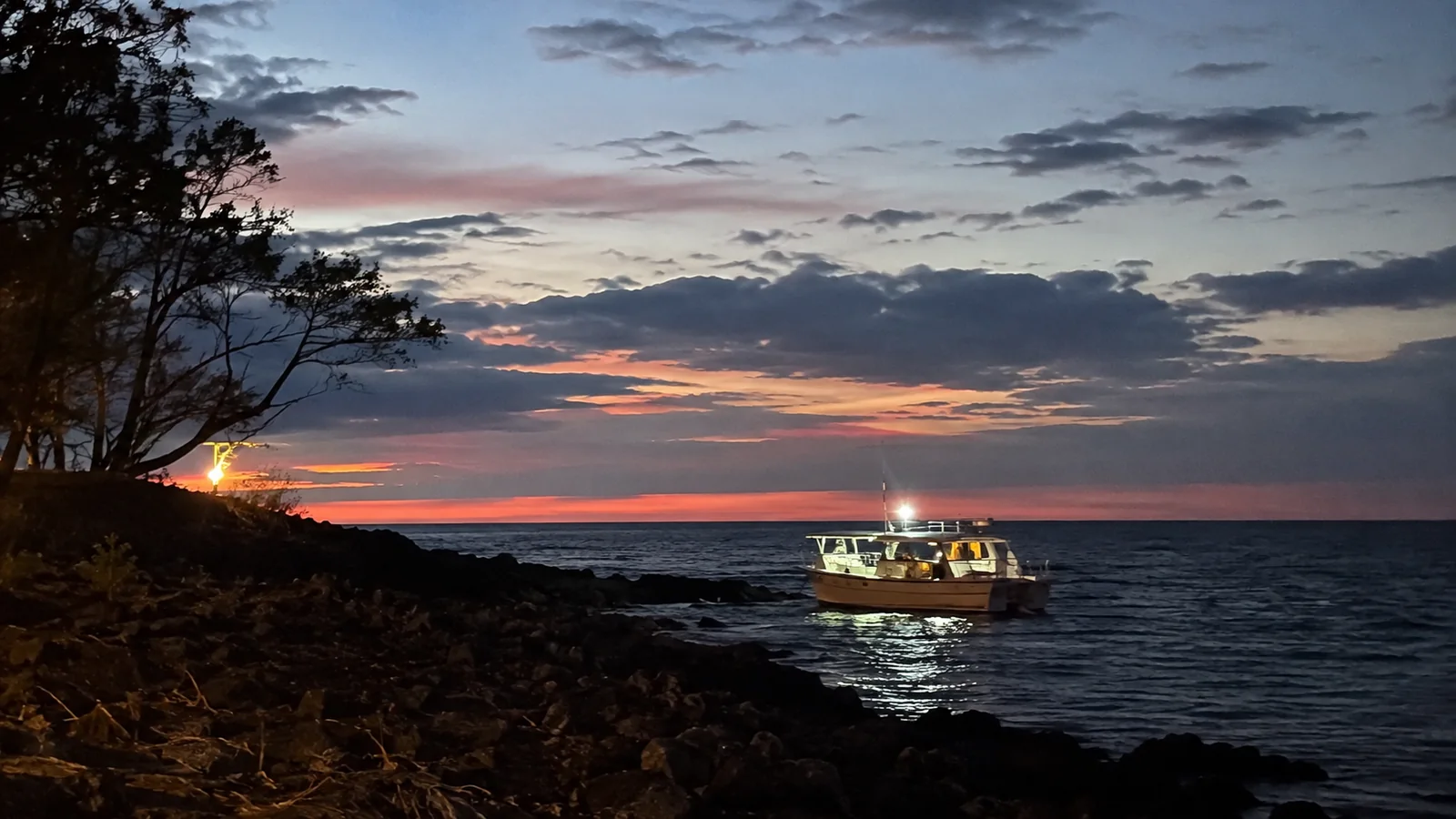
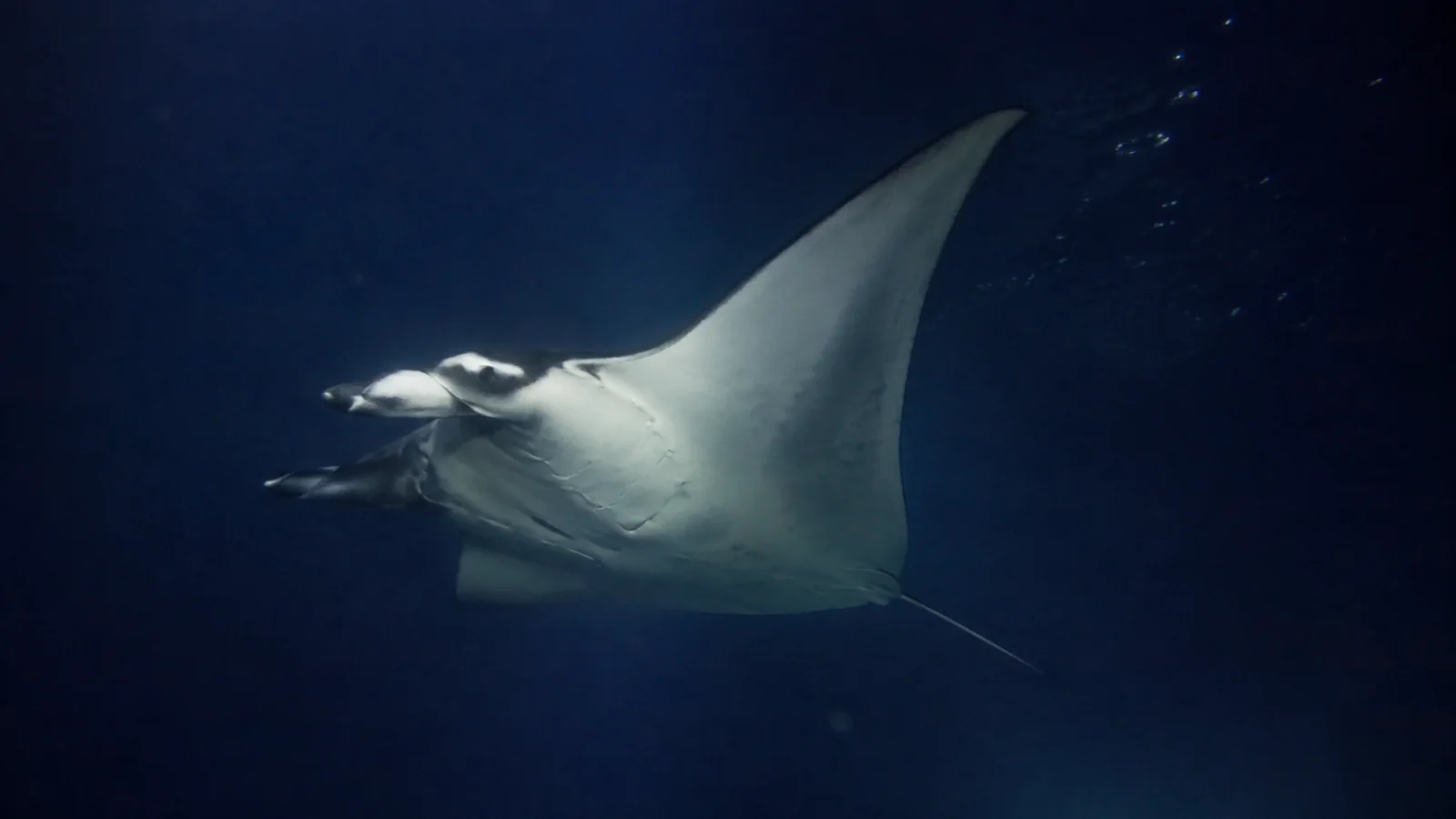
Boats take guests to an established viewing area along the Kona or Keauhou coast, where underwater lights concentrate microscopic plankton. Reef manta rays may arrive to feed in sweeping loops through the illuminated water.
The state’s official visitor site describes both sunset scuba and snorkeling experiences on the Kona and Keauhou coasts. Mantas do not have the venomous tail stingers associated with stingrays, but their size, the ocean, and nearby equipment still demand space and control.
Some nights bring several mantas, while another legal, well-run trip may see none. Plankton, animals, swell, visibility, weather, and site conditions do not accept reservations.
Snorkel or scuba?
Choose snorkeling if you are a capable ocean swimmer
Snorkelers commonly remain at the surface while holding a purpose-built light board or flotation setup, with mantas feeding below. This avoids scuba certification and depth, but it does not remove waves, darkness, mask breathing, cold, seasickness, or the need to enter and exit a boat safely.
Choose it only if you can use a mask and snorkel calmly, follow instructions, and remain comfortable in dark open water. A flotation device supports positioning; it does not turn a panicked non-swimmer into a prepared participant.
Choose scuba if you are certified and current
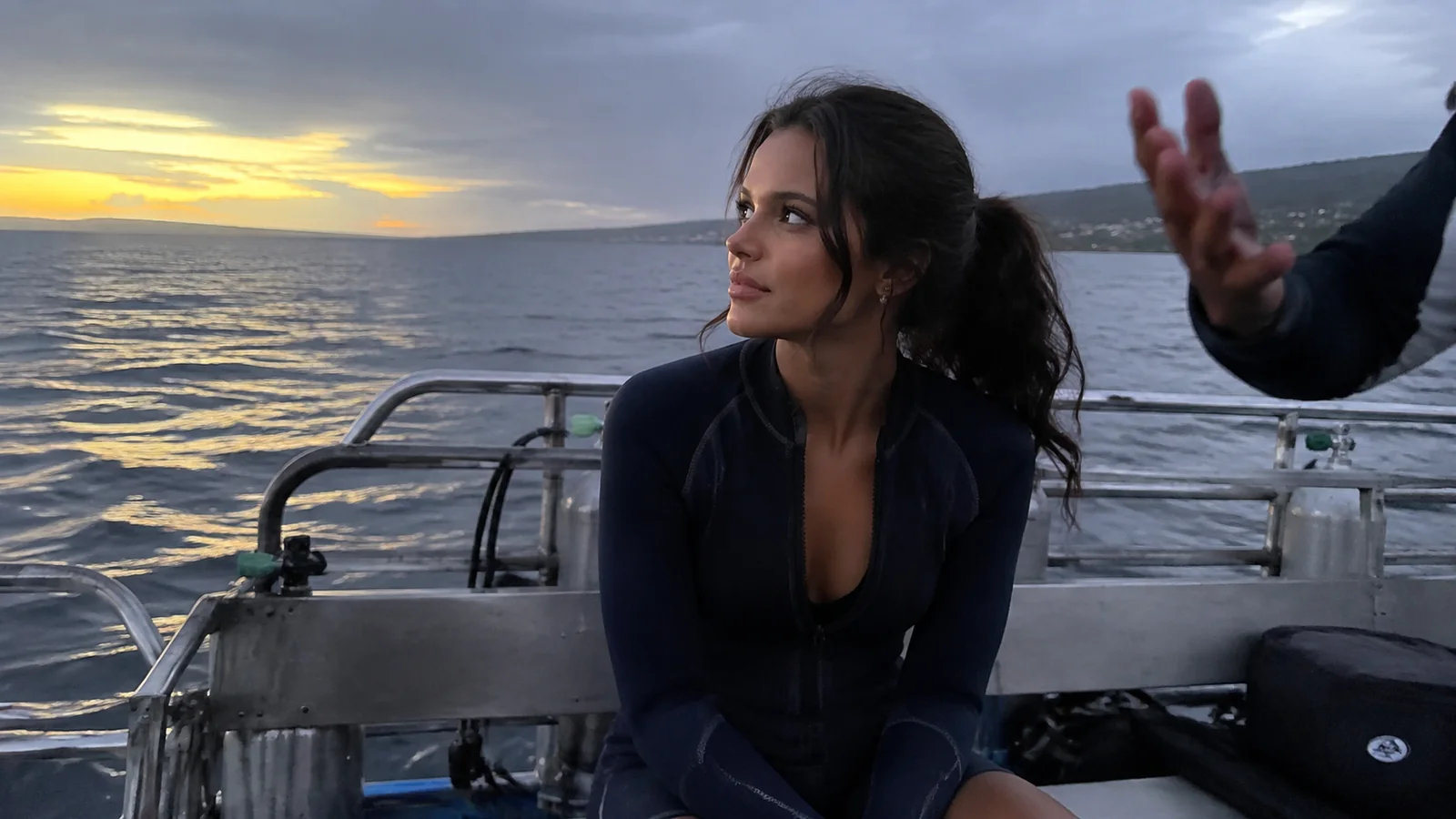
Certified divers typically settle near a sand, rubble, or boulder bottom and direct lights upward, leaving the water column open for feeding mantas. Divers need controlled buoyancy, stable positioning, awareness of the group, and enough night comfort to avoid striking coral or ascending into an animal.
An entry-level certification may satisfy one operator’s minimum while recent experience, logged dives, age, and night skills influence another’s acceptance. Send the certification level, last dive date, total dives, medical answers, and equipment needs before paying.
If skills are rusty, arrange a refresher and an easy daytime dive first. The manta dive is a poor place to rediscover mask clearing while lights, bubbles, wildlife, and an audience all provide emotional commentary.
Choose a boat ride or shore viewing if water is not your fit
A specific shore option is the Manta Learning Center and viewing area at OUTRIGGER Kona Resort & Spa, whose advertised manta talk is for resort guests. If you are staying elsewhere, ask the resort about current visitor access, parking, and any reservation requirement before making the trip.
The hotel sits above known nighttime manta feeding water, so a permitted viewing area lets you watch without entering the ocean. Sightings from shore can be distant or absent, and resort access does not authorize climbing the shoreline or swimming out.
Some companions may prefer remaining aboard, but not every boat permits ride-along guests and a boat view may be limited. Ask about seating, spray, seasickness, restroom access, lighting, and whether the non-swimmer can remain aboard throughout.
Land-based viewing opportunities sometimes exist near coastal properties, but access and visibility are not guaranteed. Confirm permission and current arrangements with the property rather than wandering onto a dark shoreline.
Who should pause before booking?
Night snorkeling and scuba may be unsuitable for people with poorly controlled heart, lung, seizure, fainting, panic, ear, sinus, or mobility concerns. Pregnancy, recent surgery, medications, illness, and any “yes” on a dive medical questionnaire require the operator’s process and appropriate clinician advice.
Do not hide a condition because the family already bought tickets. A refund dispute is frustrating, but it is still preferable to a medical emergency beside a ladder in the dark.
Children must meet the operator’s current minimum age, sizing, swimming, and supervision rules. Ask whether a parent and child can remain together, what happens if one exits early, and whether the boat can safely fit the smallest participant’s exposure gear.
This should not be a do-it-yourself night swim
Hawaii’s official snorkeling safety guidance warns that more visitors drown while snorkeling than during any other activity and generally advises avoiding dawn, dusk, and murky water. A commercial manta outing is a specialist nighttime operation, not evidence that an independent swim from shore is wise.
Use an established operator with a licensed captain, trained in-water staff, suitable vessel, emergency equipment, participant screening, and a clear wildlife protocol. Never enter from lava rock at night to chase lights or a location shared online.
How to screen an operator
- Which harbor and exact check-in point does the boat use?
- Does the trip offer snorkel, scuba, or both on the same vessel?
- What are the certification, recency, age, swimming, and medical requirements?
- How many guests share each in-water guide and light board?
- Are wetsuits, flotation, prescription masks, tanks, weights, and dive lights included?
- How does the crew separate boats, divers, snorkelers, and mantas?
- What first-aid, oxygen, communication, and rescue equipment is aboard?
- What happens after a weather cancellation or a no-manta night?
- Can a guest exit early, and will a crew member remain aboard?
- Are photos, gratuity, parking, taxes, and harbor charges included?
“Small group” should translate into a number, not a soothing adjective. Also ask the vessel’s maximum capacity and the expected participant count because mixed snorkel-and-dive trips can feel very different once gear fills the deck.
Responsible manta etiquette
Hawaii’s Division of Aquatic Resources says not to disturb manta behavior by touching or chasing the animals. Its sharks and rays guidance should be the minimum standard, followed by the more detailed positioning instructions in the crew briefing.
Keep hands, fins, cameras, and bubbles under control; do not ride, grab, feed, pursue, or block a manta. Let the animal choose proximity and maintain its path through the light.
For a practical example, a long-running Kona operator’s published participant guidelines place divers near the nonliving bottom and snorkelers at the surface, leaving the water column open. Your chosen operator should explain its current site-specific formation just as clearly.
Avoid standing on coral, kicking the bottom, or dropping unsecured equipment. Reef protection still matters when the celebrity wildlife has arrived overhead.
Safety before the mantas appear
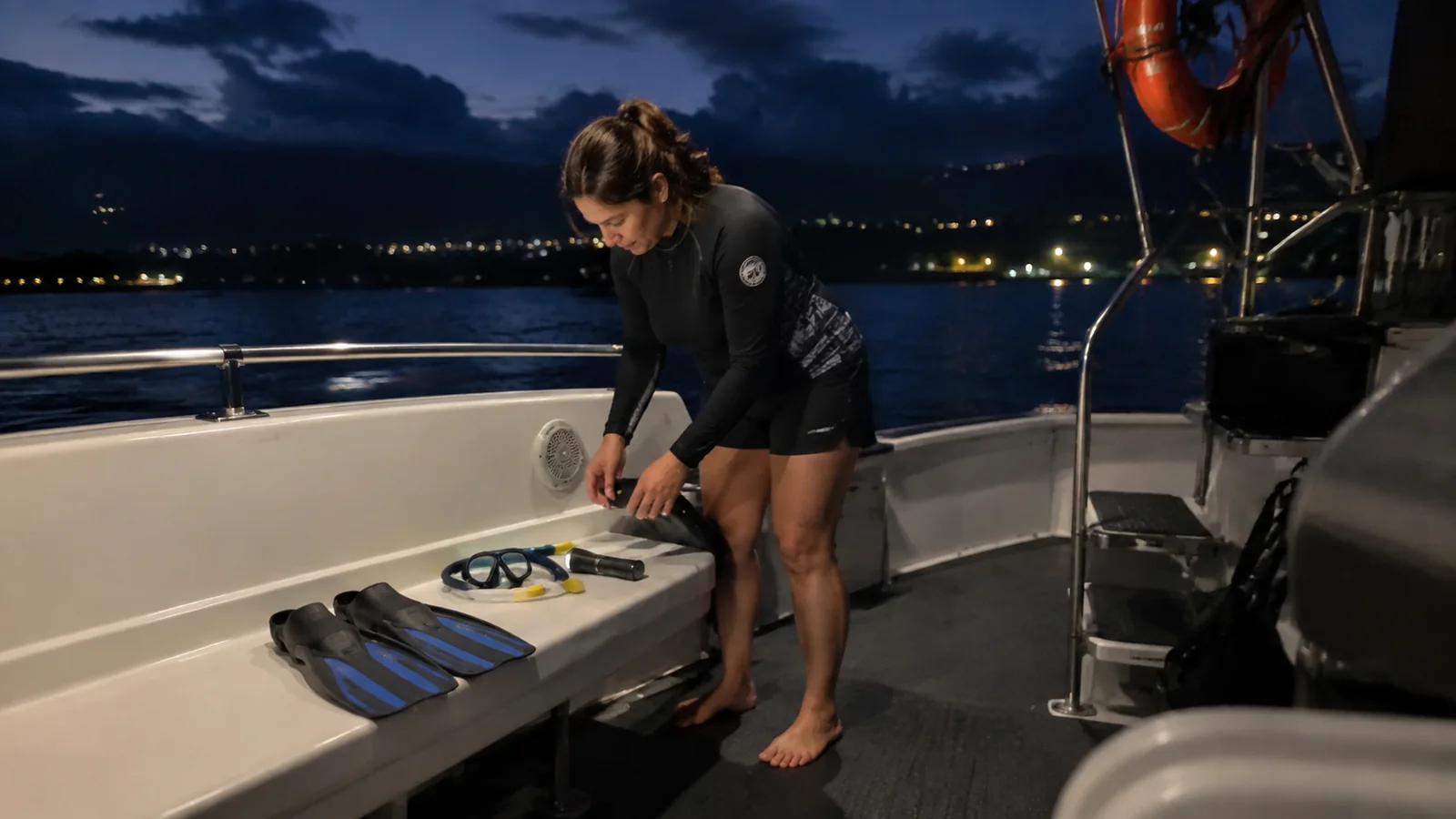
Listen to the full boat and site briefing, locate flotation and exits, and learn the signal for returning to the vessel. Tell the crew early about seasickness, anxiety, poor mask fit, cold, fatigue, or difficulty equalizing.
Use the handholds and entry method assigned by the crew, then move away from the ladder when directed. On return, wait your turn, keep clear of a moving vessel, and pass weights or cameras up only as instructed.
For snorkelers
Stay with the group and designated board, keep the snorkel clear, and avoid vertical bicycle-kicking beneath you. If breathing becomes labored or anxiety rises, signal immediately and exit before control deteriorates.
For divers
Complete buddy checks, monitor gas and computer, maintain the planned depth, and preserve enough reserve for a calm ascent and surface wait. Secure gauges, alternate air sources, lights, and cameras so nothing drags or swings into reef or animals.
Review the essentials in my scuba equipment checklist, then use the operator’s exact rental and required-gear list. Bringing a familiar mask can improve comfort, but every life-support item must be compatible and inspected.
Weather, water, and cancellation reality
Kona’s west coast is often chosen for favorable ocean access, yet no evening is guaranteed calm. Swell, wind, current, visibility, lightning, harbor restrictions, mechanical issues, or a captain’s judgment may change the site or cancel the trip.
Book early in the Hawaiʻi Island stay so a cancellation leaves a possible rebooking window. Read whether the operator offers a refund, credit, reschedule, or discounted return when weather stops the boat or mantas simply do not appear.
A “manta guarantee” generally concerns the operator’s re-ride policy, not a cash guarantee that an animal arrives. Check eligibility, expiration, seat availability, and whether taxes or gear charges repeat.
Timing the dive within a Hawaiʻi trip
Stay on the Kona side if possible because a late wet drive across the island is a poor finish to a night tour. Compare west-side ocean priorities with the broader tradeoffs in Hawaiʻi Island versus Oʻahu before choosing the island or splitting a short vacation.
Scuba divers must account for altitude as well as flights, including drives to high-elevation destinations. Divers Alert Network’s flying-after-diving guidance provides minimum surface-interval recommendations, but personal profiles and dive plans still require conservative professional advice.
Do not schedule scuba the night before flying, visiting a high summit, or taking an itinerary whose altitude you have not checked. Snorkeling does not create the same inert-gas issue, though fatigue and seasickness can still spoil an early departure.
Cruise visitors should verify the ship’s all-aboard time and whether the tour is line-sponsored before considering an evening departure. My Hawaii cruise planning overview can frame the island sequence, but the live ship schedule controls the night.
What to bring
- Swimsuit worn under comfortable clothes.
- Warm dry layers for the return boat ride.
- Towel and a dry bag for personal items.
- Motion-sickness plan approved for your health needs.
- Certification card, log details, and required identification for scuba.
- Familiar mask or corrective lenses if the operator approves them.
- Reusable water bottle and a light snack if permitted.
- Cash for gratuity if it is not included.
Leave loose jewelry and unnecessary valuables at lodging. If bringing a camera, attach it with an operator-approved secure tether and choose wildlife behavior over the shot every time.
A realistic evening sequence
- Eat a light meal and follow the chosen motion-sickness plan.
- Arrive at the exact harbor with check-in margin.
- Complete medical, equipment, and wildlife briefings honestly.
- Test mask fit and exposure gear before the boat reaches the site.
- Enter only when the captain and in-water guide direct.
- Remain in position and let mantas approach on their terms.
- Exit early if cold, breathing, anxiety, or fatigue becomes a problem.
- Dry off, warm up, hydrate, and follow post-dive limits.
Final recommendation
Choose snorkeling if you are a confident ocean swimmer who wants a surface view, and choose scuba only when certified, medically fit, and current enough for a controlled night dive. In either case, the best operator is the one that screens guests carefully, protects the water column, explains emergencies, and refuses to promise wildlife.
The right goal is not touching a manta or collecting the closest video. It is leaving the animals undisturbed and returning to shore warm, calm, and very aware that plankton can organize quite an evening.