Back-to-Back Cruises: Booking, Turnaround Day and Tips
A back-to-back cruise pairs consecutive sailings into one longer vacation, often on the same ship. The magic is unpacking once and skipping another flight, but the two cruises still have separate paperwork, accounts, benefits, and turnaround-day procedures.
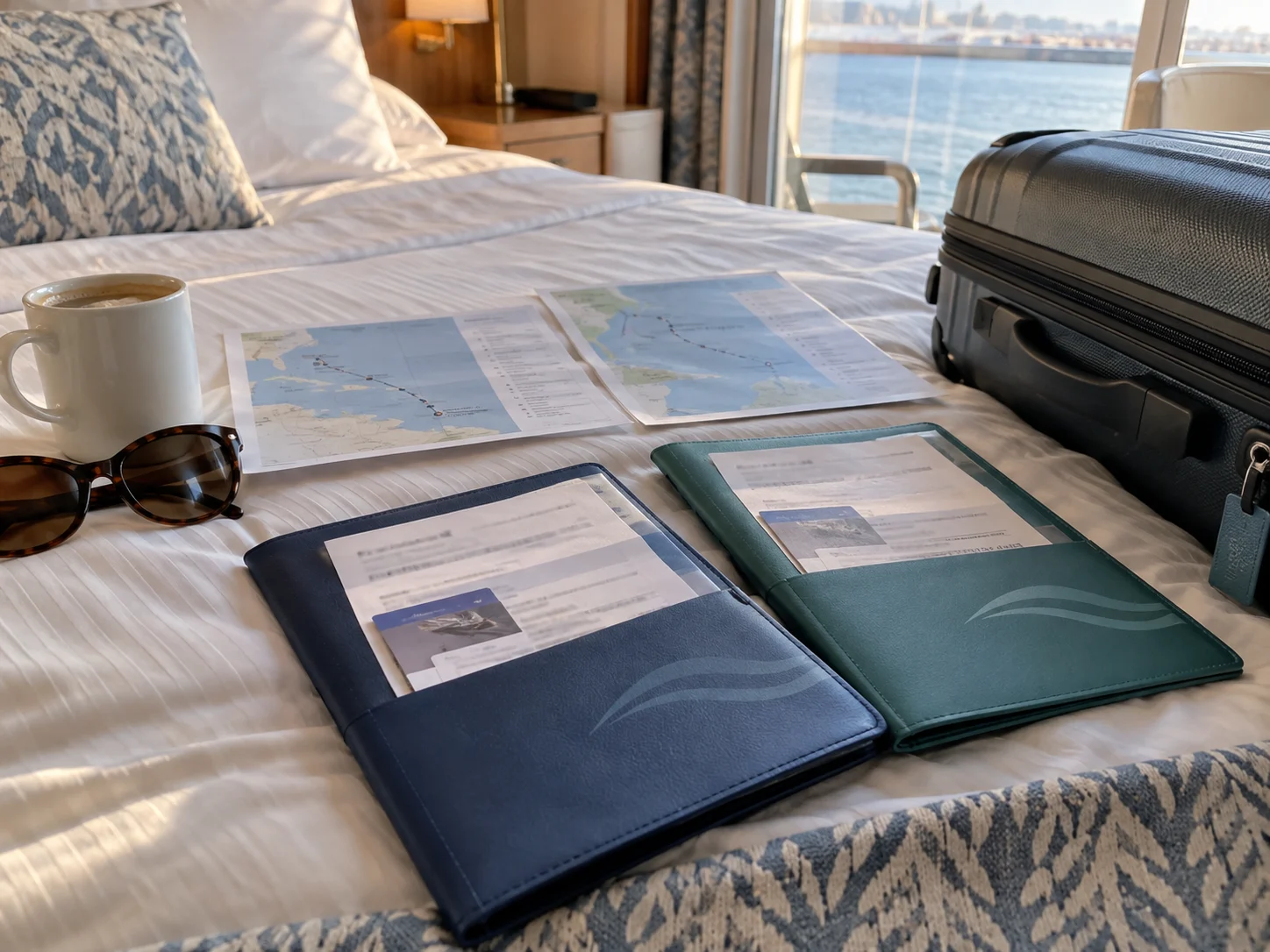
What is a back-to-back cruise?
Most people use the term for two cruises taken one after the other on the same ship. NCL’s official definition also allows different ships and a gap of no more than one day.
The best version combines two different itineraries on one ship while keeping the same cabin. Think Eastern Caribbean followed by Western Caribbean, or a northbound Alaska cruise followed by the southbound route.
Repeating the same itinerary can still be wonderful when the ship is the destination or you want a second chance at a weather-sensitive port. Just expect menus, shows, trivia, and daily activities to repeat.
Are back-to-back cruises worth it?
They are worth considering when one round of airfare, one pre-cruise hotel, and one unpacking session can support two vacations. They are especially appealing for travelers with a long flight to the embarkation port or enough vacation time to turn seven nights into fourteen.
They are not automatically cheaper than one long cruise. Each segment is priced independently, and two sets of taxes, service charges, packages, deposits, and insurance costs can erase part of the travel savings.
Best reasons to book back-to-back
- You can keep the same cabin and avoid moving luggage.
- The itineraries visit mostly different ports.
- One expensive flight serves a much longer vacation.
- You want more ship time without a long stretch of sea days.
- The first cruise ends exactly where the second begins.
Reasons to choose one longer cruise instead
- You dislike repeated dining menus and entertainment.
- The only combination requires changing cabins or ships.
- Separate promotions make the total price surprisingly high.
- The combined itinerary creates a U.S. passenger-vessel law issue.
- You need a fully protected connection between two unrelated bookings.

Book each sailing as a separate trip
Even on the same ship, expect a separate reservation number, deposit, final-payment deadline, cancellation schedule, online check-in, and travel-document review for every segment. Save both booking confirmations where you can reach them without internet.
Compare the fare rules line by line because the first cruise might include onboard credit while the second includes a drink package. A benefit shown on one confirmation should never be assumed to cover both sailings.
After booking, call the cruise line or your travel advisor and ask for the reservations to be noted as consecutive. That helps the ship identify continuing guests and issue the right turnaround instructions, but it does not merge the legal or financial terms.
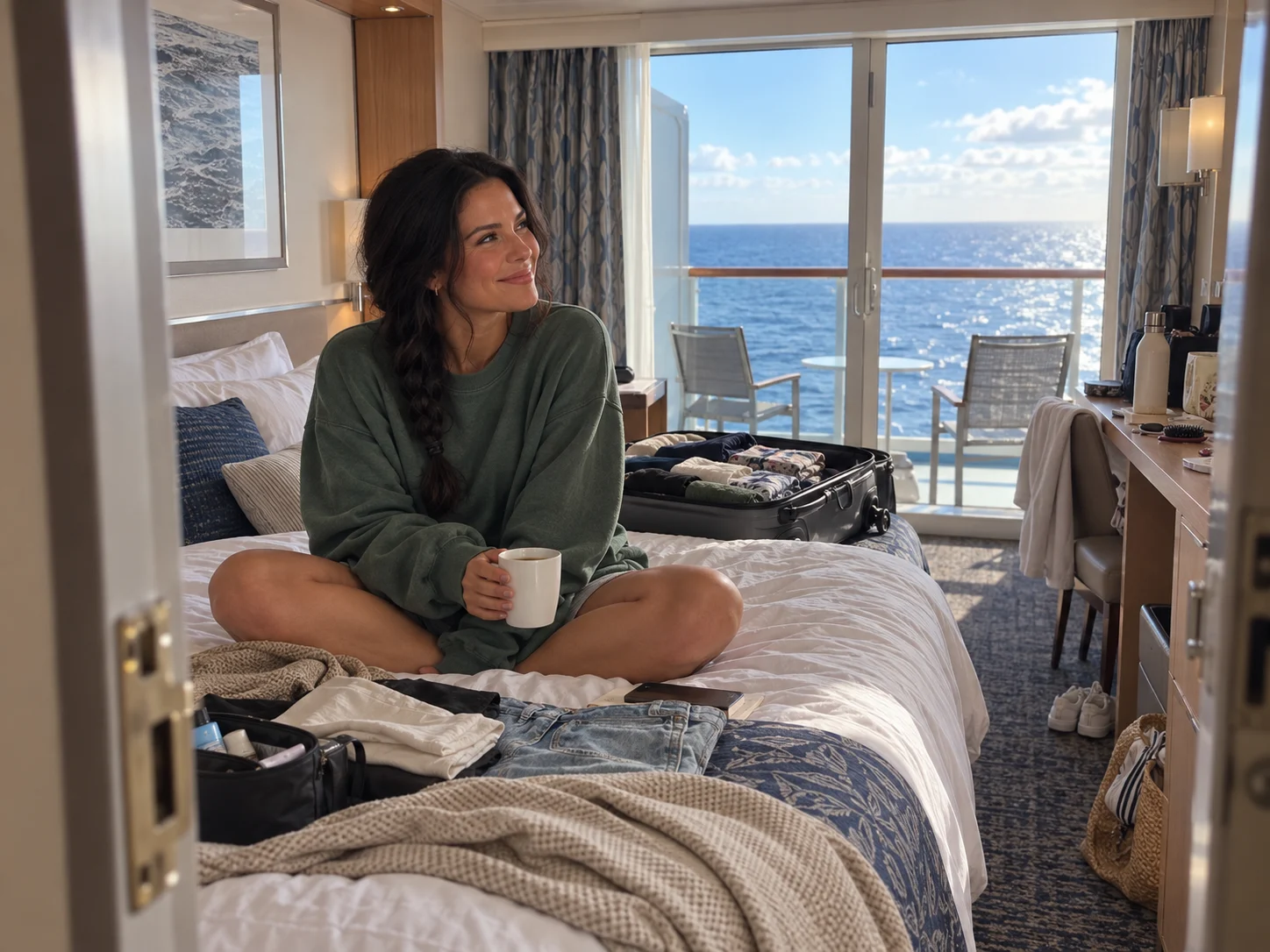
Make the same cabin your first priority
Keeping one cabin preserves the biggest back-to-back advantage: you can leave clothes in the closet and toiletries in the bathroom. Check the cabin number on both confirmations, not just the category name.
Royal Caribbean’s current consecutive-cruise guidance says continuing guests receive turnaround instructions and continued cabin access. Procedures vary by line and port, so confirm what your ship permits before leaving valuables behind.
A guarantee, “we pick,” or GTY fare can assign different cabins even when both bookings show the same category. If unpacking once matters, paying a little more for one confirmed room across both segments may be the better value.
Use the deck plan for both cruises because a ship can change categories during a future deployment. My cruise cabin checks show how to screen the spaces above, below, beside, and across from a room.
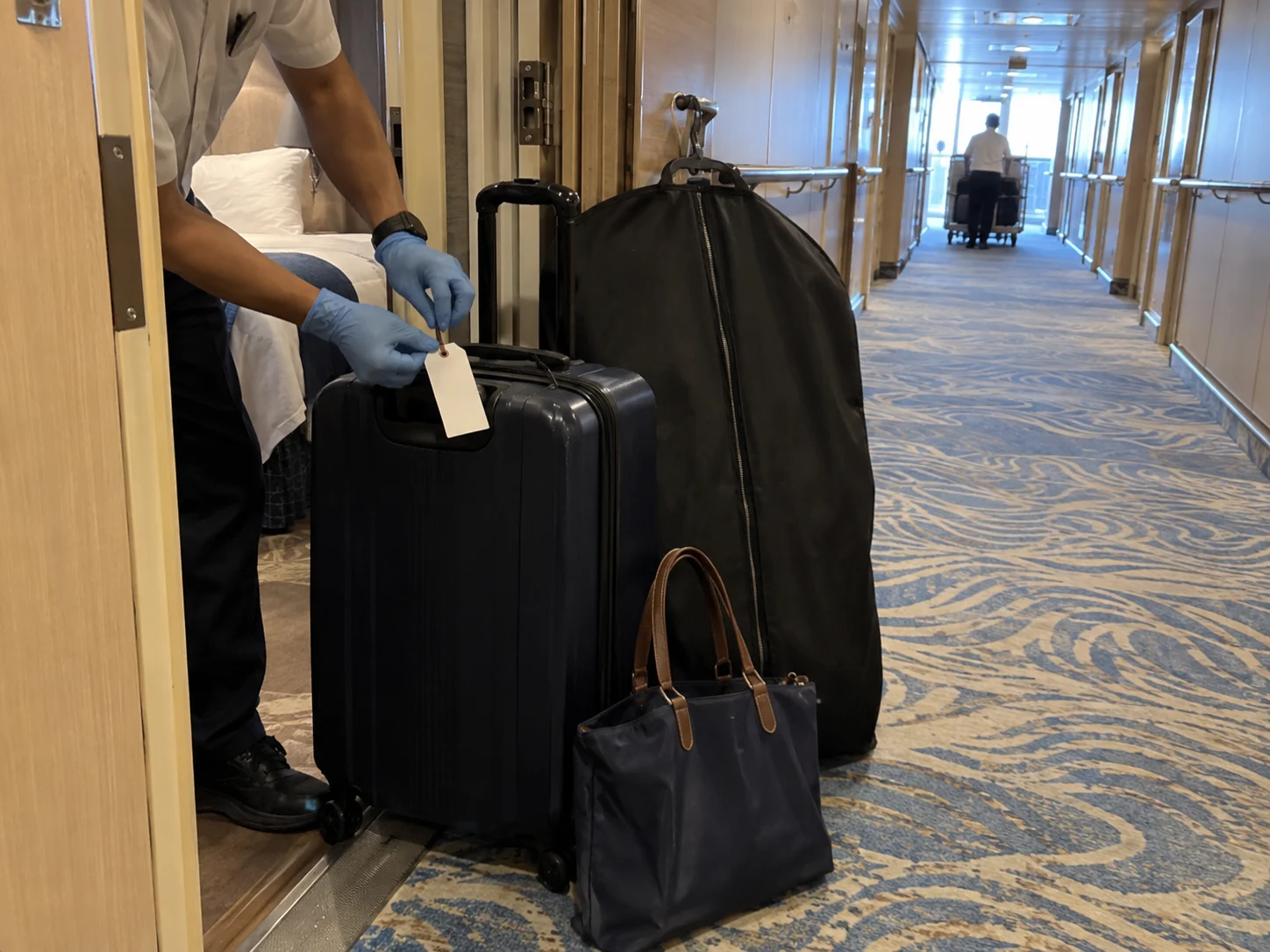
What if you must change cabins?
Tell both cabin attendants early in the first cruise and ask Guest Services for the ship’s moving procedure. Do not put bags into the normal disembarkation stream unless the crew specifically tells you to.
Pack loose belongings, medications, documents, valuables, electronics, and chargers before the scheduled move. The crew may transfer hanging clothes and suitcases, but that service is line- and ship-specific rather than guaranteed.
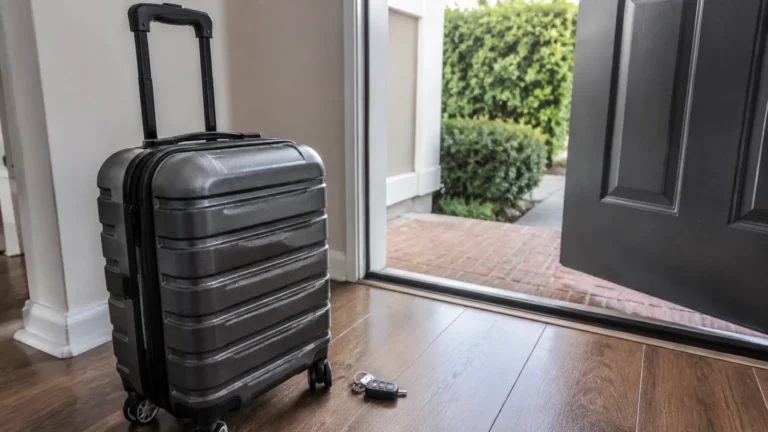
Keep a small turnaround bag with your passport, wallet, new boarding documents, medication, phone, swimsuit, sunscreen, and a change of clothes. Your new cabin may not be available while the ship is being prepared for arriving passengers.

What happens on turnaround day?
Near the end of the first sailing, the ship should deliver a letter or app message with a meeting place, time, document list, and options for going ashore. If nothing arrives, visit Guest Services before the final evening becomes crowded.
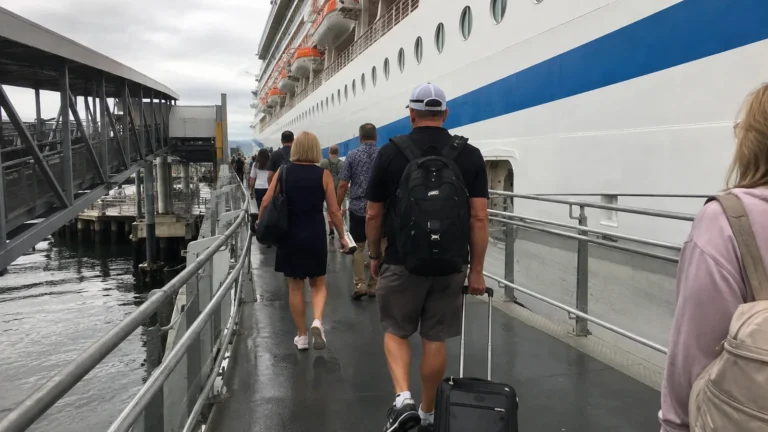
Continuing guests may gather in a lounge, complete customs or immigration formalities, step into the terminal, and return as a group. NCL explicitly says guests may need to disembark and reembark depending on the port and local authorities.
Do not promise yourself a completely empty ship all morning. Restaurants, pools, lounges, and other facilities may close while crew clean, restock, test systems, and prepare for the next passenger group.
Can you stay onboard?
Sometimes you can remain within the controlled ship-and-terminal process, but you may still have to step off briefly so the ship can clear the first manifest. The rule comes from local authorities and can change even when a previous traveler had a different experience.
Can you go into port?
Usually, if immigration and the cruise line permit it. Tell the crew you plan to leave, carry the required continuing-passenger card or new key, and confirm the all-aboard time for the second cruise.
Book a turnaround excursion only when its cancellation terms protect you from a delayed clearance. A relaxed lunch near the terminal is safer than an independent tour that drives two hours away.
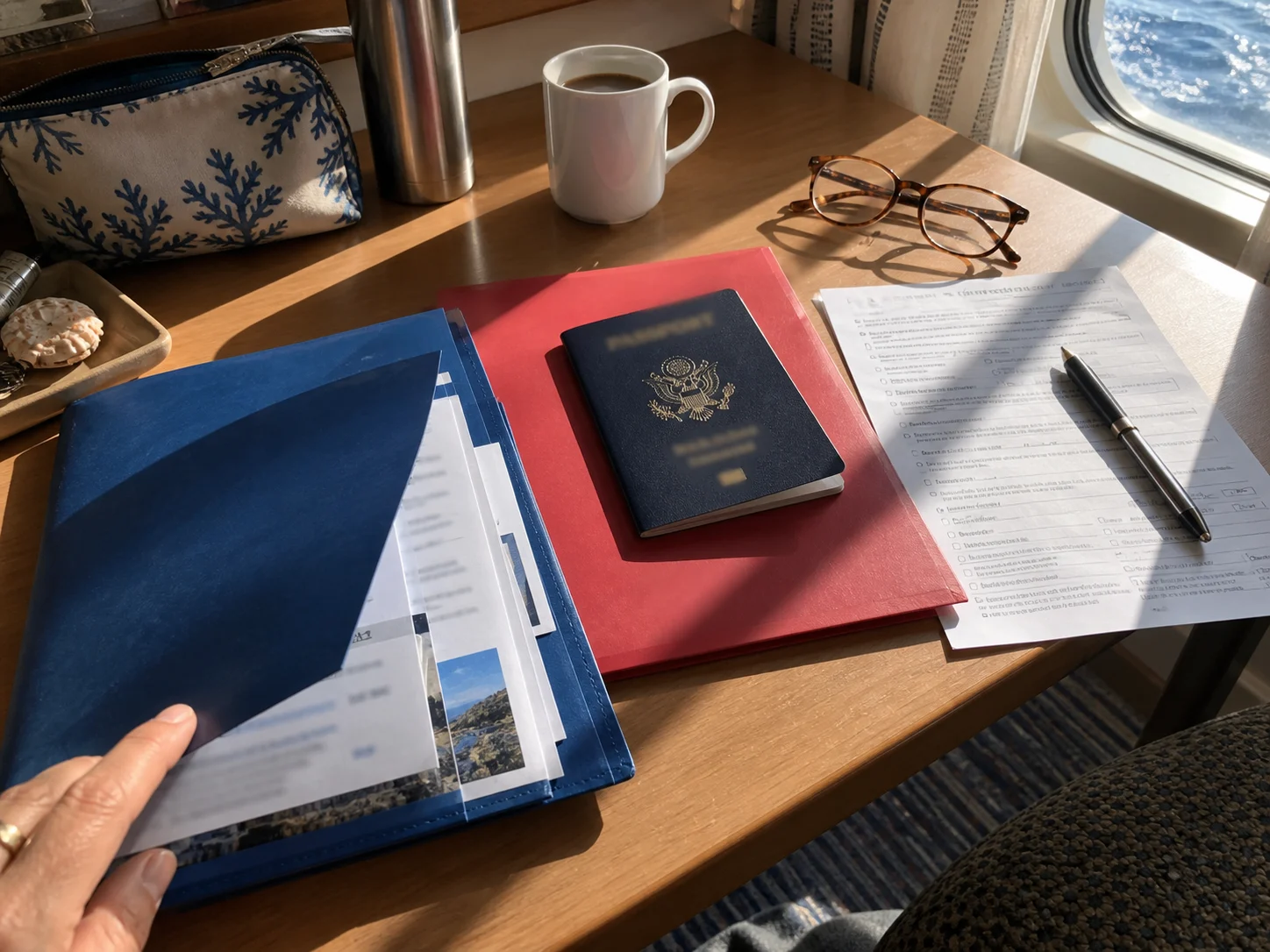
You need documents for both cruises
Check passport, visa, vaccination, consent-letter, and entry requirements against the complete combined itinerary. A document that works for one closed-loop sailing may not work for a second segment ending in another country.
CBP says some citizens of the United States on qualifying closed-loop cruises can use proof of citizenship plus government-issued photo identification, as outlined in its Western Hemisphere Travel Initiative guidance. I still recommend a valid passport whenever possible because an emergency flight home or a different end port can change the situation quickly.
Non-U.S. citizens must check the rules tied to citizenship, residency status, visas, and every country visited. The cruise line can deny boarding when a traveler lacks the required documents, even if the first segment was completed successfully.
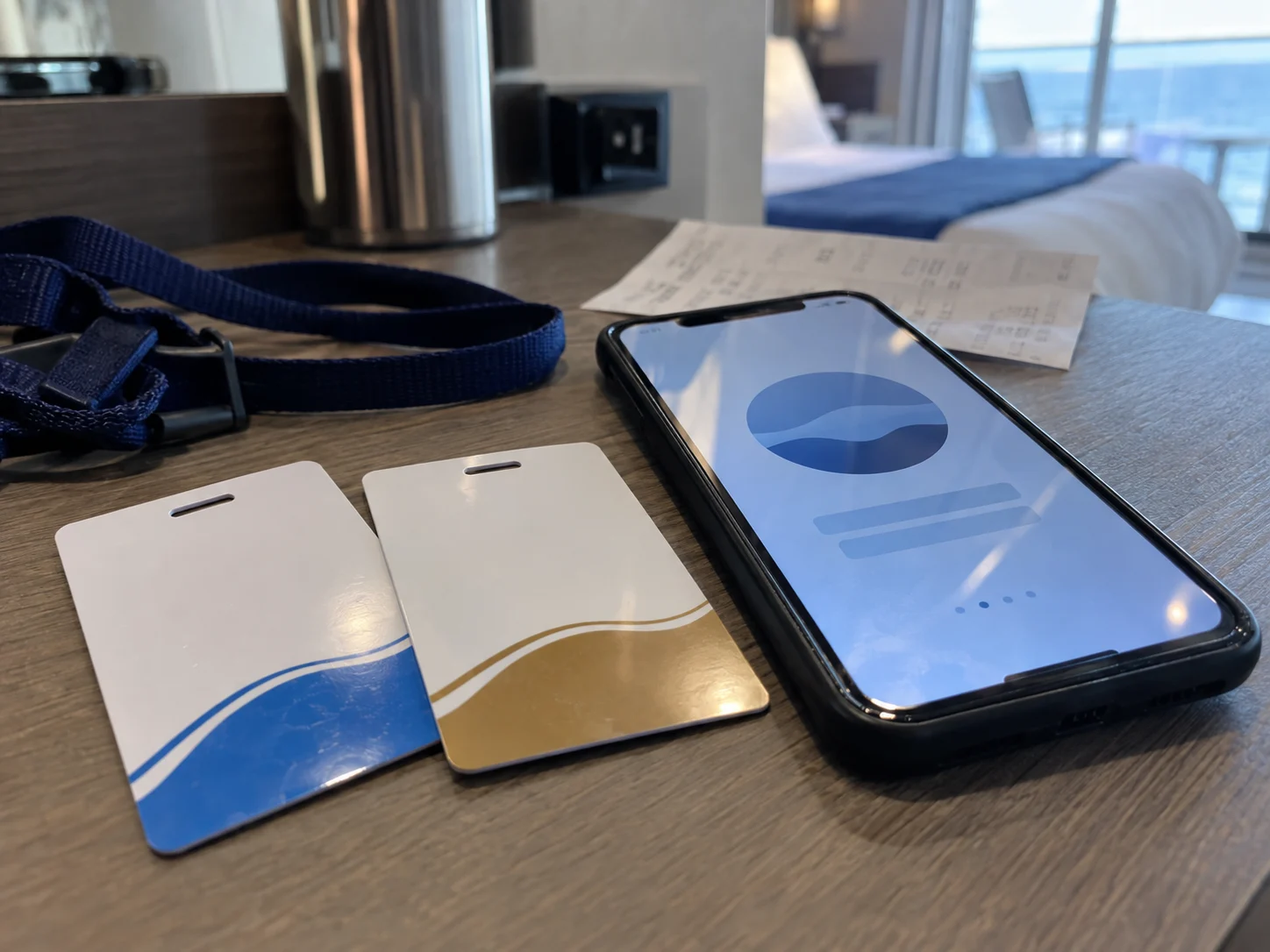
Your key card and onboard account will reset
Expect a new key card or updated onboard credential for the second cruise. Test it at the cabin and keep the old one until you know charges, photos, and access are correctly attached to the new account.
Review the first folio before that sailing closes. Onboard credit, casino balances, arcade funds, internet minutes, dining credits, and promotional charges may expire rather than roll into the next reservation.
Download purchased photos and save any receipts you need before the first account disappears from the app. Treat the second cruise as a fresh wallet even though your suitcase never left the room.
Packages usually belong to one segment
Buy beverage, dining, Wi-Fi, spa, and photo packages for each reservation unless the written terms clearly say otherwise. Prices and inclusions can differ between two consecutive weeks on the same ship.
Wine allowances can have special handling for continuing guests. Royal Caribbean currently allows one sealed 750 ml bottle per drinking-age guest for each individual sailing and says later bottles will be stored until the appropriate voyage, according to its onboard alcohol policy.
That example is not a fleetwide cruise-industry rule. Check your own line shortly before departure because prohibited-item and alcohol policies change.
Expect a second safety requirement
Each segment has a new passenger manifest and safety process. Follow the app and crew instructions for the second cruise rather than assuming your first muster completion carries forward.
This may take only a few minutes, but skipping it can lead to repeated announcements or direct follow-up. Put the task near the top of your second embarkation-day list.
Watch for the Passenger Vessel Services Act
This issue matters when a foreign-flag ship carries you between different U.S. ports as part of a combined trip. CBP’s Passenger Vessel Services Act explanation confirms that U.S. coastwise law restricts passenger transportation between U.S. points.
The analysis can depend on the combined embarkation point, final disembarkation point, vessel, and foreign ports visited. Two sailings being sold separately does not guarantee that your exact combination is permitted.
Ask the cruise line to validate the entire sequence before paying nonrefundable deposits, especially if it begins in one U.S. port and ultimately ends in another. Do not try to solve a complicated itinerary from social-media examples because one changed port can change the result.
Changing ships raises the risk
A same-day ship change means collecting luggage, clearing immigration, finding transportation, and meeting a new terminal’s check-in cutoff. Even Miami and Port Everglades are separate operations with traffic, security lines, and possible delays between them.
A one-night buffer is the safer choice when the ships, ports, or cruise lines differ. If the schedule cannot absorb a late arrival from the first ship, treat the second cruise like any other unprotected connection.
Keep the second boarding pass, passport, medication, valuables, and transfer details in your carry-on. The embarkation-day essentials in my cruise packing list are especially important when luggage changes ships.
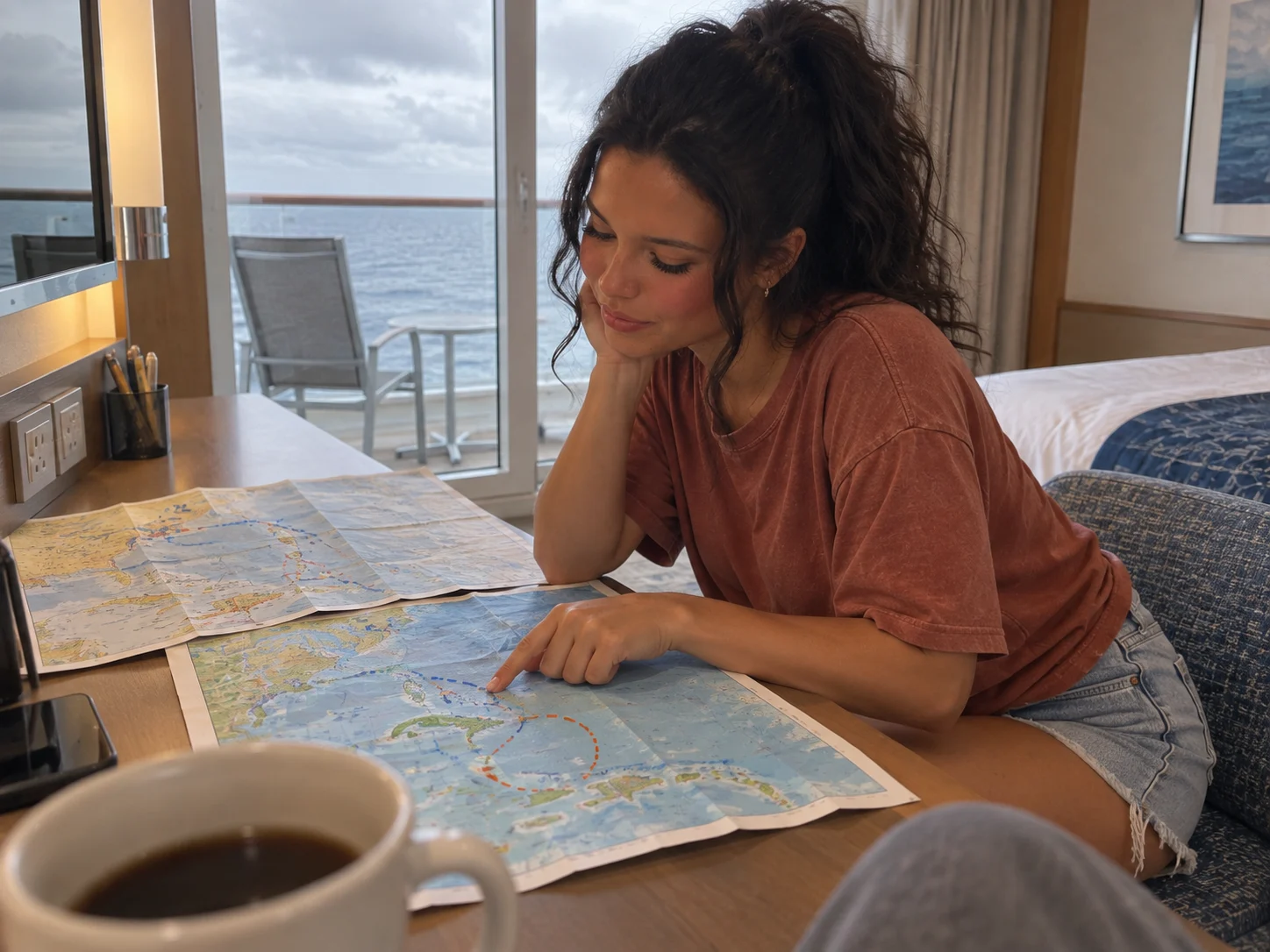
How to choose the best itinerary pair
Start with different ports, then check cabin continuity, price, and turnaround logistics. Two attractive fares are not a smart pair when they repeat every stop and force a cabin move for only a small savings.
- Compare the complete port lists and sea days.
- Confirm that one cabin is available on both sailings.
- Add both deposits, taxes, service charges, and package costs.
- Verify documents and any U.S. coastwise issue.
- Link the bookings and save written confirmation.
- Recheck ship, cabin, and itinerary changes before final payment.
Use a separate page for each segment in a cruise planning worksheet. That simple separation keeps dining reservations, credits, excursion times, and final-payment dates from bleeding into the wrong week.
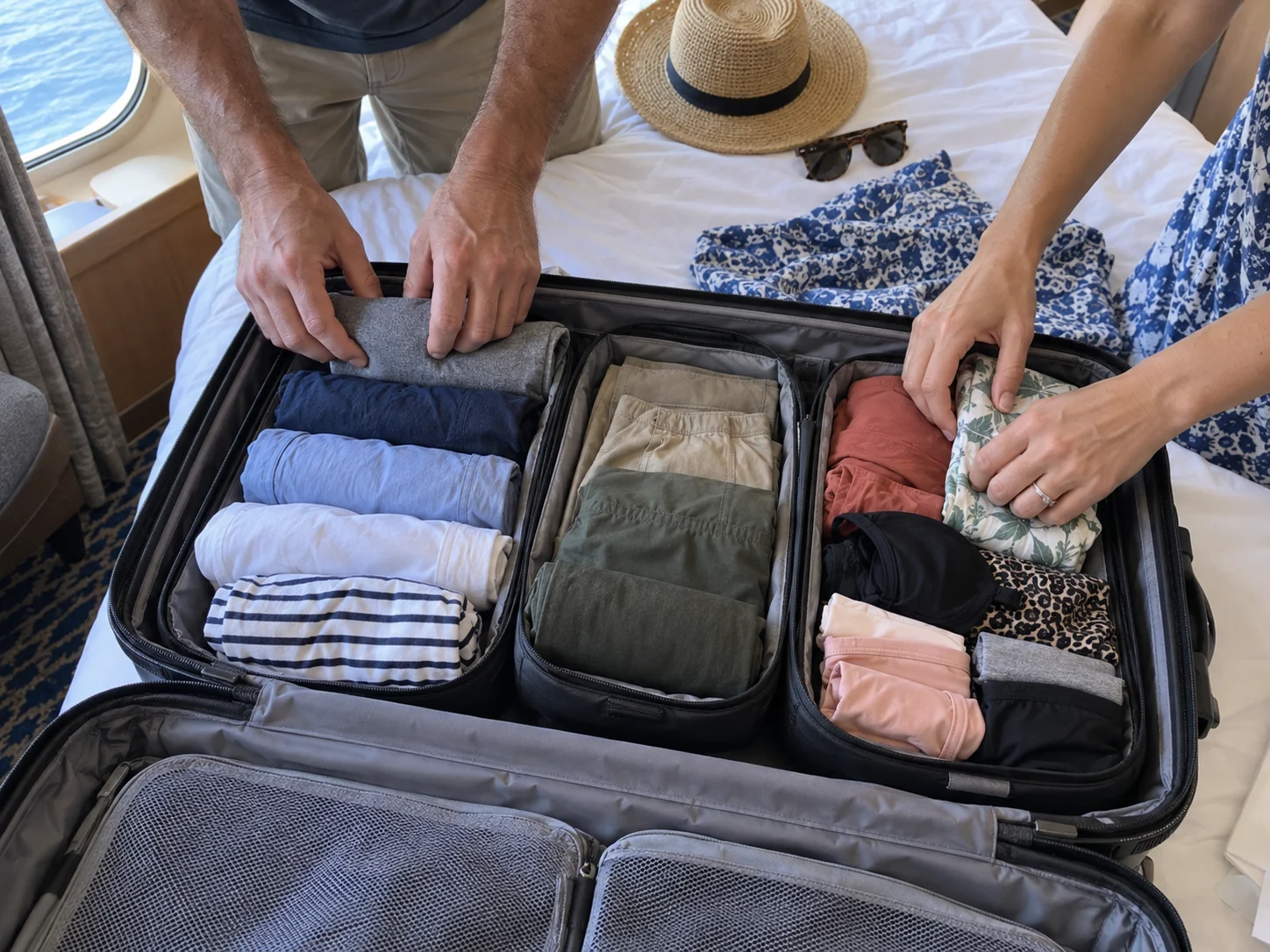
Packing for two cruises without two suitcases
Build a capsule wardrobe around repeatable colors and plan one laundry point near the middle. Check whether the ship offers self-service machines, a paid wash-and-fold bag, or loyalty laundry before deciding how much to bring.
Pack for the combined weather range, not just the first itinerary. An Alaska northbound-and-southbound pair may need the same layers, while a repositioning combination can move from cool mornings to genuinely hot afternoons.
Keep prescription medication for the full journey plus a reasonable disruption buffer. My first-cruise planning steps also cover arriving early and protecting the pieces outside the cruise fare.
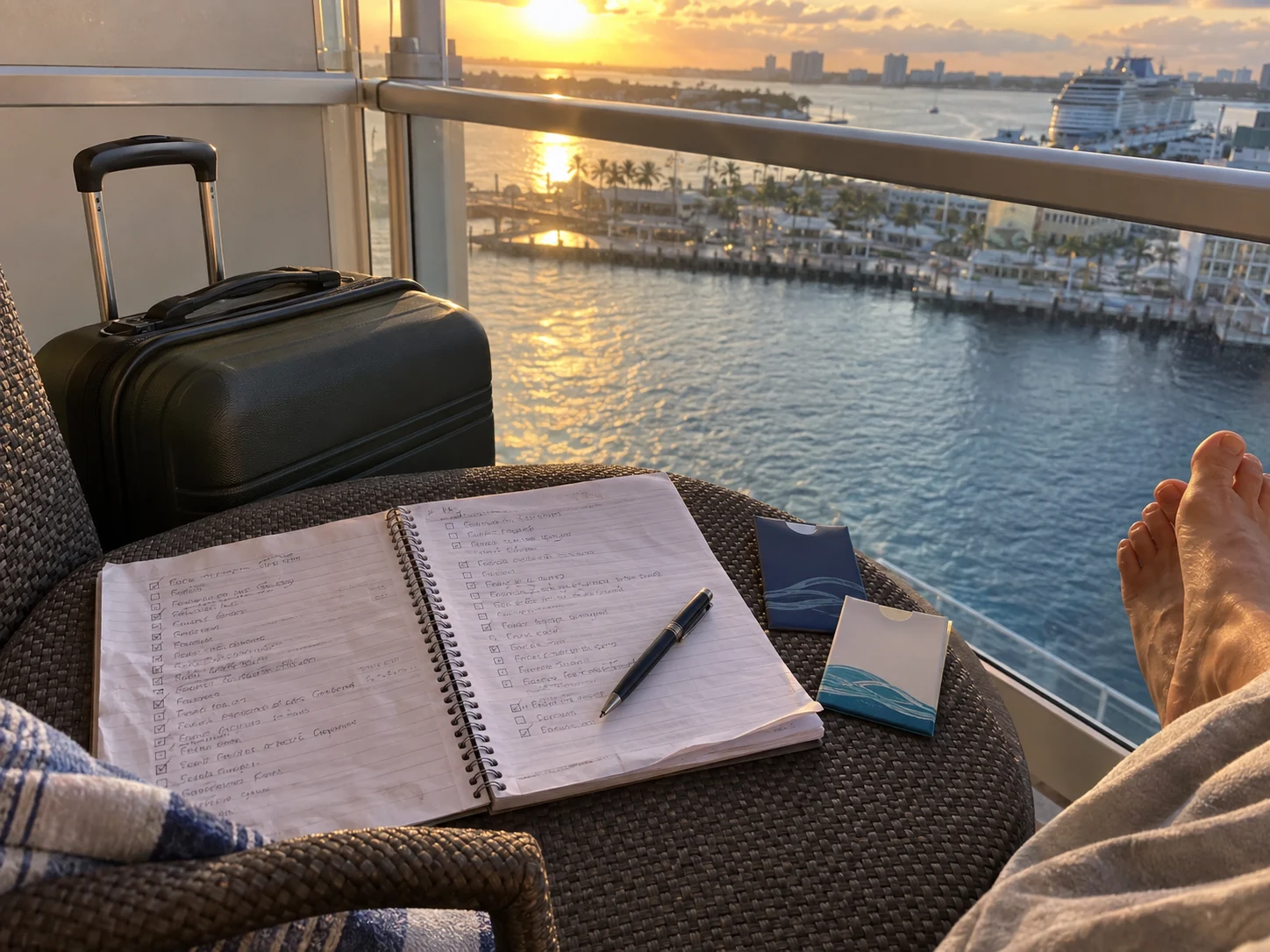
Back-to-back cruise checklist
- Two booking numbers saved offline
- Same cabin confirmed, or a written moving plan
- Reservations marked as consecutive
- Online check-in completed for both segments
- Documents verified for the combined itinerary
- Packages and onboard credits checked separately
- First account reviewed before it closes
- Turnaround letter received and understood
- Second muster requirement completed
- Laundry and medication planned for the full trip
Final recommendation
The sweetest back-to-back cruise uses the same ship and cabin for two meaningfully different itineraries. It gives you a longer vacation without doubling the hardest parts of getting there.
Book only after treating each segment as a separate contract and the entire sequence as one travel plan. When the cabin, documents, legal route, costs, and turnaround instructions all line up, unpack once and enjoy the rare pleasure of not going home with everyone else.