How to Plan a Road Trip with Dogs
A road trip with a dog can be ridiculously fun right up until you realize the hotel has a surprise weight limit, the beach bans dogs, and the restaurant patio you counted on does not actually allow them.
I plan the trip around what the dog can safely do with us, because “pet-friendly” is not very helpful when the dog spends half the vacation waiting for the humans to finish something.
First, Decide Whether Your Dog Actually Likes Road Trips
Some dogs settle into the car immediately, while others pant, drool, pace, vomit, or become increasingly stressed. I would find that out on a short drive before building a twelve-hour vacation around the assumption that the dog loves travel.
The American Veterinary Medical Association recommends acclimating pets with shorter car rides before a long trip and discussing motion sickness or other health concerns with your veterinarian. Its traveling with pets guide is a useful starting point.
Talk to Your Veterinarian Before a Big Trip When Appropriate
I would check with the dog’s veterinarian before a long trip when the dog is very young, senior, has chronic medical issues, gets carsick, becomes highly anxious in the vehicle, or needs medication. Travel can change feeding, exercise, temperature exposure, and access to normal care.
Do not start a new sedative or motion-sickness medication based on internet advice. Your veterinarian can tell you what is appropriate for your specific dog and how to use it safely.
Check State Entry Requirements
Domestic pet travel is not governed by one simple nationwide rule. USDA APHIS says destination states and territories can set their own animal-health requirements, including possible vaccination, testing, treatment, or health-certificate rules.
Use the current USDA interstate pet travel page to reach the requirements for the places you are visiting. I check this before departure rather than assuming a neighboring state has identical rules.
International Road Trips Need Much More Lead Time
Crossing into Canada, Mexico, or another country with a dog can involve destination-specific microchip, vaccination, treatment, certificate, or documentation rules. Requirements can also depend on how you plan to return to the United States.
USDA APHIS recommends contacting a USDA-accredited veterinarian as soon as you decide to travel internationally because some requirements take time. Its international pet travel overview walks through the process.
Secure the Dog in the Car
I do not let a dog ride loose in the driver’s lap or roam into the footwell. A secure travel crate or properly used vehicle restraint keeps the dog from interfering with driving and reduces chaos during a sudden stop.
AVMA advises restraining pets during car travel and keeping them away from a passenger seat with an active airbag. Choose a setup that fits your dog’s size, the vehicle, and the manufacturer’s instructions, then practice with it before the trip.
Do Not Let the Dog Ride With Its Head Out the Window
I know it looks joyful, but AVMA warns that debris can injure a dog’s eyes, ears, or nose. An open window also creates an escape risk during stops or unexpected events.
I crack a window only when it is safe and the dog remains secured well away from the opening. The goal is fresh air, not recreating a movie scene.
Never Leave the Dog in a Hot Car
A parked vehicle can heat dangerously fast, even on a day that does not feel extreme outside. I do not treat shade, cracked windows, or “just ten minutes” as reliable safety strategies.
If an attraction does not allow dogs, I either use safe pet care, choose a hotel policy that permits the dog to remain alone under appropriate conditions, split up briefly, or skip the attraction. The itinerary has to work with the dog that is actually traveling.
Plan More Breaks Than the Humans Need
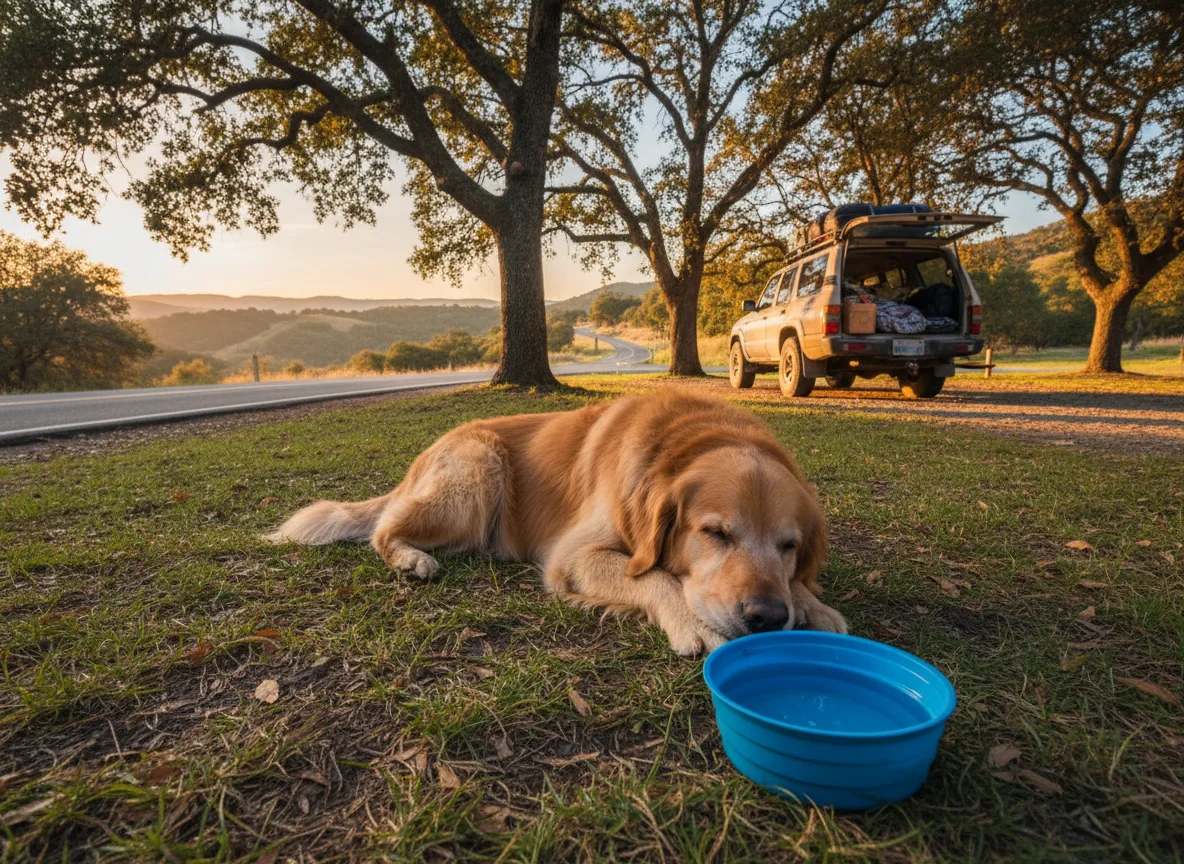
I build dog breaks into the route before everybody becomes desperate for one. The exact frequency depends on the individual dog’s age, health, routine, and comfort in the car.
Stops should include water, a bathroom break, and enough walking or sniffing to let the dog decompress. A patch of grass beside a busy fuel pump is sometimes necessary, but I prefer parks and quiet rest areas when the route offers them.
Keep the Daily Driving Shorter
A six-hour drive can become eight once the dog gets appropriate breaks, and I plan as though that is normal rather than a delay. That is another reason I avoid huge transfer days on pet trips.
My road trip route guide works especially well for dogs because it favors fewer hotel changes and shorter sightseeing drives.
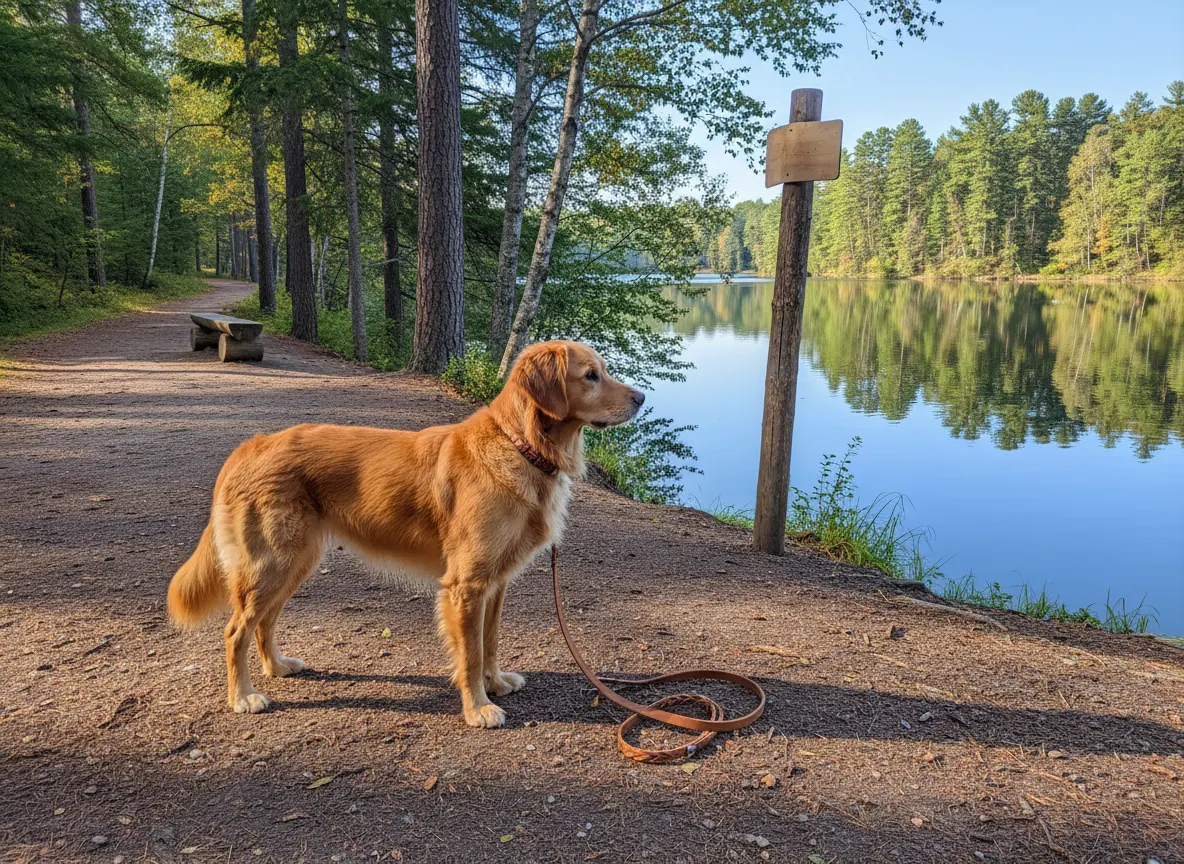
Choose a Route Where the Dog Can Participate
I would rather take a dog to Door County, the Northwoods, a river-road route, or a dog-friendly coastal region than build a vacation around museums and attractions where pets cannot join. The destination should fit the traveler, and the dog is one of the travelers.
My dog-friendly Midwest road trips are built around routes where outdoor time is a real part of the day.
National Park Rules Vary Widely
Pets may be welcome in campgrounds, roads, parking areas, or certain trails while being prohibited from most backcountry paths, buildings, or wildlife-sensitive areas. Never assume one national park’s rule applies to another.
The National Park Service’s B.A.R.K. Ranger guidance emphasizes bagging waste, always leashing, respecting wildlife, and knowing where pets can go. I check the individual park page before putting a dog-dependent activity on the itinerary.
State Park Rules Vary Too
Many state parks welcome leashed pets on numerous trails while restricting beaches, buildings, picnic areas, or specific nature preserves. Some have designated dog swim areas or dog beaches.
I check the state park system and the specific park. “Dogs allowed in the park” is not enough information if the only beach I planned to visit is the one area where they are prohibited.
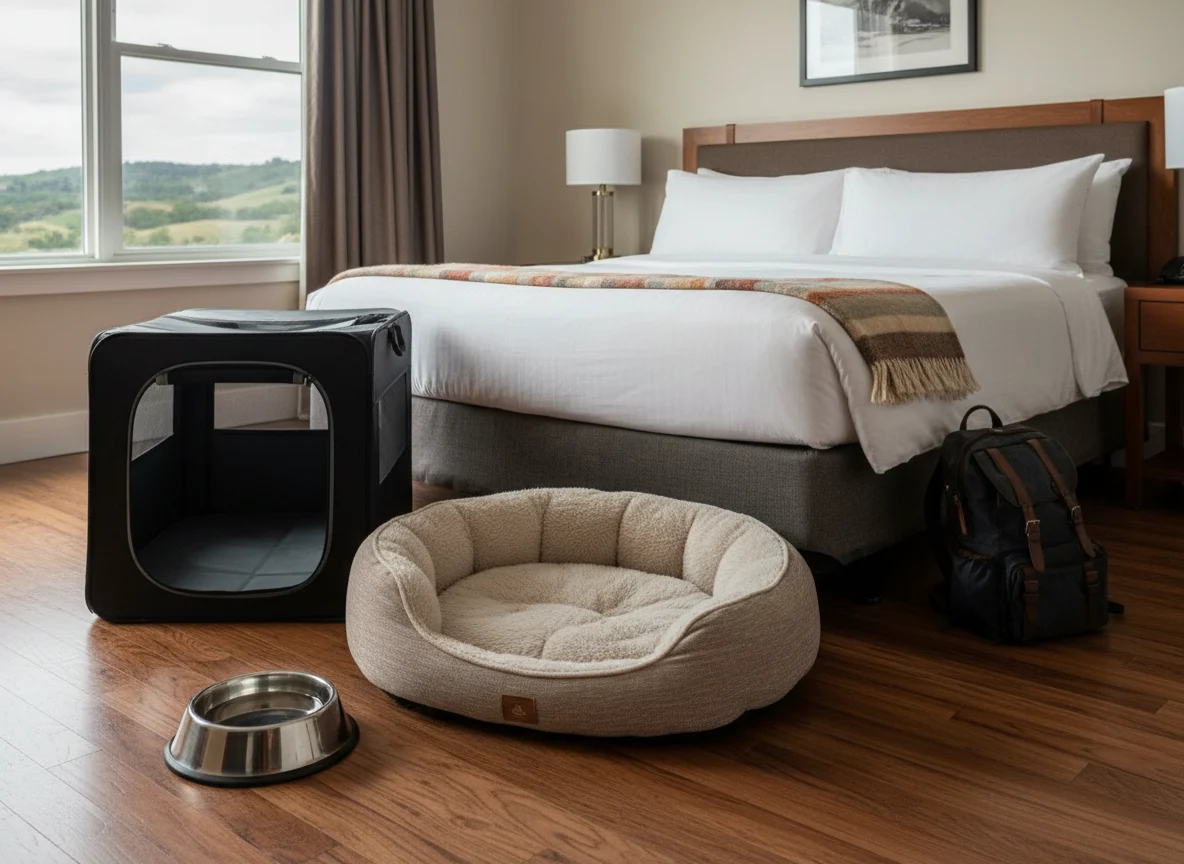
Read the Entire Hotel Pet Policy
I check the fee, weight limit, breed restrictions, number of pets, permitted room types, unattended-pet policy, and where the nearest safe walking area is. A hotel can be technically pet-friendly and still be terrible for the dog you are bringing.
My road trip hotel guide explains how I choose the location too. With a dog, a ground-floor room near grass can be more valuable than a prettier room on the tenth floor.
Do Not Assume the Dog Can Stay Alone in the Room
Some hotels prohibit unattended pets completely, while others require crating, a phone number, specific hours, or a pet-sitting arrangement. This single rule can determine whether dinner or an indoor attraction is possible.
I verify it before booking when I know the humans will need any dog-free time. I do not wait until check-in to discover the dog must accompany us everywhere.
Vacation Rentals Can Be Easier and Harder
A cabin or rental can give the dog more space, quieter surroundings, and direct outdoor access. It can also have strict pet counts, cleaning rules, unfenced property, wildlife, or an owner who does not permit the dog to remain alone.
Read the contract and property description carefully. “Pet-friendly” does not tell you whether there is a fenced yard or a highway twenty feet from the front door.
Bring the Dog’s Normal Food
I bring enough of the dog’s usual food for the trip plus a little extra. Vacation is not the moment I want to discover that a sudden diet change and six hours in the car are a bad gastrointestinal combination.
Store food securely and keep feeding times reasonably close to normal. AVMA also recommends maintaining familiar feeding routines during travel.
Carry More Water Than You Think You Need
I keep dog water accessible rather than buried under luggage. Heat, dry climates, hiking, stress, and unfamiliar water availability can all increase how quickly you use it.
Bring a bowl the dog already knows or a travel bowl you have tested at home. The cleverest collapsible bowl in the world is useless if your dog treats it like suspicious camping equipment.
Pack the Medical and Identification Basics
- Regular medications
- Vaccination information
- Veterinarian contact information
- Microchip information if applicable
- Current ID tag
- Any required travel certificate or destination paperwork
- Basic first-aid supplies recommended by your veterinarian
I save digital copies and keep any legally required originals where I can reach them. A document that exists only on a phone with no service is not the backup I want at a border or emergency clinic.
Find Emergency Veterinary Care Before You Need It
For remote routes, I note the nearest emergency or after-hours veterinary options before the trip. I do not need to memorize them, but I want to know whether emergency care is twenty minutes away or two hours away.
This matters even more with a senior dog or a destination far from large towns. The information may never be used, which is exactly how I hope the plan goes.
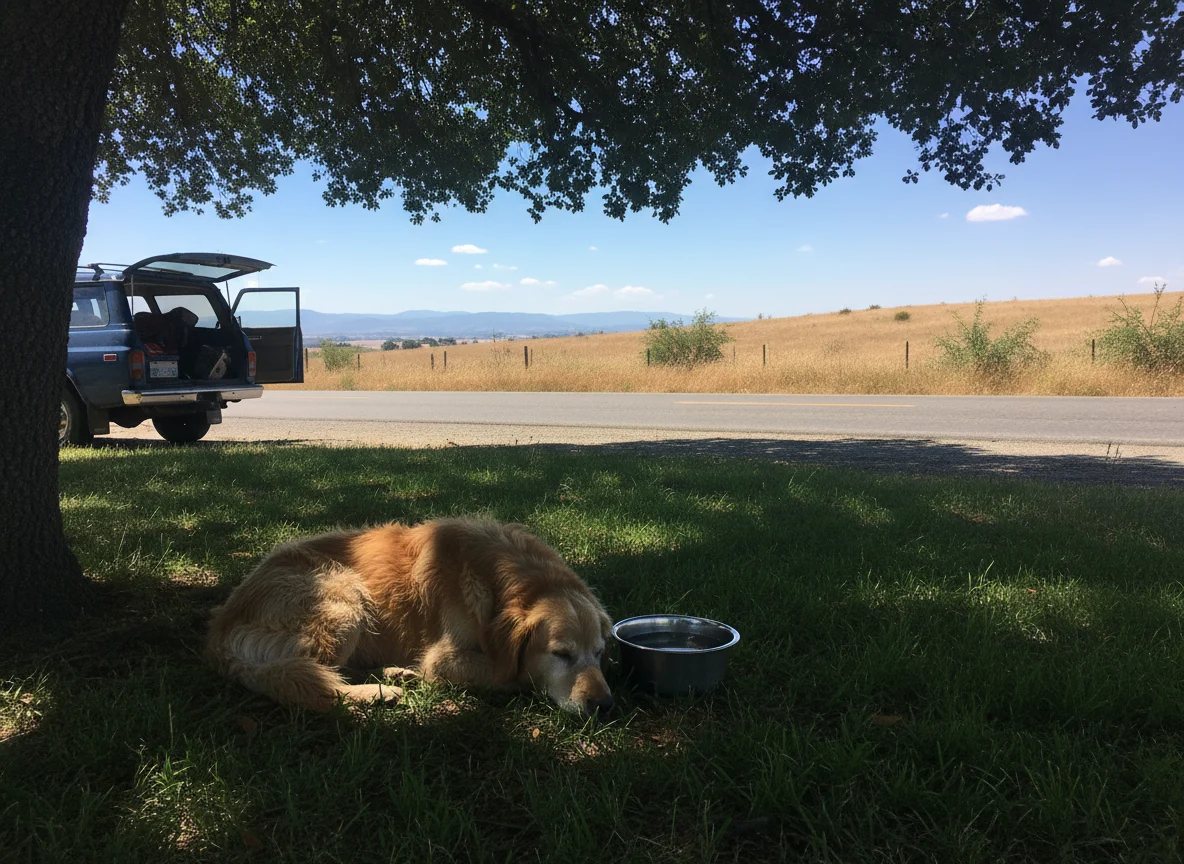
Watch Paws in Hot Weather
Hot pavement, sand, and exposed rock can become uncomfortable or dangerous long before the air temperature feels extreme. I shift walks to cooler times of day and use shaded or natural surfaces when available.
If the dog is showing signs of overheating or distress, the activity ends. A planned scenic walk is never important enough to keep pushing an animal that is struggling.
Cold Weather Needs Its Own Plan
Snow, ice, road salt, cold wind, and frozen surfaces can create different problems. Dogs vary enormously in cold tolerance, coat type, age, and medical needs.
I bring whatever protective gear the dog already uses comfortably and keep a towel in the car. I do not introduce complicated boots for the first time in a snowy trailhead parking lot.
Wildlife Changes the Walk
A dog can attract or disturb wildlife, and wildlife can injure dogs. I keep the dog leashed where required and use extra caution around bears, bison, elk, snakes, coyotes, and nesting or shorebird areas.
Do not let a dog approach wildlife because the animal seems calm. Park and land-manager rules are the minimum, not a guarantee that an encounter is safe.
Do Not Let the Dog Drink From Every Lake or Stream
Natural water can carry pathogens, harmful algae, contaminants, or other hazards that are not obvious from appearance. I bring drinking water rather than assuming a clear mountain stream is a dog fountain.
Pay attention to local advisories around beaches and lakes too. Harmful algal blooms can affect pets very quickly.
Restaurants Need a Backup Plan
Outdoor seating does not automatically mean dogs are allowed, and policies can depend on local law or the restaurant itself. I confirm when a specific meal matters.
My backup is usually takeout, a picnic, or one person picking up food while the other stays with the dog. That is much less frustrating than discovering the patio rule at 7 p.m. when everybody is hungry.
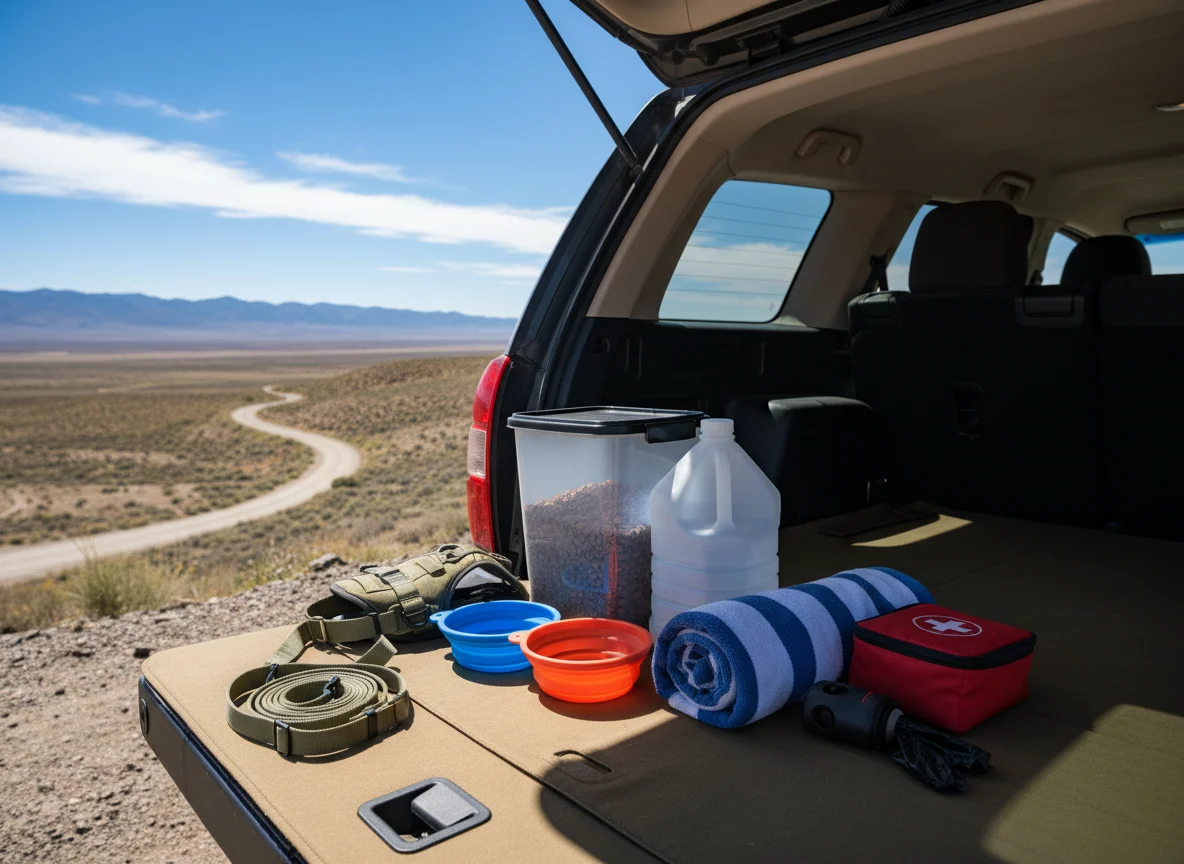
My Dog Road Trip Packing List
- Food plus extra
- Water
- Food and water bowls
- Leash and backup leash
- Harness or travel restraint
- Crate when used
- Waste bags
- Medications
- Vaccination and travel documents
- Bed or familiar blanket
- Towels
- Favorite toy or chew
- Cleaning supplies
- Weather-appropriate gear the dog already knows
Keep the Routine More Normal Than You Think
I try to keep feeding, walks, bedtime, and breaks somewhat familiar even when the scenery changes every day. Predictability can help a dog settle into the travel routine.
That is another reason I prefer staying two nights in the same hotel. The dog gets at least one morning where the room and hallway are no longer completely new.
My Favorite Dog-Friendly Road Trip Rhythm
I keep driving days shorter, stay in one base for two or three nights, make the first activity outdoors, return to the hotel for a midday rest when needed, and use evenings for walks or takeout. That routine gives the dog real participation without forcing every human plan to become a dog activity.
A road trip with a dog should feel like bringing a favorite travel companion, not managing a moving set of restrictions. Choose the route accordingly and the entire trip becomes easier.