Road Trip Food Ideas: Cooler Meals, Easy Snacks, and Picnic Lunches
I want road trip food to save me from a sad gas-station lunch, not turn the vacation into a mobile meal-prep challenge with seventeen containers nobody wants to wash.
My sweet spot is a small cooler, a few genuinely good snacks, simple breakfasts, and enough picnic options that I can eat somewhere beautiful when the restaurant situation is terrible.
A Simple Road Trip Food System
I pack food in three groups: shelf-stable snacks, cold food for the next day or two, and emergency meals that require almost no thought. Then I deliberately leave room for bakeries, farm stands, cheese shops, roadside fruit, and whatever local food makes the trip more interesting.
I am not trying to avoid restaurants. I am trying to make sure I never choose a bad restaurant simply because everyone in the car is suddenly starving.
My Favorite Shelf-Stable Snacks
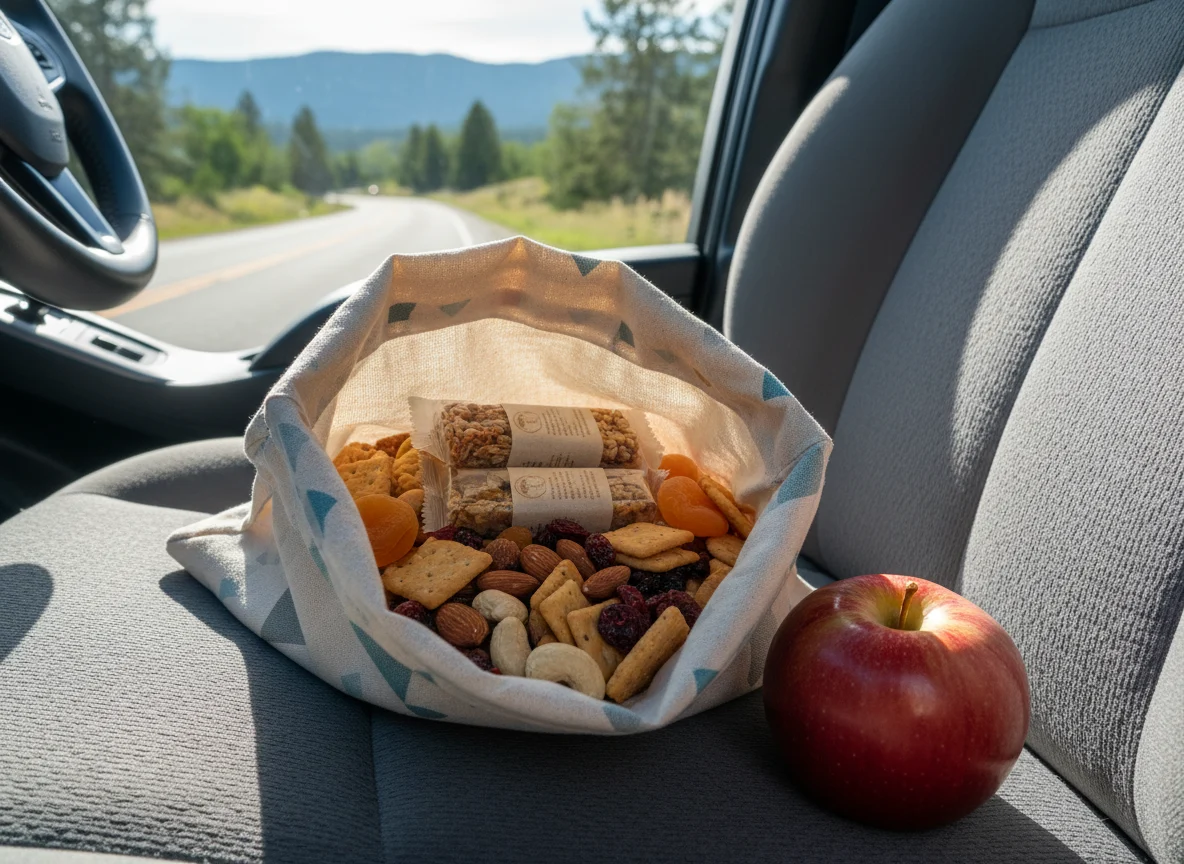
- Trail mix
- Nuts
- Granola or snack bars
- Crackers
- Pretzels
- Popcorn
- Dried fruit
- Apples or oranges
- Peanut or nut butter packets
- Jerky if you eat it
- Individually wrapped chocolate for the emergency-dessert category
I prefer snacks that do not crumble into every surface of the car or require refrigeration. Anything covered in powdered sugar, neon cheese dust, or an unrealistic amount of chocolate gets judged more harshly once it has spent three hours in a warm cup holder.
Keep One Snack Bag in the Car, Not the Trunk
The easy-access bag holds whatever people will want while driving. The rest can stay packed away so the cabin does not slowly fill with open food packages.
My road trip packing list uses the same idea for jackets, chargers, and other things you do not want to dig out at every stop.
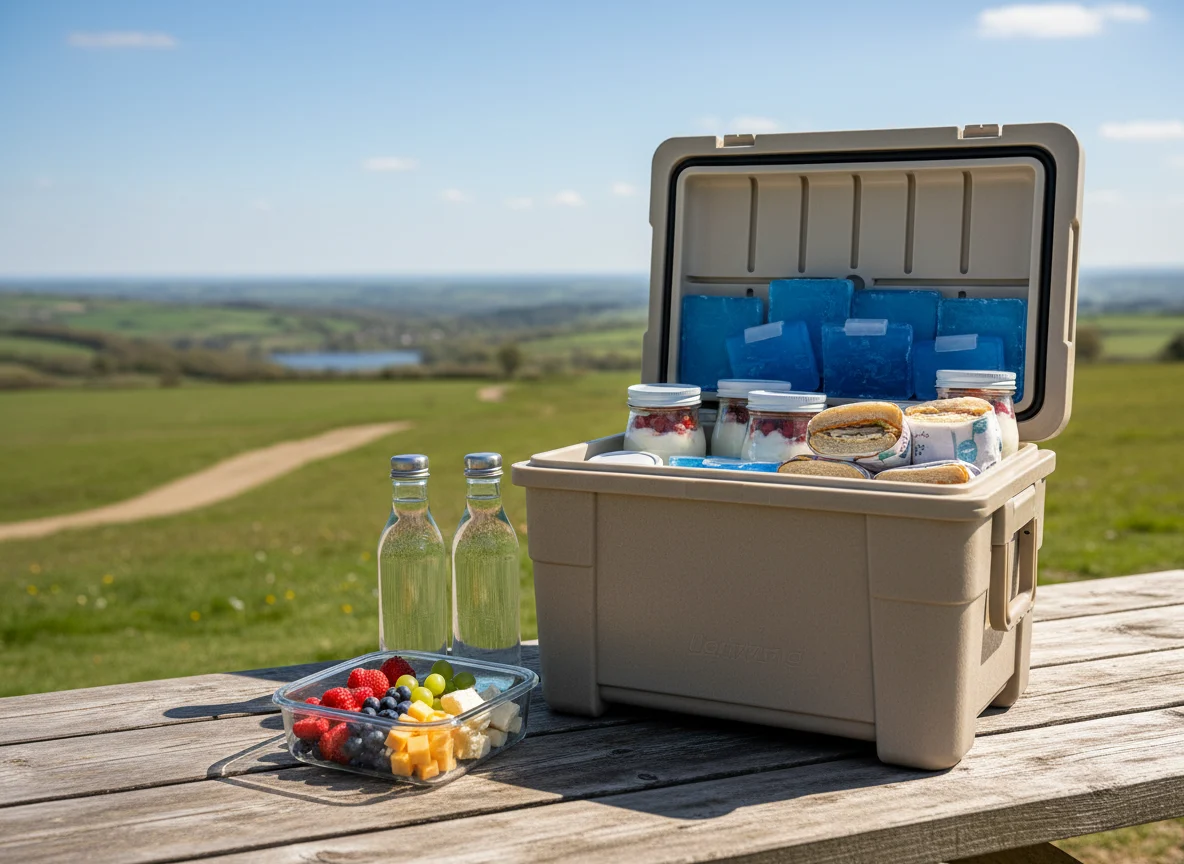
What Goes in My Cooler
- Cheese
- Hummus
- Greek yogurt
- Hard-boiled eggs
- Cut vegetables
- Berries or grapes
- Deli meat when I know I can keep it safely cold
- Prepared sandwiches for the first day
- Leftovers I genuinely plan to eat
- Cold drinks
The U.S. Department of Agriculture recommends keeping cold perishable food at 40°F or below. Its outdoor food-safety guidance recommends ice or frozen gel packs and keeping the cooler closed and shaded as much as possible.
The Food-Safety Rule I Do Not Improvise
USDA identifies 40°F to 140°F as the temperature “danger zone” where bacteria can multiply quickly. Perishable food should not sit unrefrigerated for more than two hours, or more than one hour when the temperature is above 90°F.
That means a turkey sandwich spending all afternoon on the back seat is not “probably fine” because the car had air-conditioning earlier. The USDA danger-zone guidance is the rule I follow.
Use Two Coolers on Longer Trips
USDA suggests separating drinks and frequently accessed items from more perishable food when practical because every cooler opening lets warm air inside. On a multi-day trip, that is one of the rare food-safety suggestions that also makes the car more organized.
I use one small easy-access cooler and keep the more temperature-sensitive food packed tightly in the colder one. This is especially useful in summer.
My Favorite Easy Road Trip Breakfasts
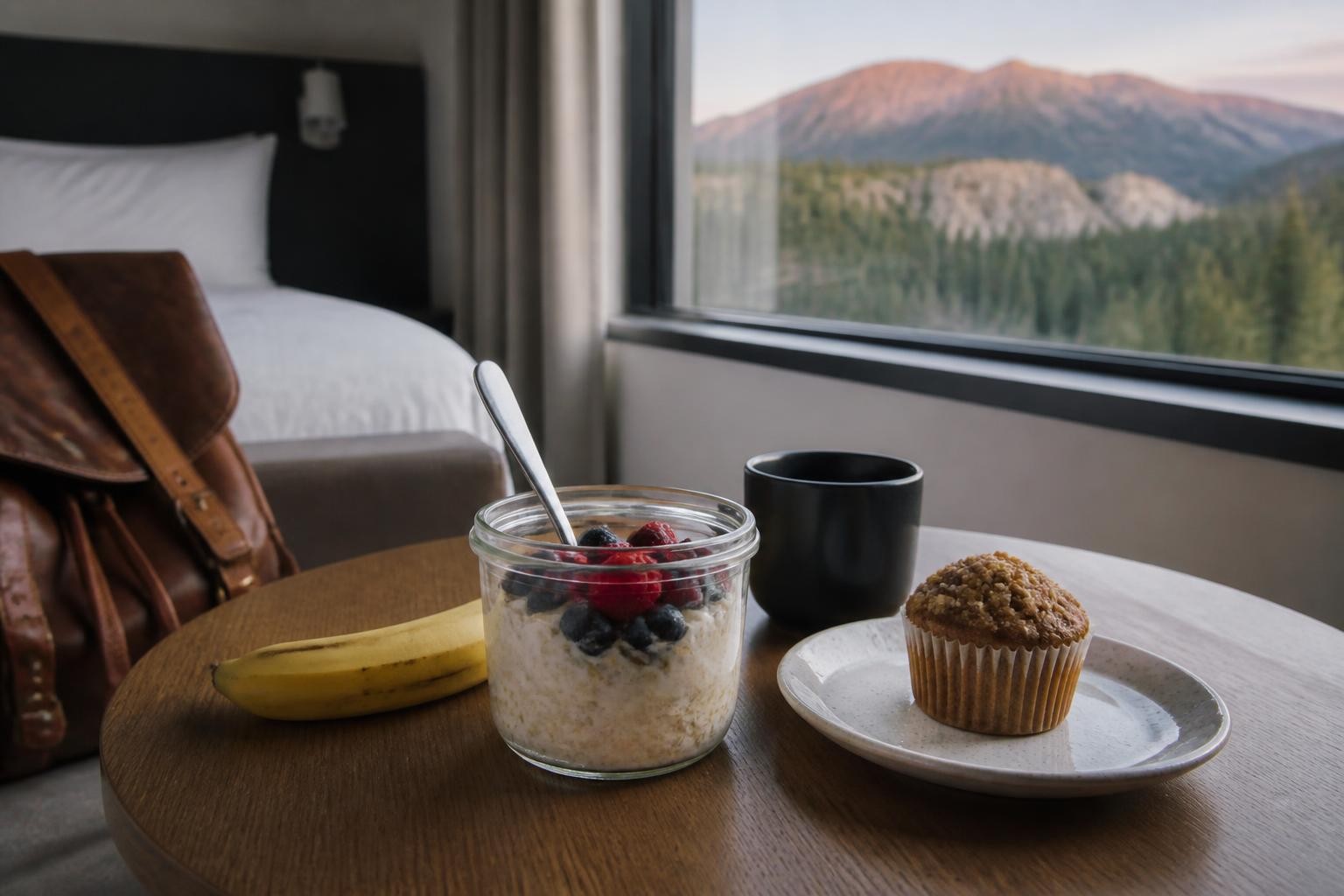
- Yogurt, berries, and granola
- Banana with peanut butter
- Bagel or English muffin with cream cheese
- Overnight oats when the hotel has a refrigerator
- Hard-boiled eggs and fruit
- Bakery breakfast bought the night before
- Instant oatmeal when the hotel has hot water or a microwave
I use simple breakfasts on early park mornings, ferry days, or transfer days when sitting in a restaurant would steal the best part of the morning. I happily go out for breakfast when the bakery or diner is part of why I chose the town.
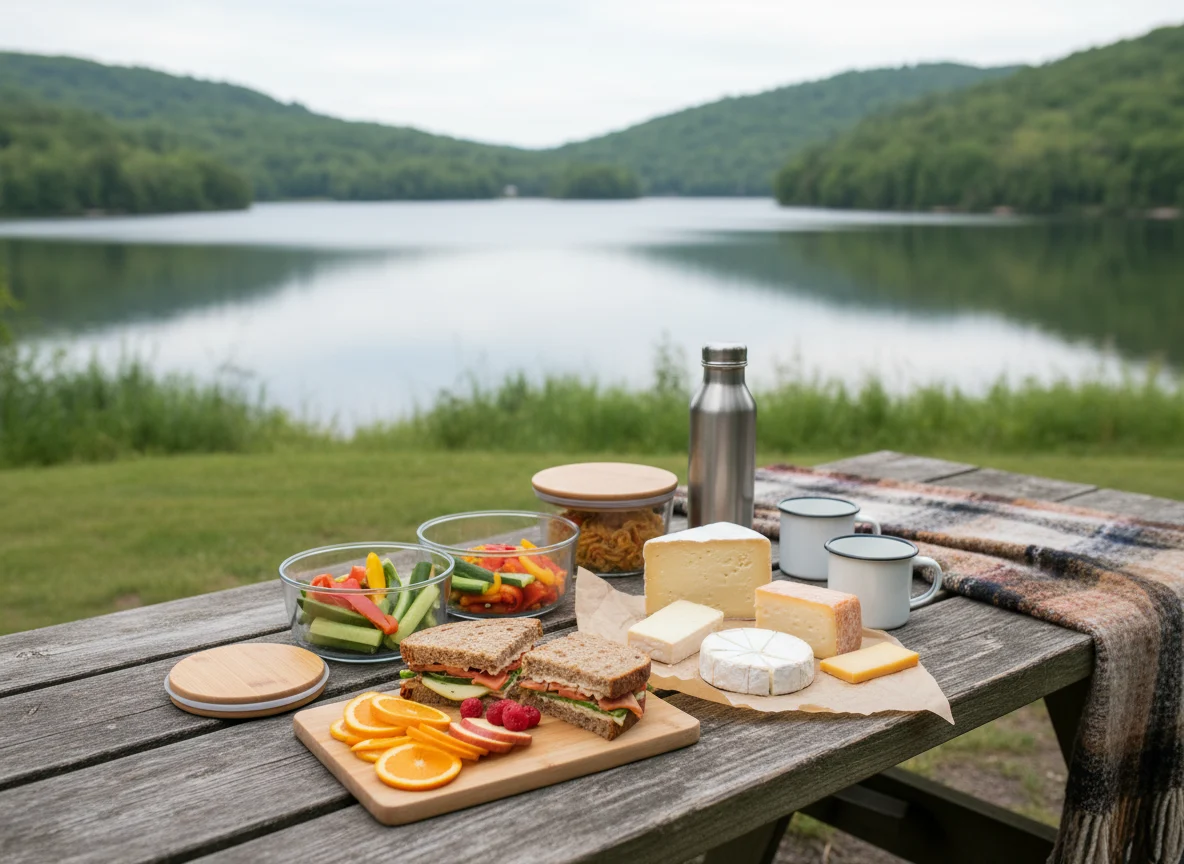
Easy Picnic Lunch Ideas
- Turkey, cheese, mustard, and lettuce wraps
- Hummus, vegetables, pita, and olives
- Cheese, crackers, fruit, and nuts
- Chicken salad and bread kept properly cold
- Caprese sandwiches with chilled mozzarella
- Cold pasta salad with vegetables
- Peanut butter and banana sandwiches
- Prepared grocery-store salad plus bread
I like lunches that can be eaten at a picnic table without needing a knife collection and a fully equipped kitchen. The view should be the complicated part.
A Grocery Store Is a Road Trip Attraction in Disguise
I stop at local grocery stores every few days because they solve breakfast, picnic, ice, water, fruit, and snack problems in one visit. They can also be a surprisingly good way to find regional food without another restaurant reservation.
A grocery run is especially useful on national-park routes, island trips, and remote coastlines where dining options become limited after a certain hour. I restock before the route gets quiet, not once I am already hungry in a town with one closed café.
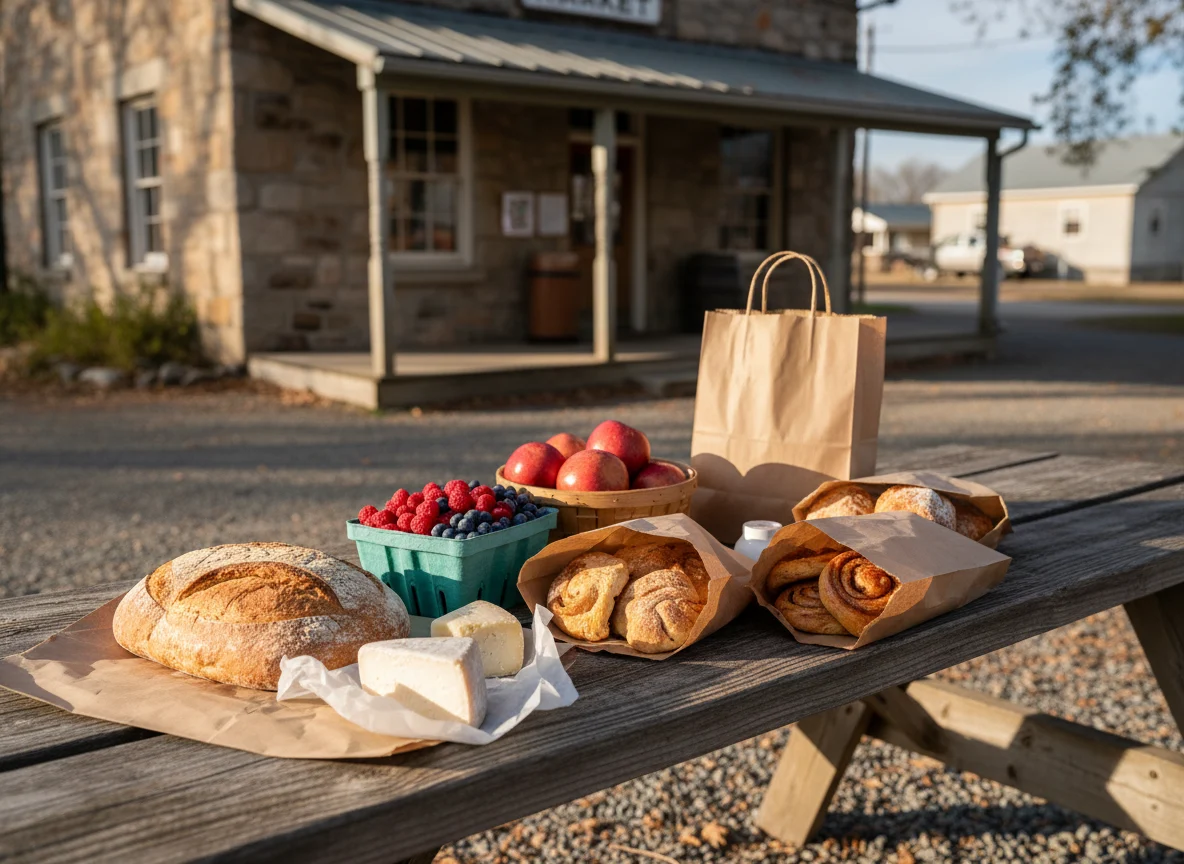
Build a Picnic From Local Food
Some of my favorite road trip meals barely qualify as cooking. Wisconsin cheese, a bakery loaf, local fruit, cured meat, jam, and something cold to drink can turn a roadside stop into a meal I remember more than another sit-down lunch.
This is exactly why I leave cooler space open at the beginning. My Wisconsin cheese road trip would be much less fun if the cooler were already packed to the lid with food from home.
Food for Hotel Rooms With No Kitchen
A refrigerator and microwave can make road-trip eating much easier, but I do not assume the room has either. I check the hotel amenities before buying food that depends on equipment I may not have.
Without a kitchen, I rely on sandwiches, salads, fruit, yogurt, bakery items, takeout, and shelf-stable snacks. I do not bring a suitcase full of countertop appliances to solve a problem restaurants already solved.
What I Buy Instead of Pack
I usually buy bread, delicate fruit, dairy, and most prepared foods during the trip instead of hauling a week’s supply from home. That keeps the cooler manageable and creates reasons to stop at local markets.
I also buy water as needed when refilling is not practical. A car full of heavy bottled water at the start of a two-week trip is not my idea of organized packing.
My Emergency Meal
I keep one meal in reserve that can be eaten without refrigeration, cooking, or a functioning restaurant. Crackers, nut butter, tuna or another shelf-stable protein, fruit, and a snack are not glamorous, but they solve the evening when everything closes early.
I call this emergency dinner rather than pretending it is a carefully curated charcuterie experience. Its only job is preventing hunger from making bad decisions.
Do Not Put Every Snack in Individual Plastic Bags
I use reusable containers or larger bags where practical because road trips create enough trash without individually packaging every almond. A small trash bag in the car helps more than another organizer.
I still use single-serve items when they make sense for hygiene, allergies, or a group where everyone wants different things. The goal is useful, not morally perfect snack logistics.
Pack for the Climate
Chocolate, soft cheese, and anything oily behave differently in Arizona than they do beside Lake Superior. I adjust the food to the season rather than assuming the cooler will solve every temperature problem.
In extreme heat, I lean more heavily on shelf-stable food and keep the cooler out of direct sun. USDA recommends shading or insulating the cooler and replenishing cold sources as needed.
Raw Meat Is a Separate Problem
If I bring raw meat for a cabin or campground, I keep it securely wrapped and below ready-to-eat food so leaking juices cannot contaminate everything else. USDA recommends a separate cooler for raw meat when practical.
For a normal hotel road trip, I usually skip transporting raw meat entirely. Buying it near the place where I plan to cook is simpler and safer.
What About Leftovers?
I save restaurant leftovers only when I know I can refrigerate them quickly and keep them cold afterward. A box that sits in the car through two more attractions is no longer a bargain lunch for tomorrow.
If the hotel has a refrigerator, I transfer leftovers there when I check in. If not, I either eat them soon or let them go.
Food Stops Should Sometimes Be the Attraction
I do not pack lunch on the day I am excited about a supper club, Cajun restaurant, coastal seafood shack, bakery, or destination diner. Local food is one of the easiest ways for a road trip to stop feeling generic.
My Wisconsin supper club road trip is built around that idea. The cooler supports the trip instead of competing with it.
My Favorite Snack Mix for Long Driving Days
I want something salty, something sweet, something with protein, fruit, and plenty of water. That usually means nuts or jerky, pretzels, fruit, one fun snack, and whatever cold item I can safely keep in the cooler.
I avoid eating continuously simply because food is sitting beside me. A real lunch break gives the driver a useful rest too.
Do Not Eat the Most Complicated Food While Driving
The driver does not need a dripping sandwich, soup, yogurt, or a container requiring two hands. I keep driver food simple and save anything messy for a stop.
If eating distracts you from driving, stop. Arriving ten minutes later is better than becoming a cautionary road-trip story.
My Basic Road Trip Grocery List
- Water
- Fruit
- Cheese
- Crackers or bread
- Hummus
- Cut vegetables
- Yogurt
- Granola
- Nuts
- One sweet snack
- Ice or frozen gel packs
- Paper towels
- Reusable utensils
- Trash bags
How Much Food I Pack
For a three-day trip, I might leave home with almost everything except dinners. For a two-week trip, I leave with perhaps two days of cold food and a larger supply of shelf-stable snacks.
There is no reason to make the car carry fourteen days of bananas. Grocery stores exist in most of the places I am driving.
One More Food-Safety Resource
The USDA’s broader food-safety guidance is worth bookmarking when you are carrying perishables for several days. I use the cooler to make the trip easier, but I do not let saving a leftover sandwich become more important than keeping food safely cold.
The Cooler Should Make the Trip Easier
I know the road trip food plan is working when I can pull into a beautiful park, make lunch in five minutes, and spend the rest of the stop enjoying where I am. I know it is not working when half the trunk has become a pantry I have to reorganize twice a day.
Pack enough food to create freedom. Leave enough empty space to taste the place you actually traveled to see.