Road Trip Packing List: What to Keep in the Car and What to Leave at Home
I love a well-packed road trip, but I do not want the back seat to look like we are evacuating permanently every time we stop for coffee.
The goal is to keep the things you will actually need within reach, put overnight luggage where it is easy to unload, and leave enough empty space for the food, jackets, souvenirs, and random things that somehow multiply once the trip starts.
The Road Trip Packing System I Actually Use
I divide everything into four zones: the front-seat essentials, the easy-access car bag, overnight luggage, and emergency gear. That keeps the charger from ending up under a suitcase and prevents everyone from unpacking the trunk because somebody wants sunscreen.
- Front seat: phone, charger, sunglasses, water, wallet, route notes
- Easy-access bag: layers, rain jacket, sunscreen, snacks, medications, wipes
- Overnight luggage: clothes, toiletries, shoes, hotel items
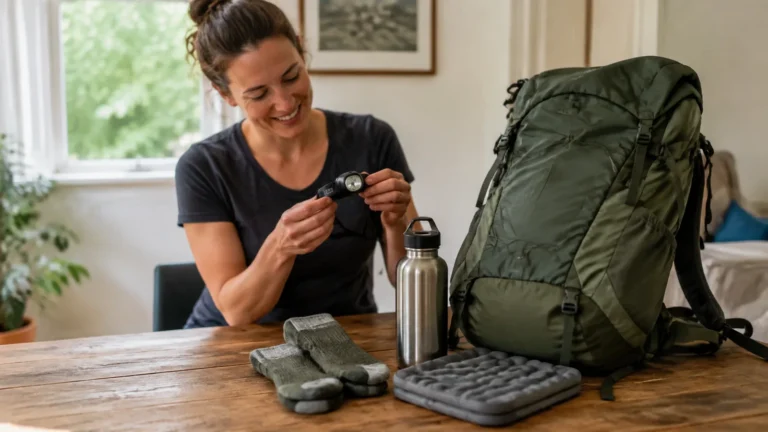
- Emergency gear: roadside supplies, first aid, flashlight, backup water
If you are still figuring out the route itself, my road trip tips cover the planning side. Packing gets much easier once you know whether the trip is beach towns, national parks, mountain roads, or mostly cities.
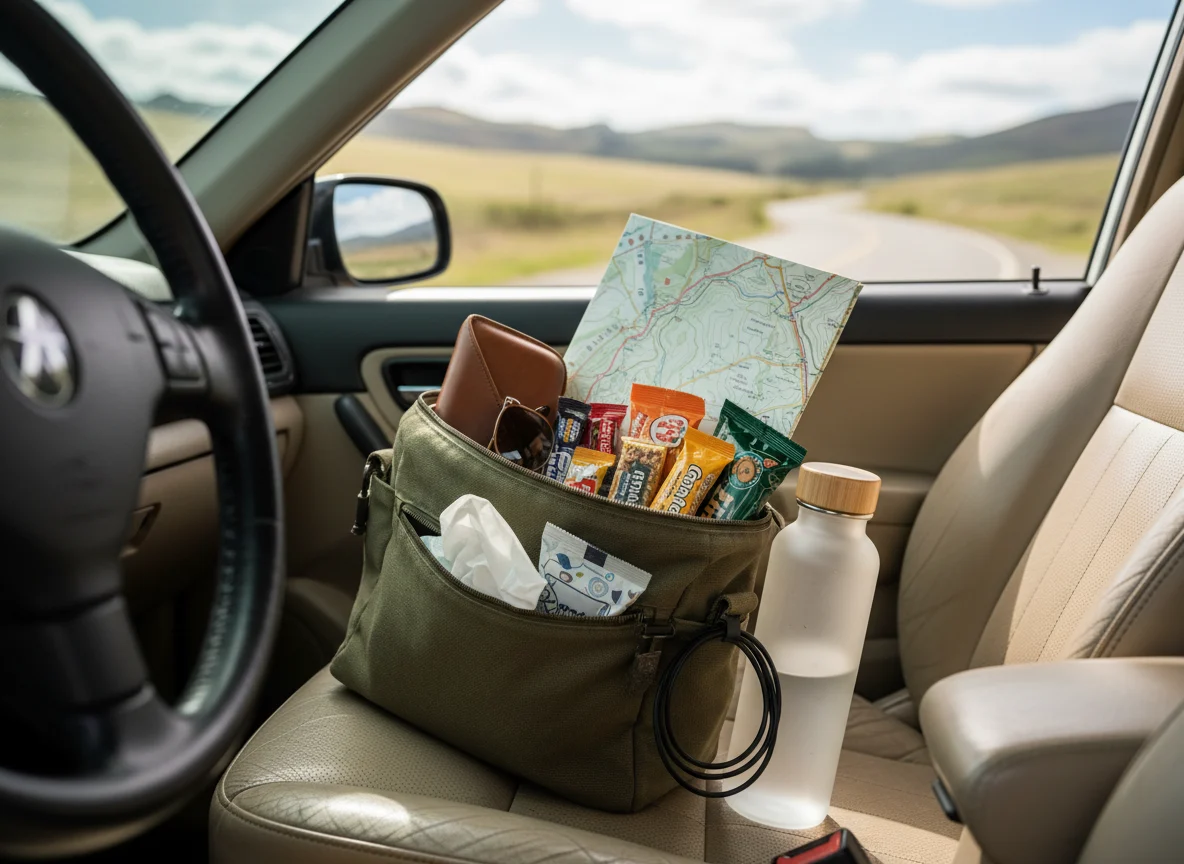
Front-Seat Essentials
These are the things I want without stopping the car or opening the trunk. I keep them in one small tote, console, or door pocket instead of scattering everything across the cabin.
- Phone
- Charging cable
- Car charger or USB adapter
- Sunglasses
- Wallet and driver’s license
- Refillable water bottle
- Small snack
- Lip balm
- Tissues
- Any medication needed during the day
- Downloaded route or offline map
I also keep the next hotel address available offline. If cell service disappears, I want the destination already saved rather than trying to remember whether the inn was on Main Street or South Main Street.
Documents to Carry
You do not need a binder full of printed confirmations for a normal domestic road trip, but I still keep the essentials accessible. For international routes, ferry-heavy trips, or cruises, I carry more redundancy.
- Driver’s license
- Vehicle registration
- Proof of insurance
- Rental agreement when applicable
- Roadside-assistance information
- Hotel confirmations saved offline
- Park permits or reservation confirmations
- Passport and border documents for international trips
I never bury passports or cruise documents in the trunk when a trip depends on them. They stay in the same secure personal bag from the first day to the last.
What Belongs in the Easy-Access Car Bag
This bag is the difference between a comfortable scenic stop and digging through three suitcases beside the highway. I keep it small enough that it does not become another piece of luggage.
- Rain shell
- Warm layer
- Sunscreen
- Bug repellent
- Hat
- Reusable shopping bag
- Hand wipes or sanitizer
- Paper towels
- Basic first-aid items
- Extra socks
- Small towel
- Plastic or reusable bag for wet items
The weather layer changes by trip, but I almost always keep one accessible. Lake Superior, coastal Maine, mountain passes, and air-conditioned museums have all taught me that the forecast does not get the final vote.
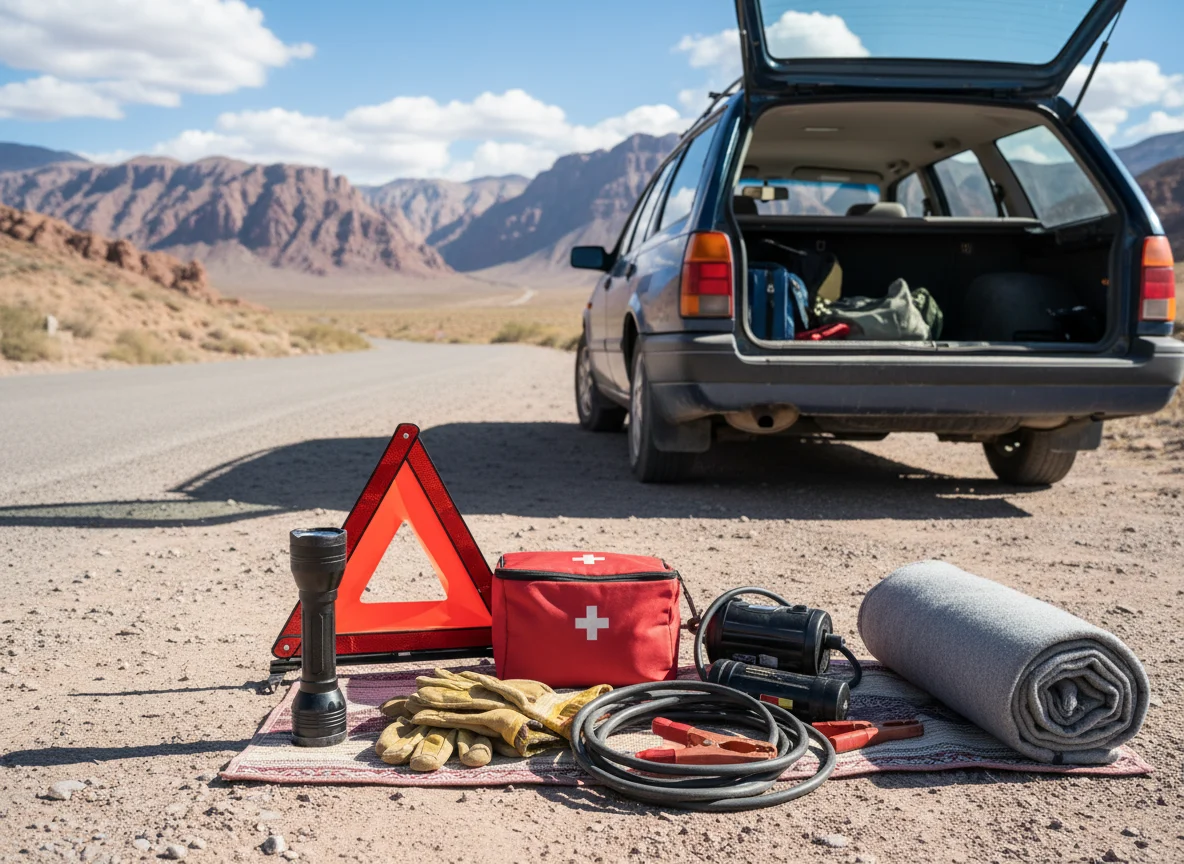
Road Trip Emergency Kit
A practical emergency kit matters far more than the aesthetic organizers that show up in most packing videos. The National Highway Traffic Safety Administration recommends carrying essentials such as a flashlight, jumper cables, warning devices, basic tools, water, food, and supplies appropriate to the season.
Use the current NHTSA driving guidance as a baseline, then add anything specific to your route. Remote winter roads and a summer weekend between Madison and Milwaukee do not require identical kits.
- Flashlight or headlamp
- Jumper cables or a portable jump pack
- Tire gauge
- Portable tire inflator if you carry one
- Reflective triangles or other warning devices
- Basic first-aid kit
- Work gloves
- Water
- Nonperishable food
- Blanket
- Ice scraper in cold seasons
- Whatever tire equipment your vehicle requires
Before a remote road trip, I also make sure I know whether the car has a spare tire, repair kit, or run-flat system. Learning that for the first time beside a flat tire is not my preferred educational experience.
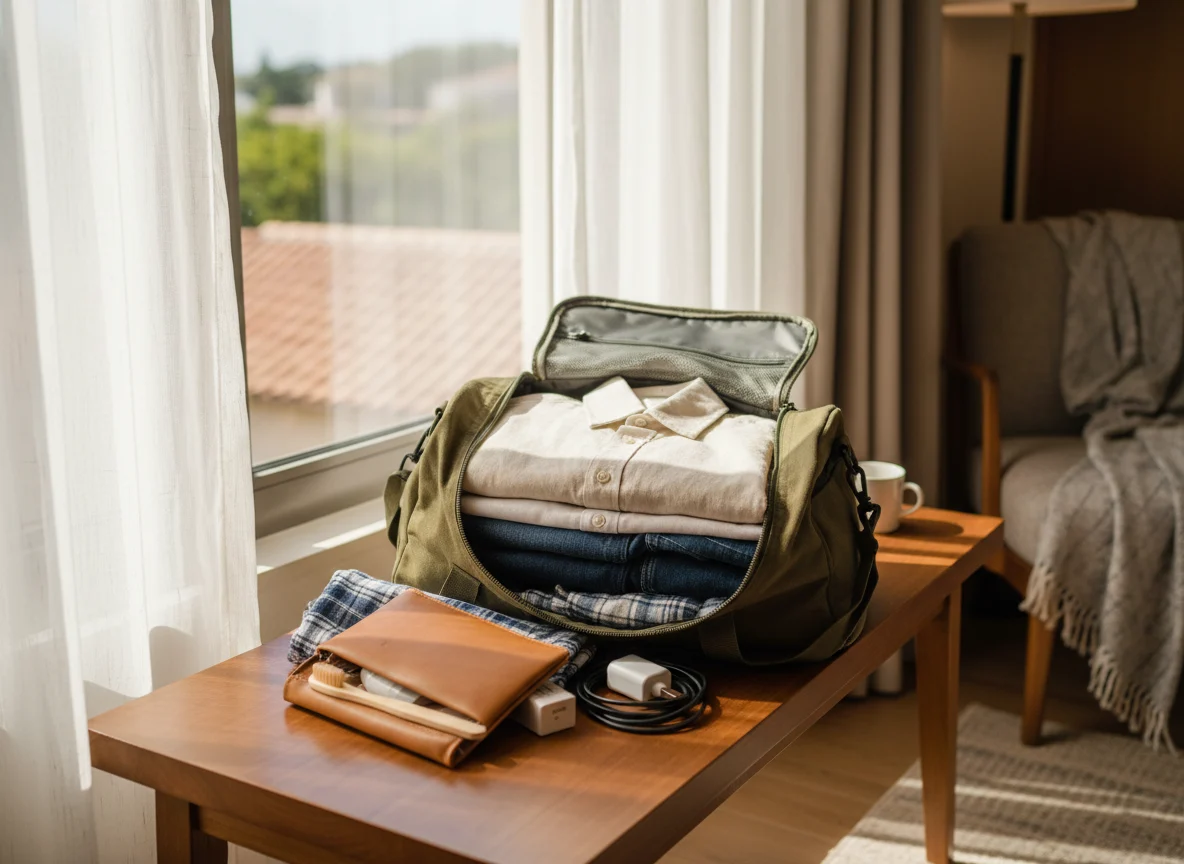
What to Pack in Your Overnight Bag
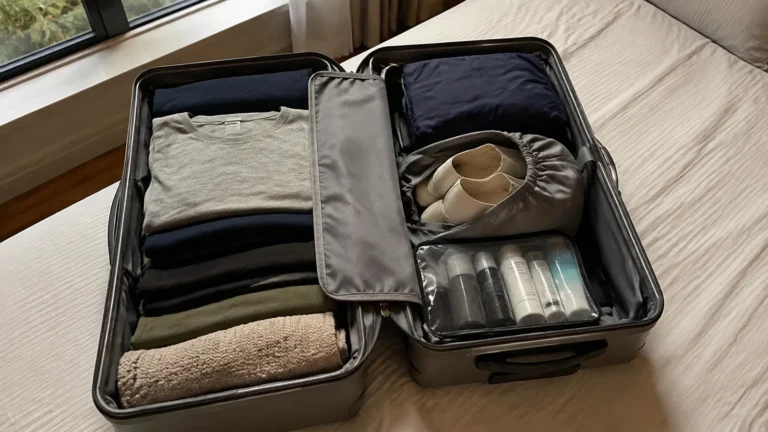
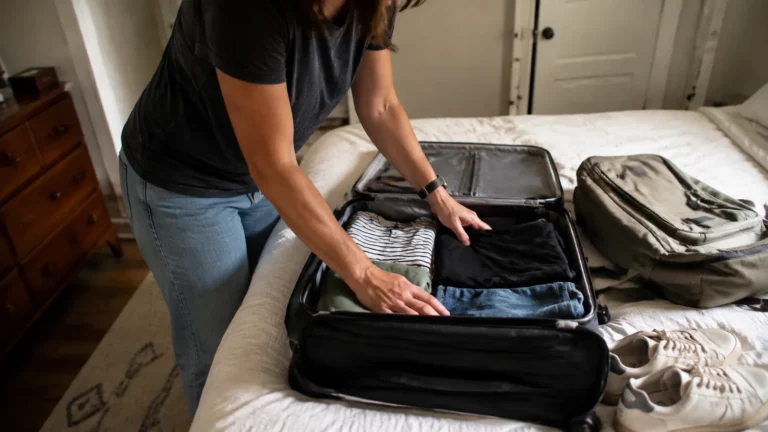
I pack for the number of hotel nights, not the number of towns. Rewearing jeans, layers, or a jacket keeps the luggage smaller and makes every hotel change easier.
- Underwear and socks
- Comfortable daily outfits
- Sleepwear
- One warmer layer
- Weather-appropriate outerwear
- Walking shoes
- One additional shoe only when the trip actually needs it
- Toiletries
- Medications
- Swimsuit if the route includes water or hotel pools
I would rather do one load of laundry on a two-week trip than spend fourteen days hauling a suitcase packed for every possible version of myself. Road trips reward smaller luggage because you touch it far more often than you do on a resort stay.
The Two-Bag Trick for Multi-Hotel Trips
If the trip changes hotels almost every night, I like separating a small overnight bag from the larger suitcase. The large bag can stay mostly organized while the small one carries tonight’s clothes and toiletries.
This works especially well on a road trip with one or two single-night stops between longer bases. It also keeps the hotel room from becoming an explosion of everything you packed on day one.
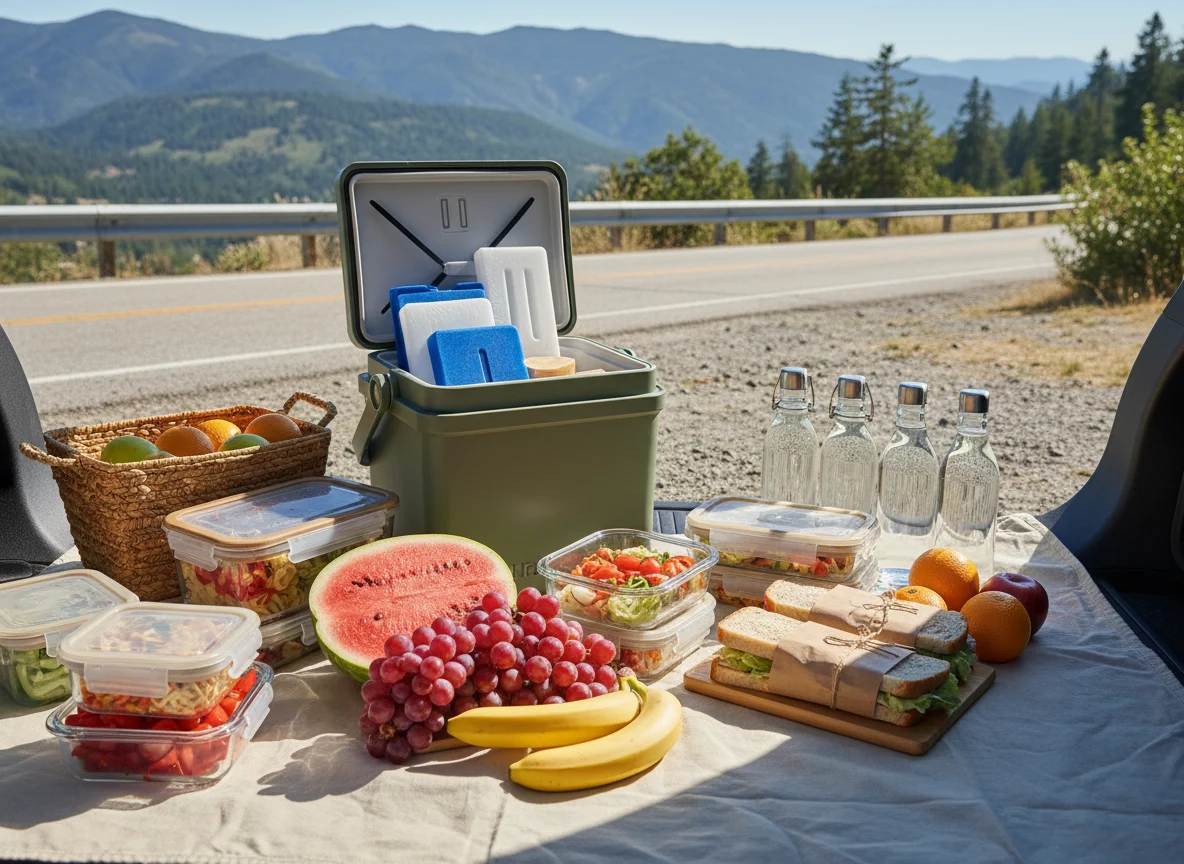
Food and Cooler Supplies
I do not pack enough food to pretend restaurants no longer exist. I want breakfast backups, road snacks, picnic flexibility, and space for whatever bakery or farm stand I find along the way.
- Small cooler
- Ice packs
- Reusable water bottles
- Napkins or paper towels
- Reusable utensils
- Trash bags
- Easy snacks
- One or two simple meal backups
My road trip food ideas guide goes much deeper into snacks, cooler meals, and easy picnic lunches. The packing rule is simple: bring enough to make the day easier, not enough to stock a convenience store.
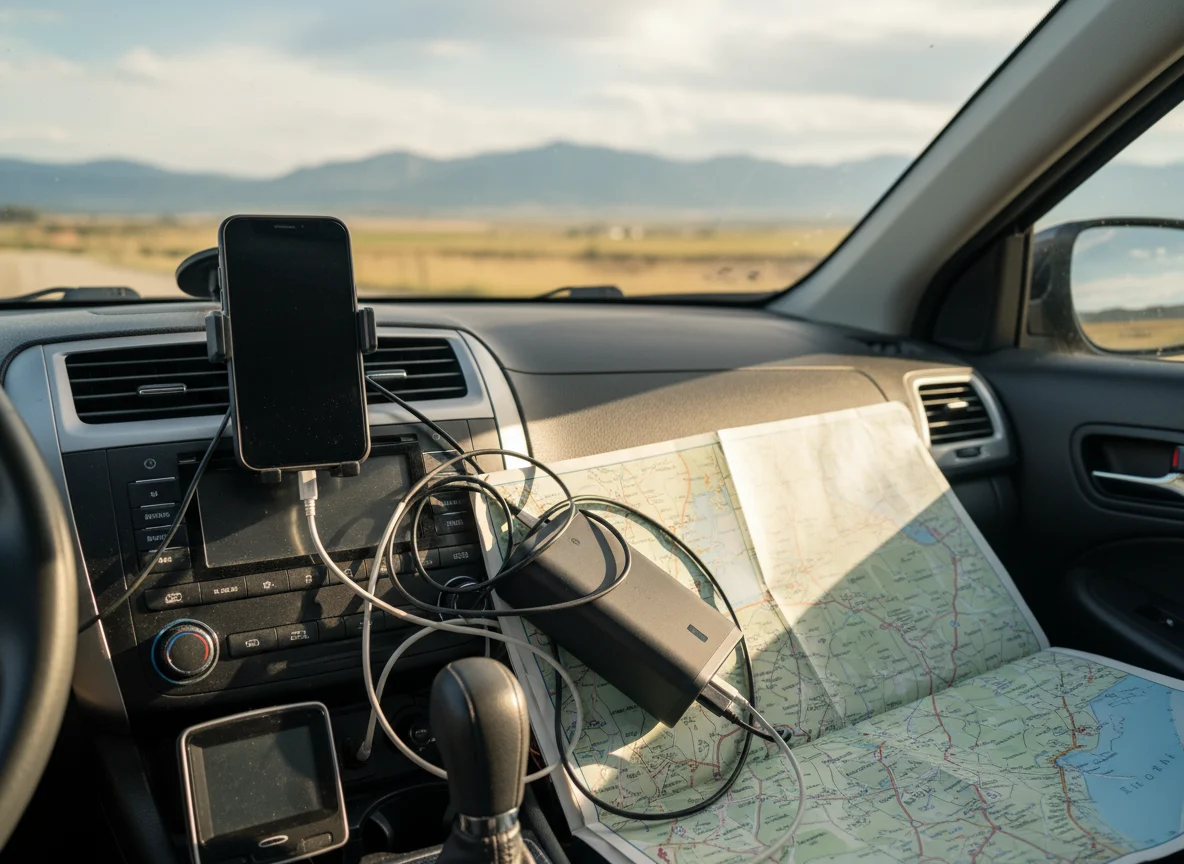
Electronics I Actually Bring
I keep electronics boring because every additional device brings another charger and another thing to lose under a hotel bed. The phone handles most navigation, photos, bookings, and entertainment.
- Phone
- Car charger
- Wall charger
- Power bank
- Headphones
- Camera only when I genuinely plan to use it
For international routes, add the correct plug adapter and verify whether any device needs a voltage converter. Most modern phone and laptop chargers handle a broad voltage range, but read the label rather than assuming.
Navigation Backup
I download offline maps before remote regions and save critical addresses in notes. That gives me a backup when cell service disappears around national parks, mountain roads, northern Wisconsin, or international rural areas.
If I am driving somewhere especially remote, I also carry a paper map. It weighs almost nothing and never announces that it needs an update at the exact moment the phone has no service.
Comfort Items That Earn Their Space
A few small comfort items make long driving days noticeably better. I would choose those over decorative organizers or travel gadgets designed mainly to create another thing to pack.
- Small pillow or neck support for passengers
- Light blanket
- Reusable mug
- Hand lotion
- Gum or mints
- Downloadable podcasts, music, or audiobooks
I do not keep loose hard objects piled around the cabin. Anything that could become dangerous in a sudden stop belongs secured in a bag, console, or trunk.
What to Pack for a Dog
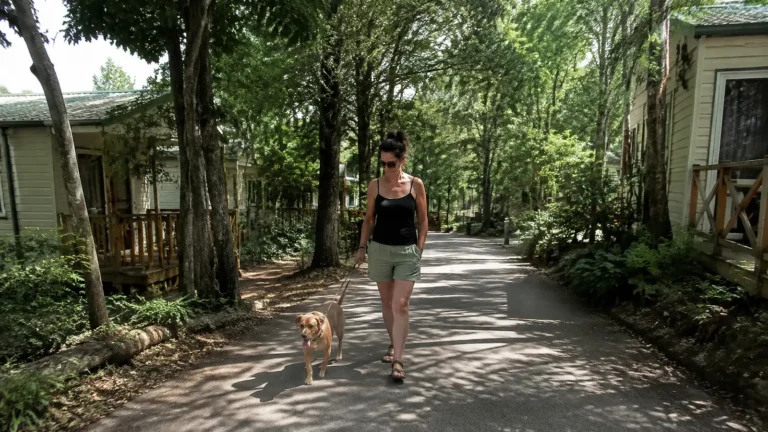
Dog road trips need their own easy-access kit rather than mixing pet supplies into human luggage. Food, water, medication, waste bags, leash, harness, towel, and vaccination records should be easy to reach.
My road trip with dogs guide covers lodging, breaks, state requirements, heat, and routines. A pet adds more logistics, which is exactly why I want the gear organized simply.
What to Add for Winter
Winter road trips require a more serious vehicle and emergency check. Weather, mountain-pass rules, traction requirements, and rural driving conditions should determine the gear.
- Ice scraper and snow brush
- Warm gloves and hat
- Extra blanket
- Waterproof boots
- Traction equipment when required and compatible with the car
- Extra washer fluid rated for cold weather
- More food and water for longer delays
My winter road-trip tips cover the driving side in more detail. Packing more stuff does not make an unsafe winter route safe, so road conditions still decide the day.
What to Add for Hot Desert Routes
Water moves to the top of the list in Arizona, Utah, Nevada, or another hot exposed region. I carry more than I expect to drink and do not rely on every trailhead or park stop having working water.
Sun protection, a hat, electrolyte options, and a cooler become much more useful than a heavy blanket. I also keep electronics out of direct sun when the car is parked.
What I Leave at Home
Most road-trip overpacking comes from trying to prepare for every imaginable mood instead of the actual itinerary. I would leave these behind unless the specific trip creates a clear reason to bring them.
- Multiple dressy outfits
- Several pairs of similar shoes
- Full-size kitchen equipment
- Huge cases of bottled water when refilling is practical
- Every travel gadget you own
- Large quantities of food you can buy locally
- Bulky pillows for every passenger
- Backup items for things available almost everywhere
Empty trunk space is useful. It gives you room for groceries, wet shoes, jackets, shopping bags, or the very large bag of cheese that seemed like an excellent idea in Wisconsin.
Two More Safety Checks I Use Before Leaving
Ready.gov has a practical vehicle-emergency checklist, while the National Highway Traffic Safety Administration tire guide is useful for pressure, tread, and tire-safety basics. I would rather check those at home than learn them beside the road.
My Final Packing Check
Before leaving, I ask five questions: Do we have the documents, medications, charging cables, weather layer, and emergency basics? Everything else is usually replaceable.
A good road-trip packing list makes the car easier to live out of for a few days. It should not make the car feel like a storage unit that happens to move.