6 Best Overwater Bungalows in Thailand: Sea, Lake & River
Thailand has memorable rooms on water, but most are not Maldives-style villas above a bright tropical sea.
The best options range from a mangrove-framed coastal villa on Koh Phayam to floating lake resorts beneath Khao Sok’s limestone cliffs and raft-style rooms on the River Kwai.
Verify direct: For the two headline stays, use The Blue Sky Resort Koh Payam and 500 Rai Floating Resort directly. For Khao Sok context, the Tourism Authority of Thailand covers the national park and its limestone-reservoir landscape.
Does Thailand have true overwater bungalows?
Yes, if you are open to sea, mangrove, reservoir, and river settings rather than expecting every room to copy Bora Bora.
This post contains affiliate links. I may earn a commission if you book through them, at no extra cost to you.
- Best coastal overwater look: The Blue Sky Resort Koh Phayam
- Best polished reservoir splurge: 500 Rai Floating Resort
- Best Cheow Lan alternative: Panvaree Resort
- Best modern freshwater design: Z9 Resort
- Best comfortable river villa: The FloatHouse River Kwai
- Best off-grid river stay: River Kwai Jungle Rafts
Best coastal option: The Blue Sky Resort Koh Payam
The Blue Sky Resort on Koh Phayam is the closest Thailand gets to the visual idea of a tropical overwater villa. Its Zone R villas sit directly above mangrove water, with private terraces and steps from the room down into the water.
The setting is the important distinction. This is sheltered, mangrove-influenced coastal water rather than a row of villas extending over an offshore coral lagoon.
Choose it for a romantic island stay, kayaking, and an overwater look without leaving Thailand for the Maldives. The 40-square-meter one-bedroom villas are designed primarily for two but can sleep up to four with the sofa bed.
Who it fits
- Couples who want the strongest coastal overwater aesthetic in Thailand
- Travelers comfortable reaching Koh Phayam through Ranong and a boat connection
- Guests who like a resort atmosphere more than total isolation
What to verify
Book the named overwater zone rather than assuming every villa sits above water. Water level and color change naturally with the tide and mangrove setting, so this is not the choice for someone who needs bright reef-blue water beneath the deck all day.
Best reservoir splurge: 500 Rai Floating Resort
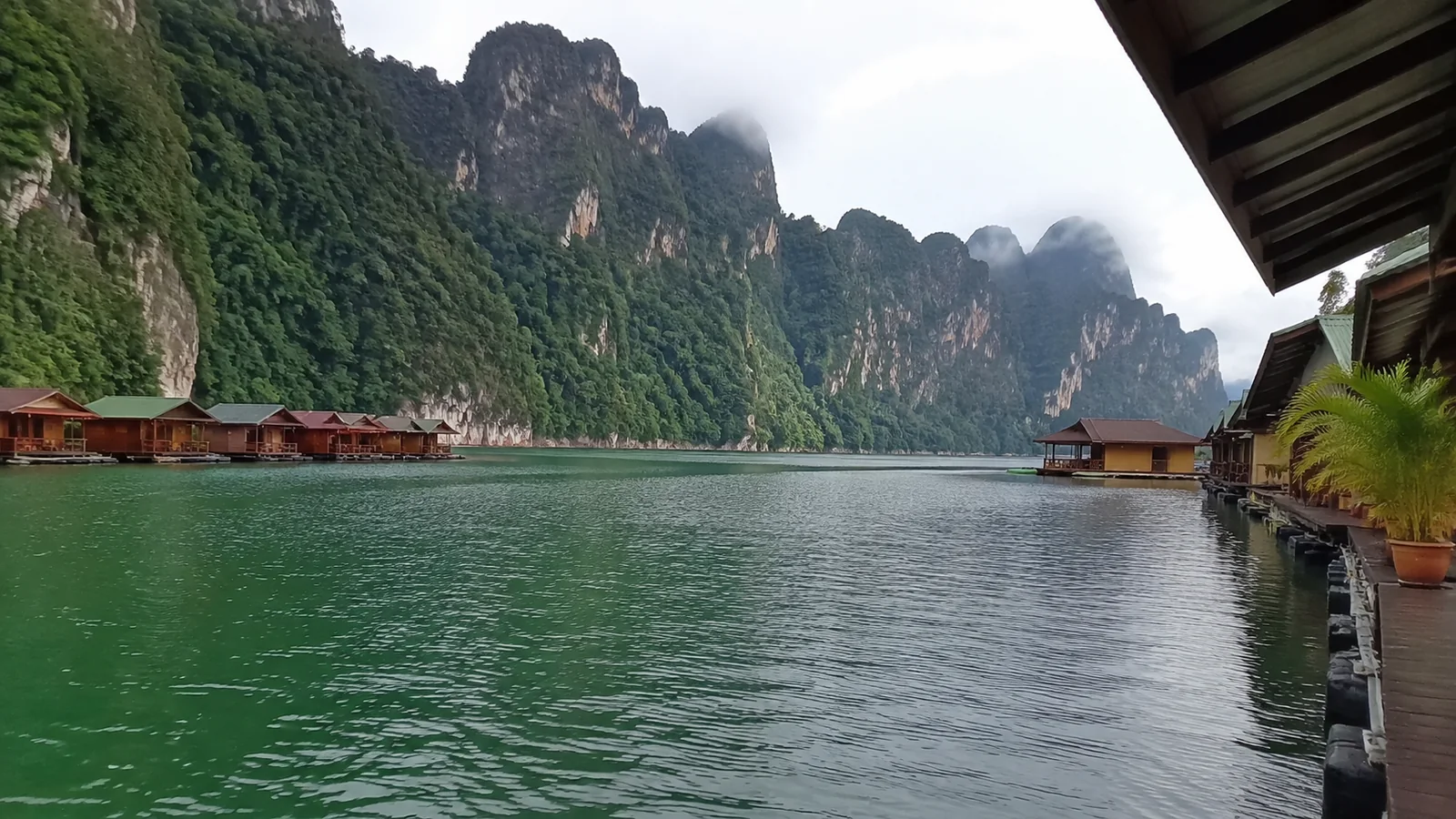
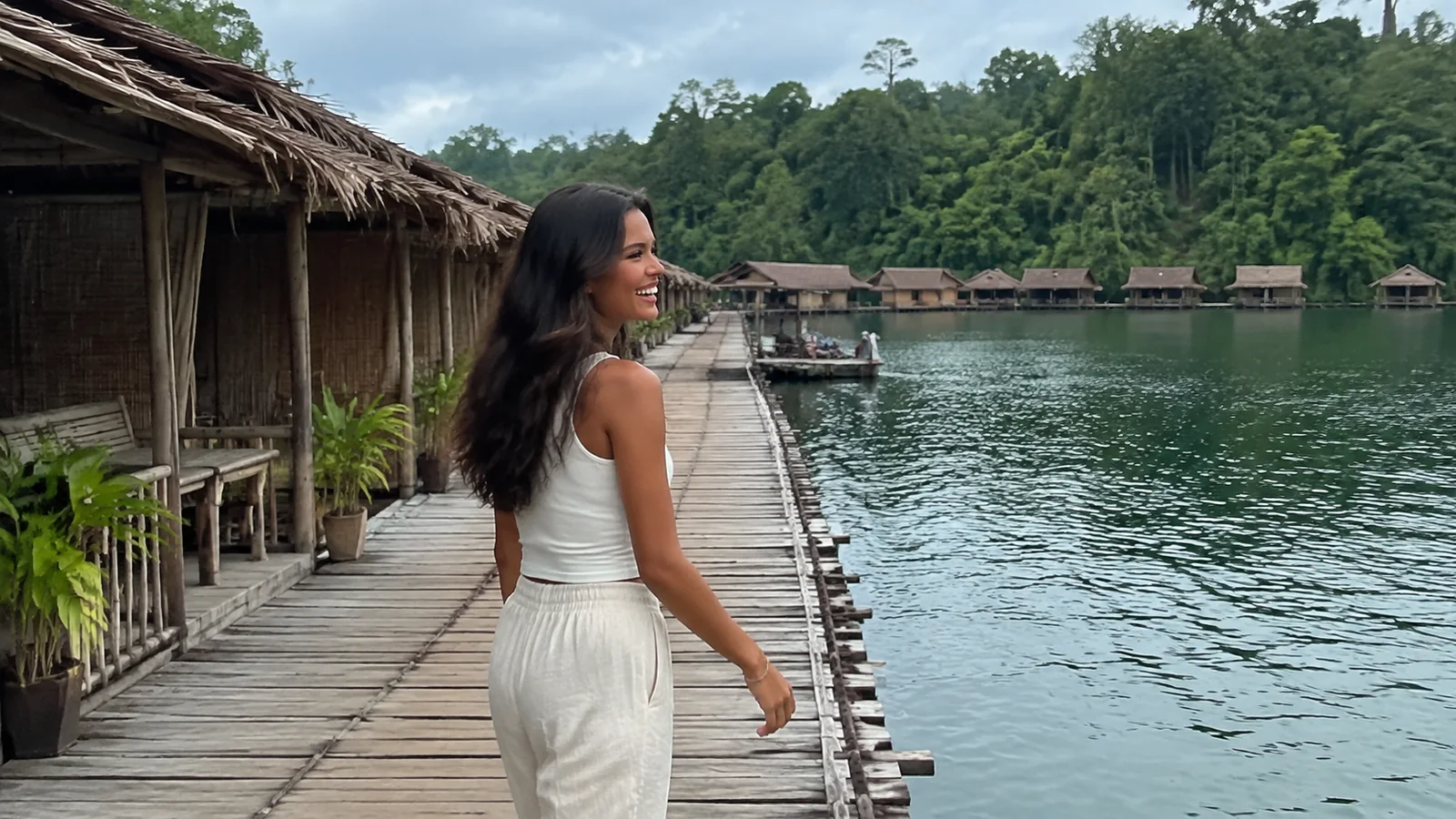
500 Rai sits on Cheow Lan Lake inside the Khao Sok landscape, with every room floating on the reservoir and limestone mountains rising around the water.
The room range is broader than many people realize. Deluxe rooms, Villas, Family Villas, Deluxe Suites, Family Suites, and a Honeymoon Suite all float, with the more private Suite Zone separated from the main restaurant and pool area.
Choose 500 Rai when dramatic scenery matters more than beach access. It is a freshwater retreat where kayaking, wildlife, caves, and the lake itself replace nightlife and town-hopping.
Who it fits
- Nature-focused couples and families willing to pay for comfort
- Travelers who want limestone scenery, kayaking, and boat excursions
- Guests happy to let a remote resort control meals and transport
What to verify
Compare the exact room zone, package meals, park fees, and boat transfer rather than focusing on the room-only number. The resort is reached through the Cheow Lan Lake system, so independent arrival is not as simple as driving to a beach hotel.
Best Cheow Lan alternative: Panvaree and The Greenery
Panvaree Resort also offers genuine floating rooms on Cheow Lan Lake, with private decks, air-conditioned options, kayaking, swimming, and a floating restaurant beneath the limestone cliffs.
The Private Garret House is a strong couples pick, while other room types vary in layout and position. Be careful with upper-level rooms over the restaurant because some sit above the floating structure without giving you direct room-level water access.
The boat journey from Cheow Lan Dam Municipal Pier takes roughly 45 minutes to an hour, so I’d treat the transfer as part of the experience rather than a minor hotel shuttle.
What to verify
Check whether your exact room is on the floating level, what cooling it has, whether the bathroom is private, and whether you can enter the water directly from the room or need to use a shared area.
Best modern reservoir design: Z9 Resort
Z9 Resort in Kanchanaburi is the modern-design choice, with floating accommodation on Srinakarin Dam reservoir rather than a jungle-lake expedition deep inside Khao Sok.
Choose it for a shorter freshwater retreat, contemporary architecture, and a Kanchanaburi itinerary. Road access is easier than Cheow Lan, which makes the stay much less transfer-heavy.
The tradeoff is that this is a reservoir getaway, not a tropical island. Book it because calm freshwater and design appeal to you, not because you want salt water or reef snorkeling.
What to verify
Choose the floating category explicitly and check swimming access, life jackets, restaurant hours, and how much movement you should expect from wakes or changing water levels.
Best comfortable river villa: The FloatHouse River Kwai
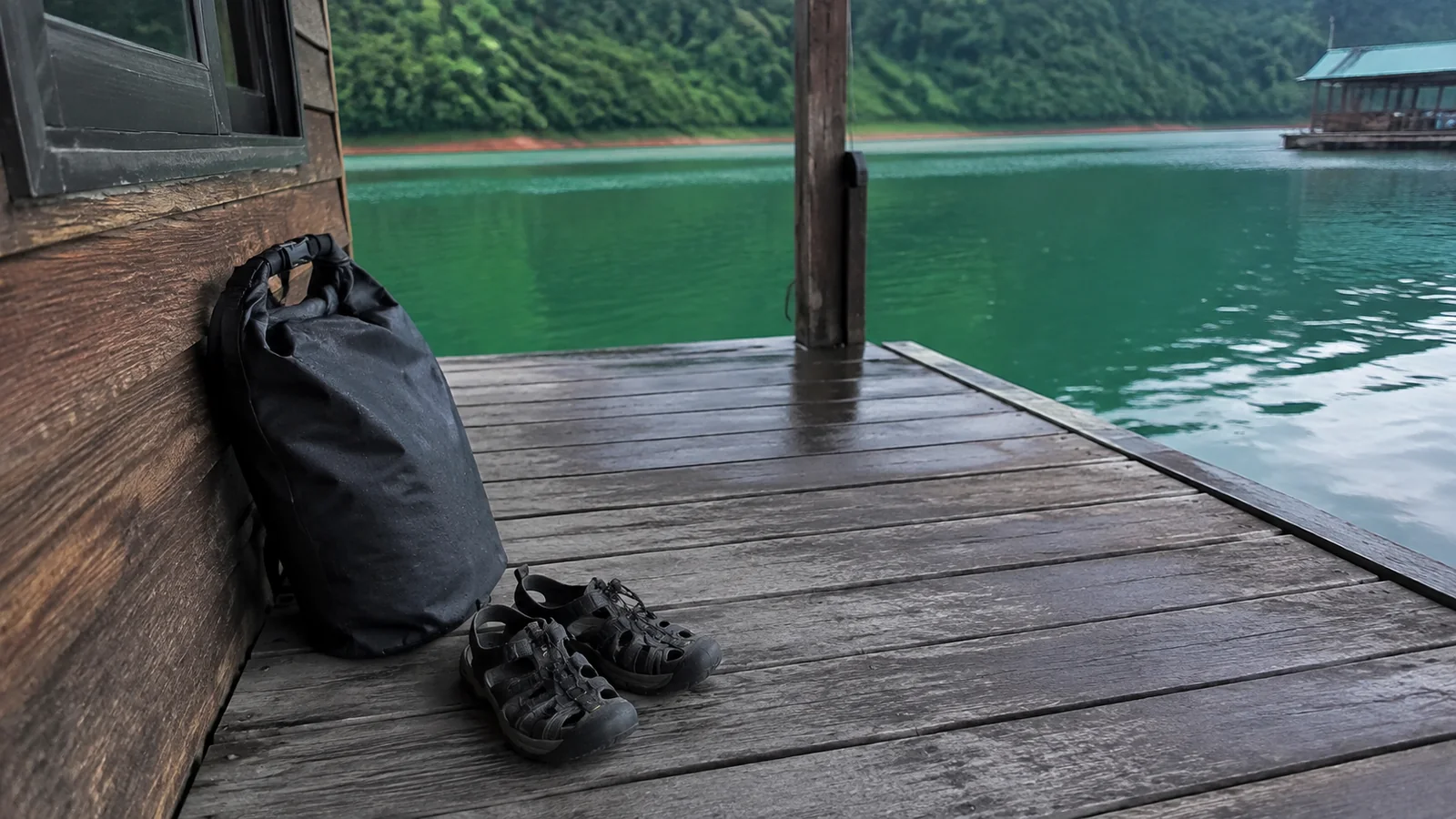
The FloatHouse River Kwai consists of floating teak-style villas on the Kwai Noi River near Sai Yok. This is a much more comfortable version of the River Kwai raft experience, with private villas and a stronger resort feel.
Choose it for a romantic Kanchanaburi stay where history, jungle, and river scenery are all part of the trip. The moving water, passing boats, and river sounds give it a completely different feel from a still reservoir.
Who it fits
- Couples pairing Bangkok with Kanchanaburi history and nature
- Guests who want a private bathroom and more comfort than a rustic raft stay
- Travelers comfortable with boat access and moving river water
My guide to Thailand’s long-tail boats is useful if boat boarding and river transfers are new to you.
Best off-grid river stay: River Kwai Jungle Rafts
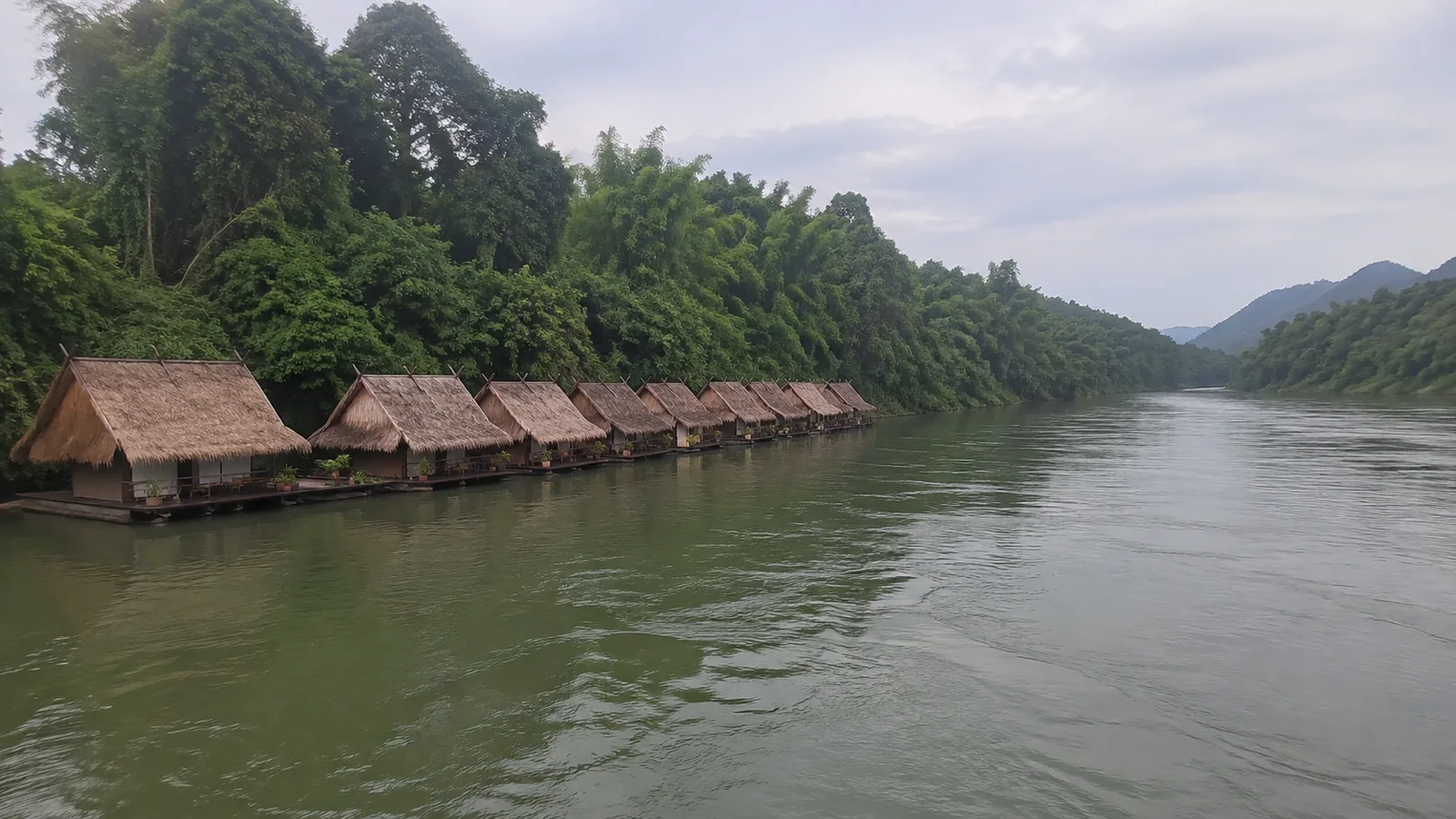
River Kwai Jungle Rafts is the atmospheric, intentionally rustic option. The rooms float directly on the Kwai Noi River and the property is known for operating without conventional electricity at night.
Kerosene-lamp lighting, limited connectivity, river sounds, heat, insects, and simpler rooms are part of the concept rather than missing luxury amenities.
Choose it for an intentional digital break and a memorable contrast within a wider Thailand trip. Anyone who needs air conditioning, bright bathroom lighting, easy charging, or road access should choose The FloatHouse instead.
Who it fits
- Adventure-minded travelers happy with simple comfort
- Guests who want the strongest floating-raft sensation
- People prepared to follow river-safety guidance
Thailand properties that are often mislabeled
A beachfront villa is not overwater, even when its deck nearly reaches high tide. A pool villa is not overwater simply because a walkway crosses the pool.
Cliffside and hillside resorts on Koh Samui, Phuket, Koh Tao, and other islands can be beautiful, but book them for the view rather than pretending the bedroom sits above the sea.
If open-ocean water and easy reef access are nonnegotiable, compare Thailand with better-value Maldives water villas. The flight may cost more, but the room can match the dream much more closely.
How the four water settings feel
Sea and tidal lagoon
Salt air, tides, mangroves, and coastal weather shape the stay. Water depth and clarity can change within hours.
Reservoir
Freshwater reservoirs can be glassy and surrounded by forest or limestone. Remote properties commonly bundle boats, meals, and excursions.
River
River rooms feel alive because current and passing boats move the structure. That can be soothing or unsettling depending on the traveler.
Decorative lagoon
A bungalow over a resort pond can be attractive, but it is a design feature rather than a natural-water overwater stay.
How to verify a true overwater room
- Ask whether the room floats, stands on piles, or sits on land.
- Check the exact room category rather than the resort generally.
- Confirm what type of water is beneath it.
- Ask whether guests may swim directly from the room.
- Check tide, current, and life-jacket rules.
- Verify road, boat, and luggage-transfer details.
- Confirm power, air-conditioning, hot water, and Wi-Fi hours.
Budget for access, not just the room
Thailand’s floating stays can look inexpensive until park admission, mandatory boats, meals, and transfers appear. Compare the cost from your previous hotel to your next hotel, not one night’s base rate.
Cheow Lan stays require a pier and boat, River Kwai properties can add another river transfer, and Koh Phayam adds the Ranong connection. Two nights often makes the travel effort feel more worthwhile than one rushed night.
Safety and comfort questions
Ask about railings, lighting, emergency communication, life jackets, child rules, and evacuation procedures. Boat-only resorts can also be difficult for guests with mobility limitations because boarding heights change with water conditions.
Carry necessary medication and understand how staff contact outside medical help when phone service is weak.
Weather and season
Thailand’s coasts have different monsoon patterns, and inland rivers or reservoirs respond to regional rainfall. Check the exact province instead of applying one “Thailand rainy season” sentence to every stay.
Koh Phayam’s Andaman setting, Cheow Lan Lake, and Kanchanaburi can all have very different conditions on the same date.
Responsible booking
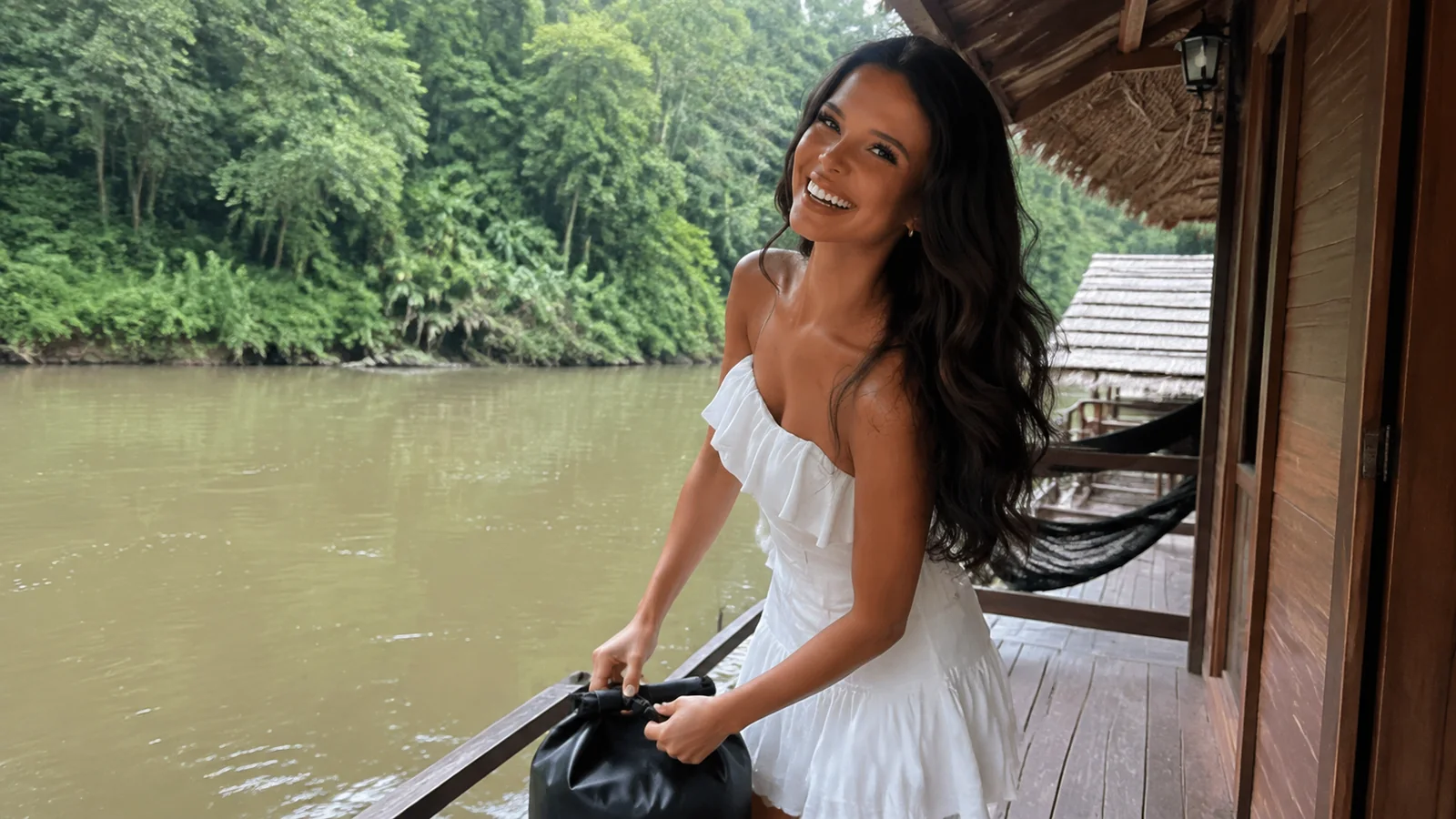
Overwater construction raises questions about wastewater, trash, fuel, wildlife, and shoreline impact. I care more about how a property manages those systems than whether bamboo appears in the decor.
My ecotourism guide helps separate actual environmental practices from a green-sounding label.
For current trip planning, cross-check the Tourism Authority of Thailand, the U.S. State Department guidance, and the CDC Thailand traveler page before departure.
Which Thailand overwater bungalow should you book?
Choose Blue Sky Koh Phayam for the coastal look, 500 Rai or Panvaree for limestone reservoir scenery, Z9 for modern freshwater design, The FloatHouse for river comfort, or Jungle Rafts for an off-grid adventure.
The best choice is the one whose setting still sounds exciting after you remove the word “overwater.”