George Town Cruise Tender Guide: Terminals, Walking and Timing
George Town is the part of a Grand Cayman cruise day where logistics matter most: your ship anchors offshore, you tender into town, and every independent plan starts from the waterfront.
This guide stays focused on the tender terminals, downtown walking, immediate transportation, short port calls, and getting back to the ship without turning a simple arrival into a stressful one.
George Town cruise port at a glance
- Port type: tender port rather than a fixed cruise-ship pier.
- Arrival area: the George Town waterfront.
- Main tender facilities: Royal Watler, North Terminal, and South Terminal.
- Best easy use of a short call: downtown George Town, the waterfront, museums, shopping, food, or a nearby taxi ride.
- Seven Mile Beach: outside the walkable downtown core and better treated as a separate beach plan.
- Most important timing rule: follow your own ship’s tender and all-aboard instructions, not a generic schedule found online.
The Cayman Islands tourism site identifies George Town as the main cruise arrival point on Grand Cayman. Its George Town guide also makes the distinction that matters for planning: downtown attractions are concentrated around the capital, while Seven Mile Beach is a short drive away.
How tendering works in George Town
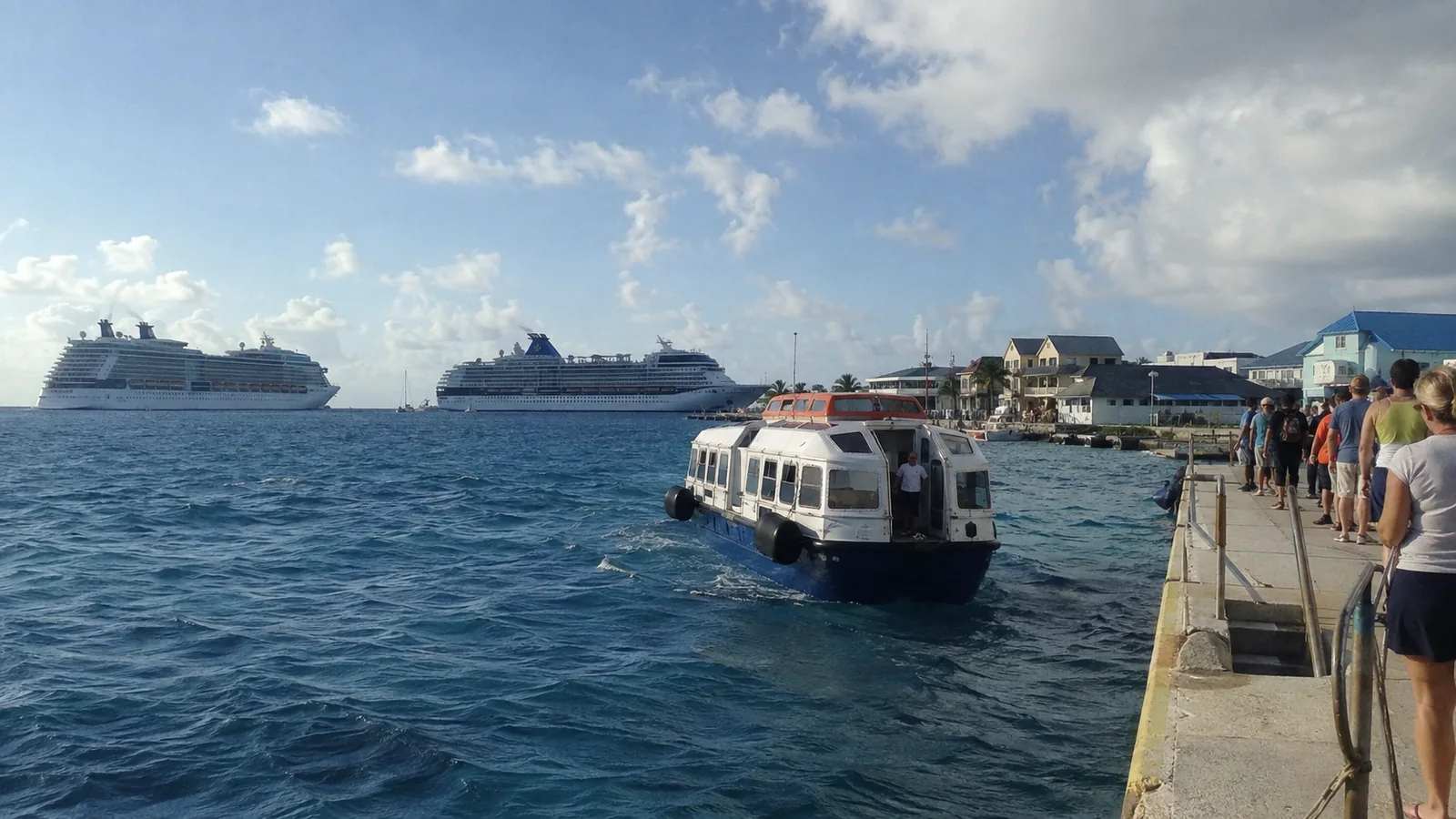
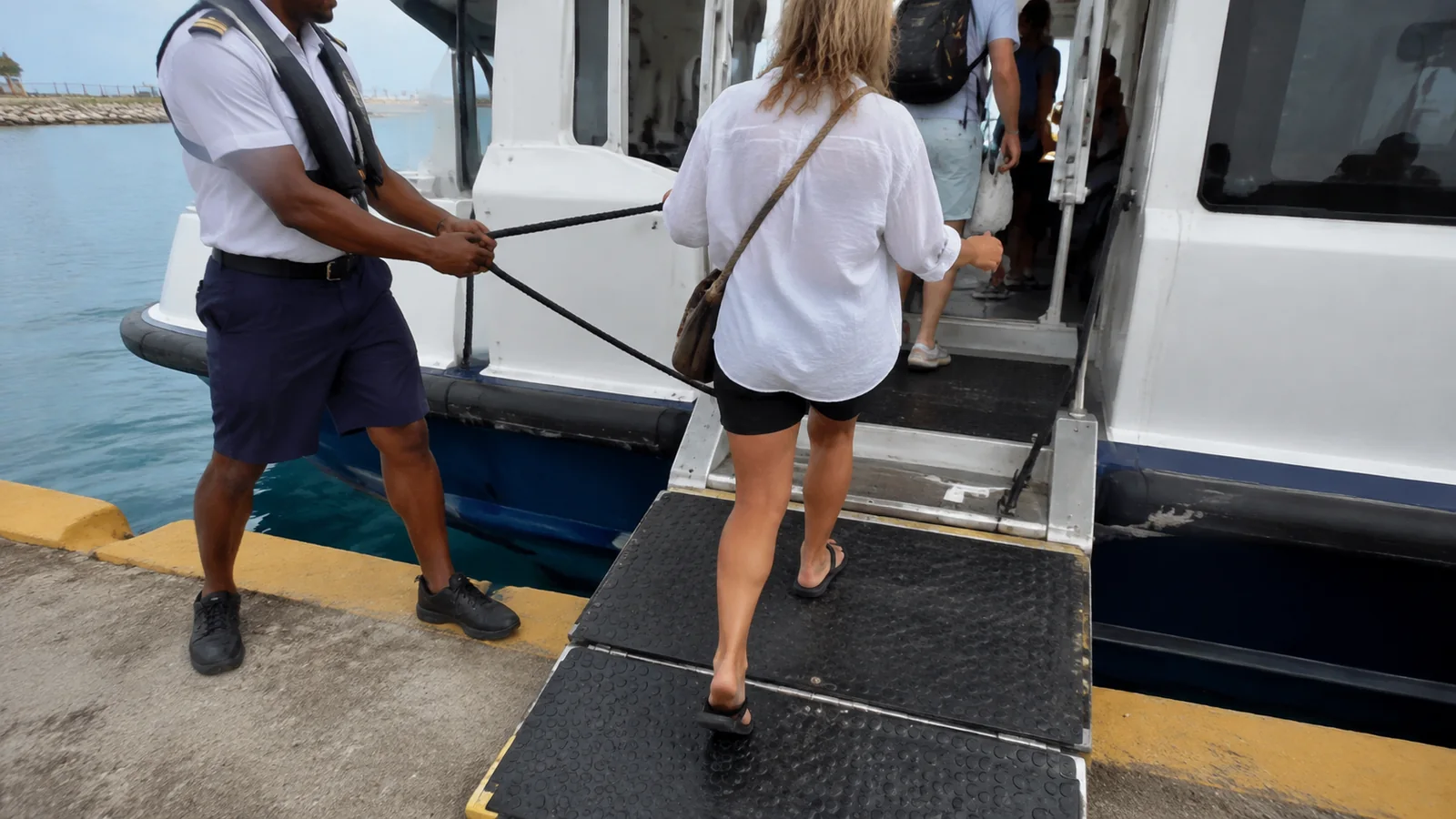
Your cruise ship normally anchors offshore and transfers passengers to land on smaller tender boats. The actual boat ride can be quick, but the complete process also includes clearance, waiting, boarding, loading, unloading, and the line at the terminal.
Do not build an independent excursion around the assumption that an 8:00 a.m. port arrival means you will be standing on Harbour Drive at 8:05. Your ship controls the tender sequence, and priority groups may go ashore before independent guests.
Some lines use numbered tender tickets, app-based queues, loyalty priority, suite priority, or excursion priority. Read the ship’s daily program the night before and check the app or onboard announcement again in the morning.
Once open tendering begins, the process can become much easier. Even then, weather and sea state can affect loading speed or stop tender operations completely.
The three George Town tender terminals
The Port Authority of the Cayman Islands operates three cruise tender terminals in George Town: Royal Watler, North Terminal, and South Terminal. They all place you in the central waterfront area, but they are not one interchangeable doorway.
Your ship may use a different landing from another ship in the harbor. Confirm where your tender actually arrives before arranging a private pickup or telling a driver where to meet you.
Royal Watler is the largest and most purpose-built cruise facility of the three. North and South Terminal sit along the same general George Town waterfront, so a change in terminal does not mean you have landed in another town.
Do not obsess over predicting the terminal weeks before the cruise. The useful plan is to know that all three are central, then confirm the live assignment after arrival.
What to do before leaving the ship
Take a screenshot of the ship’s all-aboard time, last-tender instructions, and any tender-ticket procedure before you lose Wi-Fi. Keep your ship card, accepted identification, payment method, sunscreen, water, and necessary medication with you.
If you booked an independent tour, confirm how the operator handles delayed tendering. A good meeting plan allows for the fact that cruise guests cannot control exactly when the ship clears them to go ashore.
Travelers with mobility equipment should ask the cruise line about the exact tender policy before sailing. The ability to transfer, equipment size and weight, tender design, and sea conditions can all affect whether going ashore is possible.
Your first 15 minutes ashore
Before walking away from the landing, notice the terminal name and the return entrance. This small step is more useful than memorizing a screenshot of an old port map.
If you need a taxi, ask the official transportation area for the current fare and whether the price is per person or per vehicle. If you plan to use a public bus, confirm the correct stop and destination with someone locally rather than assuming every minibus follows the same route.
For a short independent day, keep the first plan simple until you know how long tendering took. You can always add another stop, but you cannot recover an hour already lost waiting to come ashore.

Can you explore George Town on foot?
Yes. Downtown George Town is the part of Grand Cayman that makes the most sense without arranging transportation.
The waterfront puts you near shops, restaurants, historic sites, the Cayman Islands National Museum area, and the compact center of the capital. The official tourism site also highlights galleries, local food, shopping, boat activities, and historic attractions in George Town.
A walking day works especially well when the port call is short, the weather is unsettled, or you simply do not want to spend part of the day coordinating taxis and return times. Wear shoes that handle hot pavement and sudden rain rather than treating this as a beach-only stop.
A simple downtown George Town walking plan
Start along the waterfront instead of immediately heading inland. The harbor view helps orient you, and staying close to the arrival area keeps the first part of the day low-stress.
Use the Cayman Islands National Museum or another historic stop for context, then wander through the central shopping and restaurant streets. George Town works better as a compact capital visit than as a checklist of ten distant attractions.
Leave enough time for lunch or a drink without turning the meal into a clock-watching exercise. When the tender queue is visible from town, you can judge your return more conservatively than you can from the far side of the island.
What if you only have three or four hours ashore?
Stay close to George Town unless you have a very specific prearranged plan. Tendering can consume enough time that a short call becomes much shorter in practice.
A downtown walk, museum or historic stop, waterfront lunch, and a little shopping can fill the available time without creating a fragile return route. This is one of the few Grand Cayman plans where missing a taxi does not immediately become a port-day problem.
If the ship is late releasing passengers, shorten the plan rather than racing through it. The island-wide attractions will still be there on another visit.
What if you have five or six hours ashore?
You have more flexibility, but the tender return still defines the day. Choose one major off-port priority rather than trying to combine beach time, Stingray City, West Bay, shopping, and a long lunch.
Seven Mile Beach can fit a medium-length call if you leave enough return buffer. A boat excursion can also work when the operator regularly handles cruise guests and its schedule matches your ship’s tender reality.
For a full comparison of Seven Mile Beach, Stingray City, West Bay, taxis, buses, weather, and island-wide day plans, use my Grand Cayman cruise port guide. That is the page meant to help you choose the broader island day.
Seven Mile Beach from George Town
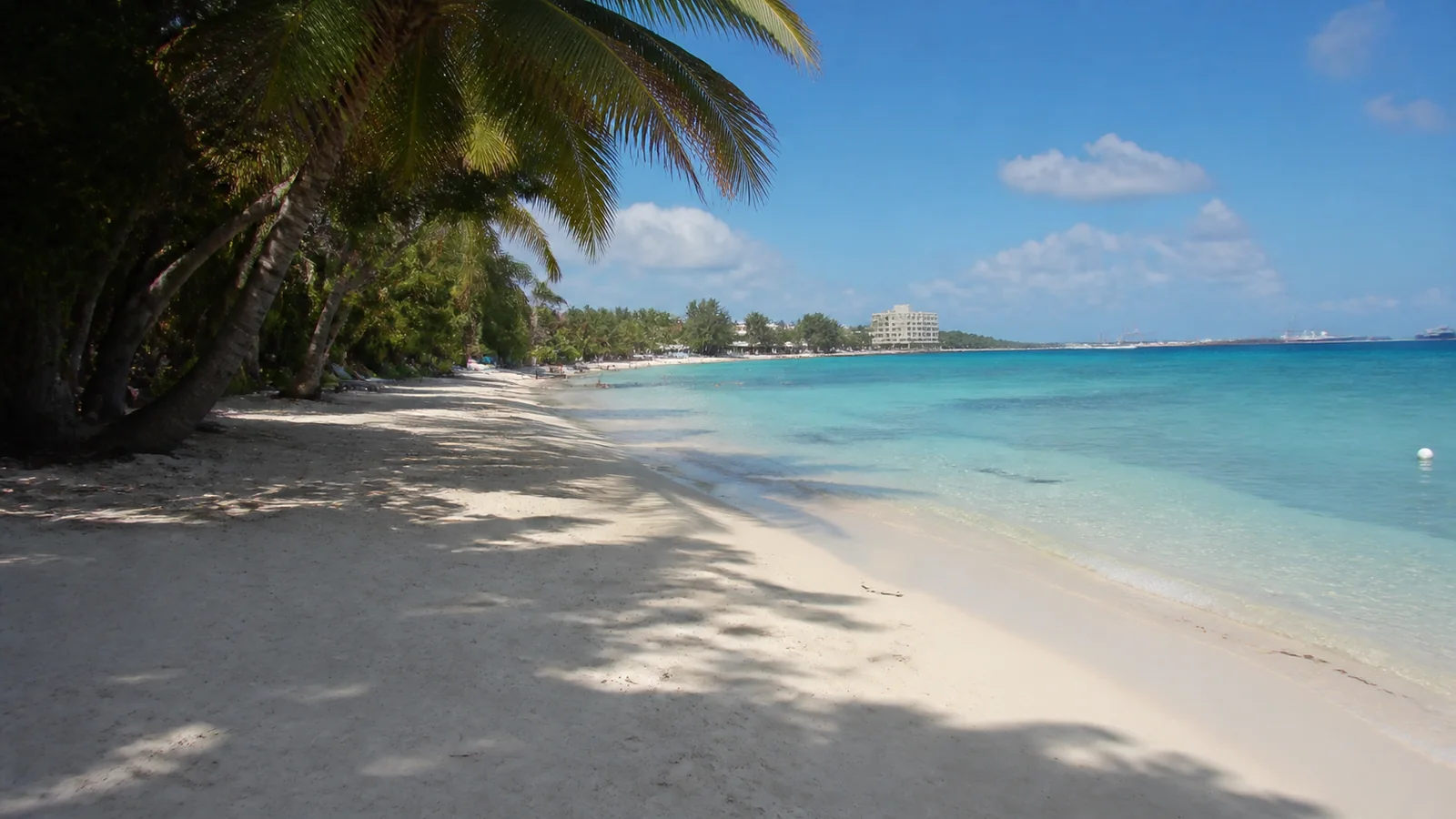
Seven Mile Beach is close enough to be an easy taxi ride, but it is not the same thing as walking around the cruise terminal. The Cayman Islands tourism site describes it as a major west-coast beach with public access points, resorts, restaurants, and watersports.
Choose your access point before getting into a taxi. “Take me to Seven Mile Beach” is less useful than knowing whether you want a public beach area, a particular stretch near restaurants, or a quieter section farther north.
Build the return around traffic and the tender cutoff, not only the drive time shown on a map. Beach time is relaxing until the last hour becomes a race back to the harbor.
Taxi or public bus from the tender area?
Taxis are the easiest choice when time matters, the group is sharing the fare, or you have a specific beach or attraction in mind. Confirm the fare arrangement before leaving.
Public buses can be useful for independent travelers with more time and flexibility. They are a poor choice when you are already late ashore, unfamiliar with the route, or trying to reach a tightly timed tour.
For a family or group, compare the total taxi cost rather than the per-person price alone. Convenience can be worth more than a small transportation saving on a short cruise call.
Should you book an independent excursion from George Town?
Independent tours can work very well here, especially for Stingray City, snorkeling, diving, or a focused island route. The critical question is how the operator handles tender delays and return timing.
Ask for the actual meeting instructions, cancellation policy, and latest safe return before paying. A vague promise that the dock is “five minutes away” is not enough because your ship is offshore and the tender queue is part of the trip back.
Ship excursions reduce some timing risk because the cruise line coordinates the tour with its own operation. They are not automatically better, but the extra coordination can be valuable on a short or weather-sensitive call.
Last tender and all-aboard are not the same thing
Your ship may publish a last-tender time that comes before the vessel’s scheduled departure. Use the ship’s own language rather than translating departure time into your own return deadline.
Plan to be back before the final tender unless the cruise line specifically instructs otherwise. A line of returning passengers, traffic, a delayed taxi, or a sudden shower is much easier to handle with a buffer.
Do not rely on another cruise line’s schedule or a screenshot from a previous sailing. Tender procedures can vary even when two ships visit George Town on the same date.
Weather can change the whole port call
George Town is exposed to sea conditions that can affect tender operations. A beautiful forecast does not guarantee that the harbor will remain suitable for every tender movement.
If a call is canceled, the ship decides what happens next. Independent tour refund rules come from the operator, which is why weather and ship-cancellation language is worth reading before you book.
The Atlantic hurricane season runs from June through November, but ordinary wind and swell can affect tendering outside a named storm. Treat the harbor operation as a live safety decision rather than a fixed transportation schedule.
Accessibility questions to settle before the cruise
A tender port is different from a pier where a level gangway connects ship and land. Guests may need to step between moving surfaces, and crews can restrict equipment or transfers when conditions are unsafe.
Ask the cruise line whether your wheelchair, scooter, walker, or other device can use the specific tender operation. Also ask what happens if you can walk a few steps but cannot safely manage a moving gap.
Do not wait until the tender platform opens to discover the rule. Accessibility planning is part of choosing the Grand Cayman day, not a detail to solve after breakfast.
Money, cards, and phone service
U.S. dollars are widely useful for many visitor purchases, but change and exchange treatment can vary. Carry a card plus a modest amount of cash rather than depending on one payment method.
Check your mobile plan before using data ashore. Download the ship information, meeting instructions, and any map you need while still onboard or on reliable Wi-Fi.
Keep valuables low-key around busy visitor areas. George Town is an easy port to navigate, but normal travel habits still apply.
What not to do in George Town
- Do not promise an exact independent-tour meeting time before you understand the tender process.
- Do not assume your ship will use the same terminal shown in an old blog post.
- Do not treat Seven Mile Beach as if it begins at the cruise-terminal gate.
- Do not leave the return tender until the last possible minute.
- Do not build a short port call around multiple distant attractions.
- Do not assume a mobility device can automatically board every tender.
- Do not use the scheduled ship departure as your personal all-aboard time.
Three George Town plans that actually make sense
Short and simple
Stay downtown for the waterfront, one historic or cultural stop, lunch, and shopping. This is the safest plan when tendering took longer than expected or the port call is brief.
Town plus beach
Spend the first part of the day at a selected Seven Mile Beach access point, then return to George Town with enough time for a waterfront walk before tendering back. Keep the beach choice simple rather than trying to hop between several sections.
One booked excursion
Choose one boat or island experience with a cruise-aware operator, then return directly to George Town. Add downtown time only if the excursion finishes comfortably ahead of the ship’s tender cutoff.
George Town cruise port FAQ
Do cruise ships dock in George Town?
Normally, no. Ships anchor offshore and passengers travel between the vessel and George Town on tender boats.
How long is the tender ride?
The boat portion itself can be short, but the useful planning number is the complete ship-to-street process. Waiting, loading, clearance, and queues can add much more time than the ride across the harbor.
Can I walk around from the tender terminal?
Yes. George Town’s central waterfront is well suited to an independent walking visit with shops, food, history, and harbor views nearby.
Can I walk to Seven Mile Beach?
Do not treat Seven Mile Beach as a downtown walk. A taxi or appropriate public-bus route is the more practical choice for most cruise visitors.
Which terminal will my ship use?
Confirm the live assignment after arrival. Royal Watler, North Terminal, and South Terminal all serve the George Town cruise operation, and assignments can vary.
Is George Town a good port without an excursion?
Yes. It is one of the easier Caribbean tender ports for a simple town day because the arrival area is already in the capital.
The bottom line
George Town is easiest when you treat it as the logistics hub for a Grand Cayman cruise call rather than trying to make this one waterfront neighborhood represent the whole island.
Understand your tender process, confirm the terminal and return time, then choose either a walkable downtown day or one simple trip beyond town. For the broader beach and excursion decision, switch to the Grand Cayman port guide.