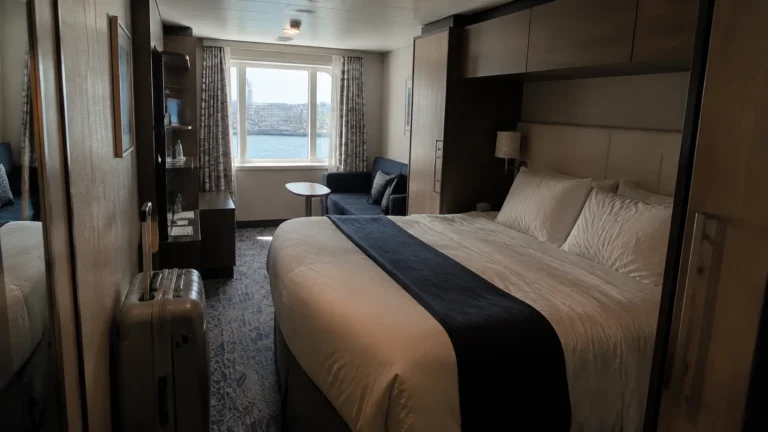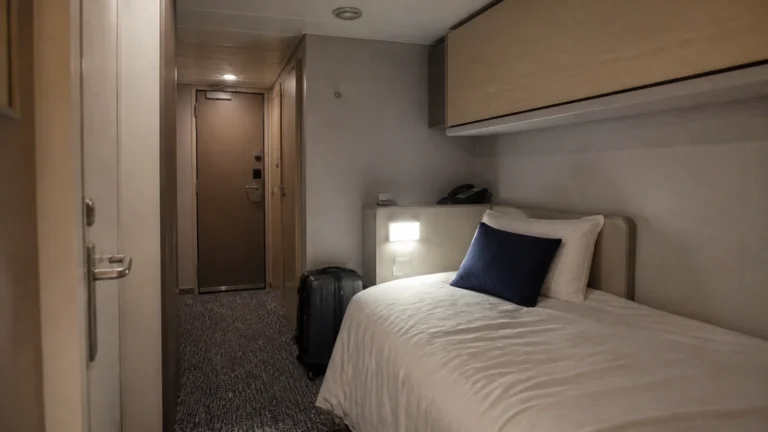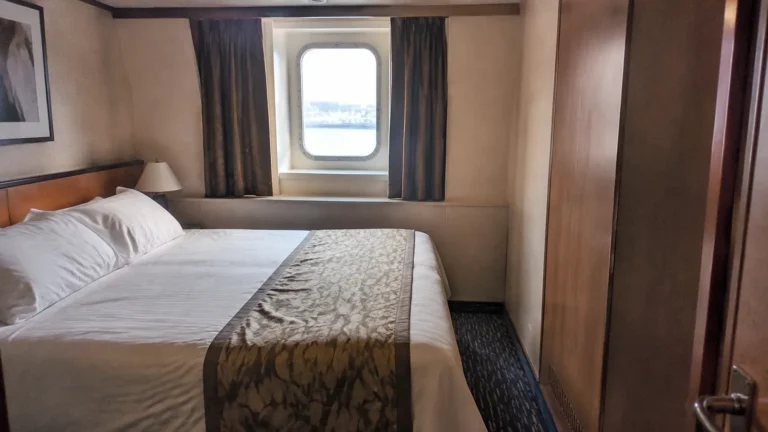
Guarantee Cruise Cabins: When the Savings Are Worth It
I would book a guarantee cruise cabin only when every room permitted by the fare would be acceptable to me. The savings can be worthwhile, but you are giving the cruise line control over the exact cabin, location, and potentially some view or layout details.
If one possible assignment would spoil the trip, I would pay to select a room instead.
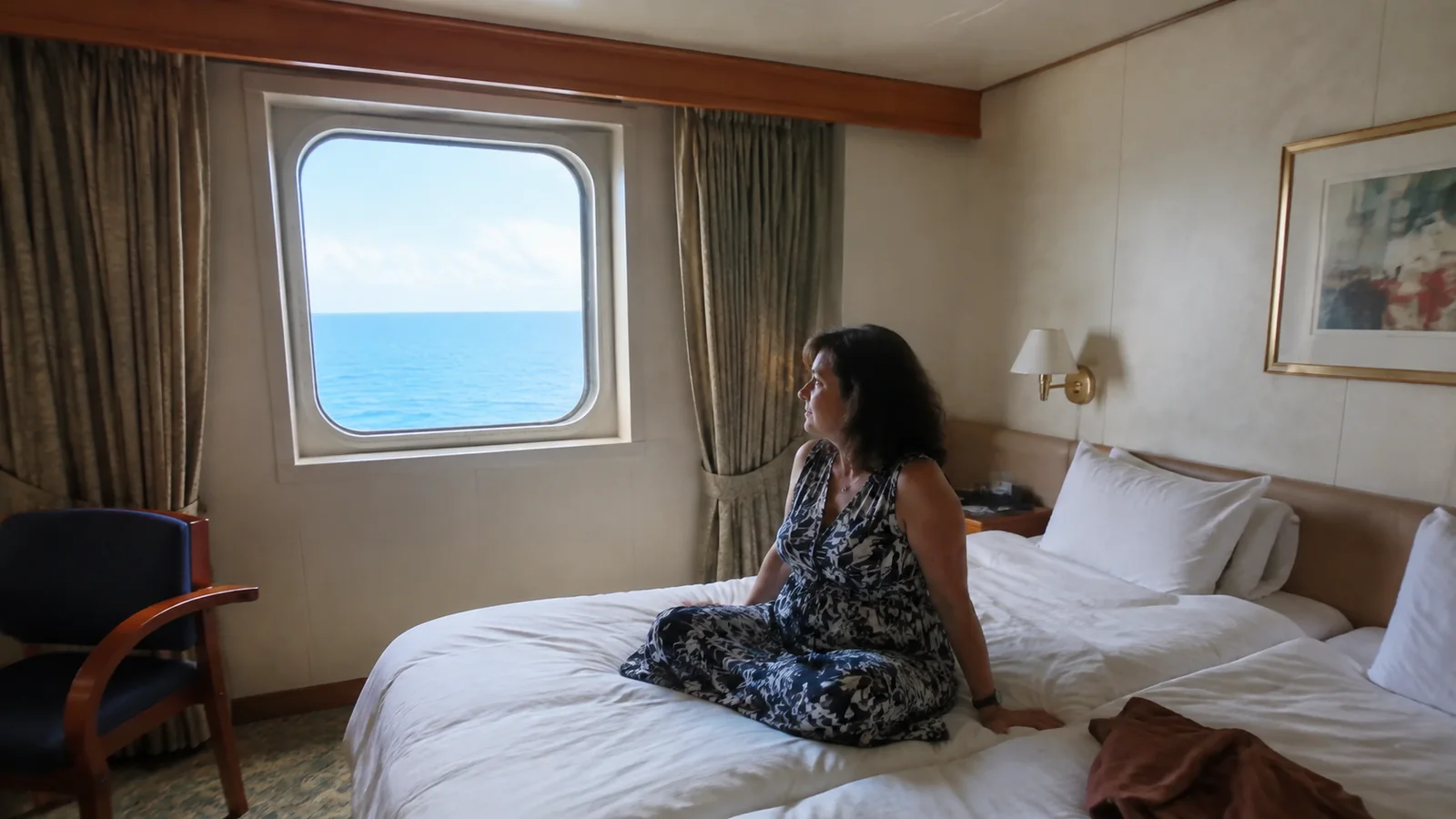
My quick guarantee-cabin decision
- Consider it when the savings are meaningful and your room requirements are flexible.
- Select a cabin when quiet, a particular view, or a lower central location is essential.
- Select confirmed neighboring rooms when family or care arrangements depend on proximity.
- Get accessibility needs explicitly confirmed rather than leave them to a general category promise.
- Count the savings without including a hoped-for upgrade.
A guarantee should be a deliberate exchange of control for value. I would not treat it as a clever way to buy a cabin I otherwise could not afford and hope the line makes it work.
What a guarantee actually promises
The fare guarantees accommodation under the category or category-type terms you purchase. The cruise line then selects the specific room, which may be assigned much later than a cabin you choose during booking.
Royal Caribbean’s guarantee-stateroom policy is a useful concrete example. It says the exact room and location are at the line’s discretion, assignments can have obstructed views, and traveling parties may be separated.
The wording on your own confirmation matters more than a generic definition of guarantee. Different lines and offers can define the assignable accommodation differently.
I would write down the full category code and description before paying. If the agent cannot explain which room types it can include, I would pause that booking until the scope is clear.
A balcony guarantee may not mean an ocean-facing balcony
Modern ships can have inward-facing neighborhood balconies as well as outward-facing accommodation. Those are different views, even though both provide a physical balcony.
Royal Caribbean specifically warns that Oasis- and Icon-class guarantee assignments can include Central Park, Boardwalk, or Surfside neighborhood balconies, depending on the ship. I would not assume a broad balcony label excludes those rooms.
If my reason for paying more is private ocean watching, I would require an outward-facing category or select a known room. A discounted balcony is not good value if it faces the wrong direction for my plans.
The same care applies to obstructed views and unusual balcony structures. Ask which limitations are permitted rather than rely on the most attractive category photograph.
Inspect the least appealing eligible rooms first
When buying an assigned cabin, you investigate one room. When buying a guarantee, I would investigate the full range that the line may choose for me.
Find the eligible cabins far forward, far aft, high under public spaces, and in any obstructed-view section. Then check whether their actual layouts and surroundings would be manageable for you.
Royal Caribbean’s official deck-plan guide explains the map information worth locating. My deck-plan reading guide helps with comparing the decks above and below possible rooms.
I would not label every cabin on a deck bad because some sit under a pool. The guarantee question is whether the specific under-pool rooms are part of the assignable inventory and whether you would accept them.
Use recent room evidence where a map cannot settle the view or a suspected noise source. A guarantee removes your ability to target the most favorable exception within a mixed category.
Put a dollar value on selecting your room
Compare the guarantee with the cheapest selected cabin you would actually book, not an expensive premium location you do not need. Keep the same sailing, guests, and relevant fare conditions in the comparison.
Imagine the guarantee totals $2,000 and a suitable selected room totals $2,140 for a seven-night trip. Those hypothetical prices put the cost of control at $140 per room, or $20 per night.
I would likely pay that difference if it removed a meaningful sleep or view concern. If I truly did not care about the possible locations, I might keep the savings.
Now imagine the selected room costs $2,700. The $700 difference deserves a closer look, but I would still reject the guarantee if an allowed room cannot meet an essential need.
A large discount can make a tolerable compromise attractive. It cannot make an unusable bathroom, required separation from a caregiver, or unacceptable sleeping arrangement work.
Check fare restrictions as well as the room
Guarantee fares can be sold under different promotions with different payment and change rules. I would check deposit terms, cancellation conditions, name changes, and any restrictions on moving to a selected cabin.
Do not assume all guarantee bookings are fully nonrefundable or that all allow changes for the same fee. The actual offer determines those details.
I would save the description and terms from the booking, particularly when a discounted offer has additional restrictions. That record is useful if you later need the line to explain what was purchased.
If a travel advisor is handling the booking, ask for the complete comparison including agency terms and included credit. The headline fare alone may not show the final difference between your options.

Guarantees are harder to justify for light sleepers
A selected room allows you to avoid known entertainment, service, or overhead activity footprints. A guarantee usually does not let you remove individual rooms from consideration simply because you prefer quiet.
I would choose a known cabin with staterooms above and below if sleep is one of my main concerns. That is more useful than paying for a higher category while leaving its location to chance.
My cabin-selection checklist explains the main relationships to investigate. Apply it to the least suitable eligible rooms before deciding whether the guarantee fits your tolerance.
Earplugs or a request to guest services are not a substitute for that choice. They may help with some issues, but they do not guarantee a quiet night or an available replacement cabin.
Motion-sensitive travelers should value location control
If you already know that being far forward or unusually high makes a sailing harder for you, I would not ignore that information for a small discount. A lower, more central selected room is a more purposeful purchase.
My seasickness guide covers broader preparation, because no cabin can guarantee you will feel no movement. Room selection is one part of planning for your own comfort.
A guarantee assignment in a technically higher category could still move you to a location you prefer less. I would judge the actual physical position rather than let the word upgrade settle the question.
If all eligible rooms are within an area you can comfortably accept, the calculation changes. That is why understanding the narrow or broad scope of the specific guarantee is essential.
Families should not gamble on being next door
Linking reservations can tell the line that you are traveling together, but it is not the same as reserving adjacent or connecting cabins. Separate guarantee rooms may be assigned on different decks or in different parts of the ship.
I would select the rooms if proximity is necessary for supervision, nighttime routines, or assistance. A note requesting nearby accommodation does not establish that the arrangement is confirmed.
Within one cabin, verify the capacity and permitted bedding setup. A guarantee for the correct number of guests may still include a bed arrangement your group would rather avoid.
If an upper berth, sofa bed, or separated bed configuration would create a practical problem, ask whether the fare can exclude it. If it cannot, I would choose suitable accommodation directly.
Accessibility requires a specific promise
A request for a convenient location does not guarantee an accessible bathroom, doorway, transfer area, or equipment space. I would work with the line’s access team to establish exactly what accommodation is suitable.
Royal Caribbean’s Guest Special Needs process shows the sort of equipment information that should be recorded. The room booking and the access arrangements need to agree before you rely on either.
I would only consider a guarantee if the line explicitly confirms every required feature is guaranteed under that reservation. Otherwise, the selected accessible room is the appropriate comparison, even if the general guarantee looks cheaper.
Do not give up elevator proximity merely to avoid theoretical noise. A manageable route can be more important than a preference for an isolated corridor.
An upgrade is a possibility, not the business plan
You may receive accommodation above the minimum promised by your fare, but I would not assign that possibility a dollar value before booking. The sensible comparison assumes you receive a valid room at the purchased level.
I would be wary of advice suggesting that a particular booking time, check-in trick, or repeated phone call guarantees better treatment. Without a published promise for your offer, those are not dependable reasons to choose it.
The guarantee works when the room meets the terms and the savings were worth the flexibility you gave up. It does not need a surprise suite to be a successful purchase.
Once the cabin is assigned
Compare the room with the purchased category and any confirmed requirements, then inspect the current plan. A location you did not choose may still turn out to be a comfortable fit.
If something appears inconsistent with the booking, contact the line or your advisor promptly with the relevant documents. If it is simply a preference, ask what changes are available and what they would cost.
I would not assume a free move will be available onboard. By that point, the rooms you would prefer may already be occupied.
Check each reservation separately on consecutive sailings. A guarantee on a back-to-back trip may require a room change between cruises, so staying put should not be assumed.
Five-minute guarantee decision
- Full category scope understood.
- Least appealing eligible room still acceptable.
- Savings compared with a suitable selected cabin.
- View, bedding, location, and access requirements protected.
- Payment and change restrictions read.
- No part of the value depends on receiving an upgrade.
Guarantee cabin questions
Are guarantee rooms always the worst cabins?
No, the assignment can be perfectly good. The issue is that you surrender the ability to choose the room that best matches your preferences.
When will the room be assigned?
The line and offer determine the window, which can extend close to departure or port check-in. I would use the booking’s stated terms rather than a timeline from another passenger.
Can I ask for a better location?
You can ask what options are available, but a preference is not automatically a promised change. I would get any cost and revised fare conditions confirmed before accepting a move.
My recommendation
I would buy a guarantee for meaningful savings only after confirming that every valid assignment would work. When sleep, accessibility, family proximity, or a particular view matters enough to shape the trip, I would pay for the room I can verify.