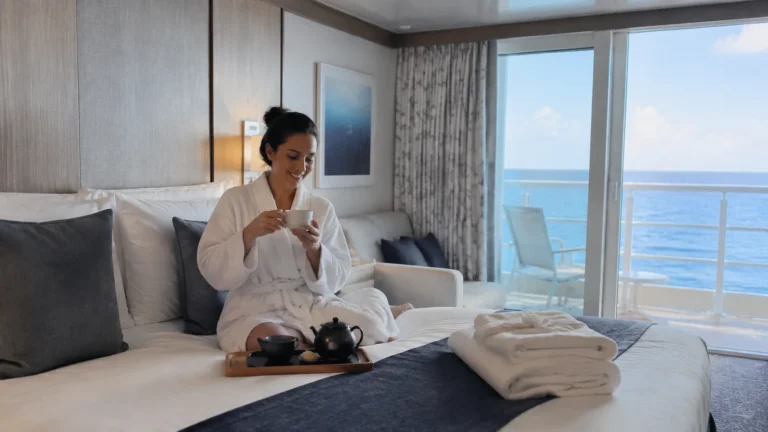
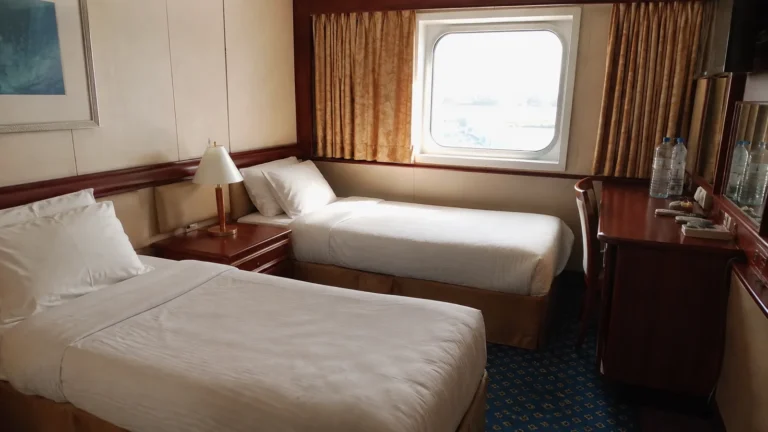
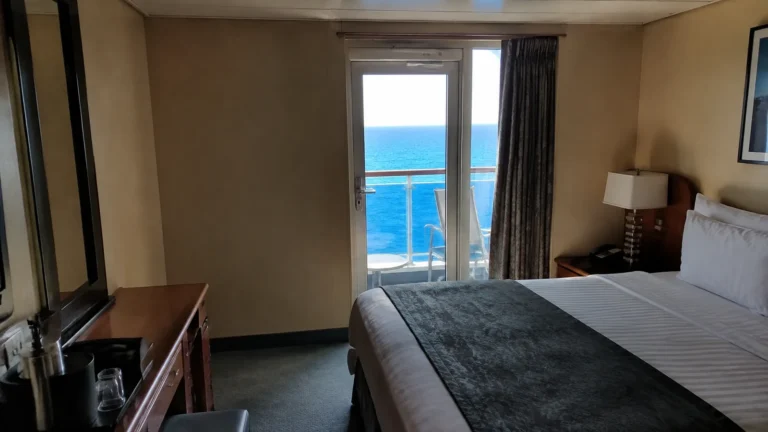
Celebrity Infinite Veranda: Pros, Cons, and Room Picks
I would choose a Celebrity Infinite Veranda when a wide view and flexible indoor seating matter more than a separate outdoor balcony. I would choose a conventional veranda if one person wants to sit outside while another sleeps, reads, or keeps the bedroom cool.
The right decision starts with that physical difference, then moves to the exact cabin’s location and price.
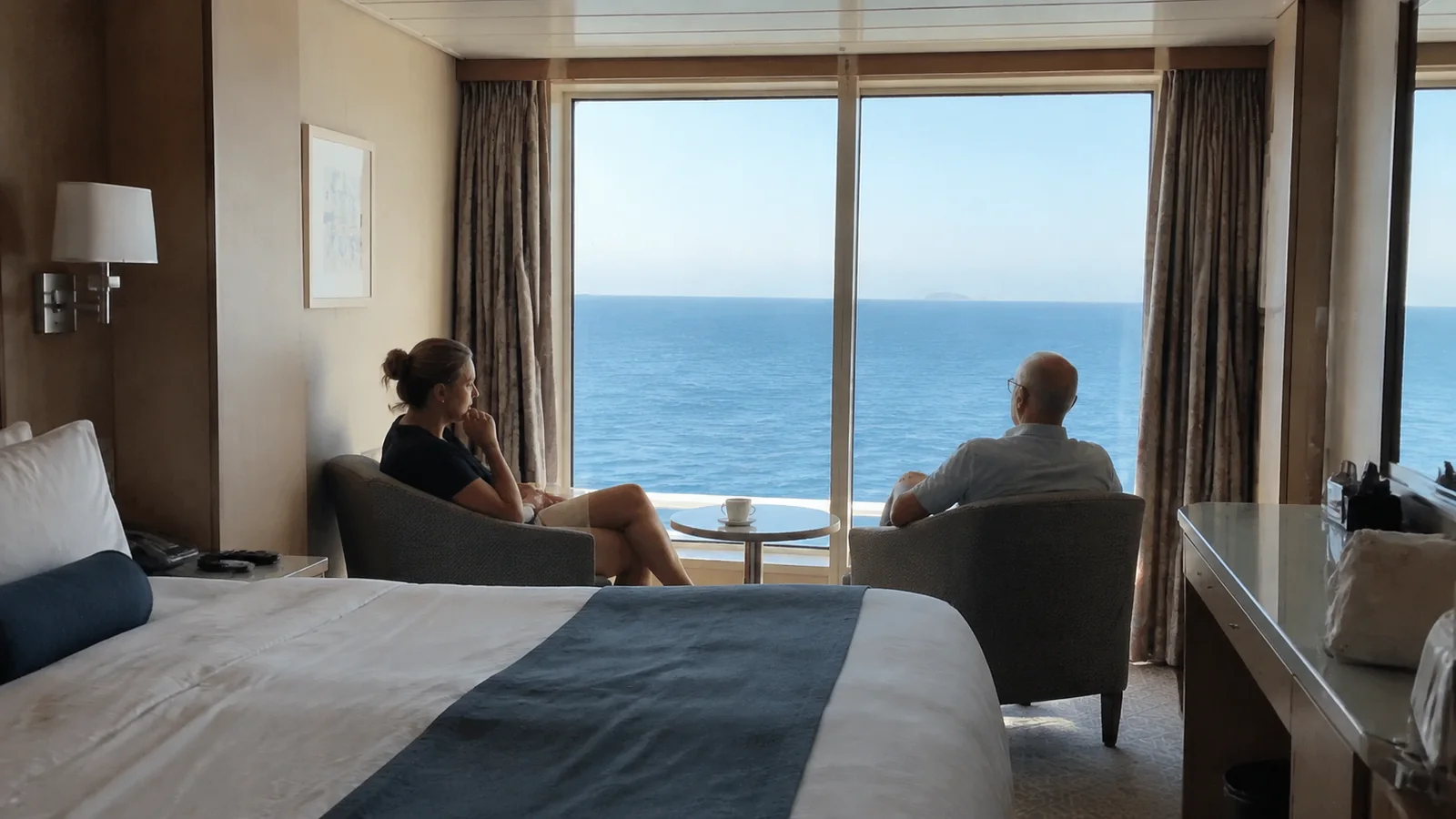
When I would choose Infinite Veranda
- I want the window-side seating area to function as part of the room.
- I value a broad view even when I keep the exterior window closed.
- My cabin partner and I have compatible preferences for light and fresh air.
- The complete fare compares well with the ship’s conventional-veranda alternatives.
- The specific room has an acceptable view and sensible surroundings for sleep.
I would skip it if stepping onto a clearly separate outdoor platform is the reason I am paying for a veranda. Calling the design good or bad without that distinction misses the actual booking decision.
How the room works
On the familiar Edge-series design, a powered upper window section lowers to create an opening to the outside, while the lower barrier remains in place. Folding interior doors divide the window-side area from the rest of the room.
When everything is closed, that area can feel like protected interior seating with a large exterior view. When the window opens, outside air enters that end of the accommodation.
Celebrity’s official veranda overview shows the design alongside its other veranda products. I would compare the floor plans and actual photographs rather than assume every room containing veranda in its name works the same way.
This guide focuses on choosing the standard Edge-series style of accommodation. Celebrity also uses Infinite Veranda terminology elsewhere, so a suite or another ship’s product needs its own layout check.
Do not confuse total living space with bedroom space
Cruise room descriptions can list the room and veranda separately or describe a combined total. I would check which measurement is being quoted before comparing two categories.
For example, Celebrity’s Celebrity Edge accommodation page lists its standard Infinite Veranda’s total living space and veranda area. I would not add the veranda figure to a total that already includes it.
The more useful question is how much floor you can comfortably use in your normal routine. A seating area that joins the room can be valuable even when it does not provide the separate outdoor space another traveler wants.
Look at the path between the bed, seating, and bathroom with the cabin’s intended number of occupants. If an extra bed is involved, ask what happens to that route at night.
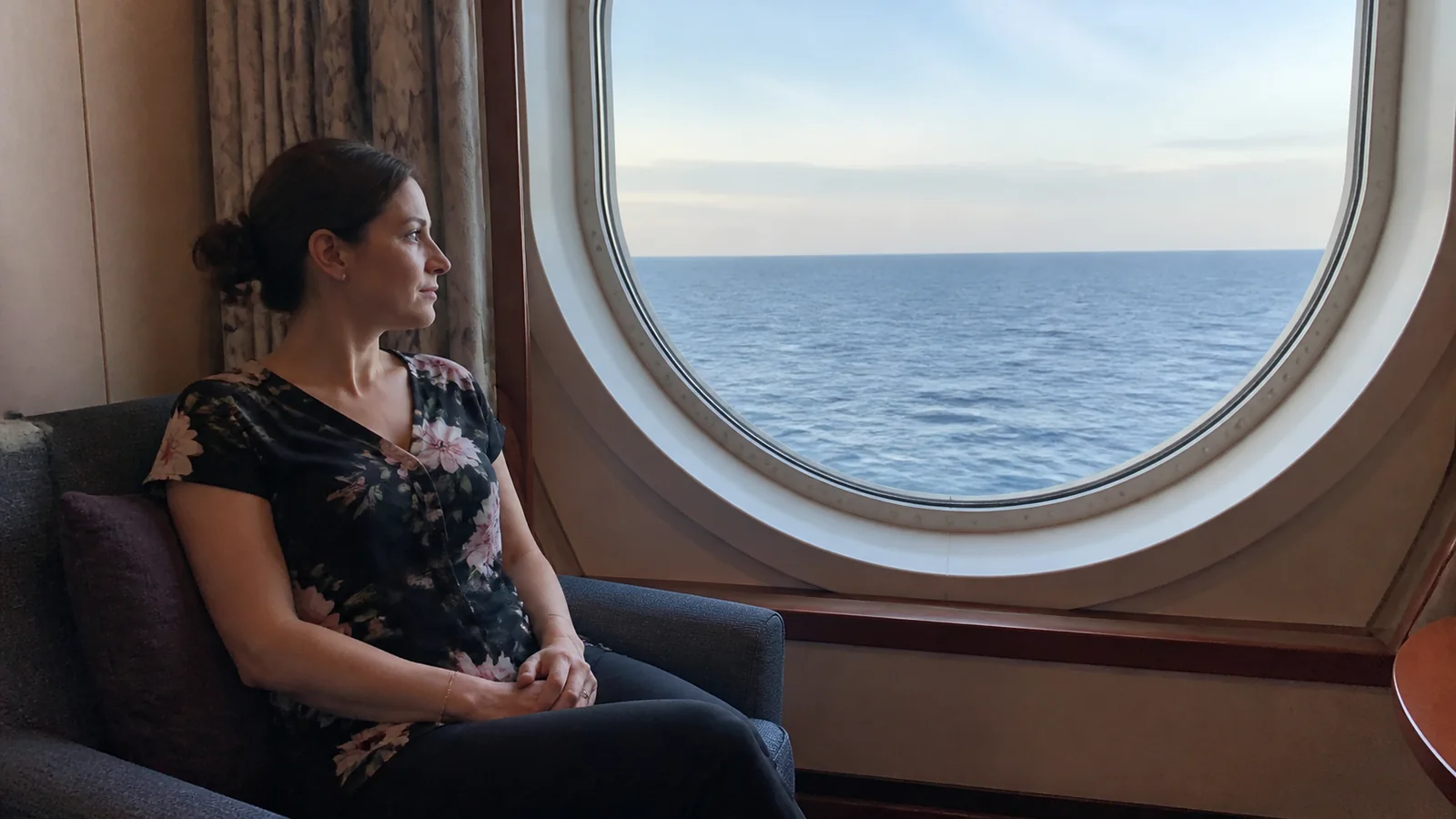
Different sleep schedules are the clearest reason to choose another design
Imagine one person wants to look out at sunrise while the other wants another hour of darkness. In an Infinite Veranda, operating the exterior shade and opening the window changes the conditions at the end of the shared room.
A conventional balcony provides a different arrangement because someone can step outside and close the balcony door behind them. That separation is the feature I would pay for if our morning routines regularly conflict.
I would discuss the issue before booking, not on the first sea day. A couple with matching schedules may barely notice the compromise that makes the same room frustrating for someone else.
Do not assume an interior divider gives identical light, sound, or temperature separation to every conventional balcony door. Ask to see the actual partition and shade arrangement in the category you are considering.
Be careful with sweeping air-conditioning claims
Opening an exterior window changes the room’s relationship with outside air. I would not book on the assumption that I can leave it open indefinitely while enjoying the same cooled interior as a closed cabin.
However, I would also avoid repeating a universal claim that the air-conditioning always switches off regardless of the divider position. Celebrity’s 2019 Captain’s Club Q&A said fully closed bifold doors allowed the air-conditioning to remain on, which is a reason to check the current ship’s setup carefully.
That older statement should not be treated as a guarantee about every room sailing today. I would ask Celebrity how the window sensor, divider doors, and climate controls operate on my chosen ship.
If keeping the bedroom cool while enjoying fresh air is nonnegotiable, I would price a conventional veranda. I would not rely on an uncertain technical workaround to make the room fit my routine.
Ask when the exterior window can be unavailable
I would confirm any weather, cleaning, or operational restrictions affecting the powered window. An opening mechanism does not mean the guest can always choose to leave it open in every condition.
Ask what happens when crew need the window closed and how that is communicated. The useful booking question is whether you would still enjoy the room if the exterior opening were unavailable for part of the trip.
I would be comfortable with that possibility if I mainly wanted the wide protected view. I would be less comfortable if continuous open-air access was the single feature that justified the upgrade.
Never interfere with sensors or attempt to defeat a crew-controlled restriction. If the room’s normal operation would disappoint you, select a different design before sailing.
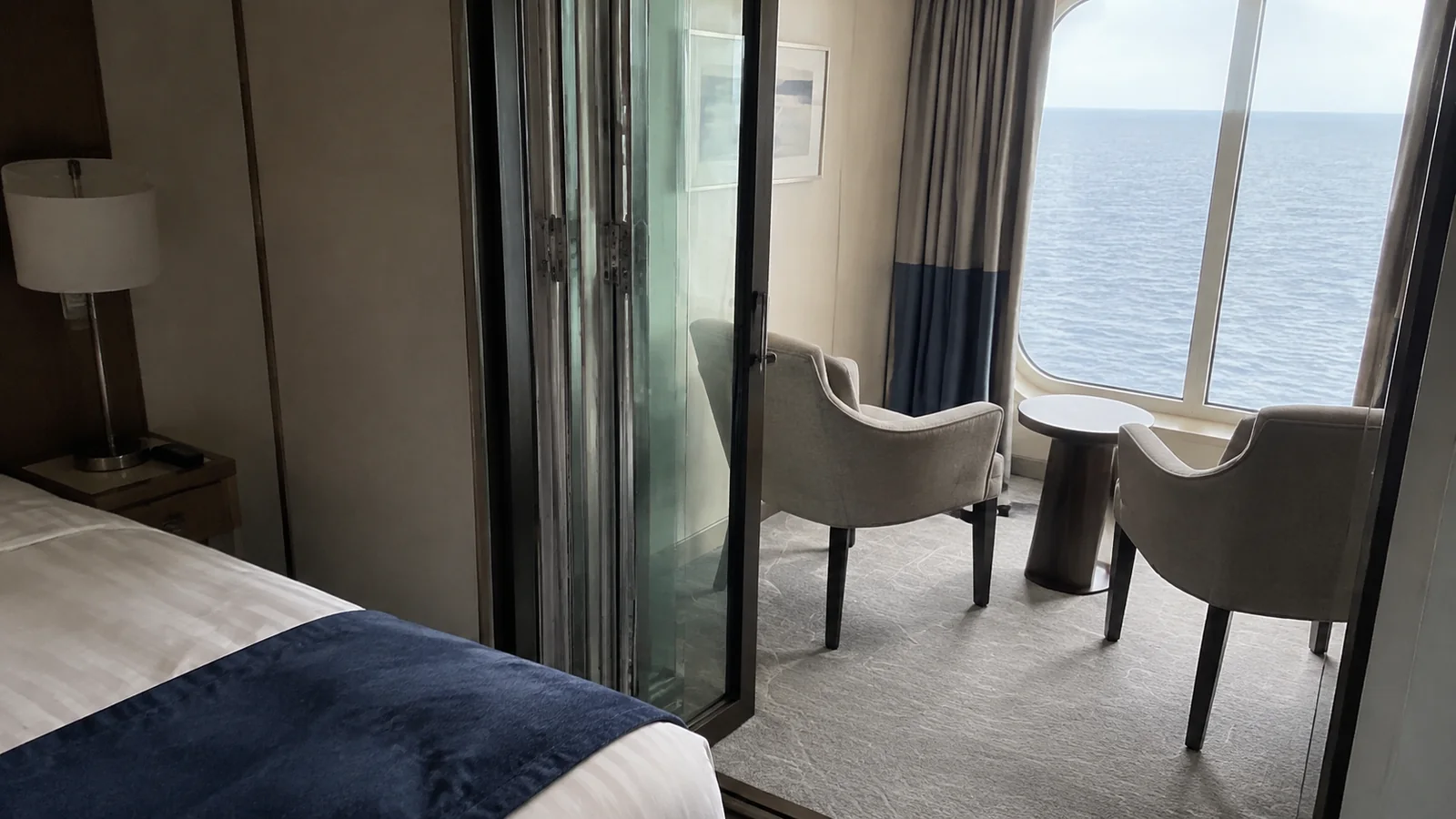
Compare Sunset Veranda and Deluxe Porthole View with Veranda
Celebrity Edge’s conventional-veranda alternatives include Sunset Veranda and Deluxe Porthole View with Veranda accommodation. Availability, dimensions, and exact configurations should be checked on the selected ship rather than borrowed from another vessel.
The Sunset option offers the aft outlook that many travelers want, but I would also consider the room’s distance from useful elevators and my tolerance for an end-of-ship position. A beautiful wake view is a reason to accept those tradeoffs, not proof they disappear.
The porthole-view veranda uses an exterior space framed by the ship’s structure. I would inspect the opening and seated view before assuming it matches the openness of a conventional side balcony elsewhere in the fleet.
Neither alternative is automatically a better purchase. I would compare the whole experience: actual outdoor separation, view, location, usable space, and fare.
A plain oceanview can be the better comparison
If you expect to keep the exterior window closed most of the time, price a suitable oceanview too. You may find that daylight and a comfortable view are the benefits you really want.
An oceanview with fixed glass does not supply the same opening-window feature, but it can be a sensible way to keep the budget focused. I would rather pay for an excursion I will enjoy than for an opening I rarely use.
Check the layout rather than infer it from the size of the window. A panoramic oceanview, an Infinite Veranda, and a conventional balcony can all look bright in photographs while functioning differently.
My cabin organization tips can help make the chosen room more comfortable. They cannot, however, create a separate balcony where the design does not provide one.
Choose the location after settling the design
I would begin by looking for an available Infinite Veranda nearer the middle of the ship with cabins directly above and below. That is a search strategy, not a claim that a particular deck is universally quiet.
Open the plan for your sailing and check the actual neighboring spaces. Pools, restaurants, outdoor seating, and entertainment footprints vary across the Edge-series ships.
My deck-plan reading guide explains how to compare those levels. A room’s window design does not protect it from a busy venue overhead or a service door nearby.
I would also check any partial-view notes and visible ship structures outside the specific room. Paying for Infinite Veranda does not automatically establish an unobstructed panorama from every chair.
Connecting rooms and elevator positions still matter
Choose a connecting room when the connection solves your family’s accommodation needs. When it does not, I would take an otherwise equal nonconnecting room rather than add an unnecessary potential sound path.
A cabin near elevators can be very convenient, especially on a large ship. I would compare whether its door faces a gathering area or sits around the corner instead of rejecting every nearby room.
If accessibility is required, verify the room’s doorways, turning space, bathroom, and controls directly. A spacious-looking window area is not evidence that the entire cabin meets a particular access need.
My broader cabin-selection guide puts these checks alongside noise and privacy. I would settle the necessary physical features first, then compare the remaining room choices for comfort.
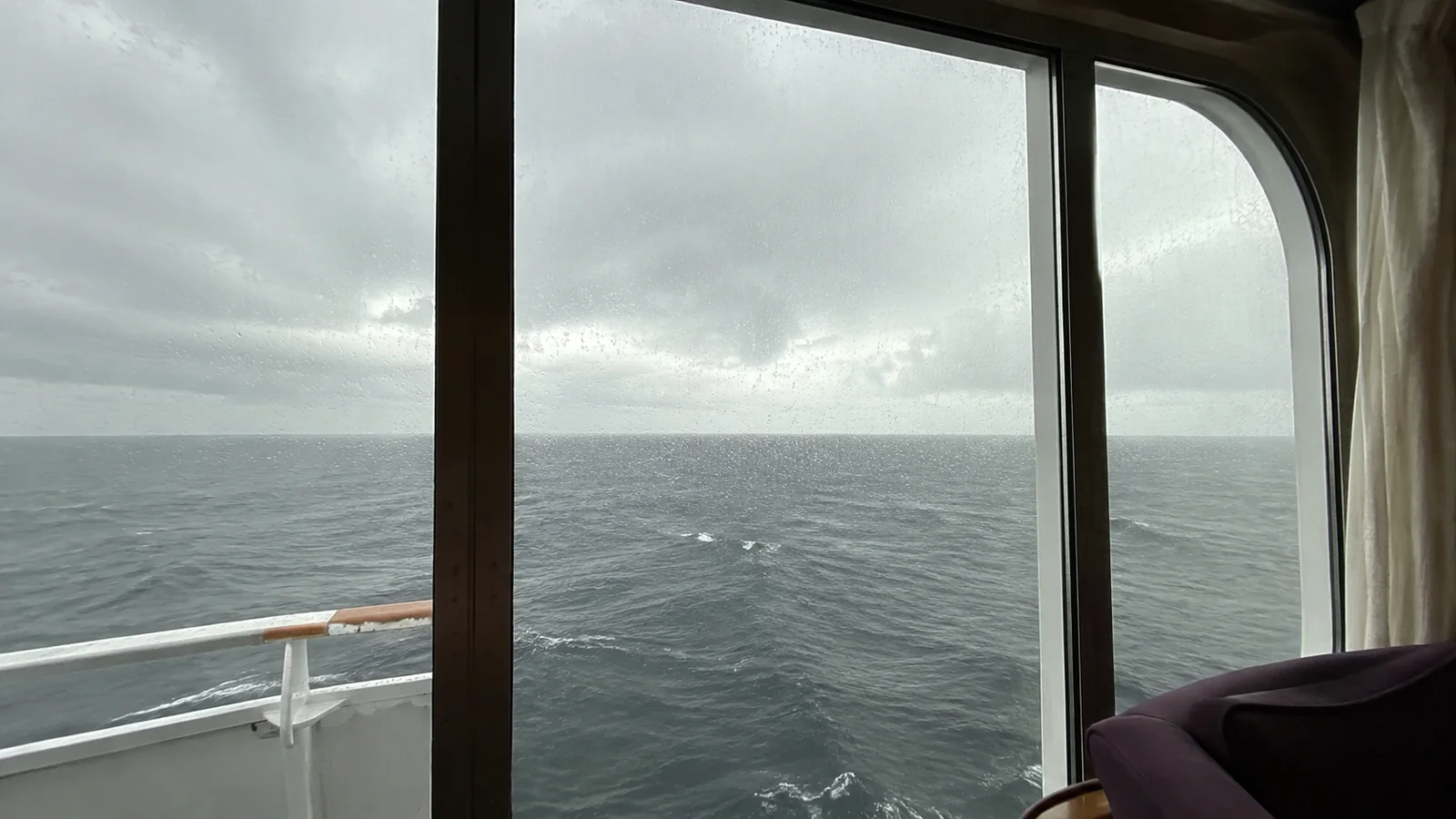
Consider the itinerary without promising perfect weather
On a cooler scenic trip, protected seating beside a large window may be especially appealing. You can enjoy the outlook without making every viewing session an outdoor activity.
On a hot, humid sailing, I would think more carefully about how often I want outside air entering the room. The same mechanism can feel like a benefit in one climate and something I use sparingly in another.
Neither season nor destination guarantees how the room will feel on a particular day. I would choose a design I can enjoy with the window closed as well as open.
For a solo traveler, control over the shade and window is simpler because no cabin partner has competing preferences. I would still compare the solo fare and available layout with other rooms priced for one.
What I would pay for the difference
Imagine Infinite Veranda costs $300 less than an available conventional veranda for the whole trip. I would keep the savings if the flexible indoor space is what I prefer and the locations are equally suitable.
If the difference is $80 and independent outdoor time matters to us, I would probably choose the conventional veranda. Those are hypothetical comparisons, but they force the price back toward a feature you can actually describe.
I would not pay more for a premium service category merely to solve a design preference if it still includes an Infinite Veranda. Confirm the physical room type separately from Concierge Class, AquaClass, or other category benefits.
Five-minute Infinite Veranda check
- Confirm the exact ship and physical room design.
- Compare total living space consistently.
- Discuss shade, window, and sleeping preferences with your cabin partner.
- Ask about current climate-control operation and window restrictions.
- Inspect the view and spaces above and below the room.
- Price the conventional-veranda and oceanview alternatives.
Infinite Veranda questions
Does the whole exterior wall open?
No, the familiar Edge-series design lowers the upper window section while retaining a fixed lower barrier. I would watch a clear demonstration of the mechanism if that distinction is difficult to picture.
Is it a bad choice for couples?
No, compatible routines can make it a very comfortable choice. I would be cautious when one person regularly wants outdoor air while the other wants darkness and a separate indoor environment.
Is the best location the highest deck?
Not automatically. I would prioritize the actual view, surrounding rooms, and convenient route before paying for elevation.
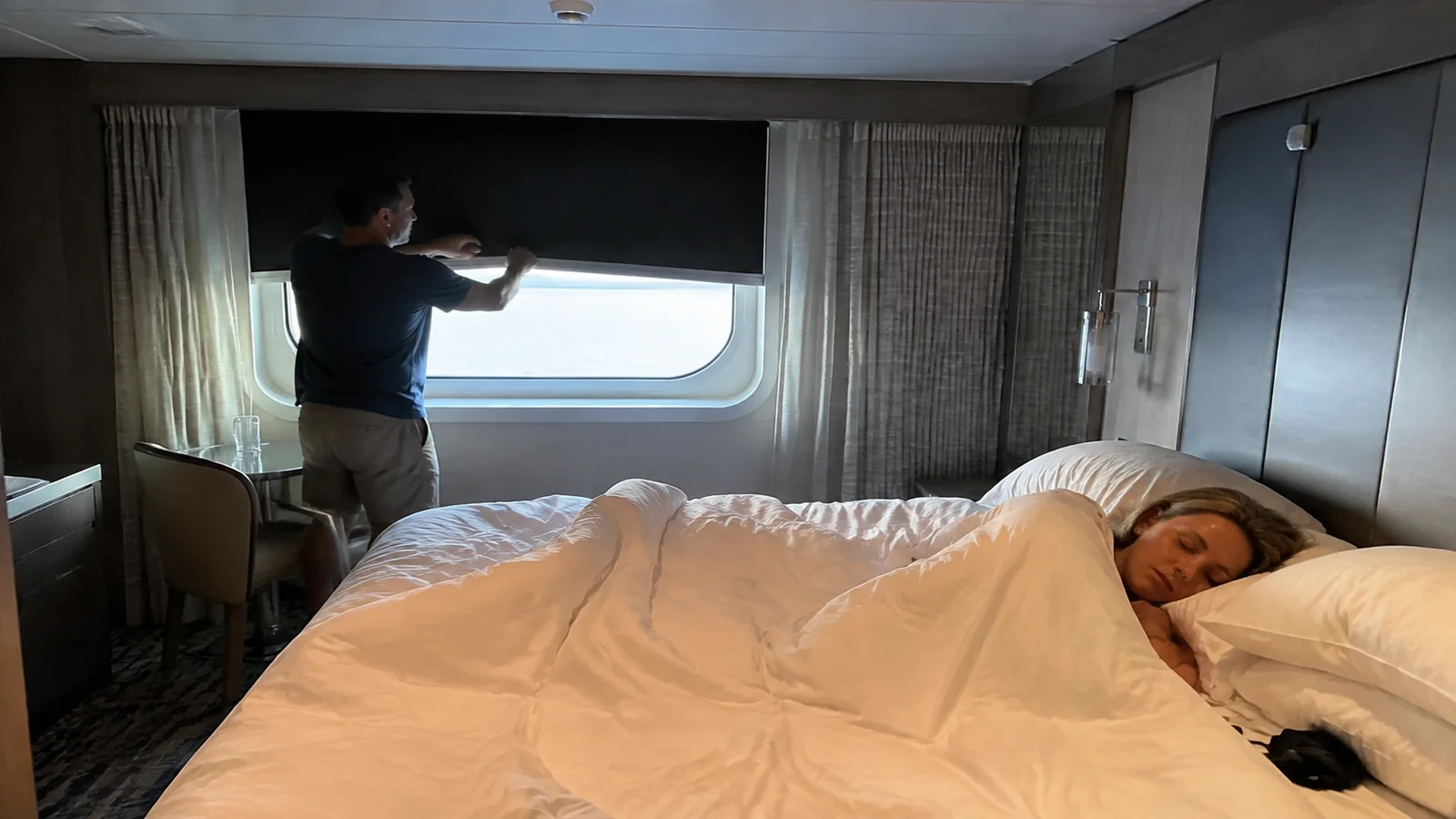
My choice
I would book Infinite Veranda for its flexible indoor space and wide outlook in a well-positioned room. If I want a distinct outdoor retreat, I would choose a conventional veranda and treat that separation as the reason for the extra cost.